Medicine Scholarships for International Students 2026–2027
Medicine Scholarships for International Students 2026–2027 Medicine is the most expensive mainstream degree an international student can choose — and the hardest to fund with a scholarship. A medical degree abroad can mean five or six years of tuition at the very top of a university’s fee scale, clinical placement costs, professional equipment, and living ... <a title="Medicine Scholarships for International Students 2026–2027" class="read-more" href="https://studygraduate.com/scholarship/medicine-scholarships-for-international-students-2026-2027/" aria-label="Read more about Medicine Scholarships for International Students 2026–2027">Read more</a>
📖 Overview
Medicine Scholarships for International Students 2026–2027
Medicine is the most expensive mainstream degree an international student can choose — and the hardest to fund with a scholarship. A medical degree abroad can mean five or six years of tuition at the very top of a university’s fee scale, clinical placement costs, professional equipment, and living expenses in cities where rents are rarely kind. It is also the field where scholarship advertising is least honest: pages promising “fully funded medicine scholarships, no exam, guaranteed admission” are usually describing something else — a partial tuition discount, a public-health master’s, or an agent’s commission.
This guide takes the harder, more useful approach. It explains which scholarships genuinely fund medicine for international students in 2026–2027, which famous scholarships explicitly exclude clinical medicine (and what they fund instead), what each real route pays, and how medical admissions — entrance exams, quotas and early deadlines — change the way you must plan. If you are still deciding between a first medical degree and a health-related master’s, read this alongside our broader guide to postgraduate scholarships for international students, and browse medical schools in our university directory.
First, a vocabulary warning that will save you months. “Medicine scholarships” can mean four different things: (1) scholarships for a first clinical degree — MBBS, MD, MBChB or a one-tier general medicine master’s; (2) scholarships for graduate-entry medicine, for students who already hold a degree; (3) scholarships for postgraduate study in medical and health fields — MSc, MPH, MRes and PhD programmes in subjects such as public health, epidemiology, biomedical science and health policy; and (4) research funding for qualified doctors. The big government scholarships mostly fund category 3. Genuine full funding for category 1 exists, but it is concentrated in a small number of government schemes — Hungary, Türkiye and a few others — and in home-country government sponsorship. Everything in this guide is labelled by category so you never mistake one for another.
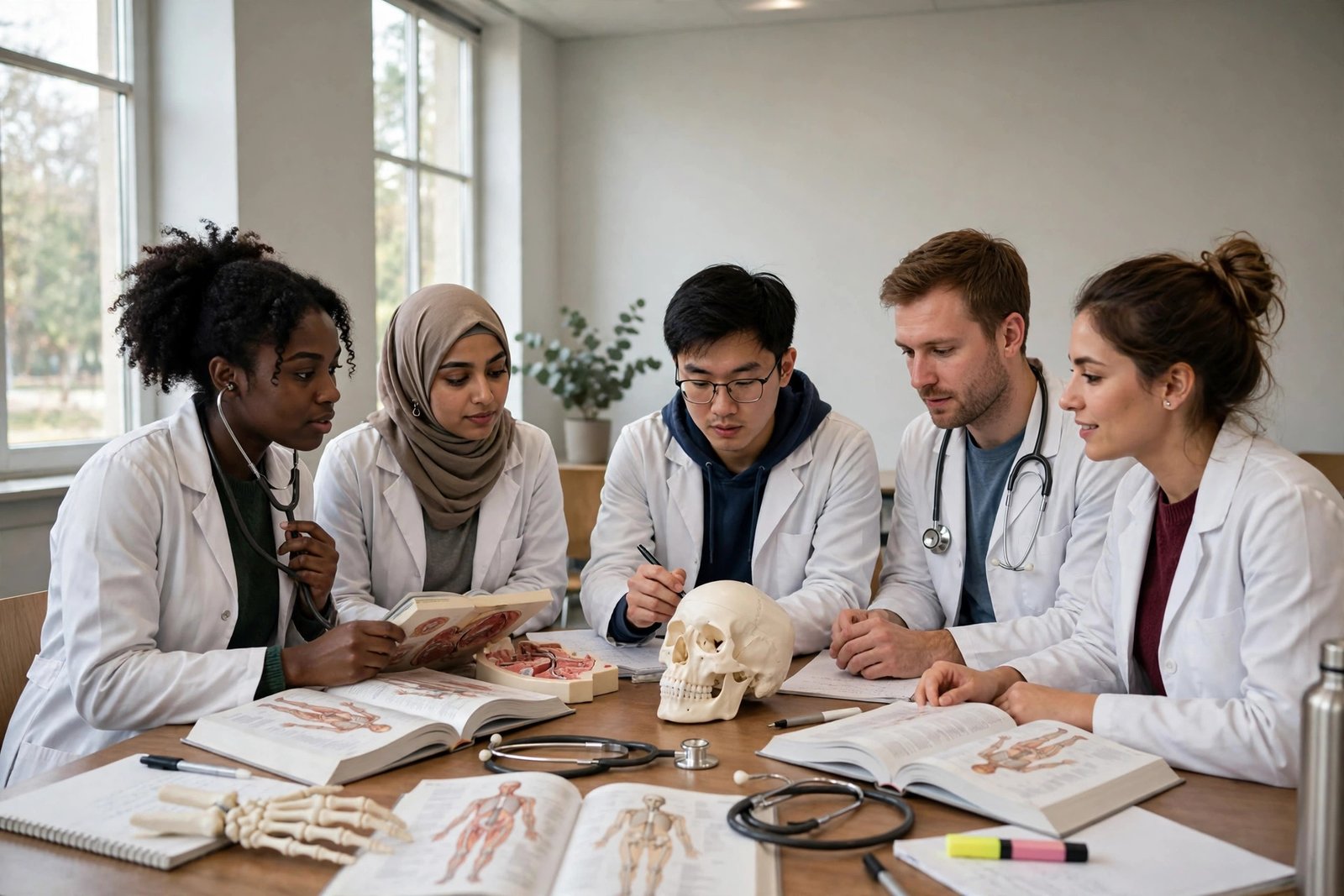
Medicine Scholarships at a Glance
| Scholarship / route | Country | Funds clinical medicine? | Headline benefit | Key condition |
|---|---|---|---|---|
| Stipendium Hungaricum | Hungary | Yes — General Medicine is a one-tier master’s programme | Tuition-free education, HUF 43,700/month stipend, dormitory place or HUF 40,000/month housing contribution, medical insurance | Must apply through your country’s Sending Partner and pass the university entrance examination/interview |
| Türkiye Burslari (Türkiye Scholarships) | Türkiye | Yes — at undergraduate level (medicine, dentistry, pharmacy) | Tuition, accommodation, health insurance, flight ticket, one-year Turkish course, monthly stipend (4,500 TL undergraduate at recent published rates) | Minimum 90% academic score for health sciences; under 21 for undergraduate applicants; applications 10 January–20 February in the 2026 cycle |
| MEXT (Undergraduate) | Japan | Yes — medicine is among the undergraduate fields, subject to country quotas | Tuition covered, ¥117,000/month stipend, return airfare, one-year preparatory education | Embassy screening with examinations; very small numbers of medical places |
| Chinese Government Scholarship (CSC) | China | Limited and university-specific — verify carefully (see warning below) | Where awarded: tuition, dormitory or subsidy, insurance, CNY 2,500/month undergraduate stipend | Many universities do not place MBBS students under CSC; an official scholarship statement on the admission letter is the only reliable proof |
| UK university medical scholarships | United Kingdom | Yes, but almost always partial | Percentage tuition waivers or fixed awards set by each medical school | International places are quota-limited; UCAS deadline 15 October; UCAT required by most schools |
| DAAD EPOS | Germany | No clinical degree — postgraduate health fields only | €992/month (master’s) for listed development-related courses such as public health and health economics | Requires a first degree plus at least two years of professional experience |
| Commonwealth Master’s / Shared Scholarships | United Kingdom | No MBBS — health-related taught master’s only | Full tuition, airfare, £1,712/month stipend (£2,000 in London) at current rates | Eligible Commonwealth countries; “Strengthening health systems” is an official development theme |
| Fulbright Foreign Student Program | United States | No — clinical medicine is excluded | Graduate funding for public health, medical research and other non-clinical fields; package varies by country | Apply through your home-country Fulbright commission or US embassy |
| Australia Awards / RTP | Australia | Not a route to a first clinical degree; strong for postgraduate public health and medical research | Australia Awards: full tuition, airfare, living contribution, OSHC. RTP research stipend base AUD 34,315 (2026) / AUD 35,550 (2027) | Country eligibility (Australia Awards) or university research rounds (RTP) |
The pattern in that table is the single most important fact in this article: the closer a programme is to hands-on clinical training, the fewer scholarships exist for it. Governments fund future public-health leaders, researchers and policy specialists generously, because those graduates return home and multiply their impact. Funding a foreign student’s six-year clinical degree, by contrast, is expensive per head and politically harder — so where it exists, competition is extreme and entrance examinations are real.
Eligibility: What Medical Scholarship Panels Actually Require
Academic thresholds are higher for medicine
Türkiye Burslari states the general rule openly: undergraduate applicants need at least 70% overall, but applicants to medicine, dentistry and pharmacy need at least 90%. Hungary’s Stipendium Hungaricum route requires nomination by your country’s Sending Partner and success in the medical university’s own entrance procedure — Semmelweis University, for example, runs its admission procedure between March and May, testing sciences and interviewing candidates. UK medical schools typically require top school-leaving grades with chemistry and biology, plus a competitive UCAT score. There is no scholarship route around these bars; funding follows admission merit, it does not replace it.
Science subjects are non-negotiable
Whatever the country, expect to show strong recent results in biology and chemistry, usually with physics or mathematics. If your school qualifications are not recognised as equivalent, you may face a foundation or preparatory year — MEXT builds a one-year preparatory education into its undergraduate scholarship for exactly this reason.
Age limits bite harder in medicine
Because medical degrees are long, several schemes cap age tightly: Türkiye Burslari undergraduate applicants must be under 21; CSC undergraduate applicants must be under 25; MEXT undergraduate applicants are generally under 24 at application (check your embassy’s current call). A gap year spent improving grades can therefore cost eligibility — plan backwards from the age rule, not forwards from convenience.
Language of clinical training
You may begin a medical degree in English, but you will treat patients in the local language. Hungary teaches general medicine in English, German and Hungarian, yet clinical contact pushes you towards Hungarian. Türkiye Burslari funds a one-year Turkish language course because most clinical teaching is in Turkish. In China, English-medium MBBS classes still require Mandarin for hospital years — universities typically expect HSK progress during the degree. Scholarship panels know this; a credible language plan is part of a credible application.
Health, fitness to practise and recognition
Medical applicants face extra checks: health certificates (Hungary requires a medical certificate in the application pack; CSC requires the Foreigner Physical Examination Form), immunisation records, and fitness-to-practise standards at enrolment. Separately — and this is your responsibility, not the scholarship’s — check that the degree is recognised where you intend to practise: your home medical council’s list, the World Directory of Medical Schools, and any licensing examination you will face afterwards (for example, Indian graduates of foreign medical schools must pass India’s licensing process to practise in India). A scholarship to an unrecognised programme is not a bargain; it is a trap.
The Real Routes to a Funded Medical Degree
Hungary: Stipendium Hungaricum and one-tier General Medicine
Hungary is the clearest fully funded clinical route in Europe. Under Stipendium Hungaricum, General Medicine is offered as a one-tier master’s programme (five to six years, integrating bachelor and master levels) at universities such as Semmelweis, Debrecen, Szeged and Pécs. The scholarship’s published provisions are: tuition-free education; a monthly stipend of HUF 43,700 for bachelor, master and one-tier master students, paid for 12 months a year; a free dormitory place or a housing contribution of HUF 40,000 per month; and health care under Hungarian legislation plus supplementary medical insurance up to HUF 65,000 per year. The programme itself warns that these provisions are a contribution to living costs, not full coverage — Budapest in particular costs more than the stipend, so budget a personal top-up honestly.
The process has three gates: the online application (the 2026/27 window ran from November to mid-January), nomination by your country’s Sending Partner, and the university’s entrance examination or interview in spring. Our full guide to the programme is the Stipendium Hungaricum Scholarship 2027 article. Note that Hungary also uses this same scheme for postgraduate health study, so unsuccessful MBBS applicants with a first degree sometimes return through the master’s route.
Türkiye: Türkiye Burslari for undergraduate medicine
Türkiye Scholarships, run by the Presidency for Turks Abroad and Related Communities (YTB), is one of the few schemes that combines scholarship and university placement in a single application: you list up to 12 programme preferences and YTB places successful candidates. For health-sciences applicants the academic bar is 90%, and the package at undergraduate level includes full tuition, accommodation, health insurance, a one-time flight ticket, a one-year Turkish language course and a monthly stipend — published recent rates are 4,500 TL per month for undergraduates, 6,500 TL for master’s students and 9,000 TL for PhD students, though lira amounts are revised and must be confirmed on the official site for your cycle. The 2026 application window was 10 January to 20 February. Two honest caveats: at graduate level, Türkiye Scholarships generally does not fund clinical health-science specialisation (clinical residency is outside the scheme), and medical study in Türkiye means studying in Turkish after the language year. See our Türkiye Burslari Scholarship 2027 guide for the full rules, and the official Türkiye Scholarships application guidance.
Japan: MEXT undergraduate medicine — tiny numbers, real funding
Japan’s MEXT undergraduate scholarship includes natural-science fields that cover medicine and dentistry, with tuition covered, a stipend of ¥117,000 per month for undergraduate scholars, an economy return ticket and a one-year preparatory education before the degree. The honest caveats are scale and screening: embassy-recommendation selection involves written examinations in subjects including science and mathematics, medical places are extremely few per country, and the degree is taught in Japanese after the preparatory year. Treat MEXT medicine as a genuine but lottery-grade route, and keep a second plan alive.
United Kingdom: expect partial funding, plan for high fees
The UK trains many international doctors but funds very few of them. International places at UK medical schools are capped by government quota; applicants apply through UCAS by the early deadline of 15 October, sit the UCAT for most schools, and face international tuition that commonly runs from around £30,000 to over £60,000 per year depending on the school and whether the year is pre-clinical or clinical. University scholarships for international medical students exist but are typically partial — a percentage waiver or a fixed annual award that softens, rather than removes, the cost. Home-country government sponsorship and family funding carry most international medical students in the UK. If the UK is your goal, our dedicated guide to medicine scholarships in the UK for international students breaks down school-by-school realities, and profiles such as the University of Oxford explain graduate funding at research-intensive universities. Remember also that the UK’s famous postgraduate schemes — Chevening and Commonwealth — fund master’s degrees, so they help doctors and health graduates at postgraduate stage, not school-leavers seeking an MBBS.
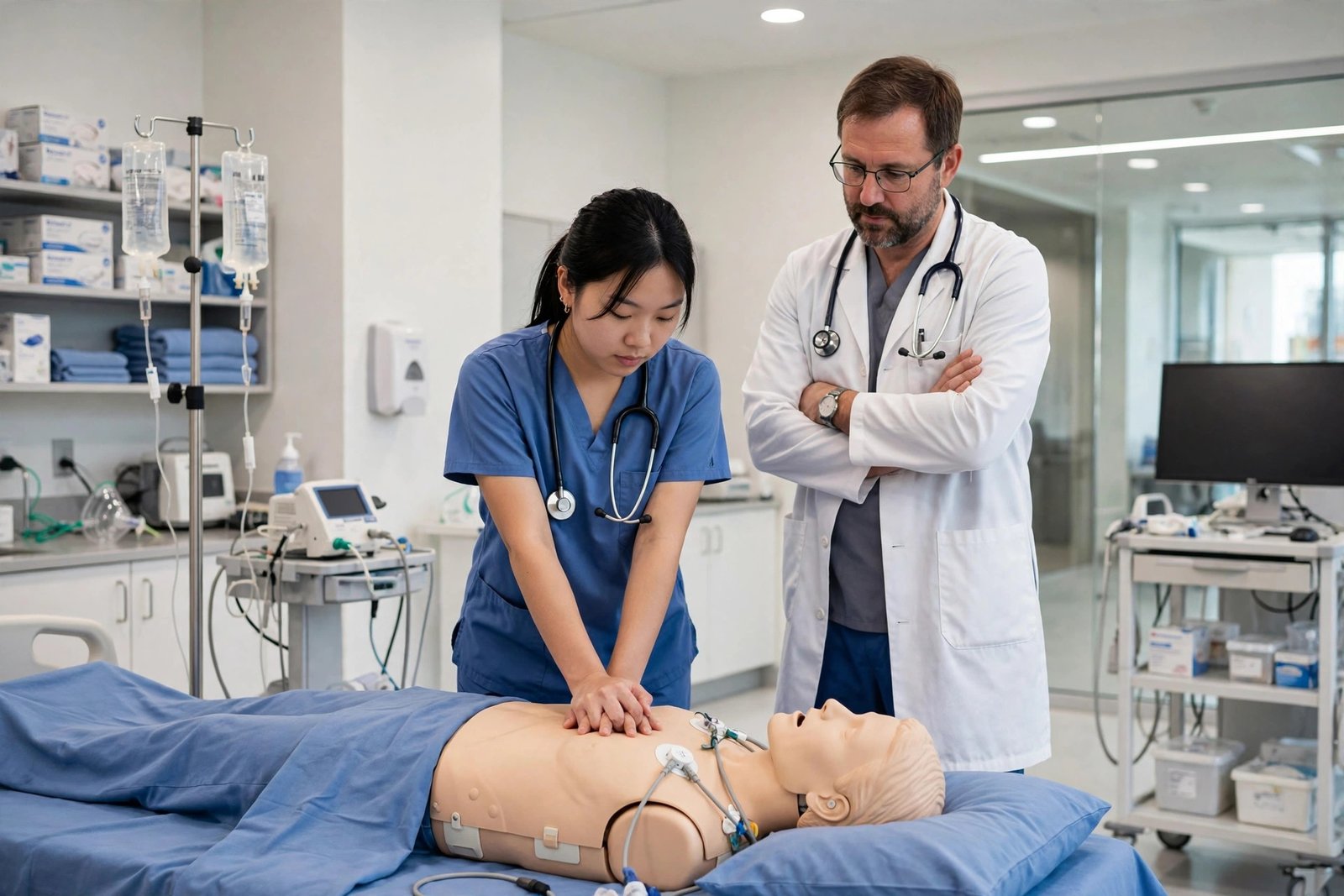
China: read the CSC–MBBS warning carefully
China hosts one of the world’s largest English-medium MBBS cohorts, and the Chinese Government Scholarship genuinely lists medicine among its fields at designated universities, with full-scholarship coverage of tuition, dormitory or accommodation subsidy, comprehensive medical insurance (CNY 800 per year) and a stipend of CNY 2,500 per month for undergraduates. However — and this is the most repeated scam in this entire field — in practice many universities do not award CSC scholarships for the MBBS programme, placements are limited and programme-specific, and agents routinely advertise “CSC MBBS scholarships” that do not exist. The safe rule, repeated by universities themselves: a scholarship is real only if the university states the scholarship type, in clear words, on your official admission letter with its stamp. Our guide to MBBS scholarships in China and the general MBBS scholarships guide walk through how to verify an offer before paying anyone anything.
Postgraduate medicine and health: where the money actually is
If you already hold a degree — in medicine, nursing, pharmacy, biomedical science or a related field — the funding landscape transforms. DAAD EPOS funds master’s and doctoral study on listed development-related courses, including public health and health-sector management, at €992 per month for master’s students (€1,300 for doctoral candidates, rising to €1,400 from February 2026), for professionals with at least two years of experience. Commonwealth Master’s Scholarships fund health-related taught master’s under the “Strengthening health systems and capacity” theme at £1,712 per month (£2,000 in London). France’s Eiffel programme includes Biology and Health among its fields at €1,200 per month (master’s) and €2,100 per month (doctoral) from January 2026 — but Eiffel does not cover tuition, and institutions must nominate you. Fulbright funds US graduate study in public health and non-clinical medical research (clinical training with patient contact is excluded). Australia combines Australia Awards (postgraduate public health is a classic priority sector) with RTP research scholarships for medical PhDs. For many readers, the smartest “medicine scholarship” is therefore sequential: a funded health-related master’s or PhD now, clinical specialisation funded later by an employer or home government.
What Medicine Scholarships Cover — and What They Leave
| Cost item | Typically covered? | Notes |
|---|---|---|
| Tuition | Yes, by the big government schemes | Stipendium Hungaricum (tuition-free), Türkiye Burslari (full), MEXT (covered). Eiffel is the famous exception — tuition is NOT covered. |
| Living stipend | Yes, but often a contribution | HUF 43,700/month in Hungary is explicitly a contribution; budget a top-up, especially in capital cities. |
| Accommodation | Usually | Dormitory place or a fixed contribution (HUF 40,000/month in Hungary; CSC dormitory or subsidy). |
| Health insurance | Usually | Included by Hungary, Türkiye, CSC and Australia Awards (OSHC). |
| Flights | Often | Türkiye and MEXT include tickets; Hungary’s scheme does not include travel — a common budgeting surprise. |
| Entrance exams, language years | Sometimes | Türkiye funds the Turkish year; Hungary entrance exams are part of admission, not a paid extra — but preparation is your cost. |
| Clinical kit, licensing exams, electives | Rarely | Budget separately for equipment, placement travel and any post-graduation licensing examinations. |
| Family costs | Almost never | Assume the award funds you alone. |
How to Apply: A Medicine-Specific Timeline
- Choose the category first. First clinical degree, graduate-entry, or postgraduate health study? The scholarships, deadlines and exams differ completely.
- Verify recognition before scholarships. Confirm the target programme appears in the World Directory of Medical Schools and is recognised by the medical council where you plan to practise.
- Check age and grade gates. 90% for Türkiye health sciences; under-21 (Türkiye undergraduate), under-25 (CSC undergraduate) and similar caps elsewhere.
- Register for entrance tests early. UCAT booking for UK medicine runs in the summer before the 15 October UCAS deadline; Hungarian medical entrance exams run March–May; MEXT embassy exams follow your embassy’s calendar.
- Apply through the official channel only. Sending Partner nomination (Hungary), TBBS portal (Türkiye), embassy (MEXT), university + CSC system (China). If an “agent” asks for a fee to submit a government scholarship application, walk away.
- Prepare the medical documents pack. Health certificate, immunisation record, police clearance where required, and certified translations — these take longer than essays.
- Keep a parallel plan. Apply to at least one postgraduate or alternative-country route alongside the clinical dream; medicine funding is too competitive for a single-thread strategy. Our study tools can help you track parallel deadlines.
Required Documents
| Document | Medicine-specific notes |
|---|---|
| School certificates and transcripts | Must show biology and chemistry (and usually physics/mathematics) with top grades; certified translations are standard. |
| Passport | Long validity — medical degrees run five to six years; renew before applying if in doubt. |
| Medical certificate / health examination form | Required by Stipendium Hungaricum and by CSC (Foreigner Physical Examination Form); use the scheme’s own template. |
| Entrance test results | UCAT (UK), university entrance exams (Hungary), or embassy exam results (MEXT) as applicable. |
| Motivation letter | Must address why medicine, why this country and system, and your language plan for clinical years. |
| Recommendation letters | Science teachers or clinical/health supervisors who can speak to aptitude and character; fitness to practise makes character evidence matter. |
| Language certificates | English proof for English-medium programmes; local-language evidence or enrolment plan for clinical phases. |
| Proof of nomination / Sending Partner forms | Country-specific for Hungary and bilateral schemes — missing partner paperwork voids otherwise strong applications. |
Deadlines and Timeline
| When | Milestone |
|---|---|
| November–mid-January | Stipendium Hungaricum application window (2026/27 round closed 15 January 2026); expect the same shape for 2027/28 |
| 10 January–20 February | Türkiye Burslari application window (2026 cycle dates) |
| March–May | Hungarian medical university entrance examinations/interviews; MEXT embassy screening in many countries |
| Summer (July–September) | UCAT testing window for UK medicine; results and results-day decisions for Hungary and Türkiye (Türkiye results typically around August) |
| 15 October | UCAS deadline for UK medicine — almost a year before entry |
| December–April | Many CSC Type B university deadlines in China; confirm per university and never rely on an agent’s date |
Selection Tips for Medical Scholarship Applicants
Panels and medical schools select together, so think like both. Academically, science grades and entrance-test performance do most of the work — there is no essay brilliant enough to offset weak chemistry for a clinical place. Beyond scores, selectors look for evidence that you understand what clinical work involves: volunteering or shadowing in a health setting, first-aid or caregiving experience, and reflection on it (what you saw, what surprised you, what it taught you about teamwork and limits). For the funded postgraduate health routes, the winning pattern is different: a concrete health-system problem from your own work, a named programme whose curriculum addresses it, and a post-degree plan with an employer or ministry context.
Language honesty scores points. Writing “I will learn Turkish/Hungarian/Mandarin to clinical standard, and here is my staged plan” beats pretending the issue does not exist. Finally, apply to the scheme whose story matches yours: Sending-Partner schemes reward national-development alignment; university scholarships reward academic rank; research schemes reward a supervisor-backed question. One application cannot be all three.
Common Mistakes
- Believing “fully funded MBBS” agent adverts. Especially around China, demand the scholarship type printed on the official, stamped admission letter before paying anything.
- Applying for Chevening or Fulbright to fund an MBBS. Chevening funds one-year master’s degrees only; Fulbright excludes clinical medicine. Both are excellent — for postgraduate health study.
- Missing the October UCAS deadline or booking UCAT too late for UK medicine.
- Ignoring recognition. Not checking the World Directory of Medical Schools and your home council’s rules before enrolling can make a funded degree unusable at home.
- Underestimating the stipend gap. Hungary’s own guidance says the stipend is a contribution, not full living costs; capital-city students need a top-up plan.
- Forgetting the language of the wards. Clinical years happen in the local language in Hungary, Türkiye, China and Japan.
- Applying after the age cap. Medicine schemes enforce age limits strictly because degrees are long.
- Treating a partial UK waiver as full funding. A 15–25% tuition discount on a £45,000 fee still leaves a very large bill; model the whole five or six years, not year one.
Related reading: nurses and allied-health applicants should see our guide to nursing scholarships for international students, and those aiming at population health rather than clinical practice should read public health scholarships for international students. You can also compare medical schools through our university rankings coverage.
Frequently Asked Questions
Can I really study medicine abroad for free?
For a small number of students, close to it: Stipendium Hungaricum (Hungary) and Türkiye Burslari fund tuition plus a living contribution for undergraduate medicine, and MEXT funds a handful of medical places in Japan. But stipends are often contributions rather than full living costs, travel may not be included, and competition is intense. “Free” should always be read as “government-funded, with conditions”.
Does the Fulbright Program fund medical degrees?
No. Fulbright’s Foreign Student Program supports graduate study and research in many fields, but clinical medicine — training involving direct patient care — is excluded. It can fund public health, health policy and non-clinical medical research at master’s or PhD level, with rules set by each country’s commission.
Can Chevening pay for my MBBS in the UK?
No. Chevening funds one-year taught master’s degrees only. It is a realistic route for doctors and health graduates seeking an MSc or MPH in the UK, not for a first medical degree.
Is the Chinese CSC scholarship available for MBBS students?
Sometimes, at specific universities, but far less often than agents claim. CSC’s official framework lists medicine among its fields, yet many universities do not place MBBS students under CSC. Only trust a scholarship that the university confirms in writing on your official admission documents, and verify the university’s own international-students page directly.
What grades do I need for a medicine scholarship?
Expect the top band of your school system. Türkiye Burslari requires at least 90% for health sciences; UK medical schools require top grades including chemistry and biology plus UCAT; Hungarian medical universities test sciences at entrance. Postgraduate health scholarships typically require a strong first degree (often 2:1 equivalent or better).
Do I need to learn the local language to study medicine abroad?
For clinical training, effectively yes in most non-English-speaking countries — patients speak the local language. Türkiye funds a preparatory Turkish year; in Hungary and China, English-medium lectures still lead to local-language clinical contact, and universities expect progressive language attainment.
Will my foreign medical degree be recognised at home?
Only if the school and programme meet your home regulator’s rules. Check the World Directory of Medical Schools and your national medical council before accepting any place, and expect a licensing examination on return in many countries. Scholarship status does not change recognition rules.
When should I start applying for medicine scholarships?
At least a year before entry — earlier for the UK, where the UCAS deadline is 15 October for the following autumn. Hungarian and Turkish government rounds open in November and January respectively, and entrance-exam preparation should begin months before that.
Sources and Verification
Facts in this article were checked at the time of writing against official sources, including: Semmelweis University’s Stipendium Hungaricum page and the programme provisions published by Hungarian universities (HUF 43,700 monthly stipend, HUF 40,000 housing contribution, HUF 65,000 supplementary insurance, one-tier General Medicine, March–May entrance procedures); the official Türkiye Scholarships application guidance (placement model, documents, language course), with the 90% health-sciences threshold, age limits and 10 January–20 February window as published for the 2026 cycle; the Japanese diplomatic service’s MEXT scholarship pages and Kagoshima University’s MEXT stipend schedule (¥117,000 undergraduate rate); the Chinese Government Scholarship guide via the Beijing municipal government portal (CNY 2,500 undergraduate stipend, medicine listed among fields); UCAS course information for Medicine (MBBS); and a Fulbright commission’s published field exclusions via the Philippine-American Educational Foundation. DAAD EPOS, Commonwealth, Eiffel and RTP figures follow the verified rates set out in this StudyGraduate series (DAAD EPOS €992; Commonwealth £1,712/£2,000; Eiffel €1,200/€2,100 with no tuition coverage; RTP AUD 34,315 in 2026 and AUD 35,550 in 2027).
Disclaimer: StudyGraduate is an information portal, not a scholarship agency, university, medical school or immigration adviser. Scholarship amounts, deadlines and eligibility rules change every cycle — always confirm details on the official programme and university websites before applying, and never pay anyone who promises selection, admission or a visa. We cannot and do not guarantee any applicant a scholarship, a university place, professional recognition or a visa outcome.
✅ Eligibility Criteria
- Check the official website for full eligibility criteria for your country
🎁 Benefits
- See the official website for the complete list of benefits
⚙️ Application Process
- 1Check your eligibility on the official site
- 2Prepare your documents and statements
- 3Submit the online application before the deadline
- 4Complete interviews or assessments if shortlisted
- 5Await the final selection announcement
📅 Important Dates
Deadlines vary by country and intake. Check the official website for country-specific dates.
📄 Required Documents
- Valid passport
- Academic transcripts & certificates
- Statement of purpose
- Letters of recommendation
- CV / resume
Commonly required — confirm the exact list on the official site.
❓ Frequently Asked Questions

Ready to Take the Next Step?
Explore more scholarships and study opportunities around the world.
Browse Scholarships →