Agriculture Scholarships for International Students 2026–2027
Agriculture Scholarships for International Students 2026–2027 Agriculture is one of the best-funded fields in international education — and for a simple reason: governments and development agencies actively need agricultural scientists, agronomists, food-security specialists, agricultural economists and rural-development professionals. Food security, climate adaptation, water scarcity and sustainable farming sit near the top of almost every development ... <a title="Agriculture Scholarships for International Students 2026–2027" class="read-more" href="https://studygraduate.com/scholarship/agriculture-scholarships-for-international-students-2026-2027/" aria-label="Read more about Agriculture Scholarships for International Students 2026–2027">Read more</a>
📖 Overview
Agriculture Scholarships for International Students 2026–2027
Agriculture is one of the best-funded fields in international education — and for a simple reason: governments and development agencies actively need agricultural scientists, agronomists, food-security specialists, agricultural economists and rural-development professionals. Food security, climate adaptation, water scarcity and sustainable farming sit near the top of almost every development agenda, which means scholarship money follows them. If you come from Bangladesh, India, Pakistan, Nepal, Nigeria, Kenya, Ghana, Indonesia or another country where agriculture employs a large share of the population, you are exactly the applicant many of these programmes were designed for.
This guide covers the agriculture scholarship routes that are genuinely open to international students for the 2026–2027 cycles: development-focused master’s and PhD funding in Germany through DAAD EPOS, Australia Awards and the agriculture-specific John Allwright Fellowship in Australia, Erasmus Mundus joint masters in agricultural and food sciences in Europe, Wageningen University’s invitation-based scholarships in the Netherlands, research funding through the Australian RTP, and the large central government schemes in China and Türkiye. Every amount below was checked against official or programme sources at the time of writing, and anything that could not be verified as a fixed figure is described as the programme itself describes it — no invented stipends.
One pattern runs through almost all agriculture funding: experience and development impact matter as much as grades. DAAD EPOS requires at least two years of professional experience. The John Allwright Fellowship is only open to researchers already involved in ACIAR projects. Australia Awards expects you to show how your study will contribute to your country’s development. Fresh graduates are not excluded from agriculture funding altogether — Erasmus Mundus, CSC, Türkiye and many university awards take them — but planning a year or two of relevant work with a ministry, NGO, research institute or agribusiness genuinely widens the funded options available to you.
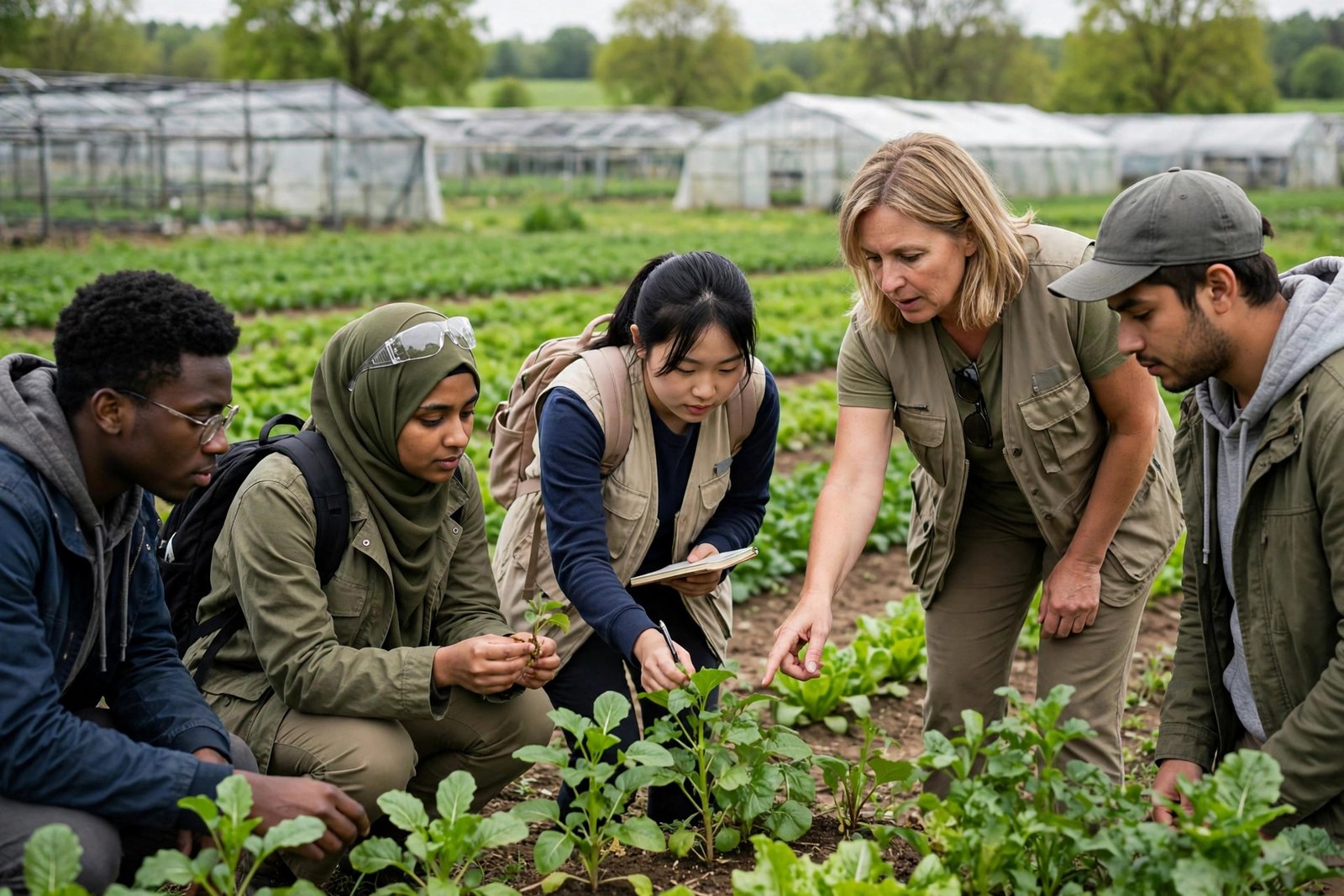
Agriculture Scholarships at a Glance
| Scholarship | Country | Level | What it pays (verified) | Who it suits best |
|---|---|---|---|---|
| DAAD EPOS (Development-Related Postgraduate Courses) | Germany | Master’s and PhD | €992 per month for graduates; €1,300 per month for doctoral candidates, rising to €1,400 from February 2026; insurance, travel allowance, possible rent and family support; 12–42 months | Professionals from eligible developing/emerging countries with 2+ years of experience |
| Australia Awards Scholarships | Australia | Undergraduate and postgraduate (country-dependent) | Full tuition, return air travel, establishment allowance, fortnightly Contribution to Living Expenses, Overseas Student Health Cover, introductory programme | Citizens of participating partner countries; agriculture and food security is a named priority area in many country programmes |
| John Allwright Fellowship (ACIAR) | Australia | Master by Research and PhD | Same core benefits as Australia Awards, administered through that system, plus ACIAR pastoral care and development support | Scientists/economists from partner countries currently or recently involved in an ACIAR research project |
| Erasmus Mundus Joint Masters | Multiple European countries | Master’s only | €1,400 per month for up to 24 months (maximum €33,600); participation costs including tuition covered by the consortium grant | Graduates targeting agricultural, food and environmental policy, animal breeding, plant sciences, aquaculture and related joint programmes |
| Wageningen University scholarships (Netherlands) | Netherlands | Master’s | Africa Scholarship Programme and Anne van den Ban Fund: travel, living allowance, tuition, visa and insurance for the 24-month programme (invitation only). NL Scholarship: €5,000, with up to €15,000 where a committee awards multiple amounts — participation varies by year | Outstanding MSc applicants; African citizens for the Africa Scholarship Programme |
| Australian Government RTP | Australia | Master by Research and PhD | Tuition fee offset plus stipend at or above AUD 34,315 per year (2026) / AUD 35,550 (2027) | Research students in agricultural science, soil, water, climate and food systems |
| Chinese Government Scholarship (CSC) | China | Bachelor’s, master’s, PhD | Tuition, dormitory or accommodation subsidy, medical insurance, CNY 2,500 / 3,000 / 3,500 per month by level | Students targeting agricultural universities in China; agriculture is a named CSC major area |
| Türkiye Scholarships | Türkiye | Bachelor’s, master’s, PhD | Tuition, placement, accommodation, health insurance, Turkish course, TRY 6,500 / 9,500 / 13,000 per month by level | Applicants within the age limits (under 21 / 30 / 35 by level) with at least 70–75% averages |
For a Netherlands-focused shortlist, read our companion guide to agriculture scholarships in the Netherlands for international students 2026–2027, and browse the wider StudyGraduate scholarships directory for country routes this field guide does not cover.
Who Is Eligible for Agriculture Scholarships?
- Citizenship of an eligible country. EPOS is restricted to graduates from the countries on DAAD’s official eligible-country (DAC-based) list. Australia Awards is limited to citizens of participating partner countries, with country-specific priority sectors. The John Allwright Fellowship requires citizenship of an ACIAR partner country and a current or recent role in an ACIAR project.
- A relevant bachelor’s degree with above-average results. EPOS expects results in roughly the upper third of your class and a degree normally no more than six years old. Agriculture, agronomy, agricultural economics, animal science, plant science, soil science, forestry, fisheries, food science, environmental science and related degrees all feed into agriculture programmes.
- Professional experience where the scheme demands it. EPOS: at least two years after your bachelor’s degree. Australia Awards country programmes often prefer work experience in a priority sector. Erasmus Mundus, CSC and Türkiye do not generally require experience, which makes them the main fully funded options for recent graduates.
- A development rationale. Most agriculture funders ask, in essays or interviews, how your study addresses a real problem at home — drought-resilient crops, post-harvest losses, livestock disease, irrigation, agricultural extension, food processing. Vague answers lose to specific ones.
- English (or host-language) proficiency at the programme’s level. The scholarship rarely sets its own test score; the university does. Plan testing early using our test preparation resources.
- Willingness to return home where the scheme requires it. Australia Awards scholars must leave Australia for at least two years after completing their award. EPOS is built around applying your training in your home country. If your plan is permanent migration, these are the wrong schemes — and saying so in an application ends it.
What Agriculture Scholarships Cover
The strongest agriculture packages — Australia Awards, EPOS, Erasmus Mundus, CSC and Türkiye — cover the full cost structure of a degree: tuition, a living stipend, travel, insurance and settling-in support, though each assembles the package differently. Australia Awards pays a fortnightly Contribution to Living Expenses at a rate set by the Australian Department of Foreign Affairs and Trade rather than a single published monthly figure, plus full tuition, return air travel, a one-off establishment allowance and Overseas Student Health Cover, as set out in the Australia Awards Scholarships Policy Handbook. EPOS pays a fixed monthly rate (€992 master’s; €1,300 doctoral, rising to €1,400 from February 2026) for 12–42 months with insurance and travel, and possible rent and family allowances. CSC pays tuition, provides a dormitory or accommodation subsidy and medical insurance, and pays CNY 2,500–3,500 per month depending on level — but not your international flight. Fieldwork is a genuine agriculture-specific cost to check: Australia Awards and the John Allwright Fellowship can support fieldwork travel for research students where the programme rules allow, while other schemes expect fieldwork to fit inside your stipend and thesis allowances.
Two cautions. First, do not budget around the Orange Knowledge Programme (OKP): the Dutch programme that funded many mid-career agriculture professionals has ended and is not an open route for 2026–2027 — Wageningen’s current invitation-based scholarships, described below, are the live Dutch alternative. Second, Destination Australia is closed (funding ceased 1 July 2024); regional Australian agriculture study is now funded through RTP, Australia Awards and university awards, not that scheme.
The Main Agriculture Scholarship Routes, Programme by Programme
1. DAAD EPOS — the workhorse for experienced agriculture professionals
EPOS funds development-related postgraduate courses at German universities for professionals from developing and newly industrialised countries. Agriculture, forestry and natural resource management form one of its established course clusters: recent official course lists have included programmes in agricultural economics, tropical forestry, agricultural and food economics and rural development at universities such as Bonn, Hohenheim, Göttingen and TU Dresden — but the list is republished for every cycle, so always work from the current EPOS course list on the official DAAD EPOS programme entry rather than from any third-party round-up, including this one. You apply directly to the course (up to three courses), not to DAAD centrally, and each course sets its own deadline, many falling between August and October for a start the following year. The funding runs 12–42 months depending on the programme. Our full walkthrough is in the DAAD EPOS Scholarship 2027 guide. If you will need visa funds beyond the scholarship at any point, note Germany’s blocked account figure of €11,904 for 2026.
2. Australia Awards and the John Allwright Fellowship — agriculture as a development priority
Australia Awards is the Australian Government’s flagship scholarship for partner countries, and agriculture and food security appears explicitly among the priority areas in many country programmes — for African applicants in the most recent round it headed the published priority list alongside climate change. The package (full tuition, return airfare, establishment allowance, fortnightly living contribution, health cover, introductory academic programme and possible pre-course English and fieldwork support) is described in the policy handbook linked above. Applications open and close by country — commonly in the first months of the year — so your country page on the Australia Awards site, not a global deadline, governs your application. Start at our Australia Awards overview and then confirm your country window officially.
The John Allwright Fellowship (JAF) is the agriculture specialist inside that system. Run by the Australian Centre for International Agricultural Research (ACIAR) and administered through Australia Awards, it funds scientists and economists from partner countries who are currently or recently involved in ACIAR research projects to complete a Master by Research or PhD at an Australian university, with additional pastoral care and professional development from the JAF support facility. The last published round ran from 1 February to 30 April 2026 for commencement in 2027; expect a similar early-year window and confirm it on the ACIAR site. Employer, project-leader and supervisor endorsements are part of a competitive JAF file, so conversations with your ACIAR project leader should start well before the window opens. Agricultural research strengths at universities such as the University of Melbourne make Australia a natural destination for this route; compare more hosts in the university directory.
3. Erasmus Mundus — agricultural joint masters across Europe
For master’s applicants without two years of experience, Erasmus Mundus is often the strongest fully funded European option. The official catalogue has included agriculture-relevant joint programmes such as Agricultural, Food and Environmental Policy Analysis (AFEPA), the European Master in Animal Breeding and Genetics (EMABG), Aquaculture, Environment and Society (ACES+), soil science (emiSS), and plant-health and sustainable agriculture programmes — the catalogue is refreshed by selection year, so search the current edition by field before relying on any programme name. Scholarship holders receive €1,400 per month for up to 24 months (maximum €33,600) towards travel, visa, installation and living costs, with tuition/participation costs covered through the consortium. Applications go to each consortium, mostly between October and January, and require a bachelor’s degree in a relevant subject. Read the step-by-step companion: Erasmus Mundus Joint Masters Scholarship 2027.
4. Wageningen, the RTP, China and Türkiye
Netherlands. Wageningen University & Research is a world-leading agriculture university, and its scholarships for international MSc students are invitation-based: you first apply for the MSc, and eligible admitted candidates are invited to compete. The Africa Scholarship Programme (for African citizens, typically expecting first-class/80%+ records) and the Anne van den Ban Fund (for students from developing countries) cover travel, a living allowance, tuition, visa and insurance across the 24-month MSc. The NL Scholarship is a €5,000 award (committees may award multiples up to €15,000 at some institutions), but participation varies by university and year — Wageningen itself did not participate in 2025–2026, according to its NL Scholarship page — so check the current year before counting on it. MSc application deadlines for scholarship consideration at Wageningen have centred on 1 February; confirm the live date on the university’s scholarship pages.
Australia (research). Outside the Awards system, agricultural PhD and Master by Research candidates compete for RTP scholarships through each university: a fee offset plus a stipend at or above AUD 34,315 (2026) / AUD 35,550 (2027), per the Australian Government RTP page. A supervisor’s support and a proposal aligned with the university’s agricultural research strengths decide most RTP outcomes.
China. CSC lists agriculture among the majors at designated universities, which include major agricultural universities; the package is tuition, dormitory or accommodation subsidy, medical insurance and CNY 2,500 / 3,000 / 3,500 per month by level, as published in the official guide reproduced by designated universities such as China University of Geosciences’ CSC page. Apply through Type A (embassy) or Type B (university) channels in the December–April season, noting CSC does not pay international airfare.
Türkiye. Türkiye Scholarships covers agriculture degrees at all levels through central placement, with tuition, accommodation, health insurance, a one-year Turkish course and TRY 6,500 / 9,500 / 13,000 per month by level on the official full-time programmes page; applications have typically run mid-January to around 20 February, with minimum averages of 70% (bachelor’s) and 75% (graduate) and age limits of under 21/30/35 by level.
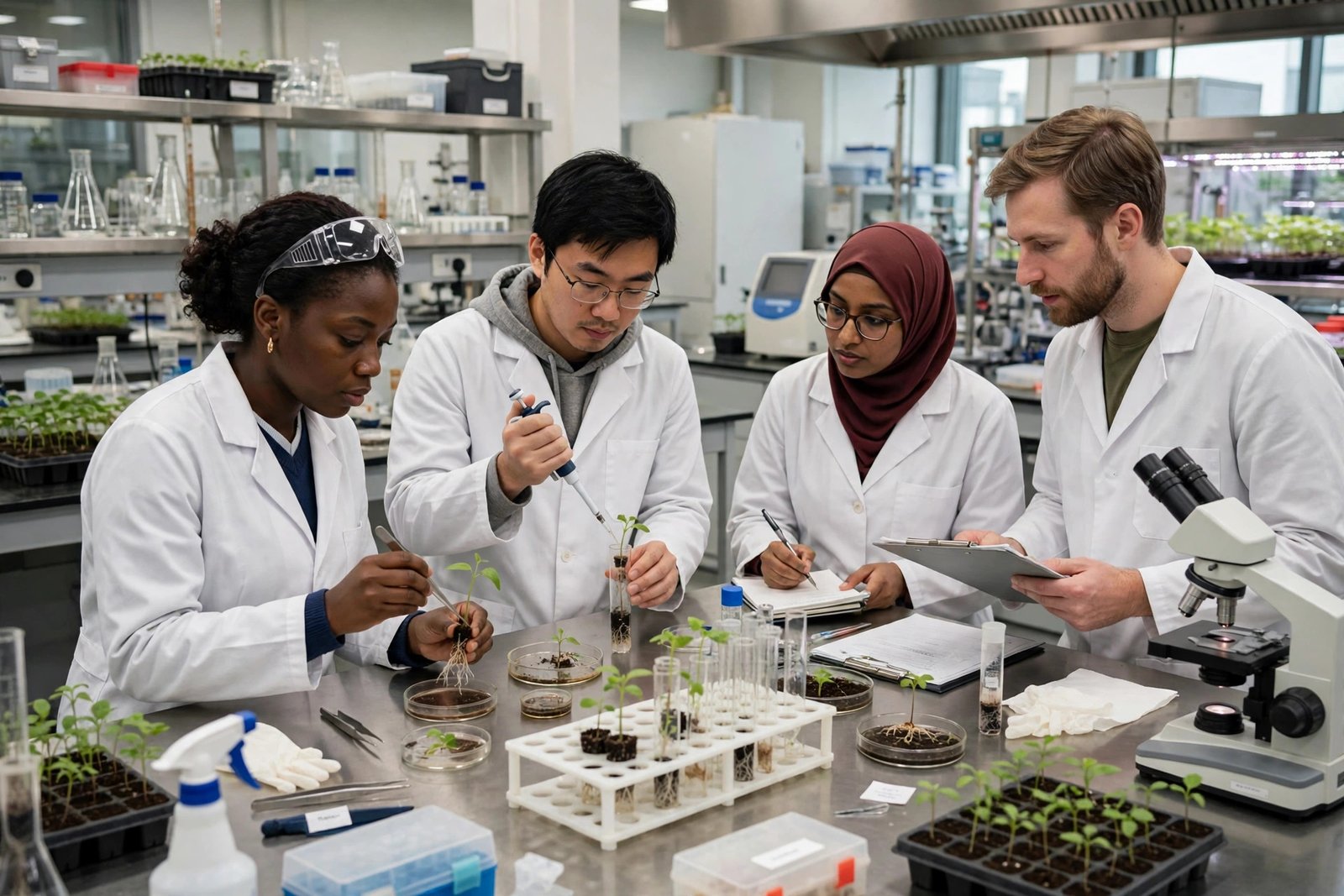
Agriculture Fields and Specialisations You Can Fund
Fundable agriculture study is much broader than a general “Agriculture” degree. Programmes regularly supported by the schemes above include: agronomy and crop science; plant breeding and plant protection; soil science and land management; animal science, livestock production and animal breeding; agricultural economics, agribusiness and bioeconomy; food science, food technology and food security; agricultural engineering and mechanisation; irrigation and water resources management; forestry, agroforestry and natural resource management; fisheries and aquaculture; horticulture; agricultural extension and rural development; and climate-smart and sustainable agriculture. When you write your application, name the specialisation and the problem together — “irrigation management for drought-prone smallholder systems” is a fundable story; “agriculture” on its own is not.
How to Apply for Agriculture Scholarships: Step by Step
- Map yourself against the experience divide (12 months out). With 2+ years of relevant work, prioritise EPOS, Australia Awards and (if ACIAR-linked) the John Allwright Fellowship. Without it, prioritise Erasmus Mundus, CSC, Türkiye and university awards, and start building experience now.
- Choose problems before programmes. Write down the two or three agricultural problems your study will address and the evidence (work, research, final-year project) behind each. Every strong agriculture application reuses this core.
- Shortlist from official lists only. For EPOS use the current DAAD course list; for Erasmus Mundus the current catalogue; for Australia Awards your country page; for Wageningen the university’s own scholarship pages. Deadlines and even programme existence change yearly.
- Secure the human endorsements early. JAF applicants need employer, project-leader and supervisor support; RTP applicants need a supervisor; EPOS applicants need strong professional references. Ask months ahead, with your draft proposal attached.
- Prepare documents and language proof. Transcripts, degree certificates, CV in the required format, references, language scores at the programme’s required level — see the documents list below.
- Submit through the correct channel. EPOS: to the course. Erasmus Mundus: to the consortium. Australia Awards/JAF: through OASIS. CSC: embassy (Type A) or university (Type B). Türkiye: the central TBBS system. DAAD, Erasmus and Awards applications are free — anyone charging you to “submit” them is not an official channel.
- Prepare for interview and development questions. Australia Awards and several other schemes interview. Expect: why this programme, why now, what changes at home because of it, and what you will do in your first two years back.
- Plan the visa finances for any gap. If part of your package is partial (for example an NL Scholarship of €5,000), prepare the remaining proof of funds early — Canada’s study-permit living funds, a common comparison point, are CAD 22,895 for applications 1 September 2025–31 August 2026 and CAD 23,448 from 1 September 2026.
Required Documents
- Passport, degree certificates and full academic transcripts, with certified translations where required.
- CV showing agricultural work experience in detail — EPOS and JAF applications live or die on this section.
- Motivation letter / development impact statement tailored to the scheme’s actual questions.
- Research proposal for research degrees (RTP, JAF, PhD routes) and evidence of supervisor contact.
- Employer endorsement and referee reports (mandatory for JAF; valuable for EPOS and Australia Awards).
- Language certificates meeting the host programme’s requirement.
- Work-experience proof (employment letters stating role, dates and duties) for EPOS and similar schemes.
- Medical/health forms and police or character documents where the scheme’s checklist requires them — Australia Awards country programmes commonly do at later stages.
Deadlines and Timeline
| Scholarship | Last verified window / deadline | Planning note |
|---|---|---|
| DAAD EPOS | Course-specific; many courses closed August–October 2026 for 2027/28 entry | Download the current official EPOS course list first — there is no single EPOS deadline |
| Australia Awards | Country-specific; commonly opens 1 February and closes around 30 April | Your country page sets the real dates and priority sectors |
| John Allwright Fellowship | 1 February – 30 April 2026 for 2027 commencement (last published round) | Line up endorsements in the preceding November–January |
| Erasmus Mundus Joint Masters | Consortium-specific, mostly October 2026 – January 2027 | Apply to each consortium separately; some allow multiple applications |
| Wageningen MSc scholarships | MSc application around 1 February for invitation-based scholarship consideration (last published cycle) | Invitation only — admission application quality decides eligibility |
| Australian RTP | University-specific rounds throughout the year | Apply with your research degree application at each university |
| Türkiye Scholarships | Typically mid-January to around 20 February | Short window; prepare documents in December |
| CSC (China) | Type A/B windows commonly December–April, varying by embassy and university | Confirm both channels’ dates; they are not identical |
Use the StudyGraduate tools, including the deadline tracker, to hold these overlapping windows in one place, and check your shortlist against the rankings pages if research strength matters for your PhD plans.
How to Improve Your Chances
Agriculture funders buy outcomes, not just transcripts. The applications that win usually do four things well. They specificise the problem — a crop, a region, a production system, a measurable loss — instead of praising agriculture in general. They show a track record in that problem, even a modest one: extension work, a research-assistant role, an NGO field project, a final-year thesis with field data. They match the programme’s actual content, naming modules, research groups or facilities and explaining the fit, which is easy to verify and therefore persuasive. And they close the loop home: a realistic first role after graduation, an institution that would employ the skill, and a two-year plan a selection panel can believe. For EPOS, document your two years of experience forensically — dates, employer, duties — because eligibility screening is strict. For JAF, your ACIAR project connection is the eligibility key; make it unmissable in the first paragraph of every document.
Common Mistakes Agriculture Applicants Make
- Applying to EPOS without the required experience or country eligibility. Two years of post-degree professional experience and a place on the official eligible-country list are hard filters, not preferences.
- Planning around ended programmes. The Orange Knowledge Programme has ended and Destination Australia is closed — neither belongs in a 2026–2027 funding plan.
- Using a global deadline for Australia Awards. Dates, priority sectors and even degree levels are set per country. The global site will not save an application filed in the wrong window.
- Treating the John Allwright Fellowship as open to all agriculture graduates. It is restricted to researchers currently or recently involved in ACIAR projects, with endorsements to prove it.
- Assuming CSC includes flights. It does not pay international airfare; budget for it yourself.
- Writing a generic “food security” essay. Panels read hundreds. Specificity about crops, systems and home institutions is what separates funded files.
Frequently Asked Questions
What is the best fully funded scholarship for agriculture students?
It depends on your profile. Experienced professionals from eligible countries are usually best served by DAAD EPOS (€992 per month for master’s, in Germany) or Australia Awards (full tuition, airfare and living contribution). Recent master’s graduates often fit Erasmus Mundus (€1,400 per month) best, and ACIAR-linked researchers have a dedicated route in the John Allwright Fellowship.
Can I study agriculture abroad on a scholarship without work experience?
Yes. Erasmus Mundus Joint Masters, CSC, Türkiye Scholarships and most university awards do not require professional experience. EPOS (minimum two years), Australia Awards (experience preferred in many country programmes) and the John Allwright Fellowship (ACIAR project involvement required) are the experience-based routes.
Is Wageningen University’s agriculture scholarship fully funded?
Its invitation-based Africa Scholarship Programme and Anne van den Ban Fund cover travel, living allowance, tuition, visa and insurance for the 24-month MSc, according to the university’s programme summaries. They are highly competitive and invitation-only: you must first apply for the MSc by the university’s scholarship deadline. The separate NL Scholarship is only €5,000 (sometimes awarded in multiples) and is not full funding.
Does DAAD EPOS fund agriculture PhDs as well as master’s degrees?
Yes, in exceptional cases EPOS funds doctoral study on listed courses, at €1,300 per month rising to €1,400 from February 2026, within the overall 12–42 month funding range. Most EPOS awards are master’s degrees, and the current official course list shows which doctoral programmes are included for your cycle.
Can agriculture students still apply for the Orange Knowledge Programme?
No. The Orange Knowledge Programme has ended and should not be presented as an open scholarship for 2026–2027. Dutch alternatives are Wageningen’s invitation-based scholarships, the NL Scholarship at participating institutions, and Erasmus Mundus programmes with Dutch partners.
What grades do I need for agriculture scholarships?
EPOS expects above-average results, generally in the upper third of your class. Wageningen’s excellence-based invitations have targeted first-class or around 80%+ records. Türkiye publishes minimums of 70% for bachelor’s and 75% for graduate applicants. Australia Awards and JAF weigh professional record and development fit alongside grades.
Do agriculture scholarships pay for fieldwork?
Sometimes. Australia Awards and the John Allwright Fellowship can support fieldwork travel for eligible research students under their programme rules. RTP universities may provide research/thesis allowances. Most other schemes expect fieldwork to be funded from your stipend, so cost it into your research proposal honestly.
When do agriculture scholarship applications open for 2027 entry?
The season is staggered: Türkiye and Wageningen around January–February, Australia Awards and JAF in February–April, many EPOS courses in August–October, and Erasmus Mundus consortia in October–January. Build your calendar from the official course and country lists, not from a single “scholarship deadline”.
Sources & Verification
Amounts and rules in this article were checked at the time of writing against official and programme sources, including: the official DAAD EPOS programme information and course lists (€992 per month for graduates; €1,300 per month for doctoral candidates rising to €1,400 from February 2026; 12–42 months; two years’ professional experience; eligible-country list); the Australia Awards Scholarships Policy Handbook published by the Australian Department of Foreign Affairs and Trade (full tuition, return air travel, establishment allowance, Contribution to Living Expenses, Overseas Student Health Cover, fieldwork provisions) and Australia Awards country information naming agriculture and food security among priority areas; ACIAR and Australia Awards information on the John Allwright Fellowship (eligibility through ACIAR project involvement, Master by Research/PhD, last published round 1 February–30 April 2026); the Australian Government Department of Education RTP page (base stipend AUD 34,315 for 2026 and AUD 35,550 for 2027); Erasmus Mundus consortium and university information (€1,400 per month, maximum €33,600, agriculture-relevant joint programmes in the official catalogue); Wageningen University & Research scholarship pages (Africa Scholarship Programme and Anne van den Ban Fund coverage; NL Scholarship €5,000 and its variable participation); the official Türkiye Scholarships full-time programmes page (TRY 6,500/9,500/13,000 per month); and the Chinese Government Scholarship application guide published by designated universities (CNY 2,500/3,000/3,500 per month, tuition, dormitory and insurance). The end of the Orange Knowledge Programme and the closure of Destination Australia (funding ceased 1 July 2024) are stated so readers do not plan around them. All figures and windows change between cycles — confirm the live details on the official programme page before applying.
Disclaimer: StudyGraduate is an independent information portal, not an agency, university or scholarship provider. We can never promise or guarantee selection, admission, funding or a visa outcome. Apply only through official channels, and verify every amount and deadline on the official website before you submit.
✅ Eligibility Criteria
- Check the official website for full eligibility criteria for your country
🎁 Benefits
- See the official website for the complete list of benefits
⚙️ Application Process
- 1Check your eligibility on the official site
- 2Prepare your documents and statements
- 3Submit the online application before the deadline
- 4Complete interviews or assessments if shortlisted
- 5Await the final selection announcement
📅 Important Dates
Deadlines vary by country and intake. Check the official website for country-specific dates.
📄 Required Documents
- Valid passport
- Academic transcripts & certificates
- Statement of purpose
- Letters of recommendation
- CV / resume
Commonly required — confirm the exact list on the official site.
❓ Frequently Asked Questions

Ready to Take the Next Step?
Explore more scholarships and study opportunities around the world.
Browse Scholarships →