MBBS Scholarships in China for International Students 2026
MBBS Scholarships in China for International Students 2026 An MBBS in China is one of the most searched medical routes in the world, and the reason is arithmetic. A six-year, English-taught medical degree at a Chinese university on the Ministry of Education’s approved list typically carries tuition in the region of CNY 30,000 to CNY ... <a title="MBBS Scholarships in China for International Students 2026" class="read-more" href="https://studygraduate.com/scholarship/mbbs-scholarships-in-china-for-international-students-2026/" aria-label="Read more about MBBS Scholarships in China for International Students 2026">Read more</a>
📖 Overview
MBBS Scholarships in China for International Students 2026
An MBBS in China is one of the most searched medical routes in the world, and the reason is arithmetic. A six-year, English-taught medical degree at a Chinese university on the Ministry of Education’s approved list typically carries tuition in the region of CNY 30,000 to CNY 45,000 a year at many institutions — a fraction of private medical tuition in South Asia or the West — and China layers several scholarship systems on top of that already lower base: the Chinese Government Scholarship (CSC), provincial and municipal government scholarships, and university awards. For a student from Bangladesh, Pakistan, India, Nepal, Nigeria or Indonesia who wants to become a doctor but cannot fund six years of private fees at home, a scholarship-supported MBBS in China can be the difference between studying medicine and not studying it at all.
This guide explains those scholarship routes honestly, including the parts promotional material leaves out. CSC full scholarships for undergraduate medicine exist, but they are limited in number, allocated through embassies and universities under quotas, and not every medical university offers CSC-funded MBBS places to English-medium students in every year. Provincial and university scholarships are more numerous but usually partial — a tuition reduction rather than a full package. And a scholarship, however generous, does not answer the most important question in medical education: whether your degree will be recognised for licensing in the country where you intend to practise. That question — about your home regulator’s list, screening tests and internship rules — matters more than any stipend figure, and this guide returns to it repeatedly.
Start by comparing this route with the worldwide picture in our MBBS Scholarships for International Students 2026 guide, browse other funded options in the scholarships directory, and use the study abroad hub to plan the non-financial side — visas, recognition and preparation — alongside the money. Note that StudyGraduate’s university directory covers the USA, UK, Canada, Australia and Germany, so for Chinese medical universities you should verify each institution directly on its own official site and on the official lists described below, rather than relying on any third-party ranking.
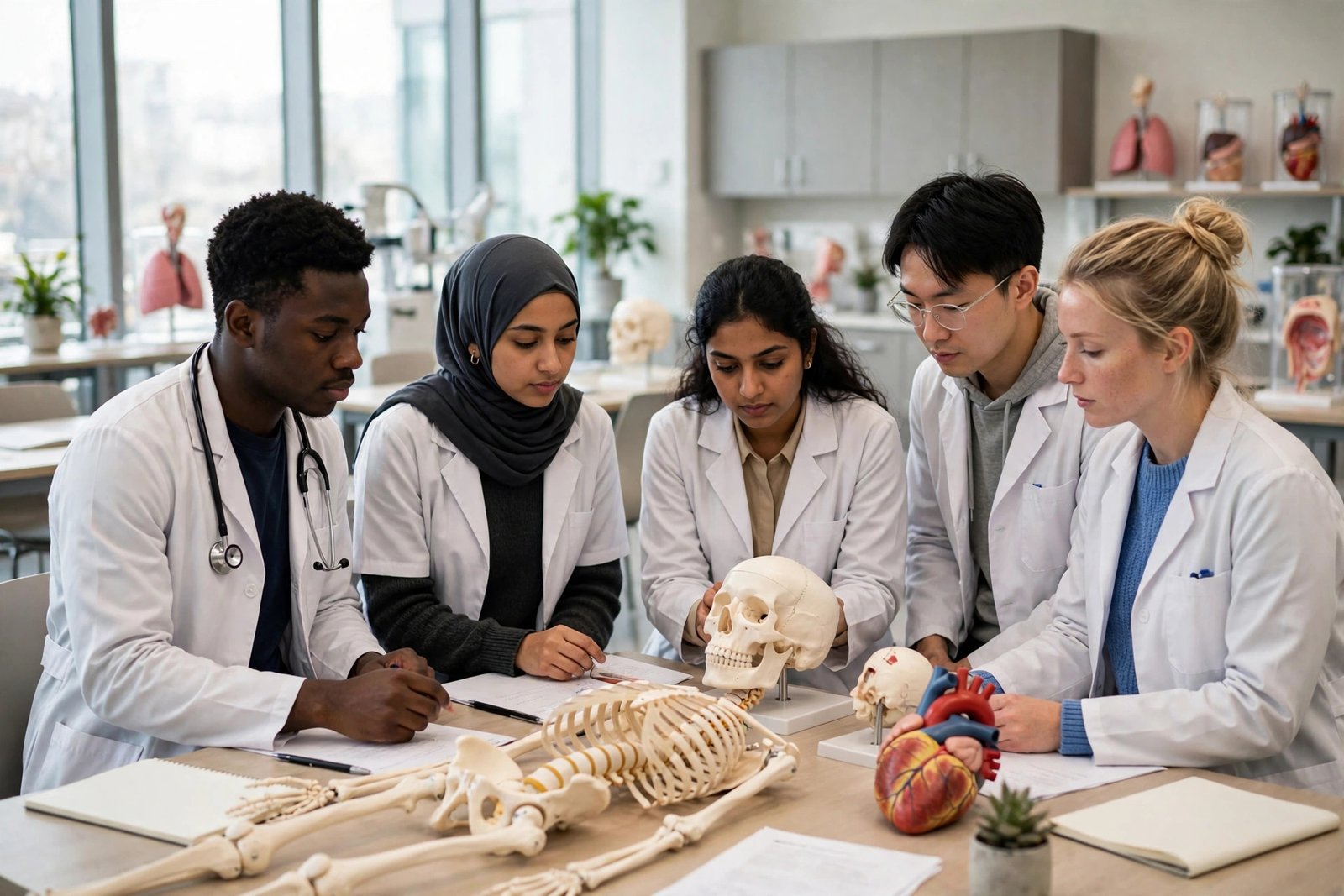
At a Glance: Scholarship Routes for MBBS in China
| Route | Funder | Typical coverage for MBBS | How you apply | Competitiveness |
|---|---|---|---|---|
| CSC Type A (Bilateral Programme) | Chinese Government via CSC | Full scholarship where offered: tuition waiver, accommodation or subsidy, monthly stipend, medical insurance | Through your home country’s dispatching authority / Chinese embassy, via Campus China | Very high; places limited by bilateral quotas |
| CSC Type B (University Programme) | Chinese Government via CSC | Full scholarship where the university nominates you | Directly to the university, plus the Campus China system with the university’s agency number | Very high; depends on the university’s quota and whether it allocates places to MBBS |
| Provincial / municipal scholarships | Provincial and city governments | Usually partial: a set amount towards tuition, or tuition plus accommodation support | Through the university, often after admission | Moderate; varies widely by province |
| University scholarships | Individual universities | Tuition reductions, entrance awards, or annual merit awards; sometimes accommodation discounts | Through the university’s international admissions office | Moderate; often grades-based |
| Belt and Road and other special schemes | Government / university partnerships | Varies by scheme and year | Through the university or the scheme’s own channel | Varies; verify the scheme is current |
The CSC full-scholarship standard, as published in CSC guidance, is: tuition waiver; free university dormitory or an accommodation subsidy (CNY 700 per month for undergraduate students living off campus); a monthly stipend of CNY 2,500 for undergraduate students; and comprehensive medical insurance. Medicine sits in CSC’s highest tuition band — the published standard for Field of Study III, which includes medicine, shows a tuition standard of CNY 27,000 per year for undergraduates — but what matters to you as a student is simpler: under a full CSC award you do not pay that tuition yourself. What CSC full scholarships do not generally include is your international airfare, so budget for your own travel. Exact availability for MBBS varies by university and year, which is why the verification steps later in this guide are not optional.
Understanding the MBBS in China Itself
China’s MBBS is a bachelor’s-level medical programme, normally six years including a final internship year, taught either in Chinese or in English at universities authorised to enrol international students in English-medium clinical medicine. The Ministry of Education publishes the list of institutions approved to offer English-taught MBBS programmes to international students, with set enrolment quotas — in recent lists, intakes at listed universities have ranged from around 60 to 120 students per university. Studying English-medium MBBS at an institution that is not on that official list is a recognised risk: degrees from non-listed institutions have faced recognition problems abroad. Your first check, before scholarships, before agents, before anything, is that your target university appears on the current MOE list for English-taught MBBS.
Language needs a clear-eyed explanation. Lectures on English-medium programmes are in English, but clinical training happens in Chinese hospitals, with Chinese patients. Universities therefore build Chinese language into the programme, and you will need working medical Chinese by your internship year to take histories and communicate on the wards. Many universities require HSK progress during the degree. Treat Chinese not as an obstacle to route around but as a clinical skill your degree depends on — students who embrace it qualify as safer, more employable doctors.
Recognition is the second non-negotiable check. A Chinese MBBS does not, by itself, license you anywhere. In India, graduates must meet the National Medical Commission’s requirements and pass the applicable screening or licensing pathway — Indian students should verify the current NMC rules, including requirements about programme duration, internship and the university’s standing, before enrolling, and note that rules for foreign medical graduates have been revised in recent years. In Pakistan, Bangladesh, Nepal and other home countries, the equivalent medical council maintains its own recognised-institution lists and licensing examinations. In the United States, the United Kingdom and elsewhere, you would follow those systems’ graduate routes (such as USMLE or the UKMLA pathway) with their own eligibility rules, including, for some routes, that your school be listed in the World Directory of Medical Schools with the relevant sponsor notes. Check your specific university against your specific regulator. A scholarship to an unrecognised programme is not a bargain; it is an expensive dead end.
Eligibility for MBBS Scholarships
CSC general eligibility. Published CSC guidance requires applicants to be citizens of a country other than China, in good physical and mental health. For undergraduate programmes, you must be a high school graduate under the age of 25 at application. For Chinese-taught undergraduate programmes, HSK Level 3 is the published minimum; English-taught programmes follow the university’s English requirements instead. Universities add their own academic thresholds for medicine — typically strong marks in biology, chemistry and physics or mathematics at higher-secondary level — and many set minimum percentage or GPA expectations for MBBS admission that are higher than for other bachelor’s degrees. Read both layers: the CSC floor and the university’s medical-school floor. You must clear both.
University and provincial awards. These usually require admission first, then reward grades — either entrance performance or, for continuing awards, your annual results in China. Some are reserved for new students from particular regions or partner countries. Because criteria are set institution by institution, the only reliable source is the university’s own international students office page for the current intake.
What selectors look for. For CSC undergraduate places, dispatching authorities and universities weigh your higher-secondary science record most heavily, then your study plan, references and, for Type A, your home authority’s nomination priorities. There is no honest shortcut here: a strong science transcript is the core of a competitive MBBS scholarship file, and a weak one is better served by targeting universities where your record is genuinely competitive for a partial award than by aiming every application at the scarcest full scholarships.
Benefits and Real Costs: Budgeting Beyond the Scholarship
| Cost item | Under full CSC scholarship | Self-funded / partial-award reality (indicative) |
|---|---|---|
| Tuition | Waived | Commonly around CNY 30,000–45,000/year at listed English-medium MBBS universities; some charge more — verify per university |
| Accommodation | Free dormitory, or CNY 700/month subsidy if living off campus with permission | Dormitory fees vary; published examples range from around CNY 4,800/year for a double room to CNY 9,600/year for a single room |
| Living stipend | CNY 2,500/month (undergraduate rate) | No stipend; students budget living costs themselves — food, transport and personal costs vary significantly by city |
| Medical insurance | Comprehensive medical insurance included (published standard CNY 800/year) | Insurance is compulsory; budget the university’s required premium |
| Airfare | Not included — pay your own travel | Pay your own travel |
| Other one-off costs | Visa, physical examination, residence permit and document legalisation are generally yours to pay | Same, plus application fees where charged |
Two budgeting truths follow. First, even a full CSC award leaves real costs — travel, visa and examination fees, initial settling-in expenses before the first stipend, and personal spending beyond the stipend — so families should hold a contingency fund rather than treating “fully funded” as “zero cost”. Second, a partial award changes the maths less than families hope if the remaining tuition still runs to tens of thousands of yuan a year for six years. Model the full six-year cost, including the internship year, for every offer you receive, and compare like with like. Our tools hub includes budgeting calculators that help with exactly this kind of multi-year comparison.

The CSC Routes in Detail: Type A and Type B
Type A — the Bilateral Programme. Type A is applied for through the dispatching authority in your home country — commonly a ministry, a higher-education commission or the Chinese embassy — which nominates candidates under a bilateral quota. In the Campus China system you select programme category Type A and enter the agency number of your dispatching authority; the number and category must match, or the authority will not receive your application. You may list preferences of institutes, and the system matches available universities to your student category and preferred teaching language. Read our full guide to the Chinese Government Scholarship (CSC) Type A 2027: Bilateral Programme Guide before starting, because home-country deadlines for Type A often fall earlier than university deadlines and are set by your authority, not by China.
Type B — the University Programme. Type B is applied for directly to a CSC-designated university, which reviews your file and nominates candidates to CSC. In the system you select Type B and enter that university’s agency number — each university has its own — and you normally also complete the university’s own international admissions application in parallel. The decisive question for MBBS applicants is whether the university is allocating any of its Type B nominations to English-medium MBBS in that year; medical places are expensive for universities to fund, and some institutions reserve nominations for postgraduate study. Ask the international office that question directly, in writing, before preparing a full Type B file. Our companion guide, Chinese Government Scholarship (CSC) Type B 2027: University Programme Guide, explains the nomination mechanics step by step. Whichever route you use, the application portal is the same: register on Campus China, the CSC’s official Study in China system.
Provincial, municipal and university awards. Below CSC sits a wide second tier. Jiangsu’s Jasmine Scholarship, various municipal awards such as those in Chongqing and other university cities, and individual university entrance and merit scholarships all support international students, including medical students, usually with partial coverage. Their value is real but variable — a fixed sum towards tuition in one province, a percentage reduction in another — and their criteria and deadlines live on university and provincial education-department pages, not on any single national portal. The efficient method is to shortlist universities first (MOE-listed, regulator-recognised, within your academic reach), then audit each university’s scholarship page for the current intake and note exactly what each award covers and whether MBBS students are eligible for it. Do not assume an award advertised for “international students” includes English-medium MBBS; some exclude clinical medicine explicitly.
How to Apply: Step by Step
- Verify recognition before anything else. Confirm your target universities are on the current MOE list for English-taught MBBS and check your home medical regulator’s current requirements for foreign medical graduates, including any list, duration, internship and licensing-exam rules.
- Shortlist three to five universities. Balance ambition and realism: check each university’s MBBS entrance thresholds against your science marks, its tuition, and which scholarships it actually offers medical students this year.
- Choose your CSC route. If your home country runs a Type A bilateral call, note its deadline — it may be months earlier than university deadlines. For Type B, confirm with each university whether MBBS nominations exist this cycle.
- Prepare documents early. Passport, notarised higher-secondary certificates and transcripts with translations where needed, language evidence, study plan, references, non-criminal-record certificate and the Foreigner Physical Examination Form — medical examination records are valid for a limited period (commonly six months in published university guidance), so time the examination carefully.
- Apply on Campus China. Register, complete personal details, choose the correct programme category and agency number, fill in language proficiency and study plan, upload supporting documents, and check every field before submitting. A wrong agency number sends your application nowhere.
- Complete the university application in parallel. Type B and most provincial or university awards require the university’s own admissions application as well. Track both submissions, not just the CSC one.
- Attend any interview or review. Some authorities and universities interview shortlisted candidates. Be ready to explain, specifically, why medicine, why China, and what you understand about practising with Chinese-language clinical skills and your home licensing pathway.
- Respond to admission and visa steps promptly. Successful candidates receive admission documents including the visa application form for study in China (JW201 or JW202 as applicable). Apply for the X1 student visa, complete the physical examination requirements, and plan arrival for registration, when stipend and dormitory arrangements are activated.
Required Documents
For CSC applications, published guidance lists: the online Chinese Government Scholarship application form; a clear scan of your passport’s information page (renew it if its validity is under twelve months from your expected start); notarised highest-education diploma and transcripts, with notarised Chinese or English translations if the originals are in another language; a study plan; recommendation letters; language certificates as applicable; the Foreigner Physical Examination Form completed and stamped by the examining hospital; and a non-criminal-record certificate. MBBS admission adds the university’s own requirements — higher-secondary science transcripts in detail, English evidence for English-medium programmes (universities publish their own thresholds; published examples include IELTS around 6.0 or TOEFL equivalents, with exemptions for students educated in English), and financial documentation for self-funded or partially funded places. Keep certified copies of everything: you will send near-identical sets to the CSC system, the university and later the visa process.
Deadlines and Timeline
| Stage | Typical timing | Notes |
|---|---|---|
| Recognition checks and shortlisting | October–December before intake year | MOE list and home-regulator rules first; scholarship research second |
| Type A home-country deadlines | Often December–March; set by your dispatching authority | Check your ministry / commission / embassy notice for the exact date |
| Type B university deadlines | Commonly January–April; set by each university | Some universities close MBBS scholarship review earlier than general admission |
| General MBBS admission deadlines (self-funded) | Often into June–July at many universities | Do not confuse late admission deadlines with scholarship deadlines — funding closes first |
| CSC review and results | Late spring to summer | Universities and authorities notify recommended and admitted candidates |
| Visa and arrival | July–September | Programmes normally start in September; register on time for stipend activation |
Selection Tips: Strengthening an MBBS Scholarship File
Lead with your science record. If your higher-secondary biology and chemistry marks are strong, make them effortless to find — clean, complete, properly notarised transcripts — because they carry more weight than any essay flourish. Write a study plan that sounds like a future doctor’s: name the clinical and public-health problems of your home community that motivate you, show you understand the six-year structure including the internship year and the Chinese-language demands of clinical training, and state your licensing plan after graduation honestly. Choose referees who taught you science and can comment on specific work, not dignitaries who know your family. For Type A, engage your dispatching authority’s process fully and early — bilateral nominations reward candidates whose files are complete well before the deadline. And keep a credible parallel plan: a Type B application plus two provincial or university-award applications at universities where your grades are competitive is a stronger portfolio than three identical long-shot files. If English evidence is required, prepare properly using our test preparation resources rather than treating the test as a formality.
Common Mistakes
- Enrolling at a university not on the MOE English-medium MBBS list. The single most damaging error; recognition problems follow you for your whole career.
- Skipping the home-regulator check. Licensing rules for foreign medical graduates differ by country and change over time. Verify before you pay or travel.
- Assuming CSC automatically funds MBBS. Availability depends on quotas and on whether a university allocates nominations to medicine in that year. Ask, in writing.
- Using the wrong CSC agency number or programme category. Your application is routed by these fields; an error means the receiving authority never sees it.
- Letting the physical examination expire. Examination records have limited validity in published guidance. Time yours to remain valid at submission.
- Underestimating Chinese language. Clinical years require patient communication in Chinese. Students who resist language study struggle precisely when training becomes real.
- Budgeting as if “fully funded” means zero cost. Airfare, visa, examination and settling-in costs remain yours even under a full CSC award.
- Paying agents for “guaranteed” CSC places. No agent can guarantee a government scholarship. Applications through Campus China and universities are made by you, and the official systems charge no scholarship application fee.
Frequently Asked Questions
Can I get a fully funded MBBS in China through CSC?
It is possible where a full CSC scholarship is allocated to undergraduate medicine — through Type A bilateral quotas or a university’s Type B nominations — covering tuition, accommodation or a subsidy, a CNY 2,500 monthly undergraduate stipend and medical insurance. Places are limited and vary by year and university, so treat full funding as competitive rather than standard, and build parallel provincial and university-award applications.
How much is the CSC stipend for an MBBS student?
MBBS is an undergraduate programme, so the undergraduate rate applies: CNY 2,500 per month, plus free dormitory accommodation or a CNY 700 monthly subsidy if you live off campus with permission, a tuition waiver and comprehensive medical insurance, under the published CSC full-scholarship standards.
What marks do I need for MBBS admission in China?
Universities set their own thresholds, generally requiring strong higher-secondary results with biology, chemistry and physics or mathematics. Competitive, scholarship-funded places expect a stronger record than minimum admission. Check each university’s current MBBS admission page for its specific minimums rather than relying on general figures.
Do I need IELTS for English-taught MBBS in China?
Many universities ask for English evidence from non-native speakers — published examples include IELTS around 6.0 or TOEFL equivalents — while others exempt students whose schooling was in English or assess English by interview. There is no single national rule; verify your university’s requirement. For Chinese-taught programmes, HSK requirements apply instead.
Will a Chinese MBBS let me practise in my home country?
Only after you satisfy your home regulator’s requirements for foreign medical graduates, which typically include the institution being recognised, programme and internship conditions, and a licensing or screening examination. Rules differ by country and are revised periodically — verify the current position with your medical council before enrolling, and choose only MOE-listed English-medium programmes.
Does the CSC scholarship pay for my flight to China?
No. Under the published CSC standards, international travel is generally the student’s own cost. Budget for your flights, visa fees, physical examination and initial expenses separately, even with a full award.
Can I apply for CSC Type A and Type B at the same time?
The two routes run through different receiving authorities — your home dispatching authority for Type A and a university for Type B — and each has its own agency number and deadline. Follow the current cycle’s official instructions for your country and target universities carefully, ensure your programme category and agency number match the route you intend, and do not submit inconsistent duplicate files. If in doubt, ask the receiving authority before submitting.
When should I start an MBBS scholarship application for a September start?
Start recognition checks and shortlisting in the autumn of the previous year. Type A home-country deadlines can fall as early as December to March, and Type B university deadlines commonly fall between January and April — months before general MBBS admission closes. Scholarship applicants who start when admission opens have usually already missed the funding.
Sources & Verification
This guide was checked at the time of writing against official sources: Campus China / China Scholarship Council guidance via campuschina.org (application system, programme categories and agency numbers); CSC full-scholarship coverage and standards as published in CSC and Chinese government guidance (tuition, accommodation subsidy of CNY 700 per month for undergraduates, stipend of CNY 2,500 per month for undergraduates, medical insurance standard, and medicine in Field of Study III); Chinese embassy CSC notices (eligibility, age limits and HSK requirements); and individual university international admissions pages (MBBS tuition ranges, dormitory fees, English thresholds and examination-form validity). Key official sources: Campus China — Study in China and the China Scholarship Council; always prefer the CSC and university pages themselves for the figures that affect you. Recognition statements summarise the position that licensing is governed by your home medical regulator — verify your university and pathway with that regulator directly.
Disclaimer: Scholarship amounts, quotas, deadlines and recognition rules change yearly — always confirm details on the official website before applying. StudyGraduate is an information portal, not an agency. We do not arrange admissions, charge for scholarship applications, or promise or guarantee selection, admission, medical licensing or visa approval.
✅ Eligibility Criteria
- Check the official website for full eligibility criteria for your country
🎁 Benefits
- See the official website for the complete list of benefits
⚙️ Application Process
- 1Check your eligibility on the official site
- 2Prepare your documents and statements
- 3Submit the online application before the deadline
- 4Complete interviews or assessments if shortlisted
- 5Await the final selection announcement
📅 Important Dates
Deadlines vary by country and intake. Check the official website for country-specific dates.
📄 Required Documents
- Valid passport
- Academic transcripts & certificates
- Statement of purpose
- Letters of recommendation
- CV / resume
Commonly required — confirm the exact list on the official site.
❓ Frequently Asked Questions

Ready to Take the Next Step?
Explore more scholarships and study opportunities around the world.
Browse Scholarships →