
MS in Power Systems Engineering Abroad: Eligibility, Fees, Top Universities and Careers
Power systems engineering is the branch of electrical engineering that keeps electricity flowing safely, reliably and affordably from where it is generated to where it is used. It covers power generation, transmission and distribution, substations, protection systems, power electronics, grid stability, energy storage and, increasingly, the integration of wind, solar, hydro and battery storage into grids that were originally designed around large central power stations. An MS in Power Systems Engineering abroad is therefore a specialist postgraduate degree for students who already understand electrical fundamentals and want to go deeper into how real grids are planned, operated, protected and modernised.
This guide is for international students considering this degree for 2026 or 2027 entry. It explains what you will study, who is eligible, how entry requirements differ by country, what costs to expect and how to check them, which countries and universities are strong in this field, what careers follow, and what official salary data actually says. It does not promise admission, a job or a visa outcome. Fees, deadlines and entry rules change every year, so every figure that matters to your application should be confirmed on the official university and government pages linked in the Sources and Verification section.
If you are still choosing between engineering specialisms, start with the Courses and Programs directory and compare this degree with the broader Bachelor of Engineering pathway and related postgraduate options. Power systems is a good fit if you enjoy mathematics, three-phase circuits, control theory and large-scale infrastructure, and if you are comfortable with work that combines analysis, simulation software, laboratory testing and site-based engineering judgement. It is less suitable if you dislike mathematics or prefer purely software-based work, because even the most modern, renewables-focused programmes remain grounded in electrical machines, power flow and protection.
At a glance
| Item | Typical position for an MS in Power Systems Engineering |
|---|---|
| Degree level | Postgraduate taught master’s, usually MSc, MEng or MS, depending on the country and university |
| Typical duration | 1 year full-time in the United Kingdom and Ireland; 1.5 to 2 years in the United States, Canada, Australia and much of continental Europe |
| Who it is for | Graduates in electrical engineering, electrical and electronic engineering, power engineering or a closely related discipline |
| Core subjects | Power system analysis, power system protection, electrical machines and drives, high-voltage engineering, power electronics, smart grids, renewable integration and energy storage |
| Common tools | MATLAB and Simulink, PSS/E, DIgSILENT PowerFactory, ETAP, PSCAD and Python for grid data and simulation work |
| Typical final project | A research or industry-linked dissertation, often involving grid simulation, protection design, renewable integration or stability analysis |
| Next steps | Roles in utilities, transmission and distribution operators, consultancies, equipment manufacturers, renewables developers and grid operators; some graduates continue to a PhD |
What you study in an MS in Power Systems Engineering
Most programmes begin by rebuilding your power fundamentals at postgraduate level before moving to specialist topics. Power system analysis is central: load flow, short-circuit analysis, symmetrical components, voltage stability and transient stability. You will learn not only how to calculate what happens on a network under normal conditions, but how it behaves when a line trips, a generator fails or a large block of solar or wind output suddenly changes. This is the analytical core that employers test in interviews, and it is worth choosing a programme that teaches it thoroughly rather than one that only surveys energy topics at a high level.
Power system protection is a second pillar. Protection engineers design relay settings and schemes that detect faults and isolate only the affected part of a network, quickly enough to protect people and equipment and narrowly enough to keep the rest of the grid running. You will study overcurrent, distance and differential protection, protection of transformers, generators and transmission lines, and the coordination problems that arise when distributed generation changes fault currents. This is precise, safety-critical work, and it is one reason utilities value graduates who can show both theory and simulation or laboratory evidence.
Electrical machines and power electronics connect the degree to physical equipment. You will revisit synchronous machines, induction machines, transformers and drives, and then study converters, inverters, high-voltage direct current transmission and flexible alternating current transmission systems. These topics matter because modern grids depend on power electronics to connect renewables, batteries, electric vehicle charging and interconnections between countries. A graduate who understands both the machine and the converter is more useful than one who understands only one side of that interface.
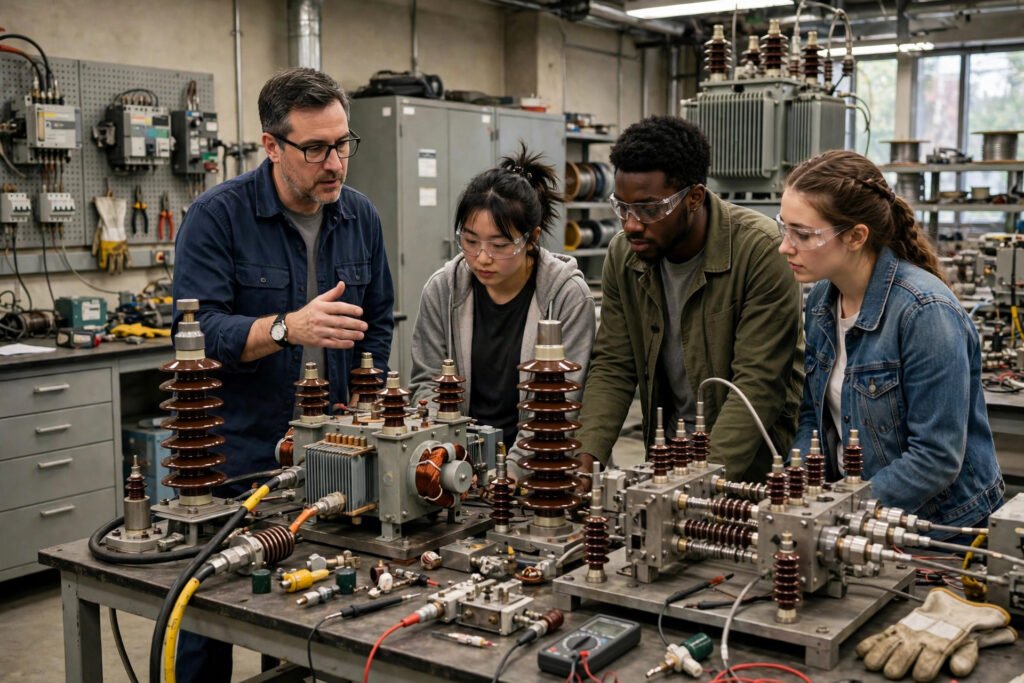
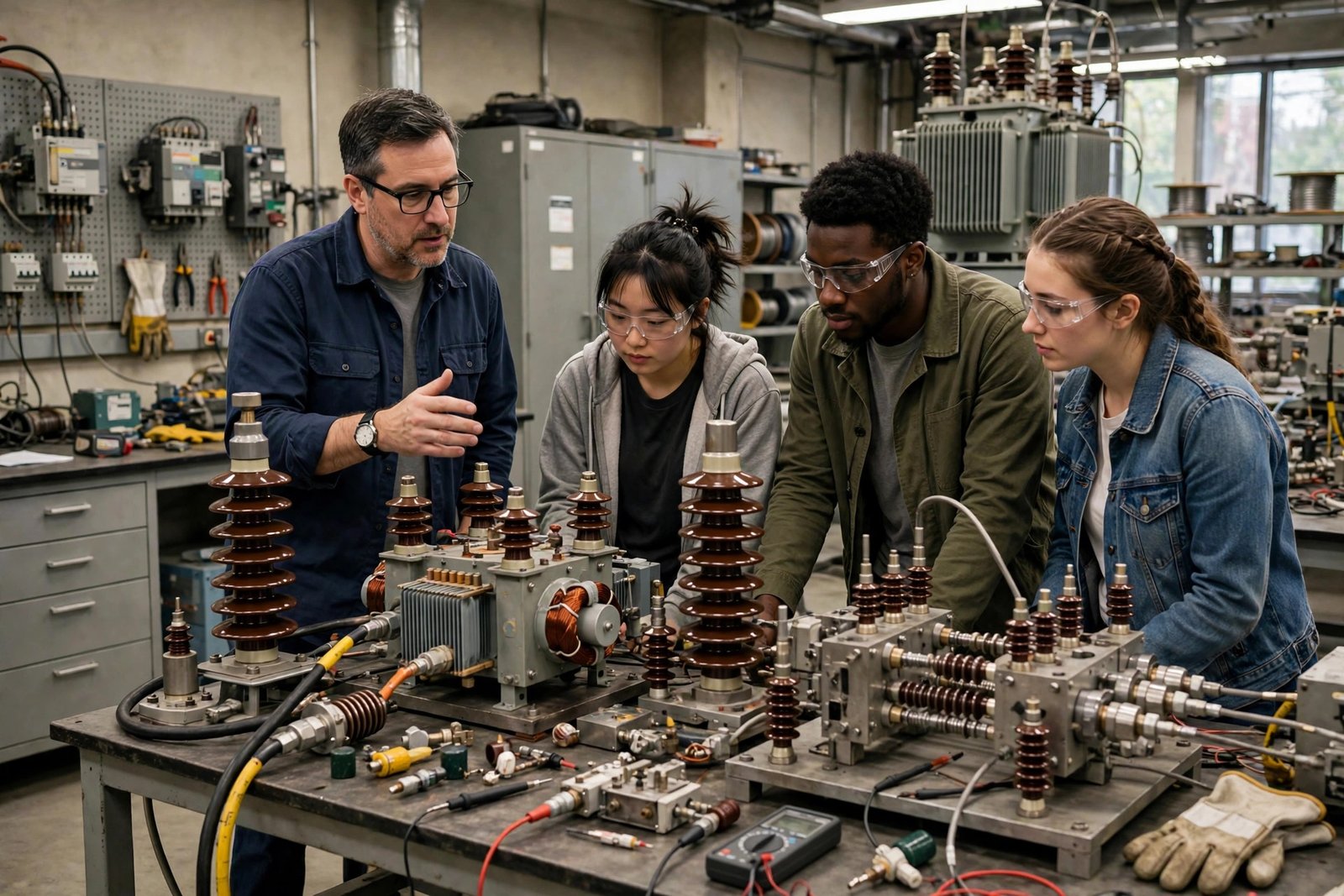
High-voltage engineering, insulation, substation design and grid codes form another important block. You will learn how equipment is specified for high voltages, how insulation is tested, how substations are laid out and earthed, and how grid codes set the technical rules that generators and large loads must meet before they can connect. In many countries this material is taught alongside laboratory work with high-voltage test equipment, which is an experience worth asking about at open days and in programme handbooks.
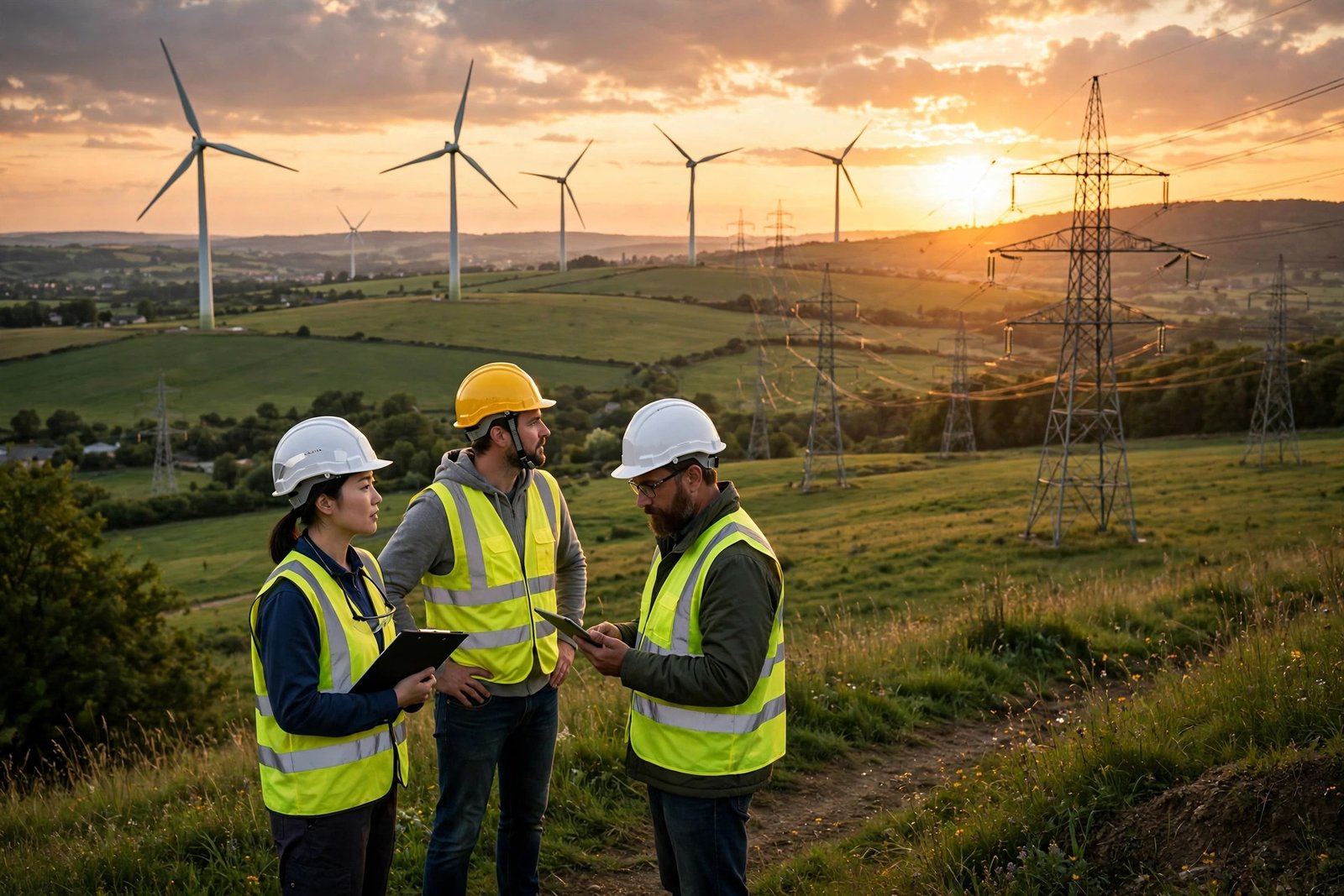
Renewable energy integration, smart grids and energy storage are where the field is changing fastest. Modules in this area cover forecasting of wind and solar output, demand response, microgrids, distribution automation, state estimation, wide-area monitoring, battery storage sizing and the operation of grids with very high shares of inverter-based generation. Some programmes also cover electricity markets, regulation and energy economics, which is valuable if you want to work in system operation, planning or policy-facing roles rather than purely in design. The strongest programmes balance these newer topics with the classical core, because a grid engineer who cannot do protection or stability analysis will struggle however fluent they are in renewables policy.
Across the degree, assessment usually mixes examinations, coursework, laboratory reports, simulation assignments and a substantial dissertation or capstone project. Employers read dissertations closely, so choose a topic with a clear engineering question, real data or a realistic model, and a result you can explain in plain language. A project on, for example, protection coordination for a feeder with rooftop solar, or stability of a microgrid after islanding, tells a hiring manager far more than a generic literature review. If your programme offers an industry placement, internship module or industry-linked project, treat it as a central part of the degree rather than an optional extra.
Eligibility and entry requirements
The standard academic requirement is a bachelor’s degree in electrical engineering or a closely related field, with strong grades in mathematics, circuit theory, electrical machines and power systems or control. Universities publish minimum grade equivalents by country, and these vary: a first-class or upper second-class honours equivalent is commonly expected in the United Kingdom, while universities in the United States and Canada usually assess grade point average alongside the full transcript, and German universities often apply their own grade conversion. If your undergraduate degree is in electronics, mechatronics, mechanical engineering or physics, you may still be considered, but you should expect to show power-related modules and, in some cases, to complete prerequisite study. A short, honest email to the programme admissions team, with your transcript and module list, is usually more useful than guessing.
English language requirements are set by each university and by immigration authorities, and they differ by programme. Typical requirements for engineering master’s degrees are in the region of IELTS 6.0 to 7.0 overall, with minimum sub-scores, or an equivalent TOEFL, PTE or Duolingo score where the university accepts it. Some universities waive the test for applicants who studied in English or hold certain qualifications, but a waiver is never automatic: check the exact wording on the university page. If your score is slightly below the requirement, many universities offer pre-sessional English courses, which add time and cost but can be a sensible route if your academic background is strong.
Standardised tests are less central than they once were. Many power systems master’s programmes in the United States no longer require the GRE, but some still recommend or require it, especially for funded or research-oriented places. Where the GRE is optional, a strong quantitative score can still help an applicant whose undergraduate grades are borderline. In Europe, Canada and Australia, the GRE is rarely required for taught master’s degrees. Letters of recommendation, a statement of purpose and a curriculum vitae matter everywhere: recommenders should be able to comment on your technical ability, ideally in power, machines or control modules, and your statement should name the technical areas you want to specialise in rather than repeating general enthusiasm for renewable energy.
Work experience is not usually required for a taught MS in Power Systems Engineering, but relevant experience strengthens an application and can matter for employment afterwards. Internships with utilities, distribution companies, consultancies or equipment manufacturers, project work on substations or renewables, and proficiency in simulation tools such as PSS/E, DIgSILENT PowerFactory or ETAP all help. If you have no industry experience, laboratory projects, final-year power projects and open-source or university grid simulations are good substitutes, provided you can describe what you built, what it showed and what you would change.
Entry requirements by country
| Country | What applicants should expect |
|---|---|
| United States | Bachelor’s in electrical engineering or a related field; transcripts and GPA assessed; GRE required by some programmes and optional at many others; English test for most international applicants; accreditation through ABET matters for the undergraduate degree background and for licensure pathways |
| United Kingdom | Usually a good honours degree in electrical or electronic engineering; IELTS typically around 6.5 overall; one-year master’s is common; check whether the programme is accredited by the Institution of Engineering and Technology |
| Canada | Four-year bachelor’s in a relevant discipline; GPA thresholds vary by university; English test required unless exempt; course-based and thesis-based master’s options differ in length and funding |
| Australia | Recognised bachelor’s in engineering or a cognate discipline; Engineers Australia accreditation is relevant for professional recognition; English test required unless exempt; two-year master’s is common for international students |
| Germany | Recognised bachelor’s with sufficient electrical engineering and mathematics content; many programmes are taught in English but German can help for internships and local employment; blocked account and other visa finance rules apply; check whether the programme is consecutive or non-consecutive |
Licensing and professional recognition deserve a separate check. In the United States, becoming a licensed Professional Engineer involves examinations and supervised experience after graduation, and requirements vary by state. In Canada, provincial regulators govern the Professional Engineer designation. In the United Kingdom, Incorporated Engineer and Chartered Engineer routes run through professional institutions. In Australia, Engineers Australia assesses qualifications for migration and professional purposes. None of these outcomes is guaranteed by admission to a master’s degree, and you should read the relevant regulator’s guidance before assuming a particular title or route.
Tuition fees and living costs
Tuition fees for an MS in Power Systems Engineering vary so widely by country, university and programme length that a single average would mislead. Public universities in Germany often charge low or no tuition for many master’s programmes, with a semester contribution and living costs to cover, while private and many English-taught programmes elsewhere charge full international fees. Universities in the United States, the United Kingdom, Canada and Australia typically publish annual international tuition on the programme page, and the total cost depends on whether the degree takes one year or two. Always compare the total programme cost, not just the annual figure, and confirm whether fees are fixed for the duration or rise each year.
Living costs are equally variable. Capital cities and major technology hubs are usually the most expensive, while smaller university towns can be substantially cheaper, even within the same country. Visa finance rules give a useful floor for planning: for Germany, the blocked account requirement cited in StudyGraduate’s programme briefs is 11,904 euros for 2026, and for Australia the living-cost figure used for student visa planning is 29,710 Australian dollars. For the United Kingdom, student visa maintenance figures verified in the briefs are 1,529 pounds per month in London and 1,171 pounds per month outside London, rising to 1,570 and 1,203 pounds respectively for applications on or after 30 November 2026. These are planning and visa figures, not promises about your actual spending, and they must be rechecked against the official immigration pages at the time you apply.
Use the tuition fee calculator and the cost of living calculator to build a personal budget, then test it against the official programme page and the university’s own living-cost guidance. Include health insurance, visa fees, travel, books and software, laboratory or field-trip costs, and a contingency for currency movement. If you are comparing a one-year degree with a two-year degree, include the second year of living costs and the extra year of forgone earnings, as well as any internship or placement income the longer programme makes possible. Scholarships are covered later in this guide, but assume at the budgeting stage that you will pay full fees unless a scholarship is confirmed in writing.
Top universities and countries for power systems engineering
The United States is strong in power systems because of its large utilities, national laboratories, research universities and equipment manufacturers, and because many programmes combine power with control, power electronics and renewable integration. Look for departments with active power research groups, industry-funded projects and laboratory facilities for protection, machines and high-voltage work, rather than choosing on a general university brand alone. A smaller department with a dedicated power group and close utility links can be a better fit than a famous university where power is a minor theme.
Germany is a natural choice for power and energy transition engineering, given its large renewable fleet, interconnections and engineering industry. The TU Berlin profile in the StudyGraduate universities directory is a useful starting point for exploring German technical universities, and the broader universities directory lets you compare institutions by country and field. When shortlisting German programmes, check the language of instruction module by module, the mathematics and power prerequisites, and whether laboratory and industry project work is built into the curriculum.
The United Kingdom offers many one-year specialist master’s degrees in power systems, electrical power engineering and renewable energy systems, which can reduce total living costs compared with two-year programmes. The trade-off is intensity: a one-year programme leaves little room for a long internship, so students who need work experience should weigh a programme with an industry project or placement year. Canada and Australia combine strong engineering schools with post-study work routes that many international students value, but the length of stay and eligibility rules depend on the programme, the institution and the immigration rules in force when you graduate, so check them on official government pages rather than relying on a university brochure.
When you compare universities, use a consistent checklist: the exact module list and how much is power core versus general energy; laboratory and simulation facilities; dissertation options and industry links; graduate employment destinations where the university publishes them; total programme cost; and the city and its energy employers. University rankings can help with a first shortlist, and StudyGraduate’s rankings directory presents QS and THE figures separately by provider, but a rank is not a substitute for reading the curriculum. Two programmes with similar names can differ sharply in how much protection, stability and high-voltage engineering they actually teach.
Careers and salaries
Power systems graduates work for transmission system operators, distribution network operators, utilities, engineering consultancies, equipment manufacturers, renewable developers, battery and storage companies, system operators, regulators and large industrial energy users. Common job titles include power systems engineer, protection engineer, transmission planning engineer, distribution engineer, grid integration engineer, substation engineer, power electronics engineer and energy storage engineer. With experience, graduates move into senior engineer, principal engineer, project engineering, system operation and engineering management roles. Some move into electricity markets, regulation or energy consulting, where technical understanding of grids is combined with economics and policy.
Official salary data is best read at the level of the broader occupation, because statistical agencies do not publish a separate median for the narrow specialism of power systems engineering. In the United States, the Bureau of Labor Statistics Occupational Outlook Handbook reports a median annual wage of 125,040 dollars for electrical and electronics engineers in May 2025, with employment projected to grow 8 percent from 2025 to 2035, much faster than the average for all occupations. Within that occupation, the Handbook reports a median of 122,430 dollars in May 2025 for electrical engineers in electric power generation, transmission and distribution, which is the industry closest to power systems work. Those figures describe the whole occupation, including experienced engineers, and are not a starting salary or a guarantee for a new graduate.
| Role or benchmark | Official figure | Source and year |
|---|---|---|
| Electrical and electronics engineers, United States, median annual wage | 125,040 US dollars | US Bureau of Labor Statistics, Occupational Outlook Handbook, May 2025 |
| Electrical engineers in electric power generation, transmission and distribution, United States, median | 122,430 US dollars | US Bureau of Labor Statistics, Occupational Outlook Handbook, May 2025 |
| Civil engineers, United States, median annual wage (for comparison with infrastructure engineering) | 100,840 US dollars | US Bureau of Labor Statistics, Occupational Outlook Handbook, May 2025 |
| Civil engineers, Canada, median hourly wage | 48.56 Canadian dollars per hour | Government of Canada Job Bank, updated 19 November 2025 |
Salary varies by country, city, employer type, experience, licensing and specialism. Utilities and system operators often offer stability, structured training and defined progression, while consultancies and equipment manufacturers may offer faster project variety and, in some markets, higher early pay. Protection and grid integration specialists are in demand where grids are expanding or adding large amounts of renewable generation, but demand is local: a shortage in one grid region does not mean the same shortage everywhere. Use the career path explorer to map roles against your interests, and then check current job postings in your target country for the skills employers actually list, such as PSS/E, PowerFactory, protection relay experience or SCADA knowledge.
For long-term progression, three investments pay off repeatedly: a portfolio of simulation and laboratory work you can explain; experience with a real network problem, whether through an internship, dissertation or utility project; and, where relevant, progress towards professional licensing or chartered status. Learn the grid codes and standards that apply in your target country, because employers value engineers who can work within them. Keep your software skills current, but do not let software replace fundamentals: in a protection or stability interview, the ability to reason about fault currents and system behaviour matters more than the ability to name tools.
Scholarships for power systems engineering
Scholarships for this field come from universities, governments, industry and foundations, and most are competitive. University scholarships may be merit-based, awarded on academic achievement, or tied to a specific department or research area. Government scholarships in destination countries and in students’ home countries often cover tuition and living costs but have their own eligibility rules, deadlines and sometimes return or service conditions. Industry scholarships from utilities and energy companies sometimes include internships or project placements, which can be as valuable as the funding itself.
Start with the university’s own scholarship pages for each programme on your shortlist, because deadlines often fall months before the programme deadline and some awards require a separate application. Then explore StudyGraduate’s scholarships directory and the scholarship finder for awards relevant to engineering and energy. Read the conditions carefully: some scholarships are one-year only, some require a minimum grade to continue, and some restrict the programmes or nationalities eligible. Never pay an agent or third party for a scholarship application that the official provider offers free, and treat any message guaranteeing a scholarship as a warning sign.
How to apply: a practical timeline
Begin twelve to fifteen months before your intended start date if you can. First, shortlist six to ten programmes using the curriculum checklist above, and confirm entry requirements, language requirements and deadlines on official pages. Second, prepare for and book English tests early, because scores take time to arrive and re-sits are common. Third, request recommendation letters with enough notice and give your referees your transcript, statement draft and a list of the programmes, so their letters can be specific. Fourth, draft a statement of purpose for each programme that names the modules, research groups or industry links that attract you, and the technical preparation you bring.
Fifth, submit applications in order of deadline, not preference, and keep a record of every portal login, document uploaded and confirmation received. Sixth, once offers arrive, compare total cost, curriculum, location and conditions, and ask departments direct questions about laboratory access, dissertation supervision and internship support before accepting. Seventh, prepare visa documents, finance evidence and health requirements well before the deadline, because visa processing times vary and finance evidence often has a required holding period. Finally, use the waiting period to build simulation skills, read grid codes for your destination country and follow system operators’ publications, so you arrive ready for postgraduate-level power work.
Frequently asked questions
Do I need an electrical engineering bachelor’s degree to apply?
In most cases, yes, or a very closely related degree with substantial electrical, machines, control and mathematics content. Applicants from electronics, mechatronics or physics are sometimes accepted, but you should confirm prerequisites with the programme team and be prepared to show relevant modules.
Is an MS in Power Systems Engineering the same as an MS in Electrical Engineering?
No. A general electrical engineering master’s may let you choose power modules alongside electronics, communications or control, while a power systems master’s concentrates on generation, transmission, distribution, protection, machines and grid operation. If you want a power career, the specialist degree usually gives deeper relevant preparation.
How long does the degree take?
Typically one year full-time in the United Kingdom, and one and a half to two years in the United States, Canada, Australia and much of Europe. Part-time and online options exist at some universities but take longer and may affect visa eligibility, so check the study mode rules for international students.
Do I need the GRE?
It depends on the programme. Many United States programmes no longer require it, while some still require or recommend it. Programmes in the United Kingdom, Canada, Australia and Germany rarely require the GRE for taught master’s degrees. Check each programme page rather than assuming a single rule.
Can I work in renewable energy after this degree?
Yes, and this is one of the degree’s main strengths. Grid integration, wind and solar connection, battery storage, microgrids and system operation all draw directly on power systems knowledge. A dissertation or internship in renewable integration will help you make that case to employers.
What salary can I expect after graduation?
No honest guide can give you a personal salary figure. Official benchmarks are given in the careers section above: the United States Bureau of Labor Statistics reports a median of 125,040 dollars for electrical and electronics engineers in May 2025, and 122,430 dollars for electrical engineers in electric power generation, transmission and distribution. Your actual pay will depend on country, city, employer, experience and licensing.
Is this degree good for staying abroad after graduation?
Post-study work rules vary by country, programme and graduation date, and they change. The United States, United Kingdom, Canada and Australia all have post-study work routes, but eligibility, duration and conditions must be checked on official immigration pages at the time you graduate. A degree alone does not guarantee a work visa or permanent residence.
What should I look for when choosing between two similar programmes?
Compare the module lists in detail, especially protection, stability, machines and high-voltage content; laboratory and simulation facilities; dissertation and industry links; total cost and duration; and the employers and grid operators near the university. Talk to current students or recent graduates if the university can connect you, and ask what they wish they had known before enrolling.
Sources and Verification
- US Bureau of Labor Statistics, Occupational Outlook Handbook: Electrical and Electronics Engineers — median pay, industry medians and 2025 to 2035 projections.
- US Bureau of Labor Statistics, Occupational Outlook Handbook: Civil Engineers — median pay and projections, used for infrastructure comparison.
- Government of Canada Job Bank, Civil Engineer wages — national median hourly wage, updated 19 November 2025.
- Official university programme pages and admissions pages for entry requirements, module lists, fees and deadlines — to be checked for each shortlisted programme.
- Official immigration pages for the United States, United Kingdom, Canada, Australia and Germany for visa finance, English and post-study work rules.
- StudyGraduate programme briefs for verified visa finance figures cited in this guide, including Germany, Australia and United Kingdom maintenance amounts.
Figures change yearly. Confirm fees, entry requirements, scholarship deadlines and visa rules on the official university and government page before you apply. StudyGraduate is an information portal, not an agency, and never promises admission, jobs, salaries or visa or permanent residence outcomes. External links in this guide are to official and authoritative sources only.