

MS in Energy Engineering Abroad: Eligibility, Fees, Top Universities and Careers
An MS in Energy Engineering abroad is a graduate degree for students who want to design, operate and improve the systems that produce, store, move and use energy. That includes renewable generation, conventional power plants, heating and cooling, energy storage, grid integration, building energy systems, industrial efficiency and emerging technologies such as hydrogen and carbon capture. Energy engineers work at the intersection of mechanical, electrical, chemical and environmental engineering, and their decisions affect cost, reliability, safety and emissions at the same time. If you enjoy thermodynamics, systems thinking and work with visible real-world impact, this degree deserves close attention.
This guide explains what energy engineering covers, who it suits, what universities usually ask for, what it costs, where to study it, and what careers follow. It is written for international applicants planning 2026 or 2027 entry. Fees, deadlines and visa rules change every year, so confirm current figures on the official university or government page before you apply. StudyGraduate is an information portal, not an agency, and nothing here promises admission, a job, a salary or a visa outcome.
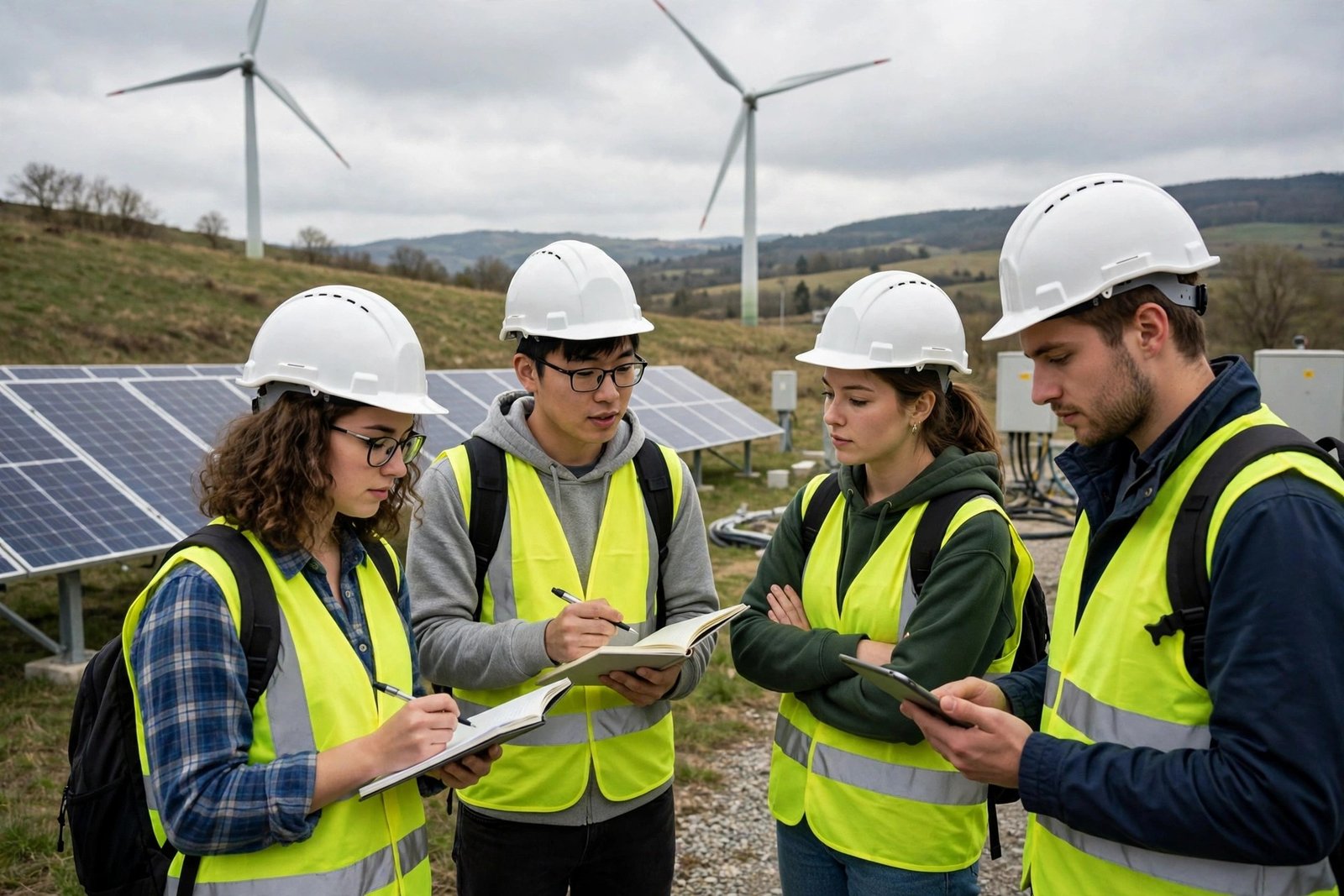
At a glance
| Item | What to expect |
|---|---|
| Degree level | Master of Science, usually following a bachelor’s degree in mechanical, electrical, chemical, civil, environmental engineering, physics or a closely related field |
| Typical duration | One to two years full time, depending on country, thesis requirements and internship or co-op terms |
| Core subjects | Thermodynamics, heat transfer, fluid mechanics, renewable energy systems, power systems, energy storage, energy efficiency and energy economics |
| Best suited to | Students who like physics, systems analysis, data and policy-aware engineering, and who enjoy working across generation, networks, buildings and industry |
| Common degree names | MS Energy Engineering, MSc Energy Engineering, MSc Renewable Energy Engineering, MS Sustainable Energy Systems, MSc Energy Systems |
| Typical next steps | Energy engineer, renewable energy engineer, building energy engineer, grid or storage engineer, energy consultant, or doctoral study |
What is energy engineering?
Energy engineering is not a single technology. It is the engineering of energy as a system: how energy is generated, converted, stored, transmitted, distributed and used, and how those stages interact. A solar panel, a wind turbine, a heat pump, a battery, a district-heating network and an industrial furnace are all components, but an energy engineer must understand the whole chain. Generating cheap electricity is of limited value if it cannot be stored or delivered when demand peaks. Improving a building’s insulation is of limited value if its heating system is oversized and poorly controlled. Energy engineering therefore emphasises balances, efficiencies, losses, costs and constraints across an entire system.
The field has broadened rapidly. Traditional energy engineering focused on power plants, combustion, turbines and heating systems. Modern programmes add solar, wind, hydro, geothermal and bioenergy; battery, thermal and hydrogen storage; smart grids and demand response; building physics and retrofit; industrial energy management; and energy markets and policy. Students should expect both technical depth and breadth. Depth might come from a specialisation in thermal systems, power systems or renewable technologies. Breadth comes from learning to compare technologies fairly, using lifecycle analysis, cost analysis and emissions accounting, rather than judging a technology by a single headline efficiency figure.
Energy engineering also involves people, regulation and economics more directly than many engineering fields. A technically excellent project can fail if it does not meet grid codes, planning rules, safety standards, financing requirements or community expectations. Good programmes therefore include energy policy, project finance, risk assessment and communication alongside core engineering. Graduates who can explain a trade-off between cost, reliability and emissions to a client, a regulator or a community group will have broader career options than graduates who can only run a simulation.
What you study
Most programmes begin with a shared foundation in thermodynamics, heat and mass transfer, fluid mechanics, electrical fundamentals and energy systems analysis. Students learn to model energy flows, calculate efficiencies, size components and evaluate performance under varying conditions. Renewable energy modules cover resource assessment, solar photovoltaic and thermal systems, wind energy, hydropower, geothermal energy and bioenergy, including the practical limits of each resource in different climates and locations.
Power-systems and storage modules cover generation, transmission, distribution, grid stability, power electronics and integration of variable renewables. Energy-storage modules cover batteries, thermal storage, pumped hydro, compressed air and hydrogen, including round-trip efficiency, degradation, safety and cost. Building-energy modules cover building physics, heating, ventilation and cooling, lighting, controls and retrofit strategies. Industrial-energy modules cover process heat, waste-heat recovery, combined heat and power, motors and drives, and energy auditing. Many programmes also include data analysis, simulation and geographic information tools for resource and network modelling.
Laboratory and project work is central. Expect experiments in thermodynamics and heat transfer, solar and wind test rigs, building-energy simulations, grid and storage modelling, and energy audits of real buildings or processes. A thesis or capstone project often involves designing or evaluating a real energy system, such as a hybrid renewable system for a campus, a retrofit plan for a building, a storage sizing study for a microgrid, or an efficiency plan for an industrial process. Choose a project that demonstrates quantitative analysis, realistic constraints and clear recommendations, because employers value that evidence more than a purely descriptive report.
Electives let you specialise. Useful combinations include energy engineering with power systems for grid and storage careers, with building physics for building-services careers, with mechanical and thermal engineering for industrial and heating careers, with data science for energy analytics, or with policy and finance for consulting and project-development careers. If you hope to work in a particular country, study its grid codes, building standards, renewable support mechanisms and safety regulations, and seek internships with local utilities, developers or consultancies.
Eligibility and entry requirements
Most departments ask for a bachelor’s degree in mechanical, electrical, chemical, civil or environmental engineering, or in physics or a closely related field, with strong grades in mathematics and physics. Applicants from general science degrees may be admitted if they have sufficient mathematics, thermodynamics or electrical fundamentals, but they may need prerequisite modules. Applicants from business, economics or policy backgrounds are sometimes admitted to energy management programmes, but a technically focused energy engineering master’s usually requires an engineering or physical-science foundation, so check the programme’s subject requirements carefully.
English-language requirements vary by country and institution, and the programme page is the authoritative source. In the United Kingdom, Australia and Canada, universities publish minimum IELTS or TOEFL scores for each programme. In the United States, requirements vary and some departments waive tests for applicants who studied in English. In Germany, the Netherlands, Denmark and Sweden, many energy programmes are taught in English, but internships and local employment may still benefit from local-language skills. Do not assume that an English-taught degree guarantees English-speaking employment in that country.
Standardised tests follow a mixed pattern. Some United States programmes still require or recommend the GRE, others have made it optional or removed it, and European programmes rarely require it. A strong quantitative score can help a borderline application, but it does not replace relevant preparation or a convincing project record. Your statement of purpose should name an energy problem you have worked on, the analysis you performed, the constraints you considered, and the specialisation you want to pursue. References from supervisors who saw your engineering or project work carry more weight than generic references.
Work experience in energy, utilities, building services, manufacturing or consulting strengthens an application, especially for professional master’s programmes. If you do not have industry experience, a final-year energy project, an energy audit, a renewable-energy design competition, a research assistantship or relevant volunteering can demonstrate the same qualities: quantitative analysis, system thinking and persistence with real data.
| Country | Typical entry pattern | Points to check |
|---|---|---|
| United States | Bachelor’s in engineering or physical science; transcripts, statement, references; GRE often optional | Check ABET background, thesis versus professional tracks, and laboratory facilities |
| United Kingdom | Upper second-class honours degree or equivalent in engineering or a related subject | One-year taught MSc formats are common; check accreditation and industry projects |
| Canada | Four-year bachelor’s in engineering or related field; thesis programmes may need a supervisor | Contact potential supervisors early for research-based programmes |
| Germany | Relevant bachelor’s degree; many English-taught energy programmes | Check subject-match assessment, deadlines and blocked-account rules |
| Denmark, Netherlands and Sweden | Relevant bachelor’s degree; strong mathematics and physics preparation expected | Check renewable-energy, wind-energy and sustainable-energy specialisations |
Tuition and living costs
Tuition depends mainly on country and institution type. Public universities in parts of continental Europe charge low or no tuition for many programmes, although semester contributions and living costs still apply. Universities in the United States, the United Kingdom, Canada and Australia generally charge international tuition at a higher rate, and laboratory-intensive energy programmes can carry additional fees. Compare the total cost of the whole degree, including living costs and any extra term for an internship or thesis, rather than the first year’s headline fee alone.
Living costs vary by city, and energy students should also budget for field visits, site travel, a capable laptop and simulation software where the university does not provide licences. Build a full budget covering tuition, accommodation, food, transport, health insurance, books, visa fees and a contingency for currency movement. The tuition fee calculator and the cost of living calculator can help you compare scenarios, but the university’s published fee schedule remains authoritative.
For visa planning, government maintenance figures are useful minimums, not comfortable budgets. For the United Kingdom, the Student visa maintenance requirement is GBP 1,529 per month in London and GBP 1,171 per month outside London, rising to GBP 1,570 and GBP 1,203 respectively for applications on or after 30 November 2026. For Germany, the blocked account requirement is EUR 11,904 for 2026. For Australia, the financial requirement commonly cited is AUD 29,710 for living costs. For Canada, the proof-of-funds figure for a single applicant outside Quebec moved from CAD 22,895 to CAD 23,448. Confirm the current figure on the official immigration page for your intake.
Funding options include university merit scholarships, government scholarships, industry-sponsored projects and, for research programmes, assistantships. Energy is often a priority field for government and foundation scholarships linked to climate, sustainability and development goals, but eligibility and deadlines vary widely. Search early through the scholarships directory and the scholarship finder, and note whether an award renews in a second year or applies only to the first year.
Top universities and countries
Germany is a strong choice for energy engineering, with deep expertise in renewable energy, energy systems, thermal engineering and manufacturing, alongside relatively low public-university tuition. Denmark is particularly strong in wind energy and district energy systems. The Netherlands offers strengths in energy systems, offshore energy and sustainable technology, often in English. Sweden offers strengths in sustainable energy, hydropower, bioenergy and district heating. The United Kingdom offers intensive one-year taught programmes in renewable energy, energy systems and sustainable energy, which suit students who want to enter industry quickly.
The United States offers broad strength across power systems, renewable energy, storage, building energy and industrial energy, with large laboratories and close industry links. Canada offers strengths in hydropower, energy systems, cold-climate building energy and resource industries, alongside post-graduation work options that many international students value. Australia offers strengths in solar energy, grid integration, mining and remote energy systems, and energy storage, with strong sunlight resources and large test sites. In Asia, strong energy and power-systems research exists in several countries, but programme titles, language and recognition differ, so compare curricula rather than assuming equivalence from a degree name.
When comparing departments, look at the laboratories, test rigs, field sites and industry partners, and at recent graduate destinations. Accreditation matters in some contexts: in the United States, ABET accreditation is the recognised standard for engineering programmes, and in Australia, Engineers Australia accreditation plays a similar role. In the United Kingdom, professional recognition through engineering institutions can matter for later chartered status. Use the universities directory and the Courses and Programs directory to compare profiles, and verify shortlisted programmes on their official pages. The university comparison tool can help you weigh cost, duration and specialisation side by side, and the Bachelor of Engineering profile is a useful reference for undergraduate foundations.
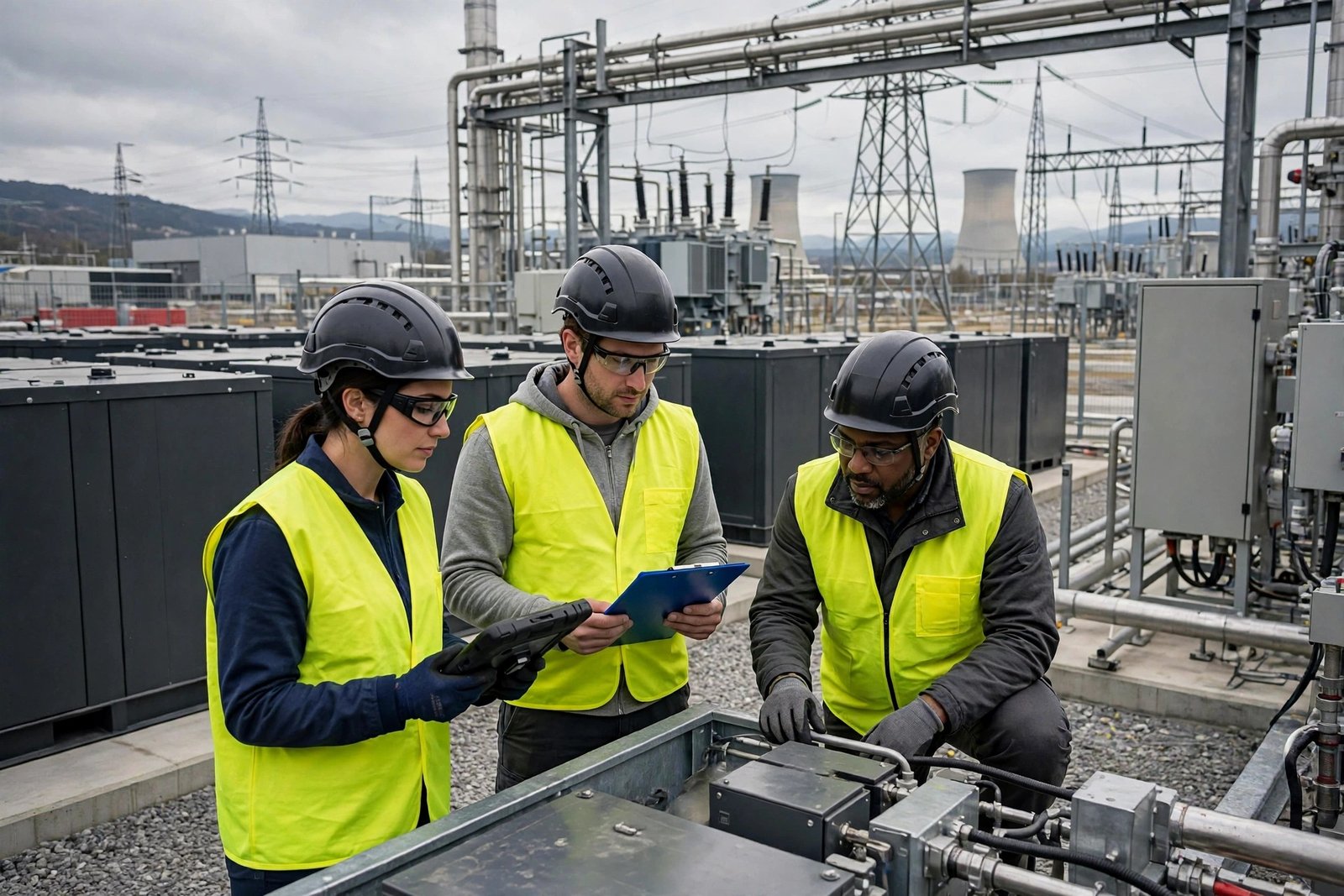
Careers and salaries
Energy engineering graduates work as energy engineers, renewable energy engineers, power systems engineers, building energy engineers, energy auditors, energy consultants, project engineers for renewable or storage projects, and grid or microgrid engineers. Employers include utilities, renewable developers, engineering consultancies, building-services firms, manufacturers, government agencies, research institutes and international organisations. Some graduates move into project development, energy trading analysis, policy analysis or entrepreneurship after gaining technical experience.
As with control systems, there is no single United States Bureau of Labor Statistics occupation called energy engineer. Employers classify energy roles under mechanical engineering, electrical engineering, chemical engineering or broader engineering categories, depending on the work. The closest broad benchmarks are therefore mechanical engineers and electrical and electronics engineers. The Bureau of Labor Statistics reports that the median annual wage for mechanical engineers was USD 104,110 in May 2025. It projects employment of mechanical engineers to grow by 11 percent from 2025 to 2035, much faster than the average for all occupations, with about 17,800 openings projected each year on average over the decade. For electrical and electronics engineers, the median annual wage was USD 125,040 in May 2025, with projected growth of 8 percent from 2025 to 2035.
These benchmarks describe broad United States occupations, not energy engineering specifically, and they should not be treated as entry-level salaries or as pay in another country. Energy pay varies by sector, technology, location, experience and responsibility for safety-critical or capital-intensive projects. A renewable project engineer, a building energy consultant and a grid engineer may have different duties and pay even with similar degrees. For other countries, use the equivalent official source, such as national statistics or a government job outlook service, rather than converting a United States figure into another currency.
| Role or benchmark | Official figure | Source and year |
|---|---|---|
| Mechanical engineers, United States, median annual wage | USD 104,110 | U.S. Bureau of Labor Statistics, May 2025 |
| Mechanical engineers, United States, projected growth | 11 percent, 2025 to 2035 | U.S. Bureau of Labor Statistics projection |
| Mechanical engineers, United States, projected openings | About 17,800 per year on average | U.S. Bureau of Labor Statistics projection |
| Electrical and electronics engineers, United States, median annual wage | USD 125,040 | U.S. Bureau of Labor Statistics, May 2025 |
| Energy engineer as a standalone BLS occupation | Not published as a single occupation; use mechanical and electrical benchmarks with care | U.S. Bureau of Labor Statistics occupational structure |
Employers also look for evidence that you can work with uncertainty. Energy data are often incomplete, weather-dependent or commercially sensitive, and a good engineer states assumptions clearly, tests sensitivity to key variables and recommends a robust option rather than a fragile optimum. If your coursework allows it, practise this explicitly: show a base case, a pessimistic case and an optimistic case, explain which assumption drives the result, and say what additional data would change your recommendation. That habit is useful in every energy sector, from a small building retrofit to a large grid investment, and interviewers notice it quickly.
Long-term prospects favour engineers who combine system analysis with practical delivery. Modelling skills are common; engineers who can also audit a building, size a storage system, assess a grid connection, manage a commissioning process and explain a business case are rarer. Safety, standards and lifecycle thinking also matter: energy systems operate for decades, and design choices made today affect maintenance, decommissioning and emissions for years. Graduates who build a portfolio showing quantitative analysis, realistic constraints and implemented or audited projects will be better placed than graduates whose portfolio contains only coursework.
Scholarships for this field
Scholarships for energy engineering come from universities, governments, foundations and industry. University merit awards for international master’s students are a common starting point. Government scholarships often prioritise energy, climate and sustainability, and some are linked to specific countries or development goals. Foundations and industry bodies support students in renewable energy, energy efficiency and climate technology, sometimes linked to an internship or project. Research-based applicants should ask supervisors about funded projects, which may cover tuition and provide a stipend but require a specific research match.
Keep a careful record of deadlines, because scholarship deadlines often fall months before programme deadlines. Check whether an award can be combined with other funding and whether it renews in a second year. The scholarship finder, the scholarships directory and the career path explorer can help you match funding and roles to your specialisation.
How to choose a programme
Start with the energy system you want to work on. If you want renewables and grids, prioritise power systems, storage and resource assessment. If you want buildings, prioritise building physics, heating and cooling, controls and retrofit. If you want industry, prioritise thermal systems, process heat, waste-heat recovery and energy auditing. If you want project development or consulting, add policy, finance and project-management modules. Then check total cost, duration, thesis versus coursework, internship availability, laboratory access and post-study work rules.
Ask departments focused questions: which laboratories and test facilities can master’s students use, what industry projects ran last year, what simulation tools are taught, and where recent graduates work. Ask current students about supervision, workload and support. Check the rankings directory for context, but remember that rankings describe universities as a whole, not a single energy group, and they should never be the only reason to choose a programme.
Plan for life after graduation with official information. In the United States, Optional Practical Training rules and employer sponsorship vary and should be checked on official government pages. In the United Kingdom, the Graduate Route currently allows eligible graduates to stay and work for a period after study, while an announced change would shorten that period to 18 months from 1 January 2027; treat that change as announced, not current, until it takes effect. In Canada, post-graduation work permit rules depend on programme length and institution eligibility. In Australia, post-study work rights depend on qualification level and location. None of these rules guarantees an outcome, and they can change between application and graduation.
Frequently asked questions
Is energy engineering the same as renewable energy engineering?
No, although they overlap. Renewable energy engineering focuses mainly on renewable generation technologies. Energy engineering is broader and covers generation, storage, networks, buildings, industry, efficiency, economics and policy across the whole energy system.
Do I need an electrical or mechanical engineering degree to apply?
Usually a degree in mechanical, electrical, chemical, civil or environmental engineering, or in physics with strong mathematics, is expected. The best fit depends on the specialisation: power-systems tracks favour electrical backgrounds, thermal and building tracks favour mechanical backgrounds, and many programmes accept either with appropriate prerequisites.
Is there a standalone BLS salary for energy engineers?
No. The United States Bureau of Labor Statistics does not publish energy engineer as a single occupation. The closest broad benchmarks are mechanical engineers, reported at a median annual wage of USD 104,110 in May 2025, and electrical and electronics engineers, reported at USD 125,040 in May 2025. Use those figures as context, not as promised energy-engineering salaries.
How long does the degree take abroad?
Typically one to two years full time. One-year taught programmes are common in the United Kingdom. Two-year programmes, including a thesis or internship, are common in the United States, Canada, Germany and Australia.
Is the GRE required?
It depends on the programme. Many programmes have made it optional or removed it, while others still require or recommend it. Check each programme page rather than assuming a single rule.
Can I work in energy consulting after this degree?
Yes, if you build the relevant skills. Energy consulting values quantitative analysis, lifecycle and cost assessment, policy awareness and clear communication, alongside technical depth. Choose electives and projects that demonstrate those skills, and seek internships with consultancies or developers where possible.
Should I specialise in renewables, storage or buildings?
Choose by the work you enjoy and the industry in your target country. Renewables and storage suit students interested in generation and grids. Buildings suit students interested in heating, cooling and retrofit. Industrial energy suits students interested in processes and efficiency. All three areas need system thinkers, so do not choose solely by headlines about growth.
Should I choose a thesis or a coursework master’s?
Choose a thesis if you may pursue doctoral study or research roles. Choose coursework plus an industry project if you want to enter industry quickly and prefer applied, team-based work. Both routes can lead to strong careers when the project demonstrates real analysis and realistic constraints.
Sources and verification
Sources consulted for this guide include the U.S. Bureau of Labor Statistics Occupational Outlook Handbook for mechanical engineers and for electrical and electronics engineers, ABET accreditation information for engineering programmes, and official government maintenance and funding figures summarised in the StudyGraduate guides brief, including United Kingdom Student visa maintenance rates, the German blocked account figure for 2026, the Australian living-cost figure and the Canadian proof-of-funds figure. External sources: BLS Mechanical Engineers, BLS Electrical and Electronics Engineers and ABET.
Figures change yearly. Confirm tuition, entry requirements, deadlines and visa rules on the official university and government pages for your intake before you apply. StudyGraduate is an information portal, not an agency, and never promises admission, jobs, salaries or visa or permanent-residence outcomes.