

MS in Game Development Abroad: Eligibility, Fees, Top Universities and Careers
An MS in Game Development is a postgraduate degree for people who want to make games professionally — not only play them. It covers the craft and the engineering behind interactive entertainment: game programming and engine technology, real-time graphics, gameplay systems, artificial intelligence for non-player characters, audio, animation pipelines, level and systems design, production methods and user testing. Some programmes lean heavily towards programming and technical art; others lean towards design, production or research. Understanding which kind of programme you are applying to is the single most important decision in this guide, because two degrees with similar titles can prepare you for quite different jobs.
This guide is for graduates considering an MS in Game Development abroad for the 2026 or 2027 intake. It explains what you will study, who the degree suits, what universities typically ask for, what it may cost, where to study it, what careers it can lead to, and which salary figures official statistics actually report. It does not promise admission, a job or a visa outcome. Fees, entry requirements and immigration rules change from year to year, so always confirm the current figures on the official university page and the official government immigration page for your destination before you apply.
If you are still comparing computing master’s degrees, the broader Courses and Programs directory places game development alongside related options, including the MSc Computer Science profile and the BSc Computer Science profile, which help you judge whether a specialist games degree or a broader computing master’s fits your goals better.
At a Glance: MS in Game Development
| Feature | Typical position |
|---|---|
| Degree level | Postgraduate master’s degree (MS, MSc, MA or MFA in some systems, depending on technical or creative emphasis) |
| Typical duration | One year full-time in the United Kingdom and some European systems; one to two years in the United States, Canada and Australia, depending on programme structure and thesis or project requirements |
| Core subjects | Game programming, game engines, real-time graphics, gameplay and systems design, game artificial intelligence, animation, audio, production and playtesting |
| Who it suits | Graduates with programming, art, design or related experience who can show finished game work, and who want a structured route into the games industry or games research |
| Common assessment | Coursework, team game projects, prototypes, technical reports, a dissertation or major project, and a portfolio or playable demo |
| Typical next steps | Gameplay programmer, engine or tools programmer, technical artist, game designer, producer, quality assurance and related roles in studios, or doctoral research in games or graphics |
The title varies, and the variation signals content. A Master of Science in Game Development or Computer Games Technology usually emphasises programming, engines and graphics. A Master of Arts in Game Design usually emphasises design, narrative, art direction and player experience, with less programming. Some universities offer an MFA, which is typically a longer, practice-led degree. A programme in interactive media, digital media or entertainment technology may overlap with game development but include film, virtual reality or interactive installation work. Read module lists and graduate portfolios, not titles alone, and ask admissions staff which roles recent graduates actually entered.
What You Study in an MS in Game Development
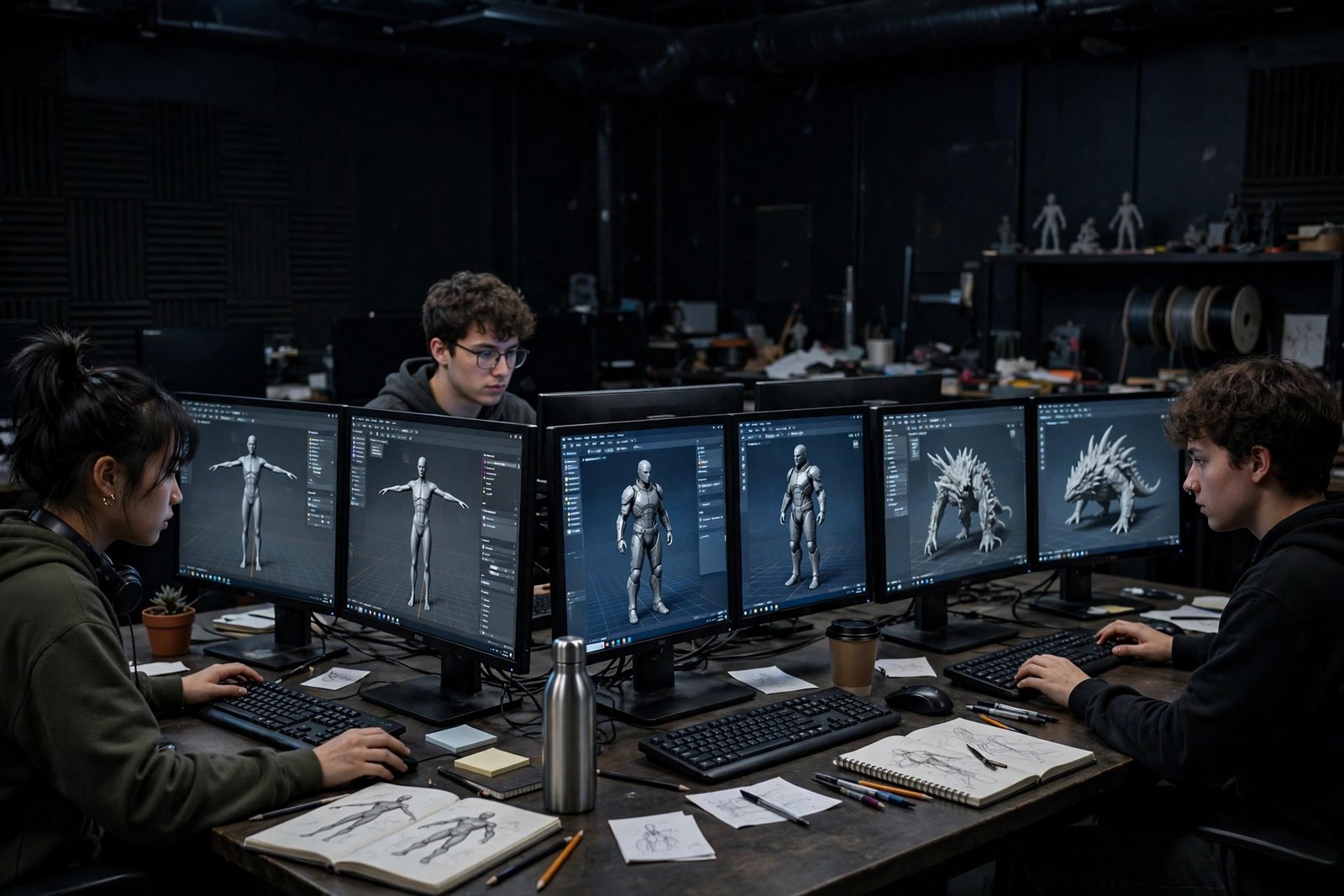
Most programmes begin with a shared foundation in engines and production, even when students later specialise. You will normally work in a current commercial engine such as Unreal Engine or Unity, learning scene management, asset pipelines, scripting and gameplay programming, physics and animation integration, and build and version-control practices. Early modules often include a team project in which programmers, artists and designers build a small playable game together under a deadline. That team experience is central: professional game development is collaborative, and studios hire people who can work inside a team, accept feedback, meet milestones and communicate across disciplines.
Programming-focused modules go deeper into real-time systems. Graphics programming covers rendering pipelines, shaders, lighting and optimisation for frame rate and memory budgets. Gameplay programming covers character controllers, cameras, input, game states and systems such as inventories, economies and progression. Artificial intelligence for games covers pathfinding, behaviour trees, state machines and decision-making for non-player characters, which is different in emphasis from general machine learning. Engine and tools programming covers editor tools, asset import, build automation and performance profiling. Students who arrive with strong programming skills can use these modules to build a technical portfolio that studios can evaluate directly.
Design-focused modules examine what makes a game playable, readable and enjoyable. Level design teaches spatial layout, pacing, difficulty curves, teaching the player through play, and testing levels with real players. Systems design teaches rules, balance, economies and progression, and how small rule changes affect the whole experience. Narrative and audio modules cover story structure for interactive media, dialogue systems, sound design and music implementation. User research and playtesting teach observation, interview and survey methods, usability testing and the interpretation of player data without reducing design decisions to raw metrics alone.
Technical art sits between programming and art, and it is one of the most employable specialisms in games. Technical artists build shaders, rigs, particle systems, procedural tools and optimisation workflows, and they translate artistic intent into something that runs efficiently in real time. Animation modules cover rigging, motion capture pipelines, blend trees and procedural animation. If your background is in art or animation, a technical art route can be more valuable than a general design route, because it combines a scarce technical skill with creative judgement.
Production modules cover the business and management side: project planning, agile methods adapted to games, scope management, risk, budgeting, pitching, publishing models and live-service operations. Many programmes end with a capstone project in which a team builds a larger game, often shown at a showcase or submitted to festivals. Treat the capstone as your job application: a polished, playable, well-documented game with a clear statement of your contribution will do more for your career than a high mark on a written examination. Keep a portfolio website from the start of the programme, with playable builds, videos, code samples and a clear breakdown of what you personally built.
Eligibility and Entry Requirements
Entry requirements for an MS in Game Development abroad depend on the destination, university and programme, and they are published on each university’s official course page. The summary below describes the usual pattern so you know what to prepare, but it is not a substitute for the official requirements of the university you apply to.
Academically, universities normally require a bachelor’s degree, often in computer science, computing, games, art, design, media or a related field, with a minimum grade or grade-point average. Programming-focused programmes usually expect prior programming experience and may require evidence of mathematics or computer science coursework. Design-focused programmes may accept a broader range of degrees, but they still expect a portfolio. Some programmes accept applicants from unrelated degrees if they can demonstrate relevant skills through work experience or a strong portfolio, while others do not. Check whether your degree is recognised and whether any prerequisite modules are specified.
The portfolio is often the decisive part of the application. For programmers, it should include finished or playable work, code you can discuss, and evidence of engine experience. For artists, it should include game-ready art, rigs, shaders or animation work rather than only traditional illustration. For designers, it should include playable prototypes, level designs, design documents and playtest evidence, not only ideas described in prose. A portfolio that shows one finished small game is stronger than a list of ten unfinished projects. Include a short note for each piece stating what you made, what tools you used, what you learned and what you would improve.
English language requirements apply in English-speaking destinations, commonly an IELTS Academic or TOEFL score with minimum overall and component scores. Typical postgraduate thresholds are often around IELTS 6.5 overall, but competitive programmes set higher bars and some require a higher writing score. In the United States, some programmes require GRE scores, while many have dropped that requirement; check the official page for each programme rather than assuming. References, a statement of purpose and sometimes an interview or a test task may also be required. Your statement should name the specialism you want — programming, technical art, design or production — and explain, with examples from your own work, why that specialism fits you.
Tuition Fees and Living Costs
Tuition fees for international students vary widely by destination, university and programme, and any single average would mislead. One-year master’s programmes in the United Kingdom concentrate the cost into a single year, which can look expensive per year but may cost less in total than a two-year programme elsewhere. Two-year programmes in the United States, Canada and Australia spread tuition over a longer period and may include more project or thesis time. Specialist games programmes sometimes charge more than general computing master’s programmes because of studio facilities, motion capture equipment and small-group teaching, so compare like with like.
Because fees change annually, this guide deliberately avoids publishing a single invented average fee. Compare the official course page for each university on your shortlist, record the fee for your specific programme and intake year, and check whether it is fixed or rises annually and what it includes. Add living costs using official government guidance for your destination. For planning, the student visa maintenance figures summarised in this programme series are GBP 1,529 per month in London and GBP 1,171 per month outside London for the United Kingdom, rising to GBP 1,570 and GBP 1,203 respectively for applications on or after 30 November 2026; EUR 11,904 for a German blocked account in 2026; and AUD 29,710 for Australian financial capacity guidance. Treat these as official planning benchmarks and confirm the current figure for your application date on the relevant government page.
Budget for a capable computer or laptop, software licences where the university does not provide them, and any costs of showcasing work at festivals or industry events. Scholarships for games master’s programmes exist but are competitive and usually partial. Do not base your budget on an assumed scholarship or on part-time work income, and check the permitted work hours and conditions of your student visa before relying on earnings.
Top Universities and Countries for Game Development
The games industry is geographically concentrated, and location matters more for this degree than for many others, because internships, studio visits, guest lectures and graduate hiring often happen near clusters of studios. The United States has major studio clusters in California, Washington, Texas and other states, and several universities with long-standing games programmes. The United Kingdom has studio clusters in London, the South East, the North West, Scotland and elsewhere, and a number of specialist games programmes with strong industry links. Canada has significant studio presence in Montreal, Toronto, Vancouver and other cities, and games programmes that benefit from that proximity. Australia, Germany, Sweden, Finland and the Netherlands also have notable games industries and programmes, and for some students a smaller, specialist programme in one of those countries may fit better than a large general university elsewhere.
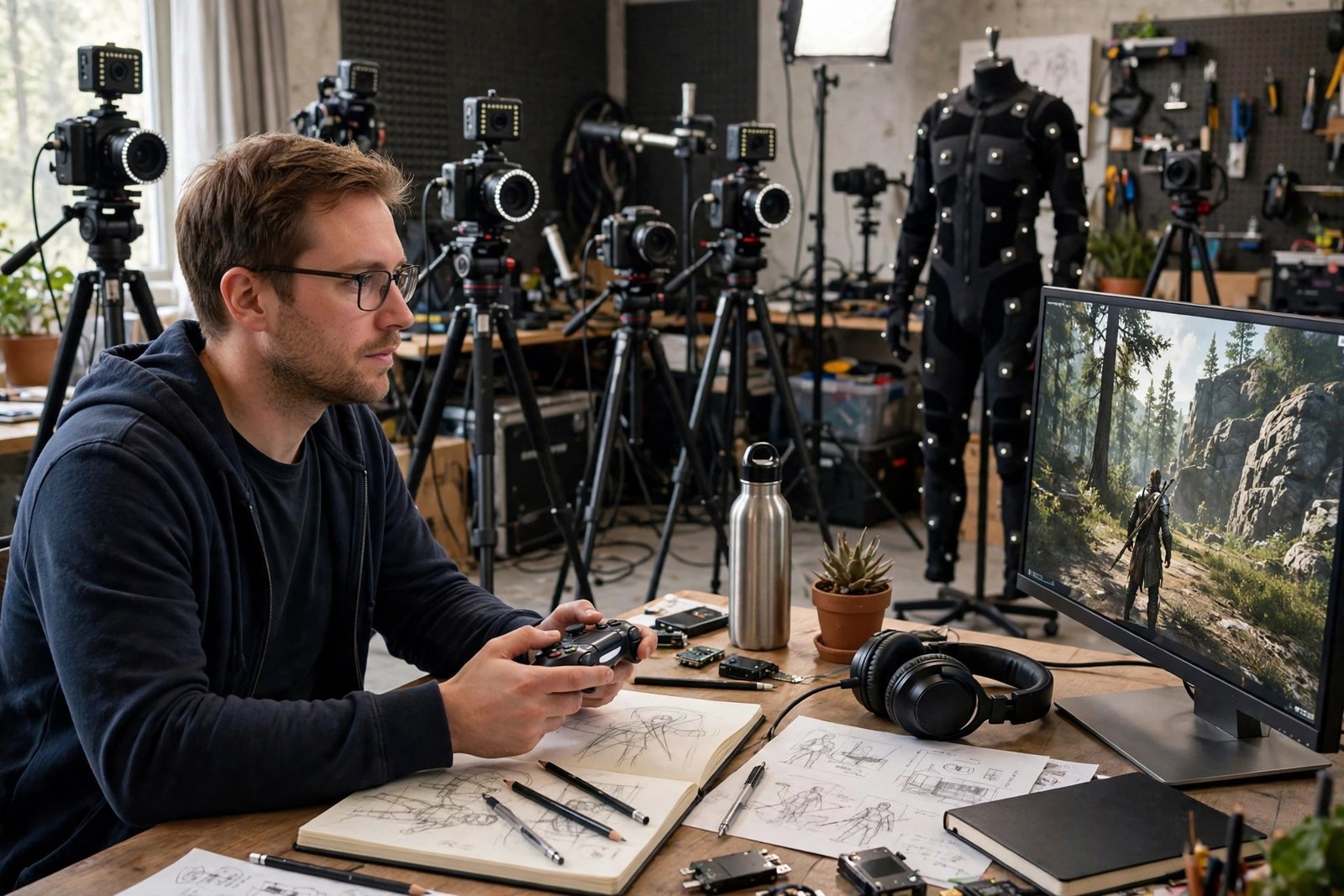
When comparing programmes, examine graduate portfolios and capstone games, staff industry experience, studio partnerships, internship or placement support, and the facilities available: motion capture, audio studios, virtual reality laboratories and dedicated games laboratories. Ask what proportion of graduates enter games roles, and in which roles, rather than accepting a general employment rate. A programme whose graduates mainly enter general software roles may still be a good degree, but it is not evidence of games-industry placement. Also check whether the programme teaches the engine and tools used by the studios you want to join, and whether its alumni network reaches those studios.
Use the StudyGraduate directories to build a shortlist. The universities directory covers institutions in the programme, and the rankings pages present QS and THE rankings separately by provider, without merging them. For a broader computing comparison, the MSc Computer Science profile shows how a general master’s differs from a specialist games degree. For cost planning, the tuition fee calculator and the cost of living calculator help you model total costs, and the career path explorer can help you compare games roles with adjacent computing careers.
Careers and Salaries: What Official Statistics Report
There is no single official occupation called “game developer” in the United States statistical system, so salaries for games careers must be read through adjacent occupations. That is an important honesty point: a figure for software developers describes software developers in all industries, not only games, and games salaries vary by studio size, location, role and seniority. Use the figures below as occupation benchmarks, not as promises for games roles specifically.
| Occupation (United States) | Median annual wage | Source and reference |
|---|---|---|
| Software developers | $135,980 | U.S. Bureau of Labor Statistics, Occupational Outlook Handbook, May 2025 |
| Software quality assurance analysts and testers | $104,300 | U.S. Bureau of Labor Statistics, Occupational Outlook Handbook, May 2025 |
| Special effects artists and animators | $102,030 | U.S. Bureau of Labor Statistics, Occupational Outlook Handbook, 2025 median pay |
| Web developers and digital designers | $99,520 | U.S. Bureau of Labor Statistics, Occupational Outlook Handbook, 2025 median pay |
| Computer programmers | $100,390 | U.S. Bureau of Labor Statistics, Occupational Outlook Handbook, 2025 median pay |
| Graphic designers | See BLS profile for the occupation | U.S. Bureau of Labor Statistics, Occupational Outlook Handbook |
Typical games roles include gameplay programmer, engine programmer, tools programmer, technical artist, 3D artist and animator, level designer, systems designer, narrative designer, audio designer, producer and quality assurance tester. Quality assurance is a common entry route, but it is not the same work as programming or design, and progression from testing into design or programming depends on the studio and on the skills you demonstrate. Production roles require scheduling, communication and scope management as much as games knowledge. Technical art and engine programming are often the hardest roles to fill, which is why graduates with those skills can be comparatively employable, although no article can guarantee that outcome for an individual.
The BLS projects employment of software developers, quality assurance analysts and testers to grow 10 percent from 2025 to 2035, described as much faster than the average for all occupations. That projection covers the broad occupation, not games alone, and games employment is more cyclical than general software employment because it depends on studio funding, project cycles and platform shifts. No verified official salary figure for a games-specific role in the United Kingdom, Canada, Australia or Germany is stated in this guide, because no such official figure was verified at the time of writing; that omission is deliberate. When you compare destinations, look up the official figure for the closest occupation in each country’s statistical publication, note the year and whether it is a median or a mean, and compare like with like.
The games industry also has well-documented working-pattern concerns, including periods of intense overtime around release deadlines, project-based contracts and studio closures. A good programme will discuss production practice honestly, including sustainable scheduling, and you should ask studios about contract type, overtime expectations and project length when you interview. Building a career in games rewards persistence and a visible portfolio over a long period: many successful developers worked on small independent projects, game jams and mods before or alongside formal study, and that habit of finishing playable work is worth maintaining after graduation.
Building a Portfolio While You Study
A games master’s degree gives you structured time, feedback and team experience, but the portfolio you leave with is built by habits outside formal assessment as much as inside it. Game jams, in which small teams build a playable game in a weekend or a week around a theme, are one of the most efficient ways to practise scoping, teamwork and finishing work under pressure. A jam game that is small, complete and playable teaches more than an ambitious project that never reaches a build. Modding an existing game, contributing to an open-source engine tool, or releasing a small independent game on a storefront or itch-style platform can also demonstrate initiative, although commercial success is not the measure: a clear, well-documented project with a playable build and an honest post-mortem is the measure. Keep a development log for each project, noting the design problem, the technical approach, what broke, what you changed and what players said. That log becomes the raw material for portfolio case studies and for interview answers, because studios ask candidates to explain decisions, not merely to list tools. If you work in a team, record your personal contribution precisely and keep evidence of it, such as commits, art assets or design documents you authored. Exaggerating a team contribution is easy to detect in a technical interview and damaging to trust, whereas a modest contribution explained clearly is respected. Finally, play widely and critically: analyse games outside your preferred genre, note how tutorials teach without words, how difficulty is tuned, how audio signals danger or reward, and how accessibility options change the experience. The habit of noticing design decisions in other people’s work sharpens your own, and it gives you a vocabulary for discussing games in interviews that goes beyond personal taste.
Scholarships for Game Development Students
Scholarships for international games master’s students are usually university merit awards, government scholarships or subject-specific awards from industry bodies where they exist, and they are competitive and usually partial. Some universities offer scholarships for creative or technical excellence judged on portfolio, which makes the portfolio doubly important. Check the scholarships directory and the scholarship finder tool for current options, and read each award’s terms carefully: renewal conditions, whether it covers tuition only, whether it can be combined with other awards, and the application deadline, which may be earlier than the course deadline. Never pay a fee to apply for a scholarship, and treat any promise of guaranteed funding as a scam warning sign.
How to Choose and Apply: A Practical Checklist
Start by choosing your specialism: programming, technical art, design, audio or production. Then shortlist programmes whose module lists and graduate portfolios match that specialism, and compare them on studio links, facilities, capstone quality and total cost. Before applying, spend time on a portfolio piece that demonstrates that specialism at the level the programme expects. Apply in good time, track each university’s deadlines and portfolio requirements separately, and keep copies of everything you submit. If you receive a conditional offer, read the conditions precisely and plan how to meet each one. Prepare for the visa stage early, gathering financial evidence in the form the destination government requires and keeping it in place for the required period.
Frequently Asked Questions
Do I need a games degree to work in the games industry?
No. Many professionals enter games from general computer science, art, design or other degrees, or through portfolios built independently. A specialist master’s is valuable if it fills a gap in your skills, gives you team project experience and produces a portfolio, but it is not a licence to practise and does not by itself guarantee a studio job.
Should I choose a programming-focused or design-focused programme?
Choose by the work you enjoy and can evidence. Programming-focused programmes suit applicants with coding experience who want engine, gameplay or tools roles. Design-focused programmes suit applicants with design, art or narrative strengths who want level, systems or narrative roles. Technical art sits between the two and is worth considering if you have both artistic and technical skills.
Which game engine should I learn before applying?
Unity and Unreal Engine are the most widely used engines in teaching and in many studios, and experience in either is valuable. Learn one deeply enough to finish a playable project rather than touching several superficially, and be ready to discuss the technical decisions you made.
How important is the portfolio compared with grades?
For games programmes and for studio hiring, the portfolio is often decisive. Grades show academic ability; a portfolio shows what you can make. A strong portfolio with playable work can compensate for modest grades at some programmes, while high grades without playable work rarely compensate for an empty portfolio in games.
Can I work in games after graduation in another country?
It depends on your visa and the destination’s post-study work rules, which change over time. Check the official immigration rules for your destination, and do not assume that graduation leads automatically to a work visa or to studio sponsorship, which depends on the employer and the role.
Is game development a stable career?
Games employment can be cyclical, with project-based hiring and studio closures, even though the broader software occupation is projected to grow in the United States. Stability varies by studio, role and seniority. Building transferable programming, art or production skills helps you move between games and adjacent industries if a project ends.
How long does an MS in Game Development take?
Typically one year full-time in the United Kingdom and some European systems, and one to two years in the United States, Canada and Australia, depending on programme structure and thesis or project requirements. Confirm the duration on the official course page for each programme.
What should my capstone project demonstrate?
A polished, playable game or technical system, your personal contribution stated clearly, and evidence of testing and iteration. Include a playable build, a short video, documentation and, for programmers, code samples. Studios evaluate finished, understandable work far more readily than ambitious unfinished work.
Sources & Verification
Sources consulted for this article: U.S. Bureau of Labor Statistics, Occupational Outlook Handbook — software developers, quality assurance analysts and testers; graphic designers (similar-occupations table, including special effects artists and animators and web developers and digital designers); computer systems analysts. Official government student-visa financial guidance for the United Kingdom, Germany and Australia, as summarised in the programme brief. Official university course pages should be consulted for programme-specific fees, entry requirements and curriculum, since those details vary by institution and intake.
Figures change yearly — confirm fees and requirements on the official university page. StudyGraduate is an information portal, not an agency — never promise admission, jobs, salaries or visa/PR outcomes. This article provides general information only and does not guarantee admission, employment, salary or any visa or post-study outcome.