

MS in Digital Forensics Abroad: Eligibility, Fees, Top Universities and Careers
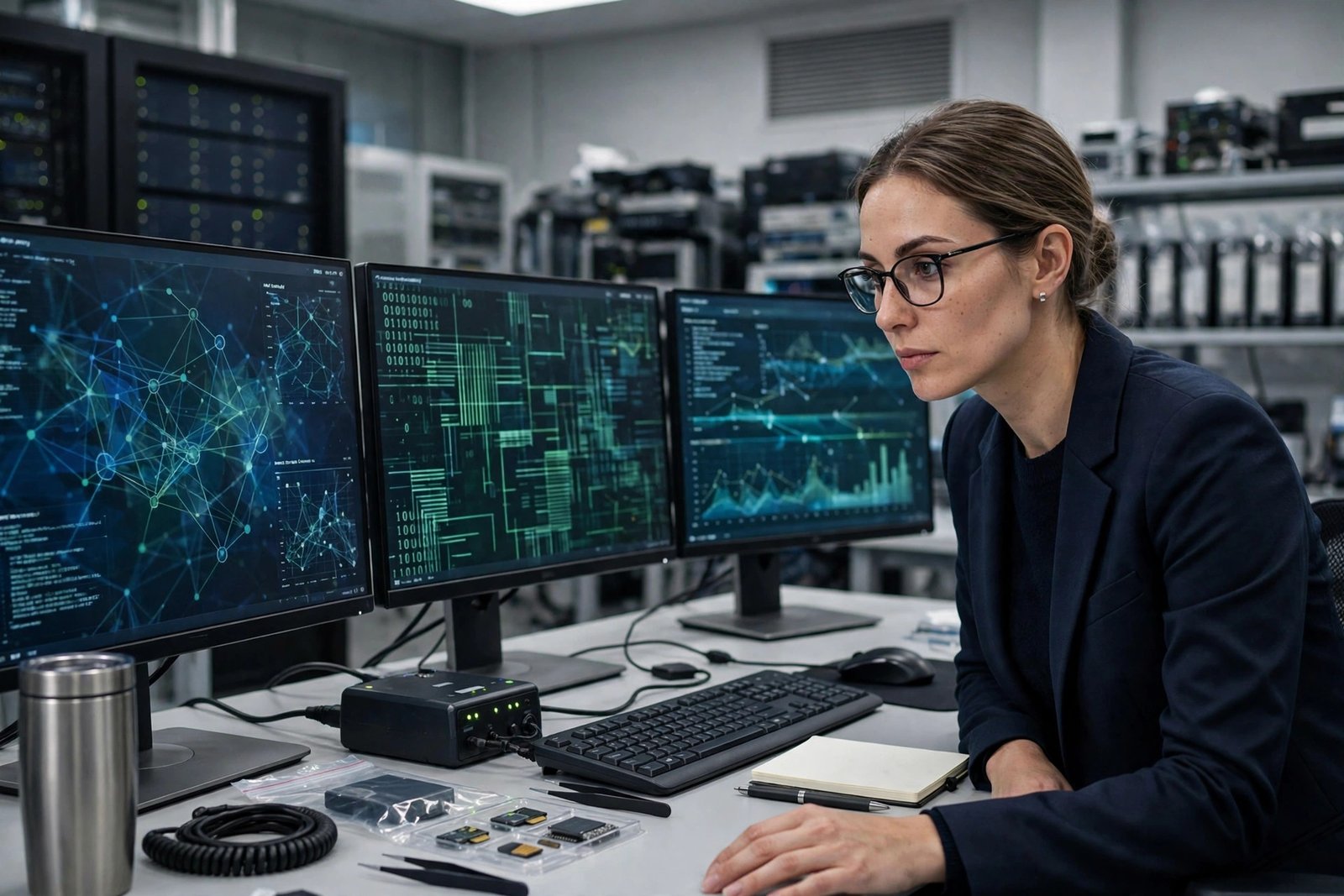
Digital forensics is the discipline of finding, preserving, analysing and presenting digital evidence in a form that can stand up to scrutiny. When a company suffers a data breach, when a phone or a laptop is seized as part of a criminal investigation, when an employee is suspected of stealing trade secrets, or when a disputed transaction needs to be reconstructed from logs and metadata, someone has to do the painstaking technical work of recovering the truth from devices, networks and cloud systems without altering it in the process. That someone is a digital forensic investigator, analyst or examiner, and the master’s degree in digital forensics is the most direct academic route into that work.
An MS in Digital Forensics abroad is designed for students who already have a technical foundation — usually in computer science, information technology, cybersecurity, electronics or a related field — and who want to specialise in the investigative side of computing. It is not a general cybersecurity degree, although the two fields overlap heavily. A general cybersecurity master’s teaches you how to defend systems and prevent attacks. A digital forensics master’s teaches you what to do after an incident has happened: how to image a drive write-blocked, how to recover deleted files, how to trace an attacker’s path through network logs, how to analyse malware safely, how to handle mobile devices and cloud artefacts, and how to write a report and give evidence that a court, a regulator or a board of directors can rely on.
This guide explains the degree in full: what you will study, who is eligible, what it costs in the main study destinations, which universities and countries are strongest for it, what careers it leads to and what those careers actually pay according to official statistics, and how to fund it. It is written for international students planning 2026 and 2027 intakes, and it is deliberately careful about figures. Salary numbers in this guide come from the United States Bureau of Labor Statistics and from Canada’s official Job Bank, with the source and year stated beside each figure. Where no official figure exists for a narrow job title such as digital forensic analyst — the Bureau of Labor Statistics does not publish a separate category for it — this guide says so plainly and uses the closest official occupation instead of inventing a number.
At a glance
| Feature | What to expect |
|---|---|
| Degree level | Master’s degree, usually MSc or MS, sometimes offered as a specialisation within cybersecurity or computer science |
| Typical duration | 1 year full-time in the UK and Ireland; 1.5 to 2 years in the USA, Canada, Australia and much of Europe |
| Who it suits | Computing graduates who enjoy detail, puzzles, methodical lab work and clear written reporting, and who are comfortable with legal and ethical constraints |
| Core subjects | Computer forensics, network forensics, mobile forensics, malware analysis, incident response, cryptography, cyber law and evidence handling |
| Typical entry requirement | A bachelor’s degree in computing or a closely related subject, usually with a good grade; some programmes accept relevant work experience |
| English requirement | Usually IELTS 6.0 to 7.0 overall, or an equivalent TOEFL or PTE score, depending on the university and country |
| Common careers | Digital forensic analyst, incident responder, malware analyst, e-discovery analyst, forensic consultant, security analyst |
| Closest official salary benchmark (USA) | Information security analysts: median $129,180 per year in May 2025 (BLS) |
What is digital forensics, and what does the degree actually teach?
Digital forensics rests on a simple but demanding idea: digital evidence is fragile. Switching a device on, opening a file, or connecting a drive to a normal computer can change timestamps, overwrite deleted data and destroy the very evidence you are trying to preserve. The first skill every digital forensics student learns, therefore, is preservation. You learn to work with write blockers, to create forensic images that are bit-for-bit copies of the original, and to verify those images with hash values so that you can prove, months later, that nothing changed. Chain of custody — the documented, unbroken record of who handled evidence, when, and why — runs through everything you do, because evidence without a chain of custody is evidence a defence lawyer can challenge.
From that foundation, a typical curriculum branches into several forensic domains. Computer forensics covers file systems, operating systems, deleted and hidden data, registry and artefact analysis on Windows, macOS and Linux systems. Network forensics teaches you to read packet captures, firewall and proxy logs, and intrusion detection alerts, and to reconstruct what happened on a network during an incident. Mobile forensics deals with smartphones and tablets, including app data, location artefacts and cloud-synchronised content, and the legal and technical limits of extracting it. Memory forensics examines volatile RAM, which can reveal running malware, encryption keys and open network connections that disappear when a machine is switched off. Malware analysis, taught in a safely isolated lab, shows you how to observe what malicious software does without letting it escape, and how to write indicators of compromise that other defenders can use.
Around those technical cores sit three subjects that separate a good forensic graduate from a merely technical one. The first is cyber law and ethics: search and seizure, privacy law, data protection rules, admissibility of evidence, and the different standards that apply in criminal, civil and corporate investigations. The second is incident response: how to triage a live breach, contain it, preserve evidence while the business is still operating, and coordinate with legal, communications and management teams under pressure. The third is reporting and expert testimony: writing findings in plain, precise language, distinguishing fact from inference, and defending your method under cross-examination in a mock court or moot exercise. Many programmes include exactly such an exercise, and students consistently report that it is the part of the degree that changes how they write and think.
Most programmes also include a substantial project or dissertation. This is where you can specialise: forensic analysis of a particular platform, a study of anti-forensic techniques, a tool evaluation, an investigation of internet-of-things devices, or a piece of research with a partner organisation. Choose this project strategically. Employers read it as a signal of what you can actually do, and a well-chosen project — for example, on cloud forensics or on memory analysis of a current operating system — can matter more in an interview than a module grade.
How digital forensics differs from cybersecurity and from traditional forensic science
Students often confuse three neighbouring fields, and choosing the wrong one is an expensive mistake, so the distinction is worth making clearly. Cybersecurity is primarily defensive and preventive: building secure systems, monitoring for attacks, patching vulnerabilities and managing risk. Digital forensics is primarily investigative and retrospective: reconstructing events after they have happened, with an emphasis on evidence integrity and legal admissibility. The two overlap in incident response, and many professionals move between them, but their day-to-day work feels different. A security analyst watches live dashboards and responds to alerts. A forensic analyst spends long, quiet hours in a lab reconstructing a timeline from fragments.
Traditional forensic science — DNA, toxicology, fingerprints, ballistics — works with physical evidence in a laboratory and usually requires a natural-science background. Digital forensics works with data, and its laboratory is a computer. Some programmes combine the two, especially in the United Kingdom where forensic science degrees have a long history, but a dedicated MS in Digital Forensics is a computing degree first and a forensic degree second. If your interest is in crime scenes and biology, this is probably not your degree. If your interest is in computers, networks and puzzles, and you like the idea that your work might end up in a courtroom, it probably is.
Eligibility and entry requirements
Entry requirements vary by university, but the pattern is consistent across the main destinations. A bachelor’s degree in computer science, information technology, software engineering, cybersecurity, electronics, mathematics or a closely related discipline is the standard expectation. Most universities ask for a good second-class honours degree or its equivalent in their grading system — roughly a 60 percent average or a GPA of around 3.0 on a 4.0 scale, though the exact conversion depends on your home country’s system and on the university. Some programmes state a minimum in computing or mathematics modules specifically, because students without programming and operating-systems knowledge struggle with the lab work.
What if your bachelor’s degree is not in computing? You are not automatically excluded, but you will need to make a case. Relevant work experience in IT support, network administration, security operations or law enforcement can compensate, particularly in the United States and Australia, where admissions are more holistic. Some universities offer a pre-master’s or conversion route, and a few accept graduates from any discipline onto a longer programme with foundational computing modules. A strong statement of purpose that shows genuine engagement — a home lab, a capture-the-flag competition, an online forensic challenge, a relevant certification such as CompTIA Security+ — helps considerably more than generic enthusiasm. Admissions tutors read hundreds of statements that say the applicant is passionate about cybersecurity; the ones that stand out describe something the applicant has actually done.
English language requirements are a separate hurdle and should be planned early. The United Kingdom typically asks for IELTS 6.0 to 6.5 overall, with no band below 5.5 or 6.0. The United States, Canada and Australia typically ask for IELTS 6.5 to 7.0, or a TOEFL iBT score in the region of 80 to 100. Some universities waive the English test if you studied in English for a qualifying period, but the rules are specific and change, so confirm the waiver policy on the official programme page before assuming you qualify. A number of programmes also require an interview, particularly for competitive cohorts, and a small number ask for a background check, because forensic work can involve sensitive material and, in law-enforcement placements, security clearance.
| Destination | Typical academic requirement | Typical English requirement | Notes |
|---|---|---|---|
| United Kingdom | 2:2 honours or above in computing or a related subject | IELTS 6.0–6.5 overall | One-year master’s; Graduate Route work permission after graduation, with an announced shortening to 18 months from 1 January 2027 |
| United States | Bachelor’s in computing or related field; GRE often optional now | IELTS 6.5–7.0 or TOEFL 80–100 | STEM-designated programmes can support extended post-study practical training; check the programme’s STEM status |
| Canada | Four-year bachelor’s, usually with a B average in the final years | IELTS 6.5 overall, no band below 6.0 | Post-Graduation Work Permit length depends on programme length; field-of-study rules apply to some permits |
| Australia | Bachelor’s in computing or a cognate discipline | IELTS 6.5 overall, no band below 6.0 | Two-year programmes are common; check current post-study work settings before applying |
| Germany | Bachelor’s in computer science or a related field; some English-taught options | IELTS 6.5 or equivalent for English-taught programmes | Many public universities charge low or no tuition, but living costs and a blocked account apply |
Tuition fees and living costs
Fees for a master’s in digital forensics vary enormously by country, by university and by whether you are charged a domestic or international rate, and any guide that gives you a single average figure for the world is misleading you. The honest way to plan is to work with ranges, confirm the exact fee on the official programme page for your intake year, and then add living costs, which are often as large as the tuition itself. The table below gives broad, indicative planning ranges for international students; they are not quotations, and universities revise fees annually.
| Destination | Indicative international tuition per year | Living-cost planning note |
|---|---|---|
| United Kingdom | Commonly in the low to mid tens of thousands of pounds for a one-year master’s | Student visa maintenance is GBP 1,529 per month in London and GBP 1,171 per month outside London; for applications on or after 30 November 2026 the figures rise to GBP 1,570 and GBP 1,203 |
| United States | Very wide: public universities are usually cheaper than private ones, and total programme cost depends on duration | Budget for housing, health insurance and books on top of tuition; health cover is often mandatory |
| Canada | Commonly in the mid tens of thousands of Canadian dollars per year | Proof of funds is set by Immigration, Refugees and Citizenship Canada and is revised periodically; check the current figure before you apply |
| Australia | Commonly in the tens of thousands of Australian dollars per year | The Australian government requires evidence of living costs of AUD 29,710 per year for a primary student applicant, plus tuition and travel amounts |
| Germany | Often low or no tuition at public universities, with a semester contribution; private programmes charge much more | The blocked account requirement for a student visa is EUR 11,904 per year |
Three cost traps catch international students in this field in particular. The first is equipment and software: some programmes expect you to have a capable laptop, and while most forensic tools are provided in university labs, a home lab for practice is a real advantage and a real expense. The second is certification: employers value vendor-neutral certifications, and exam fees are separate from tuition. The third is the cost of a longer programme: a two-year master’s in North America or Australia can cost substantially more in total than a one-year master’s in the United Kingdom, even if the annual fee looks similar, and the extra year is also a year of living costs and a year out of full-time work. On the other hand, a two-year programme may give you more time for an internship, a research assistantship or a part-time forensic placement, which can be worth more than the saving. Compare total programme cost, not just the annual fee, and use the tuition fee calculator and the cost of living calculator to model your own budget rather than relying on a headline number.
Top universities and countries for digital forensics
There is no single official ranking of digital forensics master’s programmes, and this guide does not invent one. The honest way to choose is to look at a combination of factors: whether the programme has dedicated forensic laboratories rather than shared computer rooms, whether staff are active practitioners or researchers in forensics, whether the programme has links with law enforcement, government labs or forensic consultancies, whether it includes a placement or a live case project, and whether its graduates are employed in forensic roles. The rankings directory can help you compare universities on published QS and THE measures, but a university’s overall rank is a weak proxy for the quality of one specialist laboratory.
The United Kingdom has one of the deepest traditions in this field, with several universities offering dedicated forensic computing degrees, strong links to police forces and forensic providers, and one-year master’s programmes that appeal to students who want to qualify quickly. The United States offers the largest market and the deepest employer base, with programmes at large research universities and at institutions close to federal agencies and defence contractors, where forensic and incident-response hiring is concentrated. Canada combines strong computer science departments with a post-study work route that many international graduates value, and its universities in Ontario, British Columbia and Quebec are frequent choices. Australia has well-regarded cybersecurity and forensics programmes, particularly in Canberra, Melbourne and Sydney, where government and defence employers are significant. Germany and the Netherlands offer strong technical programmes, some in English, at much lower tuition, and are worth serious consideration if cost is your binding constraint.
When you shortlist, read module lists, not prospectus slogans. A programme that lists disk forensics, network forensics, mobile forensics, memory forensics and malware analysis as separate, lab-based modules is a different proposition from a general cybersecurity programme with a single forensics elective. Ask whether the programme teaches current tools and current operating systems, whether the dissertation can be done with an external partner, and what the most recent cohort went on to do. If a university cannot answer those questions, that is itself an answer. Browse the universities directory and the Courses and Programs directory to compare options side by side, and consider the related MSc Computer Science profile if you want a broader degree with a forensic specialisation rather than a dedicated forensic degree.
Careers and salaries: what official statistics actually say
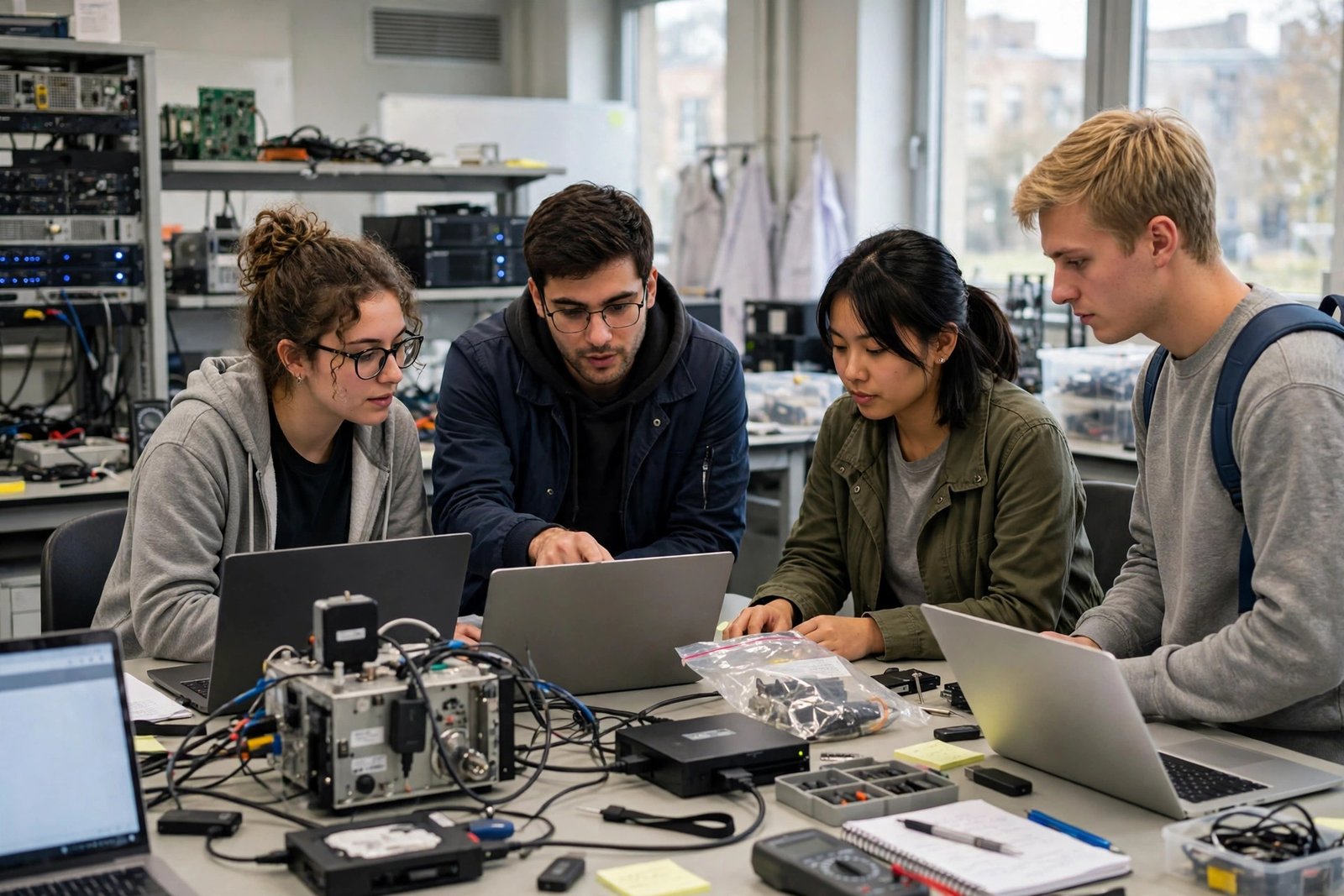
Digital forensics graduates work in a wider range of settings than most applicants expect. Law enforcement and government forensic laboratories are the most visible employers, but the majority of jobs are in the private sector: incident-response teams at large companies, specialist forensic consultancies, the big accounting and advisory firms’ forensic technology practices, e-discovery providers, financial institutions, insurance companies investigating fraud, and technology companies’ trust-and-safety and internal-investigations teams. A forensic analyst in a consultancy may work on a data-breach investigation one month, an employment dispute the next, and an intellectual-property theft case after that. The variety is one of the field’s attractions, and also one of its demands: you must be able to write for lawyers, managers and engineers in the same week.
Typical early roles include digital forensic analyst, forensic examiner, incident responder, security operations centre analyst with a forensic brief, and e-discovery analyst. With experience, graduates move into senior forensic analyst, incident-response lead, forensic manager, malware analyst, threat-intelligence analyst and expert-witness roles, and some move sideways into penetration testing, security engineering or security management. A minority, usually after several years of practice and often with a law or accountancy qualification alongside, become independent forensic consultants. That path pays well for established practitioners but is not a realistic first job, and any programme that implies otherwise is overselling.
On pay, precision matters, because this is where most marketing material invents numbers. The United States Bureau of Labor Statistics does not publish a separate occupation called digital forensic analyst. It groups much of this work under information security analysts, and it also publishes forensic science technicians as a separate, largely laboratory-based occupation. The table below reports those official figures exactly as published, with their dates, and does not blend them into a single invented forensic salary.
| Occupation (official BLS category) | Median annual wage | Projected growth | Source and reference |
|---|---|---|---|
| Information security analysts (USA) | $129,180 per year | 21% from 2025 to 2035, much faster than average; about 14,100 openings per year | U.S. Bureau of Labor Statistics, Occupational Outlook Handbook, May 2025 |
| Forensic science technicians (USA) | $67,440 per year | 13% from 2024 to 2034, much faster than average | U.S. Bureau of Labor Statistics, Occupational Outlook Handbook, May 2024 |
| Software developers and programmers (Canada, for comparison) | CAD 48.08 per hour, median (Job Bank, reference period 2023–2024) | Not stated here; consult Job Bank for the current outlook | Government of Canada Job Bank, wage data sourced from Statistics Canada’s Labour Force Survey, reference period 2023–2024 |
Read that table carefully, because the gap between the two American figures tells you something important. The information security analyst figure reflects a broad, largely private-sector occupation in which many roles are in technology and finance, and it is the closest official benchmark for a graduate who goes into corporate incident response or forensic consultancy. The forensic science technician figure reflects a largely public-sector, laboratory-based occupation, and it is closer to the pay of a graduate who joins a police or state forensic laboratory. Neither figure is a promise about what you personally will earn, and both are medians: half of workers in the occupation earn more, half earn less, and location, employer, clearance and experience move the number substantially. A graduate in a high-cost American city working for a consultancy will typically earn well above the technician median; a graduate in a public laboratory in a lower-cost region may earn below the information security median. Treat official medians as anchors for planning, not as offers.
For Canada, the official Job Bank reports a national median wage of CAD 48.08 per hour for software developers and programmers and CAD 56.73 per hour for software engineers and designers in Ontario, both for the reference period 2023–2024 and sourced from Statistics Canada’s Labour Force Survey. Those are not digital forensics figures, and this guide does not present them as such; they are included because many Canadian forensic roles are advertised under software and systems titles, and because they give a realistic sense of the Canadian technology labour market. Check the current Job Bank figure for your target province before you rely on it, since wage data is revised.
Certifications deserve a paragraph of their own, because in forensics they matter more than in many computing fields. Employers commonly look for, or will fund, certifications from bodies such as the International Association of Computer Investigative Specialists, the EC-Council’s computer hacking forensic investigator credential, SANS Institute forensic courses, and vendor certifications for the major forensic suites. A master’s degree gets you interviewed; a recognised certification plus a strong project portfolio gets you hired into the more competitive roles. Plan certification costs and study time into your first two years after graduation, and be wary of any provider that promises a certification will guarantee employment. It will not.
Scholarships and funding for digital forensics students
Funding for a specialist master’s is less plentiful than for a general computer science degree, but it exists, and it rewards early applications. University merit scholarships are the most common source: many universities automatically consider international applicants for partial tuition awards, and a strong undergraduate record plus a clear statement can secure a meaningful reduction. Government scholarships — the major national schemes in the United Kingdom, Australia, Canada and Germany, and the large American university assistantships — are competitive and have deadlines many months before the programme starts, so begin the scholarship search at the same time as the university search, not after you have an offer.
Two practical funding routes are often overlooked. The first is the graduate teaching or research assistantship, common in the United States and Canada, in which you work part-time for a department in return for a stipend and sometimes a tuition waiver. Forensic and security labs frequently need assistants, and a master’s student who can run a lab session or support a research project is valuable. The second is employer sponsorship for students already working in IT, policing or the armed forces; several employers fund a forensic master’s for staff they intend to move into investigative roles, and it is worth asking your current employer before you resign. Explore the scholarships directory early, and use the scholarship finder to match your profile to current opportunities. Remember that a scholarship that covers only tuition still leaves living costs, and that some awards require you to return to your home country or to work in a particular sector for a period afterwards. Read the conditions before you accept.
How to apply: a realistic timeline
For a September or autumn intake, a realistic timeline starts twelve to fifteen months beforehand. In the first three months, research programmes, read module lists, and sit down with the cost tables in this guide and your own savings to set a budget. In the next three months, prepare for and take your English test if you need one, request transcripts and references, and draft a statement of purpose that is specific to each programme — tutors notice a generic statement immediately. Applications themselves usually open in the autumn for the following year, and the strongest programmes fill early, even where they do not publish a hard deadline. Scholarship deadlines are often earlier than programme deadlines, sometimes by several months, and visa processing takes weeks to months depending on your country, so do not leave the visa application until you have booked accommodation and flights. The application deadline finder and the document checklist can help you keep the moving parts in order, and the visa requirement checker is a useful starting point before you read the official immigration guidance for your destination.
Your statement of purpose deserves particular care for this degree. The strongest statements do three things: they explain why forensics specifically, rather than cybersecurity in general; they show evidence of the temperament the work requires — patience, attention to detail, comfort with ambiguity, respect for procedure; and they connect the degree to a plausible next step, whether that is a forensic laboratory, an incident-response team or a research career. If you have done a forensic challenge, built a home lab, or investigated a simulated incident, describe what you did and what you learned, including what went wrong. Admissions tutors and employers both value a candidate who can describe a mistake and a correction more than one who claims a flawless record.
Is this degree worth it?
The honest answer is that it depends on what you compare it with and what you want from your working life. Compared with a general computer science master’s, a digital forensics master’s is narrower: it opens fewer doors in general software engineering, but it opens specific doors that a general degree does not, and in a field where employers complain about a shortage of candidates who can do forensic work properly, specialisation is an advantage rather than a risk — provided you genuinely enjoy the work. The work itself is not glamorous in the television sense. It is methodical, documentation-heavy, and sometimes frustrating, because evidence is incomplete, devices are damaged, and cases take months. It is also absorbing, intellectually demanding and socially useful, and for the right person that combination is exactly what makes a career satisfying over decades rather than years.
Financially, the official figures above support a careful optimism. Information security analysts in the United States earn a median of $129,180 per year as of May 2025, with employment projected to grow 21 percent from 2025 to 2035, which is much faster than the average for all occupations. That is a strong labour-market backdrop, but it is not a guarantee for any individual, and it says nothing about the market in your home country or in the country where you hope to stay after graduation. Weigh the total cost of the degree, including living costs and lost earnings, against a realistic starting salary in the market you actually intend to work in, and be sceptical of any institution that quotes you a salary figure without a source and a year. If you do that arithmetic honestly and the degree still makes sense, and if the work itself appeals to you, then this is a degree worth doing, and doing well.
Frequently asked questions
Do I need a computer science degree to study digital forensics?
Most programmes expect a computing or closely related bachelor’s degree, but relevant work experience in IT, network administration, security operations or law enforcement can compensate at many universities, particularly in the United States and Australia. Check the specific programme’s entry criteria, and strengthen your application with a home lab project, a forensic challenge or a relevant certification.
Is digital forensics the same as cybersecurity?
No. Cybersecurity is mainly about preventing and defending against attacks, while digital forensics is mainly about investigating incidents after they happen and preserving evidence to a legal standard. The fields overlap in incident response, and many professionals work across both, but the degrees emphasise different skills.
How long does an MS in Digital Forensics take?
Usually one year full-time in the United Kingdom and Ireland, and one and a half to two years in the United States, Canada, Australia and much of Europe. Part-time options, where available, take longer.
What salary can I expect after graduation?
No honest guide can promise you a salary. The closest official American benchmark is information security analysts, with a median of $129,180 per year in May 2025 according to the Bureau of Labor Statistics, while forensic science technicians earned a median of $67,440 in May 2024. Your actual pay will depend on your country, city, employer, clearance and experience.
Can international students work in law enforcement after this degree?
Often not immediately, because many law-enforcement forensic roles require citizenship, residency or security clearance in the employing country. Private-sector forensic consultancies, incident-response teams and corporate investigation teams are usually more accessible to international graduates, so plan your target employer type before you choose a destination.
Do I need certifications as well as the degree?
Not to graduate, but recognised forensic certifications significantly improve your competitiveness for the best roles, and many employers fund them. Treat certification as part of your first two years after graduation, not as a substitute for the degree.
Is a one-year UK master’s a disadvantage compared with a two-year programme?
Not necessarily. A one-year programme is cheaper in total and gets you into work sooner, while a two-year programme gives more time for internships and research. The deciding factors should be the quality of the forensic laboratories, the placement opportunities and the total cost, not the duration alone.
Sources and verification
- U.S. Bureau of Labor Statistics, Occupational Outlook Handbook: Information Security Analysts — median annual wage $129,180 in May 2025; employment projected to grow 21 percent from 2025 to 2035.
- U.S. Bureau of Labor Statistics, Occupational Outlook Handbook: Software Developers, Quality Assurance Analysts, and Testers — median annual wage $134,040 in May 2025; employment projected to grow 10 percent from 2025 to 2035.
- U.S. Bureau of Labor Statistics, Occupational Outlook Handbook: Web Developers and Digital Designers — web developers median $92,650 and web and digital interface designers median $104,000 in May 2025.
- U.S. Bureau of Labor Statistics, Occupational Outlook Handbook: Forensic Science Technicians — median annual wage $67,440 in May 2024; employment projected to grow 13 percent from 2024 to 2034.
- Government of Canada Job Bank, wage data sourced from Statistics Canada’s Labour Force Survey, reference period 2023–2024 — software developers and programmers, national median CAD 48.08 per hour; software engineers and designers in Ontario, median CAD 56.73 per hour.
- Official university programme pages for the universities you shortlist — confirm fees, entry requirements, English requirements and module lists for your intake year, as all of these change annually.
- Official immigration guidance for your destination country — confirm student visa maintenance, proof-of-funds and post-study work rules before you apply, since announced changes, such as the United Kingdom’s announced Graduate Route shortening to 18 months from 1 January 2027, must be kept separate from current rules.
Figures change yearly — confirm fees and requirements on the official university page before you apply. StudyGraduate is an information portal, not an agency — we never promise admission, jobs, salaries or visa or permanent-residence outcomes, and nothing in this guide should be read as such a promise.