
MS in Mechatronics Engineering Abroad: Eligibility, Fees, Top Universities and Careers
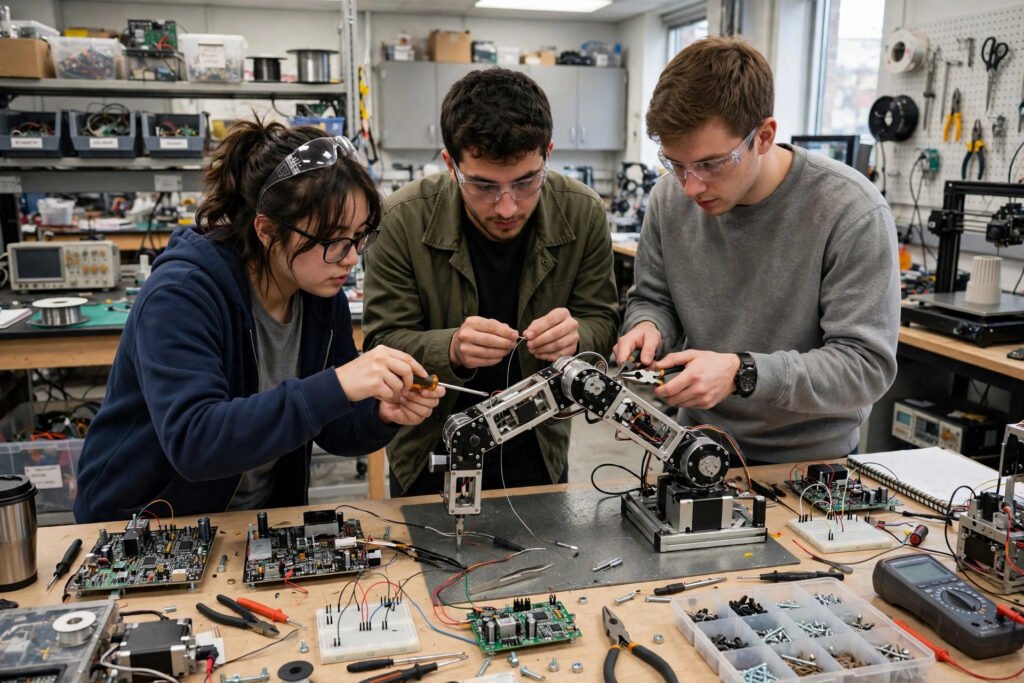
Mechatronics is the engineering of smart machines: systems in which mechanical parts, electronics, sensors, actuators and software work together so that a machine can sense, decide and act. A robot arm that picks up a fragile object without crushing it, a drone that holds its position in wind, an automated warehouse that moves goods without human drivers, a prosthetic hand that responds to muscle signals — all of these are mechatronic systems, and an MS in Mechatronics Engineering abroad teaches you to design, build, program and test them. It is a deliberately interdisciplinary degree, and that breadth is both its greatest strength and its main challenge: you must be comfortable moving between mechanics, electronics and code in a single project.
This guide explains what the degree covers, who it suits, what universities require, what it costs in the main destination countries, where to study it, and what careers follow. It is written for international students planning 2026 or 2027 entry. Where a salary or employment figure is given, it comes from an official source and is labelled as such, because mechatronics itself has no single official occupation code in most statistics systems, so honest reporting means using the closest official occupations and saying so. If you are still comparing programmes, browse the Courses & Programs directory, and test your career direction with the career path explorer tool.
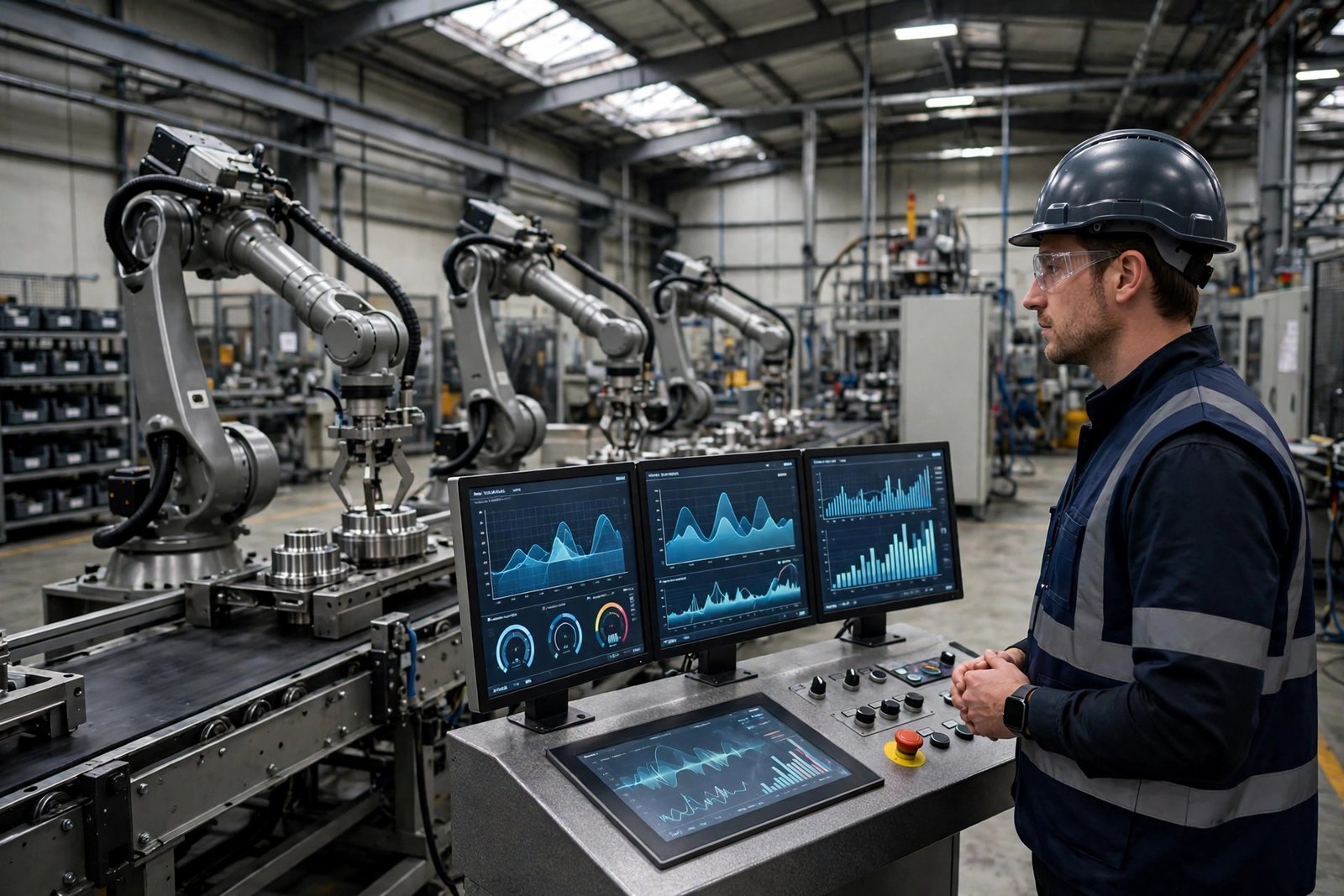
The demand for mechatronics graduates comes from automation spreading into almost every sector. Manufacturing uses robots and automated inspection; agriculture uses autonomous tractors and drones; healthcare uses surgical robots and rehabilitation devices; logistics uses automated warehouses and delivery systems; energy uses automated inspection and control of wind turbines and grids. Employers in these sectors do not just want a mechanical engineer who can tolerate electronics, or a programmer who can tolerate hardware: they want engineers who can own a whole system, debug it when sensors, mechanics and software interact in unexpected ways, and deliver a machine that works reliably outside the laboratory.
At a Glance: MS in Mechatronics Engineering
| Feature | Typical position |
|---|---|
| Degree level | Master of Science (MS, MSc or MEng, depending on country and university) |
| Typical duration | 1 year in the UK; 1.5 to 2 years in the USA, Canada and Australia; 2 years (4 semesters) in Germany |
| Usual entry qualification | A bachelor’s degree in mechanical, electrical, electronics, mechatronics, robotics or computer engineering, or a closely related subject |
| Core subjects | Robotics, control systems, embedded systems, sensors and actuators, mechanical design, programming and system integration |
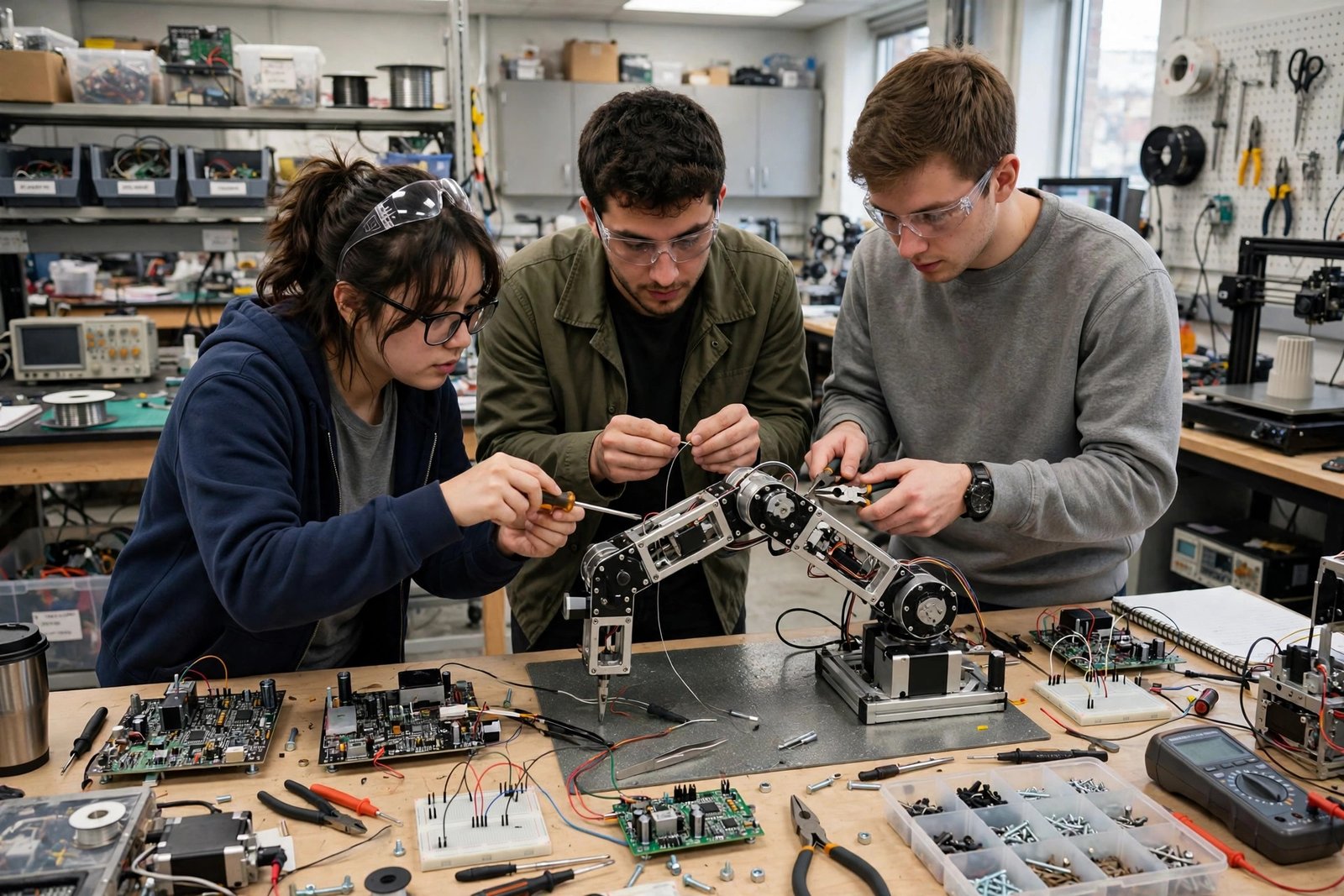
| Typical final project | Designing, building and testing a working robotic or automated system, often with an industry partner |
| Best suited to | Students who enjoy building things, debugging hardware and software together, and working in teams on practical projects |
| Key employers | Robotics, automotive, aerospace, manufacturing automation, medical devices, logistics and consumer electronics companies |
What You Study in an MS in Mechatronics Engineering
The mechanical strand covers the design of the machine itself: kinematics and dynamics, mechanisms, machine elements, materials selection and manufacturing methods. You will learn to model how a robot arm moves, calculate the forces and torques its motors must deliver, design a gripper that holds an object securely, and choose materials and processes that keep weight down while maintaining strength. Computer-aided design and simulation are central here, and many programmes expect you to validate a simulation against a physical prototype, because a model that has never been tested against hardware is only a hypothesis.
The electronics and control strand covers sensors, actuators, signal processing and control theory. You will work with encoders, cameras, force and proximity sensors, DC and servo motors, stepper motors and pneumatic actuators, and you will learn to read a datasheet, design a circuit, and interface hardware with a microcontroller or embedded computer. Control theory — feedback, PID control, state-space methods and, increasingly, model-predictive and learning-based control — explains how a system stays stable and accurate when conditions change. This is the strand that most distinguishes mechatronics from pure mechanical engineering, and it is where many students discover whether they enjoy the subject, because control problems are unforgiving: a system that works in simulation may oscillate, overshoot or fail on real hardware.
The computing strand covers embedded programming, real-time systems, computer vision and, in many programmes, machine learning for perception and decision-making. Languages commonly used include C and C++ for embedded work and Python for prototyping, vision and data analysis, and frameworks such as ROS (Robot Operating System) appear in many robotics laboratories. You will learn to write code that must run on time, every time, on limited hardware, which is a different discipline from writing a web application. Version control, testing and documentation matter here too, because mechatronic systems are built by teams, and a project that only one person understands cannot be maintained or extended.
System integration ties the strands together, and it is the heart of the degree. Integration modules and the final project ask you to combine mechanics, electronics and software into a working system, test it against a specification, and iterate when it fails — as it will, repeatedly. Typical projects include an autonomous mobile robot, a robotic manipulator with vision guidance, an automated inspection system, a rehabilitation device or a drone with autonomous navigation. Specialisation options commonly include industrial robotics, autonomous vehicles, medical robotics, human-robot interaction and smart manufacturing. Choose your specialisation by the systems you enjoy building and the industries near your chosen university, and check that the department has a laboratory you can actually use, not just a list of equipment on a web page.
Eligibility and Entry Requirements
Most programmes ask for a bachelor’s degree in mechanical, electrical, electronics, mechatronics or robotics engineering, or in computer engineering with substantial hardware content. Applicants from pure mechanical engineering are usually accepted but may need to show programming or electronics experience; applicants from pure computer science may need to show mechanics or electronics coursework. A grade equivalent to a UK 2:1 or a GPA around 3.0 on a 4.0 scale is typical, with some flexibility for applicants with strong project or work experience. A portfolio of built projects — a robot, an automation system, an embedded device, with photographs, code and a short explanation of what you designed — can strengthen an application more than a generic statement, because it proves the practical skills the degree demands.
English language requirements follow the usual pattern for English-taught programmes: IELTS around 6.5 overall with no band below 6.0, or an equivalent TOEFL score, with some competitive programmes asking for 7.0. English-taught programmes in Germany require IELTS or TOEFL, while German-taught programmes require German proficiency. Standardised tests are increasingly optional in the United States, where many programmes have dropped a GRE requirement, but a strong quantitative score can still support an application with weaker grades. References from supervisors of hardware projects or internships in automation, robotics or manufacturing carry particular weight, because they speak directly to the skills the programme will test.
Programming and mathematics preparation deserve honest self-assessment before you apply. You will need linear algebra, calculus and basic probability, plus comfort with programming in at least one language. If your undergraduate degree was light on programming, complete a structured course in Python or C++ and build a small embedded project before you start, and mention both in your statement. Similarly, if you have never soldered a circuit or used an oscilloscope, a short practical course or a hobby project will make the first laboratory modules far less stressful. Admissions tutors do not expect you to arrive as a finished mechatronics engineer — that is what the degree is for — but they do expect evidence that you know what the work involves and that you enjoy it.
Application timing matters as much as qualifications. Deadlines for funded places, scholarships and popular programmes often fall many months before the start date, and research-based programmes in Canada may require you to secure a supervisor before admission, which means contacting professors with a specific, well-researched proposal rather than a generic enquiry. Use the document checklist tool to track transcripts, test scores, references and portfolio materials, and apply to a spread of programmes rather than betting everything on one university.
Eligibility at a Glance by Country
| Country | Typical academic requirement | Language requirement | Notes |
|---|---|---|---|
| United States | 4-year bachelor’s in a relevant engineering subject; GPA around 3.0 | TOEFL or IELTS | GRE often optional; robotics laboratories and industry links vary widely |
| United Kingdom | 2:1 honours or equivalent in a relevant subject | IELTS around 6.5 overall | Most master’s last 1 year; strong robotics and manufacturing research base |
| Canada | 4-year bachelor’s with strong grades in final years | IELTS or TOEFL | Research master’s often require a supervisor’s agreement before admission |
| Germany | Recognised bachelor’s in a relevant subject | English or German, depending on programme language | Strong automotive and industrial automation links; check internship semesters |
| Australia | Bachelor’s in a relevant subject | IELTS or equivalent | 1.5 to 2 years; robotics and mining automation are notable strengths |
Tuition Fees and Living Costs
As with other engineering master’s degrees, tuition varies more by country and university than by programme title, and the only reliable figure is the one published on the official programme page for your intake year. United States tuition is highest at private universities and lower, for residents, at public universities, and assistantships that waive tuition and pay a stipend are a major funding route for research-oriented students. The United Kingdom’s one-year format reduces total living costs even where the annual fee is high. Canada and Australia publish programme fees on university websites and require proof of funds for immigration, so a realistic budget must be built before you apply, not after you receive an offer.
Germany is again the low-tuition option for many students: many public universities charge no tuition for consecutive master’s programmes, only a semester contribution, although some states and some private or non-consecutive programmes do charge fees. The blocked-account requirement for living costs is EUR 11,904 for a year under the 2026 rules, and health insurance, housing and travel are additional. Use the tuition fee calculator and the cost-of-living calculator to model your total cost, and remember that mechatronics projects can add costs of their own: components, prototype materials and conference travel are not always covered by the university, so ask the department what project costs students typically bear.
Government maintenance figures provide a floor for living-cost planning. The UK student visa requirement is GBP 1,529 per month in London and GBP 1,171 per month outside London, rising to GBP 1,570 and GBP 1,203 for applications on or after 30 November 2026. Australia’s financial requirement figure is AUD 29,710 for a year, and Canada’s proof-of-funds figure for a single applicant outside Quebec is CAD 23,448, up from CAD 22,895. These are immigration minimums, not comfortable budgets, and rent in robotics hubs such as Boston, Munich, London or Toronto can exceed them quickly. Keep a reserve for the first month, when deposits, insurance and equipment purchases cluster before any part-time income begins.
Top Universities and Countries for Mechatronics Engineering
Germany is a natural first look for mechatronics, because its automotive, machine-tool and industrial automation industries employ mechatronics engineers at scale and many universities work closely with those employers through internships and applied research. The United States offers exceptional robotics research depth, from university laboratories to corporate research centres, and its programmes often give students access to advanced facilities and startup ecosystems. The United Kingdom combines strong robotics research with one-year degrees and a manufacturing sector that is investing heavily in automation, while Canada’s robotics and AI research, particularly in Ontario and Quebec, pairs with a post-graduation work permit system that many international graduates value.
Australia’s automation strengths are distinctive: mining automation, agricultural robotics and defence robotics all employ mechatronics graduates, and universities in Queensland, New South Wales and Victoria have laboratories in those areas. When shortlisting, prioritise the laboratory over the league table: can you use industrial robot arms, motion-capture systems, embedded hardware and a workshop, and will master’s students get supervised access or only watch demonstrations? Also check whether the programme includes an industry placement or a project with a real client, because a working system built for a real user is far more persuasive to employers than a classroom exercise. Browse the universities directory and compare candidates with the university comparison tool, and if you are deciding between mechatronics and a broader engineering degree, the Bachelor of Engineering profile sets out the undergraduate foundations that feed into it.
Post-study work rules should be verified on official government pages at the time you apply, because they change. The United States offers Optional Practical Training, with a STEM extension for designated degrees, which covers many mechatronics and robotics programmes. The United Kingdom’s Graduate Route currently allows two years after a master’s, with an announced reduction to 18 months from 1 January 2027. Canada’s Post-Graduation Work Permit can run up to three years depending on programme length, and Australia’s post-study arrangements depend on qualification level and location. Choose the programme first and the work route second, and never rely on a third-party summary of immigration rules for a decision of this size.
Careers and Salaries After an MS in Mechatronics Engineering
Mechatronics graduates work as robotics engineers, automation engineers, controls engineers, embedded systems engineers, product development engineers and systems engineers, and the official statistics that best describe those roles are the engineering occupations published by the US Bureau of Labor Statistics. Because there is no single BLS occupation called “mechatronics engineer”, the honest approach is to report the closest occupations and label them as proxies. The Bureau reports that the median annual wage for electrical engineers was $120,630 in May 2025, and for electronics engineers, except computer, it was $130,220 in May 2025, with overall employment of electrical and electronics engineers projected to grow 8 percent from 2025 to 2035, much faster than the average for all occupations, and about 16,300 openings projected each year on average over the decade.
The Bureau also reports a 2025 median pay of $73,900 per year for electro-mechanical and mechatronics technologists and technicians, which is a technician-level occupation and therefore not a graduate-engineer benchmark, but it is useful because it is one of the few official categories that names mechatronics directly. The gap between that figure and the engineer-level medians illustrates an important career point: the master’s degree is what moves you from technician-level work into engineer-level design, integration and leadership roles, and the salary difference reflects that responsibility gap. Starting salaries for new master’s graduates will sit below the national medians, which cover all experience levels, while senior robotics and controls engineers in high-demand sectors can earn well above them.
Roles differ in emphasis. Robotics engineers design and test robots and robotic systems, often specialising in manipulation, locomotion or perception. Automation engineers design production lines, specify programmable logic controllers and industrial networks, and commission systems in factories. Controls engineers design the algorithms that keep systems stable and accurate, from motor drives to autonomous vehicles. Embedded systems engineers build the hardware-software boundary: firmware, sensor interfaces and real-time operating systems. Systems engineers own the whole product, balancing mechanical, electronic, software, safety and cost requirements. Employers consistently report that the hardest skill to hire is not any single technology but system-level debugging: finding why a machine that works in parts fails as a whole, and fixing it methodically.
| Role or occupation | Official figure | Source and year |
|---|---|---|
| Electrical engineers (USA, proxy for mechatronics roles) | Median $120,630 per year | US Bureau of Labor Statistics, May 2025 |
| Electronics engineers, except computer (USA, proxy) | Median $130,220 per year | US Bureau of Labor Statistics, May 2025 |
| Electrical and electronics engineers (USA) | Employment growth 8%, 2025 to 2035 | US Bureau of Labor Statistics, Occupational Outlook Handbook |
| Electro-mechanical and mechatronics technologists and technicians (USA, technician level) | Median $73,900 per year (2025) | US Bureau of Labor Statistics, similar-occupations data |
Skills that raise a mechatronics graduate’s value include ROS and robot simulation, embedded C and C++, Python for vision and data analysis, control design and tuning, CAD and simulation, and industrial communication protocols. Just as important are safety and standards: industrial robots, autonomous vehicles and medical devices all operate under safety standards, and engineers who understand risk assessment, functional safety and testing documentation are trusted with more responsibility sooner. Build evidence of these skills in your dissertation and portfolio, with videos of working systems, test results and honest accounts of failures fixed, because employers in this field trust demonstrations far more than claims.
Scholarships for Mechatronics Engineering
Funding routes mirror those for other engineering master’s degrees: university merit scholarships, departmental awards, government scholarships such as Chevening and Fulbright, and supervisor-funded research places in Canada and Australia. Robotics and automation are also areas where industry scholarships and sponsored projects appear, because employers want a pipeline of graduates in a scarce skill area, so ask departments directly about industry-linked funding rather than relying only on central scholarship listings. Germany’s low public-university fees are again a major effective subsidy, and DAAD publishes awards for international students in engineering.
Browse the scholarships directory and use the scholarship finder tool to match awards to your profile, and note that scholarship deadlines often precede university deadlines by months. A strong scholarship application in this field should include a project portfolio and a clear statement of how the degree connects to automation or robotics needs in your home country or target industry, because funders look for impact as well as grades.
How to Choose and Apply
Shortlist six to eight programmes across at least two countries, balancing ambition, realism and safety, and record for each the official fee, length, laboratory access, placement options and deadline. Contact departments with specific questions: which robot platforms will you use, is there a workshop induction, does the dissertation involve a real client, and what do recent graduates do now? Build or document at least one working project before you apply, even a small one, and present it with photographs, code and test results. Write your statement around a system you want to build and why, not around a list of adjectives about yourself, and give referees time and material to write specific letters.
Finally, plan the practical side before accepting an offer: total cost, deposit and visa-funds deadlines, housing near laboratories that may require evening access, and health insurance. Mechatronics is a hands-on degree, and students who arrive with a working laptop, basic tools and a project idea they care about make faster progress than students who arrive only with a reading list.
Frequently Asked Questions
Is mechatronics better than mechanical or electrical engineering?
It is better if you want to build complete smart machines and enjoy working across mechanics, electronics and software. It is not automatically better: a mechanical degree goes deeper into structures and fluids, and an electrical degree goes deeper into circuits and signals, so if you know you want only one of those depths, choose the specialist degree instead.
Do I need to be good at programming for mechatronics?
Yes, programming is a core skill, not an optional extra. You will program embedded systems, robots and simulations, and you will debug code alongside hardware. You do not need to arrive as an expert, but you should enjoy programming and be willing to practise it steadily, because the degree will test it from the first term.
Which country is best for mechatronics?
Germany is strong for industrial automation and automotive applications, the USA for robotics research depth, the UK for one-year degrees and robotics research, Canada for research funding and post-study work options, and Australia for mining and agricultural automation. Choose by laboratory, industry links and budget rather than by a single ranking.
How long does the degree take?
Typically one year in the UK, two years in Germany, and 1.5 to 2 years in the USA, Canada and Australia. Programmes with an internship semester or a substantial industry project may run longer.
What is the difference between mechatronics and robotics?
Robotics is a major application of mechatronics, but mechatronics is broader: it covers any smart machine, including automated production equipment, medical devices, vehicles and consumer products, whereas robotics focuses specifically on robots. Many mechatronics programmes offer a robotics track, and many robotics programmes are built on mechatronics foundations.
Can I work in software after a mechatronics degree?
Yes, particularly in embedded software, robotics software, automation software and computer vision, where hardware understanding is an advantage. A move into pure web or enterprise software is possible but would compete with computer science graduates on their home ground, so it is a weaker use of the degree.
Do I need a PhD to work in robotics?
No. Most industry robotics, automation and controls roles are filled by bachelor’s and master’s graduates. A PhD is most valuable for research leadership, university roles and advanced perception or learning research, and it should be chosen for that reason rather than as a default next step.
Sources & Verification
- US Bureau of Labor Statistics, Occupational Outlook Handbook: Electrical and Electronics Engineers — median wages $120,630 (electrical) and $130,220 (electronics, except computer) in May 2025; employment projected to grow 8 percent, 2025 to 2035. BLS: Electrical and Electronics Engineers
- US Bureau of Labor Statistics, similar-occupations data for electrical and electronic engineering technologists and technicians — 2025 median pay $73,900 for electro-mechanical and mechatronics technologists and technicians (technician level). BLS: Electrical and Electronic Engineering Technologists and Technicians
- ABET accreditation criteria and accredited programme search — what accredited engineering programmes must deliver. ABET: What Programs Does ABET Accredit?
- UK student visa maintenance figures, Germany blocked-account figure (EUR 11,904), Australia financial requirement (AUD 29,710) and Canada proof-of-funds figure (CAD 23,448) — as summarised in the StudyGraduate guides brief; confirm the figure that applies to your application date on the official government page before applying.
Figures change yearly — confirm fees, entry requirements, visa rules and scholarship deadlines on the official university and government pages before you apply. StudyGraduate is an information portal, not an agency, and never promises admission, jobs, salaries or visa or permanent-residence outcomes.