

MS in Materials Science and Engineering Abroad: Eligibility, Fees, Top Universities and Careers
Every phone, aircraft, electric vehicle battery, medical implant and solar panel depends on a decision that most people never see: which material to use, how to process it, and how to prove it will survive years of stress, heat, corrosion and repeated use. An MS in Materials Science and Engineering abroad trains you to make those decisions with scientific rigour and engineering judgement. It sits exactly at the meeting point of physics, chemistry, mechanical engineering and manufacturing, and it is one of the most versatile engineering master’s degrees you can choose, because almost every advanced industry needs people who understand materials from the atomic scale up to the finished product.
This guide explains what the degree actually covers, who it suits, what universities look for in applicants, what it costs in the main destination countries, where to study it, and what careers it leads to. It is written for international students planning 2026 or 2027 entry, and it uses official salary and employment statistics wherever a number is given, so you can compare options on evidence rather than marketing claims. If you are still comparing degree options, start with the Courses & Programs directory, and if you already have a shortlist of universities, compare them side by side with the university comparison tool.
Materials science is not a narrow specialism, even though the name can sound like one. Graduates work on metals and alloys for aerospace, polymers and composites for automotive and sport, ceramics and glass for electronics and energy, semiconductors for computing, biomaterials for implants, and coatings, adhesives and packaging for everyday products. The common thread is a way of thinking: structure determines properties, processing controls structure, and performance in service is what finally matters. A master’s degree deepens that thinking, adds laboratory and computational skills, and usually includes a substantial research or industry project that becomes the strongest part of your CV.

At a Glance: MS in Materials Science and Engineering
| Feature | Typical position |
|---|---|
| Degree level | Master of Science (MS, MSc or MEng, depending on country and university) |
| Typical duration | 1 year in the UK; 1.5 to 2 years in the USA, Canada and Australia; 2 years (4 semesters) in Germany |
| Usual entry qualification | A bachelor’s degree in materials, mechanical, chemical, civil or electrical engineering, physics, chemistry or a closely related subject |
| Core subjects | Structure and properties of materials, thermodynamics, mechanical behaviour, characterisation, processing, polymers, metals, ceramics and composites |
| Typical final project | A laboratory research dissertation, a computational modelling project, or an industry-linked design and testing project |
| Best suited to | Students who enjoy laboratory work, quantitative analysis, and solving practical problems in manufacturing, energy, aerospace or healthcare |
| Key employers | Aerospace, automotive, energy, electronics, biomedical device, steel, chemicals and advanced manufacturing companies, plus research institutes |
What You Study in an MS in Materials Science and Engineering
The first part of most programmes rebuilds your foundations at a higher level. You will study crystallography and microstructure, phase diagrams and thermodynamics, diffusion and kinetics, and the mechanical behaviour of materials, including elasticity, plasticity, fracture and fatigue. These are not abstract topics: they explain why a turbine blade creeps at high temperature, why a weld cracks, why a polymer becomes brittle in the cold, and why a battery electrode degrades after hundreds of charge cycles. Students who enjoyed the materials and mechanics parts of their undergraduate degree usually find this core the most satisfying part of the master’s.
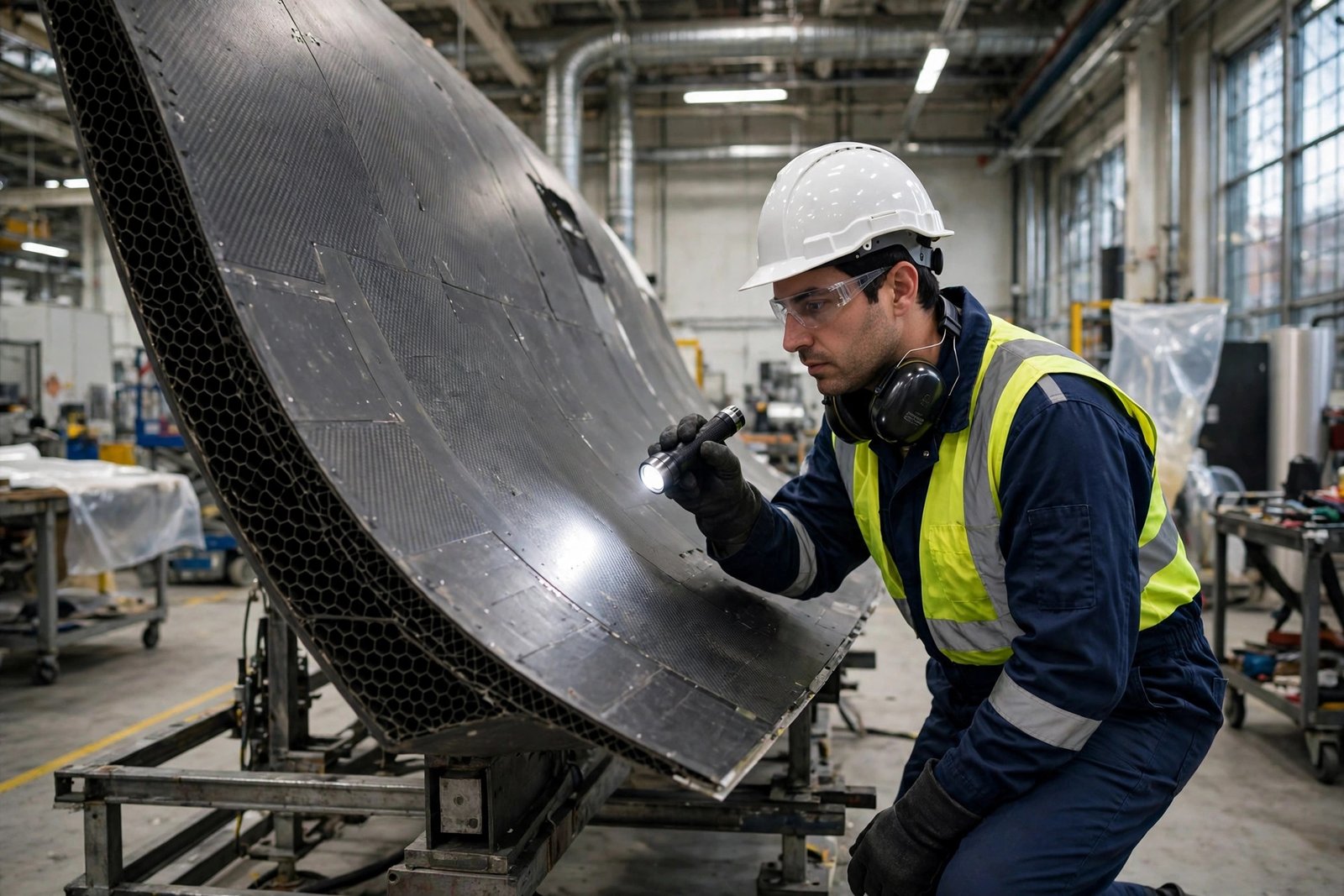
Characterisation is the second pillar, and it is where the degree becomes hands-on. You will learn how scanning and transmission electron microscopy, X-ray diffraction, spectroscopy and thermal analysis reveal what a material actually is, rather than what it was supposed to be. Many programmes also teach mechanical testing, corrosion testing, non-destructive testing and failure analysis, so you can investigate a broken component and write a defensible report on why it failed. Employers value this combination enormously, because a graduate who can both run the instrument and interpret the result correctly is far more useful than one who can only do one of those things.
Processing and manufacturing form the third pillar. Casting, powder metallurgy, additive manufacturing, thin-film deposition, polymer processing, heat treatment and surface engineering all change a material’s structure, and therefore its properties. A good programme does not just describe these processes; it asks you to select a process for a real component, justify the choice against cost, quality and sustainability, and recognise where a process introduces defects. Sustainability now runs through this teaching as well, including recycling, life-cycle assessment, lightweighting, and the substitution of scarce or hazardous materials, which are central concerns for employers under tightening environmental regulation.
After the core, you specialise. Common tracks include metals and alloys, polymers and composites, electronic and photonic materials, energy materials such as batteries and photovoltaics, biomaterials and nanomaterials. Computational materials science is a growing option, covering modelling, simulation and data-driven materials discovery, and it pairs well with programming skills learned alongside the degree. Your dissertation then lets you go deep in one area: examples include developing a stronger aluminium alloy, testing a new solid-state battery material, characterising a 3D-printed implant, or modelling stress corrosion in a pipeline steel. Choose the track by the industries you want to enter, not by which title sounds most futuristic, and check that the department has active researchers and laboratory facilities in that track before you apply.
Eligibility and Entry Requirements
Most universities ask for a bachelor’s degree in a relevant subject with a good grade, typically equivalent to a second-class honours degree in the UK system or a GPA around 3.0 on a 4.0 scale in the USA, although the exact threshold varies by institution and by how competitive the programme is. Relevant degrees include materials science and engineering, metallurgical engineering, mechanical engineering, chemical engineering, physics and chemistry. Applicants from civil or electrical engineering are often accepted if they have taken materials, mechanics or solid-state courses, but you may be asked to complete preparatory modules. A strong final-year project or laboratory experience in a materials topic strengthens an application considerably, especially where your grades are close to the threshold.
English language requirements are standard for English-taught programmes: most universities ask for an IELTS score around 6.5 overall, with no band below 6.0, or an equivalent TOEFL score, although some competitive programmes ask for 7.0. German-taught programmes in Germany require German proficiency, while English-taught international master’s programmes in Germany generally require IELTS or TOEFL instead. Always check the programme page itself, because requirements differ between departments at the same university, and a department that has just changed its requirement will show the new figure on its own page before any third-party listing catches up.
Standardised tests are less central than they used to be. Many US programmes have made the GRE optional, but a strong quantitative GRE score can still help an applicant whose undergraduate grades are weaker, or who is applying for funding. Research experience, internships in manufacturing or testing laboratories, and a clear statement of purpose matter at least as much: admissions tutors want to see that you understand what materials science involves, that you can point to a specific research group or facility you want to work with, and that your career goal connects logically to the programme. References from professors who supervised laboratory or project work carry more weight than generic references.
Some programmes also expect basic programming or data-analysis skills, and a few computational tracks prefer applicants who have used Python or MATLAB. If you lack that background, a short online course before you apply, honestly described in your statement, is a sensible investment. The same applies to laboratory safety and experimental write-ups: a master’s moves quickly, and students who arrive able to keep a proper lab notebook, analyse data statistically and present results clearly settle in faster. Use the document checklist tool to organise transcripts, certificates, references and test scores well before deadlines, because missing documents are the commonest avoidable reason for a delayed decision.
Eligibility at a Glance by Country
| Country | Typical academic requirement | Language requirement | Notes |
|---|---|---|---|
| United States | 4-year bachelor’s in a relevant subject; GPA around 3.0 | TOEFL or IELTS | GRE often optional; funding and assistantships are competitive |
| United Kingdom | 2:1 honours or equivalent in a relevant subject | IELTS around 6.5 overall | Most master’s last 1 year; a 2:2 may be accepted with relevant experience |
| Canada | 4-year bachelor’s with strong grades in final years | IELTS or TOEFL | Research-based master’s often require a supervisor’s agreement before admission |
| Germany | Recognised bachelor’s in a relevant subject | English or German, depending on programme language | Check restricted-admission rules and application portals for each university |
| Australia | Bachelor’s in a relevant subject | IELTS or equivalent | 1.5 to 2 years; prior study may reduce duration |
Tuition Fees and Living Costs
Tuition varies far more between countries and universities than between materials programmes themselves, so treat any single “average fee” you see online with suspicion and always check the official programme page for your intake year. In the United States, master’s tuition at public universities is usually lower for residents than for international students, and private universities charge more again; total costs therefore depend heavily on the institution and on whether you secure an assistantship, which can waive tuition and pay a stipend. In the United Kingdom, a one-year master’s compresses the total cost even where the annual fee looks high, because you pay living costs for only one year. In Canada and Australia, fees are set per programme and are published on the university website, and both countries require proof of funds for a study permit or visa, so budget for the full amount before you apply.
Germany deserves special attention, because many public universities charge no tuition for consecutive master’s programmes, asking only a semester contribution that covers administration and student services, while some states and some non-consecutive or private programmes do charge fees. That makes Germany genuinely affordable for many students, but it does not make it free: you must still show blocked-account funds for living costs, currently EUR 11,904 for a year under the 2026 rules, and you must budget for health insurance, housing and travel. The same discipline applies everywhere: build a budget from the university’s published fee plus the government’s stated living-cost figure, not from a blog estimate, and use the tuition fee calculator and the cost-of-living calculator to test your numbers before you commit.
Government maintenance figures used for visa purposes give a useful floor for living costs. For the United Kingdom, the student visa maintenance requirement is GBP 1,529 per month in London and GBP 1,171 per month outside London, rising to GBP 1,570 and GBP 1,203 respectively for applications on or after 30 November 2026, so check which figure applies to your application date. For Australia, the financial requirement figure is AUD 29,710 for a year. For Canada, the proof-of-funds requirement for a single applicant outside Quebec rose from CAD 22,895 to CAD 23,448. These are minimums for immigration purposes, not comfortable budgets: rent in major cities, laboratory consumables, conference travel and a laptop upgrade can all push real spending higher, and part-time work rules limit how much of the gap you can close while studying.
Top Universities and Countries for Materials Science and Engineering
The strongest programmes are spread across all five major destinations, and the best choice depends on your specialism. The United States has exceptional depth in aerospace materials, semiconductors and energy materials, with large research universities that combine materials departments with national laboratories and industry partnerships. The United Kingdom offers intensive one-year master’s degrees with strong links to aerospace, automotive and nuclear employers, and its universities have long traditions in metallurgy and ceramics. Germany combines low tuition with world-class manufacturing and automotive research, particularly in metals, composites and production engineering, and many programmes include an industry internship semester.
Canada’s strength lies in mining and metallurgy, advanced manufacturing and clean-energy materials, and its research master’s programmes often fund students through supervisor grants, which makes them attractive if you want research experience before a PhD. Australia is strong in mining-related materials, corrosion and coatings, and energy materials, with close ties to its resources sector. Rather than chasing a single league-table position, shortlist departments by research group, laboratory facilities, industry partners and graduate destinations in your chosen track, and browse the full universities directory to compare profiles. If you are weighing materials against a broader engineering first degree, the Bachelor of Engineering profile explains how undergraduate engineering pathways differ.
When you compare universities, look for evidence rather than slogans. Does the department publish its characterisation facilities, such as electron microscopes and diffraction equipment, and can master’s students actually use them? Does the programme include a placement, an industry project or a research dissertation with a named supervisor? Where do recent graduates work, and does the university publish that information? A department that answers those questions clearly is usually a better bet than one that only talks about rankings. Also check accreditation and professional recognition: in the United States, ABET accredits engineering programmes, and its published criteria explain what an accredited programme must deliver, which is a useful quality check even for a master’s applicant.
Country choice also affects your post-study options, and these rules change, so verify them on official government pages at application time. The United States offers Optional Practical Training after graduation, with a longer extension for STEM-designated degrees, which many materials programmes hold. The United Kingdom’s Graduate Route currently allows two years of work after a master’s, although an announced change would shorten it to 18 months from 1 January 2027, so confirm the rule that will apply when you graduate. Canada’s Post-Graduation Work Permit can run up to three years depending on programme length, and Australia’s post-study work arrangements depend on your qualification level and location. Never choose a country on a post-study promise alone; choose it for the programme, and treat work rights as a bonus that must be confirmed.
Careers and Salaries After an MS in Materials Science and Engineering
Materials graduates work under several job titles, and the most useful way to judge pay is to look at the official occupation that matches the role. In the United States, the Bureau of Labor Statistics reports that the median annual wage for materials engineers was $112,860 in May 2025, with employment projected to grow 8 percent from 2025 to 2035, much faster than the average for all occupations, and about 1,300 openings projected each year on average over the decade. That growth reflects demand in aerospace, automotive, electronics, energy and advanced manufacturing, where new materials and processes are central to product development. Median pay is a midpoint, not a starting salary: new graduates typically earn less, experienced specialists and managers earn more, and industry and location shift the figure substantially.
Typical roles include materials engineer, metallurgist, process engineer, quality and failure-analysis engineer, research scientist, product development engineer and technical sales engineer for materials products. Materials engineers in manufacturing select and test materials, improve processes and solve production problems. Metallurgists specialise in metals, from alloy development to heat treatment and corrosion control. Failure-analysis engineers investigate why components broke, which is detective work that combines microscopy, mechanical testing and clear report writing, and it is highly valued in aerospace, oil and gas and transport. Research scientists in universities, national laboratories and corporate research centres develop new materials, while product development engineers take those materials into real products and shepherd them through testing and certification.
Skills that raise your value beyond the degree itself include electron microscopy and diffraction, mechanical and corrosion testing, statistical analysis of experimental data, computational modelling, and programming for data analysis. Equally important are the professional skills that employers test in interviews: writing a test report that a non-specialist manager can act on, presenting results honestly including negative results, and working safely in a laboratory with hazardous chemicals, high temperatures and heavy equipment. A master’s dissertation that demonstrates all three, with a clear problem, a sound method and a defensible conclusion, is often the single most persuasive item in a graduate’s portfolio.
| Role or occupation | Official figure | Source and year |
|---|---|---|
| Materials engineers (USA) | Median $112,860 per year | US Bureau of Labor Statistics, May 2025 |
| Materials engineers (USA) | Employment growth 8%, 2025 to 2035 | US Bureau of Labor Statistics, Occupational Outlook Handbook |
| Electrical engineers (USA, close proxy for electronic materials roles) | Median $120,630 per year | US Bureau of Labor Statistics, May 2025 |
| Electronics engineers, except computer (USA, close proxy) | Median $130,220 per year | US Bureau of Labor Statistics, May 2025 |
For careers outside the United States, use the equivalent official source for that country rather than converting a US figure: the UK’s Graduate Outcomes and Longitudinal Education Outcomes data, Statistics Canada and the Job Bank, and Jobs and Skills Australia all publish occupation and earnings information, and each uses its own definitions. That discipline matters, because a median in one country cannot be compared directly with a median in another without accounting for tax, working hours, benefits and cost of living. If an official figure for your target occupation and country cannot be found, describe demand qualitatively and say so, rather than importing a number from elsewhere.
Scholarships for Materials Science and Engineering
Funding for a materials master’s comes from several sources, and the strongest applications are made early, often a year before entry. University scholarships and departmental awards are the most common source, and many are awarded automatically on academic merit or through a short separate application. Government scholarships in destination countries, such as Chevening in the UK and Fulbright in the USA, are highly competitive and require a strong leadership and impact case as well as academic excellence. Research-based master’s programmes in Canada and Australia may offer funding through a supervisor’s grant, which is why contacting potential supervisors before applying can matter as much as the application itself.
Industry sponsorship and employer funding are also worth exploring, particularly if you already work in manufacturing, aerospace or energy and your employer benefits from the specialism. German public universities’ low fees are themselves a form of funding, and the German Academic Exchange Service (DAAD) publishes scholarship opportunities for international students. Browse the scholarships directory and use the scholarship finder tool to match awards to your nationality, destination and field, and always check deadlines on the awarding body’s own page, because scholarship deadlines often fall months before university application deadlines.
How to Choose and Apply
Start with your specialism and your budget, then build a shortlist of six to eight programmes: two ambitious, three realistic and two safer options, spread across at least two countries so that a visa or funding delay in one place does not end your plans. For each programme, record the official fee, the programme length, the dissertation format, the research groups, and the application deadline in a single spreadsheet. Then contact departments with specific questions, such as whether master’s students can use a particular microscope facility or join a named research group, because specific questions get useful answers while generic questions get brochures.
Write your statement of purpose around a problem, not a biography. Explain which materials problem interests you, what laboratory or project experience you already have, which research group or module attracted you to that programme, and what you plan to do afterwards. Ask referees early, give them your statement and CV, and remind them politely before the deadline. Finally, plan your finances before you accept an offer: confirm the total cost, the deposit deadline, the visa funds requirement and the date by which you must show those funds, and keep a reserve for flights, insurance and the first month’s rent, which often falls due before any part-time work or scholarship payment arrives.
Frequently Asked Questions
Is an MS in Materials Science and Engineering worth it?
It is worth it if you want a career in manufacturing, aerospace, energy, electronics or research, where materials knowledge is a genuine advantage and where employers recruit specifically for it. The US Bureau of Labor Statistics projects 8 percent employment growth for materials engineers from 2025 to 2035, with a May 2025 median wage of $112,860, which indicates a healthy, well-paid occupation. It is less obviously worth it if you want a purely software career, where a computer science master’s would be a more direct route.
Do I need a materials undergraduate degree to apply?
No, but you need a relevant degree and evidence of preparation. Mechanical, chemical and civil engineering, physics and chemistry graduates are commonly accepted, especially if they have taken materials, thermodynamics or solid mechanics courses. Applicants from unrelated subjects are rarely accepted without additional preparatory study, so check the programme’s prerequisite list before applying.
Which country is best for materials science?
There is no single best country: the USA offers depth and research scale, the UK offers a one-year degree, Germany offers low tuition and manufacturing links, Canada offers funded research master’s options, and Australia offers strengths in resources and energy materials. Choose by specialism, budget and the department’s facilities rather than by a headline ranking.
How long does the degree take?
Typically one year in the UK, two years in Germany, and 1.5 to 2 years in the USA, Canada and Australia. Research-based programmes and programmes with an internship semester can run longer, and part-time options extend the duration further.
What is the difference between materials science and metallurgy?
Metallurgy is the study of metals and their processing, while materials science covers metals, polymers, ceramics, composites, semiconductors and biomaterials, and studies them from atomic structure to product performance. Many metallurgy graduates move comfortably into materials science master’s programmes, and many materials programmes offer a metallurgy track.
Can I do a PhD after this master’s?
Yes. A research-based dissertation is the best preparation, and a strong dissertation with a publication or conference presentation strengthens a PhD application considerably. Taught master’s degrees also lead to PhDs, particularly where the dissertation is substantial, but you should confirm that your chosen programme’s dissertation meets the expectations of the PhD programmes you may later target.
What jobs can I get without a PhD?
Most materials engineering jobs do not require a PhD. Industry roles in materials, process, quality, failure analysis and product development are normally filled by bachelor’s and master’s graduates, while a PhD is most valuable for university research, national laboratory research and senior corporate research roles.
Sources & Verification
- US Bureau of Labor Statistics, Occupational Outlook Handbook: Materials Engineers — median wage $112,860 in May 2025; employment projected to grow 8 percent, 2025 to 2035. BLS: Materials Engineers
- US Bureau of Labor Statistics, Occupational Outlook Handbook: Electrical and Electronics Engineers — median wages $120,630 (electrical) and $130,220 (electronics, except computer) in May 2025. BLS: Electrical and Electronics Engineers
- ABET accreditation criteria and accredited programme search — what accredited engineering programmes must deliver. ABET: What Programs Does ABET Accredit?
- UK student visa maintenance figures, Germany blocked-account figure (EUR 11,904), Australia financial requirement (AUD 29,710) and Canada proof-of-funds figure (CAD 23,448) — as summarised in the StudyGraduate guides brief; confirm the figure that applies to your application date on the official government page before applying.
Figures change yearly — confirm fees, entry requirements, visa rules and scholarship deadlines on the official university and government pages before you apply. StudyGraduate is an information portal, not an agency, and never promises admission, jobs, salaries or visa or permanent-residence outcomes.