Scholarships for Pakistani Students in Canada 2026/2027
Scholarships for Pakistani Students in Canada 2026/2027 Canada funds international students differently from the United Kingdom, and a Pakistani applicant who understands that difference early saves a year. There is no Canadian equivalent of Chevening, no single government portal where a Pakistani master’s student applies for a full ride, and — this guide will prove ... <a title="Scholarships for Pakistani Students in Canada 2026/2027" class="read-more" href="https://studygraduate.com/scholarship/scholarships-for-pakistani-students-in-canada-2026-2027/" aria-label="Read more about Scholarships for Pakistani Students in Canada 2026/2027">Read more</a>
📖 Overview
Scholarships for Pakistani Students in Canada 2026/2027
Canada funds international students differently from the United Kingdom, and a Pakistani applicant who understands that difference early saves a year. There is no Canadian equivalent of Chevening, no single government portal where a Pakistani master’s student applies for a full ride, and — this guide will prove it rather than repeat the rumour — Pakistan is not on the eligible-country list for the Government of Canada’s Study in Canada Scholarships. What Canada offers instead is a university-led funding system with several genuinely full awards at the top: the Lester B. Pearson International Scholarship at the University of Toronto for undergraduates, the University of British Columbia’s International Scholars Program, fully funded thesis-based graduate packages assembled from assistantships and university awards, and the federal Canada Graduate Research Scholarship – Doctoral (CGRS-D), which replaced the discontinued Vanier programme and reserves a share of awards for international doctoral students already enrolled in Canada. Add Pakistan’s own HEC Overseas Scholarships, which can fund study at Top 200-ranked Canadian universities, and a realistic funding map emerges. This guide draws it honestly, including the study-permit money rules — CAD 23,448 in living funds for applications from 1 September 2026 — that every Pakistani applicant must plan around.
Work through this page alongside our guides for Pakistani students in the UK and fully funded scholarships for Pakistani students generally, and browse the scholarship directory and Canadian university profiles as you shortlist. The golden rule for Canada: funding follows admission. Almost every dollar described below is won inside a university application, a supervisor conversation or a federal competition you enter after enrolling — so your admission strategy and your scholarship strategy are the same document.

Scholarships for Pakistani students in Canada at a glance
| Scholarship / route | Level | Coverage | Pakistani eligibility | How you are considered |
|---|---|---|---|---|
| Lester B. Pearson International Scholarship — University of Toronto | Bachelor’s | Tuition, books, incidental fees and full residence support for four years | Open to international students requiring a study permit, including Pakistanis | Your school must nominate you (one nominee per school); about 37 scholars named per year |
| UBC International Scholars Program | Bachelor’s | Need- and merit-based awards, up to full tuition, fees and living costs depending on assessed need | Open to international students entering from secondary school, including Pakistanis | School or non-profit nomination plus a separate award application |
| Canada Graduate Research Scholarship – Doctoral (CGRS-D) | PhD | CAD 40,000 per year for 36 months | International students may hold up to 15% of awards; you must be enrolled in a doctoral programme at a Canadian institution by the deadline | Apply through your Canadian institution or directly to the agency (CIHR, NSERC or SSHRC) by its route |
| University graduate funding packages | Master’s (thesis), PhD | Combinations of entrance awards, teaching and research assistantships and supervisor grants; at many universities a funded PhD offer covers tuition plus a living stipend | Open to admitted international students, including Pakistanis | Automatic or departmental consideration with your admission application; supervisor agreement is decisive for research degrees |
| HEC Overseas Scholarships Phase-III (Pakistan) | MS/MPhil, PhD | HEC funding for study at Top 200 QS/THE-ranked universities in priority thematic areas | Pakistani and AJ&K nationals only | HEC e-services portal; Batch-IV announced for 2026-27; bond and service conditions apply |
| Mitacs Globalink Research Internship | Undergraduate (research placement) | Funded 12-week summer research placement at a Canadian university (award package set by Mitacs each cycle) | Pakistan has been listed among Mitacs partner countries — the partner list changes, so verify for your cycle | Apply through the Globalink portal in the annual summer window |
| Study in Canada Scholarships (Global Affairs Canada) | Short-term exchange | CAD 10,200 for a 4-month term in the current institutional programme design | Pakistan is NOT eligible — the Asia list is Bangladesh, Nepal and Taiwan only | Do not build a plan on this scheme; see the warning section below |
| Vanier Canada Graduate Scholarships | PhD | Discontinued | Closed to everyone | Replaced by CGRS-D — see our Vanier and CGRS-D explainer |
Eligibility: the Canadian rules Pakistani applicants must plan around
Admission first. Pearson and UBC Scholars are undergraduate admission awards: you must be in your final year of secondary school (or have graduated within the window each programme sets — for Pearson’s 2027 intake, no earlier than June 2026), be starting your first undergraduate degree, and be nominated. CGRS-D inverts the order: international applicants become eligible only once enrolled in a doctoral programme at a Canadian institution, with no more than 36 months of full-time doctoral study completed by 31 December of the application year, and no previous doctoral-level award from CIHR, NSERC or SSHRC. University funding packages require an admission offer, and for thesis programmes they usually require a supervisor who has agreed to take you.
What does not work for Pakistanis — read this before any agent quotes you. The Study in Canada Scholarships, funded by Global Affairs Canada for short-term study and research exchanges, list their eligible Asian countries as Bangladesh, Nepal and Taiwan; the wider list covers Türkiye, Ukraine, parts of the Middle East and North Africa, and named Sub-Saharan African countries. Pakistan appears nowhere on it, as the official EduCanada programme page confirms. Any adviser selling you a “Canadian government scholarship for Pakistanis” through this scheme is selling something that does not exist. The same discipline applies at master’s level federally: the Canada Graduate Research Scholarship – Master’s (CGRS-M) is restricted to Canadian citizens, permanent residents and protected persons, so Pakistani students cannot use it; the doctoral CGRS-D is the federal door that is genuinely open, via enrolment first. Vanier, once the famous CAD 50,000-a-year doctoral award, has been discontinued by the Government of Canada — applications are no longer accepted, and official guidance points candidates to CGRS-D instead.
Study-permit finances. A scholarship does not replace Immigration, Refugees and Citizenship Canada’s (IRCC) proof-of-funds test; it feeds into it. Outside Quebec, a single applicant must show living expenses of CAD 22,895 for applications submitted from 1 September 2025 to 31 August 2026, rising to CAD 23,448 for applications submitted on or after 1 September 2026 — in addition to first-year tuition and travel costs, with higher amounts when family members accompany you. Official scholarship and funding letters count as evidence, which is one more reason to secure funding in writing before you apply for the permit. Most applicants also need a Provincial Attestation Letter (PAL) issued through their institution unless an IRCC exemption covers them; Quebec uses its own acceptance certificate (CAQ). Note for Pakistani applicants specifically: the Student Direct Stream, which many Pakistanis previously used, ended on 8 November 2024 — everyone now applies through the regular study-permit stream, where the quality and history of your funds evidence is examined closely.
Documents and attestation. Canadian universities assess Pakistani credentials on transcripts and degrees issued by HEC-recognised universities; for admission and later for credential recognition, keep your documents in the order Pakistan itself uses: degrees and transcripts attested by the Higher Education Commission (HEC), and matriculation and intermediate certificates attested by the Inter Boards Coordination Commission (IBCC) where a university or an assessment body such as WES asks for school-level or verified copies. Several Canadian institutions require documents to be sent through a credential assessment service’s document-verification channel — follow your university’s exact instruction rather than posting originals anywhere.
The routes in detail
Lester B. Pearson International Scholarship — University of Toronto
The Pearson is Canada’s most generous undergraduate award open to Pakistanis: at the University of Toronto it covers tuition, books, incidental fees and full residence support for four years of undergraduate study, and roughly 37 new Pearson Scholars are named each year from a global nominated pool. The catch is structural, not academic: you cannot apply directly. Your secondary school must nominate you — one student per school per year — and schools that have never participated can apply to join the programme, so the first conversation happens with your principal or counsellor in the spring or summer before your final year, not in October. For the 2027 intake the published rhythm was school nomination in early October, the U of T admission application in mid-October and the Pearson application itself in early November; confirm the current dates on the official Pearson Scholarships page before relying on them. You must be an international student requiring a study permit, be in your final year of secondary school in 2026/2027 (or have graduated no earlier than June 2026), and begin at U of T in September 2027 — students already in post-secondary study are ineligible. Our full profile of the Lester B. Pearson International Scholarship walks through the nomination mechanics in detail.
UBC International Scholars Program
The University of British Columbia’s International Scholars Program is the need-aware counterpart to Pearson: it recognises outstanding international students entering their first undergraduate degree directly from secondary school who demonstrate both exceptional achievement and financial need that would otherwise prevent them from attending UBC. Its named awards — including the Karen McKellin International Leader of Tomorrow Award, the Donald A. Wehrung International Student Award, the International Impact Award and the Vantage One Excellence Award — are sized against assessed need, with the largest covering tuition, fees and living costs. Like Pearson, it runs on nomination by your school or a recognised non-profit, with the award application typically closing in mid-November for the following September entry, ahead of UBC’s own admission deadlines. Pakistani applicants compete in a single global pool; there is no Pakistan quota, so the file — grades, leadership, and rigorously documented need — does all the work.
CGRS-D: the federal doctoral award (and the honest Vanier story)
The Canada Graduate Research Scholarship – Doctoral program is administered jointly by Canada’s three federal research agencies — CIHR (health), NSERC (natural sciences and engineering) and SSHRC (social sciences and humanities) — and pays CAD 40,000 per year for 36 months. It is the designated successor to the Vanier Canada Graduate Scholarships, which the government has discontinued: if a website still invites you to “apply for Vanier 2027”, it is out of date. For Pakistani students the pathway is specific. International students may receive up to 15% of CGRS-D awards, but you must already be enrolled in a research-based doctoral programme at an eligible Canadian institution when you apply, and applications route either through your institution (which sets an earlier internal deadline) or directly to the agency by its October deadline, depending on your situation. In practice this means the competition is won in two stages: first secure a funded PhD admission in Canada, then compete federally from inside. Note what CGRS-D does and does not pay: the CAD 40,000 supports your living and research training costs; tuition arrangements sit with your institution and your existing funding package, so read your offer letter’s tuition terms before treating the award as total coverage.
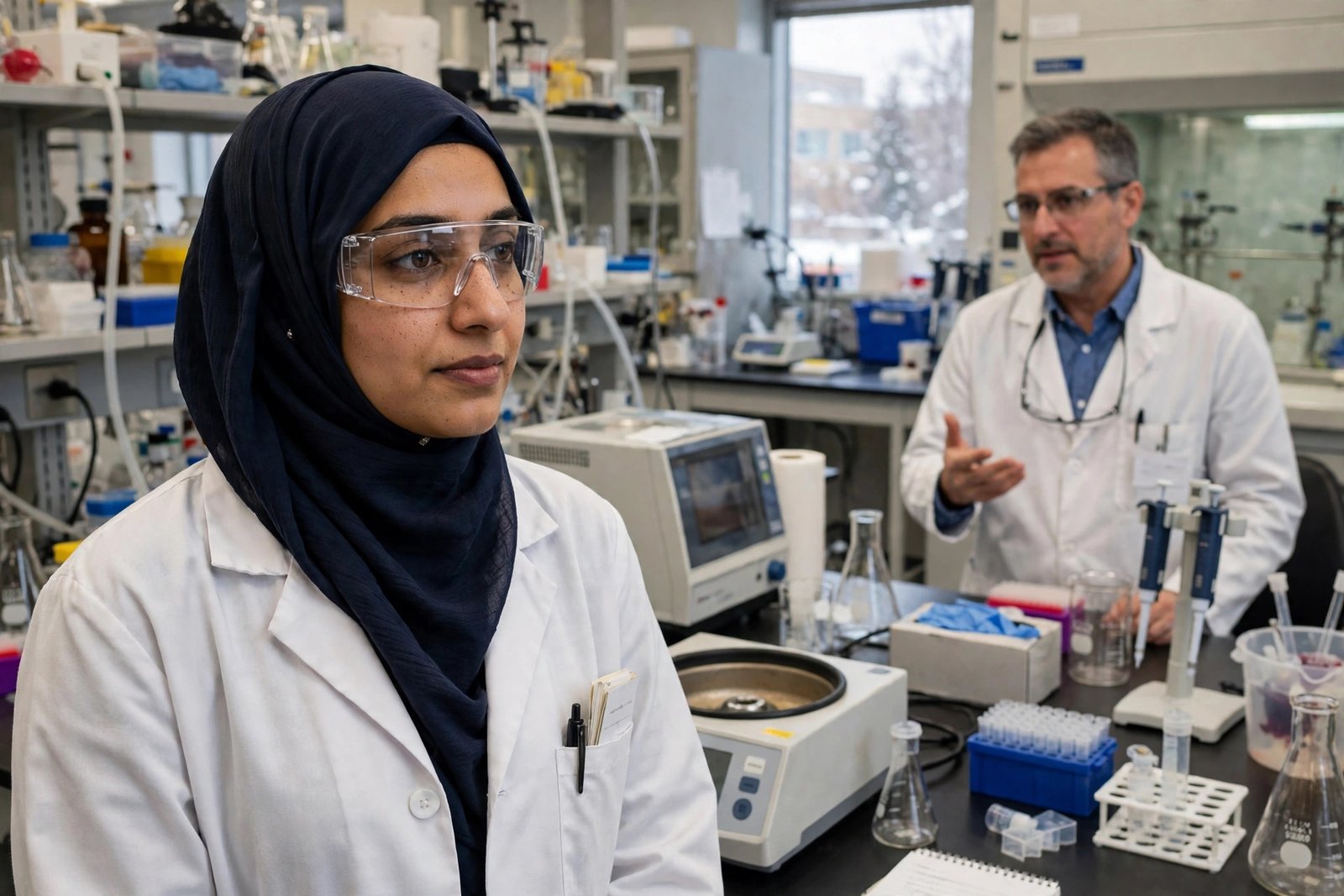
University funding packages: where most Pakistani graduate funding actually lives
For master’s and PhD study, the everyday Canadian funding unit is the package your admitting department assembles: an entrance scholarship, a teaching assistantship, a research assistantship paid from your supervisor’s grants, and sometimes a tuition award — combined, for thesis-based programmes at research universities, into an offer that covers tuition and a living stipend for the normal degree duration. Three implications follow for Pakistani applicants. First, thesis-based programmes fund; course-based master’s programmes mostly do not, so choose your programme type with funding in mind. Second, the supervisor is the budget: a professor with active grant funding who wants your profile is worth more than any bursary list, which is why contacting potential supervisors with a precise research fit — months before deadlines — is the highest-value activity in a Canadian application. Third, everything must end up in the offer letter: only funding confirmed in writing counts for your study-permit proof of funds. Compare departments through the university directory and rankings, and track each internal funding deadline, which is earlier than the admission deadline, in the deadline tools.
HEC Overseas Scholarships Phase-III — funded from Islamabad
Pakistan’s own HEC Overseas Scholarship Programme Phase-III funds MS/MPhil leading to PhD and PhD study at Top 200 QS/THE-ranked universities worldwide in five priority areas — digital transformation and emerging technologies; energy, climate change and environment; agriculture, food security and agri-tech; health, biotechnology and life sciences; and engineering and advanced manufacturing. Canada’s leading research universities sit inside that Top 200 frame, which makes HEC a genuine Canada route for Pakistani postgraduates whose field matches. Batch-IV has been announced for Spring/Fall 2026-27: applications are online only through the HEC e-services scholarship portal, the application processing fee is Rs. 3,000 via 1LINK in the current instructions, and no hard copies are required at application stage. Read the scheme’s deed of agreement and surety bond templates before applying — HEC funding carries return and service obligations that Canadian university funding does not, and you should accept them knowingly.
Mitacs Globalink: a funded research summer, not a degree
For Pakistani undergraduates, the Mitacs Globalink Research Internship places students with Canadian professors for a 12-week research project each summer, with a funding package set by Mitacs for the cycle. Pakistan has appeared on Mitacs’ partner-country list in recent cycles, but the list is revised — verify Pakistan’s status and the eligibility rules (which include being enrolled full-time at a partner-country university and returning to it afterwards) on the Mitacs site for your year. A Globalink summer is not degree funding; its real value is strategic — a Canadian supervisor relationship and research output that materially strengthen a later funded master’s or PhD application.
Benefits and money: what a funded Canadian offer must show
| Item | Figure / rule (verified) | Why it matters to Pakistani applicants |
|---|---|---|
| Pearson Scholarship value | Tuition + books + incidental fees + full residence, 4 years | The only Canadian undergraduate award that removes the proof-of-funds problem almost entirely — the award letter anchors your permit file |
| CGRS-D value | CAD 40,000/year × 36 months | Federal prestige plus a living-cost base; check how your university treats tuition alongside it |
| IRCC living-funds requirement (outside Quebec) | CAD 22,895 for applications 1 Sep 2025 – 31 Aug 2026; CAD 23,448 from 1 Sep 2026 | Applies on top of first-year tuition and travel; scholarship letters count towards the evidence |
| Study-permit stream | Student Direct Stream ended 8 November 2024; regular stream for all | Funds history and source documentation are scrutinised — sudden large deposits without a paper trail are a refusal risk |
| Attestation letters | PAL required for most applicants unless exempt; CAQ for Quebec | Issued through your institution after acceptance — start admission early enough to receive it |
| HEC Overseas Phase-III fee | Rs. 3,000 application processing fee via 1LINK (current batch instructions) | Pay only through the official HEC portal route; no agent can submit for you |
How to apply: step by step
- Choose your funding model first. Undergraduate: Pearson and/or UBC Scholars (both nomination-based). Graduate: thesis programme + supervisor funding, with CGRS-D as a second-stage competition, or HEC Phase-III if your field matches its five themes.
- Trigger nominations early (undergraduates). Ask your school to nominate you for Pearson and UBC months before the autumn deadlines; if your school has never joined the Pearson programme, it must apply to participate first.
- Win admission with funding in the same motion. Graduate applicants: email supervisors with a two-page research fit note, apply before the department’s funding deadline, and ask explicitly what package — tuition, stipend, duration — the offer includes.
- Get every rupee and dollar in writing. Your IRCC proof of funds will be built from official award and offer letters; verbal assurances from anyone are worthless at the permit stage.
- Assemble the permit file around IRCC’s numbers. Tuition for year one, plus CAD 23,448 living funds for applications on or after 1 September 2026 (outside Quebec), plus travel — evidenced by scholarship letters, family funds with a traceable history, or an education loan from a recognised bank.
- Secure the PAL/CAQ through your institution as soon as you accept an offer, and check whether an IRCC exemption applies to you instead of assuming.
- Prepare documents the Pakistani way, in advance: HEC-attested degrees and transcripts, IBCC-attested matric and intermediate certificates where required, and consistent name spellings across CNIC, passport and academic records.
- Apply for the permit in the regular stream with a study plan that explains the programme choice, its cost logic given your funding, and your ties and plans — officers assess genuineness, not just balances.
Required documents
- Valid Pakistani passport and CNIC; passport-validity covering your intended stay.
- Letter of Acceptance from a Designated Learning Institution (DLI) in Canada.
- All transcripts and degrees — HEC-attested for university qualifications; IBCC attestation for matric/intermediate certificates where the university or a credential assessment service requires them.
- Scholarship and funding evidence: Pearson/UBC award letters, university funding offer letters, CGRS-D results when applicable, HEC award documents for Phase-III scholars.
- Proof of funds meeting IRCC’s table for your application date, with source history (bank statements, loan sanction letters, sponsor evidence).
- Provincial Attestation Letter (PAL) or CAQ, or evidence of exemption.
- English language scores where your university requires them; Canadian universities set their own thresholds.
- For graduate research programmes: CV, statement of research intent, writing sample where asked, and two to three academic references.
- For CGRS-D (once enrolled): your institution’s internal application package and transcripts, submitted by the internal deadline, which precedes the agency’s October date.
Deadlines and timeline
| Milestone | Timing | Notes for Pakistani applicants |
|---|---|---|
| Pearson nomination & application | Autumn: school nomination early October, U of T application mid-October, Pearson application early November (2027-intake pattern) | Confirm current dates on the official U of T Pearson page each cycle |
| UBC International Scholars application | Typically mid-November, before UBC admission deadlines | Nomination must be arranged with your school first |
| Graduate admission & funding deadlines | Mostly December – February for September entry | Funding deadlines are often the same day or earlier — never use the final admission date |
| CGRS-D | Institutional internal deadlines in late summer/autumn; agency deadline in October | Only for students already enrolled in a Canadian doctoral programme |
| HEC Overseas Phase-III Batch-IV | Announced for Spring/Fall 2026-27; HEC portal dates govern | Online only; Rs. 3,000 fee via 1LINK |
| Mitacs Globalink | Annual call in the summer–early autumn for the following summer | Verify Pakistan’s partner-country status for your cycle |
| Study permit | Apply immediately after acceptance and PAL; processing times vary | Funds rule in force on your submission date applies — the CAD 23,448 rate governs from 1 September 2026 |
Selection tips for Pakistani applicants
For Pearson and UBC, understand that nomination is the real first round: a school that nominates strategically — one candidate, fully supported with transcripts and a counsellor’s letter that evidences leadership, not adjectives — beats a famous school that nominates casually. For graduate funding, write to supervisors the way researchers actually read: subject line naming their paper, three sentences on your relevant work, two on the precise question you want to pursue in their lab, and your CV attached. For HEC Phase-III, align your proposed field visibly with one of the five thematic areas and a Top 200 institution; misalignment on either axis ends the file. Across all routes, keep your funding story consistent: the same programme choice, costs and funding sources should appear in your admission file, your scholarship file and your study-permit study plan. Inconsistencies between those three documents are a quiet cause of both scholarship and permit refusals. If Canada does not fund you this cycle, compare the outcome against the UK routes in our Australia guide for Pakistani students and the fully funded list before paying a deposit you cannot afford.
Common mistakes
- Planning around the Study in Canada Scholarships, for which Pakistan is not an eligible country — or around Vanier, which no longer exists.
- Waiting to be “offered” a Pearson or UBC award without a nomination. No nomination, no application: the school conversation is step one.
- Applying to course-based master’s programmes and expecting funding that is structurally reserved for thesis-based research programmes.
- Using the old CAD 22,895 figure after 1 September 2026, or showing the living amount but forgetting tuition and travel on top.
- Sudden, unexplained deposits in a parent’s account days before the permit application — IRCC assesses the history and source of funds, and the old Student Direct Stream shortcuts no longer exist.
- Missing CGRS-D’s enrolment rule and trying to apply from Pakistan before starting a Canadian PhD.
- Ignoring HEC’s bond and service conditions until after selection, when withdrawing carries consequences.
Frequently asked questions
Are Pakistani students eligible for Canadian government scholarships?
Only narrowly. The Study in Canada Scholarships run by Global Affairs Canada do not list Pakistan among eligible countries, and the federal master’s award (CGRS-M) is for Canadian citizens, permanent residents and protected persons. The open federal door is CGRS-D at doctoral level — CAD 40,000 per year for 36 months — for international students already enrolled at a Canadian institution, who may hold up to 15% of awards.
Is the Vanier Scholarship still available to Pakistani PhD students?
No. The Vanier Canada Graduate Scholarships have been discontinued for all nationalities. The replacement route is the Canada Graduate Research Scholarship – Doctoral (CGRS-D). Any source still advertising Vanier applications for 2026 or 2027 is out of date.
How much money must a Pakistani student show for a Canadian study permit?
Outside Quebec: first-year tuition, plus travel, plus living expenses of CAD 22,895 for applications submitted between 1 September 2025 and 31 August 2026, or CAD 23,448 for applications submitted on or after 1 September 2026. Amounts rise with accompanying family members, and Quebec sets its own figures. Scholarship and funding letters form part of the evidence.
Can a Pakistani school nominate a student for the Pearson Scholarship?
Yes. Any recognised secondary school can nominate one student per year, and schools new to the programme can apply to participate. The student must be in the final year of secondary school (for the 2027 intake, or have graduated no earlier than June 2026), require a study permit, and start at the University of Toronto in September 2027.
Does Canada offer fully funded master’s scholarships for Pakistanis?
There is no national fully funded master’s scheme open to Pakistanis. Fully funded master’s outcomes in Canada are assembled at university level — typically a thesis-based programme combining an entrance award with teaching or research assistantships in a written funding offer — or funded from home through HEC Overseas Scholarships Phase-III where the university and field qualify.
What replaced the Student Direct Stream for Pakistani applicants?
Nothing — the SDS ended on 8 November 2024 and all applicants now use the regular study-permit stream. In practice that means fuller documentation of funds and their history, and no GIC-based shortcut, so prepare the financial file with more care, not less.
Do I need HEC or IBCC attestation to study in Canada?
Canadian universities decide their own document rules; many ask for transcripts sent through prescribed channels and some use credential assessment services that verify Pakistani documents. Keeping HEC attestation for degrees/transcripts and IBCC attestation for matric/intermediate certificates ready prevents the most common delays, and is essential for HEC-funded routes.
Can I work in Canada while studying on a scholarship?
Study permits carry work conditions set by IRCC, and some scholarships restrict outside work or require you to prioritise the funded activity — assistantships that form part of your funding package are employment by the university itself. Check both your permit conditions and your award’s terms; neither a scholarship nor this guide can vary IRCC’s rules.
Sources & Verification
Facts in this guide were checked in October 2026 against official sources: EduCanada’s Study in Canada Scholarships programme page (eligible-country list — Bangladesh, Nepal and Taiwan for Asia, with Pakistan absent — and the CAD 10,200 four-month value); the University of Toronto’s official Pearson Scholarships page (coverage of tuition, books, incidental fees and full residence support, school nomination and eligibility windows); the HEC’s Overseas Scholarships Phase-III pages (Top 200 QS/THE frame, five thematic areas, Batch-IV, Rs. 3,000 fee via 1LINK); IRCC’s published proof-of-financial-support table as reported from canada.ca (CAD 22,895 for 1 September 2025 – 31 August 2026 applications; CAD 23,448 from 1 September 2026); and the federal research agencies’ CGRS-D programme information (CAD 40,000 per year for 36 months, up to 15% of awards for international students, Vanier discontinued and superseded). UBC International Scholars Program details follow the University of British Columbia’s published programme description; Mitacs partner-country status must be re-verified on Mitacs’ own site each cycle, as this guide states in the text.
Disclaimer: StudyGraduate is an information portal, not an agency. Scholarship amounts, deadlines and eligibility rules change every cycle — always confirm the current figures on the official programme website before applying. We never promise selection, admission or a study permit.
✅ Eligibility Criteria
- Check the official website for full eligibility criteria for your country
🎁 Benefits
- See the official website for the complete list of benefits
⚙️ Application Process
- 1Check your eligibility on the official site
- 2Prepare your documents and statements
- 3Submit the online application before the deadline
- 4Complete interviews or assessments if shortlisted
- 5Await the final selection announcement
📅 Important Dates
Deadlines vary by country and intake. Check the official website for country-specific dates.
📄 Required Documents
- Valid passport
- Academic transcripts & certificates
- Statement of purpose
- Letters of recommendation
- CV / resume
Commonly required — confirm the exact list on the official site.
❓ Frequently Asked Questions

Ready to Take the Next Step?
Explore more scholarships and study opportunities around the world.
Browse Scholarships →