Vanier Canada Graduate Scholarships: What Changed & the Canada Graduate Research Scholarship (Doctoral) Alternative for 2026
Vanier Canada Graduate Scholarships: What Changed & the Canada Graduate Research Scholarship (Doctoral) Alternative for 2026 If you have been planning a PhD application around the Vanier Canada Graduate Scholarships, this guide starts with the fact you need to hear first, clearly and without any softening: the Vanier Canada Graduate Scholarships (Vanier CGS) program is ... <a title="Vanier Canada Graduate Scholarships: What Changed & the Canada Graduate Research Scholarship (Doctoral) Alternative for 2026" class="read-more" href="https://studygraduate.com/scholarship/vanier-canada-graduate-scholarships-what-changed-the-canada-graduate-research-scholarship-doctoral-alternative-for-2026/" aria-label="Read more about Vanier Canada Graduate Scholarships: What Changed & the Canada Graduate Research Scholarship (Doctoral) Alternative for 2026">Read more</a>
📖 Overview
Vanier Canada Graduate Scholarships: What Changed & the Canada Graduate Research Scholarship (Doctoral) Alternative for 2026
If you have been planning a PhD application around the Vanier Canada Graduate Scholarships, this guide starts with the fact you need to hear first, clearly and without any softening: the Vanier Canada Graduate Scholarships (Vanier CGS) program is discontinued and is no longer accepting applications. The official Vanier website now carries that notice at the top of its home page and directs candidates to the new, harmonised replacement program — the Canada Graduate Research Scholarship – Doctoral (CGRS-D). There is no Vanier competition to enter in 2026, no Vanier deadline to diarise, and no legitimate way to submit a Vanier application. Any website, agent or social-media post still advertising “Vanier Scholarship 2026 — apply now” is either out of date or misleading you, and you should not pay anyone a fee on the basis of it.
The good news is that Canadian federal doctoral funding itself has not disappeared. It has been reorganised. The Vanier CGS, worth CAD 50,000 per year for three years, has been folded — together with the former agency doctoral awards (the NSERC postgraduate scholarships, the SSHRC doctoral fellowships and the CIHR doctoral awards) — into a single suite called the Canada Research Training Awards Suite (CRTAS), administered jointly by Canada’s three federal research agencies: the Canadian Institutes of Health Research (CIHR), the Natural Sciences and Engineering Research Council of Canada (NSERC) and the Social Sciences and Humanities Research Council (SSHRC). The doctoral-level award in that suite is the CGRS-D, described on the official NSERC CGRS-D program page, worth CAD 40,000 per year for 36 months — CAD 120,000 in total. Crucially for international readers of StudyGraduate, the CGRS-D is open to international doctoral students: the agencies state that up to 15% of awards will be available to international applicants, provided those applicants are already enrolled in a doctoral program at an eligible Canadian institution by the application deadline.
This article explains, in order, what Vanier was and why it ended, what replaced it, who can apply for the CGRS-D (and who cannot), how much it pays and what it does and does not cover, how the quota-based institutional application route actually works, the deadlines that matter — including the internal university deadlines that catch most people out — and the selection criteria the agencies publish, weighted 50/50 between research potential and relevant experience and achievements. It also covers the separate master’s-level award, the Canada Graduate Research Scholarship – Master’s (CGRS-M), and explains honestly why that award is not an option for most international students: it is restricted to Canadian citizens, permanent residents and protected persons. If you are an international master’s student, your funding route in Canada is university funding, not the federal master’s scholarship, and this guide will point you to the realistic alternatives.
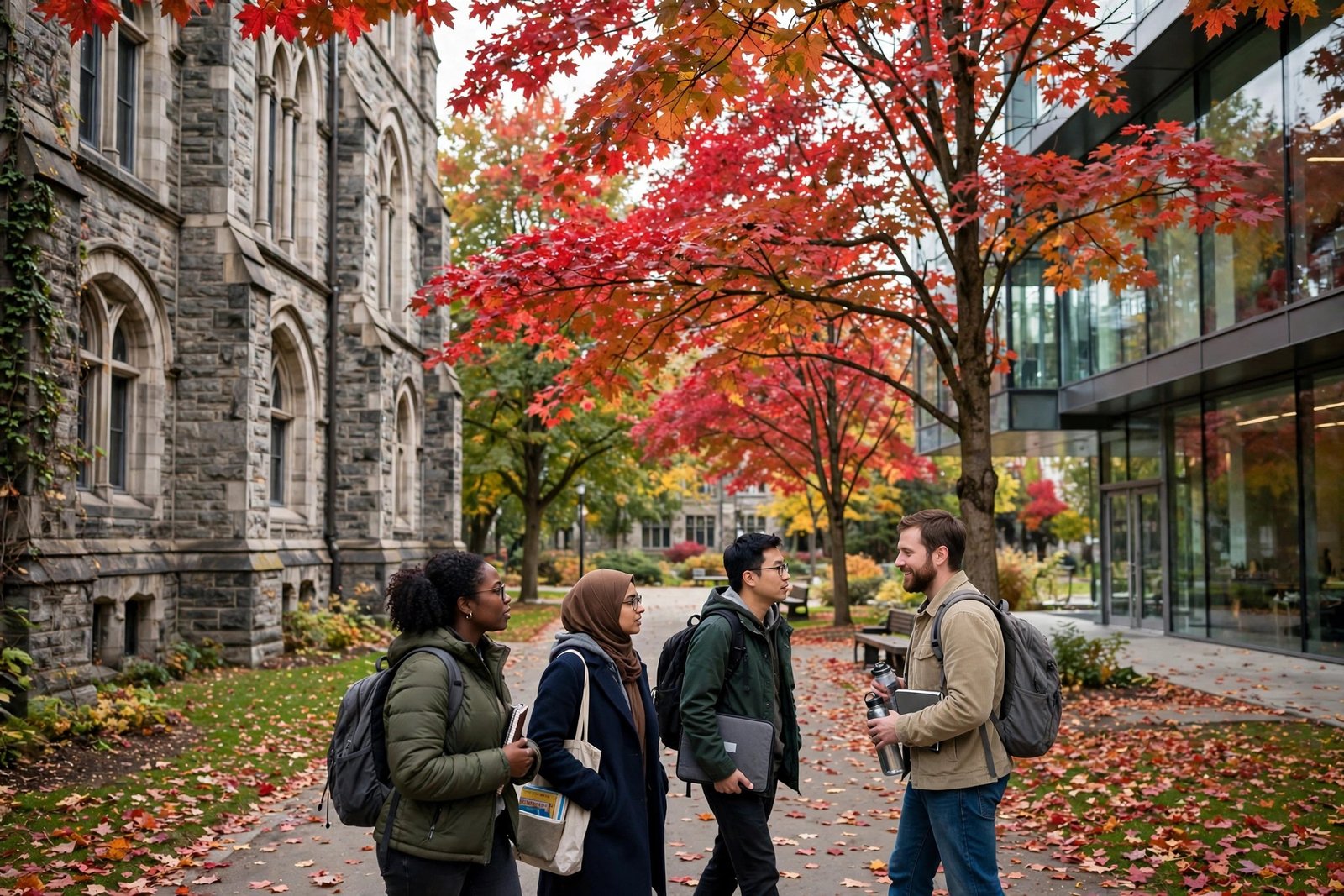
Scholarship at a Glance: Vanier (Ended) vs CGRS-D (Current)
| Detail | Vanier CGS (discontinued) | CGRS-D (current replacement) |
|---|---|---|
| Status | Discontinued — no longer accepting applications | Active — annual competition |
| Value | CAD 50,000 per year | CAD 40,000 per year |
| Duration | 3 years during doctoral studies | 36 months |
| Total value | CAD 150,000 | CAD 120,000 |
| Level | Doctoral only | Doctoral only |
| Administered by | CIHR, NSERC and SSHRC (tri-agency) | CIHR, NSERC and SSHRC (tri-agency, CRTAS) |
| International students | Were eligible under the former program | Eligible — up to 15% of awards; must be enrolled at an eligible Canadian institution by the deadline |
| Application route | Nomination by a Canadian institution with a Vanier quota | Through a Canadian institution with a quota, or directly to the agency where the rules allow; institutions set much earlier internal deadlines |
| Agency deadline | No longer applicable | October 17, 8:00 p.m. ET (direct-to-agency route; next business day if it falls on a weekend) |
| Results announced | No longer applicable | By April 30 |
| Official source | vanier.gc.ca | NSERC, SSHRC and CIHR CGRS-D program pages |
Two honest observations belong next to that table. First, the replacement award is worth less per year than Vanier was — CAD 40,000 against CAD 50,000 — and no guide should pretend otherwise. Second, the CGRS-D is a broader, harmonised competition rather than a like-for-like rebrand: it absorbed several former doctoral awards into one program with one set of rules, one annual cycle and one pair of selection criteria. If you held a plan built around Vanier’s three equally weighted criteria (academic excellence, research potential and leadership), you will need to rebuild that plan around the CGRS-D’s different weighting, explained in the selection section below. You can compare Canadian institutions while you plan in our university directory and browse other funding routes in the scholarships directory.
What Was the Vanier CGS, and What Exactly Changed?
The Vanier Canada Graduate Scholarships were named after Major-General Georges P. Vanier, the first francophone Governor General of Canada, and were created to help Canadian institutions attract and retain highly qualified doctoral students from Canada and around the world. At CAD 50,000 per year for three years, Vanier was deliberately positioned as one of the most valuable doctoral scholarships in the world, and its selection model was distinctive: three equally weighted criteria — academic excellence, research potential, and leadership (potential and demonstrated ability). Candidates could not apply directly; they had to be nominated by a Canadian institution holding a Vanier quota, and they were told to seek nomination only from the institution at which they wanted to study.
What changed is structural, not cosmetic. The Government of Canada harmonised its federal research training awards into the Canada Research Training Awards Suite. Under that reform, the standalone Vanier competition ended, and the doctoral funding line continued as the CGRS-D. The official Vanier home page now states, in plain language, “We are no longer accepting applications for the Vanier Canada Graduate Scholarships,” and links visitors to the Canada Graduate Research Scholarship – Doctoral program page as “the new harmonized program.” The historical Vanier pages remain online — which is exactly why so much confusion persists — but they describe a closed program. The value, criteria and process described on those archived pages no longer govern any live competition.
The same reform created the master’s and postdoctoral companions in the suite. The CGRS-M supports one year of master’s study and, as the brief for this program consistently notes, is restricted to domestic applicants — Canadian citizens, permanent residents of Canada and protected persons. The postdoctoral award sits above the doctoral level and is not relevant to applicants choosing a PhD. For an international doctoral applicant, the CGRS-D is therefore the single federal award in the new suite that matters, and the rest of this article treats it that way.
Eligibility for the CGRS-D
Eligibility for the CGRS-D turns on four things: your program, how far into it you are, your citizenship and enrolment status, and your history with tri-agency funding. Read each rule carefully, because the agencies apply them mechanically.
The 36-month rule
To be eligible, you must have completed no more than 36 months of full-time equivalent study in the doctoral program — or in the PhD portion of a joint program such as MD/PhD, JD/PhD or DVM/PhD, or in a joint program such as MA/PhD, MSc/PhD or MBA/PhD — for which you are requesting funding, counted by December 31 of the calendar year of application. All study toward that doctoral degree counts, whether or not it was completed in the same program or at the same institution. Summer months count. Two terms of part-time study count as one term of full-time study. If you fast-tracked from a master’s into a doctorate, your months are calculated from the date you transferred into the doctoral program; if you are in a joint program that awards a master’s along the way, months are calculated from when you officially enrolled in either portion, including the master’s portion. Joint professional undergraduate/PhD candidates count only the months in the PhD portion. In practice, this rule makes the CGRS-D an early-to-mid-doctorate award: the realistic application windows are your first, second or third year, and many successful applicants apply in the autumn of their second year.
Citizenship and the international applicant rule
Canadian citizens, permanent residents and protected persons under subsection 95(2) of the Immigration and Refugee Protection Act may apply under the standard rules. If you are not in one of those categories — that is, if you are an international student — two additional conditions apply. First, you must be enrolled in your doctoral program of study at an eligible Canadian institution by the application deadline. You cannot apply from your home country on the strength of an admission offer alone. Second, the agencies cap the international share: up to 15% of awards across Canada will be available to international applicants. That cap is a national figure, not a per-university guarantee, and it makes the international competition within the CGRS-D considerably tighter than the domestic one. Plan accordingly: your application competes first inside your institution for one of its limited quota places, and then nationally inside a capped pool.
Program of study requirements
An eligible doctoral program must be predominantly research-oriented and must lead to a thesis, major research project, dissertation, scholarly publication, performance, recital or exhibit that is merit- or expert-reviewed at the institutional level as a requirement for completing the program. Joint programs with a professional degree and clinically oriented programs — clinical psychology is the example the agencies give — are eligible if they have a significant autonomous research component. A purely coursework-based professional doctorate with no substantial independent research element does not fit this definition.
Restrictions you must not trip over
- One application per year, to one agency. You may submit a maximum of one CGRS-M, CGRS-D or CPRA application per academic year, to either CIHR, NSERC or SSHRC. If you submit more than one, only the first eligible application is retained.
- Three attempts maximum. You can apply a maximum of three times to the CGRS-D. Treat each attempt as precious; do not spend one on a rushed application in your first term if a stronger second-year application is possible within the 36-month window.
- No previous tri-agency doctoral scholarship. You cannot have already received a doctoral-level scholarship from CIHR, NSERC or SSHRC — the agencies expressly include a Vanier Canada Graduate Scholarship in that bar.
- No concurrent tenure-track post. You cannot hold a tenure or tenure-track appointment, or be on leave from one, concurrently with the award, subject to exceptions in the tri-agency award holder’s guide.
- Choose the right agency. You must apply to the agency whose mandate matches your research subject matter — CIHR for health, NSERC for natural sciences and engineering, SSHRC for social sciences and humanities. Applications submitted to the incorrect agency may be removed from the competition, and the responsibility for choosing correctly is yours.
Benefits and Coverage: What CAD 40,000 a Year Does and Does Not Do
The CGRS-D is a scholarship of CAD 40,000 per year for 36 months, a total of CAD 120,000, paid to support a high-quality research training experience while you are registered in doctoral studies. It is best understood as a generous stipendiary award, not as a full-cost package of the Oxford or Cambridge type: there is no separate line in the federal program that pays your tuition invoice, your airfare or your visa fees. How the award interacts with tuition depends on your institution. Canadian universities commonly build doctoral funding packages that combine a major external award like the CGRS-D with faculty, departmental or supervisor funding and teaching or research assistantships, and many institutions offer top-ups to students who bring in a tri-agency award. The exact stacking rules, and whether any part of the award is expected to be applied to tuition and fees, are institutional matters — ask your faculty of graduate studies for the written funding-package terms before you budget, and get the answer for holders of external awards specifically, not the generic package for unfunded students.
Budget honestly around the award. CAD 40,000 a year is a strong doctoral stipend by Canadian standards, but Toronto, Vancouver and, increasingly, Montreal rents can consume a large share of it, and international tuition at some institutions is charged at a higher rate than domestic tuition unless your funding package covers the differential. Use our student tools, including cost-of-living and budget calculators, to test the award against the real cost of your city rather than against a national average.
Separately, remember the immigration money test. A scholarship does not replace Immigration, Refugees and Citizenship Canada’s proof-of-funds requirement for a study permit. Under IRCC’s published table, a single applicant’s required living funds are CAD 22,895 for applications from 1 September 2025 to 31 August 2026, rising to CAD 23,448 from 1 September 2026, in addition to tuition and travel costs and the amounts required for any accompanying family members. Because an international CGRS-D applicant must already be enrolled in Canada by the deadline, most readers will meet this test at their initial study-permit application, funded by whatever package or resources got them to Canada in the first place — which is one more reason the doctoral funding conversation with your department must happen before you enrol, not after.
Programs and Fields Covered
The CGRS-D spans the full breadth of the three agencies’ mandates, including interdisciplinary and multidisciplinary research. Health research falls to CIHR; natural sciences and engineering to NSERC; social sciences and humanities to SSHRC. That means the award is as open to a doctoral researcher in public health, biomedical engineering or computer science as it is to one in economics, education, history or law — provided the program itself meets the research-orientation test described above and the application is routed to the correct agency. Interdisciplinary proposals need extra care at the routing stage: read the agencies’ guidance on selecting the appropriate federal granting agency, including NSERC’s addendum on health-related subject matter and SSHRC’s subject-matter eligibility page, and if you are genuinely unsure, contact the agency well before the deadline, as the program page instructs. A mis-routed application can be removed without review, which is a painful way to spend one of your three lifetime attempts.
Where can the award be held? You may take up a CGRS-D at any eligible Canadian degree-granting institution. Holding the award at an institution outside Canada is possible only for Canadian citizens, permanent residents and protected persons who have completed at least one previous degree at a Canadian institution, and up to 20% of all doctoral awards may be held abroad. That abroad provision does not help international applicants: if you are an international student, your CGRS-D is a Canadian-institution award, full stop. When you are shortlisting doctoral programs, start from research fit — supervisor, lab, research group — and then check the institution’s CGRS-D quota and internal process. Profiles such as our University of Toronto profile are a useful starting point for comparing major research universities, and our rankings section can help you put Canadian institutions in a global context.

How to Apply, Step by Step
The single most important process fact is this: most applicants do not apply directly to a federal agency on October 17. They apply through their Canadian institution, which evaluates applications internally and forwards only a limited number — its quota — to each agency. Institutional deadlines are therefore much earlier than the agency deadline, and missing your university’s internal deadline ends your competition for that year regardless of the federal date. A smaller group of applicants applies directly to an agency; the program page sets out exactly who, based on registration status. Work through the steps below in order.
- Enrol first (international applicants). Secure admission to, and actually enrol in, a research-oriented doctoral program at an eligible Canadian institution. As an international applicant you must be enrolled by the application deadline, so in practice you will usually apply for the CGRS-D after starting your PhD, not before arriving in Canada.
- Confirm your month count. Count your full-time equivalent months of doctoral study as of December 31 of the application year, using the counting rules for fast-track, joint and part-time study set out in the eligibility section. If you will pass 36 months, you are out — do not apply.
- Choose your agency. Decide CIHR, NSERC or SSHRC based on the subject matter of your research, using the agencies’ subject-matter guidance. This choice determines both the application portal and the expert committee that reviews you.
- Determine your application channel. If you are currently registered at a Canadian institution that holds a doctoral award quota for your chosen agency, you apply through that institution. International applicants registered at an institution without a quota for the selected agency apply directly to the agency. Domestic applicants follow a parallel table covering those not currently registered or registered at institutions without quotas. Submitting through the wrong channel means your application will not be considered.
- Find your internal deadline. Contact your faculty of graduate studies — early, ideally in the spring or early summer — for the institution’s CGRS-D internal deadline, internal information sessions and any institutional forms. These deadlines are often weeks to months before October 17.
- Build the application in the right portal. CIHR applications are prepared in ResearchNet, NSERC applications in the NSERC online system, and SSHRC applications in the SSHRC online system. Each agency publishes its own instructions; follow the instructions for your agency, not a generic checklist from the internet.
- Write the research proposal and the experience statement. Because the criteria are weighted 50% research potential and 50% relevant experience and achievements, your file needs both a specific, feasible research proposal and a fully documented record of experience and achievements within and beyond academia. Draft both early enough for your supervisor and referees to comment.
- Arrange transcripts and referees. Order official transcripts for all post-secondary study and brief your referees on the two criteria and the agency’s descriptors, giving them your draft proposal and CV well ahead of the internal deadline.
- Submit by the deadline that applies to you. If you apply through an institution, the institutional deadline governs. If you are eligible to apply directly to an agency, the deadline is 8:00 p.m. Eastern Time on October 17 (or the next business day if it falls on a weekend). Late applications are not accepted, and the agencies warn that heavy system traffic near the deadline is the applicant’s problem, not a ground for extension.
- Wait for April 30. Results are announced by April 30. If you accept an award, the agency will publish your name and basic award information on its website, and you will hold the award under the conditions in the tri-agency research training award holder’s guide.
Required Documents
The precise document list is set by the agency you apply to, in its own application instructions, and institutional applicants may face additional internal requirements. In a typical CGRS-D file you should expect to prepare: the completed agency application form in the correct portal (ResearchNet for CIHR, the online system for NSERC, the SSHRC system for SSHRC); a research proposal describing your question or objectives, methodology, and the significance and expected contributions of the work; a statement or structured sections covering your relevant experience and achievements within and beyond academia; official transcripts covering your post-secondary studies, with certified translations for documents in a language other than English or French; referee assessments from people who can speak to your research potential and experience; and a record of your contributions and outputs — publications, presentations, reports, creative or community outputs — presented in the format your agency prescribes. You may submit your application in either of Canada’s official languages, English or French. Institutions must have mechanisms to review applications in the language in which they were submitted. Do not treat this generic list as a substitute for your agency’s instructions: page limits, section headings and attachment rules differ by agency and are enforced.
Deadlines and Timeline
| Stage | When | Notes |
|---|---|---|
| Vanier CGS competition | Closed | The program is discontinued; there is no Vanier deadline. The official site directs candidates to the CGRS-D. |
| Doctoral enrolment (international applicants) | Before the application deadline | International applicants must be enrolled at an eligible Canadian institution by the deadline. |
| Institutional internal deadlines | Set by each university, often well before the agency deadline | Ask your faculty of graduate studies. This is the deadline most applicants actually face. |
| Direct-to-agency deadline | October 17, 8:00 p.m. ET | Only for applicants whose registration status makes them direct applicants; next business day if October 17 is a weekend. |
| Institutional review and quota forwarding | Autumn | Institutions evaluate files and forward applications up to their per-agency quotas. |
| Agency review | Winter | Agency committees evaluate forwarded and direct applications against the two criteria. |
| Results announced | By April 30 | Awardees then accept under the tri-agency award holder’s guide conditions. |
| Award period | 36 months | CAD 40,000 per year, subject to continued eligibility and progress rules. |
Work backwards from the internal deadline, not the federal one. A realistic preparation window is eight to twelve weeks: two weeks to confirm eligibility, channel and agency; three to four weeks drafting and revising the proposal with your supervisor; two weeks for referees to write with your drafts in hand; and a final week for transcripts, formatting and portal checks. Applicants who start when their department sends a reminder email are usually already behind the strongest files in the internal competition — and the internal competition, under a quota, is where most international applications actually end.
Selection Criteria and How to Improve Your Chances
The agencies publish the CGRS-D criteria and their weights, and you should write directly to them. There are two, weighted equally.
Research potential — 50%. Reviewers look at the quality of the research proposal: a specific, focused and feasible research question or objectives; a clear description and soundness of methodology; and the significance and expected contributions of the work. They also assess the quality of your research contributions to date and the extent to which they advance the field — a deliberately broad category that includes publications, patents, reports, posters, abstracts, monographs, presentations, creative outputs, knowledge-translation outputs and community products. Sound judgment and critical thinking, responsible and ethical research conduct, originality, initiative and autonomy, and the ability to communicate complex concepts clearly in written and oral form all count here, judged relative to your stage of study, lived experience and knowledge systems.
Relevant experience and achievements obtained within and beyond academia — 50%. This criterion covers your relevant training, including academic training, lived experience and traditional teachings; scholarships, awards and distinctions, weighed by amount, duration and prestige; your academic record, read in context — transcripts, duration of previous studies, program requirements, course load and relative standing where available; and your professional, academic and extracurricular activities and collaborations: teaching, mentoring, supervising and coaching; managing projects; science and research promotion; community outreach, volunteering and civic engagement; chairing committees and organising conferences and meetings; and participating in departmental or institutional organisations, associations, societies and clubs.
Practical ways to strengthen a file follow directly from those descriptors. Make the research question answerable inside the award period and say explicitly what will exist at the end — data, a method, a text, a tool — that does not exist now. Name the methodological risk and your fallback. Present every contribution with its status and your role in it; reviewers credit honest precision over inflated claims. Document leadership and service with the same care as publications, because under a 50% experience weighting, an undocumented year of mentoring or community research work earns nothing. Finally, remember the honest context: Vanier’s old leadership criterion has not vanished so much as been redistributed — leadership now earns its marks inside the experience criterion, alongside everything else, rather than as a standalone third of the score. If you are building a multi-year plan, browse our study abroad guides alongside this federal route, so a single competition never carries your entire doctorate.
Common Mistakes
- Preparing a Vanier application. The program is closed. Every hour spent on a “Vanier 2026” file, and every fee paid to anyone promising Vanier placement, is wasted. Redirect that effort to the CGRS-D and to institutional funding.
- Assuming CGRS-M is open to international students. The master’s award in the suite is for Canadian citizens, permanent residents and protected persons. International master’s students should pursue university scholarships and funding packages instead.
- Applying before enrolling. International applicants must be enrolled in the doctoral program at an eligible Canadian institution by the deadline. An admission letter alone does not satisfy the rule.
- Missing the internal deadline. Quota institutions set deadlines well before October 17. The federal date is irrelevant if your faculty’s date has passed.
- Applying to the wrong agency. Subject-matter routing is the applicant’s responsibility, and a mis-routed application may be removed from the competition.
- Miscounting study months. Passing 36 months of full-time equivalent doctoral study by December 31 of the application year makes you ineligible, however strong the file.
- Wasting one of three attempts. With a lifetime maximum of three CGRS-D applications, a speculative, unreviewed submission is an expensive gamble.
- Writing only about research. Half the score rewards experience and achievements beyond the proposal. A file that is all project and no documented experience leaves half the marks unclaimed.
Frequently Asked Questions
Is the Vanier Canada Graduate Scholarship discontinued?
Yes. The official Vanier website states that the program is no longer accepting applications and directs candidates to the Canada Graduate Research Scholarship – Doctoral (CGRS-D) program page as the new harmonised program. There is no current Vanier competition, deadline or application portal in operation.
What replaced the Vanier Canada Graduate Scholarships?
The CGRS-D, part of the Canada Research Training Awards Suite administered by CIHR, NSERC and SSHRC. It pays CAD 40,000 per year for 36 months — CAD 120,000 in total, compared with Vanier’s CAD 50,000 per year for three years.
Can international students apply for the CGRS-D?
Yes, within limits. Up to 15% of awards across Canada are available to international applicants, who must be enrolled in a doctoral program at an eligible Canadian institution by the application deadline and who apply through that institution if it holds a quota for the selected agency, or directly to the agency if it does not.
Can international students apply for the CGRS-M (master’s) instead?
No. The Canada Graduate Research Scholarship – Master’s is restricted to Canadian citizens, permanent residents of Canada and protected persons. International master’s students should look to university entrance scholarships, departmental funding and provincial awards where eligible, and plan doctoral funding around the CGRS-D route described here.
Can I apply for the CGRS-D directly, without my university?
Only in the circumstances the program defines. If you are registered at a Canadian institution holding a quota for your chosen agency, you must apply through that institution. Direct application to an agency applies, for example, to international applicants registered at an institution without a quota for the selected agency, and to certain domestic applicants not registered at a quota institution. Applying through the wrong channel means the application will not be considered.
How many times can I apply for the CGRS-D?
A maximum of three times, and only one application per academic year across the CGRS-M, CGRS-D and CPRA programs, to one agency. You also cannot have previously received a doctoral-level scholarship from CIHR, NSERC or SSHRC, including a Vanier.
When are CGRS-D results announced?
By April 30, following the October agency deadline and institutional forwarding in the autumn. Institutional applicants should note that their own deadline falls much earlier than October 17.
Does the CGRS-D pay my tuition and living costs in full?
The award is a CAD 40,000-per-year scholarship for 36 months; the federal program does not separately itemise tuition, airfare or visa costs. How the award combines with tuition obligations and institutional funding packages is set by your university, so confirm the written terms with your faculty of graduate studies. Separately, IRCC study-permit proof of funds for a single applicant is CAD 22,895 for applications up to 31 August 2026 and CAD 23,448 from 1 September 2026, in addition to tuition and travel.
Sources and Verification
- Vanier Canada Graduate Scholarships official website, vanier.gc.ca — closure notice (“We are no longer accepting applications”), the former CAD 50,000-per-year value, the three former selection criteria and the quota nomination model.
- NSERC, Canada Graduate Research Scholarship – Doctoral program page, nserc-crsng.gc.ca — CGRS-D value (CAD 40,000 per year), duration (36 months), eligibility including the 36-month rule and the international applicant rule with the 15% cap, application channels and quotas, the October 17 agency deadline, results by April 30, restrictions, and the 50/50 selection criteria. Equivalent program pages are published by SSHRC and CIHR for their subject areas.
- Immigration, Refugees and Citizenship Canada study-permit proof-of-funds table — living funds of CAD 22,895 (1 Sep 2025–31 Aug 2026) and CAD 23,448 (from 1 Sep 2026) for a single applicant, as summarised in StudyGraduate’s verified program brief.
Disclaimer: Scholarship programs, values, deadlines and eligibility rules change between cycles, and the CGRS-D details above reflect the official program pages consulted for this guide. Always confirm current deadlines, quotas and amounts on the official agency and Vanier websites before applying. StudyGraduate is an independent information portal, not an agency or a representative of the Government of Canada, CIHR, NSERC or SSHRC, and nothing in this article promises or implies selection, admission or visa approval.
✅ Eligibility Criteria
- Check the official website for full eligibility criteria for your country
🎁 Benefits
- See the official website for the complete list of benefits
⚙️ Application Process
- 1Check your eligibility on the official site
- 2Prepare your documents and statements
- 3Submit the online application before the deadline
- 4Complete interviews or assessments if shortlisted
- 5Await the final selection announcement
📅 Important Dates
Deadlines vary by country and intake. Check the official website for country-specific dates.
📄 Required Documents
- Valid passport
- Academic transcripts & certificates
- Statement of purpose
- Letters of recommendation
- CV / resume
Commonly required — confirm the exact list on the official site.
❓ Frequently Asked Questions

Ready to Take the Next Step?
Explore more scholarships and study opportunities around the world.
Browse Scholarships →