Scholarships for Indian Students in USA 2026/2027
Scholarships for Indian Students in USA 2026/2027 India sends more students to the United States than any other country, and the money question dominates every one of those journeys. American tuition is the highest in the world, the dollar is unforgiving, and yet the funding system — once you understand its actual shape — contains ... <a title="Scholarships for Indian Students in USA 2026/2027" class="read-more" href="https://studygraduate.com/scholarship/scholarships-for-indian-students-in-usa-2026-2027/" aria-label="Read more about Scholarships for Indian Students in USA 2026/2027">Read more</a>
📖 Overview
Scholarships for Indian Students in USA 2026/2027
India sends more students to the United States than any other country, and the money question dominates every one of those journeys. American tuition is the highest in the world, the dollar is unforgiving, and yet the funding system — once you understand its actual shape — contains more money for Indian students than most families ever find. That shape has three layers. At the top sit a small number of national competitions, above all the Fulbright-Nehru fellowships run by the United States–India Educational Foundation (USIEF), which can fund a master’s degree almost completely. In the middle sit India’s own philanthropic trusts — the JN Tata Endowment, the Inlaks Shivdasani Foundation, the Tata trusts for women scholars, and university-specific funds such as the Tata Scholarship at Cornell — which were created precisely to send Indians abroad. At the base, and largest of all, sits university money itself: need-based financial aid for undergraduates at wealthy private universities, and assistantships, fellowships and tuition waivers that fund most Indian PhD students in America.
This guide works through all three layers for Indian citizens targeting the 2026/2027 cycle, with the eligibility rules and deadlines verified against the official sources named at the end. It is written for citizens of India residing in India — that residence condition matters, and it appears in the fine print of almost every scheme below. If you are comparing destinations before committing, start with our scholarship directory and the companion guide to fully funded scholarships for Indian students, then return here for the USA-specific strategy.

Scholarships for Indian students in the USA at a glance
| Scholarship | Funder | Level | Core eligibility for Indians | What it provides |
|---|---|---|---|---|
| Fulbright-Nehru Master’s Fellowships | USIEF (India–US governments) | Master’s, up to 2 years | Indian citizen resident in India; U.S.-equivalent bachelor’s with at least 55% marks; at least 3 years’ full-time paid work experience; government employees not eligible | J-1 visa support, round-trip economy airfare, funding for tuition and fees, living and related costs, accident and sickness coverage — USIEF notes funding may not cover all costs and there is no dependant support |
| Fulbright-Nehru Doctoral Research & other fellowships | USIEF | PhD research, postdoctoral, faculty/professional visits | Category-specific; the 2027–28 research and excellence categories closed 1 July 2026 | Monthly stipend, airfare, J-1 support and health coverage by category |
| Tata Scholarship at Cornell | Tata Education and Development Trust endowment at Cornell University | Undergraduate only | Indian citizen who attended secondary school in India; admitted to Cornell as an undergraduate; eligible for need-based aid; no separate application — apply for Cornell financial aid via the CSS Profile | Supports around 20 scholars at a time; scholarship for the duration of undergraduate study, meeting demonstrated need within Cornell’s aid system |
| JN Tata Endowment loan scholarship | The J. N. Tata Endowment (Tata Trusts) | Master’s, PhD, postdoctoral — overseas only | Indian citizen; graduate of a recognised Indian university with a consistently good record (60% average in published guidance); under 45 at the scheme’s reference date | Merit-based loan scholarship up to ₹20 lakh, repayable within seven years in five instalments from the end of the third year; possible additional gift scholarship and travel grant at the trustees’ discretion |
| Inlaks Shivdasani Foundation Scholarships | Inlaks Shivdasani Foundation | Master’s, MPhil, PhD (9 months–4 years) | Indian passport holder resident in India; born on or after 1 January 1996 for the 2026 cycle; degree from a recognised Indian university; admission offer already held; published subject exclusions apply | Up to USD 120,000 towards tuition, living costs, healthcare and one-way airfare; joint scholarships with named partner universities can exceed the cap |
| Knight-Hennessy Scholars | Stanford University | Graduate (all Stanford graduate schools) | Open to citizens of all countries including India; bachelor’s degree within the scheme’s recent-graduate window | Funding for up to three years of graduate study at Stanford, including tuition and a living stipend |
| AAUW International Fellowships | AAUW (USA) | Graduate and postdoctoral — women only | Women who are not U.S. citizens or permanent residents; Indian citizens eligible | Fellowship awards for full-time study or research in the United States |
| University need-based aid & PhD funding | Individual U.S. universities | Undergraduate aid; PhD packages | Varies: need-blind and full-need policies at a small group of wealthy universities; funded PhD offers are the norm at research universities | From partial grants to full cost of attendance; PhD packages typically combine tuition waiver with a stipend via assistantships or fellowships |
Fulbright-Nehru: the flagship, run by USIEF
The Fulbright-Nehru Master’s Fellowships are designed, in USIEF’s own words, for highly motivated individuals who demonstrate outstanding leadership qualities, have completed the equivalent of a U.S. bachelor’s degree, have at least three years of professional work experience, and are committed to return and contribute to their communities in India. The fellowships are awarded for up to two years to pursue a master’s degree at U.S. colleges and universities. The grant provides J-1 visa support, round-trip economy class air travel from the fellow’s home city to the host institution, funding for tuition and fees, living and related costs, and accident and sickness coverage per U.S. Government guidelines. Two footnotes on the official page matter for your budgeting: the fellowships provide no financial support for dependants, and USIEF funding may not cover all costs, so a fellow may need to supplement the grant with other resources.
The eligibility detail is where Indian applicants succeed or fail, so read it exactly as USIEF publishes it. You must have completed the equivalent of a U.S. bachelor’s degree from a recognised Indian university with at least 55% marks: that means a four-year bachelor’s degree, or a completed master’s degree, or a full-time postgraduate diploma from a recognised Indian institution if your bachelor’s degree was shorter than four years. You must have at least three years of full-time, paid professional work experience relevant to your proposed field of study by the application deadline. You should demonstrate experience in leadership and community service. You must not hold another degree from a U.S. university or be enrolled in a U.S. degree programme. If you are employed, you must obtain your employer’s endorsement on the prescribed form, confirming that leave will be granted for the fellowship period. And a rule that surprises many applicants: employees of the Government of India and Indian state governments are not eligible for Fulbright-Nehru fellowships — USIEF’s guidance expressly includes central services such as the IAS, IPS, IRS and IFS, state services, and bureaucratic staff of central and state ministries and departments within that exclusion.
On timing, use the official pattern and verify it on the USIEF page for your cycle. USIEF’s fellowship family runs on different clocks: the Master’s Fellowships have historically closed in mid-May — 14 May 2025 was the deadline for the 2026–27 round, and the 2027–28 master’s round followed the same mid-May pattern in 2026 — while the Doctoral Research and Academic and Professional Excellence categories for 2027–28 closed on 1 July 2026 — see USIEF’s Academic and Professional Excellence Fellowships page for that category’s own timeline — with review in October, interviews in November, recommendations forwarded for Fulbright Foreign Scholarship Board approval in December, finalists notified in April 2027, and programmes beginning in August or September 2027. Our dedicated guide to the Fulbright-Nehru Master’s Fellowships for Indian students follows the master’s competition in full detail. The lesson for 2026/2027 planners is stark: if you are reading this in the autumn, the master’s deadline you are aiming at is next spring’s, and the right use of the intervening months is to build the three years of experience evidence, the leadership record and the field-specific study objective the panel will score. Note also USIEF’s standing warnings: you may apply for only one Fulbright-Nehru category in a cycle, plagiarism disqualifies, and incomplete applications are rejected.
India’s own trusts: JN Tata, Inlaks, and the Tata Scholarship at Cornell
Long before the Indian state funded study abroad, Indian philanthropy did, and those trusts remain the second layer of the system. The J. N. Tata Endowment, established in 1892 by Jamsetji Tata, has awarded its loan scholarship to more than 5,800 Indian students. Tata Trusts describes it precisely: it supports overseas studies only — master’s, PhD and postdoctoral fellowships in any stream — it is based only on merit, and the loan, a maximum of ₹20 lakh, is repayable within seven years and collected in five equal instalments from the end of the third year. Published applicant guidance adds the working details: Indian citizens only, an age limit of 45 at the reference date, a degree from a recognised Indian university with an average of at least 60%, and full-time postgraduate study abroad; applicants in their final year, and those who have not yet secured admission, may apply and update the Endowment when an offer arrives, while students already abroad must have at least a full academic year remaining. Selected scholars may additionally receive a travel grant and a gift scholarship linked to their academic performance, at the discretion of the affiliated Tata trusts. Treat the JN Tata award for what it is — a prestigious, low-cost loan that closes a funding gap, not a full scholarship — and it becomes one of the most useful instruments in an Indian funding plan, particularly stacked on top of a university assistantship or a partial tuition waiver.
The Inlaks Shivdasani Foundation takes the opposite approach: fewer scholars, much larger grants, and a hard requirement that you arrive with admission already secured. Inlaks scholarships support outstanding young Indian graduates to pursue full-time master’s, MPhil or doctoral study at top-rated institutions in the United States, the United Kingdom and Europe, for courses lasting nine months to four years, with an award of up to USD 120,000 covering tuition, living expenses, healthcare and one-way airfare; joint arrangements with partner institutions — Imperial College London, the Royal College of Art, the University of Cambridge through the Cambridge Trust, Sciences Po, King’s College London for PhD students, and the Hertie School among them — can take a combined package above that cap. The 2026-cycle eligibility frame was exact: an Indian passport holder residing in India at application, born on or after 1 January 1996, holding a degree from a recognised Indian university (final-year students may apply), with minimum marks of 65% (CGPA 6.8) for social sciences, humanities, law, fine arts and architecture, and 70% (CGPA 7.2) for mathematics, sciences, environment and related subjects; applicants whose undergraduate degree is from abroad must have lived, worked or studied in India for at least two years afterwards; and candidates who already hold a postgraduate degree from abroad, or who have already started postgraduate study abroad, are ineligible. Just as important is the exclusion list: Inlaks does not fund business and finance, computer science, engineering outside its partner arrangements, fashion design, film and film animation with stated exceptions, hospitality and tourism, management studies including the MBA, medicine and dentistry, music with a stated exception for Western classical singing, or public health. A computer science applicant who spends a season on an Inlaks application has wasted that season — check the exclusions before the eligibility list, not after.
The Tata name appears once more in a form undergraduates should know. The Tata Scholarship at Cornell University is funded by a USD 25 million endowment from the Tata Education and Development Trust and supports around twenty Indian scholars at Cornell at any given time. To be considered you must be a citizen of India who attended secondary school in India, be offered admission to Cornell as an undergraduate, and be eligible for need-based financial aid; preference is given to students in architecture, engineering, applied economics and management, and the sciences and social sciences. There is no separate Tata application: you apply to Cornell and complete its financial aid process, including the CSS Profile, and eligible Indian students are considered within it. Funding continues for the duration of the undergraduate degree, up to eight semesters. The wider lesson generalises beyond Cornell: at America’s wealthiest private universities, the scholarship is the financial aid system, and an Indian family’s real application is an honest, well-documented aid application filed by the same deadline as admission itself. Our profiles of Harvard University and the Massachusetts Institute of Technology explain how full-need aid works at the institutions that offer it most generously, and the rankings pages will help you judge which universities are wealthy enough to fund internationals at all.
University money: where most Indian students are actually funded
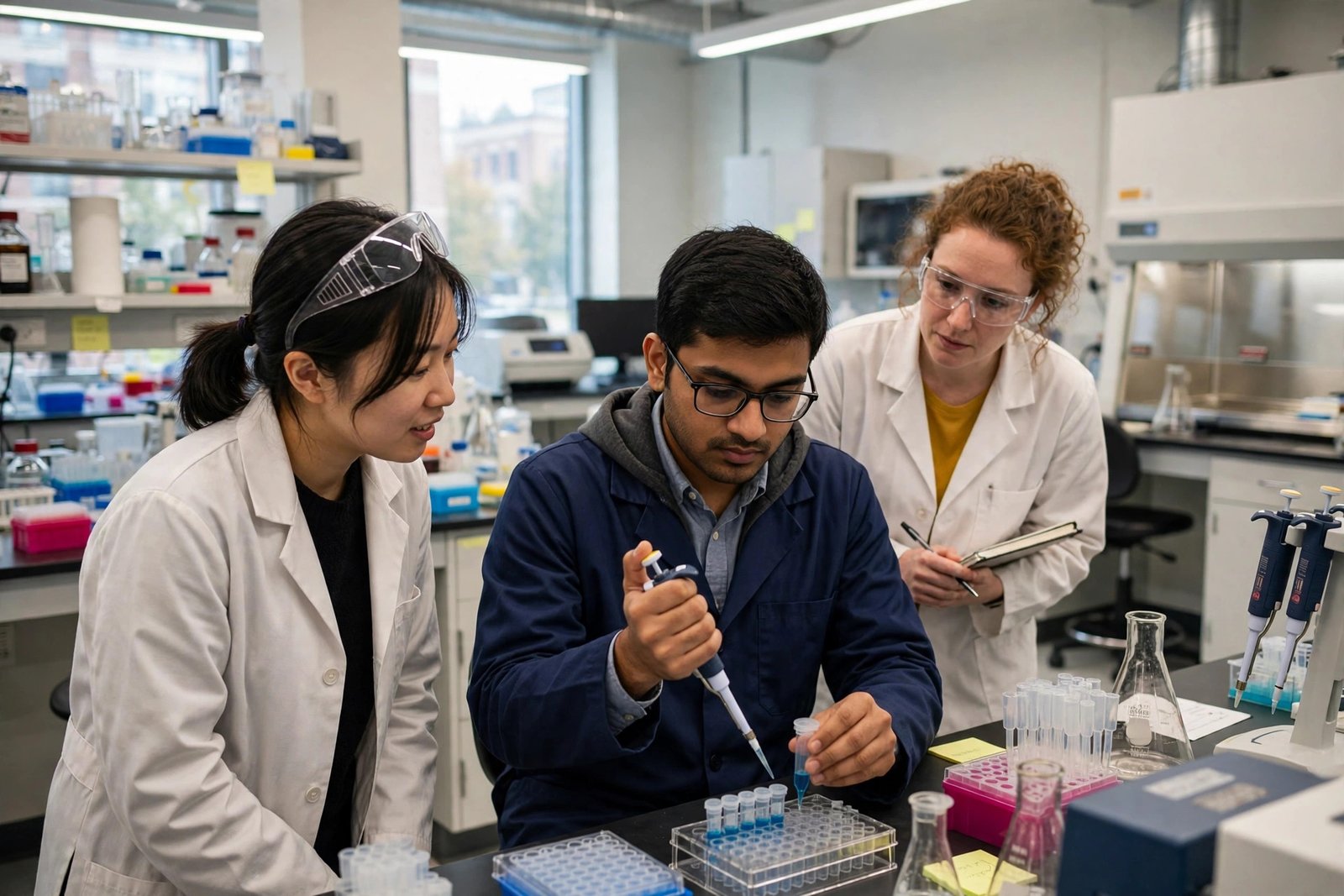
For PhD applicants, the honest headline is that the scholarship has a different name in America: the funded offer. At research universities, admitted doctoral students are typically offered a package by the department or graduate school combining a full tuition waiver with a stipend earned through a teaching or research assistantship, or granted through a fellowship, usually conditional on satisfactory progress. That is why the strongest PhD strategy for an Indian applicant is not a scholarship search at all — it is a supervisor-and-department search: published research that matches yours, a lab with grant funding, and an application that reads as the start of a research collaboration. For master’s applicants the picture is harsher and must be stated plainly: most U.S. master’s degrees are revenue programmes, large scholarships are rare, and the realistic funding stack is a partial departmental award or merit discount where offered, an on-campus assistantship after arrival where permitted, the JN Tata loan described above, and family or loan finance for the balance. Any adviser who tells an Indian master’s applicant that full funding is routine in the USA is misleading them; full funding at master’s level flows overwhelmingly through Fulbright-Nehru, Inlaks-type trusts, and a handful of named programmes such as Knight-Hennessy at Stanford, each of which is a national or global competition in its own right.
Undergraduates sit between the two. A small group of very wealthy universities meets the full demonstrated need of admitted international students, and an even smaller group admits internationals need-blind; outside that group, merit scholarships at mid-tier universities — automatic awards for specified grades and test scores, presidential and dean’s scholarships — are the common mechanism, and they discount tuition rather than covering the full cost of attendance. Two disciplines will protect an Indian family’s money here. First, file the aid forms: at need-aware universities an Indian applicant who needs aid and does not apply for it has simply chosen to pay full price, and aid deadlines are frequently the same day as the admission deadline. Second, cost the whole degree, not the first year: a scholarship that covers tuition for year one at a university whose living costs you cannot sustain for years two to four is not funding, it is a deferred withdrawal.
Eligibility patterns Indian applicants must check
Across the schemes in this guide, five Indian-specific patterns repeat. Residence: USIEF, Inlaks and JN Tata all require you to be an Indian citizen connected to India now — Inlaks requires residence in India at application, and both Fulbright-Nehru and Inlaks restrict or exclude candidates already holding degrees from abroad (Fulbright-Nehru bars holders of a U.S. degree and those enrolled in a U.S. programme; Inlaks bars holders of a foreign postgraduate degree and those who have already begun postgraduate study abroad). Marks conversion: USIEF’s line is 55% on a U.S.-equivalent bachelor’s; Inlaks sets 65% or 70% by subject family; JN Tata expects a consistently good record around 60% — do not round your percentage up on any form, because every one of these bodies verifies transcripts. Experience: Fulbright-Nehru’s three years must be full-time and paid, and relevant to the field; unpaid internships and part-time work do not clear that bar however impressive they look. Employer and state rules: Fulbright-Nehru excludes Government of India and state government employees entirely and requires an employer endorsement promising leave from everyone else who is employed. Age: Inlaks operates an effective under-30 window through its birth-date rule, JN Tata allows applicants up to 45, and Fulbright-Nehru sets no age limit but builds its competition around early-to-mid-career professionals. Finally, Canada’s experience is a useful warning to carry across all destinations: if your USA plan fails and you pivot, other countries’ rules differ completely — our guide to scholarships for Indian students in Canada sets out that system, including the Canadian study-permit living-funds requirement of CAD 22,895 for applications from 1 September 2025 to 31 August 2026, rising to CAD 23,448 from 1 September 2026.
How to apply: a step-by-step plan
- Fix your layer first. Decide whether your primary route is a national competition (Fulbright-Nehru), a trust (JN Tata, Inlaks), a named university fund (Tata at Cornell, Knight-Hennessy), or university aid and assistantships — each has a different calendar and a different definition of a strong file.
- Read the official eligibility page word by word. USIEF’s master’s page, the JN Tata Endowment site and the Inlaks Foundation site each publish rules that disqualify whole categories of applicant; confirm you are inside every line before writing anything.
- Sequence admission and scholarship correctly. Inlaks requires an offer in hand; Fulbright-Nehru selects first and places afterwards; Cornell’s Tata Scholarship is decided inside the admission-and-aid process. Building the wrong sequence is the commonest planning error Indian applicants make.
- Prepare the document core. Transcripts and degree certificates, passport, CV evidencing the required experience, test scores where your universities require them, and financial documents for aid applications — the CSS Profile for Cornell-type aid, institutional forms elsewhere.
- Brief your referees against the criteria. Fulbright-Nehru scores leadership and community contribution; Inlaks scores exceptional talent in a defined field; a generic "excellent student" letter serves neither.
- Write the field-specific case. For Fulbright-Nehru, show how the named field, your three-plus years in it, and your return to an Indian community or institution form one argument. Vague plans to "gain global exposure" are the single most common reason strong files fail.
- File aid with admission, not after it. Where a university funds internationals, its aid deadline is part of the admission deadline. Diarise both on the same day.
- Submit early and keep the record. Save submitted PDFs, confirmations and portal receipts for every application, including the JN Tata application, which is made online through the Endowment’s own portal.
Required documents
An Indian applicant’s master file for the USA normally contains: a valid Indian passport; Class X and XII certificates where undergraduate admission or age verification requires them; bachelor’s and any master’s mark sheets and degree certificates, with university-issued transcripts in sealed or officially transmitted form where a U.S. institution requires them; a CV that evidences full-time paid experience with dates an employer can verify, plus appointment or experience letters; the employer’s endorsement on USIEF’s prescribed form for Fulbright-Nehru applicants who are employed; three references for Fulbright-Nehru, submitted by referees through the portal; standardised test scores only where the target programme actually requires them — many U.S. programmes are now test-optional, and neither USIEF nor the trusts should be sent scores they have not asked for as decoration; financial documentation for need-based aid, including family income and asset evidence in the format the CSS Profile or institutional form specifies; and, for JN Tata, details of a guarantor, since the loan scholarship is a repayable instrument that requires one. Keep names, dates of birth and the spelling of your name identical across passport, academic records and every portal — Indian applicants lose weeks each cycle to mismatches between Aadhaar, passport and university records.
Deadlines and timeline
| Period | Milestone | Notes |
|---|---|---|
| Autumn (Sep–Nov) | U.S. university early applications and aid forms; Knight-Hennessy application alongside Stanford graduate deadlines | Cornell Early Decision applicants are considered for the Tata Scholarship within that round |
| Winter (Dec–Jan) | Regular Decision admission and aid deadlines, including Cornell’s; JN Tata Endowment application window typically opens in January | File the CSS Profile by the university’s own date |
| Spring (Feb–May) | Inlaks application window in recent cycles; Fulbright-Nehru Master’s deadline in mid-May on USIEF’s established pattern (14 May 2025 for the 2026–27 round) | Confirm the current year’s USIEF date on the official fellowship page |
| 1 July | Fulbright-Nehru Doctoral Research and Academic & Professional Excellence deadline (1 July 2026 for 2027–28) | One Fulbright-Nehru category per cycle only |
| Summer | F-1 visa interviews after admission and funding are confirmed; JN Tata selection stages conclude | Your funding evidence is the core of the visa file |
| August–September | Programmes begin in the USA | Fulbright-Nehru 2027–28 fellows in the July categories also begin in this window of 2027 |
Selection tips and common mistakes
Selection for the schemes in this guide rewards coherence over volume. USIEF panels interview shortlisted master’s candidates before a National Selection Committee, and the files that survive are the ones where field, experience and return plan reinforce each other at the interview as clearly as on paper. Inlaks interviews test whether the talent is as exceptional in the room as in the portfolio. Cornell-type aid rewards accuracy: an aid application whose figures cannot survive documentary verification damages the admission it was meant to support. Across all of them, start the application in the season before the deadline season — the documents, endorsements and references in the checklist above cannot be assembled credibly in a fortnight.
- Applying to Fulbright-Nehru as a government employee. The exclusion is total for Government of India and state government employees; check it before investing in the application.
- Counting unpaid or part-time work toward the three-year rule. USIEF requires full-time paid experience relevant to the field by the deadline.
- Ignoring Inlaks’ subject exclusions. Computer science, most engineering, business, management and public health are outside the scheme outside partner arrangements.
- Treating the JN Tata award as a grant. It is a loan of up to ₹20 lakh, repayable within seven years; the possible gift element is discretionary and performance-linked.
- Missing the aid deadline at a wealthy university. At Cornell and its peers, aid applied for late is aid not considered — the Tata Scholarship has no separate form to rescue you.
- Assuming every master’s is fundable. Outside the named competitions, U.S. master’s funding is partial at best; budget the gap honestly before accepting a place.
- Applying to more than one Fulbright-Nehru category. USIEF permits one category per cycle and rejects incomplete applications outright.
Frequently asked questions
Can Indian students get a fully funded master’s in the USA?
Yes, but through competitions, not through ordinary admission. The realistic full-funding routes are the Fulbright-Nehru Master’s Fellowships — which fund tuition and fees, living costs, airfare, J-1 support and health coverage, while noting that funding may not cover all costs and dependants are not supported — the Inlaks Shivdasani Scholarships of up to USD 120,000 for admitted students in eligible subjects, and named programmes such as Knight-Hennessy at Stanford. A standard admission offer to a U.S. master’s programme, by itself, rarely carries full funding.
What are the exact eligibility rules for the Fulbright-Nehru Master’s Fellowships?
Per USIEF: an Indian citizen resident in India; the equivalent of a U.S. bachelor’s degree from a recognised Indian university with at least 55% marks — a four-year bachelor’s, or a completed master’s, or a full-time postgraduate diploma where the bachelor’s was shorter; at least three years of full-time paid professional experience relevant to the proposed field by the deadline; demonstrated leadership and community service; no existing U.S. degree and no current enrolment in a U.S. programme; an employer endorsement promising leave if you are employed; and, categorically, no employment with the Government of India or a state government. You may apply in only one Fulbright-Nehru category per cycle.
Is the Tata Scholarship at Cornell a separate application?
No. The Tata Scholarship, funded by a USD 25 million Tata Education and Development Trust endowment and supporting around twenty Indian scholars at a time, is awarded inside Cornell’s admission and need-based aid process. You must be an Indian citizen who attended secondary school in India, be admitted as an undergraduate, and be eligible for need-based aid; you apply for aid, including the CSS Profile, by Cornell’s deadlines, and there is no separate Tata form.
Is the JN Tata Endowment award a scholarship or a loan?
It is a loan scholarship. Tata Trusts states that the Endowment supports overseas master’s, PhD and postdoctoral study in any stream, on merit alone, with a loan of up to ₹20 lakh repayable within seven years in five equal instalments beginning from the end of the third year. Additional gift scholarship and travel grant elements exist but are awarded at the trustees’ discretion and linked to performance; do not budget them as guaranteed.
Can I apply to Inlaks before I have a university offer?
No. Inlaks requires prior admission to the chosen institution and course at the time of application, and candidates who have already started postgraduate study abroad, or who hold a postgraduate degree from abroad, are ineligible. Inlaks also publishes subject exclusions — including business and finance, computer science, most engineering, management and public health — and a birth-date eligibility rule (born on or after 1 January 1996 for the 2026 cycle), with minimum marks of 65% for humanities-family subjects and 70% for science-family subjects.
Do Indian PhD applicants in the USA usually pay tuition?
At research universities, admitted PhD students are typically funded by the university through a package combining a tuition waiver with a stipend earned through teaching or research assistantships, or held as a fellowship, conditional on satisfactory progress. That is a general pattern of U.S. doctoral funding, not a guarantee for any individual offer: the funding letter, its duration and its conditions are part of the offer itself, and you should compare offers on those terms before accepting.
Can I combine scholarships — for example, JN Tata with a university award?
Usually yes, and stacking is the normal Indian funding strategy: a university tuition discount or assistantship, a JN Tata loan of up to ₹20 lakh toward the remaining cost, and family finance for the balance is a common structure. What you cannot do is conceal one award from another funder where its rules require disclosure, and Fulbright-Nehru fellows should note USIEF’s own caution that its funding may not cover all costs and may need supplementing with other resources — declare the supplement rather than discovering the rule afterwards.
When should I start if I want to begin in autumn 2027?
Now, in this order: this autumn, shortlist universities and file admission-and-aid applications on their winter deadlines; in January, watch for the JN Tata window; in spring, file Inlaks if you hold an eligible offer, and prepare the Fulbright-Nehru master’s application for its mid-May deadline on USIEF’s established pattern, verifying the exact date on the official page. The applicants who miss U.S. funding rarely miss it on merit — they miss it on sequence.
Sources & Verification
Facts in this guide were checked at the time of writing against official sources: the USIEF Fulbright-Nehru Master’s Fellowships page (55% marks rule, three years’ full-time paid experience, grant components, no dependant support, funding-may-not-cover-all-costs note) and USIEF’s 2027–28 fellowship timelines (1 July 2026 deadline for the Doctoral Research and Academic and Professional Excellence categories; mid-May master’s pattern, 14 May 2025 for the 2026–27 round); Tata Trusts’ education grants page for the J. N. Tata Endowment (established 1892, more than 5,800 scholars, loan up to ₹20 lakh repayable within seven years in five instalments from the end of the third year); Inlaks Shivdasani Foundation published terms (up to USD 120,000, birth-date rule, subject minima and exclusions, partner joint scholarships); and Cornell University’s published Tata Scholarship terms (USD 25 million endowment, around twenty scholars, secondary schooling in India, no separate application). Use our application tools to track the overlapping deadlines, and our scholarships for Indian students in Germany guide if a tuition-free European alternative belongs in your plan.
Disclaimer: StudyGraduate is an information portal, not an agency. We do not submit applications, charge fees, or promise selection, admission or visa approval — no one honestly can. Scholarship details change yearly; always confirm deadlines, amounts and eligibility on the official website of the scheme before you apply.
✅ Eligibility Criteria
- Check the official website for full eligibility criteria for your country
🎁 Benefits
- See the official website for the complete list of benefits
⚙️ Application Process
- 1Check your eligibility on the official site
- 2Prepare your documents and statements
- 3Submit the online application before the deadline
- 4Complete interviews or assessments if shortlisted
- 5Await the final selection announcement
📅 Important Dates
Deadlines vary by country and intake. Check the official website for country-specific dates.
📄 Required Documents
- Valid passport
- Academic transcripts & certificates
- Statement of purpose
- Letters of recommendation
- CV / resume
Commonly required — confirm the exact list on the official site.
❓ Frequently Asked Questions

Ready to Take the Next Step?
Explore more scholarships and study opportunities around the world.
Browse Scholarships →