Scholarships After HSC and A-Levels 2026 — Including Gap Year Students
Scholarships After HSC and A-Levels 2026 — Including Gap Year Students The months after your final school results — the Higher Secondary Certificate (HSC) in Bangladesh, A-Levels in the UK system and the many countries that teach it, or an equivalent school-leaving qualification — are the single best scholarship window of your life. Almost every ... <a title="Scholarships After HSC and A-Levels 2026 — Including Gap Year Students" class="read-more" href="https://studygraduate.com/scholarship/scholarships-after-hsc-and-a-levels-2026-including-gap-year-students/" aria-label="Read more about Scholarships After HSC and A-Levels 2026 — Including Gap Year Students">Read more</a>
📖 Overview
Scholarships After HSC and A-Levels 2026 — Including Gap Year Students
The months after your final school results — the Higher Secondary Certificate (HSC) in Bangladesh, A-Levels in the UK system and the many countries that teach it, or an equivalent school-leaving qualification — are the single best scholarship window of your life. Almost every major undergraduate scholarship in the world is designed for exactly this moment: students entering a first bachelor’s degree directly from secondary school. Miss this window by enrolling somewhere else first, or by misunderstanding the gap-year rules, and several of the most generous awards in this guide close to you permanently. This article maps the verified undergraduate-entry scholarships open to fresh HSC and A-Level graduates in 2026, states each one’s gap-year position only where official sources confirm it, and explains the practical steps — equivalence, attestation and timing — that school leavers from Bangladesh and similar systems need to get right.
Two definitions before we start. “First-entry” means your first undergraduate degree, entered directly from school; scholarships using this term exclude anyone who has already started tertiary study. A “gap year” means a year between finishing school and starting university — some scholarships welcome it, some cap it precisely (for example, graduation no earlier than a named month), and some forbid any post-secondary enrolment during it. Those distinctions decide eligibility, so this guide quotes each scheme’s actual rule. Browse destinations in our study abroad guides, compare institutions in the universities directory, and prepare your English testing with the test preparation resources.

At a Glance: Undergraduate-Entry Scholarships for School Leavers
| Scholarship | Host | Coverage | Gap-year position (per official rules) |
|---|---|---|---|
| Lester B. Pearson International Scholarship | University of Toronto, Canada | Tuition, books, incidental fees and full residence support for 4 years | Final-year students or those who graduated no earlier than June 2026 for Sept 2027 entry; no post-secondary study allowed |
| UBC International Major Entrance Scholarship (IMES) | University of British Columbia, Canada | CAD 10,000–25,000 per year for 2026/27, renewable up to 3 additional years | Must enter directly from secondary school; automatic consideration on admission application |
| Melbourne International Undergraduate Scholarship | University of Melbourne, Australia | One-off AUD 10,000 fee remission, or 50% or 100% fee remission for the degree’s duration | Must not have previously undertaken tertiary studies (extension studies excepted); automatic consideration |
| Türkiye Burslari (undergraduate) | Turkish government (YTB) | Placement, tuition, accommodation, health insurance, language year, 6,500 TL/month stipend | Age limit under 21 governs the gap; minimum 70% grades (90% health sciences) |
| MEXT Undergraduate | Japanese government | Full tuition exemption, JPY 117,000/month stipend plus regional supplement, round-trip airfare | Age-based eligibility (born on or after 2 April 2002 for the 2027 cycle); 12 years of schooling required |
| Stipendium Hungaricum (bachelor’s) | Hungarian government (Tempus) | Tuition-free study, HUF 43,700/month stipend, dormitory or HUF 40,000/month housing contribution, medical insurance | No gap-year ban stated; partner-country nomination required |
1. Lester B. Pearson International Scholarship — University of Toronto (Canada)
The Lester B. Pearson International Scholarship is the University of Toronto’s flagship award for international school leavers, recognising students who show exceptional academic achievement, creativity and leadership within their school and community. Around 37 new Pearson Scholars are selected each year. The scholarship covers tuition, books, incidental fees and full residence support for four years of a first-entry undergraduate programme at the University of Toronto only.
Eligibility is precise, and it is where gap-year students must pay attention. For September 2027 entry, the University of Toronto requires applicants to be international students (non-Canadian, requiring a study permit) who are either enrolled in their final year of senior secondary school in 2026/27, or have graduated no earlier than June 2026 — and who will begin studies at U of T in September 2027. Students already attending post-secondary studies are not eligible, and neither are students who begin post-secondary studies in January 2027 at U of T or anywhere else. In plain terms: a one-year gap after a June 2026 (or later) graduation is built into the rules, but spending that gap year enrolled at another university destroys eligibility.
The process is nomination-based. Your school must nominate you — each school may nominate only one student per year — and for the 2027 intake the school nomination deadline was 9 October 2026, the U of T admission application deadline was 16 October 2026, and the scholarship application and documents deadline was 6 November 2026. Schools that had not participated before could apply to join by noon Eastern Time on the nomination deadline. Because the nomination comes first and only one student per school can be put forward, the real competition starts inside your own school: speak to your counsellor or principal early in your final year, not after results. Full details are on the University of Toronto’s official Pearson page. Our related guide is undergraduate scholarships in Canada.
2. UBC International Major Entrance Scholarship (IMES) — Canada
The University of British Columbia’s International Major Entrance Scholarships are awarded to exceptional international students entering undergraduate programmes at UBC. Students receive the scholarship in their first year and it is renewable for up to three additional years, with the number and level of awards varying by available funding. For the 2026/2027 academic year, UBC publishes IMES values of CAD 10,000–25,000 per year — a potential CAD 40,000–100,000 across a four-year degree, though the exact award is set by UBC and is not guaranteed to any applicant.
UBC’s eligibility rules state that you must be new to UBC, entering directly from secondary school; be an international student studying on a Canadian study permit; demonstrate exceptional academic achievement and intellectual promise plus impressive extracurricular and community involvement; not be nominated for a need-and-merit International Scholars award; and apply to UBC by the admissions deadline. There is no separate IMES application — consideration is automatic once you have an offer of admission. The “entering directly from secondary school” wording means UBC does not publish a Pearson-style dated graduation window for IMES; a short gap in which you did not undertake post-secondary study is a different situation from transferring, but because UBC does not define a formal gap-year allowance for IMES on its page, gap-year applicants should confirm their standing with UBC admissions before relying on eligibility. UBC also offers the one-time Outstanding International Student (OIS) Award on a similar automatic basis. Remember the wider Canadian funding context: for study-permit applications, Canada’s living-funds requirement is CAD 22,895 for applications in the period to 31 August 2026 and CAD 23,448 from 1 September 2026 — your scholarship counts toward, but does not replace, the financial evidence IRCC requires.
3. Melbourne International Undergraduate Scholarship — Australia
The University of Melbourne’s International Undergraduate Scholarship rewards outstanding final-year school results from students who completed secondary school outside Australia (or a foundation programme in Australia). It offers one of three benefits: a one-off AUD 10,000 tuition fee remission in the first year, or a 50% fee remission, or a 100% fee remission for the normal full-time duration of the undergraduate degree. No separate application is needed — every eligible student with an unconditional offer is automatically considered, and awards are competitive, subject to quotas by course and region.
Eligibility requires citizenship of a country other than Australia or New Zealand, not being an Australian permanent resident, holding an unconditional offer for an undergraduate course, and excellent final-year results — the University’s published examples include A-level, IB, foundation and national-curriculum benchmarks pitched at the very top of each system (for instance, results around the 98% level in approved foundation programmes, with curriculum-specific thresholds published on the scholarship page). The gap-year-relevant rule is explicit: applicants must not have previously undertaken any tertiary studies, excluding extension studies completed as part of a Year 12 programme. A gap year spent working, volunteering or preparing applications does not breach that rule; a year spent enrolled in a degree does. With roughly 50 of these scholarships typically awarded per year across all benefit levels, treat the 100% tier as exceptional rather than expected, and model your budget on the conservative scenario. See the profile of the University of Melbourne and our fully funded scholarships in Australia guide.
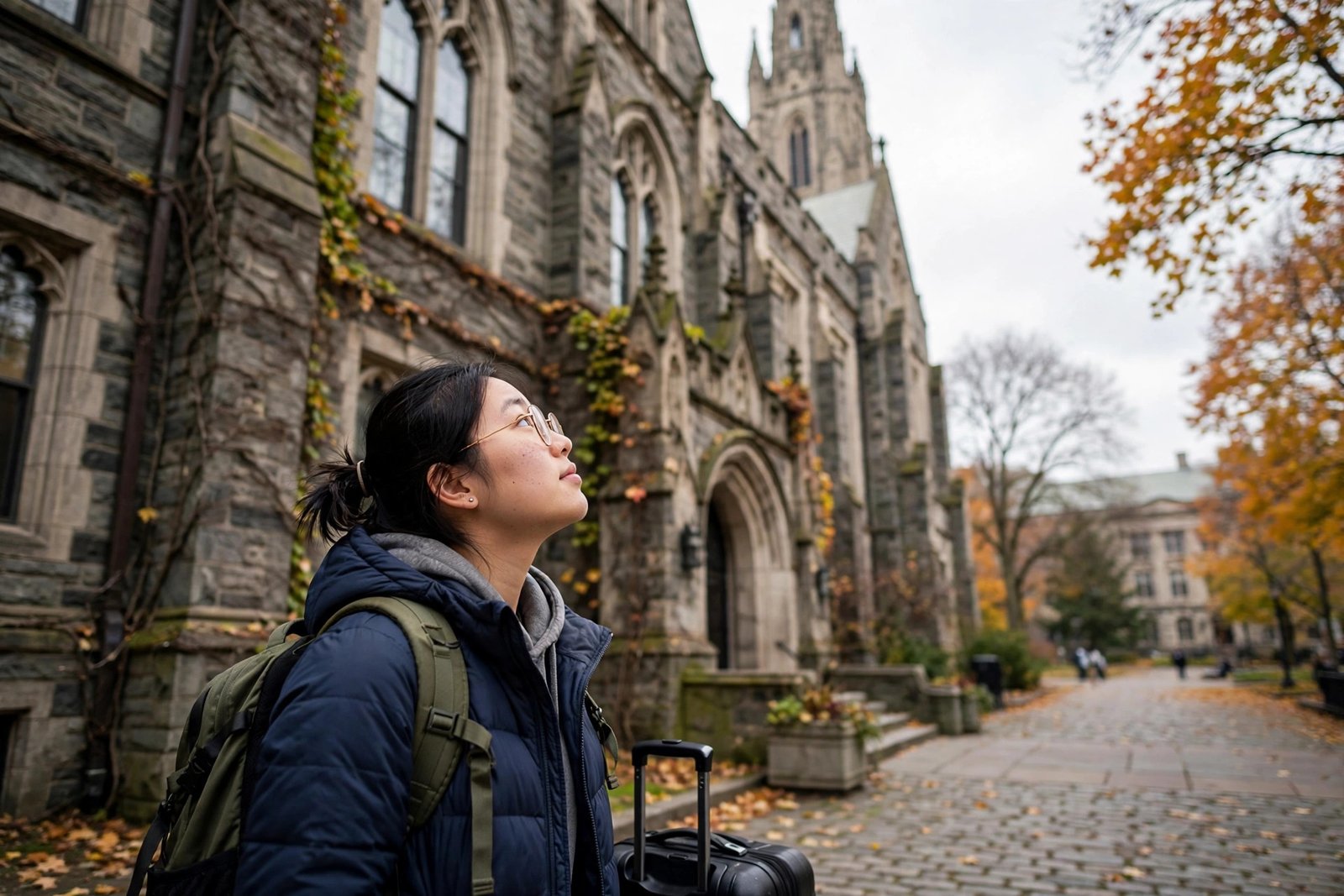
4. Türkiye Burslari — Undergraduate (Türkiye)
Türkiye Scholarships is one of the most complete packages open to fresh school leavers: university and department placement (you list up to 12 programme preferences), full tuition, accommodation, health insurance, a one-year Turkish language course where needed, a once-off flight ticket, and a monthly stipend — currently published by YTB as 6,500 TL for undergraduate students, 9,500 TL for master’s and 13,000 TL for PhD. The scheme is open to citizens of all countries, which makes it unusually accessible to HSC graduates from Bangladesh and A-Level graduates worldwide.
The constraint that replaces a gap-year rule is age: undergraduate applicants must be under 21, with minimum academic achievement of 70% for most programmes and 90% for medicine, dentistry and pharmacy. A student who finishes school at 18 can therefore take a gap year and still apply; a student who takes two or three years out may age out. The single application window runs in January–February (10 January to 20 February in recent cycles), with evaluation and interviews in spring and results in early August. Because placement and scholarship are decided together, your 12 preferences are your university application — research them as carefully as a direct application.
5. MEXT Undergraduate Scholarship — Japan
Japan’s MEXT (Ministry of Education, Culture, Sports, Science and Technology) Undergraduate Students scholarship is a full government package for school leavers: exemption from examination, entrance and tuition fees, a monthly stipend of JPY 117,000 (with a supplemental regional allowance of JPY 2,000–3,000 for designated areas), and an economy-class return air ticket. Most scholars first complete a one-year preparatory education course in Japanese language and related subjects, then enter a Japanese university for a four-year degree (longer for medicine, dentistry, pharmacy and veterinary science).
For the 2027 cycle, Japanese embassy guidance states the core conditions: citizenship of a country with diplomatic relations with Japan; born on or after 2 April 2002; and completion of 12 years of schooling (or expected completion by March 2027). The age rule, not a graduation-date rule, is what governs gap years: a graduate who is still within the birth-date limit may apply, but every gap year consumes eligibility. Selection begins at the Japanese embassy or consulate in your country — document screening, written examinations in subjects relevant to your chosen field (and Japanese), and an interview — followed by MEXT’s second screening and university placement in Japan. Applications through embassies typically open in April–May; the Consulate-General of Japan in Los Angeles’ published 2027-cycle timeline, for example, shows availability from mid-to-late April, a 3 June 2026 deadline, and exams and interviews on 24 June 2026 — dates differ by country, so your own embassy’s announcement is the only authoritative calendar. Willingness to learn Japanese is a stated expectation: degrees under MEXT undergraduate are taught in Japanese after the preparatory year. See our MEXT and Japan fully funded guide and the seed profile MEXT Scholarship.
6. Stipendium Hungaricum — Bachelor’s (Hungary)
Hungary’s Stipendium Hungaricum programme, operated by the Tempus Public Foundation, funds bachelor’s, master’s, one-tier master’s and doctoral study for citizens of partner countries — Bangladesh is among the long list of sending partners, and the partner list is republished with each call. For bachelor’s students the provisions are: tuition-free education; a monthly stipend of HUF 43,700 paid for 12 months a year; accommodation as a dormitory placement or a contribution of HUF 40,000 per month toward housing; and medical insurance under Hungarian legislation plus supplementary cover. Hungarian universities are explicit that the stipend is a contribution, not full coverage of living costs — Semmelweis University’s guidance, for example, advises applicants that they will need some resources of their own.
The application runs in two channels simultaneously: you apply online in the Tempus system (choosing up to two programmes) and you must be nominated by your country’s designated Sending Partner — applications without nomination are not forwarded to universities. Universities then run entrance examinations or interviews between roughly March and May, a minimum score of 56/100 is required in the Stipendium Hungaricum process, and final results are announced around June–July. The call timeline is November to mid-January (the 2026/27 cycle closed on 15 January 2026; the 2027/28 call is expected to follow a similar pattern — confirm on the official site). The programme documents do not state a gap-year prohibition for bachelor’s applicants: eligibility turns on partner-country citizenship, nomination and programme admission requirements rather than on when you graduated. Even so, individual universities set the academic entry requirements for each programme, and long gaps after school should be explained in your motivation letter. See our Stipendium Hungaricum guide.
Gap Years and Deferral: The Rules That Actually Decide Your Eligibility
Students conflate two different things: taking a gap year before applying, and deferring an offer after being admitted. They are governed differently everywhere.
- Gap before applying: decided by each scholarship’s eligibility text. Pearson allows graduation no earlier than June 2026 for September 2027 entry and forbids any post-secondary enrolment. Melbourne forbids previous tertiary study but sets no graduation-date limit in its published criteria. UBC IMES requires entering directly from secondary school. Türkiye Burslari and MEXT use age limits (under 21; born on or after 2 April 2002 for MEXT 2027) that indirectly cap your gap. Never assume a scheme’s position — quote its own rule back to yourself before you plan a year out.
- Deferral after an offer: decided by the university’s admissions policy and, separately, by the scholarship’s terms. Many universities allow a one-year deferral of the place; scholarships frequently do not defer — government schemes such as Australia Awards state that scholarships must be taken up in the year awarded, and school-nominated awards such as Pearson are tied to a named entry year, so a student who cannot start in September 2027 should expect to re-enter a future competition rather than carry the award forward. Where this guide could not verify a scheme’s deferral rule on an official page, we say so rather than guess: ask the awarding body in writing before you accept.
- The safest gap year is one spent working, volunteering, improving English scores or preparing applications — with zero tertiary enrolment anywhere — because it preserves eligibility under every rule set described above.
HSC and A-Levels: Equivalence and Attestation for Bangladeshi and International Applicants
HSC is the Higher Secondary Certificate awarded by Bangladesh’s education boards after Class 12; together with the SSC it represents 12 years of schooling, which is the baseline that MEXT, Stipendium Hungaricum and most undergraduate admissions require. Universities assess HSC grades against their own equivalences — there is no single global conversion table — so check each target university’s country-specific entry requirements, and be aware that competitive scholarships pitch their thresholds at the top of the HSC range (for example, Türkiye’s 70% minimum, 90% for health sciences). A-Level applicants are assessed on their A-Level grades directly; Melbourne’s published benchmarks, for example, express thresholds in A-Level, IB and other curricula side by side.
On documents: Bangladeshi applicants should expect to attest HSC/SSC certificates and transcripts through their education board, the Ministry of Education and the Ministry of Foreign Affairs where an application requires attested copies — government scholarship files routed through embassies or sending partners commonly require this chain, and embassy instructions in your own country are the authority on the exact sequence. Start attestation early: board verification queues are a classic cause of missed January deadlines. Keep colour scans of everything, and never surrender your only original certificate to any intermediary.
Eligibility Checklist for School Leavers
- Final-year student or recent graduate within the scheme’s graduation/age window.
- No previous or current post-secondary enrolment (required by Pearson and Melbourne; prudent everywhere).
- Grades at or above the scheme’s threshold (70% Türkiye general; top-band results for Melbourne and Pearson competitiveness).
- Nationality matching the scheme (open: Türkiye, Pearson, UBC, Melbourne; partner-list based: Stipendium Hungaricum; diplomatic-relations based: MEXT).
- English proficiency where required (IELTS/TOEFL or accepted alternatives; MEXT instead tests subjects and Japanese aptitude through its embassy exams).
- A school willing to nominate you, where nomination applies (Pearson — one nominee per school).
How to Apply: Step by Step
- In your final school year (autumn): shortlist schemes and note which require school nomination (Pearson) or sending-partner nomination (Stipendium Hungaricum). Start attestation of SSC/HSC documents and sit IELTS early.
- Secure nominations: for Pearson, get your school’s single nomination; for Hungary, register with your Sending Partner in parallel with the online application.
- Apply for admission and scholarship together where the systems are fused (Türkiye: one TBBS application lists 12 preferences; UBC and Melbourne: scholarship consideration is automatic with admission).
- Meet the scholarship-specific deadlines: Pearson’s three-stage deadlines (nomination 9 Oct 2026, admission 16 Oct 2026, scholarship file 6 Nov 2026 for 2027 entry); Türkiye’s 10 Jan–20 Feb window; Hungary’s mid-January close; MEXT’s embassy window in spring.
- Exams and interviews: MEXT embassy written exams and interview; Hungarian university entrance exams (minimum 56/100 in the Stipendium Hungaricum process); Türkiye expert evaluation and interview.
- Accept, then visa: with your award letter, assemble visa finances — for example Canada’s living funds of CAD 23,448 for applications from 1 September 2026, or UK Student visa maintenance of £1,529 per month in London and £1,171 per month outside London for up to nine months (rising to £1,570 and £1,203 for applications on or after 30 November 2026) where a UK route applies.
- Use the planning tools: track every date in a deadline tracker and model costs with the calculators in our tools section; compare universities in the rankings before finalising preferences.
Required Documents
- Passport (valid well beyond your intended start date).
- SSC and HSC certificates and transcripts (or A-Level certificates), with board/foreign-ministry attestation where required.
- Predicted grades or final results, as the scheme’s stage requires.
- School nomination form (Pearson) or Sending Partner nomination (Stipendium Hungaricum).
- Recommendation letter from a school principal or teacher (MEXT specifies a recommendation from the school; most schemes require referees).
- English test results where required; medical certificate in the prescribed format for MEXT and Stipendium Hungaricum.
- Motivation letter / personal statement and, for Türkiye, the letter of intent within the TBBS application.
- Passport photographs and any programme-specific forms, with certified translations where documents are not in the required language.
Deadlines and Timeline
| Scholarship | Key dates | Status note |
|---|---|---|
| Pearson (Toronto) | Nomination 9 Oct 2026; admission 16 Oct 2026; scholarship file 6 Nov 2026 (Sept 2027 entry) | Published for the 2027 intake on U of T channels |
| UBC IMES | Apply to UBC by the admissions deadline; awards decided with admission | Automatic consideration; 2026/27 values CAD 10,000–25,000/year |
| Melbourne International Undergraduate | No separate deadline; assessed with your course offer for each intake | Automatic consideration for unconditional offer holders |
| Türkiye Burslari | 10 January – 20 February in recent cycles | Single window; results early August |
| MEXT Undergraduate | Embassy applications typically April–June (example 2027 cycle: deadline 3 June 2026, exams 24 June 2026 in Los Angeles) | Dates set by your own country’s Japanese embassy |
| Stipendium Hungaricum | Call opens November; 2026/27 deadline 15 January 2026; 2027/28 expected similar | 2027/28 dates to be confirmed on the official site when the call opens |
Tips for a Stronger School-Leaver Application
- Start inside your own school. For Pearson, your school’s single nomination is the first competition — brief your counsellor with your grades and activities a term early.
- Protect your eligibility during a gap year: do not enrol in any post-secondary course, even a short degree programme, if you are targeting Pearson or Melbourne.
- Watch the age clocks. Türkiye’s under-21 rule and MEXT’s birth-date rule expire silently; calculate your age at the scheme’s reference date, not today’s date.
- Attest documents before the windows open. January deadlines (Türkiye, Hungary) collide with attestation queues every year.
- Treat automatic scholarships as admissions competitions: for UBC and Melbourne, your admission file — grades, personal profile, activities — is your scholarship file.
- Apply to a portfolio: one reach (Pearson), one strong government scheme (Türkiye, MEXT or Hungary) and one automatic-consideration university (UBC, Melbourne) covers most risk profiles.
Common Mistakes
- Enrolling locally “just for a year” and losing first-entry eligibility for Pearson and Melbourne.
- Missing that a parent or agent cannot nominate you for Pearson — only your school can, and only one student per school.
- Assuming scholarships defer with your place. Many awards must be taken up in the award year; confirm deferral in writing before relying on it.
- Using an unofficial MEXT deadline. Each embassy sets its own dates; a deadline copied from another country’s announcement can be weeks wrong.
- Budgeting on the maximum award. Melbourne’s 100% tier and UBC’s top IMES value go to a minority of recipients; plan on the conservative figure.
- Submitting unattested or untranslated documents where the scheme requires attested copies — a preventable technical rejection.
Frequently Asked Questions
Can I take a gap year and still apply for these scholarships?
It depends on the scheme’s own rule. Pearson explicitly allows graduates from June 2026 onward for September 2027 entry, provided you have not started post-secondary study. Melbourne sets no graduation-date limit in its published criteria but bans previous tertiary study. Türkiye (under 21) and MEXT (born on or after 2 April 2002 for 2027) cap gaps through age. UBC IMES requires entering directly from secondary school. Check the rule for each scheme before planning your year.
I enrolled in a local university after HSC. Am I still eligible?
For Pearson, no — students already attending post-secondary studies are ineligible, as are those starting post-secondary study in January 2027. For Melbourne, no — previous tertiary study disqualifies you (extension studies within Year 12 excepted). Age-based schemes (Türkiye, MEXT) do not state the same ban in the material reviewed here, but you must check the current call text, because rules change by cycle.
Does the Pearson Scholarship cover flights and the study permit?
The published coverage is tuition, books, incidental fees and full residence support for four years at the University of Toronto. Travel to Canada and permit costs are not listed among the covered items, so budget for them yourself and confirm the current terms on U of T’s official Pearson page.
How much is UBC’s IMES actually worth?
For the 2026/2027 academic year UBC publishes IMES at CAD 10,000–25,000 per year, renewable for up to three additional years. The number and level of awards vary with available funding, so no applicant is guaranteed a specific amount.
Is HSC accepted for MEXT and Stipendium Hungaricum?
Both schemes require 12 years of schooling, which HSC plus SSC represents. MEXT selects through embassy document screening, written exams and interview; Stipendium Hungaricum additionally requires nomination by your country’s Sending Partner and university entrance assessment. Each scheme publishes country-specific instructions — follow those, including attestation requirements.
Can I defer my scholarship if I cannot start on time?
Do not assume so. Government and nominated scholarships are normally tied to the award year — Australia Awards, for comparison, must be taken up in the year awarded — and deferral policies differ by scheme and were not published for every scheme in this guide. Contact the awarding body in writing before accepting if deferral matters to you.
What grades do I need as an HSC student for Türkiye Burslari?
YTB’s published minimum is 70% academic achievement for undergraduate programmes and 90% for medicine, dentistry and pharmacy, with applicants under 21. Meeting the minimum makes you eligible to be considered; selection is competitive and includes evaluation and interview stages.
Do I need IELTS for all of these scholarships?
No. MEXT examines you itself through embassy tests and does not run on an IELTS requirement in its embassy guidelines. Stipendium Hungaricum programmes set their own language requirements (often IELTS or equivalent for English-medium degrees). UBC and Melbourne assess English through their admission requirements. Check each programme’s page rather than assuming a universal test.
Sources and Verification
- University of Toronto — Lester B. Pearson International Scholarship (eligibility, June 2026 graduation window, nomination and deadlines): future.utoronto.ca/pearson-scholarships
- University of British Columbia — Scholarships and awards for international students (IMES CAD 10,000–25,000/year 2026/27, direct-entry rule): you.ubc.ca
- Consulate-General of Japan in Los Angeles — MEXT scholarships (2027 undergraduate cycle, birth-date and schooling rules, timeline): la.us.emb-japan.go.jp
- Türkiye Scholarships (YTB) — full-time programmes, stipends 6,500/9,500/13,000 TL: turkiyeburslari.gov.tr
- Semmelweis University — Stipendium Hungaricum (HUF 43,700/month bachelor’s stipend, housing contribution, timeline): semmelweis.hu
- Budapest Metropolitan University — Stipendium Hungaricum provisions: metropolitan.hu
- UK Government, Appendix Student — maintenance £1,529/month London, £1,171/month outside London (up to 9 months); HC 584 announced rise to £1,570/£1,203 from 30 November 2026: gov.uk
Disclaimer: StudyGraduate is an information portal, not an agency. We cannot promise selection, admission or visa approval. Amounts, age limits and deadlines change every cycle — always confirm the details on the official scholarship or university website before applying.
✅ Eligibility Criteria
- Check the official website for full eligibility criteria for your country
🎁 Benefits
- See the official website for the complete list of benefits
⚙️ Application Process
- 1Check your eligibility on the official site
- 2Prepare your documents and statements
- 3Submit the online application before the deadline
- 4Complete interviews or assessments if shortlisted
- 5Await the final selection announcement
📅 Important Dates
Deadlines vary by country and intake. Check the official website for country-specific dates.
📄 Required Documents
- Valid passport
- Academic transcripts & certificates
- Statement of purpose
- Letters of recommendation
- CV / resume
Commonly required — confirm the exact list on the official site.
❓ Frequently Asked Questions

Ready to Take the Next Step?
Explore more scholarships and study opportunities around the world.
Browse Scholarships →