Fully Funded Scholarships in Australia for International Students 2026
Fully Funded Scholarships in Australia for International Students “Fully funded” is the most searched — and most misunderstood — phrase in Australian scholarships. Used honestly, it means a package that covers your tuition fees, your living costs through a stipend or living contribution, your compulsory health cover, and ideally your travel, so that you can ... <a title="Fully Funded Scholarships in Australia for International Students 2026" class="read-more" href="https://studygraduate.com/scholarship/fully-funded-scholarships-in-australia-for-international-students-2026/" aria-label="Read more about Fully Funded Scholarships in Australia for International Students 2026">Read more</a>
📖 Overview
Fully Funded Scholarships in Australia for International Students
“Fully funded” is the most searched — and most misunderstood — phrase in Australian scholarships. Used honestly, it means a package that covers your tuition fees, your living costs through a stipend or living contribution, your compulsory health cover, and ideally your travel, so that you can complete your degree without depending on family savings or part-time work. Used loosely on social media, it is attached to almost any discount. This guide cuts through the noise: it profiles the genuinely fully funded scholarships in Australia for international students for the 2026 intake cycle, explains exactly what each package does and does not include, and shows you how to judge whether an award that calls itself “fully funded” really is. The programs below are real and verifiable: the Australia Awards Scholarships, the Research Training Program (RTP) and the university research packages built around it — such as the University of Melbourne Graduate Research Scholarships and the research awards at the University of Sydney, Monash University, the Australian National University, the University of Queensland, the University of New South Wales and the University of Western Australia — plus the small number of 100 per cent tuition scholarships that become fully funded in practice when combined with other support.
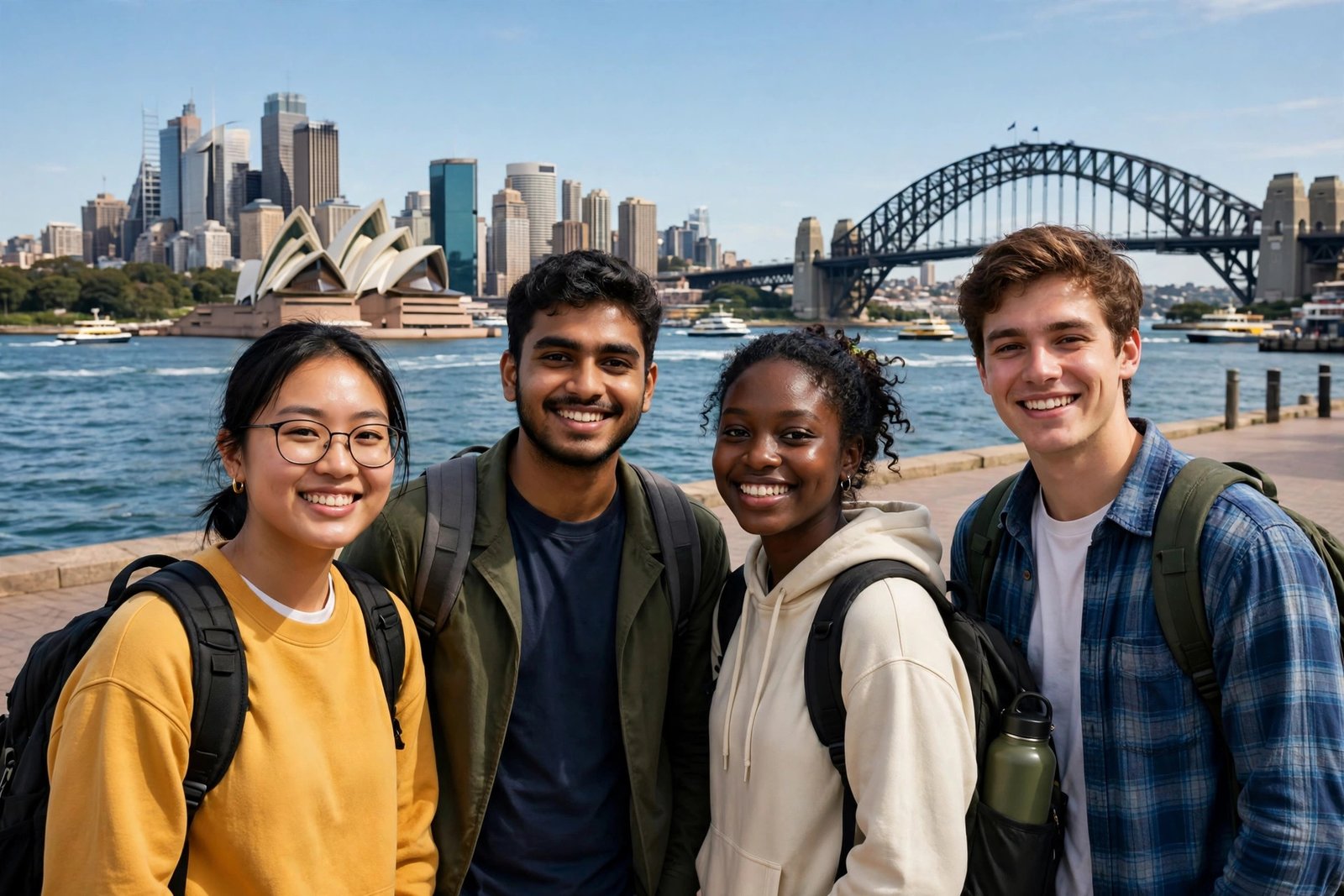
What “Fully Funded” Should Mean: A Five-Part Test
Before the program profiles, use this test on any award you encounter. A genuinely fully funded scholarship in Australia covers: (1) 100 per cent of tuition fees for the standard duration of the degree, usually as a fee offset or fee remission rather than cash; (2) a living stipend paid regularly — fortnightly or monthly — at a level at least comparable to the Australian Government’s visa living-cost benchmark of AUD 29,710 per year; (3) Overseas Student Health Cover (OSHC) for at least the scholarship holder for the visa period; (4) travel support, normally one return economy airfare between your home country and Australia; and (5) start-up and study support such as an establishment or relocation allowance, thesis or research allowances, and academic support services. An award covering only some of these may still be excellent — a 50 per cent tuition scholarship is worth a great deal of money — but it is a partial scholarship, and your budget and visa evidence must cover the gap. Panels and visa officers respect applicants who describe their funding accurately; overstating a partial award in a statement is a credibility risk you do not need.
Fully Funded Scholarships in Australia at a Glance
| Program | Levels | Tuition | Living Support | Airfare & OSHC | Open To |
|---|---|---|---|---|---|
| Australia Awards Scholarships (DFAT) | Bachelor’s, Master’s, PhD (by country) | 100% | Contribution to Living Expenses, paid fortnightly | Return economy airfare; OSHC for award holder; establishment allowance | Citizens of participating partner countries only |
| Research Training Program (RTP) via universities | Master’s by Research, PhD | Full fee offset | Stipend — 2026 base AUD 34,315/yr, maximum AUD 53,608/yr; many universities pay above base | Allowances vary by university; OSHC support at some universities | All nationalities, competitive by university |
| Melbourne Graduate Research Scholarships (MRS + RTP) | Master’s by Research, PhD | 100% fee offset (up to 2 yrs master’s research; up to 4 yrs PhD) | AUD 39,500/yr (2026 full-time rate), stipend up to 2 yrs master’s / 3.5 yrs PhD | Relocation grant AUD 3,000 from overseas; single OSHC for visa holders | All nationalities; ~600 awards across the university |
| Other university research packages (Sydney, ANU, Monash, UQ, UNSW, UWA) | Master’s by Research, PhD | Full tuition scholarship / fee offset typical | Stipend at or above the RTP base rate typical; exact rate set by each university | Varies — check each university’s RTP and scholarship pages | All nationalities, by competitive round |
| 100% tuition scholarships (e.g. Monash International Leadership Scholarship) | Bachelor’s, Master’s coursework | 100% of tuition for standard duration | No stipend included | No airfare/OSHC included | Exceptional international applicants; very few places (Monash: around 4 per year) |
The pattern in the table is the central fact of Australian funding: full packages live mainly in two places — a government development scholarship (Australia Awards) and research degrees. If you are a coursework master’s or bachelor’s applicant, expect partial funding and plan accordingly; if you can build a credible research profile, or you are a citizen of an Australia Awards partner country with relevant professional experience, a genuinely full package is a realistic target. Our scholarships directory and university rankings pages will help you map the options onto institutions.
1. Australia Awards Scholarships — Full Funding With a Development Mission
The Australia Awards Scholarships, funded by the Department of Foreign Affairs and Trade (DFAT), are the most complete fully funded scholarships in Australia open to international students. They exist to strengthen partner countries, so eligibility is defined by citizenship: you must be a citizen of a participating country — concentrated across the Indo-Pacific, Africa and the Middle East, including countries such as Bangladesh, Indonesia, Nepal, Pakistan, the Philippines, Vietnam, Fiji, Papua New Guinea, Kenya, Ghana and Nigeria — residing in and applying from that country. The study levels, priority fields and institutions available to you are set in your country profile on the official Australia Awards website, and they differ meaningfully between countries: some programs fund master’s degrees only, some include undergraduate and PhD study, and priority sectors — such as agriculture and food security, climate change, health, education, governance, gender and social inclusion, and infrastructure — reflect each country’s development agreement with Australia.
The package passes every part of the five-part test. Recipients receive full tuition fees for the minimum period required to complete their program; a single return economy airfare by the most direct route; a one-off establishment allowance on arrival for accommodation, textbooks and study materials; a Contribution to Living Expenses paid fortnightly at a rate determined by DFAT; a compulsory Introductory Academic Program before studies begin; Overseas Student Health Cover for the award holder for the duration of the award (pre-existing conditions excluded); pre-course English training where required; supplementary academic support; and, for research awards and master’s by coursework with compulsory fieldwork, a fieldwork allowance that may include one return economy airfare. Disability support and reasonable adjustments are assessed case by case. It is difficult to overstate how unusual this is: the award is designed so that a scholar from a partner country can study in Australia with no personal funding gap for the core costs of the degree.
The obligations match the generosity. Scholars sign a contract with the Australian Government, must return to their home country for at least two years after completing the award, and generally cannot apply for another long-term Australia Award until they have spent twice the length of their award period outside Australia. General eligibility requires you to be at least 18 on 1 February of the commencement year, to hold no Australian or New Zealand citizenship or permanent residency (and not be the partner of someone who does), to meet your country program’s criteria — which in many countries include relevant work experience, and in several African programs a minimum age of 25 and around five years of post-degree experience for master’s study — and to satisfy both university admission and student visa requirements. Applications are made online through OASIS for most countries; for study commencing in 2027 the window ran from 1 February 2026 to 30 April 2026, the program’s long-standing pattern, with a small number of countries using different dates or portals. Selection weighs academic competence, professional experience, leadership and personal qualities, and above all the development impact of your plan and its alignment with your country’s priorities — the strongest applications read as a credible national-contribution plan that happens to require an Australian degree, not as a personal escape plan.
2. Research Training Program (RTP) — Full Funding for Research Degrees
The Research Training Program is the engine behind most fully funded research places in Australia. The Australian Government provides funding to eligible universities as block grants under the Higher Education Support Act, and universities award RTP support competitively to master’s by research and PhD candidates, domestic and international. A full RTP package combines a tuition fee offset (so you are not charged tuition for the supported period — generally up to two years for a research master’s and up to four years for a doctorate), a living stipend, and allowances towards ancillary research costs, which universities may direct to relocation, thesis and publication costs and, in some cases, OSHC for international students.
The stipend floor is set nationally. The Department of Education publishes that the full-time base RTP stipend rate is AUD 34,315 per year for 2026, rising to AUD 35,550 for 2027, with maximum rates of AUD 53,608 (2026) and AUD 55,537 (2027). Universities must pay at least the base rate on an RTP stipend and may pay up to the maximum; many add their own top-ups or set a higher institutional rate, so the advertised stipend in an offer letter is the figure that matters. You can verify the current rates on the Department of Education’s Research Training Program page. To calibrate value: the base stipend alone exceeds the AUD 29,710 annual living-cost figure the Department of Home Affairs uses for student visa financial capacity, which is why a fee offset plus stipend plus OSHC arrangement is treated as full funding in practice even where no airfare is included — the one element RTP packages usually lack compared with the Australia Awards.
There is no central RTP application portal. You apply to each university for admission to a higher degree by research and for scholarship consideration — usually in the same application — and the university ranks candidates in rounds. Selection is merit-based and typically considers the grades of your qualifying degree (first-class honours or a high-distinction research master’s is the competitive profile), the quality and feasibility of your research proposal, your research outputs and experience, and referee assessments. Finding and engaging a supervisor whose research program fits your proposal, before the round closes, is the single most effective way to strengthen an RTP application; supervisors advocate for candidates in faculty ranking processes. International RTP places are limited at each university because government funding allocations constrain how many overseas students each institution can support, so treat RTP as a competitive academic prize, not an entitlement that follows admission. An offer of admission without a stipend is common, and universities are transparent that stipend rounds are oversubscribed.
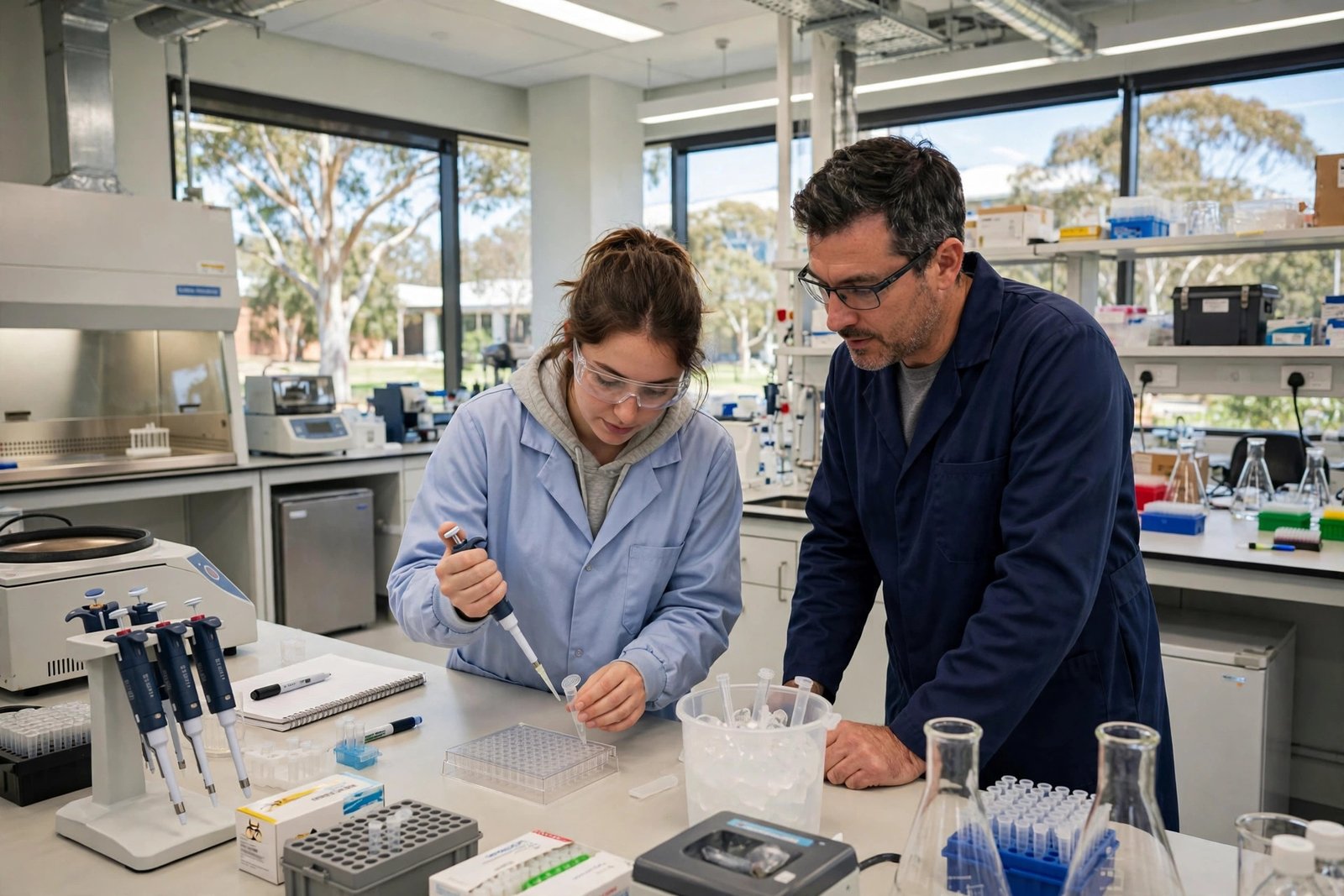
3. University Research Packages: Melbourne and the Group of Eight Pattern
On top of the national RTP framework, Australia’s research-intensive universities package their own funds with RTP money to create named, fully funded research scholarships. The clearest published example is the University of Melbourne’s Graduate Research Scholarships, which bring together the Melbourne Research Scholarship and the RTP Scholarship under one competitive process. Per the university’s official scholarship page, stipend-and-fee-offset recipients receive a full fee offset for up to two years (master’s by research) or four years (doctorate); a living allowance of AUD 39,500 per year pro rata at the 2026 full-time rate, paid for up to two years for a research master’s or up to three and a half years for a doctorate and including limited paid sick, maternity and parenting leave; a relocation grant of AUD 2,000 for moves from other Australian states or AUD 3,000 for moves from outside Australia; and single OSHC membership for international students who require a student visa. The total benefit is described by the university as 100 per cent fee remission and up to AUD 135,000, with around 600 Graduate Research Scholarships across the university. Applicants are considered automatically when they apply for a graduate research degree by the relevant round deadlines — there is no separate scholarship form — which makes the course application itself the scholarship application.
The same pattern, with university-specific values, repeats across the research-intensive group. The University of Sydney awards RTP stipend scholarships and its own international research scholarships with stipends set above the national base rate in recent rounds, together with fee coverage and allowances; ANU, Monash, UQ, UNSW and UWA each run combined admission-and-scholarship rounds for research degrees in which the offer letter specifies the fee arrangement, the stipend rate and duration, and any OSHC or relocation support. Because rates and inclusions differ — one university may include OSHC while another expects you to purchase it — compare offers line by line using the five-part test rather than comparing headline stipend numbers alone. A slightly lower stipend with OSHC and a relocation grant included can be worth more in year one than a higher stipend without them. Use our university directory profiles to reach each institution’s official scholarship pages, and always take final figures from the university itself.
4. The Near-Fully-Funded Tier: 100% Tuition and Large Percentage Awards
Below the full-package tier sits a small set of awards that cover tuition completely but leave living costs to you. The best-known example is the Monash International Leadership Scholarship, which covers 100 per cent of tuition fees for the standard duration of an undergraduate or postgraduate coursework degree for a handful of exceptional international students each year (Monash has historically offered around four per year), with recipients expected to act as Monash ambassadors and maintain a strong semester average. ANU’s Chancellor’s International Scholarship, at its 50 per cent tier, halves tuition for the full degree and is awarded on academic merit with automatic consideration. Large percentage awards at other universities — commonly 20 to 35 per cent for strong coursework applicants, with higher tiers for outstanding results — belong to the same family.
Be precise about the arithmetic before calling any of these “fully funded” in your own planning. A 100 per cent tuition scholarship still leaves you to evidence and fund living costs of at least AUD 29,710 per year for visa purposes, plus OSHC (unless included), travel and set-up costs. In Sydney or Melbourne, real living costs for a careful student can exceed the visa benchmark. These awards are outstanding — they remove the largest single cost of an Australian degree — but the honest label is “full tuition”, and the strongest applicants treat the remaining budget as a planning task, not an afterthought: some combine a full-tuition award with family support or an education loan for living costs, and research master’s and PhD candidates sometimes hold casual research or tutoring work within visa rules. What you must not do is plan to cover a planned funding gap with term-time work: student visa condition 8105 caps work at 48 hours per fortnight while your course is in session (unlimited in scheduled breaks; research master’s and PhD students have unlimited rights once their course commences), and Home Affairs expects your finances to stand without it.
Who Is Eligible for Fully Funded Scholarships in Australia?
Eligibility divides cleanly by program. Australia Awards: citizens of participating partner countries, applying from home, meeting country-specific criteria (which may include age, work experience, sector and prior-qualification rules), able to meet university entry and visa requirements, and willing to sign the return-home commitment. RTP and university research scholarships: applicants of any nationality who gain — or are gaining — admission to a master’s by research or PhD at a participating university, with an academic record competitive in that university’s rounds; there is no partner-country list, but there is also no separate application channel outside the universities. Full-tuition coursework awards: international applicants with exceptional results for their chosen course; some are restricted by citizenship region, faculty or intake, and all require you to hold (or be assessed for) an offer for the relevant degree.
Across all three routes, three practical eligibility factors decide more cases than applicants expect. First, qualification structure: Australian research degrees assess whether your prior study included a substantial research component — a thesis, research project or research methods training graded at a high level. A coursework master’s with no research component can still lead to a PhD offer at some universities, but usually with a weaker scholarship ranking. Second, English proficiency: you must meet your course’s English requirement (commonly IELTS 6.5 with no band under 6.0 at postgraduate level, higher for research in some faculties and for professional programs) through an accepted test or eligible prior study; scholarship offers are conditional on meeting it. Third, timing and completeness: full-funding rounds are annual or semester-based tournaments. An incomplete file — missing transcripts, late referees, an undeveloped proposal — is not assessed on its potential; it is simply not in the round.
Benefits Compared: What Each Package Really Pays For
| Cost Item | Australia Awards | RTP / University Research Package | 100% Tuition Award |
|---|---|---|---|
| Tuition fees | Paid in full for the minimum program period | Fee offset — no tuition charged for the supported period | Covered in full via fee remission |
| Living costs | Contribution to Living Expenses, fortnightly | Stipend — at or above AUD 34,315/yr base rate (2026), university-dependent | Not covered — budget at least AUD 29,710/yr |
| Airfare | Single return economy airfare included; fieldwork flight in eligible cases | Usually not included; some universities offer relocation support instead | Not included |
| Health cover (OSHC) | Included for the award holder | Included at some universities (e.g. single cover at Melbourne); varies elsewhere | Usually not included |
| Start-up costs | One-off establishment allowance | Relocation grant at some universities (Melbourne: AUD 3,000 from overseas) | Not included |
| Family members | Not covered by the award | Not covered; stipend is for the student | Not covered |
| Post-study obligation | Must return home for at least 2 years | No return obligation from the scholarship itself | None |
Read the family row carefully if you plan to bring a partner or children: no major Australian scholarship funds dependants. Your visa application must show the additional official amounts — AUD 10,394 per year for a partner, AUD 4,449 per child and AUD 13,502 per year of schooling for each school-age child — from other sources, and family OSHC is a significant extra cost. This does not make studying with family impossible; it makes early, honest budgeting essential.
How to Apply for Fully Funded Scholarships in Australia: Step by Step
- Confirm your route. If your country is on the Australia Awards participating list and you meet its profile, that application is your priority — it is the only route that funds undergraduate and coursework study in full. Otherwise, if your goal is a research master’s or PhD, your route is RTP/university rounds. Accept that fully funded coursework awards outside these routes are exceptional, and build a partial-funding plan B.
- Build the academic file. Order certified transcripts and certificates early, arrange certified translations if needed, and sit your English test in time to retake it if necessary. For research applications, draft a focused proposal (research question, context, method, timeline, fit) before contacting anyone.
- Engage supervisors (research route). Email two to four potential supervisors per university with a tailored proposal and CV. A supervisor who confirms your fit transforms your ranking prospects; silence or a generic reply is information too — adjust your target list.
- Follow the Australia Awards calendar (awards route). Read your country profile in full, confirm priority fields and any preparatory steps with your country program, prepare referee reports on the official templates, and lodge through OASIS within the window — for the 2027 commencement round this was 1 February to 30 April 2026, the program’s standard pattern.
- Apply for admission and scholarship together (university route). Lodge your research or coursework application before the scholarship round deadline of your intake — research rounds for Semester 1 starts commonly close in the second half of the previous year. Tick every scholarship-consideration option in the form; at Melbourne and many peers, this application is your scholarship application.
- Write statements that match the selection criteria. For Australia Awards: development impact, priority-sector alignment, leadership evidence, re-entry plan. For research rounds: academic excellence plus research potential, evidenced by outputs, methods training and referee specifics. For leadership awards: verifiable leadership outcomes, not titles.
- Respond to the offer precisely. Check the offer letter line by line — fee arrangement, stipend rate and duration, OSHC, conditions and acceptance deadline — accept in time, obtain your Confirmation of Enrolment, and lodge your subclass 500 visa application with scholarship evidence and a consistent Genuine Student statement.
Deadlines You Need to Respect
Three clocks run at once. The Australia Awards clock is annual and unforgiving: applications for most countries open around 1 February and close around 30 April for commencement the following year, and late documents are not considered. The research scholarship clock is set by each university: rounds for international research applicants typically close several months before the intake — frequently around September–October for a Semester 1 (late February) start, with mid-year rounds at some universities — and supervisor engagement must happen weeks before that. The coursework award clock is intake-based: full-tuition and percentage awards are assessed while allocations remain, so early complete applications in the intake cycle outperform late ones with identical grades. Write your target dates down, verify them on the official pages in the month you act, and use our planning tools to keep applications, tests and document requests on one timeline.
How to Improve Your Chances of a Full Scholarship
Panels fund evidence, and the evidence hierarchy is knowable. For research funding: the strongest single asset is a qualifying degree with first-class results and a visible research component; the second is a proposal that a named supervisor wants to supervise; the third is corroboration — publications, conference papers, research employment and referees who describe your research behaviours concretely. If your profile is close but not yet competitive, a deliberate gap year spent as a research assistant, publishing from your master’s thesis, or completing a research-methods qualification can move you into the funded band — a far better investment than reapplying unchanged. For the Australia Awards, the decisive assets are different: relevant professional experience in a priority sector, a study plan that maps course units to a named development problem at home, leadership with measurable outcomes, and a re-entry plan specific enough to name the institution, sector or program you will contribute to. For full-tuition coursework awards, grades dominate, leadership evidence breaks ties, and applying in the first assessment round of your intake avoids the quiet problem of exhausted allocations. Across all routes: apply to more than one institution or program where the rules allow, keep every claim in your statements verifiable, and never let an agent submit on your behalf without reading the final application yourself.
Common Myths and Mistakes
- “Every university offers fully funded bachelor’s scholarships.” It does not. Outside the Australia Awards (citizens of partner countries) and rare full-tuition prizes, undergraduate funding in Australia is partial. Budget on that basis.
- “RTP has a central application form.” There is none. RTP is awarded by universities through their own admission and scholarship rounds.
- “A stipend offer means my family is funded too.” Stipends are calculated for the student. Dependants’ costs are additional and must be evidenced separately for the visa.
- “I can top up a partial scholarship with full-time work.” Term-time work is capped at 48 hours per fortnight for most students, and your visa finances must not depend on it.
- “Fully funded means I need no money at all.” Even full packages rarely cover dependants, visa application charges in every case, or personal costs beyond the stipend design. Keep a modest personal buffer for arrival and emergencies.
- “Deadlines are flexible for strong candidates.” Scholarship rounds and the OASIS window close on schedule regardless of applicant quality.
Visa and Money Checks for Fully Funded Scholars
A full scholarship transforms — but does not abolish — the student visa process. You still apply for a Student visa (subclass 500) through the Department of Home Affairs, still need OSHC arranged for the full visa period (your scholarship letter may evidence that the university or DFAT provides it), still satisfy health and character requirements, and still address the Genuine Student requirement. Financially, your award letter is your core evidence: Home Affairs benchmarks living costs at AUD 29,710 per year for the main applicant, and stipends at or above the RTP base rate, plus a fee offset, speak directly to that benchmark. The official reference points are the Student visa (subclass 500) page and the Australian Government’s Study Australia site — check both before lodging, and remember that Australia Awards scholars have additional contractual conditions, including the two-year return-home requirement after the award.
Frequently Asked Questions
Which fully funded scholarships in Australia can I apply for in 2026?
The main ones are the Australia Awards Scholarships (citizens of participating countries; applications for 2027 commencement ran 1 February–30 April 2026), RTP and university research scholarships for master’s by research and PhD applicants (rounds set by each university, commonly closing in the second half of 2026 for 2027 starts), and a very small number of 100 per cent tuition awards such as Monash’s International Leadership Scholarship. Which of these you can realistically win depends on your citizenship, study level and academic profile.
Is the RTP scholarship really fully funded?
An RTP package that combines a full tuition fee offset with a stipend covers the two largest costs of a research degree, and the 2026 base stipend of AUD 34,315 per year sits above the government’s AUD 29,710 visa living-cost benchmark. Whether it is fully funded for you depends on the inclusions in your offer: check whether OSHC and any relocation support are included, note the stipend duration (for example, fee offset may run longer than the stipend for a PhD), and remember airfare and dependants are usually not covered.
Can I get a fully funded scholarship for a master’s by coursework in Australia?
Only in narrow circumstances: the Australia Awards fund coursework master’s degrees for eligible citizens of partner countries, and a handful of full-tuition prizes (such as Monash’s International Leadership Scholarship) cover tuition but not living costs. There is no general Australian scheme offering full packages for coursework master’s students of all nationalities — most coursework applicants should target strong percentage scholarships and fund the remainder.
What grades do I need for a fully funded research scholarship?
Competitive applicants typically hold first-class honours or a master’s degree with high-distinction results and a substantial research component, supported by a strong proposal, supervisor backing and convincing referees. Universities publish their own equivalence and ranking criteria; a profile below that band is more likely to receive an admission offer with a fee offset only, or no scholarship, than a full stipend package.
Do fully funded scholarships cover my spouse and children?
No major Australian scholarship funds dependants. The Australia Awards package covers the award holder; RTP and university stipends are for the student. You will need separate funds for family living costs (AUD 10,394 per year for a partner, AUD 4,449 per child, plus AUD 13,502 schooling per school-age child), family OSHC and travel, evidenced in your visa application.
Can I work on a fully funded scholarship?
Your visa permits 48 hours per fortnight in session (unlimited in breaks; unlimited year-round for research master’s and PhD students after commencement), but scholarship conditions come first: Australia Awards scholars are funded for full-time study and should confirm any employment with their program, and research stipend holders are generally expected to treat the degree as their primary occupation, with any tutoring or research-assistant work kept within university rules.
What is the difference between the Australia Awards and the RTP?
They differ in purpose, funder channel and eligibility. The Australia Awards are DFAT development scholarships for citizens of partner countries at undergraduate, master’s and PhD levels, with a full package and a return-home obligation, applied for through OASIS. The RTP is Department of Education research funding distributed by universities to master’s by research and PhD candidates of any nationality, applied for through each university, with no return-home obligation.
If I miss the fully funded rounds, what is my best fallback?
Apply for the strongest partial package you can win — a 25–50 per cent tuition scholarship at a university that fits your goals — and compare total degree costs across institutions, including regional options such as Destination Australia at AUD 15,000 per year. A well-chosen partial award at the right university is a better outcome than a year lost chasing a full package your profile cannot yet win; you can also strengthen your profile and re-enter research funding rounds for a later intake.
Sources & Verification
All figures in this guide were verified at the time of writing against official sources. Rates, inclusions and dates are revised regularly — confirm the current details on the official page for any program you apply to.
- Australia Awards (DFAT) — scholarship benefits (tuition, airfare, establishment allowance, Contribution to Living Expenses, OSHC, fieldwork), eligibility, country profiles and application windows; Australia Awards Scholarships Policy Handbook.
- Department of Education — Research Training Program — RTP structure and stipend rates: 2026 base AUD 34,315, maximum AUD 53,608; 2027 base AUD 35,550.
- University of Melbourne — Graduate Research Scholarships — living allowance AUD 39,500 per year (2026 rate), fee offset durations, relocation grants of AUD 2,000/AUD 3,000, single OSHC, up to AUD 135,000 total benefit.
- Department of Home Affairs — Student visa (subclass 500) — financial capacity (AUD 29,710 living costs; partner AUD 10,394; child AUD 4,449; schooling AUD 13,502), OSHC and condition 8105 work limits.
- Study Australia (Australian Government) — scholarship landscape and Destination Australia (AUD 15,000 per year) information.
- Official scholarship pages of Monash University (International Leadership Scholarship — 100% tuition; International Merit Scholarship — AUD 10,000 per year) and the Australian National University (Chancellor’s International Scholarship — 25% or 50% tuition reduction).
Disclaimer: Scholarship details, amounts and deadlines change every year. Always confirm deadlines, amounts and eligibility on the official scholarship or government website before applying. StudyGraduate is an independent information portal, not an agency and not affiliated with the Australian Government or any university; we cannot and do not promise scholarship selection, university admission or visa approval to any applicant.
✅ Eligibility Criteria
- Check the official website for full eligibility criteria for your country
🎁 Benefits
- See the official website for the complete list of benefits
⚙️ Application Process
- 1Check your eligibility on the official site
- 2Prepare your documents and statements
- 3Submit the online application before the deadline
- 4Complete interviews or assessments if shortlisted
- 5Await the final selection announcement
📅 Important Dates
Deadlines vary by country and intake. Check the official website for country-specific dates.
📄 Required Documents
- Valid passport
- Academic transcripts & certificates
- Statement of purpose
- Letters of recommendation
- CV / resume
Commonly required — confirm the exact list on the official site.
❓ Frequently Asked Questions

Ready to Take the Next Step?
Explore more scholarships and study opportunities around the world.
Browse Scholarships →