Fully Funded Scholarships in Hungary for International Students 2026: Stipendium Hungaricum Guide
Fully Funded Scholarships in Hungary for International Students 2026: Stipendium Hungaricum Guide Stipendium Hungaricum is the scholarship that turns “study in Europe for free” from a slogan into a signed award letter — when you understand exactly how it works. Launched by the Hungarian Government in 2013, supervised by the Ministry of Foreign Affairs and ... <a title="Fully Funded Scholarships in Hungary for International Students 2026: Stipendium Hungaricum Guide" class="read-more" href="https://studygraduate.com/scholarship/fully-funded-scholarships-in-hungary-for-international-students-2026-stipendium-hungaricum-guide/" aria-label="Read more about Fully Funded Scholarships in Hungary for International Students 2026: Stipendium Hungaricum Guide">Read more</a>
📖 Overview
Fully Funded Scholarships in Hungary for International Students 2026: Stipendium Hungaricum Guide
Stipendium Hungaricum is the scholarship that turns “study in Europe for free” from a slogan into a signed award letter — when you understand exactly how it works. Launched by the Hungarian Government in 2013, supervised by the Ministry of Foreign Affairs and Trade and managed by the Tempus Public Foundation, it is now Hungary’s flagship international scholarship and one of the largest government scholarship schemes in Europe. It funds full bachelor’s, master’s, one-tier master’s and doctoral degrees, plus preparatory and partial studies, at Hungarian universities — with tuition waived, a monthly stipend, a dormitory place or housing contribution, and medical insurance included.
This guide is the complete, official-source version of how to win it for 2026 entry and how to prepare for the 2027 cycle: the exact forint amounts in the current call, the Sending Partner nomination step that decides most applications before a university ever sees them, the documents list in the order the system asks for them, the March–May entrance examination phase most applicants forget to prepare for, and the budget maths that separates a scholarship you can live on from a scholarship letter you have to decline. If you want the wider Hungarian funding landscape first — university scholarships, the Diaspora Scholarship, Erasmus+ mobility — start with our general guide to scholarships in Hungary for international students, then come back here for the deep dive.
One principle runs through everything below: the Call for Applications is the law of this scholarship. Tempus publishes separate calls for bachelor’s/master’s/one-tier/non-degree applicants and for doctoral applicants, and those documents — not agent videos, not last year’s blog posts, not even this guide — define eligibility, amounts and deadlines for your cycle. We cite the 2026/27 call figures throughout because they are the current verified provisions, and we tell you plainly where a figure is a contribution rather than full coverage. Use our scholarships directory and student tools alongside this page to plan dates and budgets as you work.
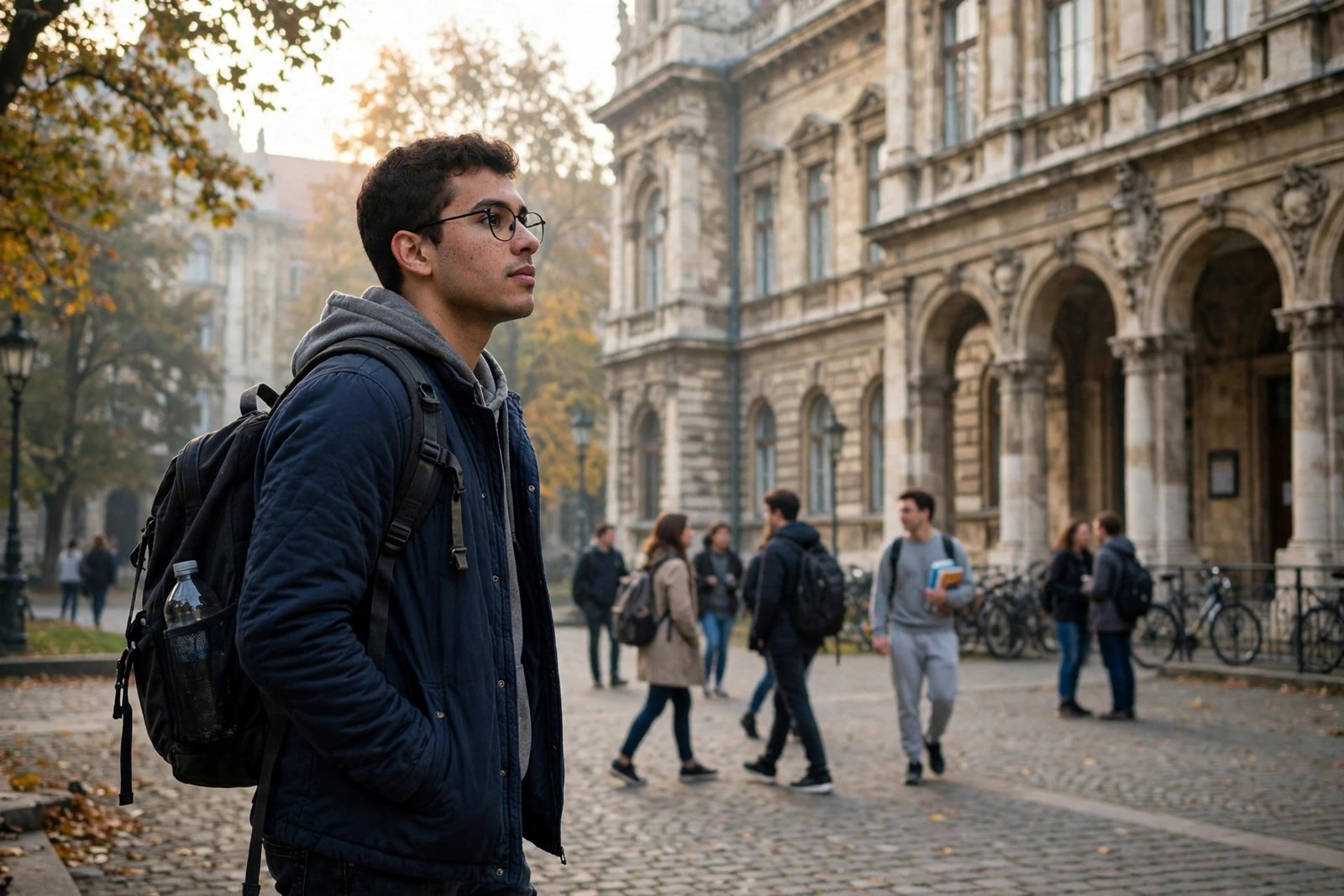
Stipendium Hungaricum at a Glance
| Detail | 2026/27 official position |
|---|---|
| Programme | Stipendium Hungaricum Scholarship Programme, launched 2013 by the Hungarian Government |
| Supervision / management | Ministry of Foreign Affairs and Trade; managed and co-ordinated by Tempus Public Foundation |
| Basis | Bilateral educational cooperation agreements between Hungary and partner countries; applicants must be nominated by their country’s Sending Partner |
| Scale | More than 90 sending partners engaged (Semmelweis University programme summary); around 30 Hungarian host institutions and several hundred foreign-language programmes, most in English |
| Levels | Bachelor’s, master’s, one-tier master’s, doctoral (PhD), non-degree (Hungarian preparatory and postgraduate specialist courses), and partial exchange studies |
| Tuition | Tuition-free education for the scholarship duration at the awarded programme |
| Monthly stipend | HUF 43,700 — non-degree, bachelor’s, master’s, one-tier master’s. Doctoral: HUF 140,000/month in phase 1 (training and research), HUF 180,000/month in phase 2 (research and dissertation) |
| Accommodation | Free dormitory place (subject to capacity) or accommodation contribution of HUF 40,000/month, for 12 months a year during full-time studies |
| Medical cover | Health care services under Hungarian legislation plus supplementary medical insurance (programme summaries describe supplementary cover up to HUF 65,000/year) |
| Application | Online only, via the Tempus application system (apply.stipendiumhungaricum.hu); up to two programmes, ranked in order of preference |
| Deadline | 15 January 2026, 2 p.m. (14:00) CET for 2026/27; the same mid-January pattern is expected for the next cycle — confirm in the new call |
| Start of studies | September 2026 (autumn semester) |
Read the stipend row twice, because it is the most misquoted number in Hungarian scholarship advice online. Older pages still circulate a lower doctoral figure or present the bachelor’s/master’s stipend as if it were a full living wage. The provisions published for holders starting in 2026/27 are the ones in the table: HUF 43,700 for BA/MA-level holders, HUF 140,000 then HUF 180,000 for doctoral holders, HUF 40,000 housing contribution where a dormitory place is not provided. At recent exchange rates HUF 43,700 is roughly €110 — the forint moves, so budget in forint against forint prices, not in converted headlines.
Eligibility: The Four Gates
Every successful application passes four gates, in this order. Failing any one of them ends the application, whatever your grades are.
Gate 1 — Citizenship and partner status
You must be a citizen of a partner country or territory with a valid bilateral agreement for your cycle, and you must not hold Hungarian citizenship alongside it (the call states the dual-citizenship exclusion precisely). Partner status is level-specific: the call’s annexes list which sending partners may nominate for bachelor’s/master’s, for doctoral studies, and for which fields. Citizens of Ukraine whose studies were interrupted by war should also read Chapter 4 of the call, which sets the special conditions of the Students at Risk subprogramme — same deadline (15 January 2026, 2 p.m. CET), same core provisions, with the programme pages confirming that Ukrainian applicants may choose any study field offered in the programme other than the specifically excluded aviation programmes (Professional Pilot BSc; Aviation Engineer / Aviation Specialist postgraduate programmes).
Gate 2 — Sending Partner nomination
Your country’s Sending Partner — typically the ministry responsible for education or a national scholarship body named in the call — must nominate you. Many partners operate their own application with an earlier deadline, document attestation rules, and sometimes national examinations or interviews. Tempus only forwards nominated applications to universities. Treat your Sending Partner’s instructions as a second call document: equally binding, occasionally stricter, and never optional.
Gate 3 — Academic and language entry
You must meet the entry requirements of the specific programmes you choose: a secondary school leaving certificate for bachelor’s entry; a bachelor’s degree for master’s entry; a master’s degree for doctoral entry. You must also meet the programme’s language requirement — most programmes are taught in English, and the required proficiency evidence is set by the host programme in the application system. Applicants for Hungarian-taught degrees normally enter through the one-year Hungarian preparatory course. Note that some programmes and some sub-programmes carry extra conditions (age limits in particular country annexes, restrictions on re-applying at a level you already completed on this scholarship, and similar) — the eligibility chapter of your call lists them all.
Gate 4 — A complete, on-time application
The system closes at 2 p.m. CET on deadline day. An application missing its signed statement, medical certificate, translations or language proof is an incomplete application, and incomplete applications are screened out before academic assessment. At doctoral level, an application without the research plan, two recommendations and the supervisor’s statement of acceptance is incomplete by definition.
Students from Bangladesh, India, Pakistan, Nepal, Nigeria and Indonesia — the audiences who ask us about this scholarship most — should check one extra thing at Gate 1: whether their country’s annex for this cycle covers their intended level and field, and which authority is their Sending Partner this year, because partner arrangements are occasionally reorganised between cycles. The call, not a previous year’s notice, answers both questions. If you are also comparing destinations with similar January deadlines, work through our study guides and study abroad section in autumn, while there is still time to run two applications properly.
Benefits and Coverage: What “Fully Funded” Means Here
| Component | Bachelor’s / Master’s / One-tier / Non-degree | Doctoral | Notes |
|---|---|---|---|
| Tuition | Full tuition-free education at the awarded host institution and programme | The largest single component by value; self-funded fees in popular fields run to several thousand euro per year, and far more in medicine | |
| Monthly stipend | HUF 43,700/month | HUF 140,000/month (phase 1: training and research) rising to HUF 180,000/month (phase 2: research and dissertation) | Paid across the scholarship period as set out in the call and scholarship contract; described by the programme as a contribution to living costs |
| Accommodation | Free dormitory place if the host institution can provide one, otherwise HUF 40,000/month accommodation contribution, payable for 12 months of the year during full-time studies | Dormitory capacity varies by institution and city; private rent in Budapest usually costs several times the contribution | |
| Medical insurance | Hungarian health care services under the applicable rules, plus supplementary medical insurance for covered services (summarised by universities as up to HUF 65,000/year) | Register and obtain your health documentation on arrival with university guidance; keep insurance evidence with your residence documents | |
| Additional holder services | Free visa and residence permit administration support; free library use (listed in participating universities’ holder guidance) | Support is administrative — the residence permit decision itself rests with the Hungarian authorities | |
| Not covered | International travel to and from Hungary (unless your Sending Partner separately funds it), personal spending beyond the stipend, dependants, and private-market rent above the contribution | Budget these yourself; see the budget section below | |
The budget conversation nobody should skip
At BA/MA level your monthly scholarship income is HUF 43,700 stipend plus — if you are not in a dormitory — HUF 40,000 housing contribution: HUF 83,700 in total. A dormitory place changes the maths completely, because your largest cost is then already paid. In Debrecen, Szeged, Pécs or other university cities, a disciplined student cooking most meals, using a discounted student transport pass and living in a dormitory or shared flat can keep total spending close to the award plus a modest top-up. In Budapest, private renting can consume the entire housing contribution two or three times over before food, transport or books appear in the budget. That does not make Budapest a bad choice — ELTE, Semmelweis, Corvinus and the Budapest University of Technology and Economics are there for good reasons — but it means your two ranked choices should be made with a calculator open. Doctoral holders are in a different position: HUF 140,000–180,000 plus housing support is a workable research salary in Hungarian terms, which is one reason competition for doctoral places, where a supervisor must also accept you, is structured differently.
Two more provisions deserve attention because students misread them. First, the stipend structure for doctoral students changes by phase: the increase to HUF 180,000 comes with progression to the research and dissertation phase (including passing the complex examination that gates it), not automatically with time served. Second, funding follows active student status and progress. The scholarship contract and operational procedures set absence, progress and maximum-duration rules; holders who disappear, repeatedly fail, or exceed the funded period can have funding suspended or terminated. “Fully funded” means fully funded for the degree, while you are genuinely doing the degree.

Programmes, Universities and Fields
Roughly thirty Hungarian higher education institutions host Stipendium Hungaricum scholars, and the application system lists several hundred study programmes in foreign languages — the overwhelming majority in English. The best-known hosts include Eötvös Loránd University (ELTE, strong across humanities, sciences, informatics, law, education and psychology), Semmelweis University (medicine, dentistry, pharmacy and health sciences), the University of Debrecen (one of the largest international intakes in the country, from medicine and engineering to business and agriculture), the University of Pécs (a historic university with broad English-taught provision), the University of Szeged, Budapest University of Technology and Economics, Corvinus University of Budapest (economics, business and social sciences), the University of Miskolc, Óbuda University, and the Hungarian University of Agriculture and Life Sciences, among others named in the system for each cycle.
Degree structures follow the Hungarian pattern: bachelor’s programmes of typically 6–8 semesters; master’s programmes of 2–4 semesters; one-tier master’s programmes of 10–12 semesters in fields such as general medicine, dentistry, pharmacy, veterinary medicine, architecture and law; doctoral programmes of 8 semesters in two phases; and non-degree provision including the one-year Hungarian language preparatory course and postgraduate specialist training. Within the system you may rank up to two programmes in order of preference — and those programmes can be at different universities. The programmes actually visible to you are filtered by your citizenship, level and your country’s bilateral field list. A field that exists in Hungary but is not open to your country this cycle simply will not appear, and no appeal, agent or email changes that.
Field choice deserves one strategic paragraph. Medicine and health programmes at Semmelweis, Debrecen, Pécs and Szeged are the most internationally famous Hungarian degrees and attract heavy competition and entrance examinations in biology and chemistry (or interviews, depending on the university). Engineering, computer science and business programmes across Budapest and the regional universities take large scholarship cohorts. Agriculture, environmental and food-science programmes — a historic Hungarian strength — are often less oversubscribed relative to their quality. And doctoral applicants should invert the usual logic entirely: choose the supervisor and research group first, the university second and the city third, because your award lives or dies on the supervisor’s statement and the research plan’s fit with that group. Compare Hungarian options against other destinations in our university rankings if prestige matters to your home-country plans, but rank your two choices on fit, eligibility and budget — the three things the system actually rewards.
How to Apply: The Complete Step-by-Step
- Read the right call (September–November). When the cycle opens in autumn, download the Call for Applications for your level from the official programme site — the calls and application guide are hosted on stipendiumhungaricum.hu, the Tempus programme website — and read the eligibility and documents chapters before you look at a single course.
- Confirm your Sending Partner and its process. Find your country’s Sending Partner in the call’s partner list. Visit its website or office the same week. Register for any national application, note its deadline (frequently earlier than 15 January), and list any attestation or extra documents it demands.
- Register in the online system at the Tempus application portal (apply.stipendiumhungaricum.hu) with an email address you will still be checking in July. Everything — nomination, university decisions, results, acceptance — flows through this account and that inbox.
- Choose up to two programmes in order of preference, from the list the system shows for your citizenship and level. Open each programme’s page, confirm its entry requirements, language requirement and any entrance examination, and read the host university’s own scholarship pages (universities such as ELTE and Semmelweis publish detailed applicant guidance — for example Semmelweis University’s Stipendium Hungaricum page, which confirms the nomination requirement and the 15 January 2026, 2 p.m. CET deadline for 2026/27). ELTE’s Stipendium Hungaricum guidance is another good model of how a host university spells out holder benefits and deadlines for its own applicants.
- Write the motivation letter properly. At least one page, addressed to your first-choice field: your academic story so far, why this programme and this Hungarian university, what specific strengths you will use (a lab, a research group, a curriculum feature you can actually name), and what you intend to do with the degree afterwards — including at home, which matters to nominating partners.
- Assemble and upload the documents listed in the next section, with translations where required, and submit the signed Statement for Application electronically.
- Submit before 15 January, 2 p.m. CET. Submit days early. The deadline is Central European Time; if you are applying from Asia, your local deadline is the same evening — check the conversion once, in writing, at the start.
- Complete the Sending Partner track in parallel: national form, attested copies, test or interview if your partner runs one. Your application advances only on nomination.
- Prepare for entrance assessment (March–May). Universities examine or interview nominated candidates. Medical and health programmes typically test science subjects; arts programmes review portfolios or hold auditions; many other programmes interview online about your preparation and motivation. Treat this phase as a second application, because functionally it is one.
- Results and acceptance (late June–July). Tempus allocates awards based on university decisions, nominations and quotas, and notifies applicants through the system. If you are awarded, accept in the system by the stated date — awards not accepted on time lapse.
- Residence permit, travel, enrolment (July–September). Apply for your study visa / residence permit with your Letter of Award and university admission documents, using the free administrative support universities offer scholarship holders. Arrive for September enrolment, complete local registration, health documentation and dormitory check-in during orientation.
Doctoral applicants add three steps in the autumn: identify supervisors, agree the research plan with your chosen supervisor, and secure the signed supervisor statement and two recommendation letters before the January deadline — a supervisor search begun in December is already late. A detailed companion overview is also published in our programme guide to the Stipendium Hungaricum Scholarship for the 2027 intake.
Required Documents Checklist
- Online application form, completed in the Tempus system.
- Recent photograph, as specified in the application guide.
- Motivation letter — minimum one page, in the language of your chosen programme (or Hungarian for preparatory applicants, per the call).
- Proof of language proficiency at the level and in the form your programme requires (test certificate or the alternative evidence the call permits); prepare tests early with our test preparation guides if you need a score.
- Certificates and transcripts: school leaving certificate (bachelor’s applicants); bachelor’s degree and transcripts (master’s applicants); master’s degree and transcripts (doctoral applicants) — with certified translations into English (or the language specified) where originals are in another language.
- Copy of valid passport identification page (the call sets the validity expectations; renew early if yours expires soon).
- Signed Statement for Application, submitted in the system.
- Medical certificate on the official form, issued within the timeframe the call specifies, confirming fitness for study (with particular requirements for health-science programmes in some cycles).
- Doctoral only: research plan; two letters of recommendation; supervisor’s statement of acceptance from the Hungarian host institution.
- Arts/music only: portfolio or audition recordings as the host institution specifies.
- Sending Partner documents: whatever your national authority additionally requires (attested copies, national application form, police or other certificates in some countries). Sending Partner lists are additional to — never instead of — the online system upload.
Deadlines and Timeline
| Phase | 2026/27 cycle dates (official) | Notes for the next cycle |
|---|---|---|
| Call published, system opens | Autumn 2025 | Expect a similar autumn opening; set a reminder for November |
| Sending Partner national deadlines | Country-specific; many fall in December–early January | Your partner’s date can be the real deadline for you — diarise it separately |
| Online application deadline | 15 January 2026, 2 p.m. CET | Recent cycles have used 15 January at 14:00 CET; confirm in the new call |
| Nomination by Sending Partners | Late winter, after the online deadline | Only nominated applications proceed to universities |
| University entrance exams / interviews | March–May 2026 | Format set by each university and field |
| Allocation and notification of results | Late June–July 2026 | Accept the award in the system by the deadline given |
| Visa / residence permit, travel | July–August 2026 | Use your Letter of Award and admission letter; universities provide free administrative support to holders |
| Enrolment | September 2026 | Autumn semester start across Hungarian universities |
Selection Criteria and How to Improve Your Chances
There is no single Stipendium Hungaricum “score”. Selection is sequential — formal screening, Sending Partner nomination, university assessment, Tempus allocation within the bilateral framework — so the way to improve your chances is to be excellent at the filter you are actually facing at each stage. For the formal screen, that means a boringly perfect file: every document, in the right language, in date, uploaded before the deadline. For nomination, it means reading your country’s priorities: partners nominate students whose fields and plans serve national needs, and a motivation letter that connects your degree to work at home speaks directly to that. For university assessment, it means grades and preparation that survive an entrance examination or a serious academic interview in your subject — start revising core subjects (for health programmes, biology and chemistry) in January, not when the invitation arrives in March.
Three higher-yield habits separate repeat winners’ files from the pile. First, specificity: name the curriculum, the laboratory, the professor’s research line, the Hungarian industry or institution connected to your field. Generic praise of “high-quality European education” reads identically in ten thousand letters; it cannot rank you. Second, coherence: certificates, letter, programme choices and (for doctoral applicants) the research plan should all point at the same future. Third, redundancy in checking: confirm your Sending Partner received everything, confirm your uploaded files open correctly in the system, and keep your own complete copy of the application offline. Portals do not accept apologies, and neither do quotas.
Finally, choose your two programmes like a strategist. If both choices are hyper-competitive programmes in Budapest, your application is a coin toss; pairing one ambitious choice with one strong, less-crowded programme in Debrecen, Szeged, Pécs or Miskolc multiplies your realistic outcomes — and, as the budget section showed, may leave you financially better off for four years. Ranking is preference, not a penalty: you are assessed for your choices in order, so never put a programme you would decline at number one for tactical reasons.
Common Mistakes
- Applying only online and never contacting the Sending Partner — or the mirror-image error of filing only the national application. Where your partner runs a parallel process, both tracks are compulsory.
- Starting the doctoral supervisor search in December. Supervisors need time to read a research plan and sign a statement; most strong applicants make contact in September–October.
- Submitting at 1:55 p.m. CET on 15 January. Every cycle, applicants lose awards to upload failures in the final hour. The deadline is a cliff, not a target.
- Budgeting as if HUF 43,700 were a full Budapest salary. It is a contribution; plan the top-up, choose the dormitory, or choose the city accordingly.
- Wrong or expired documents: a medical certificate outside the permitted window, untranslated transcripts, a passport about to expire, or language proof promised “later”.
- Writing one motivation letter for two different programmes and forgetting to make it speak to the first-choice field and university the assessors will actually read it against.
- Ignoring the entrance examination phase. Nomination is not admission; universities can and do reject nominated candidates who fail their assessments.
- Paying anyone who guarantees an award. Allocation follows nomination, university decisions and bilateral quotas. No intermediary can sell you a place in that chain.
Frequently Asked Questions
How much is the Stipendium Hungaricum stipend in 2026?
For holders starting in 2026/27: HUF 43,700 per month at non-degree, bachelor’s, master’s and one-tier master’s level; HUF 140,000 per month in the first doctoral phase and HUF 180,000 per month in the second doctoral phase; plus a free dormitory place or HUF 40,000 per month accommodation contribution, tuition-free education and medical insurance, as published in the official programme provisions.
Is Stipendium Hungaricum really fully funded?
Tuition is fully covered, and accommodation is either provided (dormitory) or subsidised (HUF 40,000/month), with a monthly stipend and medical insurance on top. It does not include your flights or full big-city living costs: Tempus presents the stipend as a contribution to your expenses. Doctoral holders are broadly self-sufficient on the award; BA/MA holders, especially in Budapest private housing, should plan supplementary funds.
Can I apply without my Sending Partner?
No. Stipendium Hungaricum is based on bilateral agreements, and only applicants nominated by the Sending Partner responsible for their country proceed to university assessment. Check who your Sending Partner is in the current call and follow its instructions and deadline as carefully as Hungary’s.
How many programmes can I apply to?
Up to two different study programmes, ranked in order of preference, chosen from those open to citizens of your country at your study level in the application system. You cannot add further choices after submission.
What is the Stipendium Hungaricum deadline for 2026/2027?
The online application deadline was 15 January 2026 at 2 p.m. (14:00) Central European Time, confirmed across the official programme pages and host universities such as ELTE and Semmelweis. Sending Partner deadlines may be earlier. The next cycle is expected to follow the same mid-January pattern, but you must confirm the date in the new Call for Applications.
Do I need to speak Hungarian?
No — most scholarship programmes are taught in English, and you need the English proficiency your programme specifies. Students on non-Hungarian programmes typically take Hungarian language and culture courses during their studies, and applicants who want Hungarian-taught degrees can first complete the one-year Hungarian preparatory course as non-degree scholarship holders.
Can I bring my spouse or children?
The scholarship funds the holder only: stipend, housing support and insurance are calculated for one person, and family members’ visas, costs and insurance are your own responsibility under the general immigration rules. Consider this carefully before applying for a four- to six-year programme.
What happens after I am awarded the scholarship?
You accept the award in the online system by the stated deadline, then apply for a study residence permit / visa with your Letter of Award and university admission documents (universities provide free administrative support to holders), travel to Hungary, enrol in September, complete local registrations, and maintain the active student status and academic progress your scholarship contract requires for funding to continue.
Sources and Verification
- Stipendium Hungaricum official website, Tempus Public Foundation — Calls for Applications 2026/27 and programme pages: deadline 15 January 2026, 2 p.m. CET; provisions for 2026/27 starters (tuition-free education; HUF 43,700/month at non-degree, bachelor’s, master’s and one-tier master’s level; HUF 140,000/180,000 at doctoral level; HUF 40,000/month accommodation contribution or free dormitory place; medical insurance); up to two programme choices; applications via apply.stipendiumhungaricum.hu; Students at Risk subprogramme Chapter 4 conditions and excluded aviation programmes.
- Semmelweis University — Stipendium Hungaricum international scholarships page: programme supervised by the Ministry of Foreign Affairs and Trade, co-ordinated by Tempus Public Foundation, based on bilateral educational cooperation agreements; more than 90 sending partners; eligibility requires valid nomination from national authorities; 2026/27 deadline 15 January 2026, 2 p.m. CET.
- Eötvös Loránd University (ELTE) — Stipendium Hungaricum holder guidance: application deadline for 2026/2027 was 15 January, 14:00 CET; stipend HUF 43,700 for preparatory, bachelor’s and master’s students and HUF 140,000/month in the first two doctoral years and HUF 180,000/month in the second two years; dormitory place or HUF 40,000/month accommodation allowance for 12 months; health care and supplementary private health insurance; free visa and residence permit administration; free library use.
- University of Pécs — Stipendium Hungaricum programme summary: fully funded structure (tuition exemption, HUF 43,700 / HUF 140,000 stipends, dormitory or HUF 40,000 housing contribution, supplementary medical insurance up to HUF 65,000 per year), 15 January application deadline, nomination requirement, results by mid-July for September start.
Disclaimer: Amounts, partner lists, eligible fields and deadlines are set by the Call for Applications for each cycle and can change. StudyGraduate is an information portal, not an agency, university or government body, and nothing here promises or guarantees nomination, selection, admission, funding or a visa. Always verify the current call, your Sending Partner’s requirements and your host university’s instructions on the official websites before applying or making financial decisions.
✅ Eligibility Criteria
- Check the official website for full eligibility criteria for your country
🎁 Benefits
- See the official website for the complete list of benefits
⚙️ Application Process
- 1Check your eligibility on the official site
- 2Prepare your documents and statements
- 3Submit the online application before the deadline
- 4Complete interviews or assessments if shortlisted
- 5Await the final selection announcement
📅 Important Dates
Deadlines vary by country and intake. Check the official website for country-specific dates.
📄 Required Documents
- Valid passport
- Academic transcripts & certificates
- Statement of purpose
- Letters of recommendation
- CV / resume
Commonly required — confirm the exact list on the official site.
❓ Frequently Asked Questions

Ready to Take the Next Step?
Explore more scholarships and study opportunities around the world.
Browse Scholarships →