Scholarships for Sri Lankan Students in UK 2026/2027
Scholarships for Sri Lankan Students in UK 2026/2027 If you are a Sri Lankan graduate planning a master’s or PhD in the United Kingdom for 2026/2027, you are applying from a stronger position than most students realise. Sri Lanka is a Commonwealth country, which keeps you eligible for the Commonwealth Scholarship Commission’s fully funded Master’s ... <a title="Scholarships for Sri Lankan Students in UK 2026/2027" class="read-more" href="https://studygraduate.com/scholarship/scholarships-for-sri-lankan-students-in-uk-2026-2027/" aria-label="Read more about Scholarships for Sri Lankan Students in UK 2026/2027">Read more</a>
📖 Overview
Scholarships for Sri Lankan Students in UK 2026/2027
If you are a Sri Lankan graduate planning a master’s or PhD in the United Kingdom for 2026/2027, you are applying from a stronger position than most students realise. Sri Lanka is a Commonwealth country, which keeps you eligible for the Commonwealth Scholarship Commission’s fully funded Master’s and PhD awards — schemes that are closed to most of the world. Sri Lanka is also on the Chevening Scholarship country list, which means the UK government’s flagship one-year master’s award is open to you if you have an undergraduate degree and at least two years of work experience after it. On top of those two government schemes sit two of the most generous university scholarships on earth — Gates Cambridge at the University of Cambridge and Clarendon at the University of Oxford — both of which accept Sri Lankan citizens with no nationality quota. This guide brings all of those routes together, with the verified stipend rates, the real deadlines from the most recent cycle, the Sri Lanka-specific nomination step that too many applicants miss, and an honest account of the UK Student visa funds you will need if you win only a partial award.
One warning before the detail: the two biggest schemes in this guide run early. In the most recent cycle, Commonwealth Master’s and PhD applications closed on 20 October 2026 and Chevening applications for 2027/28 closed on 6 October 2026. If you are reading this while preparing for the next round, treat those October dates as your working deadline and build backwards from them — transcripts, references and, for PhD applicants, a UK supervisor’s supporting statement all take longer to arrange from Sri Lanka than students expect. Browse the full scholarship directory alongside this guide, and if you are still comparing destinations, read our companion guide to scholarships for Sri Lankan students in Australia before you commit to one country.
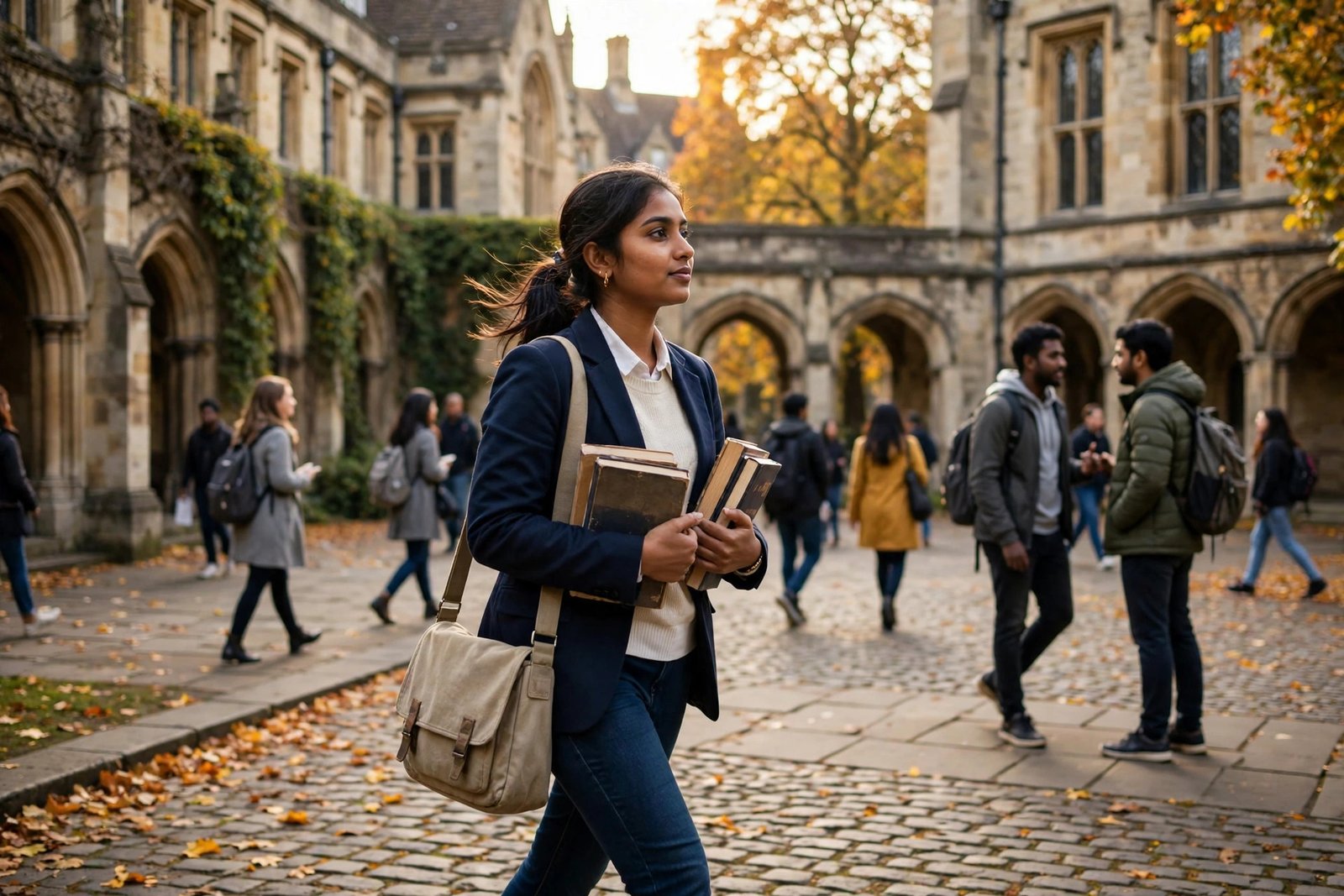
Scholarships for Sri Lankan students in the UK at a glance
| Scholarship | Level | Value | Key condition for Sri Lankans |
|---|---|---|---|
| Commonwealth Master’s Scholarships | One-year taught master’s | Full tuition, return airfare, stipend of £1,712 per month (£2,000 in the London metropolitan area), study travel grant | Sri Lankan citizen, permanently resident in Sri Lanka; degree of First or Second Class Upper standard; nomination through the Ministry of Education, Higher Education and Vocational Education |
| Commonwealth PhD Scholarships | PhD (normally three years) | Full tuition, return airfare, stipend of £1,712 per month (£2,000 London), study travel grant, fieldwork support where approved | Master’s degree plus a supporting statement from a proposed UK supervisor; national nomination required |
| Chevening Scholarship | One-year taught master’s | Full tuition, monthly stipend, economy return flight, visa cost, arrival and homeward allowances, TB test contribution up to £75 where required | At least two years (2,800 hours) of work experience after your undergraduate degree; degree completed at least two years before the deadline; return to Sri Lanka for at least two years afterwards |
| Commonwealth Shared Scholarships | One-year taught master’s on selected courses only | Full tuition, monthly stipend, return airfare and allowances, shared between the CSC and the host university | Apply through the participating UK university for a listed course; Sri Lanka is an eligible Commonwealth country for the scheme |
| Gates Cambridge Scholarship | Postgraduate degrees at Cambridge (PhD, MPhil, MSc, MLitt and other eligible courses) | Full Cambridge fees, maintenance allowance of £23,152 for 12 months at the 2026-27 rate, one economy return airfare, inbound visa costs and health surcharge | Open to citizens of any country outside the UK; apply inside the Cambridge graduate application by the course funding deadline |
| Clarendon Scholarship, Oxford | Master’s and DPhil at Oxford | Full course fees plus an annual grant for living expenses (at least £20,780 a year in recent published terms) | No separate application and no nationality restriction; apply for your Oxford course by its December or January deadline |
| University scholarships and bursaries | Undergraduate and postgraduate | Varies widely — from a few thousand pounds off tuition to full awards at a small number of universities | Check each university’s own funding pages; awards are set by the university, not by a national scheme |
| GREAT Scholarships | One-year taught postgraduate courses | £10,000 towards tuition fees | Important: Sri Lanka was NOT on the official GREAT country list for 2026-27 — check the British Council list again for your entry year before planning around this scheme |
Why the UK, and what it really costs a Sri Lankan student
The UK appeals to Sri Lankan students for practical reasons. Most taught master’s degrees take one year rather than two, which halves the living-cost exposure compared with a two-year programme elsewhere. English is the medium of instruction in Sri Lankan universities for many subjects, so Sri Lankan graduates are usually well placed on language requirements, although each UK university sets its own English test rules and you should check whether your degree is accepted as evidence or whether you need IELTS or an equivalent test — our test preparation guides explain how to plan for that. The UK also has a large Sri Lankan diaspora and established student communities in London and other cities, which matters more than rankings for many families making this decision.
The honest cost picture is this: without a scholarship, a one-year master’s for an international student typically means tuition fees set by the university — often well into five figures in pounds — plus living costs, the visa application fee and the Immigration Health Surcharge. That is exactly why the funding order in this guide matters. Fully funded awards (Commonwealth, Chevening, Gates Cambridge, Clarendon) remove both the tuition bill and, in visa terms, most of the financial-evidence burden, because an official sponsorship letter from a government scholarship scheme is accepted evidence. Partial awards such as a £10,000 tuition discount still leave you proving the remaining fees plus full living costs for the visa. Plan for the partial-award scenario from the start, and treat a full award as the outcome your strongest applications are aiming for.
Commonwealth Master’s and PhD Scholarships: Sri Lanka’s biggest route
The Commonwealth Scholarships are funded by the UK Foreign, Commonwealth and Development Office (FCDO) and administered by the Commonwealth Scholarship Commission in the UK (CSC). They exist for talented graduates from eligible low- and middle-income Commonwealth countries who could not otherwise afford UK study, and every application must sit under one of the CSC’s six development themes: science and technology for development; improving population health, health systems and capacity; promoting innovation and entrepreneurship; strengthening global peace, security and governance; strengthening resilience and response to crises; and access, inclusion and opportunity. Your course choice and your development impact statement have to make sense inside one of those themes — a well-qualified applicant whose proposed course has no development logic will lose to a slightly less decorated applicant whose plan clearly benefits Sri Lanka.
For Sri Lanka, the nomination step is run by the Ministry of Education, Higher Education and Vocational Education (Higher Education Division). In the 2027 entry round, the CSC requested 10 Master’s nominations and 6 PhD nominations from Sri Lanka — small numbers, which is why the Ministry shortlists by grades and interview before nominating. The Ministry’s eligibility rules for that round were specific: Sri Lankan citizens in good health; a four-year bachelor’s degree (SLQF 6) with a First Class or Second Class Upper Division from a UGC-recognised university for Master’s applicants; and for PhD applicants the same bachelor’s standard plus a relevant master’s degree (SLQF 9, 10 or 11). PhD applicants also needed a supporting statement from a proposed supervisor at a UK university named in the application, and all qualifications had to be completed by the closing date. Applications were made through the CSC’s online system and closed on 20 October 2026 at 16:00 UK time. Nomination by Sri Lanka does not itself award a scholarship — the CSC makes the final decision — but without nomination your CSC application cannot succeed, so the Ministry notice is as important as the CSC portal. You can check which CSC schemes you are eligible for on the Commonwealth Scholarship Commission’s official scholarship search.
What the award pays is genuinely comprehensive: approved tuition fees in full, return airfare between Sri Lanka and the UK, a monthly living allowance of £1,712 — or £2,000 if your university is in the London metropolitan area — a study travel grant, and child allowances for eligible scholars in defined circumstances. PhD scholars can also receive support for approved overseas fieldwork and a mid-term visit home under CSC conditions. These rates are reviewed periodically, so confirm the current figures on the CSC website for your cycle. Our dedicated guide to Commonwealth Master’s Scholarships 2027/28 walks through the CSC application form section by section.
Chevening Scholarship: the leadership route for working graduates
Chevening is the UK government’s global scholarship programme, also funded by the FCDO. Where Commonwealth rewards academic merit tied to development, Chevening selects for leadership, influence and networking: it funds a one-year taught master’s in almost any subject at almost any UK university, and it judges your four essays — leadership and influence, networking, study in the UK, and career plan — as heavily as your grades. Sri Lanka is a Chevening-eligible country, and Sri Lankan scholars are interviewed at the British High Commission in Colombo when shortlisted.
The eligibility rules, set out on Chevening’s official eligibility page, are strict and checked mechanically. You must be a citizen of a Chevening-eligible country; commit to returning to your country of award for at least two years after the scholarship ends; hold an undergraduate degree that qualifies you for a UK master’s; have completed that degree at least two years before the application deadline; and have at least two years of work experience acquired after your undergraduate degree, equivalent to 2,800 hours. You must also apply to three different eligible UK university courses and hold an unconditional offer from at least one of them by the offer deadline in the cycle timeline — for the 2027/28 round, applications opened on 4 August 2026, closed on 6 October 2026, and the unconditional offer deadline was 8 July 2027. The award covers full tuition fees, a monthly stipend, an economy return flight, the visa application cost, arrival and homeward departure allowances and up to £75 towards a tuberculosis test where one is required. Chevening charges no application fee, and nobody — no agent in Colombo or anywhere else — can sell you a place on it. Read our full Chevening Scholarship 2027 guide for the essay-by-essay breakdown.

Commonwealth Shared, Gates Cambridge, Clarendon and university awards
Commonwealth Shared Scholarships are jointly funded by the CSC and individual UK universities for specific listed one-year master’s courses, usually in development-related subjects. Unlike the main Commonwealth scheme, you apply through the university and course listing rather than through a national nomination: universities bid courses to the CSC, the confirmed course list is published, and candidate applications typically open late in the year and close in December. Sri Lanka appears on the Shared Scholarships eligible-country list, so if your field is public health, education, environment, development or a similar theme, search the confirmed course list each cycle — a Shared Scholarship on a listed course is often less competitive than the flagship Commonwealth Master’s simply because fewer applicants find it.
Gates Cambridge is a different kind of opportunity: a full-cost scholarship for postgraduate study at Cambridge, open to citizens of any country outside the UK, awarded on outstanding intellectual ability, leadership capacity, a strong fit with the chosen course, and a commitment to improving the lives of others. There is no Sri Lankan quota — you compete in one global pool of roughly 80 awards a year, around two-thirds of them for PhD students. The scholarship pays the full University Composition Fee, a maintenance allowance (£23,152 for 12 months at the 2026-27 rate), one economy airfare at the start and end of the course, and inbound visa costs including the Immigration Health Surcharge, with discretionary extras such as academic development and family allowances considered case by case. You apply through Cambridge’s graduate application — there is no separate form — and for non-US applicants the deadline is your course’s funding deadline, which fell on 8 December 2026 or 6 January 2027 depending on the course for 2027 entry. Full details are on the Gates Cambridge Trust’s official application pages.
At Oxford, the Clarendon Fund works similarly quietly: apply for a master’s or DPhil course by the December or January deadline and you are automatically considered, with no separate scholarship form and no restriction on nationality or field. Clarendon makes over 200 new awards a year, covers course fees in full, and pays a grant for living expenses — published at at least £20,780 a year in recent terms — for the period of fee liability. Oxford’s other funds, including the Weidenfeld-Hoffmann Scholarships and Leadership Programme for graduates from developing economies, are also worth checking on the university’s funding pages, since country eligibility lists for those schemes change. Beyond Oxford and Cambridge, most UK universities offer international scholarships of their own — typically tuition discounts or fixed-fee awards published on their international pages. Treat these as gap-fillers rather than a funding plan, and compare any offer against the visa funds test in the section below. You can compare universities themselves in our university rankings explorer and full universities directory.
A note on GREAT Scholarships — read this before you plan around them
Many scholarship listing sites still show Sri Lanka as a GREAT Scholarships country. For the 2026-27 academic year, the British Council’s official Study UK list of GREAT countries did not include Sri Lanka — the 18 listed countries included Nigeria, India, Pakistan and Bangladesh, but not Sri Lanka — while more than 140 GREAT awards of £10,000 towards one-year taught postgraduate tuition were offered across the participating countries. Country lists are reset each cycle, so Sri Lanka may return in a later year; the correct habit is to check the current official country list before spending any time on a GREAT application, and never to pay a third party who promises you a GREAT award at a university that is not on that year’s list for your country.
Eligibility checklist for Sri Lankan applicants
Across the schemes above, a competitive Sri Lankan applicant usually looks like this. Citizenship and residence: Sri Lankan citizen, permanently resident in Sri Lanka for the Commonwealth schemes, with a valid passport. Academic record: a four-year degree from a UGC-recognised university at First or Second Class Upper standard for Commonwealth Master’s; a relevant master’s for Commonwealth PhD; for Chevening, any degree that gains you UK master’s admission, plus two years elapsed since graduation and 2,800 hours of post-degree work experience. Purpose: a course and a post-study plan that visibly serve one of the CSC development themes (Commonwealth) or a credible leadership and career story (Chevening). Timing: available to start in September or October of the entry year, with references, transcripts and — for PhD candidates — a supervisor’s supporting statement ready before the October deadlines. None of the government schemes in this guide charges an application fee, and none requires you to hold a UK university offer before you start the scholarship application — although Commonwealth PhD applicants need supervisor support, and Chevening finalists must convert one of their three course choices into an unconditional offer by the July deadline.
How to apply, step by step
- Choose your lead scheme by June. If your degree class is First or 2:1 standard and your field fits a CSC theme, Commonwealth is your lead. If you have two-plus years of work experience and a leadership story, lead with Chevening. Cambridge or Oxford applicants should work backwards from the December/January course deadlines, which also govern Gates Cambridge and Clarendon.
- Watch for the Sri Lanka Ministry notice. The Ministry of Education, Higher Education and Vocational Education publishes the Commonwealth call (usually in September) with the number of nominations and any Sri Lanka-specific rules. Save the notice; its requirements sit on top of the CSC’s.
- Contact PhD supervisors early. Commonwealth PhD applicants need a supporting statement from a proposed UK supervisor. Email supervisors in July–August with a focused research proposal, not after the portal opens.
- Apply to UK universities in parallel. Chevening requires three course applications. Commonwealth applicants should also secure university admission for their chosen course. Keep every offer letter — you will need it for the scholarship file and later for your CAS.
- Submit the scholarship application before the October deadline. Commonwealth closed at 16:00 UK time on 20 October 2026 in the last cycle; Chevening closed at 11:00 UTC on 6 October 2026. Convert those times to Sri Lanka time and submit at least 48 hours early — portals slow down on deadline day.
- Prepare for shortlisting and interview. The Ministry interviews shortlisted Commonwealth candidates in Colombo; Chevening interviews take place at the British High Commission, normally in March–April. Commonwealth results follow once the CSC confirms nominations, and Chevening results are announced from mid-June.
- Convert to an unconditional offer and apply for your visa. Meet every condition (degree certificates, English evidence, deposit if any), receive your CAS, and apply for the Student visa with your scholarship sponsorship letter as your financial evidence if you hold a full award.
Required documents
Keep a single folder — physical and scanned — with: your passport; degree certificates and full transcripts (with certified English translations if any document is in Sinhala or Tamil and the receiving body requires them); evidence of your degree class and UGC recognition of your university where the Ministry asks for it; a development impact statement and study plan (Commonwealth) or the four Chevening essays; two references on institutional letterhead; a curriculum vitae; for PhD applicants, your research proposal and supervisor supporting statement; and any English test results your university requires. Names must match across every document — if your passport and degree certificate differ in spelling or order, resolve that with an affidavit or correction before the scholarship deadline, not during the visa application.
Deadlines and timeline
| Stage | Most recent cycle (for 2027 entry) | What it means for you |
|---|---|---|
| Chevening applications open | 4 August 2026 | Start essays and course choices in the summer, not September |
| CSC applications open; Sri Lanka Ministry notice | September 2026 | Confirm the year’s nomination numbers and Sri Lanka-specific degree rules |
| Chevening deadline | 6 October 2026, 11:00 UTC | Three course choices and 2,800 work-experience hours must be complete |
| Commonwealth Master’s and PhD deadline | 20 October 2026, 16:00 UK time | Supervisor statement (PhD) and all transcripts uploaded by this time |
| Commonwealth Shared applications | Typically open after course list confirmed; close mid-December | Apply through the participating university for a listed course |
| Oxford and Cambridge funding deadlines | December 2026 / January 2027 by course | Governs Clarendon and Gates Cambridge consideration |
| Nominations to CSC; interviews | Nominations by December 2026; interviews spring 2027 | Ministry and High Commission interviews for shortlisted candidates |
| Results and unconditional-offer deadline | Chevening results from mid-June 2027; unconditional offer by 8 July 2027 | Clear all offer conditions early — certificate delays are the usual problem |
| Visa application and travel | Summer 2027; courses start September/October 2027 | CAS first, then visa; keep the 28-day funds rule in mind if you hold a partial award |
UK Student visa funds: the numbers that decide partial-award cases
If you win a full government scholarship, your sponsor’s letter is your financial evidence. If you win a partial award — or no award — you must meet the Student route financial requirement yourself. Under the current GOV.UK financial evidence guidance, you must show your course fees for the first year as stated on your CAS, plus living costs of £1,529 per month if your course is in London or £1,171 per month outside London, for up to nine months — a maximum of £13,761 (London) or £10,539 (outside London) on top of fees. Note that these figures rose from the £1,483/£1,136 rates that applied from January 2025; older articles and agents still quote the old numbers, so always work from the current GOV.UK page. Money held in your own or a parent’s account must have been held for 28 consecutive days, ending within 31 days of your application, and Sri Lanka is not on the list of nationalities exempt from providing financial evidence at application — you should expect to submit bank evidence with your application. You can model your budget with the calculators in our study tools library before you choose between a London and a non-London offer.
Selection tips and common mistakes
Selectors for both government schemes are looking for benefit to Sri Lanka, not just benefit to you. The strongest Commonwealth applications name a specific problem — a health-system gap, a climate-resilience need, a teacher-training shortage — and show how the exact modules of the chosen course equip you to address it, ideally with an employer or institution at home that will use those skills. The strongest Chevening essays use the same discipline in leadership language: a real decision you made, what changed because of it, and a network you have already built, not adjectives. Apply to all three Chevening course choices properly; a rushed third application shows. And start the supervisor conversation for PhD study months early — supervisors reply to focused proposals with a clear fit to their current work.
The mistakes that end Sri Lankan applications early are mostly administrative. Missing the Ministry nomination step because you only applied on the CSC portal. Assuming a three-year degree or a Second Class Lower meets the Commonwealth Master’s bar when the Sri Lanka notice asks for a four-year degree at First or 2:1 standard. Counting work experience gained before or during your degree towards Chevening’s 2,800 post-degree hours. Submitting scholarship forms in the final hours and losing the application to a portal timeout. And planning your visa finances on the old £1,483/£1,136 maintenance rates or on an exchange rate you saw months earlier — UKVI converts foreign-currency funds at the spot rate on the day you apply.
Frequently asked questions
Can Sri Lankan students apply for both Commonwealth and Chevening in the same year?
Yes. They are separate schemes with separate applications, and many Sri Lankan graduates apply to both in the same autumn — Commonwealth in the CSC system with Ministry nomination, Chevening through the Chevening portal. If you are offered more than one award, you accept one and decline the other promptly so the place can be reallocated.
Do I need IELTS to apply for these scholarships?
The scholarship schemes themselves do not set a single English score; your UK university does, as a condition of admission. Some universities accept a Sri Lankan degree taught in English as evidence; others require IELTS or an equivalent. Check the requirement on your course page and clear any test condition well before the unconditional-offer deadline.
What degree class do I need for a Commonwealth Master’s Scholarship from Sri Lanka?
Under the Sri Lanka notice for the most recent round, a four-year bachelor’s degree (SLQF 6) with a First Class or Second Class Upper Division from a UGC-recognised university. The CSC’s general minimum is an upper second-class (2:1) honours degree, or a lower second plus a relevant postgraduate qualification — but the Sri Lankan nominating rules are the ones applied to your file first, so meet those.
Is Sri Lanka eligible for GREAT Scholarships in 2026/27?
No — Sri Lanka was not on the British Council’s official GREAT country list for 2026-27, even though many listing sites still show it as eligible. The list is reset each cycle, so check the current official list for your entry year before relying on this scheme.
How much money must I show for a UK Student visa if I only have a partial scholarship?
Your first-year course fees from your CAS (minus anything already paid or covered by sponsorship recorded on the CAS) plus living costs at the current GOV.UK rates — £1,529 per month in London or £1,171 per month outside London, up to nine months — held for 28 consecutive days in an eligible account. These rates replaced the £1,483/£1,136 rates from January 2025, so ignore older guides.
Can I stay in the UK after a Commonwealth or Chevening scholarship?
Chevening requires you to return to your country of award for at least two years after the scholarship ends — that is a condition of the award. Commonwealth scholars are likewise expected to return home and apply their training. Neither scholarship is a route to settlement, and you should apply only if you accept that design.
Do these scholarships charge application fees or use agents?
No. Commonwealth and Chevening applications are free, and both schemes warn applicants about third parties. The CSC states that supporting documents should only be submitted through its official system, and Chevening does not endorse agents who charge for application help. Anyone asking for payment to “secure” either award is not acting for the scheme.
Sources and verification
Key facts in this guide were checked in October 2026 against: the Commonwealth Scholarship Commission (cscuk.fcdo.gov.uk) for scheme structure, stipend rates of £1,712/£2,000 per month and the 20 October 2026 closing date; Sri Lanka Ministry of Education, Higher Education and Vocational Education notices for nomination numbers (10 Master’s, 6 PhD) and SLQF degree requirements; Chevening (chevening.org) for eligibility rules, the 2,800-hour requirement and the 2027/28 timeline; the Gates Cambridge Trust and the University of Oxford Clarendon pages for award values and deadlines; the British Council Study UK pages for the GREAT 2026-27 country list; and GOV.UK for Student visa financial requirements. Amounts, country lists and deadlines change between cycles — always confirm the figures for your own cycle on the official website before applying.
Disclaimer: StudyGraduate is an independent information portal, not an agency, and is not affiliated with the Commonwealth Scholarship Commission, Chevening, any university or any government. We cannot guarantee selection, admission or visa approval for any applicant. Scholarship decisions rest solely with the awarding bodies, and visa decisions rest solely with UK Visas and Immigration.
✅ Eligibility Criteria
- Check the official website for full eligibility criteria for your country
🎁 Benefits
- See the official website for the complete list of benefits
⚙️ Application Process
- 1Check your eligibility on the official site
- 2Prepare your documents and statements
- 3Submit the online application before the deadline
- 4Complete interviews or assessments if shortlisted
- 5Await the final selection announcement
📅 Important Dates
Deadlines vary by country and intake. Check the official website for country-specific dates.
📄 Required Documents
- Valid passport
- Academic transcripts & certificates
- Statement of purpose
- Letters of recommendation
- CV / resume
Commonly required — confirm the exact list on the official site.
❓ Frequently Asked Questions

Ready to Take the Next Step?
Explore more scholarships and study opportunities around the world.
Browse Scholarships →