Scholarships for Bangladeshi Students in Japan 2026/2027
Scholarships for Bangladeshi Students in Japan 2026/2027 Japan runs one of the world’s most complete government scholarship systems, and Bangladesh is one of its long-standing partner countries. The MEXT Scholarship — funded by Japan’s Ministry of Education, Culture, Sports, Science and Technology (Monbukagakusho) — covers full tuition, a monthly stipend and round-trip airfare between Bangladesh ... <a title="Scholarships for Bangladeshi Students in Japan 2026/2027" class="read-more" href="https://studygraduate.com/scholarship/scholarships-for-bangladeshi-students-in-japan-2026-2027/" aria-label="Read more about Scholarships for Bangladeshi Students in Japan 2026/2027">Read more</a>
📖 Overview
Scholarships for Bangladeshi Students in Japan 2026/2027
Japan runs one of the world’s most complete government scholarship systems, and Bangladesh is one of its long-standing partner countries. The MEXT Scholarship — funded by Japan’s Ministry of Education, Culture, Sports, Science and Technology (Monbukagakusho) — covers full tuition, a monthly stipend and round-trip airfare between Bangladesh and Japan, and Bangladeshi citizens apply for most categories through a channel that surprises many applicants: the first application goes not to the Japanese Embassy, but to the Ministry of Education of Bangladesh, which advertises the scholarships, receives applications and forwards a candidate list to the Embassy of Japan in Dhaka. A second route, university recommendation, lets Japanese universities nominate candidates directly to MEXT, and it suits research students who already have a Japanese supervisor.
This guide is written specifically for Bangladeshi applicants targeting 2026/2027. It sets out the MEXT categories the Embassy of Japan in Bangladesh actually handles — Research Students, Undergraduate Students, College of Technology (KOSEN) Students, Specialized Training College Students, Teacher Training Students and Japanese Studies Students — with the embassy’s own eligibility details for Bangladesh, including the demanding academic thresholds it publishes (for research students, first-class results throughout, stated as marks of 60% or CGPA 3.5 out of 4). It gives the current monthly stipends — ¥117,000 for undergraduate-level students and ¥143,000–¥145,000 for research students depending on status — the written examinations each category requires, and the month-by-month application calendar the embassy publishes, from the April advertisement on the Ministry of Education website to departure for Japan the following April.
Japan rewards applicants who follow official channels exactly and punishes those who improvise. There is no application fee, no agent can file for you, and the embassy repeatedly routes everything through the Ministry of Education notice and its own scholarship pages. If you are weighing Japan against other fully funded options in the same season, read our companion guides to scholarships for Bangladeshi students in Germany and scholarships for Bangladeshi students in South Korea, and browse the StudyGraduate scholarships directory for the full list.
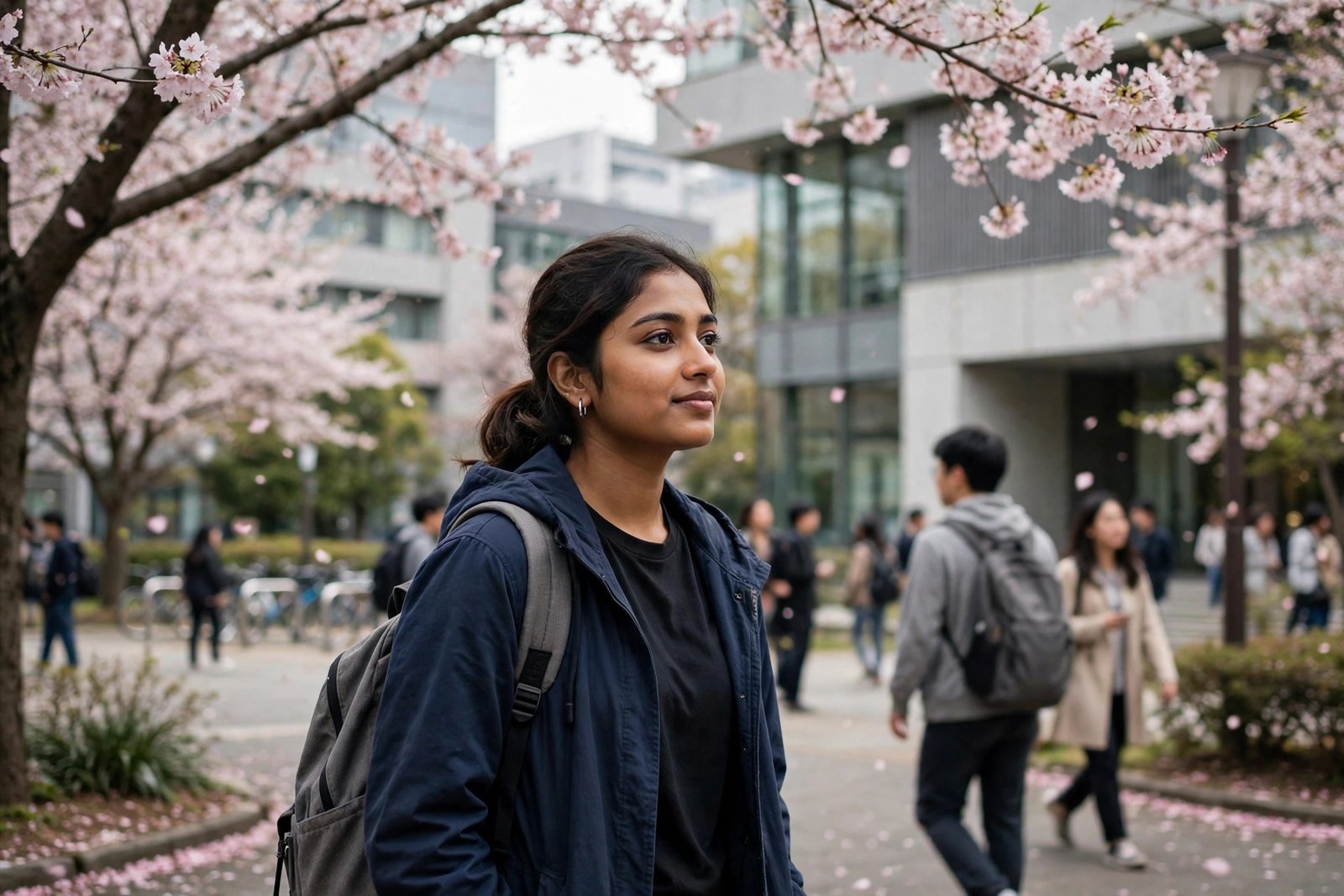
MEXT for Bangladeshi Students at a Glance
| Category (Embassy Route, Bangladesh) | Level / Duration | Monthly Stipend | Key Bangladesh Eligibility Notes (Embassy) |
|---|---|---|---|
| Research Students | Master’s / PhD pathway; maximum 2 years including 6 months of Japanese-language training if required | ¥143,000 (non-regular / preparatory); ¥144,000 (master’s course); ¥145,000 (doctoral course) | Age below 35 as of 1 April of the receiving year; 16 years of education for master’s, 18 for doctorate; first class throughout (60% marks or CGPA 3.5/4); written exam in English and Japanese |
| Undergraduate Students | Bachelor’s; normally 5 years including Japanese-language training (7 years for medicine, dentistry, pharmacy, veterinary science) | ¥117,000 | Age 17–25 as of 1 April; Humanities/Social Science: GPA 4.5 in both SSC and HSC with A+ in English and Mathematics; Science: GPA 5.0 in both SSC and HSC with A+ in English, Mathematics, Physics and Chemistry |
| College of Technology (KOSEN) Students | 4 years (1 year preparatory education, then entry to the third year of a college of technology for 3 years of specialised study) | ¥117,000 | Age 17–25; Bangladeshi citizen; engineering fields including mechanical, electrical/electronic, information and network, materials, architecture, civil and maritime engineering; 2027 application shown as closed on the embassy page at the time of writing — check the next cycle |
| Specialized Training College Students | Vocational; 3 years including preparatory education | ¥117,000 | Embassy recommendation via the Ministry of Education channel; confirm the current call and fields on the embassy page |
| Teacher Training Students | Non-degree training: 6-month training course plus a 1-year master’s-level course (embassy summary) | ¥143,000 (teacher training rate) | University or teacher-training graduates with at least 5 years of teaching experience at primary/secondary level (embassy education page); written exam in English and Japanese |
| Japanese Studies Students | 1 year | ¥117,000 | Currently enrolled undergraduates majoring in Japanese language and/or culture; born between 2 April 1996 and 1 April 2008 for the 2026 call published by the embassy |
| University Recommendation (all research levels) | Master’s / PhD at the recommending university | Same MEXT rates by status | Apply to the Japanese university, which screens and nominates you to MEXT; many universities open calls around December for the following year |
Every category in the table shares the same core package: examination, admission and tuition fees are exempted, the monthly stipend is paid in Japan, a regional supplement of ¥2,000 or ¥3,000 per month is added for study in designated areas, and MEXT provides one round-trip economy air ticket between the international airport nearest your home and an airport in Japan. What differs — decisively — is who may apply, what examination you must sit, and which door you enter through. The rest of this guide walks through those differences honestly, including the places where the embassy’s Bangladesh-specific academic bars are higher than the generic MEXT guidelines you will see quoted on international blogs.
The Two Routes In: Embassy Recommendation and University Recommendation
Embassy recommendation — the Bangladesh channel
For Bangladeshi citizens, embassy recommendation begins with the Government of Bangladesh. The Embassy of Japan in Bangladesh publishes the annual pattern plainly: in April, the advertisement appears on the Ministry of Education website (moedu.gov.bd) and in daily newspapers, and applications are submitted to the Ministry of Education. In May, the Ministry sends its list of candidates to the Embassy of Japan, which distributes application forms to the selected candidates; forms are submitted to the Embassy in June; written examinations and interviews are held at the Embassy in July; the Embassy makes a provisional selection in August; MEXT in Tokyo makes the final selection in December; orientation is held the following March; and scholars depart for Japan in April. Teacher Training follows a shifted calendar starting in January, with departure in October.
Two consequences follow. First, if you miss the Ministry of Education advertisement in April, there is no late embassy door to knock on — the year’s embassy-route intake is gone, and your remaining option that year is university recommendation. Second, documents and deadlines quoted by agents or foreign blogs are irrelevant unless they match the Ministry notice and the embassy’s scholarship pages for Bangladesh. Those two sources, and only those, govern your application.
University recommendation — the supervisor-led route
Under university recommendation, you apply directly to a Japanese university — typically for a research master’s or PhD — and the university screens its applicants and nominates a small number to MEXT. Universities run their own calendars: to take one verified example, Toyohashi University of Technology’s MEXT university-recommendation special programme page states that applications for 2026 were closed and that applications for 2027 were expected to open around December 2026. This route suits Bangladeshi research applicants who have identified a laboratory and supervisor, and it does not require sitting the embassy written examinations — but the competition inside each university is intense, the number of nominations is small, and English-taught graduate programmes may require English test scores or interviews of their own. Japanese universities are not part of the StudyGraduate university-profile database in the way Australian, German, UK, US and Canadian universities are, so explore Japanese institutions through official university websites and compare your other destinations in our university directory and rankings pages.
Eligibility in Detail: What the Embassy of Japan in Bangladesh Requires
Research Students (master’s and PhD aspirants)
- Nationality: only Bangladeshi nationals may apply from Bangladesh.
- Age: below 35 as of 1 April of the scholarship receiving year.
- Education: for a master’s course, completion of a bachelor’s course or 16 years of school education; for a doctoral course, completion of a master’s course or 18 years of school education.
- Academic record: the embassy states first class all through — marks of 60% or CGPA 3.5 out of 4. Treat this as a real filter: it is stricter than the generic MEXT guidance and it is the standard your Ministry-stage screening will be judged against.
- Fields: humanities and social sciences; natural sciences including pure science, biological science and engineering; agriculture; commerce; and dentistry and medical science groups.
- Written examination: English and Japanese. You do not need to be fluent in Japanese — the exam tests aptitude and basic proficiency and preparatory language training is built into the award — but arriving with zero Japanese and no preparation is a competitive disadvantage at both exam and interview.
- Duration: maximum two years under the embassy summary, including six months of Japanese-language training if required; research students who pass entrance requirements proceed into degree courses under the standard MEXT framework — confirm the progression rules in the current application guidelines.
Undergraduate Students
- Age: 17–25 as of 1 April of the receiving year; Bangladeshi nationals only.
- Humanities and Social Science: GPA 4.5 in both SSC and HSC, with Grade A+ in English and Mathematics.
- Science (Engineering / Medical Science): GPA 5.0 in both SSC and HSC, with Grade A+ in English, Mathematics, Physics and Chemistry.
- Duration: normally five years including Japanese-language training; seven years for medicine, dentistry, pharmacy and veterinary science.
- Written examination: Humanities and Commerce group — English, Mathematics and Japanese. Science (Engineering) group — English, Mathematics, Chemistry, Physics and Japanese. Science (Medical Science) group — English, Mathematics, Chemistry, Biology and Japanese.
These undergraduate thresholds are among the highest MEXT bars anywhere in the world, and they are published by the embassy itself — a GPA 5.0 in both public examinations is the stated expectation for the science streams. If your results fall below the published Bangladesh thresholds, an honest plan is to strengthen your profile for a research-student application later, or to consider destinations whose undergraduate funding fits your record; our study abroad guides and planning tools can help you compare realistic options rather than spend a year on an application the screening rules will stop.
Teacher Training and Japanese Studies
Teacher Training Students conduct research on school education at Japanese universities. The embassy’s education page requires applicants to be graduates of a university or teacher-training school who have worked as teachers at primary or secondary educational institutions for at least five years in total as of 1 April of the application year; the embassy’s scholarship summary describes the award as a six-month training course plus a one-year master’s-level course, and notes clearly that it is a non-degree training course. The written examination covers English and Japanese proficiency, on a January-to-October calendar. Japanese Studies Students spend one year in Japan and must be currently enrolled undergraduates majoring in fields related to the Japanese language and/or Japanese culture — for the 2026 call, born between 2 April 1996 and 1 April 2008 and Bangladeshi citizens.

What MEXT Pays: Stipends, Fees and Travel
| Benefit | Amount / Terms |
|---|---|
| Tuition and fees | Examination, admission and tuition fees exempted at the host institution |
| Monthly stipend — Undergraduate, KOSEN, Specialized Training, Japanese Studies | ¥117,000 per month |
| Monthly stipend — Research student (non-regular / preparatory) | ¥143,000 per month |
| Monthly stipend — Master’s / professional degree course | ¥144,000 per month |
| Monthly stipend — Doctoral course | ¥145,000 per month |
| Monthly stipend — Teacher Training | ¥143,000 per month |
| Regional supplement | Additional ¥2,000 or ¥3,000 per month for study/research in designated regions |
| Travel | One round-trip economy air ticket between the nearest international airport in Bangladesh and an airport in Japan, under MEXT conditions |
| Preparatory education | Japanese-language training included where required (commonly 6 months for research students; 1 year for undergraduate-level categories) |
Budget honestly around these figures. The stipend is designed to cover a single student’s living costs in Japan, and in lower-cost regional cities — where the regional supplement also applies — it generally does so in university dormitory housing. In central Tokyo, rents consume a much larger share, and the first stipend payment can arrive several weeks after you land, so MEXT guidance expects scholars to bring enough personal funds to cover the initial period. The stipend does not cover dependants: MEXT is a single-student award, and family members’ travel, visas and living costs are outside the package. Finally, note what MEXT does not require: there is no application fee, and IELTS is not a MEXT scholarship requirement in itself — the embassy route examines you in English directly — although an English-taught university-recommendation programme may ask for English scores separately. Anyone charging you a fee to “process” a MEXT application is not part of the system.
How to Apply from Bangladesh: Step by Step (Embassy Route)
- Watch the Ministry of Education website from early April. The advertisement appears on moedu.gov.bd and in daily newspapers. This notice — with its category list, eligibility and submission instructions — is your starting document. Download and keep it.
- Confirm your category and your numbers. Research, undergraduate, KOSEN, specialized training, teacher training or Japanese studies — and check yourself against the embassy’s published bars (age limits; first class / CGPA 3.5 for research; SSC/HSC GPA and A+ subject rules for undergraduates; five years of teaching for teacher training). Do not apply into a category whose stated threshold you do not meet.
- Submit the application to the Ministry of Education exactly as the notice directs, within the April window. The Ministry screens and forwards its candidate list to the Embassy of Japan in May.
- Complete the embassy application forms (May–June). Shortlisted candidates receive the official MEXT application forms from the Embassy and submit the completed set — application form, academic transcripts and certificates, recommendation letter, medical certificate on the prescribed form, and for research students a study/research plan and placement preference form — to the Embassy in June, following the guidelines for your category.
- Sit the written examinations and interview at the Embassy (July). Research students: English and Japanese. Undergraduates: the subject combination for your group, plus Japanese. Teacher training: English and Japanese proficiency. The embassy’s website links previous examination questions — practising with them is the single highest-value preparation you can do, alongside structured Japanese study (hiragana, katakana and basic kanji and grammar are all learnable in the months before July if you start at the April notice).
- Provisional selection (August), then final selection by MEXT (December). Passing the embassy stage makes you a recommended candidate, not yet a scholar: MEXT in Tokyo takes the final decision, and for research students the placement process with Japanese universities runs through this period.
- Orientation and departure. Successful grantees attend orientation in March and depart for Japan in April of the following year (October for teacher training). Arrange your visa, and plan funds for the first weeks before your stipend begins.
Applying by university recommendation instead
Identify the laboratory or graduate school first — through faculty pages and recent publications — and email the prospective supervisor with your CV, transcripts and a one-page research summary. If the university accepts you as a candidate, you complete its MEXT nomination paperwork by its internal deadline (many universities open these calls in the autumn, with some — like the Toyohashi example above — opening around December). The university nominates you to MEXT, and final results and placement follow the university’s published schedule. Never apply through both routes for the same intake in a way that duplicates your candidacy — follow the current guidelines on which combinations are permitted.
Required Documents
| Document | Route | Notes |
|---|---|---|
| Ministry of Education application (per the April notice) | Embassy — first stage | Submitted to the Ministry of Education, Bangladesh, exactly as advertised on moedu.gov.bd |
| MEXT application form (embassy-issued) | Embassy | Distributed to candidates on the Ministry’s forwarded list; submit to the Embassy in June |
| Academic transcripts and certificates (SSC/HSC for school-leaver categories; bachelor’s/master’s for research) | Both | Your results are checked against the embassy’s published GPA / first-class thresholds |
| Study / research plan | Research students | The core document at interview: field, question, method, why Japan, and fit with a Japanese research environment |
| Recommendation letter(s) | Both | From academic supervisors or institutional heads who know your work, per the category guidelines |
| Medical certificate (prescribed MEXT form) | Embassy | Completed by a physician on the official form supplied with the guidelines |
| Passport / citizenship proof | Both | Only Bangladeshi nationals may apply from Bangladesh |
| Proof of teaching service (5 years) | Teacher Training | Service records showing at least five years at primary/secondary institutions |
| University nomination paperwork | University recommendation | Set by the Japanese university; may include English scores for English-taught programmes |
A note on document handling in Dhaka: keep the originals of every certificate and transcript safe, prepare multiple attested photocopy sets through the usual education-board and university channels the Ministry notice specifies, and never hand your only originals to any intermediary. MEXT’s process is entirely official — Ministry, Embassy, university, MEXT — and no private organisation sits inside it.
Deadlines and Timeline (Embassy Route, Bangladesh)
| Month | Stage |
|---|---|
| April | Advertisement on moedu.gov.bd and in daily newspapers; applications submitted to the Ministry of Education |
| May | Ministry of Education sends the candidate list to the Embassy of Japan; application forms distributed to selected candidates |
| June | Completed application forms submitted to the Embassy of Japan |
| July | Written examinations and interview at the Embassy of Japan |
| August | Provisional selection by the Embassy |
| December | Final selection by MEXT (Monbukagakusho), Tokyo |
| March (following year) | Orientation for MEXT grantees |
| April (following year) | Departure for Japan |
| Teacher Training variation | Forms available in January; submission, examinations and interview in February–March; provisional selection April; final selection July; departure in October |
This calendar is the embassy’s published pattern for Bangladesh; the exact dates in any given year come from that year’s Ministry of Education notice and the embassy’s scholarship pages. At the time of writing, the embassy page showed the MEXT 2027 College of Technology (KOSEN) application as closed — a useful reminder that each category opens and closes on its own schedule, and the only safe habit is to check the embassy page and moedu.gov.bd directly, early and often. University-recommendation deadlines are set by each university, commonly in the autumn and winter before entry.
Selection Tips
- Prepare for the written exams with the embassy’s past papers. The embassy links previous examination questions on its website. For undergraduates, the mathematics and science papers — not the interview — decide most outcomes; revise to HSC level and beyond, in English, under time pressure.
- Start Japanese the day the April notice appears. Research applicants are examined in English and Japanese. Even a few months of serious study — scripts, core grammar, self-introduction — signals the seriousness panels reward, and the preparatory course assumes willingness, not fluency.
- Write a research plan a Japanese professor would recognise. A defined question, the relevant literature, a feasible method, and a reason the work belongs in Japan (a laboratory, dataset, archive or research group). “I want to study in Japan because it is advanced” fails at interview; specificity passes.
- Respect the published academic bars. First class throughout (60% / CGPA 3.5) for research, GPA 5.0 with A+ subjects for undergraduate science — if you meet them, say so clearly in your application; if you do not, do not spend the cycle hoping the rule bends.
- Use the months between August and December well. Provisional selection is not the end: research candidates should be ready for university placement steps and further document requests, and all candidates should keep contact details current with the Embassy.
- Keep every alternative alive until December. MEXT’s final selection is in Tokyo and is genuinely final. A parallel study-abroad plan — another scholarship cycle, another intake — is prudence, not pessimism.
Common Mistakes
- Applying to the Embassy first. In Bangladesh the first application goes to the Ministry of Education in response to its April advertisement. Sending documents straight to the Embassy in April puts you outside the process.
- Missing the April notice. The embassy-route window is short and annual. Set your reminder for March, and check moedu.gov.bd and the embassy scholarship pages weekly through the spring.
- Paying an agent. There is no MEXT application fee and no agent role anywhere in the Bangladesh channel. Payment to any intermediary buys nothing and risks your documents.
- Ignoring the Japanese paper. Applicants who treat the Japanese examination as a formality lose marks — and interviews — to candidates who prepared. The exam exists; prepare for it.
- Applying below the published thresholds. The embassy’s GPA and first-class requirements for Bangladesh are explicit. Screening applies them.
- Confusing the two routes’ rules. University recommendation has no embassy written exam but requires a university to nominate you; embassy recommendation requires no prior supervisor contact but examines you. Choose the route that matches your profile instead of drifting between both.
- Assuming MEXT covers family costs. The stipend, fee exemption and air ticket are for the scholar alone.
Frequently Asked Questions
1. How do Bangladeshi students apply for MEXT?
Through the Ministry of Education of Bangladesh. The scholarship is advertised on moedu.gov.bd and in newspapers each April; applications go to the Ministry, which forwards a candidate list to the Embassy of Japan in Dhaka. Shortlisted candidates complete embassy forms in June, sit written examinations and an interview at the Embassy in July, and MEXT makes the final selection in December. Research students may alternatively apply by university recommendation directly to a Japanese university.
2. How much is the MEXT stipend?
¥117,000 per month for undergraduate, College of Technology, Specialized Training College and Japanese Studies students; ¥143,000 for research students in non-regular or preparatory status and for teacher training students; ¥144,000 in a master’s course; and ¥145,000 in a doctoral course. A regional supplement of ¥2,000 or ¥3,000 per month is added in designated areas. Tuition and admission fees are exempted and one round-trip air ticket is provided.
3. What grades do Bangladeshi applicants need?
The Embassy of Japan in Bangladesh publishes strict local thresholds: research students need first class throughout (marks of 60% or CGPA 3.5 out of 4). Undergraduate humanities and social science applicants need GPA 4.5 in both SSC and HSC with A+ in English and Mathematics; undergraduate science applicants need GPA 5.0 in both with A+ in English, Mathematics, Physics and Chemistry.
4. Do I need Japanese language ability or IELTS for MEXT?
IELTS is not a MEXT requirement for the embassy route — your English is tested in the embassy’s own written examination. Japanese is also examined (English and Japanese papers for research students), but fluency is not required at entry: preparatory Japanese training is built into the scholarship. Prior study still helps you compete, and English-taught programmes under university recommendation may ask for English test scores separately.
5. What are the age limits for Bangladesh?
Per the embassy’s Bangladesh pages: research students must be below 35 as of 1 April of the receiving year; undergraduate and KOSEN applicants must be 17–25 as of 1 April. Japanese Studies applicants for the 2026 call had to be born between 2 April 1996 and 1 April 2008 and be enrolled undergraduates majoring in Japanese language or culture.
6. Is there an application fee, and can an agent apply for me?
No fee exists at any stage, and no agent has any role in the process. The only channels are the Ministry of Education of Bangladesh, the Embassy of Japan in Bangladesh, Japanese universities (for university recommendation) and MEXT itself. Treat any fee-charging “MEXT processing” offer as a scam.
7. When do MEXT scholars from Bangladesh leave for Japan?
Under the embassy’s published calendar, grantees attend orientation in March and depart in April of the year after application — roughly twelve months after the April advertisement. Teacher Training scholars depart in October of the application year. University-recommendation scholars follow their university’s schedule, commonly April or autumn entry.
8. What other scholarships can Bangladeshi students combine with a Japan plan?
MEXT is the main fully funded route; smaller options include university tuition-reduction schemes and honours scholarships administered in Japan after enrolment, whose current terms you should verify with your university. As a parallel fully funded plan in the same region, many Bangladeshi applicants also prepare for our guide to fully funded scholarships for Bangladeshi students covering several countries at once.
Sources & Verification
- Embassy of Japan in Bangladesh — MEXT Scholarship Details for Bangladeshi Students: research and undergraduate eligibility (age limits, first class / CGPA 3.5, SSC/HSC GPA and A+ subject rules), fields, durations and written examinations.
- Embassy of Japan in Bangladesh — Education / Scholarship Schedule: the April-to-April application calendar via the Ministry of Education, and the Teacher Training schedule and five-year teaching requirement.
- Kyoto University — Japanese Government (MEXT) Scholarship: stipend table by category (¥117,000 undergraduate; ¥143,000/¥144,000/¥145,000 research statuses), regional supplement, fee exemption and round-trip ticket.
- Toyohashi University of Technology — MEXT Scholarship (University Recommendation), Special Program: university-recommendation timing example (2026 closed; 2027 applications expected around December 2026).
Disclaimer: StudyGraduate is an information portal, not an agency. Scholarship stipends, categories, thresholds and deadlines change every cycle — always confirm the current details in the Ministry of Education notice (moedu.gov.bd), on the Embassy of Japan in Bangladesh website and in the official MEXT application guidelines before applying. We never promise selection, admission or visa approval, and no one can guarantee them.
✅ Eligibility Criteria
- Check the official website for full eligibility criteria for your country
🎁 Benefits
- See the official website for the complete list of benefits
⚙️ Application Process
- 1Check your eligibility on the official site
- 2Prepare your documents and statements
- 3Submit the online application before the deadline
- 4Complete interviews or assessments if shortlisted
- 5Await the final selection announcement
📅 Important Dates
Deadlines vary by country and intake. Check the official website for country-specific dates.
📄 Required Documents
- Valid passport
- Academic transcripts & certificates
- Statement of purpose
- Letters of recommendation
- CV / resume
Commonly required — confirm the exact list on the official site.
❓ Frequently Asked Questions

Ready to Take the Next Step?
Explore more scholarships and study opportunities around the world.
Browse Scholarships →