

Cost of Studying in Canada 2026/2027: Tuition, Living Expenses and Total Budget
Ask ten websites what it costs to study in Canada and you will get ten different totals — because each one is quietly counting different things. One quotes only tuition, another adds the immigration minimum for living costs, a third assumes Toronto rent for a student who will actually live in Winnipeg. This guide does the job properly. It separates the cost of studying in Canada into tuition by level of study, the living-funds figure Immigration, Refugees and Citizenship Canada (IRCC) requires you to show, what students really spend on rent, food, transport and insurance in different cities, and the one-off costs before you ever board a plane. It then assembles those parts into honest total budgets for a college diploma, a bachelor’s degree and a master’s degree in 2026/2027, using Statistics Canada tuition data and IRCC figures verified at the time of writing.
The guide is for international students and their families planning a 2026 or 2027 start — including readers in Bangladesh, India, Pakistan, Nepal, Nigeria and Indonesia comparing Canada with other destinations. Every figure here is labelled as one of three things: an official average (useful for orientation, not for your personal budget), an official minimum you must prove for your study permit (a floor, not a spending plan), or a planning range you should replace with the exact numbers from your university’s fee schedule and your city’s rental market. For funding help, read this alongside our scholarships in Canada guide, and for the visa process itself, our Canada study permit step-by-step guide.

Cost of Studying in Canada at a Glance
| Cost element | 2026/2027 figure (CAD) | Basis |
|---|---|---|
| Average international undergraduate tuition | 41,746 per year | Statistics Canada, 2025/2026 average |
| Average international graduate tuition | 24,028 per year | Statistics Canada, 2025/2026 average |
| College and diploma tuition | Commonly about 7,000–22,000+ per year | Planning range by program and institution — verify on the institution’s fee page |
| Living funds you must show (single, outside Quebec) | 22,895 if applying to 31 Aug 2026; 23,448 if applying on/after 1 Sep 2026 | IRCC proof of funds, excluding tuition and travel |
| Study permit fee | 150 | IRCC fee schedule |
| Biometrics fee | 85 per person (170 family maximum) | IRCC fee schedule |
| Off-campus work limit in term | Up to 24 hours per week if eligible | IRCC work rules — earnings reduce costs but cannot be counted as proof of funds |
The single most important distinction in that table is between the IRCC living-funds figure and a real living budget. CAD 23,448 a year works out to roughly CAD 1,954 a month. In a shared house in a mid-sized city, a careful student can live near that level. In Toronto or Vancouver, rent alone for a room can consume half or more of it before food, transport, phone and winter clothing are counted. IRCC’s figure decides whether your permit application is financially credible; your city-level budget decides whether you will actually be comfortable — and whether you will be forced into excessive work hours that put your studies and status at risk. Plan both numbers, and do not confuse them.
Tuition Fees by Level of Study
Tuition is your largest cost and the one with the widest range. Statistics Canada reported in September 2025 that international undergraduate tuition for 2025/2026 would average CAD 41,746 per year, up 2.5 per cent on the previous year, while international graduate tuition would average CAD 24,028, up 1.5 per cent. Those are national averages across all fields, so they hide two big spreads. By province, Ontario’s international undergraduate average was about CAD 49,802, British Columbia’s about CAD 39,851, Quebec’s about CAD 36,279 and Alberta’s about CAD 34,880, while Newfoundland and Labrador averaged about CAD 18,867 — less than half the Ontario figure for the same level of study. By field, professional and laboratory-heavy programs such as medicine, dentistry, engineering and some business programs sit well above the average, while many humanities and social science programs sit below it.
Colleges and polytechnics generally charge less than universities. Diploma and certificate tuition for international students commonly falls in a broad range of roughly CAD 7,000 to CAD 22,000 or more per year depending on the institution, program length and whether the program carries expensive laboratory, clinical or equipment components. Graduate tuition also needs care: research-based master’s and PhD programs may carry lower fees and can come with funding packages, scholarships or assistantships, while course-based professional master’s programs — including many MBA and engineering management programs — can cost considerably more than the graduate average. Always take your figure from the specific program’s international fee schedule for your intake year, including compulsory ancillary fees, and confirm whether the quoted amount is per term, per year or for the whole program. You can compare institutions in our university directory and check how they place in our rankings, but the institution’s own fee page is the only number to budget on.
What the Study Permit Requires You to Show
Separate from what you will spend, IRCC requires proof that you can pay first-year tuition, living expenses and return travel without relying on work in Canada. The living-expenses component for a single applicant outside Quebec is CAD 22,895 for applications submitted from 1 January 2025 to 31 August 2026, rising to CAD 23,448 for applications submitted on or after 1 September 2026. The schedule is set by your application date, and it grows with family size — for applications on or after 1 September 2026 the amounts are CAD 29,192 for two people, CAD 35,888 for three and CAD 43,572 for four, all still excluding tuition and travel. Quebec applicants follow Quebec’s own financial rules through the CAQ process.
| People in the application | Living funds — applying 1 Sep 2025 to 31 Aug 2026 (CAD/year) | Living funds — applying on/after 1 Sep 2026 (CAD/year) |
|---|---|---|
| 1 (you alone) | 22,895 | 23,448 |
| 2 | 28,502 | 29,192 |
| 3 | 35,040 | 35,888 |
| 4 | 42,543 | 43,572 |
| 5 | 48,252 | 49,419 |
| 6 | 54,420 | 55,736 |
| 7 | 60,589 | 62,054 |
| Each additional person | 6,170 | 6,318 |
Evidence can include receipts for first-year tuition and housing already paid, a Guaranteed Investment Certificate from a participating Canadian financial institution, a bank education loan letter, scholarship letters, and bank statements — normally covering the past six months — showing the money and its source. For programs longer than one year, you must also explain how later years will be funded. Remember that the former Student Direct Stream, which once made a GIC the centrepiece for some countries, ended on 8 November 2024; a GIC is now simply one accepted form of evidence among several within the regular application. Our proof of funds guide explains how officers read these documents.
Living Expenses: What Students Actually Spend
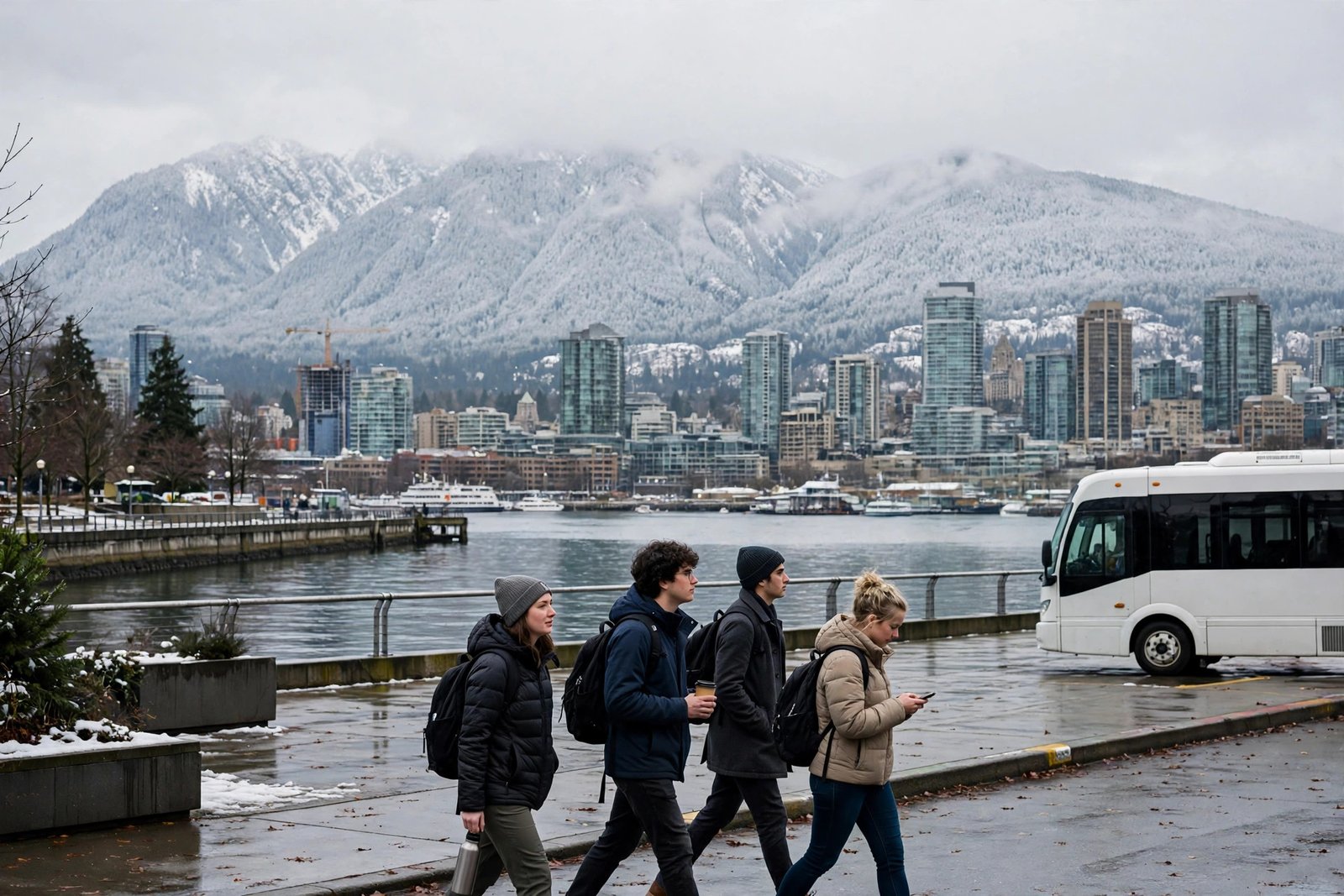
Rent is the cost that decides your real budget. In Toronto and Vancouver, even a room in a shared apartment is expensive by Canadian standards, and purpose-built student housing or a one-bedroom apartment costs substantially more; in cities such as Winnipeg, Halifax, Regina, St. John’s and many smaller university towns, shared housing is markedly cheaper. University residences bundle rent with meal plans and place you on campus for the first year, at a premium that some families judge worth paying for a soft landing, while off-campus shared housing usually wins on price from the second term onward once you know the city. Whichever route you choose, budget a deposit and first month upfront, and beware rental scams targeting newcomers — never wire money for an apartment you have not verified through the university’s housing office or a reputable listing channel.
Food is the second lever. A student who cooks most meals, shops at discount supermarkets and buys seasonal produce can eat well for a few hundred dollars a month; a student who relies on restaurants and delivery will spend multiples of that. Public transport passes are often included in tuition ancillary fees at larger universities through universal pass programs, which is a genuine saving worth checking; in smaller cities, a monthly pass or a bicycle may be the main transport cost. Add a mobile phone plan, internet share, laundry, toiletries, and — uniquely Canadian for many of our readers — proper winter clothing in your first year: a warm coat, waterproof boots, hat and gloves bought once and used for years. Health insurance is mandatory in effect everywhere: some provinces include international students in provincial coverage or require a university plan, others require a private or university-arranged plan, and either way you should treat roughly a thousand dollars a year as a placeholder until your institution confirms its exact plan and price. Books and supplies vary by field — modest for many humanities programs, significant for design, engineering and health programs with equipment or clinical requirements.
Sample Total Budgets for the First Year
The three budgets below combine the official averages and minimums above into planning totals. They are illustrations built from published averages and typical ranges, not quotes: replace the tuition line with your program’s exact fee and the living line with a budget for your actual city before making decisions.
| First-year budget | College diploma, mid-cost city | Bachelor’s degree, national average tuition | Master’s degree, national average tuition |
|---|---|---|---|
| Tuition and compulsory fees | About 16,000 (within the typical college range) | 41,746 (Statistics Canada undergraduate average) | 24,028 (Statistics Canada graduate average) |
| Living costs — planning figure | 23,448 (use the IRCC figure as your floor; many students in mid-cost cities plan near it) | 26,000–30,000 in a large city (above the IRCC floor) | 24,000–28,000 depending on city |
| Health insurance, books and supplies | About 1,500–2,500 | About 1,500–2,500 | About 1,200–2,000 |
| Government fees (permit + biometrics) | 235 | 235 | 235 |
| Indicative first-year total | Roughly 41,000–43,000 | Roughly 69,000–74,500 | Roughly 49,500–54,500 |
Read those totals as the cost of the first year, not the whole credential. A four-year bachelor’s degree multiplies tuition and living costs across four years, partly offset in later years by cheaper housing, campus jobs and summer work. A two-year diploma or a one- to two-year master’s compresses the total considerably, which is one reason shorter credentials attract budget-conscious students — though the cheapest program is poor value if it does not lead to the work rights and career you need, so weigh PGWP eligibility and field-of-study rules alongside price. Build your own version of this table with our budgeting and cost tools, converting currencies at a conservative rate and adding a contingency of at least five to ten per cent for exchange-rate movement and fee increases between now and your intake.
Reducing the Cost Without Cutting Corners
The largest saving is geographic: choosing a strong institution in a lower-cost province or city can reduce both tuition and rent at once, as the provincial averages show. The second saving is funding. Entrance scholarships, faculty awards, research and teaching assistantships for graduate students, and external awards can materially reduce the total, and some of the most valuable have early, separate application deadlines — research them at shortlist stage through our guide to fully funded scholarships in Canada. The third saving is behavioural: cooking, shared housing, buying winter gear and textbooks second-hand, and using the transport pass and campus facilities already bundled in your fees.
Part-time work helps at the margin but must never be the foundation of the plan. Eligible students may work up to 24 hours per week off campus during academic sessions and full-time during scheduled breaks, and earnings at provincial minimum wage can cover a meaningful share of groceries and personal costs. However, IRCC explicitly requires you to show funds without counting future work, timetables and exam periods limit real availability, and first-semester job hunting in a new country takes time. Present work as a supplement that improves your quality of life from the second term onward, not as the money that pays tuition.
Common Budgeting Mistakes
The most frequent error is budgeting tuition plus the IRCC living minimum and calling it the total, which understates large-city reality and ignores insurance, books, travel, application costs, test fees, credential evaluation where required, medical exams and winter clothing. The second error is using a national average tuition for a specific expensive program — or the reverse, assuming a low-cost province’s average applies to a flagship university. Third, families often convert currencies at today’s best rate with no buffer, then watch a modest exchange movement open a gap in the proof of funds. Fourth, students underestimate the first month, when deposits, first rent, bedding, kitchen basics, a laptop repair and initial groceries all land at once. Finally, many applicants forget that proof of funds is examined for source and history, not only amount: money assembled hastily at the last moment without documentation can fail the permit application even when the headline total looks sufficient. For the application sequence that ties this budget to your visa file, follow our step-by-step guide to applying to universities in Canada.
A Monthly Living Budget, Line by Line
Annual totals are hard to feel. A monthly view shows where the money actually goes and where your choices matter. Rent in shared housing is the anchor line: in Toronto and Vancouver a room commonly costs far more than the same room in Winnipeg, Halifax or a smaller Ontario or Prairie city, and students who sign a lease without comparing neighbourhoods, lease length and what utilities are included can lock in an avoidable premium for a full academic year. Living with two or three compatible housemates, slightly further from the downtown core but on a direct transit line, is the single most common way students in expensive cities bring rent back toward the IRCC monthly equivalent of about CAD 1,954. In residence, compare the full contract — room plus mandatory meal plan plus the exact number of months covered — against the off-campus alternative rather than comparing a residence monthly rate with a private monthly rent.
After rent, build the month in this order. Groceries come next, and the gap between a cooking student and a takeaway student is routinely several hundred dollars a month; a realistic approach is to plan a proper grocery budget, learn five or six inexpensive meals you genuinely like before you leave home, and treat eating out as entertainment spending rather than food spending. Transport follows: check whether your tuition already includes a universal transit pass, because students regularly buy monthly passes they have already paid for through ancillary fees. Then add your phone plan — Canada’s mobile prices surprise many newcomers, so compare student and bring-your-own-device plans on arrival rather than roaming — plus your share of internet and utilities if they are not in the rent, laundry, household basics, personal care, and a small clothing allowance that spikes in your first winter and then falls sharply. Finally, protect two lines students cut first and regret most: a modest social and recreation budget, because isolation is a real cost to your studies, and a genuine emergency reserve built up gradually toward at least one month of living costs, because a broken phone, a dental problem or a delayed part-time wage should not become a crisis.
Pre-Departure and First-Month Costs Families Forget
The budget before the budget deserves its own list, because these costs arrive while you are also paying deposits and first tuition instalments. Application fees to several institutions and portals, English test fees with a possible retake, credential evaluation if an institution requires one, certified translations, and courier or document charges all fall in the application season. The study permit stage adds the CAD 150 permit fee and CAD 85 biometrics fee, a panel-physician medical exam where required, police certificates, and travel to a Visa Application Centre, which for some applicants means a domestic trip and an overnight stay. After approval come the large items: your flight, travel and health coverage for any gap before your student plan begins, the tuition deposit or first instalment itself, and the settlement costs of the first month — rental deposit and first month’s rent, bedding, towels, kitchen basics, a kettle and cookware if your housing lacks them, winter coat and boots, a local SIM, and two to three weeks of groceries and transport before any routine is established. A family that lists these items explicitly, even with rough local prices, will not be ambushed by them; a family that budgets only tuition and rent almost always is. Keep every receipt from this period in the same folder as your permit documents, because several of them — tuition and housing receipts in particular — double as financial evidence.
The Cost of the Whole Credential, Not Just Year One
Admissions decisions are usually made on a first-year budget, but degrees are bought whole. A four-year bachelor’s at the Statistics Canada undergraduate average tuition represents roughly CAD 167,000 in tuition alone across the degree before fee increases, plus four years of living costs. A two-year college diploma at a mid-range college fee represents a fraction of that tuition total, and a one- to two-year master’s sits between the two while often opening the three-year Post-Graduation Work Permit route for eligible graduates, since master’s graduates can qualify for a three-year PGWP even when the program itself is shorter than two years. None of this makes the longest or the most expensive option wrong — field, institution quality and career outcome decide value, not price alone — but it does mean you should compare total credential cost, total time out of full-time work at home, and the likely post-graduation pathway together. Also factor in annual increases: tuition for continuing international students rises at most institutions, and rent renewals follow the local market, so a prudent multi-year plan escalates both tuition and living lines by a few per cent a year rather than freezing year-one numbers. Students who run this whole-credential calculation before accepting an offer occasionally change province or program; students who run it in their third year have no choices left to change.
Frequently Asked Questions
What is the average cost of studying in Canada for international students in 2026/2027?
Using Statistics Canada’s 2025/2026 averages, an undergraduate should plan around CAD 41,746 a year in tuition plus living costs, and a graduate student around CAD 24,028 plus living costs. With realistic living budgets, indicative first-year totals are roughly CAD 69,000–74,500 for a bachelor’s in a large city and CAD 49,500–54,500 for a master’s, while a college diploma in a mid-cost city can total roughly CAD 41,000–43,000.
How much money must I show for the study permit?
For a single applicant outside Quebec: first-year tuition, plus living funds of CAD 22,895 if you apply up to 31 August 2026 or CAD 23,448 if you apply on or after 1 September 2026, plus travel costs. Families must show the higher family-size amounts from IRCC’s table.
Is the IRCC living amount of CAD 23,448 enough to live on?
It is a minimum for the application, not a guaranteed living budget. It averages about CAD 1,954 a month, which can work in a lower-cost city with shared housing and careful spending, but is tight in Toronto or Vancouver. Budget your real city costs separately.
Which provinces are cheapest for international students?
On Statistics Canada’s 2025/2026 averages, Newfoundland and Labrador had the lowest international undergraduate tuition at about CAD 18,867, with Manitoba and the other Atlantic provinces also well below the national average. Ontario was the most expensive at about CAD 49,802. Living costs follow a similar pattern, with Toronto and Vancouver the priciest major cities.
Can I pay for my studies by working part-time in Canada?
Not fully, and you must not plan that way. Eligible students may work up to 24 hours per week off campus in term and full-time in scheduled breaks, which can cover part of living costs, but IRCC requires proof of funds that does not depend on future earnings.
Are master’s degrees cheaper than bachelor’s degrees in Canada?
On average, yes for tuition: Statistics Canada’s international graduate average of CAD 24,028 is well below the undergraduate average of CAD 41,746, and master’s programs are shorter. Professional course-based programs can be exceptions, so always check your program’s own fee schedule.
Do I need to pay tuition before applying for the study permit?
IRCC does not require full prepayment in every case, but a receipt for first-year tuition and housing already paid is one accepted form of financial proof, and many institutions require a deposit to secure your place and trigger your PAL. Follow your institution’s instructions and keep every official receipt.
What extra costs do students most often forget?
Health insurance, books and equipment, the medical exam and police certificate for the permit where required, English tests and possible retakes, credential evaluation if your institution requires one, rental deposits, and first-year winter clothing. Together these can add several thousand dollars to the headline budget.
Sources & Verification
Prepared from official sources consulted at the time of writing: Statistics Canada’s Daily release on tuition for 2025/2026 on statcan.gc.ca (international averages of CAD 41,746 undergraduate and CAD 24,028 graduate, with provincial averages including Ontario at about CAD 49,802 and Newfoundland and Labrador at about CAD 18,867); IRCC’s proof of financial support guidance and fee schedule via Guide 5269 on canada.ca (living-funds schedules of CAD 22,895 and CAD 23,448 by application date and family size; study permit fee CAD 150; biometrics CAD 85); and IRCC’s notice on the 2026 provincial and territorial allocations under the international student cap for the attestation context. City living costs are presented as planning guidance, not official figures. Figures and rules change — always confirm on the official government or university website before applying.
Disclaimer: StudyGraduate is an information portal, not a financial adviser, visa agency or consultancy, and this guide is general information, not personal financial or immigration advice. We never promise admission, scholarship, job or visa approval. Verify tuition on your institution’s official fee schedule and immigration figures on canada.ca for your intake, and browse more guidance in our guides section.