University of Victoria Scholarships for International Students 2026
University of Victoria Scholarships for International Students 2026 The University of Victoria does something refreshingly simple with its main international entrance scholarship: if you are admitted as an international undergraduate with an A- average or equivalent, UVic’s published automatic award for the 2027–2028 year is CAD 15,000, one-time, with no separate scholarship application to complete. ... <a title="University of Victoria Scholarships for International Students 2026" class="read-more" href="https://studygraduate.com/scholarship/university-of-victoria-scholarships-for-international-students-2026/" aria-label="Read more about University of Victoria Scholarships for International Students 2026">Read more</a>
📖 Overview
University of Victoria Scholarships for International Students 2026
The University of Victoria does something refreshingly simple with its main international entrance scholarship: if you are admitted as an international undergraduate with an A- average or equivalent, UVic’s published automatic award for the 2027–2028 year is CAD 15,000, one-time, with no separate scholarship application to complete. No essay portal, no referee chase, no December ambush — your admission file is your scholarship file. Around that automatic core sits a wider ecosystem worth understanding: application-based entrance scholarships assessed between February and April, partner-school scholarships worth $15,000 to $20,000 or more, a $100,000 Vikes award for international varsity athletes, in-course scholarships you compete for once enrolled, need-based international support, and graduate funding built around UVic Fellowships and Graduate Awards.
This guide walks through every layer of that ecosystem as UVic itself publishes it — including the fine print students most often miss, such as the self-reporting window that decides automatic consideration for many applicants, the full-time registration rules that govern whether an award is actually paid, and the way international eligibility depends on being assessed international tuition fees and studying on a Canadian study permit. Begin with our full University of Victoria profile for programs, fees and admission requirements, scan the national StudyGraduate scholarships directory, and compare UVic’s automatic model with other provinces in our guide to scholarships in Canada.

UVic Scholarships at a Glance
| Award | Level | Value (CAD) | Application needed? | Key condition |
|---|---|---|---|---|
| UVic Automatic Entrance Scholarship — international | Undergraduate, first year | $15,000 (one-time), figures published for 2027–2028 | No — automatic consideration | A- admission average or equivalent; international fee status; study permit |
| UVic Automatic Entrance Scholarship — Canadian/PR | Undergraduate, first year | $1,500 – $5,000 (one-time) | No | 90%+ (32 IB) admission average or equivalent |
| Entrance scholarships based on admission average + other criteria | Undergraduate, first year | Varies by award | Yes — online application 15 Feb – 30 Apr | Offer of admission; criteria per award (faculty, background, achievements) |
| Partner-school international entrance scholarships | Undergraduate, first year | Examples published at $15,000 – $20,000+ | No application required for the listed examples | Graduate of the named partner school; higher-value award prevails if also eligible for the general international scholarship |
| Vikes International Athlete Award | Undergraduate, varsity athletes | $100,000 total, payable at $20,000 per year over 5 years | No application required; nomination via varsity program | Compete on a Vikes varsity team; maintain U SPORTS eligibility |
| Aga Khan Academy Renewable Scholarship | Undergraduate | $90,000 total ($22,500 per year × 4 years) | Per award terms | Entering directly from an Aga Khan Academy; academics, service and leadership |
| In-course scholarships | Continuing undergraduates | Varies | Annual in-course application for many awards | Completed UVic coursework with the required GPA (typically 12+ units in two terms) |
| UVic Fellowship Awards (graduate) | Master’s and PhD | Up to $17,500 per year (master’s, as published in UVic funding summaries) | Considered through your academic unit | A- average in last two years of coursework; full-time registration |
| UVic Graduate Awards | Master’s and PhD | Up to $10,000 per year | Through academic unit | A- average in last two years; at least part-time registration |
The Automatic International Entrance Scholarship, Explained
UVic’s Student Awards and Financial Aid (SAFA) office publishes the automatic table each year. For 2027–2028, the published figures are: Canadian citizens and permanent residents with a 90%+ (32 IB) admission average receive $1,500–$5,000 one-time, while international students admitted with an A- average or equivalent receive $15,000 one-time. UVic adds an explicit caution that scholarship values are subject to change each year, so treat $15,000 as the published figure for that cycle and re-check SAFA’s page when your own admission year opens. “One-time” is equally important: this is a first-year award, not a renewable $15,000 per year, and your four-year budget must be built on that basis.
Who counts as eligible
UVic’s regulations define international entrance eligibility precisely. You must normally be entering your first year of an undergraduate degree at UVic, meeting UVic’s academic and English proficiency requirements; be a current secondary school student or have graduated within the last two years without attending a post-secondary institution; be admitted with a competitive admission average; and be an international student studying at UVic on a Canadian study permit. Eligible candidates are automatically referred to Student Awards and Financial Aid by Undergraduate Admissions — that referral is the mechanism, which is why your admission record, not a scholarship form, decides the outcome. Two status warnings follow from the regulations: changes to your citizenship status may affect your scholarship eligibility, and eligibility for international scholarship funding is available only to students assessed international tuition fees. If your status changes mid-process — for example, a permanent residence approval — tell SAFA early rather than discovering a reassessment after the fact.
The self-reporting trap
Automatic does not mean effortless. UVic’s process depends on your grades reaching the university inside specific windows. Current Grade 12 students in British Columbia must order transcripts through the StudentTranscripts Service (STS) when they apply through EducationPlannerBC, choosing the default option that allows updates for one year. Current Grade 12 Canadian secondary students outside BC — including international students completing a Canadian secondary diploma — must self-report their Grade 12 marks between 15 February and 15 March; IB Diploma students can also self-report IB marks. UVic states the consequence bluntly: if you do not sign up for STS or do not self-report, you will not be considered for entrance scholarships based on admission average at a later date. Early offers are based on self-reported marks and are reviewed against final marks in August before offers are finalised — UVic does not round percentages up — so report accurately: an inflated self-report produces an offer that evaporates in August, not a scholarship.
Registration rules that decide whether you are paid
An offer is not a payment. Under UVic’s scholarship regulations, recipients must normally register and maintain enrolment in at least 12.0 units for credit (of which 10.5 units are graded) across their first winter session (September to April) to receive the scholarship; students entering in January or May terms face proportionate minimums (6.0 units). Students with a disability studying at an approved reduced load have adjusted minimums (6.0 units in the winter session) and must identify themselves to SAFA with documentation from the Centre for Accessible Learning. If you drop below the minimum after receiving funds, the scholarship can be revoked. Funding is applied toward your assessed tuition and fees for the winter session, and any balance beyond tuition and fees is paid to you provided you maintain the required registration. Deferral of a scholarship for up to one year may be granted if your admission deferral is approved. Keep these mechanics in mind when planning course loads: dropping a course to protect your GPA can cost you the award that dropping was meant to protect.
Application-Based Entrance Scholarships
Beyond the automatic table, UVic runs entrance scholarships “based on admission average and other criteria” through an online application open from 15 February to 30 April. These awards layer in criteria such as faculty or program, background, service and achievement, and they are where students whose profiles are strong in dimensions other than raw average can add funding on top of — or instead of — the automatic award. You must hold an offer of admission to receive a scholarship offer, and you must register as a full-time student in the summer or winter session to receive the funds. The calendar discipline is simple: apply for admission early enough to hold an offer while the 15 February – 30 April scholarship window is open, then work through the online application award by award rather than in one rushed sitting.
Partner-school scholarships
UVic maintains named entrance scholarships for graduates of specific international schools — published examples include awards of at least $20,000 for graduates of Bunka Suginami Canadian International School (Tokyo) and the United Nations International School of Hanoi, at least $20,000 for Indus International School, Pune, and $15,000 for The American School Foundation, Guadalajara. These require no separate application, and if a recipient is also eligible for the general UVic International Entrance Scholarship, they receive the scholarship with the higher value rather than both. If you attend a school with a Canadian-curriculum or partner relationship anywhere in the world, check SAFA’s entrance scholarship listings for your school’s name before assuming the general table is your ceiling.
The Aga Khan Academy Scholarship and athletic awards
Two further named routes deserve mention. The Aga Khan Academy Renewable Scholarship is valued at $90,000 in total — $22,500 per year over four years — for an outstanding international student entering directly from an Aga Khan Academy, assessed on academics, service and leadership; it is one of the very few genuinely renewable international undergraduate awards in UVic’s portfolio. For athletes, the Vikes International Athlete Award provides one or more awards of $100,000, payable at $20,000 per year over five years, to international undergraduates entering or transferring to UVic who compete on a Vikes varsity team — including transfers from non-Canadian institutions. Renewal is automatic each year of full-time study up to degree completion or four years, provided U SPORTS eligibility is maintained; nominees are selected by the Director, Varsity Performance Sport with the head coaches, so the route in is through the coaching staff of your sport, not an application portal.
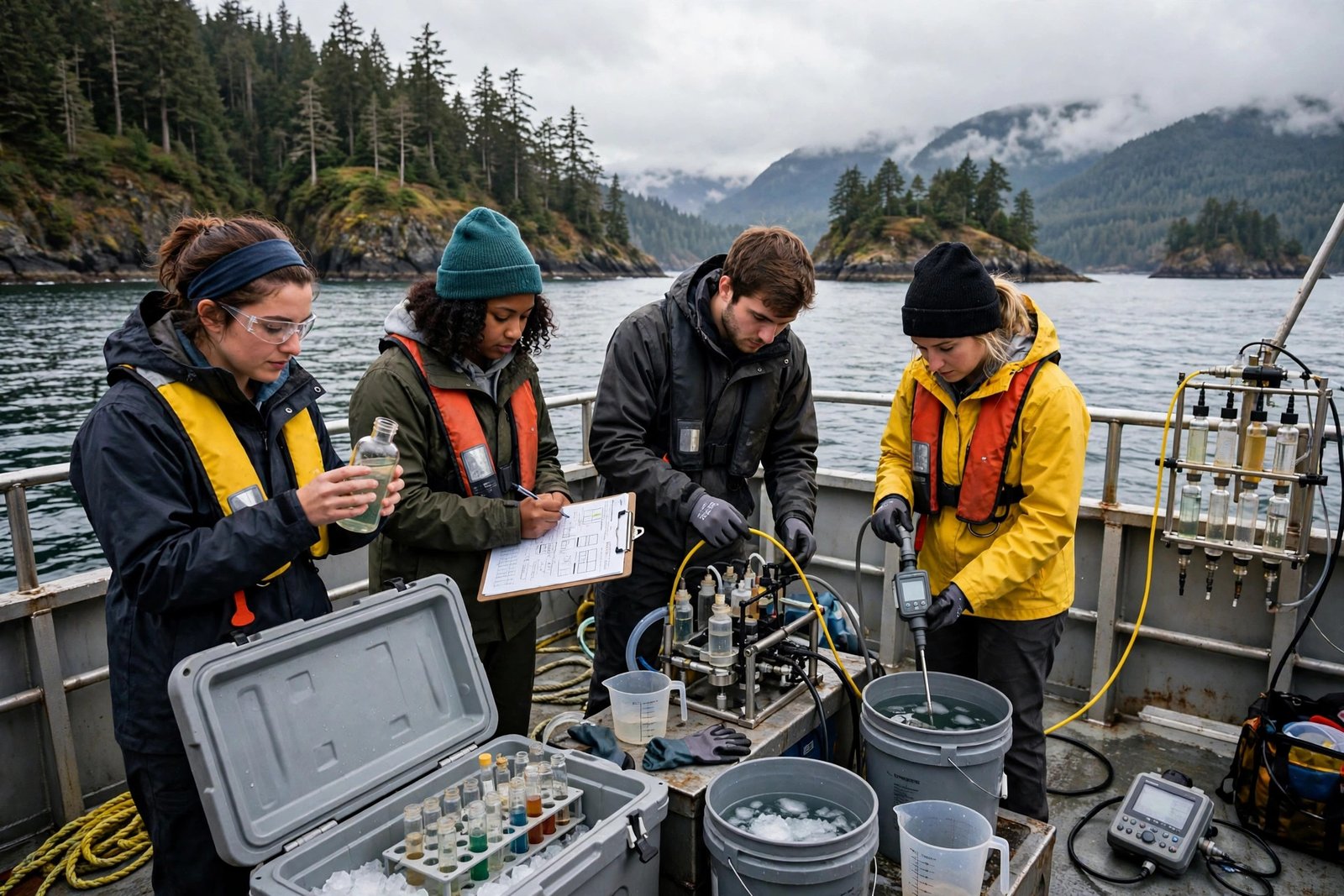
In-Course Scholarships and Continuing Support
Entrance money is only the first year of the story. Once enrolled, UVic students compete for in-course scholarships and awards administered by SAFA and the faculties, generally requiring completion of at least 12 units across two terms in the preceding academic year with the GPA specified by each award. For international students this matters strategically: because the flagship entrance award is one-time, your years two to four funding plan should combine in-course scholarship performance, UVic’s co-operative education earnings (Victoria’s tech and public sectors hire co-op students heavily), and part-time work within your study permit conditions. UVic also administers need-based support relevant to international students, including international student support awards and bursaries assessed on demonstrated financial need — values and windows change by year, so check SAFA’s current listings each fall rather than relying on any guide’s snapshot.
Graduate Funding: UVic Fellowships and Graduate Awards
Graduate funding at UVic is allocated largely through academic units, and two university-wide instruments anchor most packages. UVic Fellowship Awards are published at up to $17,500 per year at master’s level for students with an A- average in the last two years of coursework, registered full-time (3.0 units, or 1.5 units for students registered with the Centre for Accessible Learning). UVic Graduate Awards reach up to $10,000 per year for master’s and PhD students meeting the same A- standard, with registration of at least 1.5 units. Departments layer their own funding on top: departmental pages describe University Graduate Entrance Awards in the $5,000–$10,000 range for new students entering with a minimum admission GPA of 7.0 (domestic scale) or First Class standing for international students, alongside teaching assistantships and research assistantships funded by supervisors’ grants. Exact fellowship values vary by faculty and year — UVic’s own departmental summaries quote ranges rather than a single tariff — so the operative question for any offer is the total written package: fellowship plus assistantships plus any supervisor support, set against UVic’s graduate tuition for your program.
Doctoral applicants should also register the national change: the Vanier Canada Graduate Scholarship has been discontinued, and Canada’s flagship doctoral award is now the Canada Graduate Research Scholarship – Doctoral (CGRS-D), worth CAD 40,000 per year for up to 36 months, with eligible doctoral students at Canadian universities — including internationals studying in Canada — competing through the harmonised federal process. Your UVic department is your route into that competition, which is another reason research fit and an early supervisor conversation matter more than any standalone scholarship form.
Eligibility Summary
| Requirement | Automatic international entrance | Graduate fellowships/awards |
|---|---|---|
| Level | First year of a first undergraduate degree | Master’s or PhD in an eligible program |
| Academic standard | A- admission average or equivalent (published 2027–28 table) | A- average in the last two years of coursework |
| Recency | Current secondary student or graduated within last 2 years; no post-secondary attendance | Per program admission requirements |
| Status | International student on a Canadian study permit, assessed international tuition fees | Registered graduate student; full-time (3.0 units) for Fellowships |
| Application | None — automatic referral by Undergraduate Admissions; but grade self-reporting windows apply | Consideration through your academic unit at admission and in-course |
| Study permit finances | IRCC: tuition plus living funds of CAD 22,895 (applications to 31 Aug 2026) / CAD 23,448 from 1 Sep 2026. UVic awards do not replace this proof. | |
How to Secure UVic Funding, Step by Step
- Apply for admission early. You must hold an offer to receive scholarship offers, and the application-based entrance window (15 February – 30 April) rewards students already admitted.
- Handle your grade reporting correctly. BC-curriculum students: order transcripts via StudentTranscripts Service with the one-year update option. Canadian-curriculum students outside BC (including internationals on a Canadian diploma): self-report Grade 12 or IB marks between 15 February and 15 March.
- Complete the online entrance scholarship application between 15 February and 30 April for awards based on average plus other criteria.
- Check the named listings. Search SAFA’s entrance pages for your school (partner-school awards), background (Aga Khan Academy) or sport (Vikes) before assuming the automatic table is all you can get.
- Accept and register full-time. Maintain at least 12.0 units (10.5 graded) across the winter session so your award is paid and not revoked.
- Graduate applicants: engage your unit. Fellowships and entrance awards flow through departments — present an A- or better record, confirm what package accompanies admission, and ask about assistantships in writing.
- File your study permit with complete finances — tuition plus the IRCC living-funds amount for your application date (CAD 23,448 from 1 September 2026).
Required Documents
- UVic admission application via EducationPlannerBC and official transcripts
- Self-reported Grade 12 / IB marks in the 15 February – 15 March window where your category requires it (verified against final marks in August)
- English proficiency results meeting UVic requirements
- Online entrance scholarship application (15 February – 30 April) for criteria-based awards
- For graduate funding: degree transcripts evidencing an A- average in the final two years, references and program-specific materials
- Study permit documentation, including proof of tuition and living funds
Deadlines and Timeline
| When | Milestone |
|---|---|
| 15 February – 15 March | Self-reporting window: Grade 12 marks for Canadian-curriculum students outside BC; IB marks can also be self-reported |
| 15 February – 30 April | Online application window for entrance scholarships based on admission average + other criteria |
| August | Final marks reviewed; early scholarship offers confirmed against official results |
| September – April (winter session) | Maintain 12.0 units (10.5 graded) to receive and keep your award |
| Transfer entries | Final transcript deadlines: 15 January (January entry), 15 May (summer), 15 September (September entry) — for transfer scholarship assessment |
| 1 September 2026 onwards | IRCC living-funds threshold CAD 23,448 applies |
How to Improve Your Chances
For the automatic award, everything reduces to your admission average and your paperwork discipline: an A- or better average, honestly self-reported inside the window, with final marks that match. Because UVic does not round percentages, borderline students should focus effort on the specific subjects UVic will average for their faculty rather than spreading effort thinly. For criteria-based entrance awards, the February–April application is your differentiator — awards exist for particular faculties, backgrounds and achievements, and they are chronically under-applied-for by international students who assume “automatic” describes the whole system. For graduate funding, protect your final-two-years average (the A- fellowship threshold is calculated there), choose referees who can speak to research ability, and treat the department — not a central portal — as your funding audience. And for every student: keep 12.0 units. More UVic entrance money is lost to dropped courses and changed status than to any selection committee.
Common Mistakes
- Missing the self-reporting window. No STS order or no self-report between 15 February and 15 March means no consideration for average-based entrance scholarships — with no late fix.
- Inflating self-reported grades. Offers are re-checked against final marks in August; UVic does not round up, and mismatches end offers.
- Treating the $15,000 as renewable. The published international automatic award is one-time. Years two to four need in-course awards, co-op and work income.
- Dropping below 12.0 units. Falling under the registration minimum can revoke your scholarship after it is paid.
- Ignoring status changes. International scholarship eligibility depends on study-permit status and being assessed international fees; tell SAFA if your status changes.
- Skipping the February–April criteria-based application because you heard UVic awards are “automatic” — only the average-based table is.
- Under-proving study permit funds. You must still show tuition plus IRCC living funds (CAD 23,448 from 1 September 2026).
Frequently Asked Questions
How much is UVic’s automatic entrance scholarship for international students?
UVic’s published table for 2027–2028 lists $15,000 (one-time) for international students admitted with an A- average or equivalent. Values are subject to change each year — confirm the figure for your admission year on SAFA’s entrance scholarships page.
Do I need to apply for the UVic international entrance scholarship?
No. Eligible candidates are automatically referred to Student Awards and Financial Aid by Undergraduate Admissions. However, grade-reporting rules apply: BC students must order transcripts through StudentTranscripts Service, and Canadian-curriculum students outside BC must self-report marks between 15 February and 15 March or they will not be considered.
Is the UVic entrance scholarship renewable?
The automatic international award is one-time, not renewable. A small number of named awards are renewable — the Aga Khan Academy Renewable Scholarship ($22,500 per year for four years) is the standout example — and continuing students compete for in-course scholarships each year.
What average do I need?
For the automatic international award, an A- admission average or equivalent, alongside a competitive overall admission profile. Canadian citizens and permanent residents need 90%+ (32 IB) for their $1,500–$5,000 band.
Can transfer students get UVic entrance scholarships?
UVic operates transfer scholarships for students transferring directly from a Canadian college or university with at least 12.0 transferable graded units and a 7.5/9.0 transfer average, with final-transcript deadlines by entry term. The international automatic entrance scholarship described here is for first-year entrants who have not attended post-secondary.
What graduate funding is available to international students at UVic?
UVic Fellowship Awards (up to $17,500 per year at master’s level) and UVic Graduate Awards (up to $10,000 per year), both requiring an A- average in the last two years of coursework, plus departmental graduate entrance awards and teaching/research assistantships allocated through your academic unit. Doctoral students also compete for the national CGRS-D (CAD 40,000/yr), which replaced the discontinued Vanier.
What happens if I drop a course in first year?
If dropping takes you below 12.0 units for credit (10.5 graded) across the winter session, UVic’s regulations allow your scholarship to be revoked. Students with a disability on an approved reduced load have adjusted minimums and must register their documentation with SAFA.
Does the scholarship satisfy IRCC’s proof of funds?
No. You must still demonstrate tuition plus the official living-funds amount — CAD 22,895 for applications submitted by 31 August 2026 and CAD 23,448 for applications from 1 September 2026.
Budgeting Honestly in Victoria
Victoria sits in the middle of Canada’s cost map: cheaper than Vancouver across the water, more expensive than the Atlantic or Prairie cities, with a rental market tight enough that housing — not tuition — is where most student budgets break. Set the $15,000 automatic award against that reality. It is a meaningful first-year discount, roughly the cost of a year of shared accommodation and food for a careful student, but it arrives as a credit against tuition and fees across the winter session rather than as arrival cash, and it does not repeat. The students who make UVic work financially tend to share a pattern: they secure residence or a shared house early (UVic’s off-campus housing listings move fast from spring onward), they treat the co-op program as a funding instrument rather than a résumé extra — UVic is one of Canada’s co-op leaders, and paid work terms in Victoria’s technology, tourism, health and provincial-government sectors can contribute thousands per term — and they apply for in-course scholarships every year without fail, because UVic’s continuing-student awards reward exactly the GPA that careful course-load management protects. If you hold a partner-school, Aga Khan or Vikes award instead of the standard automatic scholarship, the arithmetic improves sharply, which is why checking those named listings before you enrol is worth an afternoon of anyone’s time. And whatever your award mix, arrive with the full IRCC-required funds documented — tuition plus CAD 23,448 in living funds for study permit applications from 1 September 2026 — because Victoria’s landlords and UVic’s fee deadlines will both expect the money to be real.
Sources & Verification
- University of Victoria, Student Awards & Financial Aid — Entrance Scholarships & Awards: automatic table for 2027–2028 (international A- = $15,000 one-time), eligibility, regulations, self-reporting and deadlines — uvic.ca entrance scholarships
- University of Victoria, SAFA — Vikes International Athlete Award: $100,000 payable at $20,000 per year over 5 years — uvic.ca Vikes International Athlete Award
- University of Victoria, SAFA — Partner-school entrance scholarship listings (Bunka Suginami, UNIS Hanoi, Indus Pune, American School Foundation Guadalajara): values $15,000–$20,000+, no application required, higher-value rule — e.g. uvic.ca Bunka Suginami Entrance Scholarship
- University of Victoria departmental/Faculty of Graduate Studies funding summaries: UVic Fellowship Awards up to $17,500/yr, Graduate Awards up to $10,000/yr, Graduate Entrance Awards $5,000–$10,000.
- IRCC study permit proof-of-funds table: CAD 22,895 to 31 August 2026; CAD 23,448 from 1 September 2026.
Disclaimer: Scholarship values, deadlines and eligibility change yearly. Always confirm deadlines and amounts on the official University of Victoria website before applying. StudyGraduate is an information portal, not an agency, and cannot promise admission, scholarship selection or visa approval.
✅ Eligibility Criteria
- Check the official website for full eligibility criteria for your country
🎁 Benefits
- See the official website for the complete list of benefits
⚙️ Application Process
- 1Check your eligibility on the official site
- 2Prepare your documents and statements
- 3Submit the online application before the deadline
- 4Complete interviews or assessments if shortlisted
- 5Await the final selection announcement
📅 Important Dates
Deadlines vary by country and intake. Check the official website for country-specific dates.
📄 Required Documents
- Valid passport
- Academic transcripts & certificates
- Statement of purpose
- Letters of recommendation
- CV / resume
Commonly required — confirm the exact list on the official site.
❓ Frequently Asked Questions

Ready to Take the Next Step?
Explore more scholarships and study opportunities around the world.
Browse Scholarships →