University of Melbourne Graduate Research Scholarships 2027: Fully Funded Master’s by Research & PhD
University of Melbourne Graduate Research Scholarships 2027: Fully Funded Master’s by Research & PhD For international students who want a Master’s by Research or a PhD in Australia without tuition debt, the University of Melbourne Graduate Research Scholarships are among the strongest offers in the country. Under one umbrella sit two awards — the university-funded ... <a title="University of Melbourne Graduate Research Scholarships 2027: Fully Funded Master’s by Research & PhD" class="read-more" href="https://studygraduate.com/scholarship/university-of-melbourne-graduate-research-scholarships-2027-fully-funded-masters-by-research-phd/" aria-label="Read more about University of Melbourne Graduate Research Scholarships 2027: Fully Funded Master’s by Research & PhD">Read more</a>
📖 Overview
University of Melbourne Graduate Research Scholarships 2027: Fully Funded Master’s by Research & PhD
For international students who want a Master’s by Research or a PhD in Australia without tuition debt, the University of Melbourne Graduate Research Scholarships are among the strongest offers in the country. Under one umbrella sit two awards — the university-funded Melbourne Research Scholarship (MRS) and the Australian Government’s Research Training Program (RTP) Scholarship — and for students who win the stipend version, the package is genuinely fully funded: a 100% fee offset, a living allowance of AUD 41,100 per year at the published 2027 full-time rate, a relocation grant, and Overseas Student Health Cover single membership for students who need a visa.
This guide explains the 2027 position exactly as the university publishes it, including the point most comparison sites get wrong: the difference between the Australian Government’s national RTP base stipend rate and the higher rate Melbourne actually pays. It also covers eligibility and ranking, how application works through your course application (there is no separate scholarship form for new applicants), the faculty-round system that decides when you must apply, and the documents and strategy that give you a realistic chance. For university context, see the University of Melbourne profile on StudyGraduate, and for the full funding landscape read our overview of University of Melbourne scholarships for international students.
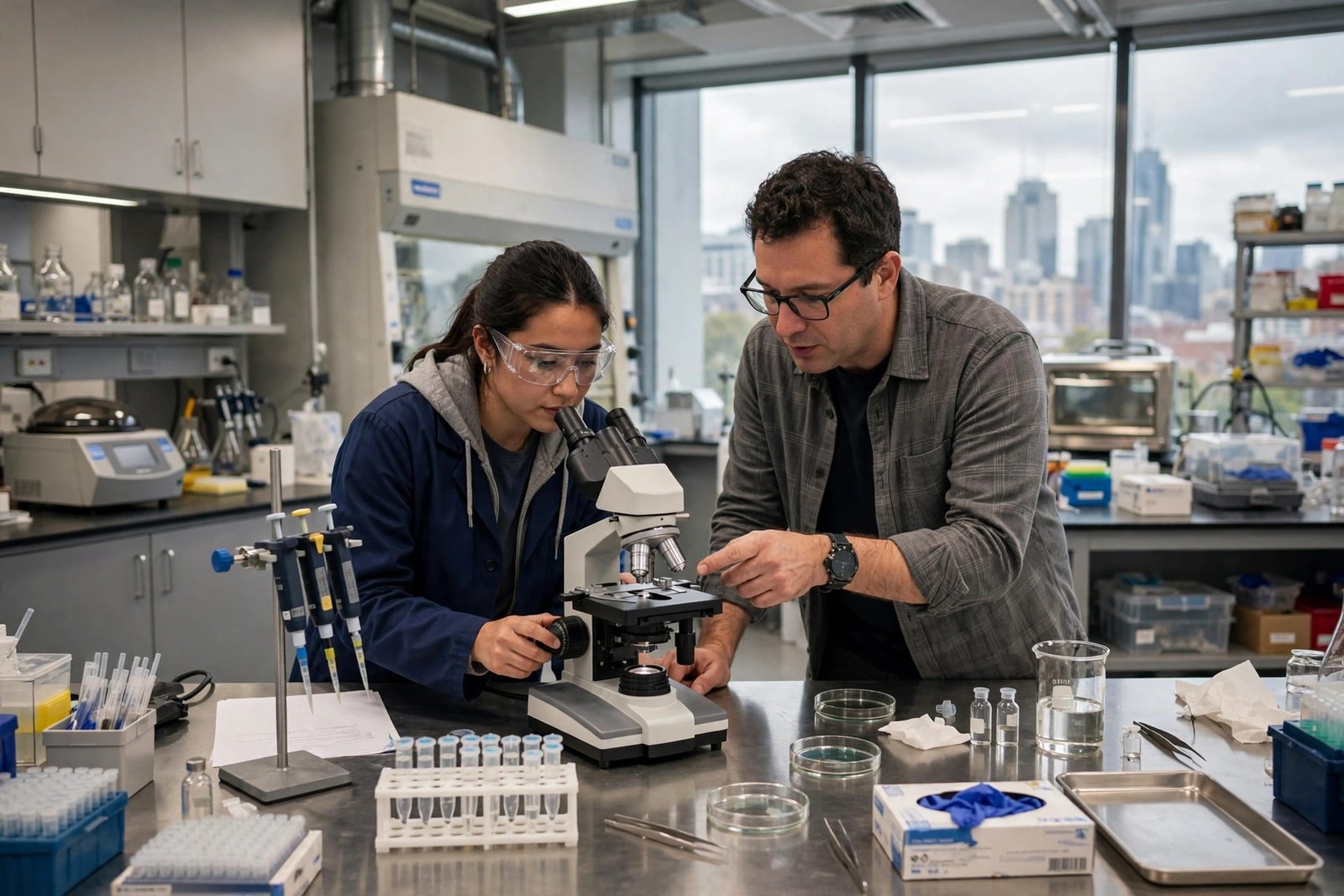
Graduate Research Scholarships at a Glance
| Detail | Official position (University of Melbourne) |
|---|---|
| Awards covered | Melbourne Research Scholarship and Research Training Program (RTP) Scholarship, presented together as the Graduate Research Scholarships |
| Who can be considered | High-achieving domestic and international students enrolling in a graduate research degree (Master’s by Research or doctoral degree) |
| Tuition | Full fee offset for up to 2 years (Master’s by Research) or up to 4 years (doctoral degree) |
| Living allowance | AUD 41,100 per year pro rata (2027 full-time rate); AUD 39,500 per year was the 2026 rate. Paid for up to 2 years (Master’s by Research) or up to 3.5 years (doctoral). May be indexed annually; includes limited paid sick, maternity/parenting (parental) leave provisions |
| Relocation grant | AUD 2,000 if moving from another Australian state or territory; AUD 3,000 if moving from outside Australia |
| Health cover | OSHC Single Membership for international students who require a student visa |
| Scale | Graduate Research Scholarships page lists 600 scholarships; the MRS and RTP pages each list 350 (indicative figures) |
| Application | Automatic consideration when you apply for a graduate research course by its closing date — no separate scholarship application for new students |
| Total value headline | 100% fee remission and up to AUD 135,000 (Graduate Research Scholarships page) / up to AUD 138,000 (MRS and RTP pages) |
The Two Awards Under One Umbrella
Melbourne Research Scholarship (MRS)
The Melbourne Research Scholarship is the university’s own award, offered to high-achieving domestic and international students enrolling in a graduate research degree. It comes in fee-offset, stipend, and combined stipend-and-fee-offset forms. The stipend form pays a fortnightly stipend at AUD 41,100 per year pro rata (2027 full-time rate) for up to two years for a Master’s by Research or up to 3.5 years for a doctoral degree, together with the full fee offset (up to two or four years respectively), the relocation allowance, and OSHC single membership for international students who need a student visa. The official page lists 350 scholarships and a total benefit of 100% fee remission and up to AUD 138,000.
Research Training Program (RTP) Scholarship
The RTP Scholarship is supported by the Australian Commonwealth Government and the University of Melbourne and is offered to high-achieving domestic and international research students on materially the same terms: full fee offset, the same published stipend rate (AUD 41,100 per year at the 2027 full-time rate on the university’s RTP page), relocation grant and OSHC single cover. All domestic students offered admission to a Master’s by Research or doctoral degree receive an RTP Scholarship (Fee Offset) with their course offer; the stipend-bearing awards — RTP and MRS alike — are competitive for everyone, and for international students the fee offset itself is part of the competitive award rather than an automatic entitlement.
The RTP base rate vs the Melbourne rate — read this before comparing universities
The Australian Government sets a national RTP base stipend rate: AUD 34,315 for 2026 and AUD 35,550 for 2027. Universities administer RTP funding and set the stipend their own scholarship holders receive, and Melbourne’s published living allowance — AUD 39,500 in 2026, rising to AUD 41,100 in 2027 — sits above that national base. When a comparison table shows “RTP: AUD 35,550” for 2027, it is showing the government base rate, not necessarily what a Melbourne scholarship holder is paid. Always compare the rate on each university’s own scholarship page for the stipend scholarship itself, and note that Melbourne states its living allowance may be indexed annually.

Eligibility
To be considered for the Graduate Research Scholarships, you must have applied for and meet the requirements for a graduate research degree at the University of Melbourne, or be currently enrolled in a graduate research degree at the university. That is the complete formal eligibility test on the official pages — but meeting it only puts you in the pool. Admission requirements themselves are substantial: you must satisfy your course’s academic entry requirements (typically a degree with a significant research component and results at the standard your faculty sets), meet English language requirements, and, for most applicants, secure a supervisor willing to support your project. Full-time enrolment matters too: faculty guidance notes that you must be a full-time student to be awarded a scholarship.
How Selection Works: Ranking, Not Thresholds
Graduate Research Scholarships that provide a stipend as well as a fee offset are offered to eligible candidates ranked highest by the relevant selection panels, based on their academic results for prior study and their research potential in their field of study. The Melbourne Research Scholarship page adds that factors such as completion of a degree at the same level as the research course sought, relevant professional experience, refereed publications, specialist medical qualifications or composition of original music may be taken into consideration. In practice, panels are comparing your grades, the strength and feasibility of your research proposal, your supervisor and faculty fit, and any evidence — a research thesis, publications, conference work, relevant professional research experience — that you can complete a significant original project on time. There is no financial-need test and no nationality quota published on the official pages.
Benefits and Coverage in Detail
| Component | Master’s by Research | Doctoral degree (PhD) |
|---|---|---|
| Fee offset | 100% for up to 2 years | 100% for up to 4 years |
| Stipend duration | Up to 2 years | Up to 3.5 years |
| Stipend rate | AUD 41,100 per year pro rata (2027 full-time rate); AUD 39,500 in 2026; paid fortnightly for MRS; may be indexed annually; limited paid sick, maternity and parenting/parental leave included | |
| Relocation grant | AUD 2,000 (moving from another Australian state/territory) or AUD 3,000 (moving from outside Australia), one-off | |
| OSHC | Single Membership for international students who require a student visa — dependants are not covered | |
| Fee-offset-only awards | Also offered: full fee offset without a stipend (up to 2 / 4 years as above) | |
Budget for what is not covered: OSHC for a partner or children, airfares beyond the relocation grant’s help, visa application charges, and living costs above the stipend if your household is larger than one. The stipend is designed as a living allowance for the student, and Melbourne’s rate is comparatively generous — but it is not a family income guarantee.
How to Apply, Step by Step
- Find your research area and supervisor. Identify potential supervisors whose work matches your proposed project and make contact with a focused, credible proposal outline. Supervisor support is central to both admission and ranking.
- Check your faculty’s application and scholarship rounds. Rounds and closing dates are set at faculty level (see the timeline table below). Your course page and faculty graduate-research page are authoritative.
- Prepare your application documents. Transcripts and certificates, CV, research proposal, evidence of English proficiency where required, and referee details or reports as your faculty specifies.
- Submit your graduate research course application by the closing date. If you are a new student and have applied by the application closing date for your course, you are automatically considered for the Graduate Research Scholarships. Melbourne will notify you that a scholarship application has been added to your record — within ten business days of submitting your course application according to the Graduate Research Scholarships page, and within seven days according to the Melbourne Research Scholarship page.
- Receive outcomes around course-offer time. Domestic students receive an RTP (Fee Offset) offer as part of their course offer. Offers for scholarships that provide a stipend and fee offset are made separately, but around the same time course offers are made.
- Special cases — deferred and currently enrolled students. If you have deferred commencement or are already enrolled and wish to be reconsidered, the process varies by faculty and commonly requires submitting a scholarship application form by 31 October for the following year. Check your faculty’s Graduate Research Scholarship Applications guidance.
Required Documents
- Academic transcripts and completion certificates for all prior study (certified English translations where applicable)
- A research proposal aligned with your proposed supervisor’s and faculty’s research strengths
- Curriculum vitae evidencing research experience, publications or relevant professional work
- Referee reports or referee contact details, as your faculty’s application requires
- Evidence of English language proficiency where your prior study does not already meet the course requirement
- Evidence of any factors panels may consider: refereed publications, prior degree at the same level, specialist qualifications
Deadlines and Faculty Rounds for 2027
There is no single university-wide closing date: you apply by your course’s closing date, and faculties run scholarship rounds. As a verified example, the Faculty of Medicine, Dentistry and Health Sciences publishes three rounds for 2027 applications: Round 1 — complete applications received by 31 October 2026, outcomes by 18 December 2026; Round 2 — by 31 January 2027, outcomes by 26 March 2027; Round 3 — by 15 May 2027, outcomes by 16 July 2027. Other faculties run different calendars — the Faculty of Education, for example, has published rounds closing 18 September (Semester 1 commencement) and 18 April (Semester 2 commencement). Treat the MDHS dates as an illustration of the rhythm, not as your deadline: your own faculty’s page is the only safe source, and Round 1 is consistently where the largest share of stipend scholarships is allocated. If 2027 details for your faculty are not yet published when you read this, the last confirmed cycle’s months are the best guide — and you should re-check before submitting.
| Round (MDHS example, 2027) | Complete application by | Outcome by |
|---|---|---|
| Round 1 | 31 October 2026 | 18 December 2026 |
| Round 2 | 31 January 2027 | 26 March 2027 |
| Round 3 | 15 May 2027 | 16 July 2027 |
How to Improve Your Chances
Because ranking is comparative, your task is to be visibly stronger than other strong applicants in your faculty’s pool. Finish prior study with the highest results you can — panels start with academic results. Choose a supervisor deliberately and engage early: a proposal that extends a supervisor’s actual research program is far more competitive than a generic topic mailed to twenty academics. Write a proposal that is specific about question, method, feasibility within the scholarship duration (two years for a Master’s by Research; a PhD project scoped to be completable while the fee offset runs to four years and the stipend to 3.5), and contribution. Evidence research potential with artefacts — thesis results, publications, datasets, code, exhibitions or professional research outputs — rather than adjectives. And apply complete, in Round 1 where your faculty offers one: incomplete applications are not rescued by later documents in a competitive round. Students earlier in the pipeline should also read how undergraduate funding works at Melbourne in our Melbourne International Undergraduate Scholarship guide, because a strong Melbourne undergraduate record is one credible path into this research pool.
Common Mistakes to Avoid
- Looking for a separate GRS application form. For new students there is none — the course application by its closing date is the trigger. (Deferred and enrolled students are the exception; they may need the faculty form by 31 October.)
- Comparing the government base rate with other universities’ actual stipends. The national RTP base rate (AUD 34,315 in 2026; AUD 35,550 in 2027) is not Melbourne’s stipend. Melbourne publishes AUD 39,500 (2026) and AUD 41,100 (2027).
- Applying in a late round with a Round 1 mindset. Stipend numbers shrink as rounds progress; earlier complete applications compete for more awards.
- Assuming the fee offset is automatic for internationals. Domestic students receive RTP (Fee Offset) with their course offer; international students receive fee offset as part of a competitive scholarship award.
- Forgetting dependants’ costs. OSHC included is single cover only, and the stipend is a student living allowance.
- Ignoring the wider national picture. Compare Melbourne’s package with other universities and government schemes in our scholarships in Australia guide before committing.
Frequently Asked Questions
Are the Melbourne Graduate Research Scholarships fully funded?
The stipend-and-fee-offset version is fully funded for the student: 100% fee offset (up to 2 years for a Master’s by Research, 4 years for a doctorate), a living allowance of AUD 41,100 per year at the 2027 full-time rate (up to 2 or 3.5 years respectively), a relocation grant of AUD 2,000–3,000, and OSHC single membership for international students who need a visa. Dependant costs and airfares are not covered.
What is the Melbourne PhD stipend in 2027?
AUD 41,100 per year pro rata, as published on the official Graduate Research Scholarships and Melbourne Research Scholarship pages as the 2027 full-time rate. The 2026 rate was AUD 39,500. The allowance may be indexed annually.
Is AUD 35,550 the Melbourne RTP stipend for 2027?
No. AUD 35,550 is the Australian Government’s national RTP base stipend rate for 2027 (AUD 34,315 for 2026). Melbourne’s published living allowance for its Graduate Research Scholarships is AUD 41,100 per year for 2027 — above the base rate.
Do I need a separate scholarship application?
New students do not: apply for a graduate research course by its closing date and you are automatically considered, with confirmation added to your record within days. Deferred or currently enrolled students follow their faculty’s process, which commonly requires a scholarship application form by 31 October for the following year.
When should I apply for a 2027 start?
As early as your faculty’s rounds allow. Using the Faculty of Medicine, Dentistry and Health Sciences as the published example, Round 1 complete applications closed on 31 October 2026 with outcomes by 18 December 2026, followed by rounds closing 31 January 2027 and 15 May 2027. Your faculty’s dates may differ — check its official page.
Can international students receive the RTP Scholarship at Melbourne?
Yes. Both the Melbourne Research Scholarship and the RTP Scholarship are offered to high-achieving domestic and international students enrolling in a graduate research degree. For international students, both the stipend and the fee offset are competitive awards.
What if I am offered a fee offset but no stipend?
Fee-offset-only Graduate Research Scholarships also exist. They remove tuition fees (up to 2 or 4 years) but pay no living allowance, so you would need other funds for living costs and OSHC, and to satisfy visa financial requirements. Consider deferring and re-applying in a later round, or compare stipend offers from other universities, before accepting.
How many Graduate Research Scholarships does Melbourne offer?
The official Graduate Research Scholarships page lists 600, and the Melbourne Research Scholarship and RTP pages each list 350. The university notes that numbers and values are indicative and subject to change.
Stipend, Indexation and Your Research Budget
Plan your doctorate or research master’s around three clocks that do not match. The fee-offset clock is the longest: four years for a doctorate, two for a Master’s by Research. The stipend clock is shorter: up to 3.5 years for a doctorate and two years for a Master’s by Research. And the visa and OSHC clock runs with your course enrolment, not with either payment. A realistic budget therefore assumes you finish your doctorate — including thesis submission — inside the stipend window, treats the relocation grant (AUD 3,000 if you are moving from outside Australia) as setup help rather than income, and holds a personal buffer for the gap between stipend end and thesis examination if your project slips. Indexation helps modestly: Melbourne states the living allowance may be indexed annually, and the movement from AUD 39,500 (2026) to AUD 41,100 (2027) shows that mechanism at work in the university’s published rates. Do not, however, budget on an assumed future indexation figure the university has not published — build your plan on the rate in your offer letter.
It is also worth understanding what kind of money the stipend is. It is a living allowance paid to support you while you research — the Melbourne Research Scholarship is paid as a fortnightly stipend — and it comes with limited paid sick, maternity and parenting/partner leave provisions under the Graduate Research Scholarships Terms and Conditions. Those conditions, linked from the official pages, govern everything from leave and outside work to progress requirements and termination, and they are the document that will actually decide edge cases in your candidature. Read them before you accept, not after a problem arises.
Verify the package on the official pages: the Graduate Research Scholarships page for the combined offer and its 600-scholarship listing; the Melbourne Research Scholarship page for the stipend form of the award and its ranking factors; the Research Training Program Scholarship page for the government-supported award and its identical 2027 stipend rate; and the MDHS application and scholarship deadlines page as the worked example of a faculty round calendar for 2027 (Round 1 closing 31 October 2026). If your faculty is not MDHS, find its equivalent page and use its dates — faculties set their own rounds, and using another faculty’s calendar is a recognised way to miss a round entirely.
Master’s by Research vs PhD: Choosing Your Entry Point
Applicants often ask whether to enter through a Master’s by Research or directly into a PhD, and the scholarship structure should inform that choice. A Master’s by Research carries a fee offset for up to two years and a stipend for up to two years — a tight, well-matched package that suits a defined project and can strengthen a later PhD application with Melbourne results, a Melbourne supervisor’s reference and, ideally, a publication. A doctorate carries a fee offset for up to four years but a stipend for up to 3.5 years, so doctoral applicants should scope a project that can genuinely be completed and examined within the funded window. Panels also weigh whether you have completed a degree at the same level as the course you seek, relevant professional experience and refereed publications, which means a research master’s is not a detour: done well, it manufactures exactly the evidence a doctoral panel ranks. International applicants should also note the difference in risk. A fee-offset-only offer on a Master’s by Research leaves two years of living costs to self-fund; the same offer on a doctorate leaves up to four. Compare any Melbourne offer against stipend-bearing offers elsewhere before accepting, using the national guide linked in this article, and remember that declining or deferring to re-enter a later, earlier round — with a stronger record — is sometimes the financially correct decision.
Whichever degree you choose, the sequence does not change: supervisor first, faculty round second, complete course application by that round’s closing date third — and the automatic scholarship consideration follows. Students currently enrolled at Melbourne, or holding a deferred offer, are the exception to memorise: faculty guidance requires a scholarship application form, commonly by 31 October, to be reconsidered for the following year, and re-applications are typically only considered against that Round 1 deadline.
One last practical note: keep dated copies of your scholarship offer, the official pages as they stood in your application cycle, and your faculty’s round dates. Scholarship terms are amended over time, and if a condition is ever queried during your candidature, the documents from your own offer — not a webpage updated for a later intake — are what govern your award. That habit costs nothing and protects every other piece of advice in this guide.
Sources & Verification
Facts in this article are drawn from the University of Melbourne’s official pages, accessed in October 2026: the Graduate Research Scholarships page, the Melbourne Research Scholarship page and the Research Training Program Scholarship page (scholarships.unimelb.edu.au) — the source of the AUD 41,100 (2027) and AUD 39,500 (2026) stipend rates, durations, relocation grant, OSHC and quantities — and the Faculty of Medicine, Dentistry and Health Sciences and Faculty of Education graduate research application pages for round dates. National RTP base rates (AUD 34,315 for 2026; AUD 35,550 for 2027) are as recorded in the StudyGraduate program brief. Where a 2027 faculty deadline had not been published for a specific faculty, this article says so rather than inventing one. Scholarship details change yearly — always confirm deadlines and amounts on the official website before applying. StudyGraduate is an information portal, not an agency, and cannot promise selection, admission or visa approval.
✅ Eligibility Criteria
- Check the official website for full eligibility criteria for your country
🎁 Benefits
- See the official website for the complete list of benefits
⚙️ Application Process
- 1Check your eligibility on the official site
- 2Prepare your documents and statements
- 3Submit the online application before the deadline
- 4Complete interviews or assessments if shortlisted
- 5Await the final selection announcement
📅 Important Dates
Deadlines vary by country and intake. Check the official website for country-specific dates.
📄 Required Documents
- Valid passport
- Academic transcripts & certificates
- Statement of purpose
- Letters of recommendation
- CV / resume
Commonly required — confirm the exact list on the official site.
❓ Frequently Asked Questions

Ready to Take the Next Step?
Explore more scholarships and study opportunities around the world.
Browse Scholarships →