Schwarzman Scholars 2027 in China: Fully Funded Master’s in Global Affairs at Tsinghua
Schwarzman Scholars 2027 in China: Fully Funded Master’s in Global Affairs at Tsinghua Most master’s scholarships fund a degree in a subject you have already chosen. Schwarzman Scholars does something different: it funds one specific degree — a one-year Master’s in Global Affairs — at one specific place, Schwarzman College at Tsinghua University in Beijing, ... <a title="Schwarzman Scholars 2027 in China: Fully Funded Master’s in Global Affairs at Tsinghua" class="read-more" href="https://studygraduate.com/scholarship/schwarzman-scholars-2027-in-china-fully-funded-masters-in-global-affairs-at-tsinghua/" aria-label="Read more about Schwarzman Scholars 2027 in China: Fully Funded Master’s in Global Affairs at Tsinghua">Read more</a>
📖 Overview
Schwarzman Scholars 2027 in China: Fully Funded Master’s in Global Affairs at Tsinghua
Most master’s scholarships fund a degree in a subject you have already chosen. Schwarzman Scholars does something different: it funds one specific degree — a one-year Master’s in Global Affairs — at one specific place, Schwarzman College at Tsinghua University in Beijing, for a carefully selected global cohort of young leaders. Everyone studies the same broad questions from different angles: how the world is governed, how economies and businesses interact across borders, and how China’s role in global affairs is changing. If that shared mission excites you, this may be one of the most complete fully funded master’s packages anywhere. If you wanted a specialised technical master’s, it is not — and understanding that distinction early will save you a misdirected application.
This guide covers the Schwarzman Scholars class of 2027–2028 in full: eligibility, the genuinely comprehensive funding package, the curriculum and its three concentrations, the two application tracks and their different deadlines, required essays and documents, how interviews work, what selectors actually look for, and the mistakes that sink otherwise strong candidates. It is written for applicants worldwide, including the Bangladeshi, Indian, Pakistani, Nepali, Nigerian and Indonesian graduates who form a large part of StudyGraduate’s readership.
Timing first, because Schwarzman runs two tracks on two calendars. According to the official Schwarzman Scholars site, the application window for the class of 2027–2028 is now closed. For United States and global applicants — everyone holding a passport from outside the Chinese mainland, Hong Kong, Macao and Taiwan — the application ran from April to September 2026, with a deadline of 9 September 2026 at 3:00 p.m. Eastern Daylight Time reported consistently from the official cycle. Applicants with Chinese citizenship from the mainland, Hong Kong, Macao and Taiwan applied through a separate China system from roughly January to May 2026, with a deadline around 20 May. The official admissions page now looks ahead to the class of 2028–2029, with a US/global window from April to September 2027 and a China window from March to May 2027, for a program beginning in August 2028. Use this guide to prepare thoroughly for the next cycle, and always confirm the exact current deadline on the official site.
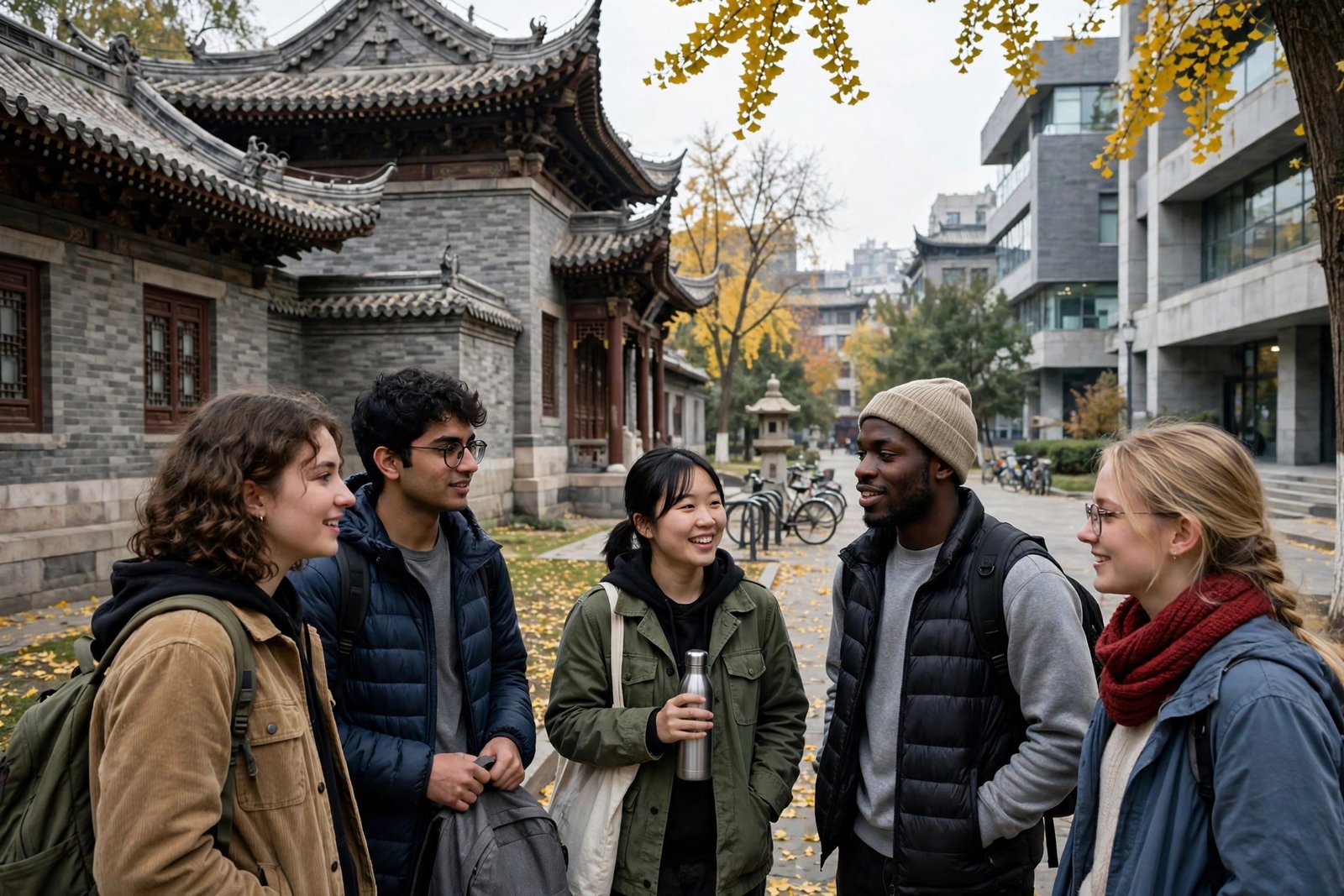
Why do so many graduates chase this program? Start with the setting. Tsinghua is one of China’s most prestigious universities, and Schwarzman College is a purpose-built residential college where scholars live, eat, study and debate together. Add a curriculum designed with input from leading universities worldwide, guest lectures by senior figures from government, business and academia, a mentorship program, a practical leadership curriculum, and an in-country study tour that takes the cohort beyond Beijing to see other regions of China. Then remove the financial barrier almost entirely: tuition, room and board, travel, books, a laptop, health insurance and a personal stipend are covered. The result is a program that competes for applicants with the world’s best-known fellowships — and selects accordingly.
You can place Tsinghua in context through the Tsinghua University profile on StudyGraduate, browse alternatives in our scholarships directory, and explore the wider destination through StudyGraduate’s study abroad guides as you weigh Beijing against other options.
Schwarzman Scholars at a Glance
| Item | Verified detail |
|---|---|
| Host institution | Schwarzman College, Tsinghua University, Beijing, China |
| Degree | One-year Master’s in Global Affairs (full-time, residential) |
| Language of instruction | English for all teaching; no Chinese language requirement to apply |
| Who can apply | All nationalities; no citizenship requirement. Two application tracks by passport/citizenship |
| Age rule | At least 18 but not yet 29 on 1 August of the enrolment year (for 2027 entry: as of 1 August 2027) |
| Degree rule | Bachelor’s degree completed, or all requirements completed, before 1 August of the enrolment year |
| English rule | Strong English required; test scores needed if native language is not English and waiver conditions are not met — official minima include TOEFL 100 (120-point scale), IELTS 7, Cambridge C1/C2 185, Duolingo 130 |
| Funding | Tuition and fees, room and board, travel to and from Beijing at the start and end of the year, in-country study tour, required books and supplies, Lenovo laptop, health insurance and a personal stipend |
| Application fee | None |
| Global deadline (2027–2028 class) | 9 September 2026, 3:00 p.m. EDT — now closed |
| China-track deadline (2027–2028 class) | May 2026 through the separate China application system |
| Program start | August 2027 for the 2027–2028 class |
| Official website | schwarzmanscholars.org |
Read the age rule literally. “Not yet 29 as of 1 August of your enrolment year” means a candidate who turns 29 before that date is too old for that cohort, even by a day, while a younger applicant who will still be 18 or older qualifies on age however early they graduated. Combined with the requirement to have finished a bachelor’s degree before enrolment, the program’s target is clear: recent graduates and young professionals in the first years of their careers, not mid-career executives. If you fall outside the window for the next cohort, no essay can change that — check the dates against your date of birth before anything else.
What Schwarzman Scholars Is — and Is Not
Schwarzman Scholars was created to prepare the next generation of global leaders for a century in which understanding China is essential, whatever your field. Scholars are selected to represent many countries and many disciplines — the program expects roughly a global mix each year — and then brought together for a single intensive year. The academic core covers leadership, global affairs and China, and each scholar chooses a concentration in Public Policy, Economics and Business, or International Studies. Around the coursework sit leadership training, seminars with visiting leaders, a mentor matched to your interests, a capstone-style practical project, Chinese language study offered as part of college life (learning some Mandarin is encouraged and supported, even though it is not an admission requirement), and cultural immersion across China.
It is not a route to a specialised engineering, medical, scientific or professional qualification, and it does not let you pick any Tsinghua degree — the Master’s in Global Affairs is the degree. Applicants whose real goal is, say, a research MSc in computer science at Tsinghua should look at Chinese Government Scholarship routes and Tsinghua’s own admissions instead. Schwarzman rewards applicants who genuinely want this curriculum and this cohort experience. Selectors interview finalists in person and are experienced at distinguishing authentic motivation from prestige-seeking; the candidates who thrive are those whose past leadership and future plans connect naturally to global affairs and to engaging with China.
Eligibility: The Three Hard Requirements
The official Schwarzman Scholars admissions page sets three core eligibility requirements, plus English proficiency.
1. An undergraduate degree before enrolment
You must hold an undergraduate degree, or be on track to complete all degree requirements, before 1 August of your enrolment year. There is no requirement for a specific undergraduate field — all fields are welcome — but you must be able to articulate how the Schwarzman year will develop your leadership potential within your field. A computer-science graduate heading toward technology policy and a history graduate heading toward diplomacy can both make that case; neither can skip making it.
2. Age 18 to 28 at enrolment
Candidates must be at least 18 but not yet 29 years of age as of 1 August of the enrolment year. For the class of 2027–2028 that reference date was 1 August 2027; for the next class it will be 1 August 2028. The official admissions page states this rule explicitly for each cycle, so check your eligibility against the cycle you intend to enter, not a previous one.
3. Strong English proficiency
All teaching is conducted in English, so applicants must demonstrate strong English skills. If your native language is not English, official test scores must be submitted unless a waiver applies. The official page waives the test for applicants who studied at an undergraduate institution where English was the primary language of instruction for at least two years, and for those who studied in English for two or more years at master’s level or higher. Where a test is required, the official minimum scores are: TOEFL 100 on the 120-point scale (or 5 on the newer 6-point scale referenced on the official page), IELTS 7, Cambridge English Advanced (C1) or Proficiency (C2) at 185, and Duolingo English Test 130. Do not treat these minima as targets for competitiveness — they are floors, and your essays, video and interview must also demonstrate fluent, precise English.
What is NOT required
Equally important is what Schwarzman does not require. There is no citizenship or nationality restriction. There is no minimum GPA or class rank required to apply, although academic excellence is expected and the most competitive candidates will have been among the stronger students in their class. There are no course prerequisites. There is no GRE or GMAT requirement described in the official application. There is no Chinese language requirement, and no prior experience of China is required — curiosity about China and openness to learning are what selectors look for. Marital status is not part of eligibility; married applicants may apply, though scholars are expected to live in the college residence and partners cannot live in the dormitory, with no extra funding for dependants. Each of these points comes from the program’s official admissions and FAQ material — rely on those pages, not on social-media checklists that invent requirements.
Benefits and Coverage: A Genuinely Full Package
The official Schwarzman FAQ states plainly that scholars’ expenses are fully covered, listing the components below. This is one of the few master’s programs where “fully funded” needs almost no asterisk.
| Benefit | What is covered |
|---|---|
| Tuition and fees | Full tuition and fees for the one-year Master’s in Global Affairs at Tsinghua University |
| Room and board | Accommodation at Schwarzman College and board for the program year |
| International travel | Travel to and from Beijing at the beginning and end of the academic year |
| In-country study tour | A program study tour within China, organised by the college |
| Books and supplies | Required course books and supplies |
| Laptop | A Lenovo laptop provided to scholars |
| Health insurance | Health insurance for the program period |
| Personal stipend | A stipend for personal expenses; the official FAQ confirms a personal stipend without the program needing applicants to budget core costs themselves — treat any specific dollar figure circulating on unofficial sites as unverified unless the official site publishes it |
| Interview expenses | For invited candidates: economy air or train travel, group meals and one night of hotel accommodation if needed, arranged and covered by the program |
Two honest qualifications keep this picture accurate. First, the funding covers the program year and the items listed; it does not extend to supporting a spouse or family in Beijing, and scholars live in the college as part of the residential design. Second, because almost everything core is provided in kind — housing, meals, books, laptop — your personal spending in Beijing will be far lower than for a self-funded student, but you should still arrive with a small personal reserve for the first days, personal travel beyond the program’s tours and items no scholarship covers. Plan that reserve with our study tools and calculators rather than assuming zero costs of any kind.

The Academic Program: Concentrations and College Life
All scholars pursue the Master’s in Global Affairs and share a core curriculum focused on leadership, global affairs and China. Within that shared frame, each scholar selects one of three concentrations. Public Policy suits those heading toward government, international organisations, NGOs and policy research, with attention to governance, development and social and environmental policy. Economics and Business suits future founders, investors, executives and economic policymakers, examining global markets, trade, finance and China’s economy. International Studies suits aspiring diplomats, security and regional specialists, journalists and scholars of international relations, with a focus on geopolitics and intercultural understanding.
Your concentration choice should follow your record and your plans, not a guess about which sounds most prestigious. In your application, the program asks in effect: given where you have been, why is this curriculum the right next step, and what will you do with it? Beyond the classroom, scholars are matched with mentors, hear from visiting leaders across sectors, work on practical projects with real organisations, and join the Deep Dive study tour to another region of China. Schwarzman College itself — designed as a residential academic community — puts living and learning in the same building, which is why alumni so often describe the network, as much as the coursework, as the lasting asset. For comparison with how other top Chinese universities present themselves internationally, see our rankings coverage alongside the Tsinghua profile linked above.
How to Apply: Step by Step
Schwarzman has a single online application for your track, completed in English. You do not apply separately to Tsinghua for the degree — admission to Schwarzman is admission to the program at Schwarzman College. Follow this sequence.
- Confirm your track. If you hold a passport or permanent-resident status from the Chinese mainland, Hong Kong, Macao or Taiwan, you use the China application system and its earlier calendar. Everyone else uses the US/global application. Using the wrong system can invalidate an application, so settle this first from the official admissions page.
- Check the three hard rules. Degree completed before 1 August of the enrolment year; age at least 18 and not yet 29 on that date; English proficiency demonstrated or waived under the official conditions.
- Create your account on the official application system when the window opens — April for the global track in recent cycles — and read the full application instructions before typing anything.
- Complete the online form in English. You can save and return to it; you do not need to finish in one sitting. Accuracy matters: names, dates and institutions must match your transcripts and passport.
- Write the two required essays. The Leadership Essay (750 words) and the Statement of Purpose (500 words), plus short-answer responses where the application asks for them. These are described by the program as a critical component — start them months early.
- Upload transcripts for each degree-granting post-secondary institution you attended, scanned from official transcripts as instructed.
- Prepare a current résumé/CV of no more than two pages, focused on leadership, achievement and impact rather than job duties.
- Secure three letters of recommendation from people who know you well and can speak with specific examples to your intellect, character and leadership potential. Brief them early and track their submission yourself — a missing letter is a missing application.
- Record your video introduction of no more than one minute, in your own voice and style, conveying your interests and personality. Simple, clear and authentic beats over-produced.
- Add English test scores if required, ensuring they reach the program by the deadline in the format the application specifies.
- Submit before the deadline in the stated time zone — 3:00 p.m. EDT for the global track’s September deadline — and keep your confirmation. Then watch for interview invitations in mid-October (global track) if you are shortlisted.
Required Documents Checklist
Gather these before the portal opens: completed online application form in English; official transcripts from each degree-granting institution attended; a two-page-maximum résumé/CV; the Leadership Essay (750 words); the Statement of Purpose (500 words); any short-answer responses the form requires; three letters of recommendation; a video self-introduction of one minute or less; and English proficiency scores where the waiver does not apply. The program discourages supplemental materials — portfolios, extra recommendations, writing samples — and states they will not be shared with the review committee, so do not waste effort uploading extras. Currently enrolled undergraduates should also check early whether their university runs an internal campus process with its own earlier deadline; the official site advises coordinating with your campus contact.
Deadlines and Timeline: Two Tracks, Two Calendars
| Stage | US / Global track | China track (mainland, Hong Kong, Macao, Taiwan) |
|---|---|---|
| Application window (2027–2028 class) | April – September 2026 | January – May 2026 (separate China system) |
| Deadline (2027–2028 class) | 9 September 2026, 3:00 p.m. EDT — closed | Around 20 May 2026 — closed |
| Interview notification | Mid-October 2026 | Before July 2026 |
| Interviews | Late October – early November 2026, before an international panel, in locations including Beijing, London and New York in recent cycles | Early July 2026 at Tsinghua University, Beijing |
| Decisions | Following the autumn interview round | Announced before October 2026 per official FAQ |
| Program begins | August 2027 | August 2027 |
| Next cycle (2028–2029 class) | Application April – September 2027; program begins August 2028 | Application March – May 2027 per official admissions page |
The practical lesson is to work a full season ahead. Global-track applicants who start in August face a September deadline with essays, three recommendations, transcripts and a video still unfinished. Start in spring: draft essays while the portal is new, request recommendations by early summer, and treat the internal deadline of your own university, if it has one, as your real first deadline.
Selection Criteria and How to Improve Your Chances
The official admissions page lists the qualities Schwarzman seeks: leadership abilities; exemplary character and integrity; academic aptitude and intellectual ability; empathy and intercultural competency; open-mindedness; and an entrepreneurial spirit. Read those as an interview rubric, because the process ends with an interview before senior leaders from business, government and academia who are skilled at testing exactly these traits.
Improving your chances means making each quality evidenced, not asserted. For leadership, choose your strongest real example — a problem you saw, the initiative you took, the people you persuaded, the measurable result — and tell it completely in the Leadership Essay. For purpose, connect your field to global affairs and to China specifically: why does engaging with China matter for the future you describe in your Statement of Purpose? Applicants with no China connection can succeed — prior China experience is not required — but applicants with no curiosity about China cannot explain why this program, in this place, is right for them. For character and intercultural competence, let recommenders who have seen you work across difference describe it, and be ready in interview to discuss setbacks honestly. Finally, respect the craft basics: a tight two-page CV, essays within the word limits, a natural one-minute video, and flawless logistics. In a pool this strong, avoidable sloppiness is a differentiator in the wrong direction.
Common Mistakes to Avoid
- Applying through the wrong track — global applicants using the China system or vice versa, instead of following the passport-based rule.
- Misreading the age rule and applying for a cohort whose 1 August reference date you will already have passed your 29th birthday by.
- Treating it as a generic Tsinghua admission and writing about a different degree or research specialisation the program does not offer.
- Generic leadership essays listing titles without a single concrete decision, obstacle or result.
- Ignoring China entirely — no reason given for why Beijing, this college and this curriculum fit your plans.
- Late recommenders: requesting letters days before the deadline and never confirming submission.
- Submitting extra materials the program explicitly says will not be reviewed, while neglecting the required video or transcripts.
- Missing the EDT deadline conversion from Asia, Africa or Europe and uploading after 3:00 p.m. Eastern.
Frequently Asked Questions
Is Schwarzman Scholars really fully funded?
Yes, for the program year. The official FAQ confirms coverage of tuition, fees, room and board, travel to and from Beijing at the start and end of the year, in-country study tours, required books and supplies, a Lenovo laptop, health insurance and a personal stipend. It does not fund dependants, and scholars live in Schwarzman College as part of the program design.
Do I need to speak Chinese to apply for Schwarzman Scholars?
No. All teaching is in English and there is no Chinese language requirement for admission, nor is prior experience of China required. Scholars are supported to learn Mandarin during the year, and genuine curiosity about China is important to a convincing application.
What are the age limits for Schwarzman Scholars?
You must be at least 18 but not yet 29 years old as of 1 August of your enrolment year. For the class beginning in August 2027, that reference date was 1 August 2027; for the next class it is 1 August 2028.
Which deadline applies to me — September or May?
It depends on your passport. Applicants holding passports from countries other than the Chinese mainland, Hong Kong, Macao and Taiwan use the US/global application, which closed on 9 September 2026 for the 2027–2028 class. Applicants with Chinese citizenship from the mainland, Hong Kong, Macao and Taiwan use the separate China system, whose window closed in May 2026. Check the official admissions page for the next cycle’s exact dates.
Is there a minimum GPA for Schwarzman Scholars?
No minimum GPA or class rank is required to apply, according to the official program material. Academic excellence is still expected, and competitive applicants will generally have strong records — but leadership, character and purpose carry unusual weight in this selection compared with a grades-only scholarship.
What English test scores does Schwarzman Scholars accept?
Where a test is required, official minima are TOEFL 100 on the 120-point scale, IELTS 7, Cambridge C1/C2 at 185, and Duolingo English Test 130. The requirement is waived if you studied for at least two years where English was the primary language of instruction at undergraduate level, or two or more years in English at master’s level or above.
How many recommendation letters and essays are required?
Three letters of recommendation, a Leadership Essay of 750 words and a Statement of Purpose of 500 words, plus short answers required by the form, transcripts, a CV of up to two pages and a video introduction of no more than one minute.
Does Schwarzman Scholars guarantee a visa or a job afterwards?
No. Admission and funding do not guarantee any immigration outcome, which follows Chinese regulations and your own documentation, and the program does not promise employment. It offers a degree, a leadership curriculum, mentorship and a powerful alumni network — what you build from those is your responsibility.
Sources and Verification
This guide is based on official Schwarzman Scholars sources: the admissions page at schwarzmanscholars.org/admissions, which confirms the three eligibility requirements, English minima and waivers, essay and video requirements, the two-track calendars and the next cycle’s windows; and the official frequently asked questions at schwarzmanscholars.org/frequently-asked-questions, which confirms that there is no application fee, that interview expenses are arranged and covered, and lists exactly what the scholarship covers. Where unofficial sites publish a specific stipend dollar figure that the official site does not, this guide deliberately does not present it as fact. Cycle-specific dates are labelled by class year throughout.
Disclaimer: Scholarship details, deadlines and eligibility rules change every cycle. Always confirm deadlines, amounts and requirements on the official Schwarzman Scholars website before applying. StudyGraduate is an information portal, not an agency, and cannot promise selection, admission or visa approval for any applicant.
✅ Eligibility Criteria
- Check the official website for full eligibility criteria for your country
🎁 Benefits
- See the official website for the complete list of benefits
⚙️ Application Process
- 1Check your eligibility on the official site
- 2Prepare your documents and statements
- 3Submit the online application before the deadline
- 4Complete interviews or assessments if shortlisted
- 5Await the final selection announcement
📅 Important Dates
Deadlines vary by country and intake. Check the official website for country-specific dates.
📄 Required Documents
- Valid passport
- Academic transcripts & certificates
- Statement of purpose
- Letters of recommendation
- CV / resume
Commonly required — confirm the exact list on the official site.
❓ Frequently Asked Questions

Ready to Take the Next Step?
Explore more scholarships and study opportunities around the world.
Browse Scholarships →