Scholarships in UK for International Students 2026/2027
Scholarships in UK for International Students 2026/2027 The United Kingdom runs one of the most structured scholarship ecosystems in the world. At the top sit the great government awards — Chevening and the Commonwealth Scholarships — which can fund a UK master’s degree completely, from tuition and flights to a monthly stipend and even your ... <a title="Scholarships in UK for International Students 2026/2027" class="read-more" href="https://studygraduate.com/scholarship/scholarships-in-uk-for-international-students-2026-2027/" aria-label="Read more about Scholarships in UK for International Students 2026/2027">Read more</a>
📖 Overview
Scholarships in UK for International Students 2026/2027
The United Kingdom runs one of the most structured scholarship ecosystems in the world. At the top sit the great government awards — Chevening and the Commonwealth Scholarships — which can fund a UK master’s degree completely, from tuition and flights to a monthly stipend and even your visa fee. Beneath them sits the GREAT Scholarships programme, worth £10,000 towards tuition at more than 60 universities, and beneath that, thousands of university-level awards: excellence scholarships, country scholarships, alumni discounts and faculty bursaries attached to institutions from the University of Oxford and the University of Cambridge to modern universities in every UK city. This guide maps the whole landscape for the 2026/2027 cycles: what each scheme covers, who is eligible, the real deadlines, how to apply, what documents you need, how the UK Student visa’s financial rules interact with your award, and the mistakes that quietly end applications every year.
The UK’s other advantage is time. A taught master’s degree usually takes one year, not two — which halves your living costs and gets you back into the workforce a year earlier than a comparable US programme. That is precisely why the flagship awards concentrate on one-year master’s degrees, and why planning for the UK rewards precision: the windows are short, the rules are published to the day and hour, and the students who win are the ones who treated the timeline as part of the competition. Browse the institutions in our UK university directory and the wider list of awards in the scholarship directory as you work through this guide.
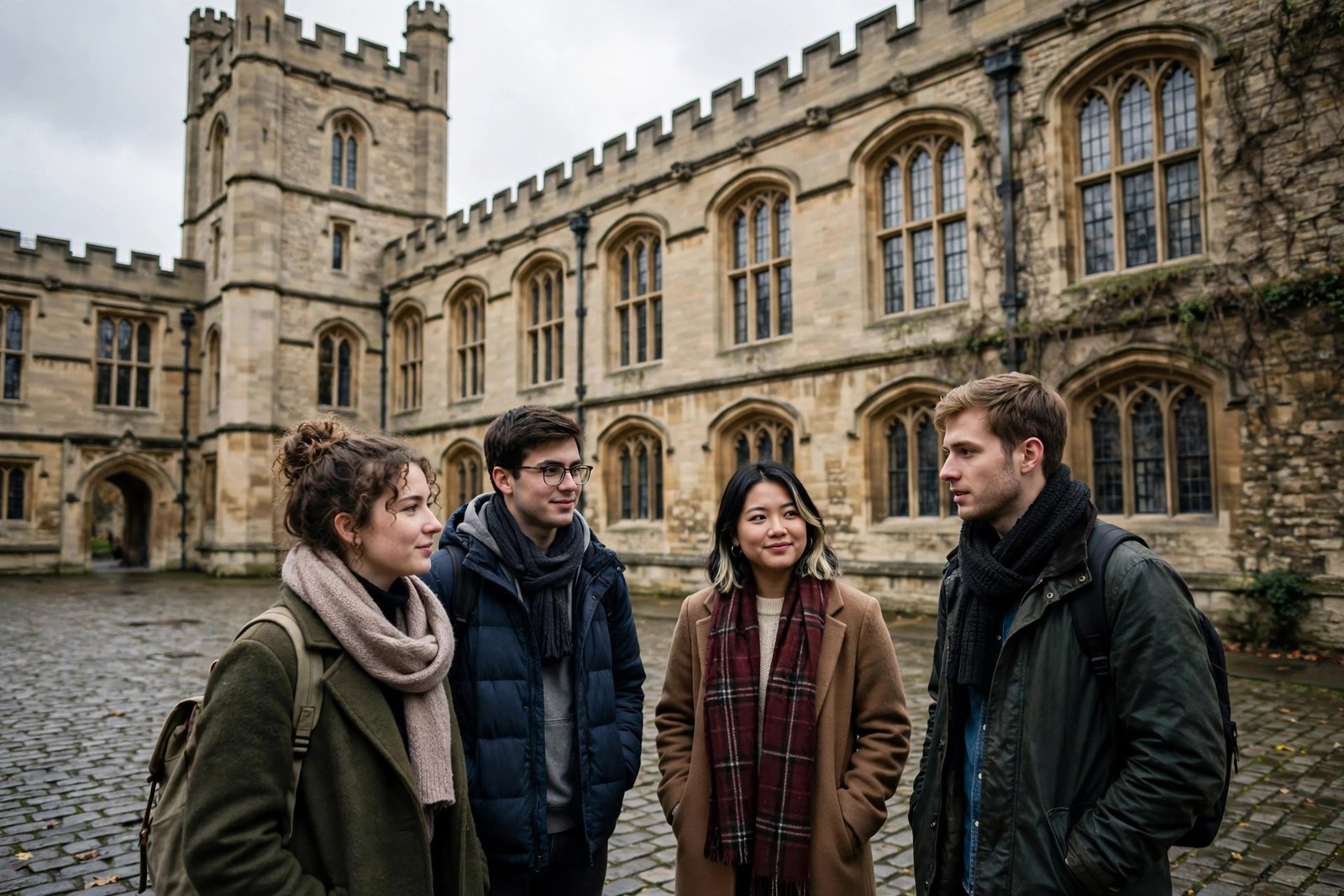
UK Scholarships at a Glance
| Scheme | Funder | Level | What it covers | Application window (2027/28 cycle) |
|---|---|---|---|---|
| Chevening Scholarship | UK Foreign, Commonwealth & Development Office (FCDO) and partners | One-year taught master’s | Full tuition (MBA fees capped), monthly stipend, return flights, visa cost, arrival/departure allowances, TB test contribution | Opened 4 August 2026; closed 6 October 2026, 11:00 UTC — results from mid-June 2027 for September/October 2027 start |
| Commonwealth Master’s Scholarships | Commonwealth Scholarship Commission (CSC), UK | Master’s (also PhD and Shared schemes) | Full tuition, approved airfare, monthly stipend, allowances under CSC terms | CSC system opened 8 September 2026; deadline 20 October 2026, 16:00 (UK time) — plus a separate nomination step |
| GREAT Scholarships | UK government’s GREAT Britain Campaign and British Council, with participating universities | One-year taught postgraduate courses | £10,000 towards tuition fees; 140+ scholarships at 60+ universities for 2026-27, for students from 18 listed countries | Set by each university — apply through the university’s own page |
| University scholarships | Individual UK universities | Undergraduate, master’s and PhD | Tuition discounts or fixed awards; research degrees may carry full studentships | Varies — often automatic on application or an early separate deadline |
| Prestigious university funds (e.g. Gates Cambridge, Clarendon at Oxford) | Trusts and the universities | Graduate study | Typically full-cost awards for a small number of outstanding scholars | Tied to the university’s graduate application deadlines, usually December–January |
Chevening Scholarship: The UK Government’s Flagship Award
Chevening is the UK government’s global scholarship programme, funded by the Foreign, Commonwealth & Development Office and partner organisations, and aimed at future leaders, influencers and decision-makers. It funds a one-year taught master’s degree at any UK university, in any subject, for citizens of Chevening-eligible countries and territories — a list that includes Bangladesh, India, Pakistan, Nepal, Nigeria and Indonesia among many others (always confirm your country on the official site, as eligibility lists are reviewed).
What Chevening covers
According to Chevening’s official guidance, the award covers university tuition fees (with a fee cap applying to MBA programmes — £22,000 in recent cycles), a monthly stipend for accommodation and living expenses (at a higher rate for London), economy return airfare to the UK, an arrival allowance and a homeward departure allowance, the cost of one visa application, the Immigration Health Surcharge is handled under the award terms, a travel top-up allowance, and up to £75 towards a tuberculosis test where one is required. It is, in short, designed so that a scholar needs almost no money of their own — but it does not fund dependants, and family members’ costs are yours to plan separately.
Chevening eligibility
- Be a citizen of a Chevening-eligible country or territory and intend to return home for at least two years after the award ends.
- Hold an undergraduate degree that enables entry to a UK postgraduate programme — and, under the current rules, have completed that degree at least two years before the application deadline.
- Have at least two years (2,800 hours) of work experience after your undergraduate degree. Paid work, part-time work, internships and voluntary work can count toward the hours, documented honestly.
- Apply to three different eligible UK university courses and hold an unconditional offer from at least one of them by the published deadline (8 July 2027 for the current cycle).
- Not have previously studied in the UK with a UK government-funded scholarship.
Chevening timeline for 2027/28 entry
Chevening publishes its calendar to the hour, and the 2027/28 cycle on the official Chevening application timeline ran as follows: applications opened 4 August 2026 at 11:00 UTC and closed 6 October 2026 at 11:00 UTC; eligibility sifting and reading committees ran from October 2026 to January 2027; interview shortlists were announced in mid-February 2027; interviews at British embassies and high commissions take place in March–April 2027; results are released from mid-June 2027; the deadline to hold an unconditional offer is 8 July 2027; and studies begin in September or October 2027. If you missed this cycle, the pattern is stable: prepare through the spring and summer, and expect the next window in August–October. Chevening assesses four things above all — leadership, networking, your reason for studying in the UK, and your career plan — each through a dedicated essay. Marks get you eligibility; the essays get you the interview.
Commonwealth Scholarships: For Students from Commonwealth Countries
The Commonwealth Scholarship Commission in the UK (CSC) awards scholarships to talented students from eligible low- and middle-income Commonwealth countries who could not otherwise afford UK study. For applicants from Bangladesh, India, Pakistan, Nigeria and other eligible Commonwealth nations, this is often the most relevant fully funded route after Chevening. The flagship schemes are the Commonwealth Master’s Scholarships, Commonwealth PhD Scholarships, and the Commonwealth Shared Scholarships (funded jointly with UK universities for specific courses).
Eligibility for Commonwealth Master’s Scholarships
- Be a citizen (or hold refugee status) of an eligible Commonwealth country and be permanently resident there.
- Hold, by the start of the UK academic year (September 2027 for the current cycle), a first degree of at least upper second-class (2:1) honours standard — or a second-class degree plus a relevant postgraduate qualification.
- Be unable to afford to study in the UK without the scholarship — financial need is a genuine criterion, assessed through the application.
- Not have studied or worked for one academic year or more in a high-income country.
- Align your study plan with one of the CSC’s development themes (which include science and technology for development, strengthening health systems, global prosperity, peace and governance, resilience and crisis response, and strengthening education systems) and show the development impact of your work back home.
- Apply both through the CSC’s official online system and through a nominating agency in your home country — for the 2027/28 Master’s round the CSC system opened on 8 September 2026 with a deadline of 20 October 2026 at 16:00 UK time, and nomination deadlines in your own country may be earlier.
What Commonwealth Scholarships cover
Under CSC terms, awards typically cover approved airfare to and from the UK, full tuition fees, a monthly stipend at rates the CSC publishes for each cycle (with a London supplement), a warm-clothing allowance where applicable, study travel and thesis grants, and child allowances in defined circumstances. The exact rates are set by the CSC for each round and published on its website — quote only the figure on the official page for your cycle, not a number from any blog. The selection criteria are published and threefold: academic merit, the quality of your study plan, and the potential development impact of your work on your home country.
GREAT Scholarships: £10,000 Towards a UK Master’s
GREAT Scholarships are jointly funded by the UK government’s GREAT Britain Campaign and the British Council together with participating UK universities. The official Study UK page confirms the shape of the programme: for the 2026-27 academic year, over 140 scholarships are offered by over 60 universities across England, Scotland, Wales and Northern Ireland, each worth £10,000 towards tuition fees for a wide range of one-year taught postgraduate courses. Eligible countries for 2026-27 are Bangladesh, China, Egypt, France, Ghana, Greece, India, Indonesia, Italy, Kenya, Malaysia, Mexico, Nigeria, Pakistan, Spain, Thailand, Turkey and Vietnam — a list that covers most of StudyGraduate’s core readership. You apply through the individual university (each runs its own deadline and selection, and you normally need an offer of a place first or in parallel), and the country pages on the Study UK (British Council) website list which universities offer awards to students from your country. GREAT scholars are also expected to act as ambassadors for UK education and attend programme networking events — a small commitment in exchange for a meaningful cut in your tuition bill.
Be clear-eyed about the maths: £10,000 is a substantial contribution, not full funding. International master’s tuition commonly runs well above that figure, and you will still need to evidence your living costs for the visa. GREAT works best stacked with a university’s own international scholarship where the rules allow combining awards — check with the university, because stacking policies differ — and as the centrepiece of a plan whose remaining funds are genuinely in place.

University Scholarships: Oxford, Cambridge, Imperial, Edinburgh, Manchester and Beyond
Every UK university that recruits internationally offers some form of award, and for most students this layer — not Chevening or Commonwealth — is where their funding will come from. The patterns to know:
- Prestigious full-cost graduate funds. The Gates Cambridge Scholarships (University of Cambridge) and the Clarendon Fund (University of Oxford) are examples of highly competitive full-cost graduate awards; you are usually considered automatically when you apply for the degree by the funding deadline in December or January. Competition is global and severe — apply, but never as your only plan.
- International excellence scholarships. Universities such as the University of Edinburgh and the University of Manchester run named international awards at undergraduate and master’s level, typically as fixed tuition reductions with set application rounds. Imperial College London offers a range of departmental and centrally funded scholarships, particularly at postgraduate level, alongside funded PhD studentships.
- Automatic country and merit discounts. Many universities publish automatic awards for students from specific countries or with specific grades. These are genuine money but modest — read whether they apply to the first year only or every year.
- PhD studentships. For research degrees, the real funding is the advertised studentship: tuition plus a stipend for three to four years, attached to a project or doctoral training programme. These are advertised like jobs, with closing dates — search university vacancy and studentship pages, not just scholarship pages.
The correct method is unglamorous: shortlist universities in the study abroad section and our UK rankings coverage, then read the fees-and-funding page of each one, noting deadlines and whether a separate scholarship application exists. Universities change award values annually, so the figure that matters is always the one on the official page for your entry year.
Eligibility: The Common Foundations
Across schemes, UK scholarship eligibility rests on the same pillars: an academic record that meets the course’s entry standard (a 2:1 or equivalent is the common scholarship threshold, with first-class-equivalent records expected for the most competitive funds); English language proficiency at the level your university sets — proven by an approved test or, at degree level, by the university’s own assessment route where it offers one; an offer of a place, either before the scholarship decision or as a parallel condition (Chevening and Commonwealth both build the university-offer stage into their calendars); and scheme-specific conditions — citizenship and return-home commitment for Chevening, Commonwealth citizenship, residency, need and development impact for the CSC, nationality lists for GREAT. Undergraduates should note that the big government awards are postgraduate schemes: school-leavers rely on university undergraduate scholarships, which are partial almost everywhere in the UK.
Benefits Comparison
| Benefit | Chevening | Commonwealth (CSC) | GREAT | Typical university award |
|---|---|---|---|---|
| Tuition | Full (MBA capped) | Full | £10,000 contribution | Partial reduction |
| Living stipend | Yes — monthly, London-weighted | Yes — monthly rate set by CSC per cycle, London supplement | No | Usually no (except PhD studentships) |
| Flights | Return economy airfare | Approved airfare to and from the UK | No | No |
| Visa and health surcharge | Visa cost covered; allowances per official terms | Covered under CSC terms | No — budget yourself | No |
| Extra allowances | Arrival, departure, travel top-up, TB test up to £75 | Warm clothing, study travel, thesis grant (scheme-dependent) | Networking events and ambassador role | Varies |
| Return-home condition | Yes — at least 2 years | Development-impact focus; terms per scheme | No | No |
How to Apply: Step by Step
- Choose your schemes and courses together (spring–summer). Chevening needs three course choices; Commonwealth needs a development-aligned study plan; GREAT needs a participating university. One longlist serves all three.
- Apply for Chevening in its window (August to early October) through the official online system — essays first, offers later.
- Apply for Commonwealth through both channels: the CSC online system and your national nominating agency, respecting whichever deadline is earlier.
- Apply to the universities themselves through their own portals (or UCAS for undergraduate courses), in time for funding deadlines — December–January for Oxford/Cambridge graduate funds, varying dates elsewhere.
- Apply for GREAT and university scholarships on each university’s own timetable, usually after or alongside your course application.
- Attend interviews if shortlisted (Chevening interviews run March–April at British embassies and high commissions) and secure your unconditional offer by the scheme’s deadline (8 July 2027 for Chevening).
- Receive your CAS (Confirmation of Acceptance for Studies) from your university once your place and funding are confirmed, then apply for the Student visa.
Required Documents
- Valid passport and national ID
- Degree certificates and full transcripts (with certified translations if not in English)
- English language evidence at your university’s required level
- Personal statement and, for Chevening, the four application essays (leadership, networking, studying in the UK, career plan); for the CSC, a study plan and development-impact statement
- Two references — academic or professional, scheme rules specify which
- Work-experience evidence for Chevening’s 2,800-hour requirement
- University offer letters as your applications progress
- Financial evidence for the visa (see below), TB test certificate if you are applying from a listed country, and ATAS certificate if your course requires one
The Student Visa and Proof of Funds
Your scholarship and your visa meet at the financial requirement. Under the rules published on GOV.UK’s Student visa pages, applicants must show any unpaid first-year tuition plus living costs of £1,529 per month if the course is in London or £1,171 per month outside London, for up to nine months — and the money must have been held for 28 consecutive days, ending within 31 days of the application. These rates were reported to rise to £1,570 (London) and £1,203 (outside London) for applications from 30 November 2026, so always work from the current GOV.UK figures at the moment you apply, not from any article. If you hold an official scholarship, your award letter or CAS notation evidences the sponsored portion; you must still evidence any shortfall yourself. Chevening and Commonwealth scholars are sponsored students, and their award documentation is designed to satisfy this requirement for the covered amounts. You will also pay the visa application fee and the Immigration Health Surcharge as part of the application unless your award’s terms cover them — check GOV.UK for current fees. The Graduate visa, which allows most successful students to stay and work after their course, is a separate post-study application with its own fee and rules; treat it as a bonus in your planning, never as funding.
Deadlines and Timeline for 2026/2027
| Date | Milestone |
|---|---|
| 4 August 2026 | Chevening applications opened (11:00 UTC) |
| 8 September 2026 | Commonwealth Master’s Scholarships — CSC online system opened |
| 6 October 2026 | Chevening applications closed (11:00 UTC) |
| 20 October 2026 | Commonwealth Master’s deadline in the CSC system (16:00 UK time); national nomination deadlines may be earlier |
| December 2026 – January 2027 | Oxford and Cambridge graduate funding deadlines (Gates Cambridge, Clarendon and similar funds); many university scholarship rounds |
| Mid-February 2027 | Chevening interview shortlist announced |
| March – April 2027 | Chevening interviews at British embassies and high commissions |
| From mid-June 2027 | Chevening results announced |
| 8 July 2027 | Chevening deadline to hold an unconditional offer (17:00 UK time) |
| September – October 2027 | Courses begin across the UK |
GREAT Scholarships and university awards run on each university’s own dates, mostly in the first half of 2027 for autumn entry — another reason the university funding pages belong on your weekly reading list. Use the deadline and budget tools on StudyGraduate to keep every date in one place.
Common Mistakes
- Applying to only one scheme. Chevening, Commonwealth, GREAT and university awards have overlapping calendars — run them in parallel.
- Missing the nomination step for Commonwealth Scholarships, or discovering your country’s nomination deadline was earlier than the CSC’s.
- Weak Chevening essays that describe job titles instead of leadership results, or a career plan with no home-country logic.
- Choosing three Chevening courses carelessly — they must be eligible, full-time, and courses you would genuinely accept.
- Breaking the 28-day funds rule: a balance dipping below the required amount for even one day restarts the clock.
- Assuming £10,000 GREAT funding covers the visa requirement. It covers part of tuition only; the rest of your evidence must be real and in place.
- Paying an agent who “guarantees” Chevening. Chevening itself states that applying is free and no third party can secure an award.
Frequently Asked Questions
What is the best fully funded scholarship for the UK in 2026/2027?
For a one-year master’s, Chevening and the Commonwealth Scholarships are the two flagship fully funded routes: both cover tuition, airfare and a monthly stipend under their terms. Chevening suits experienced professionals (it requires 2,800 hours of work experience and a two-year return-home commitment); Commonwealth awards suit citizens of eligible Commonwealth countries who can show financial need and a development-impact plan. Prestigious university funds such as Gates Cambridge and Clarendon are also full-cost but far smaller in number.
When do Chevening applications open and close?
For the 2027/28 cycle, applications opened on 4 August 2026 and closed on 6 October 2026 at 11:00 UTC, with interviews in March–April 2027, results from mid-June 2027, and an unconditional-offer deadline of 8 July 2027. The cycle repeats annually on a similar August–October pattern; confirm the next window on chevening.org.
How much is a GREAT Scholarship worth?
£10,000 towards tuition fees for a one-year taught postgraduate course. For 2026-27 the British Council lists over 140 scholarships at over 60 UK universities for students from 18 countries, including Bangladesh, India, Pakistan, Nigeria and Indonesia. It is a contribution, not full funding — you must fund the remaining tuition and your living costs.
Can undergraduates get UK scholarships?
Yes, but mainly university-level awards: international excellence scholarships and automatic merit or country discounts, which are almost always partial. The major government schemes in this guide (Chevening, Commonwealth, GREAT) are postgraduate programmes. Undergraduates apply to universities through UCAS and should read each university’s undergraduate funding pages carefully.
How much money do I need to show for the UK Student visa?
Any unpaid first-year tuition plus living costs — £1,529 per month for courses in London or £1,171 per month outside London, for up to nine months — held for 28 consecutive days ending within 31 days of your application. Rates were reported to increase for applications from 30 November 2026, so verify the current figures on GOV.UK before you apply. Scholarship holders evidence the sponsored portion with their award letter or CAS and must cover any shortfall themselves.
Do I need IELTS for UK scholarships?
You need to meet your university’s English requirement, which the scholarship then relies on. Chevening sets no English test of its own — you must satisfy the university, whose approved routes are set out on its admissions pages and within the Student visa rules (including Secure English Language Tests where required). Check both the university’s and GOV.UK’s current requirements for your course level.
Can I stay and work in the UK after my scholarship?
Most graduates can apply for the Graduate visa to stay and work after successfully completing their course, subject to the rules and fees in force at the time. Note the exception built into Chevening: scholars commit to returning home for at least two years after the award, and that commitment is a condition of the scholarship. Never plan around immigration outcomes — plan around the terms you sign.
Are UK scholarships taxable or repayable?
Scholarships for study are generally not repayable and UK scholarship income for full-time study is not treated like employment income, but conditions attach to each award (progress, attendance, and for government schemes, return or service commitments). Read your award letter’s terms in full — breaching conditions can end funding.
Sources & Verification
- Chevening — official application timeline and eligibility/coverage guidance: chevening.org
- Commonwealth Scholarship Commission — Commonwealth Master’s Scholarships official page (eligibility, nomination, 20 October 2026 deadline): cscuk.fcdo.gov.uk
- British Council, Study UK — GREAT Scholarships official programme page (£10,000 awards; 140+ scholarships at 60+ universities for 2026-27; eligible countries): study-uk.britishcouncil.org
- GOV.UK — Student visa overview, money requirements and the 28-day rule: gov.uk/student-visa
Disclaimer: Scholarship amounts, stipend rates, eligibility rules and deadlines change every cycle. Always confirm the current details on the official scholarship and GOV.UK websites before applying. StudyGraduate is an information portal, not an agency or a university — we never promise selection, admission, scholarship awards or visa approval.
✅ Eligibility Criteria
- Check the official website for full eligibility criteria for your country
🎁 Benefits
- See the official website for the complete list of benefits
⚙️ Application Process
- 1Check your eligibility on the official site
- 2Prepare your documents and statements
- 3Submit the online application before the deadline
- 4Complete interviews or assessments if shortlisted
- 5Await the final selection announcement
📅 Important Dates
Deadlines vary by country and intake. Check the official website for country-specific dates.
📄 Required Documents
- Valid passport
- Academic transcripts & certificates
- Statement of purpose
- Letters of recommendation
- CV / resume
Commonly required — confirm the exact list on the official site.
❓ Frequently Asked Questions

Ready to Take the Next Step?
Explore more scholarships and study opportunities around the world.
Browse Scholarships →