Scholarships for Bangladeshi Students in Hungary 2026/2027
Scholarships for Bangladeshi Students in Hungary 2026/2027 Hungary runs one of Europe’s largest government scholarship schemes, and Bangladesh is one of its partner countries. The Stipendium Hungaricum Scholarship, funded by the Hungarian Government and managed by the Tempus Public Foundation, offers Bangladeshi citizens tuition-free bachelor’s, master’s, one-tier master’s and doctoral study at Hungarian universities, with ... <a title="Scholarships for Bangladeshi Students in Hungary 2026/2027" class="read-more" href="https://studygraduate.com/scholarship/scholarships-for-bangladeshi-students-in-hungary-2026-2027/" aria-label="Read more about Scholarships for Bangladeshi Students in Hungary 2026/2027">Read more</a>
📖 Overview
Scholarships for Bangladeshi Students in Hungary 2026/2027
Hungary runs one of Europe’s largest government scholarship schemes, and Bangladesh is one of its partner countries. The Stipendium Hungaricum Scholarship, funded by the Hungarian Government and managed by the Tempus Public Foundation, offers Bangladeshi citizens tuition-free bachelor’s, master’s, one-tier master’s and doctoral study at Hungarian universities, with a monthly stipend, a dormitory place or a housing contribution, and medical insurance. For a Bangladeshi student it has one defining feature that separates it from most scholarships in this series: you cannot win it on the Hungarian application alone. Every applicant must also be nominated by Bangladesh’s Sending Partner — the Secondary and Higher Education Division of the Ministry of Education — and that nomination step, with its own parallel application in Bangladesh, is where unprepared applicants quietly fall out of the process. This guide explains the whole route specifically for Bangladeshi citizens targeting the 2026/2027 cycles: the exact stipend figures in the official call, what the scholarship honestly does and does not pay for, the two-programme application rule, the mid-January deadline, and the document and attestation preparation that Bangladeshi files require.
Hungary’s appeal is concrete. It is a European Union degree at no tuition cost, in a country whose universities — Eötvös Loránd University (ELTE), the Budapest University of Technology and Economics (BME), Semmelweis University for medicine, and the universities of Debrecen, Szeged and Pécs — teach a large catalogue in English and have hosted Bangladeshi students for years through this very program. Living costs outside Budapest are moderate by European standards. But honesty matters more than marketing here: the Stipendium Hungaricum stipend at bachelor’s and master’s level is officially described as a contribution to living costs, not full maintenance, and the scholarship does not pay your travel to Hungary. A Bangladeshi family planning this route well plans a modest personal budget alongside the award — and this guide will show you the real figures so you can do exactly that.
Use this guide with the wider StudyGraduate resources: browse the scholarships directory, weigh Hungary against other destinations in the study abroad section, and read the companion overview, Scholarships in Hungary for International Students 2026/2027. Bangladeshi readers comparing European government routes should also see our guides to scholarships for Bangladeshi students in Germany, scholarships for Bangladeshi students in Turkey and scholarships for Bangladeshi students in Europe.

Stipendium Hungaricum for Bangladeshi Students at a Glance
| Item | Detail (official call figures) |
|---|---|
| Program | Stipendium Hungaricum Scholarship — Hungarian Government, managed by Tempus Public Foundation |
| Levels | Bachelor’s, master’s, one-tier master’s (e.g. general medicine, dentistry, pharmacy, architecture, veterinary medicine), doctoral (PhD), plus non-degree preparatory and postgraduate specialist options in the calls |
| Tuition | Tuition-free education for the full program |
| Monthly stipend | HUF 43,700 at non-degree, bachelor’s, master’s and one-tier master’s level; doctoral level HUF 140,000 per month in the first phase (first 4 semesters) and HUF 180,000 per month in the second phase, for 12 months a year until completion |
| Accommodation | Free dormitory place (subject to capacity) or a housing contribution of HUF 40,000 per month |
| Medical cover | Medical insurance under Hungarian legislation, plus supplementary medical insurance up to HUF 65,000 per year |
| Travel | NOT covered — scholars fund their own travel to and from Hungary |
| Bangladesh route | Online application in the Tempus system AND nomination by the Sending Partner: Secondary and Higher Education Division, Ministry of Education, Bangladesh |
| Deadline pattern | Mid-January — the 2026/27 call closed 15 January 2026 at 14:00 CET; nominations by the end of February |
Read the travel and stipend rows twice. Stipendium Hungaricum is routinely marketed online as “fully funded,” and in the sense that tuition, housing support, insurance and a stipend are all provided, that is fair. But Tempus itself frames the bachelor’s and master’s stipend of HUF 43,700 per month (roughly €110) as a contribution, and in Budapest that contribution covers only part of a student’s real monthly spending. Doctoral scholars, at HUF 140,000 rising to HUF 180,000 per month plus a one-off doctoral grant of HUF 400,000 under the call provisions, are in a materially stronger position. Bangladeshi applicants should budget for the gap honestly — through family support, savings or lawful part-time work after arrival — rather than discovering it in their first Hungarian winter.
Eligibility: The Rules for Bangladeshi Citizens
Bangladesh is a Stipendium Hungaricum partner country, so Bangladeshi citizens are eligible to apply — through Bangladesh’s Sending Partner only. You must hold the citizenship of your Sending Partner’s country; a Bangladeshi citizen cannot apply through another country’s nomination. You must be at least 18 years old by 31 August of the year your studies start. Hungarian citizens, including dual citizens holding Hungarian citizenship, are excluded, as are refugees and certain other statuses named in the call — the call text governs. Unlike some Sending Partners, which impose their own maximum ages and grade floors, the Hungarian side sets no general maximum age; Bangladesh’s Ministry of Education circular for the cycle may, however, add conditions, deadlines and document requirements of its own, and those bind Bangladeshi applicants just as firmly as the Hungarian call does. Read both documents every cycle.
Academically, you need the qualification for your level: HSC or equivalent for bachelor’s and one-tier master’s applications, a bachelor’s degree for master’s applications, and a master’s degree for doctoral applications, with applicants in their final year able to apply under the call’s conditions on producing the certificate by the stated date. The study fields and programs actually open to Bangladeshi applicants are the ones listed for Bangladesh in the online application system for that cycle — partnership agreements differ by country, so a program visible to another nationality may not be open to you. Language follows the program: English-taught programs require the English level the host institution sets (commonly around B2, evidenced as the institution requires), Hungarian-taught programs require Hungarian, and all scholarship holders must attend a Hungarian as a Foreign Language course in their first year under the program rules. Doctoral applicants additionally submit a research plan and need a prospective supervisor’s support as the separate doctoral call requires — note that doctoral studies have their own call for applications, and you cannot apply for a PhD and another level in the same round.
What the Scholarship Pays — in Full, and What It Leaves to You
The funded package, as set out in the official call, is: exemption from tuition fees for the whole program; the monthly stipend above, paid for 12 months a year until completion of studies; a free dormitory place where capacity allows or HUF 40,000 per month toward private accommodation; medical services under Hungarian social security legislation for scholarship holders plus supplementary insurance up to HUF 65,000 a year; and, for doctoral scholars, the higher phased stipend described above. A one-year Hungarian preparatory course exists within the program structure for applicants choosing Hungarian-taught study without the language, under the call’s terms.
What is not funded deserves equal clarity: international travel to and from Hungary is the scholar’s own cost; visa and residence permit administration, document attestation and translation in Bangladesh, and personal living costs above the stipend and housing contribution are yours; and the housing contribution will not cover full private rent in Budapest, as the program itself warns. Regional university cities — Debrecen, Szeged, Pécs, Miskolc, Győr — stretch the same package considerably further than the capital, which is a rational factor in programme choice, not a compromise to be embarrassed about. Model your city with the budget and cost-of-living tools before you rank your two choices.
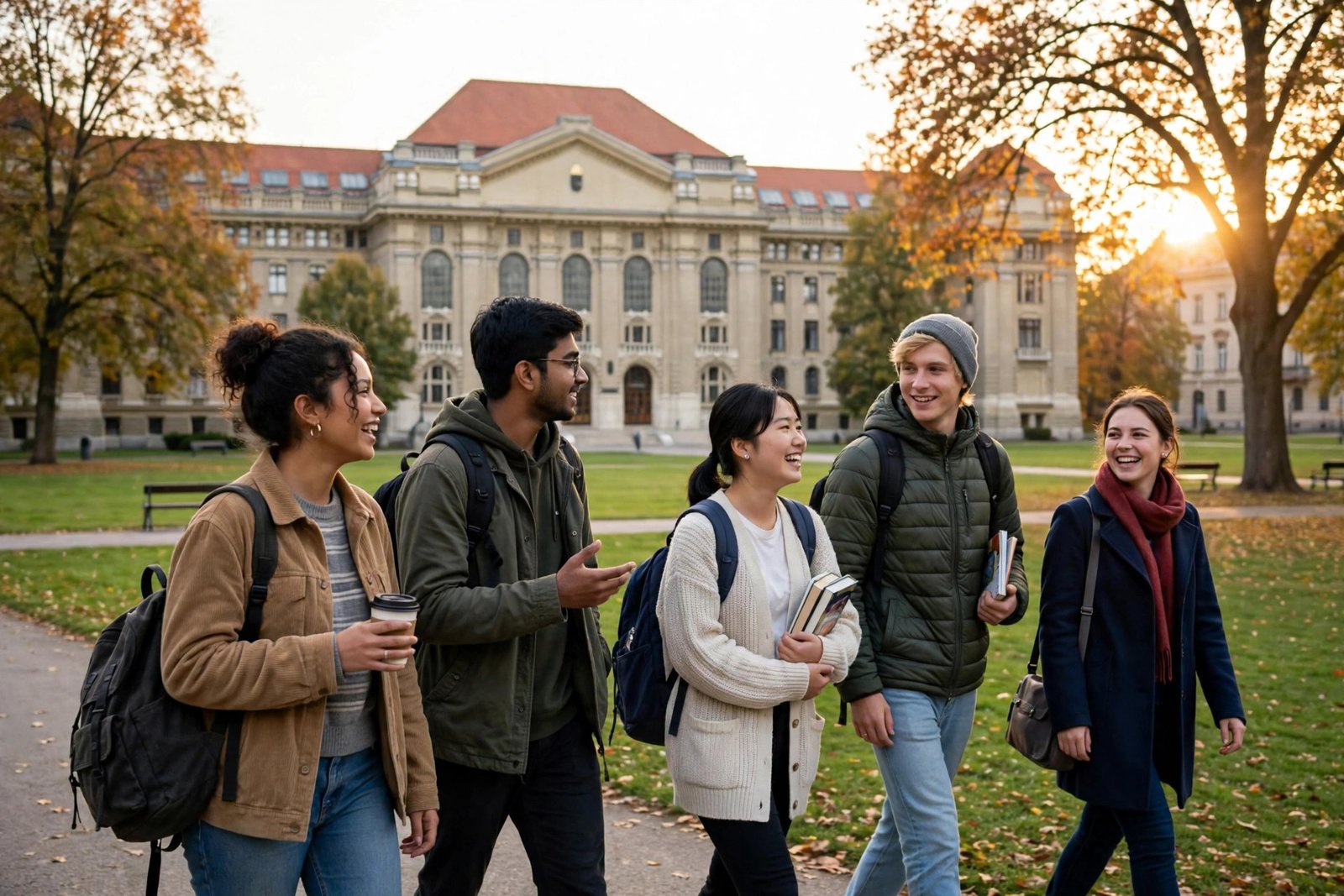
The Two Applications: Tempus Portal and Bangladeshi Nomination
Every Bangladeshi applicant must complete two connected processes. The first is the Hungarian application: register in the online application system at apply.stipendiumhungaricum.hu, complete your profile, choose up to two study programs in order of preference, and upload the documents the call requires before the deadline — 15 January, 14:00 CET, in the 2026/27 call, with the 2027/28 call expected to follow the same mid-January pattern when it opens in the autumn. Your two choices are locked at the deadline and cannot be increased or rearranged afterwards, so choose programs you genuinely meet the entry requirements for, in an order you would actually accept.
The second process is the Bangladeshi nomination. Bangladesh’s Sending Partner is the Secondary and Higher Education Division of the Ministry of Education, and Bangladeshi applicants must complete the parallel application or submission the Ministry requires for that cycle — in recent cycles this has meant a separate application to the Ministry alongside the Tempus submission, with its own instructions and a deadline aligned to the Tempus deadline. Only applicants the Sending Partner nominates — nominations go to Tempus by the end of February in the standard timeline — proceed to the Hungarian universities’ entrance examinations and interviews. Missing the Ministry step invalidates an otherwise perfect Tempus application, and missing the Tempus step leaves the Ministry nothing to nominate. Treat “dual application” as the single most important phrase in this guide. Our step-by-step companion, Stipendium Hungaricum Scholarship 2027 in Hungary, walks through the call in program-wide detail.
How to Apply: Step by Step for Bangladeshi Students
Step 1 — Read both calls. When the cycle opens (the portal and call documents are published in the autumn, with the program system opening in mid-November in recent cycles), download the call for applications for your level — bachelor’s/master’s/one-tier master’s and doctoral studies have separate calls — and find Bangladesh’s Sending Partner information and the Ministry of Education’s Bangladeshi circular for the year.
Step 2 — Choose up to two programs. Use the study finder in the application system, filtering for programs open to Bangladeshi applicants, and check each program’s entry requirements, language requirement and entrance examination format on the host university’s own pages. Medicine and other health programs at Debrecen, Szeged, Pécs and Semmelweis carry entrance examinations in biology and chemistry (and sometimes English or mathematics, depending on the program) — know what you are volunteering for before you rank them.
Step 3 — Prepare your documents in Bangladesh. Gather the call’s document set (listed in the next section) and arrange any translations and attestations early. Although the online application accepts uploads by the January deadline, the visa stage later requires a properly attested set — board or university attestation, then the Ministry of Education, then the Ministry of Foreign Affairs in Dhaka is the standard legalization chain described for Bangladeshi academic documents — so building the attested set during application season saves a crisis in July.
Step 4 — Submit in the Tempus system before the deadline. Complete and submit at apply.stipendiumhungaricum.hu well before 14:00 CET on the deadline day; the system is strict, the deadline is Central European Time — evening in Dhaka — and last-hour submissions collide with thousands of applicants worldwide.
Step 5 — Complete the Bangladeshi Sending Partner application. Submit the parallel application the Ministry of Education requires, exactly as its circular instructs and by its stated deadline. Keep proof of both submissions.
Step 6 — Pass the technical check and win nomination. Tempus checks applications for formal completeness and the Sending Partner nominates by the end of February. Only nominated applications reach the universities.
Step 7 — Sit the university entrance examinations or interviews. Between March and May, host institutions examine or interview nominated applicants — online for most Bangladeshi candidates — and rank them. Doctoral applicants are assessed on their research plan and supervisor fit.
Step 8 — Receive the decision and prepare to travel. Final allocation results are announced in June–July. Successful scholars accept the award in the system, submit the required medical certificate (which must be issued no earlier than the date the call specifies — 1 November of the application year in the 2026/27 call), apply for the D-type student visa through the Hungarian visa process in Bangladesh, and arrive for enrolment by the end of September.
Required Documents for Bangladeshi Applicants
The call’s checklist is authoritative, but Bangladeshi applicants should expect: online application form data; a motivation letter written to the call’s guidance; proof of language proficiency as your chosen institutions require; school-leaving or degree certificates and transcripts of records — for Bangladesh, HSC and SSC documents at bachelor’s level, bachelor’s and master’s certificates and transcripts at graduate level; a copy of your passport (or national ID where the call permits applicants without a passport yet); a medical certificate of satisfactory health on the program’s terms, dated within the validity window the call sets; for doctoral applicants, a research plan and two recommendation or supervisor-support documents as the doctoral call specifies; and any portfolio or program-specific material for arts and similar fields. Upload clean, complete scans in the required formats. Documents issued in Bengali need the translations the call and the institutions accept, and names must be identical across passport, certificates and the application — a familiar Bangladeshi problem that should be corrected with the board or university before January, not explained in the motivation letter.
Deadlines and Timeline
| Stage | Timing (2026/27 call pattern) |
|---|---|
| Call published, application system opens | Autumn — mid-November in recent cycles |
| Online application deadline | 15 January, 14:00 CET (15 January 2026 for the 2026/27 call; expect mid-January for 2027/28) |
| Sending Partner nominations due | By the end of February (28 February 2026 in the last call) |
| University entrance examinations and interviews | March–May |
| Final selection results | June–July |
| Medical certificate, visa application | July–August, after acceptance |
| Arrival and enrolment | By 30 September, for the September start |
The Bangladeshi Ministry of Education’s own deadline for its parallel application may be the same as or earlier than the Tempus deadline — in the most recent published partner information, Bangladesh’s sending-partner deadline matched the Tempus deadline — but treat the Ministry circular for your cycle as binding and never assume the two dates are identical. All times for the Tempus system are Central European Time.
Selection Tips: Competing Well from Bangladesh
Bangladesh sends a large applicant pool, and selection happens in two filters: the Ministry’s nomination and the Hungarian universities’ examinations. Write for both audiences. Your motivation letter should do specific work — why this program, why Hungary, what preparation you bring, and a credible post-degree purpose connected to Bangladesh — in your own words; Hungarian universities interview against this letter, and an inflated or borrowed text collapses under two questions. For examination programs, prepare for the actual exam: Debrecen’s and Semmelweis’s published entrance topics are the syllabus, and Bangladeshi HSC science preparation is a genuine foundation if you revise to the universities’ topic lists rather than generally. Choose your two programs like an adult: two realistic choices you qualify for beat one dream and one random filler, because the second choice is frequently where Bangladeshi scholars are actually placed. Doctoral applicants should contact prospective supervisors early with a focused research plan — supervisor support is structural in the doctoral call, not a courtesy. Finally, keep the finances honest in your planning conversation at home: tuition-free plus HUF 43,700 a month plus housing support is a strong package outside Budapest and a partial one inside it, and the students who thrive are those whose families understood that arithmetic before January, not after June.
Common Mistakes Bangladeshi Applicants Make
The defining mistake is completing only one of the two applications — Tempus without the Ministry, or the Ministry without Tempus — and discovering in March that the file never existed on one side. The second is missing the 14:00 CET cut-off by treating the deadline as a Dhaka evening free-for-all; the system closes on Hungarian time. Third is choosing programs Bangladesh is not eligible for in that cycle, or programs whose entry requirements the applicant does not meet, and wasting both choices. Fourth is the expired-document pattern familiar across this series: a medical certificate dated before the call’s permitted window, or certificates whose names do not match the passport. Fifth is believing “fully funded” means no personal money is needed — travel to Hungary is not covered and the bachelor’s/master’s stipend is a contribution, so arriving with no reserve is a genuine hardship risk. Sixth is paying an agency: the application is free of charge, no third party is authorized to represent the program, and no agent can manufacture a Ministry nomination or a Tempus allocation. If help is offered for a fee with a guaranteed seat, it is not help.
Studying and Living in Hungary as a Bangladeshi Student
A word on life after the award letter, because Bangladeshi scholars plan better when the destination is concrete. Hungary’s academic year begins in September, and Stipendium Hungaricum scholars must complete the program’s Hungarian language course in their first year even when their degree is taught in English — treat that as an asset rather than an obligation, since everyday Hungarian transforms part-time job prospects, bureaucracy and social life outside the international bubble. Budapest concentrates the largest Bangladeshi community in Hungary, with halal food, mosques and Bangladeshi shops readily available; Debrecen, Szeged and Pécs have smaller but established international and Muslim student communities centred on their universities, and scholarship holders there consistently report that the stipend and housing contribution go further than in the capital. Student part-time work is possible within the limits of Hungarian residence rules for students, and many scholars supplement their budgets that way after the first semester — but work is found after arrival, not guaranteed in advance, so it belongs in the “helps later” column of your budget, never in the “pays for the flight” column. Winters are cold by Bangladeshi standards and the first semester carries one-off costs — winter clothing, deposits, residence administration — that exceed a normal month; arriving with a reserve for those first ninety days is the single most common piece of financial advice returning scholars give. None of this diminishes the award. It is simply the difference between a family that planned Hungary as it is and one that planned the Hungary of a scholarship advertisement.
Frequently Asked Questions
Is Stipendium Hungaricum open to Bangladeshi students?
Yes. Bangladesh is a Stipendium Hungaricum partner country, and Bangladeshi citizens may apply for bachelor’s, master’s, one-tier master’s and doctoral programs listed for Bangladesh in the application system — provided they are nominated by Bangladesh’s Sending Partner, the Secondary and Higher Education Division of the Ministry of Education.
How much is the Stipendium Hungaricum stipend?
Under the official call figures: HUF 43,700 per month at bachelor’s, master’s, one-tier master’s and non-degree level; HUF 140,000 per month for doctoral students in the first phase and HUF 180,000 in the second — plus a free dormitory place or a housing contribution of HUF 40,000 per month, tuition-free study, and medical cover with supplementary insurance up to HUF 65,000 per year.
Does Stipendium Hungaricum pay for my flight from Bangladesh?
No. Travel to and from Hungary is not covered by the scholarship in the official call, and scholars arrange and fund their own travel. Budget for the Dhaka–Budapest journey yourself, and note that the stipend is officially a contribution to living costs — some personal or family funds are needed, especially in Budapest.
Why do Bangladeshi applicants need to apply twice?
Because the program runs on nominations. The Tempus online application at apply.stipendiumhungaricum.hu is the Hungarian side; the parallel application to the Ministry of Education is the Bangladeshi side that leads to nomination. Without the Sending Partner’s nomination your application does not reach the Hungarian universities, whatever its quality. Both steps are mandatory.
How many programs can I choose, and can I change them?
You may choose up to two study programs, ranked in order of preference, in the online system. Choices lock at the application deadline in mid-January and cannot be increased or rearranged afterwards, so verify entry requirements and your eligibility for each program before submitting.
Do I need IELTS for Stipendium Hungaricum?
The program does not set one universal IELTS score; the host institution sets the language requirement for each program, commonly around B2 English for English-taught study, evidenced in the way the institution specifies. Some institutions test English within their entrance process. Check your two chosen programs’ own pages rather than relying on a program-wide claim — in either direction.
When is the Stipendium Hungaricum deadline for the 2027 intake?
The annual pattern is mid-January: the 2026/27 call closed on 15 January 2026 at 14:00 CET, with Sending Partner nominations by the end of February, entrance examinations from March to May and results in June–July. The 2027/28 call is expected to open in the autumn of 2026 on the same pattern — confirm the exact date and time on stipendiumhungaricum.hu and in the Bangladeshi Ministry’s circular.
Can I study medicine in Hungary on Stipendium Hungaricum?
Yes, where the Bangladesh program list for the cycle includes it: general medicine, dentistry and pharmacy are offered as one-tier master’s programs at universities including Debrecen, Szeged, Pécs and Semmelweis, subject to entrance examinations in the sciences. Competition is strong and the examinations are real — check the current cycle’s list and each university’s exam topics before choosing medicine as one of your two programs.
Sources & Verification
This article was prepared from official sources checked at the time of writing: the Stipendium Hungaricum official website and calls for applications published by the Tempus Public Foundation, including the stipend, housing contribution, insurance, deadline and nomination provisions of the 2026/27 call, and the program’s Sending Partner information identifying Bangladesh’s partner as the Secondary and Higher Education Division, Ministry of Education. Amounts, eligible fields and deadlines are set per cycle, so confirm every detail in the current call and the Bangladeshi Ministry’s circular before applying.
Disclaimer: StudyGraduate is an information portal, not an agency and not a part of the Hungarian Government, the Tempus Public Foundation, the Government of Bangladesh or any university. We cannot nominate, select or influence any applicant, and nothing in this article promises selection, admission or visa approval. The final authority for every rule in this guide is the current official Stipendium Hungaricum call for your level and the Bangladeshi Sending Partner’s instructions for your cycle.
✅ Eligibility Criteria
- Check the official website for full eligibility criteria for your country
🎁 Benefits
- See the official website for the complete list of benefits
⚙️ Application Process
- 1Check your eligibility on the official site
- 2Prepare your documents and statements
- 3Submit the online application before the deadline
- 4Complete interviews or assessments if shortlisted
- 5Await the final selection announcement
📅 Important Dates
Deadlines vary by country and intake. Check the official website for country-specific dates.
📄 Required Documents
- Valid passport
- Academic transcripts & certificates
- Statement of purpose
- Letters of recommendation
- CV / resume
Commonly required — confirm the exact list on the official site.
❓ Frequently Asked Questions

Ready to Take the Next Step?
Explore more scholarships and study opportunities around the world.
Browse Scholarships →