PhD Scholarships in USA for International Students 2026/2027
PhD Scholarships in USA for International Students A doctorate in the United States is funded differently from almost every other degree — and understanding that difference is the key to affording one. For a bachelor’s or a taught master’s degree, international students usually hunt for a scholarship to set against tuition. For a research PhD ... <a title="PhD Scholarships in USA for International Students 2026/2027" class="read-more" href="https://studygraduate.com/scholarship/phd-scholarships-in-usa-for-international-students-2026-2027/" aria-label="Read more about PhD Scholarships in USA for International Students 2026/2027">Read more</a>
📖 Overview
PhD Scholarships in USA for International Students
A doctorate in the United States is funded differently from almost every other degree — and understanding that difference is the key to affording one. For a bachelor’s or a taught master’s degree, international students usually hunt for a scholarship to set against tuition. For a research PhD at a strong American research university, the funding is often built into the admission offer itself: you are admitted not simply as a student who pays, but as a junior researcher and teacher whom the department invests in. The package typically combines a tuition waiver, a living stipend paid over the academic year (and sometimes the summer), and student health insurance, delivered through a mix of research assistantships, teaching assistantships and fellowships. That is the honest version of the phrase “fully funded PhD” — it is real, it is common at research universities in many fields, and it is never a promise that applies to every department, every university or every applicant.
This guide explains how PhD funding in the USA actually works for international students planning applications for the 2026/2027 cycle: what a funded offer contains, who is eligible, how research assistantships and teaching assistantships differ from fellowships, where Fulbright fits for doctoral applicants, which well-known fellowships are not open to international students, how to apply step by step, what documents departments expect, and how the timeline runs. It is written for applicants from countries including Bangladesh, India, Pakistan, Nepal, Nigeria and Indonesia, and it avoids the two errors that dominate poor-quality PhD advice online: treating funding as a separate scholarship you apply for after admission at universities where funding is decided with admission, and quoting stipend figures as if a single national amount exists. Stipends vary by university, by field and by the cost of living of the city — a stipend that is comfortable in a small college town may be tight in a major coastal city, and the only figure that matters is the one in your offer letter from that department.
Use this article alongside the StudyGraduate universities directory to identify research universities, the rankings section to understand research strength (while remembering that for a PhD, the specific department and supervisor matter more than a whole-university rank), and the scholarships directory for named awards. Profiles of research universities discussed in doctoral contexts, such as Harvard University, Stanford University, Princeton University, Yale University and Columbia University, are a starting point for research, not a complete list of funded programmes — excellent funded PhDs exist at public research universities across the United States, often in departments that are world-leading in a specific field.
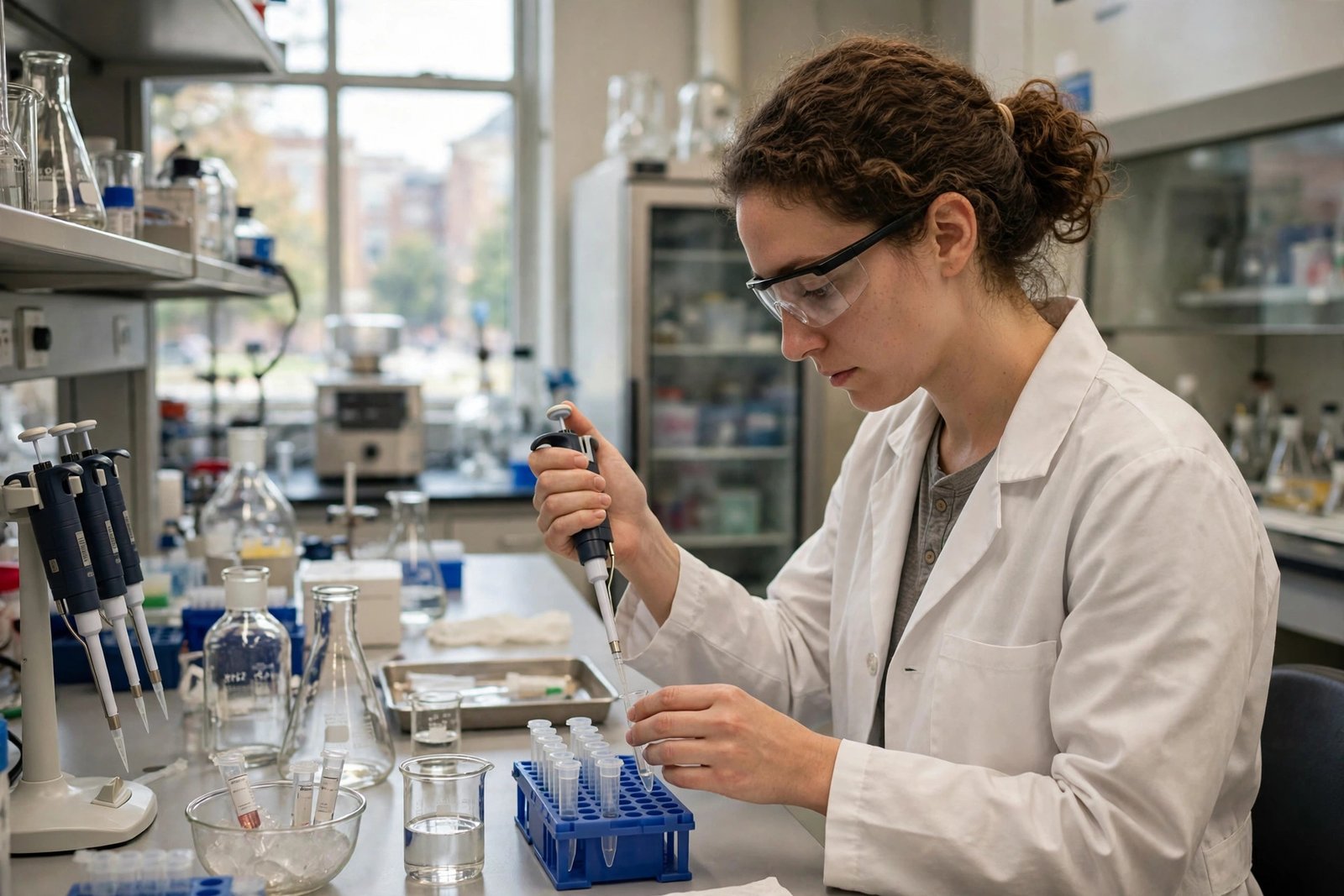
PhD Funding in the USA at a Glance
| Funding component | What it means | Typical conditions | What to verify |
|---|---|---|---|
| Tuition waiver / remission | The university covers tuition (and sometimes most fees) for a student holding an assistantship or fellowship | Continued enrolment and satisfactory progress; assistantship appointment level can affect the waiver | Whether fees, not just tuition, are included, and for how many years |
| Research Assistantship (RA) | You are paid a stipend to work on a funded research project, usually in your supervisor’s group; the work normally is your doctoral research | Funding depends on the supervisor’s grants; appointment is renewed as grants and progress allow | Who your supervisor would be, the project, and what happens if grant funding ends |
| Teaching Assistantship (TA) | You are paid a stipend to teach, lead discussion or laboratory sections, hold office hours and mark work | Often around a half-time appointment in teaching weeks; English proficiency requirements for teaching roles | Teaching load, training provided, and language testing for international TAs |
| University / departmental fellowship | Stipend (and usually tuition support) with no teaching or research duties for that period, awarded on merit | Often concentrated in the first year or used to recruit top applicants; may be combined with RA/TA years | Duration, and what funding replaces it when it ends |
| Health insurance | Student health cover, often included or heavily subsidised for funded doctoral students | Varies by university; dependants are commonly not covered in full | Premium share, dependant costs, and whether cover is mandatory |
| External fellowship (e.g. Fulbright) | A sponsored award that funds doctoral study or doctoral research under its own rules | Citizenship, residency and return obligations set by the programme and your country | Your country’s Fulbright rules, deadlines and field restrictions |
Read any funded offer as a multi-year financial document, not a headline. Ask: how many years of support are described, and is the later support guaranteed in writing subject to satisfactory progress, or is it expected and typical but not guaranteed? Which semesters are covered — does the stipend run for nine months or twelve, and how do students fund summers? What fees remain payable by the student each term? Official university pages illustrate why these questions matter. The University of Colorado Boulder’s computer science funding page, for example, states that all admitted PhD students receive a TA or RA offer covering tuition, fees and a high share of the health insurance premium plus a stipend during academic semesters, and notes that summer is not included in that offer. The University of Washington’s chemistry department describes most PhD students being supported throughout the year including summer by teaching and research assistantships with salary, a full tuition waiver and a medical, dental and vision plan. Two good programmes, two different shapes of package — which is exactly why you compare offer letters, not adjectives.
Eligibility: Who Can Apply for a Funded PhD in the USA?
The academic baseline is a strong bachelor’s degree, and for many programmes a master’s degree as well, though the United States system frequently admits students to a PhD directly from a bachelor’s degree — the doctorate then includes master’s-level coursework and research training on the way. Whether a master’s is required, preferred or not expected is a department decision, published on the programme’s admission page. What every competitive department looks for is evidence that you can do independent research: strong grades in relevant subjects, research experience such as a thesis, laboratory or field work, research assistance, publications or conference work where your field produces them, and referees who can describe your research ability in specific terms.
English proficiency is required for admission and, separately, often for teaching. Universities set minimum TOEFL, IELTS or other accepted test scores for graduate admission, and many set an additional spoken-English requirement before an international student can hold a teaching assistantship with classroom duties. Plan testing through the StudyGraduate test preparation section early enough that a retake does not collide with December and January deadlines. Some departments no longer require the GRE, others require or recommend it for particular programmes; this has changed repeatedly in recent years, so the only safe approach is to check each programme’s current requirements page rather than relying on general advice.
Citizenship eligibility divides the funding landscape in a way applicants must understand. Departmental funding — RA positions, TA positions and university fellowships — is generally open to admitted students regardless of citizenship, because it is payment and support attached to the programme, not a national scholarship. That is the main route for international doctoral students, and it is a genuinely open one. By contrast, many United States federal fellowships are restricted by citizenship. The clearest example is the National Science Foundation’s Graduate Research Fellowship Program (NSF GRFP): the NSF’s official eligibility page states that applicants must be United States citizens, nationals or permanent residents. International students on a student visa are therefore not eligible for the GRFP, however strong their research proposal is, and any guide that lists it as a scholarship for international students is wrong. The same citizenship check applies to many federal training grants and some foundation fellowships. Always read the eligibility section of the official solicitation before investing time in an application.
Fulbright sits between these two worlds. The Fulbright Foreign Student Program, administered under the United States Department of State, enables graduate students, young professionals and artists from abroad to study and conduct research in the United States for one year or longer, and applicants must have completed undergraduate education and hold a degree equivalent to a bachelor’s degree. In many countries it supports master’s and doctoral study or doctoral research, but the details — whether full degree study is funded, which fields are eligible, whether clinical fields are excluded, how much professional experience is expected — are set country by country through Fulbright Commissions and United States embassies. A doctoral applicant should therefore treat Fulbright as a serious possible route whose rules they must read in their own country’s current call, not as a single global scheme with one deadline and one benefit package.
How the Funded PhD Model Works, Year by Year
A typical funded doctorate runs for around five years in many laboratory sciences, social sciences and humanities fields, though duration varies considerably by discipline and by whether you enter with a master’s degree. In the first year, support often comes as a fellowship or a teaching assistantship while you complete coursework, rotate through research groups in fields that use rotations, and settle on a supervisor. In the middle years, research assistantships funded from a supervisor’s grants commonly become the main support, because by then your work is the project. In the writing-up period, a mix of fellowship, teaching and research support may apply. Departments describe this differently, and some make a written multi-year commitment at admission — Rice University’s business PhD page, for instance, describes full financial assistance in the form of a tuition waiver and a stipend earned in part through a research or teaching assistantship, with continued funding for the first five years contingent on satisfactory academic progress. The contingency phrase matters everywhere: funded does not mean unconditional. Continued support depends on making satisfactory progress, performing assistantship duties properly, and, for RA support, on the underlying grant funding continuing.
That model explains two practical truths. First, your supervisor choice is also a funding choice. A supervisor with active grants, a record of graduating students on time, and a group whose research genuinely matches your interests offers a different risk profile from a famous name with no current funding for a new student. Ask prospective supervisors directly and politely whether they are taking students for your entry year and what form of support a new student in their group would typically receive. Second, admission and funding decisions are usually made together by the department, which is why PhD application deadlines are early — commonly in December or January for autumn entry — and why a late application can mean the funded places are gone even if the programme would otherwise consider you.

Fields and Programmes: Where Funding Is Strongest
Funding follows research money and teaching need. Doctoral funding is most systematically available in STEM fields, where research grants support RA positions and undergraduate teaching creates TA demand; in economics, business, psychology and other social sciences with funded research programmes and large undergraduate courses; and in humanities fields at universities that fund doctoral cohorts through teaching and fellowships, usually with smaller cohorts and fiercer competition. Professional doctorates and self-funded practice programmes work differently and may carry little or no assistantship funding — never assume the research PhD model applies to a professional programme with a similar name.
Within a field, funding strength is department-specific. A department that is mid-ranked overall but holds major grants in your sub-field may fund you fully, while a more famous department may admit a larger share of its doctoral students without a full package in a particular year. That is why experienced applicants research at the level of the research group: recent publications, current grants, where recent graduates now work, and whether the department publishes its funding commitment for admitted doctoral students. The StudyGraduate guides section can help you structure that wider research into supervisors, programmes and countries.
How to Apply for PhD Scholarships and Funded Places: Step by Step
Step 1 — Define a research direction you can evidence. You do not need a finished dissertation proposal, but you need a direction specific enough that a department can see which of its faculty you would work with, and grounded in work you have already done — a thesis, a project, a paper, a research job.
Step 2 — Build a department-level shortlist. For each programme, record the funding model (is a package described for all admitted PhD students, or is funding competitive after admission?), the application deadline, test requirements, and two or three potential supervisors. Prefer programmes whose official pages describe doctoral funding clearly.
Step 3 — Contact potential supervisors where the field expects it. In laboratory and grant-funded fields, a brief, specific email is normal: who you are, what you have done, what of their recent work you want to build on, and whether they are recruiting for the coming cycle. In some humanities and social science fields, programmes prefer contact through the application itself — follow the convention of your field and any instruction on the programme page.
Step 4 — Prepare the core documents. A research-focused statement of purpose, a CV that foregrounds research, transcripts, test scores where required, writing samples where requested, and three strong academic references are the standard set (detailed below).
Step 5 — Apply by the funding deadline. For most funded programmes, the main December or January admission deadline is the funding deadline: applicants are automatically considered for departmental fellowships and assistantships. Where a separate fellowship application exists inside the university, its deadline may be the same day. Missing it usually means waiting a full year, not a few weeks.
Step 6 — Interview and evaluate offers as financial documents. Many programmes interview shortlisted applicants. When offers arrive, compare years of support described, stipend period (nine or twelve months), fees remaining, health insurance, teaching load, and summer expectations — and ask the graduate coordinator, in writing, about anything unclear. The StudyGraduate tools section can help you model living costs against a stipend for a specific city before you accept.
Step 7 — Consider Fulbright in parallel, on its own timetable. If your country’s Fulbright programme supports doctoral study or research, its competition usually runs through your Fulbright Commission or embassy on a country timetable that may start well before United States departmental deadlines. Running both routes in parallel is normal; deceiving either funder about the other is not — disclose other applications and awards as each application requires.
Step 8 — Accept one offer and complete visa documentation. Your funding letter forms part of the financial documentation the university needs before issuing your immigration document. Visa approval remains a separate government decision that no university or scholarship can guarantee.
Required Documents
A competitive doctoral application usually contains: a statement of purpose centred on research — the questions you want to pursue, why they matter, what preparation you bring, and why this department and its named faculty fit; an academic CV listing education, research experience, publications, preprints, conference presentations, technical skills and awards; transcripts from all universities attended, with certified translations where needed; degree certificates or evidence of expected completion; English proficiency scores and any subject tests the programme requires; three letters of recommendation from academics or research supervisors who know your research work directly; a writing sample or published work where the field requests one; and a copy of your passport. For Fulbright, your country application will add its own forms, essays and requirements, which are authoritative for that competition.
Two documents decide more than applicants expect. The statement of purpose fails when it is a biography rather than a research argument, or when it names no faculty and could be sent unchanged to any university. References fail when they are warm but vague — a referee who can write “she designed the experiment, debugged the analysis when the first approach failed, and presented the results to our collaborators” gives a committee evidence; a page of general praise does not. Give referees your CV, your statement draft and time — at least several weeks — and tell them the deadline precisely.
Deadlines and Timeline
| Period (for autumn entry) | Milestone | Notes |
|---|---|---|
| Spring–summer of the year before entry | Research programmes and supervisors; take tests | Funding models and supervisor fit are researched now, not in December |
| Autumn | Supervisor contact in fields where it is expected; draft statement and CV; request references | Fulbright country competitions may open or close in this period — check your country call |
| December–January | Main PhD application deadlines at most research universities | These deadlines normally control funding consideration as well as admission |
| January–March | Interviews and admissions decisions | Funded offers are usually described in the offer letter or a separate funding letter |
| Spring (commonly by mid-April) | Acceptance deadline for funded graduate offers at many universities | Many United States graduate schools follow a common mid-April reply date for funded offers; confirm your offer’s date in writing |
| Spring–summer | Funding documentation, immigration document, visa application, housing | Keep the funding letter with your visa documents |
| August–September | Programme begins; assistantship duties and any international TA language requirements completed | Some universities test spoken English for teaching on arrival |
If the 2026/2027 dates for a specific programme have not been published when you start, plan from the programme’s most recent cycle — doctoral deadlines move little from year to year — and re-check the official page monthly. What you must not do is invent a deadline from a third-party listicle and plan around it.
Selection Criteria — and How to Improve Your Chances
Doctoral selection committees ask one question in several forms: is this applicant ready to produce original research here, with these faculty, within a funded place we could give to someone else? They assess research potential from your statement and any writing or publications; preparation from your grades and coursework in the specific field; fit from the match between your direction and active faculty; and credibility from references who know research when they see it. Teaching potential matters where TA support is central. None of this is improved by volume — ten unfocused applications with a generic statement will lose to five applications, each of which names the right faculty, cites the right recent work, and proposes questions those faculty would want supervised.
The highest-value improvements are therefore: get real research experience before applying and be able to describe your own contribution precisely; choose referees for knowledge, not seniority alone; write a different, department-specific statement for each application; apply to a spread of programmes where your profile is competitive, not only to the most famous names; and be honest about funding in every conversation — a department that knows you need the standard package to attend will not be surprised later, and a supervisor who cannot fund you would rather tell you in October than in an offer letter you cannot accept.
Common Mistakes to Avoid
Applicants lose funded places by treating the PhD like a taught degree — applying without contacting or naming any supervisor where the field expects fit; by quoting or believing a single “average stipend” figure instead of reading the actual offer; by assuming every fellowship they find online is open to them, including citizenship-restricted federal fellowships such as the NSF GRFP; by missing the December or January deadline that controls both admission and funding; by accepting an offer without clarifying how many years of support are committed, what fees remain, and how summers are funded; and by overlooking dependant costs, which funded packages frequently do not cover in full. A final mistake deserves emphasis: paying an intermediary who promises a funded PhD place or a Fulbright award. Departments and Fulbright Commissions select their own candidates, and no third party can sell you a place in either process.
Frequently Asked Questions
Are PhDs in the USA really fully funded for international students?
At many research universities, admitted PhD students — including international students — receive a package of tuition waiver, stipend and health insurance through fellowships and research or teaching assistantships. This is a departmental model, not a national guarantee: it varies by field and university, support is contingent on satisfactory progress, and you should confirm the exact package, duration and conditions in your written offer.
What is the difference between an RA and a TA?
A research assistant works on a funded research project, usually in their supervisor’s group, and the work typically forms their doctoral research. A teaching assistant supports undergraduate teaching — sections, laboratories, office hours and marking. Both usually carry a stipend and tuition support; many students hold a mix across their degree.
How much is a PhD stipend in the USA?
There is no single national amount. Stipends vary by university, field and local living costs, and official pages that publish figures publish them for their own programme and year. Compare the stipend in your offer letter with living costs in that specific city, check whether it covers nine or twelve months, and ask how summers are funded — those details matter more than any average.
Can international students apply for the NSF Graduate Research Fellowship?
No. The National Science Foundation’s official GRFP eligibility rules require applicants to be United States citizens, nationals or permanent residents. International students should focus on departmental RA, TA and fellowship funding, university awards open to all admitted students, and sponsored programmes such as Fulbright where their country participates.
Can Fulbright fund a PhD in the USA?
In many countries, yes — the Fulbright Foreign Student Program supports graduate study and research, and applicants must hold a degree equivalent to a bachelor’s degree. Whether full doctoral degree study, doctoral research visits, or both are supported, and which fields are eligible, is decided in each country’s programme. Read your Fulbright Commission or embassy’s current call and deadlines.
Do I need a master’s degree before a US PhD?
Often not — many United States programmes admit students directly from a bachelor’s degree and include master’s-level training within the doctorate. Some programmes require or strongly prefer a master’s. The programme’s own admission page is authoritative for your field.
When are PhD application deadlines for 2026/2027 entry?
Most funded research PhD programmes set deadlines in December or January for autumn entry, and those deadlines usually control funding consideration too. Check each programme’s official page for its exact date; if the new cycle’s date is unpublished, plan from the most recent cycle and re-check.
Does a funded offer guarantee my visa?
No. A funding letter is important evidence for your financial documentation, but the student visa is decided separately by a consular officer. No university, scholarship or adviser can guarantee visa approval.
Sources & Verification
Facts in this article were checked against official sources at the time of writing, including: the United States Department of State, Bureau of Educational and Cultural Affairs — Fulbright Foreign Student Program (graduate study and research; bachelor’s degree requirement); the National Science Foundation — NSF Graduate Research Fellowship Program eligibility (citizens, nationals and permanent residents only); the University of Washington Department of Chemistry — PhD student financial support (TA/RA salary, full tuition waiver and health plan); the University of Colorado Boulder Department of Computer Science — graduate funding opportunities (TA/RA offer, tuition, fees, insurance share and semester stipend, summer not included); and Rice University’s Jones Graduate School of Business — PhD financial assistance (tuition waiver and stipend with assistantship, five years contingent on progress). Stipend amounts, where a university publishes them, belong to that university and year and were deliberately not generalised into national figures in this article.
Disclaimer: Scholarship and funding details change yearly, so always confirm deadlines, amounts and funding conditions on the official website and in your written offer before applying or accepting. StudyGraduate is an information portal, not an agency, and never promises selection, admission or visa approval.
✅ Eligibility Criteria
- Check the official website for full eligibility criteria for your country
🎁 Benefits
- See the official website for the complete list of benefits
⚙️ Application Process
- 1Check your eligibility on the official site
- 2Prepare your documents and statements
- 3Submit the online application before the deadline
- 4Complete interviews or assessments if shortlisted
- 5Await the final selection announcement
📅 Important Dates
Deadlines vary by country and intake. Check the official website for country-specific dates.
📄 Required Documents
- Valid passport
- Academic transcripts & certificates
- Statement of purpose
- Letters of recommendation
- CV / resume
Commonly required — confirm the exact list on the official site.
❓ Frequently Asked Questions

Ready to Take the Next Step?
Explore more scholarships and study opportunities around the world.
Browse Scholarships →