PhD Scholarships in Canada for International Students 2027
PhD Scholarships in Canada for International Students Doctoral funding in Canada changed fundamentally in the mid-2020s, and almost every guide written before that change now misleads the students who follow it. The famous Vanier Canada Graduate Scholarships — for two decades the headline answer to “how do I fund a PhD in Canada?” — have ... <a title="PhD Scholarships in Canada for International Students 2027" class="read-more" href="https://studygraduate.com/scholarship/phd-scholarships-in-canada-for-international-students-2027/" aria-label="Read more about PhD Scholarships in Canada for International Students 2027">Read more</a>
📖 Overview
PhD Scholarships in Canada for International Students
Doctoral funding in Canada changed fundamentally in the mid-2020s, and almost every guide written before that change now misleads the students who follow it. The famous Vanier Canada Graduate Scholarships — for two decades the headline answer to “how do I fund a PhD in Canada?” — have been discontinued and no longer accept applications. In their place, Canada’s three federal research agencies (CIHR for health, NSERC for natural sciences and engineering, and SSHRC for social sciences and humanities) now run a single harmonised doctoral competition, the Canada Graduate Research Scholarship – Doctoral (CGRS-D), worth CAD 40,000 per year for three years — and, crucially for readers of this guide, a reserved share of CGRS-D awards is open to international students who are already enrolled in a doctoral program at an eligible Canadian institution. If you are planning a PhD in Canada for 2027, this guide explains the new system honestly: what replaced Vanier, what CGRS-D actually requires, how university funding packages and supervisor grants really finance most doctorates, which provincial awards you can and cannot hold, and the step-by-step sequence that funded PhD students actually follow.
The second thing to understand is that in Canada, the scholarship is rarely the foundation of doctoral funding — the funding package is. Most research universities assemble a multi-year package for full-time PhD students from a supervisor’s research grants, departmental funds, teaching assistantships and internal awards, and then students compete on top of that base for the major external prizes such as CGRS-D and the Ontario Graduate Scholarship. That structure is good news: it means funded doctoral admission is achievable at many universities, not just at two or three famous ones. It also means the decisive conversations happen with your prospective supervisor and your department months before any national competition opens. Students who treat the supervisor search as an afterthought discover that the national competitions — which require you to already be enrolled — were never the real gate. Admission with funding was.
Compare the universities discussed here through our university directory and rankings explorer, read the profiles of the University of Toronto, the University of British Columbia and McGill University, and track every internal deadline with the planners in our tools section.
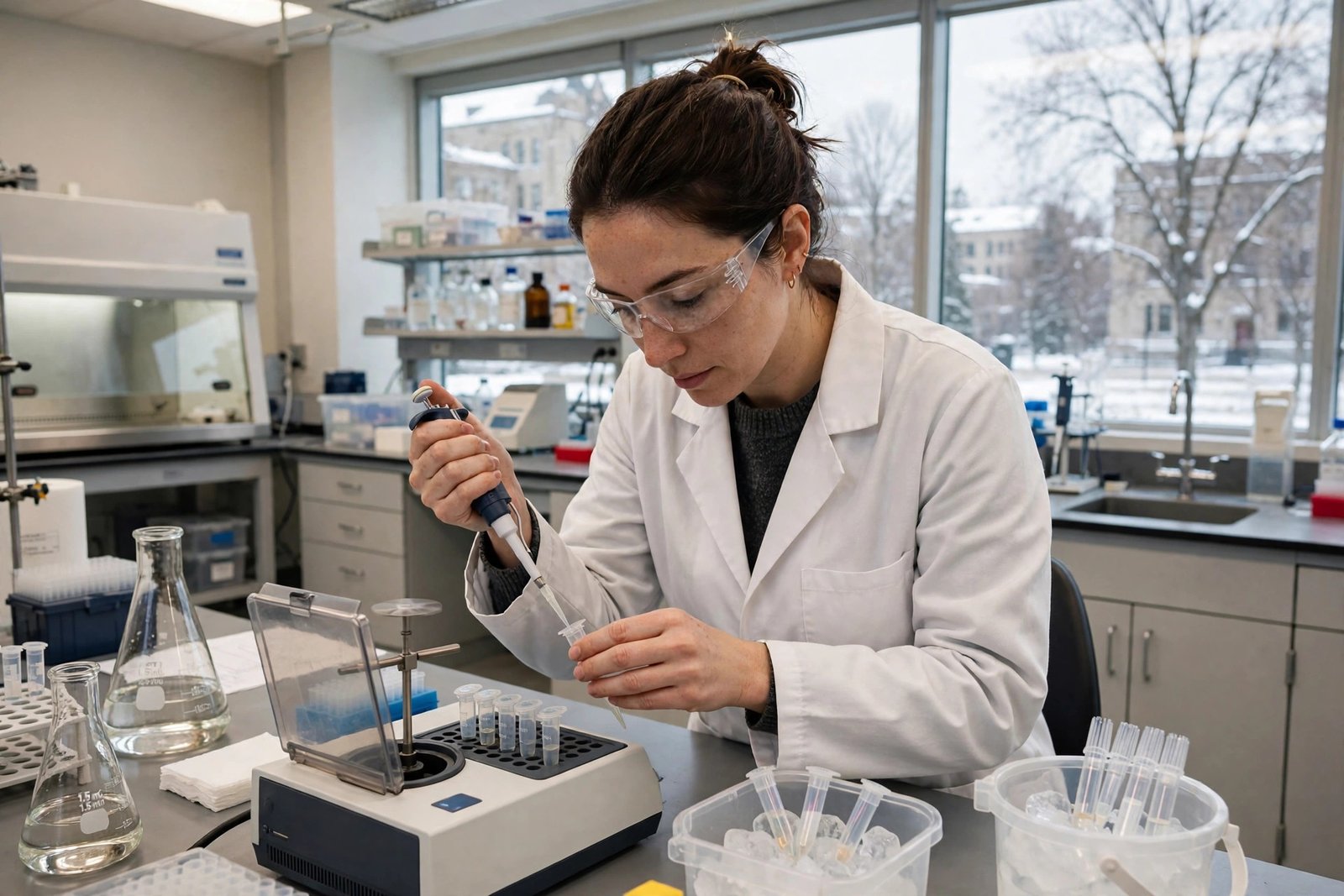
PhD Funding in Canada at a Glance
| Funding Route | Value | International Student Eligibility | Route In |
|---|---|---|---|
| Canada Graduate Research Scholarship – Doctoral (CGRS-D) | CAD 40,000 per year for 36 months (CAD 120,000 total) | Yes — up to 15% of awards across Canada are available to international applicants, who must already be enrolled in a doctoral program at an eligible Canadian institution by the application deadline | Through your university (internal deadlines, typically late summer–autumn) or, where permitted, directly to the agency by October 17 |
| Vanier Canada Graduate Scholarships | Was CAD 50,000 per year for 3 years | DISCONTINUED — no longer accepting applications; replaced by CGRS-D | Do not apply; any site still inviting Vanier applications is out of date |
| University doctoral funding packages | Varies by university and field; multi-year packages combining stipend, RA and TA income, commonly structured over 4 years of full-time doctoral study | Yes — the standard route for international PhD students in research programs | Offered with admission; negotiated through supervisor and department |
| International Doctoral Student Award (IDSA), University of Waterloo | Approximately the difference between domestic and international PhD tuition (Engineering lists CAD 15,420 per year for 4 years; value varies by faculty) | Yes — awarded to full-time international PhD students on top of minimum funding | Automatic for eligible registered doctoral students |
| Ontario Graduate Scholarship (OGS) | CAD 5,000 per term, up to CAD 15,000 per year | Limited quota only; at some universities (e.g. Waterloo) only current students may compete | Through your Ontario university each year |
| Killam and other prestigious institutional doctoral awards (e.g. at Alberta and Calgary) | Varies by award and year; among the most competitive internal prizes | Generally open to top doctoral students including internationals, per each award’s terms | Departmental nomination |
| Canada Graduate Research Scholarship – Master’s (CGRS-M) | CAD 27,000 for 12 months | No — citizens, permanent residents and protected persons only; listed so master’s-to-PhD planners do not rely on it | Not open to study-permit holders |
Read the first two rows together, because they define the era you are applying in. The old system asked international doctoral hopefuls to dream about Vanier’s CAD 50,000 a year and institutional nominations against a Vanier quota. The new system pays CAD 40,000 a year — less at the very top — but runs one harmonised competition across the three agencies, expands the total number of doctoral awards in the Canada Research Training Awards Suite, and formalises international access at up to 15% of awards. Your strategy must be built for the system that exists, not the one described in older blog posts, older videos and older agency brochures.
What Happened to Vanier — and What CGRS-D Demands Instead
The Government of Canada’s own Vanier pages now carry an archived notice: the Vanier Canada Graduate Scholarships program is no longer accepting applications, and candidates are directed to the Canada Graduate Research Scholarship – Doctoral program page for the new tri-agency doctoral competition. The former agency-specific doctoral awards (such as the old NSERC postgraduate and SSHRC doctoral competitions in their previous forms) were folded into the same redesign, which the three agencies launched in March 2025 as the Canada Research Training Awards Suite (CRTAS), with published award values of CAD 27,000 at master’s level, CAD 40,000 at doctoral level and CAD 70,000 at postdoctoral level. If a counsellor, agent or website is still preparing you a “Vanier application” for a future cycle, stop and re-verify everything else they have told you.
CGRS-D supports high-calibre scholars engaged in full-time doctoral programs at eligible institutions, across health research (CIHR), natural sciences and engineering (NSERC), and social sciences and humanities (SSHRC), including interdisciplinary work. The published value is CAD 40,000 per year for 36 months. Eligibility, as set out in the agencies’ program description and repeated by universities administering the competition, includes the following core conditions. You must be a Canadian citizen, permanent resident or protected person — or, if you hold another citizenship, you must be enrolled in your doctoral program of study at an eligible Canadian institution by the application deadline; up to 15% of awards across Canada are available to international applicants. You must have completed no more than 36 months of full-time-equivalent doctoral study (for the program for which funding is requested) by December 31 of the application year. You may submit only one application per year, to one agency — the agency whose mandate fits your research — and from the fall 2025 competition onward, you may submit a maximum of three CGRS-D applications in total. You must not already hold (or have held) a doctoral-level scholarship or fellowship from CIHR, NSERC or SSHRC, and you cannot hold a tenure-track faculty appointment concurrently with the award. The application route runs through your Canadian institution, whose internal deadline is typically significantly earlier than the agency deadline of October 17 for any direct-to-agency stream, with national results announced around April 30. In practice, universities run their own internal competitions through the summer and early autumn — some set September internal deadlines — forward a quota of applications, and notify students through the autumn and winter. Your department’s graduate coordinator, not a national webpage, owns your real deadline.
Selection in the national competition turns on the quality and feasibility of the proposed research, the applicant’s track record relative to their stage, and the training environment — which is why the supervisor and department you choose echo through your file for years. A well-matched supervisor with a strong research program does not just fund your first year; they co-create the record — publications, conference presentations, collaborations — on which your CGRS-D application will later be judged. Choose the environment, not only the stipend figure.
The Real Foundation: University Funding Packages and Supervisors
For most international doctoral students, the money that makes the PhD possible arrives as a package described in the admission offer. Its components recur across Canada. A stipend or scholarship element paid from faculty or central funds. A research assistantship paid from the supervisor’s grants, which is simultaneously your doctoral employment and your thesis work. A teaching assistantship, paid per term, which builds the teaching record academic careers require. And tuition arrangements that vary decisively by university: some packages are quoted before tuition (you pay international tuition out of the package), some institutions add a specific award that offsets the international differential, and a small number quote net figures. Comparing offers without untangling this is comparing illusions. The only sound method is a single table per offer: gross annual funding, minus international tuition and compulsory fees, multiplied across the guaranteed years, with the conditions (full-time registration, satisfactory progress, coursework completion) written beside it.
The University of Waterloo illustrates the differential-offset model with unusual clarity. Waterloo publishes minimum funding for full-time doctoral students in research programs, and international PhD students additionally receive the International Doctoral Student Award (IDSA), described as approximately the difference between full-time domestic and full-time international PhD tuition — Waterloo’s Faculty of Engineering lists the IDSA at CAD 15,420 per year for four years, with the exact value and duration varying by faculty. Waterloo is equally blunt that self-funded full-time doctoral study is available only on an exceptional basis with approval and documented funds. At the University of Alberta, doctoral funding combines departmental packages with competitive prizes such as the Alberta Graduate Excellence Scholarship (reported in the CAD 11,000–15,000 range for graduate awards) and the university’s most prestigious Killam awards, which have historically supported top doctoral scholars including international students; values and eligibility are set per cycle on the Faculty of Graduate and Postdoctoral Studies pages, so verify them there rather than in any guide. The University of Calgary similarly combines faculty funding commitments with a Graduate Award Competition and recruitment scholarships aimed at new doctoral students, including international recruits. At Toronto, British Columbia and McGill, funding is held at faculty and department level, with published minimum funding commitments for eligible full-time doctoral students in many research programs and wide variation by field — laboratory sciences and engineering typically fund more reliably than fields dependent on smaller grants, a truth about research economics that no honest guide should hide.
The supervisor’s role inside this system cannot be overstated. In grant-funded fields, your supervisor’s active research funding is literally your salary for much of the degree, and departments admit doctoral students against available supervision capacity and money. Your application campaign therefore begins with the literature: identify researchers whose current work you can contribute to, read their recent papers and lab pages, check whether they are taking students, and write individually crafted enquiries that connect your preparation to their program. A dozen precise approaches built on real reading outperform a hundred generic emails, and supervisors talk to each other — careless mass-mailing damages the very reputation your references will later need to certify.

Provincial and Other Awards You May Add
On top of the base package and any CGRS-D success, doctoral students in Ontario compete annually for the Ontario Graduate Scholarship: CAD 5,000 per term, up to CAD 15,000 for a three-term year, merit-based and open in all disciplines, with universities receiving an allocation of which only a limited number may be held by international students. Waterloo’s published guidance is representative of the caution required — because of the limited international quota, prospective students there cannot apply and only current graduate students compete — while other Ontario universities administer their own international allocations (the University of Toronto’s graduate units, for example, shared an allocation of 22 international OGS awards for a recent cycle across the entire university). Doctoral students may hold OGS for up to four years across their studies within lifetime limits, applying afresh each year through their institution. Read OGS, correctly, as a competitive top-up for enrolled students with first-class records — never as the funding that gets you admitted or gets your study permit approved.
Beyond OGS, keep three further categories in view. First, your home country’s government and foundation scholarships for doctoral study abroad, which sometimes stack with Canadian packages and sometimes replace parts of them — always disclose external awards to your university, because stacking rules are contractual. Second, short-term exchange funding such as EduCanada’s Study in Canada Scholarships, which funds four-to-six-month research visits for students enrolled abroad (CAD 10,200 for four months; CAD 12,700 for graduate visits of five to six months, applied for by the Canadian host institution) — a legitimate route to build the Canadian collaboration and supervisor relationship that later anchors a full doctoral application, though never a substitute for degree funding. Third, discipline-specific prizes, learned-society grants and conference funding that accumulate across a doctorate; individually small, collectively they professionalise a CV. What you should not chase: the McCall MacBain Scholarship, which does not fund PhDs, and CGRS-M, which excludes international students entirely. Doctoral planning time is scarce; spend it where you are eligible.
Costs, the Study Permit, and the Money Conversation
Doctoral tuition for international students is frequently lower than master’s or undergraduate tuition at the same university — many programs charge international PhD tuition broadly in the CAD 7,000–20,000 per year zone, with some institutions aligning doctoral tuition for funded students closer to domestic levels — but the range is wide and program-specific, so use only your target program’s official fees page. Your study permit application carries the same federal floor as every other level: for applications on or after September 1, 2025, a single applicant outside Quebec must demonstrate at least CAD 22,895 for one year of living expenses in addition to first-year tuition and transportation, with Quebec applying its own financial capacity rules and higher total amounts for accompanying family members. A formal funding package letter from your university is among the strongest documents in that application, which is another reason funded admission matters more than any single prize: it documents, in one institutional voice, that your doctorate is financed. Funded students bringing a spouse or children should model the family funding thresholds early, because dependants multiply the required proof well beyond a single stipend, and honesty in that modelling at the application stage prevents genuine hardship later.
Eligibility Checklist for Doctoral Funding
Before you invest in applications, test yourself against the conditions that recur across funded Canadian doctorates. A master’s degree (or, for the minority of direct-entry routes, an exceptional bachelor’s record) in a relevant field, with grades that place you convincingly in the top band of your cohort. A research record appropriate to your stage — a strong thesis, methods competence, and ideally presentations or publications, weighted by field norms. English proficiency at your program’s required level (French opens additional doors at McGill and other Quebec institutions and can matter for some funding streams). A research proposal that fits an identifiable supervisor and program — fit is an eligibility condition in practice even where it is not one on paper. And for CGRS-D specifically: enrolment in the doctoral program by the deadline, no more than 36 months of doctoral study completed by the end of the application year, no previous tri-agency doctoral award, and no more than three lifetime CGRS-D applications. If any item fails, your plan changes — fix the item, choose a different route, or choose a different year — but do not paper over it.
How to Apply: The Funded-PhD Sequence
Step 1 — Define the research, then find its people (12–18 months before entry). Write a two-page research concept. Identify ten to fifteen potential supervisors across at least five universities whose current work genuinely intersects it. Read before you write.
Step 2 — Open supervisor conversations (9–14 months out). Send concise, specific enquiries with your CV, transcripts summary and research concept. In grant-funded fields, ask directly whether the supervisor expects funded doctoral places for your entry year. A warm reply is not an offer; an absent reply is information, too.
Step 3 — Build the application file (6–10 months out). Transcripts, English results, a program-specific statement of purpose that names the supervisor and the training environment, a writing sample where required, and two to three referees who know your research first-hand and have agreed early, with your materials in their hands a month ahead.
Step 4 — Apply for admission with funding (by each program’s deadline, commonly December–February for autumn entry). Complete every awards section of the admission application; in Canada, admission and funding consideration are intertwined, and an incomplete awards profile silently removes you from competitions.
Step 5 — Interrogate the offer. Convert every offer into the same net table: gross funding minus international tuition and fees, guaranteed years, RA/TA expectations, summer funding, and progress conditions. Ask the graduate coordinator to confirm ambiguous points by email.
Step 6 — Accept, secure documents, file immigration paperwork. Letter of acceptance, provincial attestation (or CAQ in Quebec), funding letter and remaining proof of funds, then the study permit — filed early, because doctoral start dates do not move for slow paperwork.
Step 7 — In year one, build the CGRS-D and OGS files. Register your research outputs, present at a conference, keep grades first-class, and diarise your institution’s internal deadlines (often September for CGRS-D forwarding, autumn–winter for OGS). External prizes reward the enrolled and the organised — become both.
Deadlines and Timeline
| Period | Milestone | Notes |
|---|---|---|
| Mid-2026 | Supervisor outreach for Fall 2027 funded admission | Earlier in laboratory fields where places attach to grant cycles |
| September – October 2026 | CGRS-D internal university deadlines for students already enrolled | Internal dates are far earlier than agency dates; departments set them |
| October 17 (agency date) | CGRS-D direct-to-agency deadline where that stream applies | Most applicants apply through their institution instead |
| December 2026 – February 2027 | Doctoral admission deadlines for Fall 2027 at most universities | Funding consideration is usually tied to these deadlines |
| Winter – Spring 2027 | OGS internal deadlines at Ontario universities; admission and funding offers | OGS for internationals is a limited-quota, enrolled-student competition |
| April 30 (approx.) | CGRS-D national results announced | Per the agencies’ published competition calendar |
| Spring – Summer 2027 | Study permit application (CAQ first for Quebec) | Show funding package plus CAD 22,895 living-expense floor (outside Quebec) and tuition |
| September 2027 | Doctoral program begins; award tenure options may include May, September or January starts for some competitions | Confirm your award start rules with your institution |
How to Improve Your Chances
Committees and supervisors fund trajectories. Publish or present something — a thesis chapter converted into a conference paper teaches you more about doctoral life than any webinar, and it gives referees concrete work to praise. Master one method deeply rather than listing six superficially; doctoral training assumes a foundation it can build on. Write the proposal for the reader who funds it: a focused question, a feasible design for 36–48 months, a clear contribution, and explicit fit with the host environment. Protect your application’s administrative perfection — matched agency choice (CIHR vs NSERC vs SSHRC is a substantive decision students regularly get wrong), correct transcripts in the required format, referee letters actually submitted. Finally, apply to several universities where your fit is real. Funded doctoral admission is competitive everywhere; a portfolio of well-matched applications is the only reliable hedge any applicant controls.
Common Mistakes — Including the Vanier Trap
The defining mistake of the current cycle is preparing for Vanier, a discontinued program, while CGRS-D’s internal deadlines pass unnoticed. Close behind: assuming CGRS-D can be applied for from abroad before admission, when international applicants must already be enrolled; wasting one of only three lifetime CGRS-D applications on an unready file in year one instead of a strong file in year two; comparing funding packages gross instead of net of international tuition; choosing a supervisor on reputation alone without confirming active funding and current student load; and treating a teaching assistantship as guaranteed income beyond the terms your offer actually specifies. Underneath all of these sits the same error — trusting summaries (including well-meaning ones) over primary documents. For doctoral funding, the primary documents are your offer letter, your institution’s competition pages and the agencies’ program description. Read those three, and most traps disappear.
After the PhD, Briefly
Doctoral graduates of eligible programs at Designated Learning Institutions may qualify for a Post-Graduation Work Permit of up to three years by applying within 180 days of completion and meeting IRCC’s conditions, including the language requirement for degree graduates; doctoral graduates are exempt from the field-of-study requirement that applies to certain non-degree programs. The tri-agency system also continues beyond the doctorate through the Canada Postdoctoral Research Award (published value CAD 70,000 per year under the Canada Research Training Awards Suite), for which separate eligibility rules apply. None of these outcomes is automatic or guaranteed — verify your position on the official IRCC and agency pages when you reach that stage.
Frequently Asked Questions
Is the Vanier Scholarship still available for 2027?
No. The Vanier Canada Graduate Scholarships program has been discontinued and is no longer accepting applications; the Government of Canada’s Vanier pages are archived and direct candidates to the Canada Graduate Research Scholarship – Doctoral (CGRS-D) program. Any source inviting you to apply for Vanier for a future cycle is out of date.
How much is CGRS-D worth, and can international students win it?
CGRS-D pays CAD 40,000 per year for 36 months. Yes, international students can win it: up to 15% of awards across Canada are available to international applicants. However, an international applicant must already be enrolled in a doctoral program at an eligible Canadian institution by the application deadline, unlike domestic applicants who may apply while seeking admission. You may apply a maximum of three times in total.
Do I need to be admitted before applying for PhD funding in Canada?
For the main university funding packages, funding is decided with admission, so admission is the application. For CGRS-D, international students must already be enrolled. This is why the funded-PhD strategy is sequential: win funded admission first, then compete for national and provincial prizes from inside the program.
What replaced the old NSERC and SSHRC doctoral scholarships?
They were harmonised, with Vanier, into the Canada Research Training Awards Suite announced by CIHR, NSERC and SSHRC in March 2025: CGRS-M at master’s level (CAD 27,000, domestic only), CGRS-D at doctoral level (CAD 40,000 per year for three years) and a postdoctoral award (CAD 70,000 per year). You apply to the single agency whose mandate matches your research.
How much funding does a typical international PhD student in Canada receive?
There is no single typical figure, because packages are assembled per university, faculty and supervisor and are quoted differently (before or after tuition). What matters is the net amount after international tuition and fees, the number of guaranteed years, and the conditions. Convert every offer to that net, multi-year figure before comparing — and get the package in writing in your offer letter.
Can international PhD students hold the Ontario Graduate Scholarship?
Only within a small reserved quota. OGS pays CAD 5,000 per term up to CAD 15,000 per year, and each Ontario university receives a limited international allocation; some universities, Waterloo among them, restrict the international competition to students already enrolled. Plan on competing for OGS after you arrive, on the strength of your doctoral record, rather than counting it toward admission funding.
How much money must I show for the study permit as a PhD student?
The same federal floor as other students: for applications on or after September 1, 2025, at least CAD 22,895 for one year of living expenses for a single applicant outside Quebec, plus first-year tuition and travel, with Quebec’s own rules applying there and higher amounts for dependants. Your university funding letter is key evidence — but if dependants accompany you, model the family thresholds carefully. Confirm the current amounts on Canada.ca.
When are CGRS-D deadlines?
Most applicants apply through their Canadian institution, which sets an internal deadline typically in late summer or early autumn — significantly earlier than the agency’s October 17 date for any direct stream — with national results announced around April 30. Your department’s internal date is the one that governs your application; obtain it in your first term and plan backwards from it.
Sources & Verification
Prepared from official and institutional sources checked at the time of writing: Natural Sciences and Engineering Research Council of Canada — Canada Graduate Research Scholarship – Doctoral program (value CAD 40,000 per year, 36 months, deadlines, results date); Government of Canada — Vanier Canada Graduate Scholarships archived notice (program no longer accepting applications; candidates directed to CGRS-D); tri-agency Canada Research Training Awards Suite announcement via NSERC (harmonised values: CAD 27,000 master’s, CAD 40,000 doctoral, CAD 70,000 postdoctoral); University of Waterloo — funding for research-based graduate programs and OGS information; Immigration, Refugees and Citizenship Canada — proof of financial support. Institutional award values (including IDSA faculty figures and provincial scholarship ranges) vary by year and faculty — confirm them on the awarding university’s official pages.
Disclaimer: Scholarship amounts, deadlines and eligibility rules change yearly, so always confirm every detail on the official scholarship or university website before applying. StudyGraduate is an information portal, not an agency or a representative of any university or government. We never promise or guarantee selection, admission, funding or visa approval, and no one can honestly make those promises to you.
✅ Eligibility Criteria
- Check the official website for full eligibility criteria for your country
🎁 Benefits
- See the official website for the complete list of benefits
⚙️ Application Process
- 1Check your eligibility on the official site
- 2Prepare your documents and statements
- 3Submit the online application before the deadline
- 4Complete interviews or assessments if shortlisted
- 5Await the final selection announcement
📅 Important Dates
Deadlines vary by country and intake. Check the official website for country-specific dates.
📄 Required Documents
- Valid passport
- Academic transcripts & certificates
- Statement of purpose
- Letters of recommendation
- CV / resume
Commonly required — confirm the exact list on the official site.
❓ Frequently Asked Questions

Ready to Take the Next Step?
Explore more scholarships and study opportunities around the world.
Browse Scholarships →