PhD Scholarships in Australia for International Students 2026/2027
PhD Scholarships in Australia for International Students 2026/2027 Australia is one of the few countries where a genuinely fully funded PhD is a realistic goal for international students — not through one single national competition, but through a system in which the Australian Government funds research training places and universities award them, alongside their own ... <a title="PhD Scholarships in Australia for International Students 2026/2027" class="read-more" href="https://studygraduate.com/scholarship/phd-scholarships-in-australia-for-international-students-2026-2027/" aria-label="Read more about PhD Scholarships in Australia for International Students 2026/2027">Read more</a>
📖 Overview
PhD Scholarships in Australia for International Students 2026/2027
Australia is one of the few countries where a genuinely fully funded PhD is a realistic goal for international students — not through one single national competition, but through a system in which the Australian Government funds research training places and universities award them, alongside their own research scholarships, to the strongest applicants from any country. If you hold a first-class honours degree or a research master’s with excellent results, and you can secure a supervisor who wants to work with you, your tuition can be fully offset and your living costs covered by a tax-free stipend for the length of your doctorate. This guide explains the whole landscape for the 2026/2027 rounds: the Research Training Program (RTP), the major university research scholarships at the University of Melbourne, the Australian National University, the University of Sydney, Monash University and the University of Queensland, who is eligible, what the stipend is actually worth, and the step-by-step process that successful applicants follow.
Browse related funding in our scholarships directory, compare research strengths in the rankings section, and shortlist institutions through the universities directory as you read.
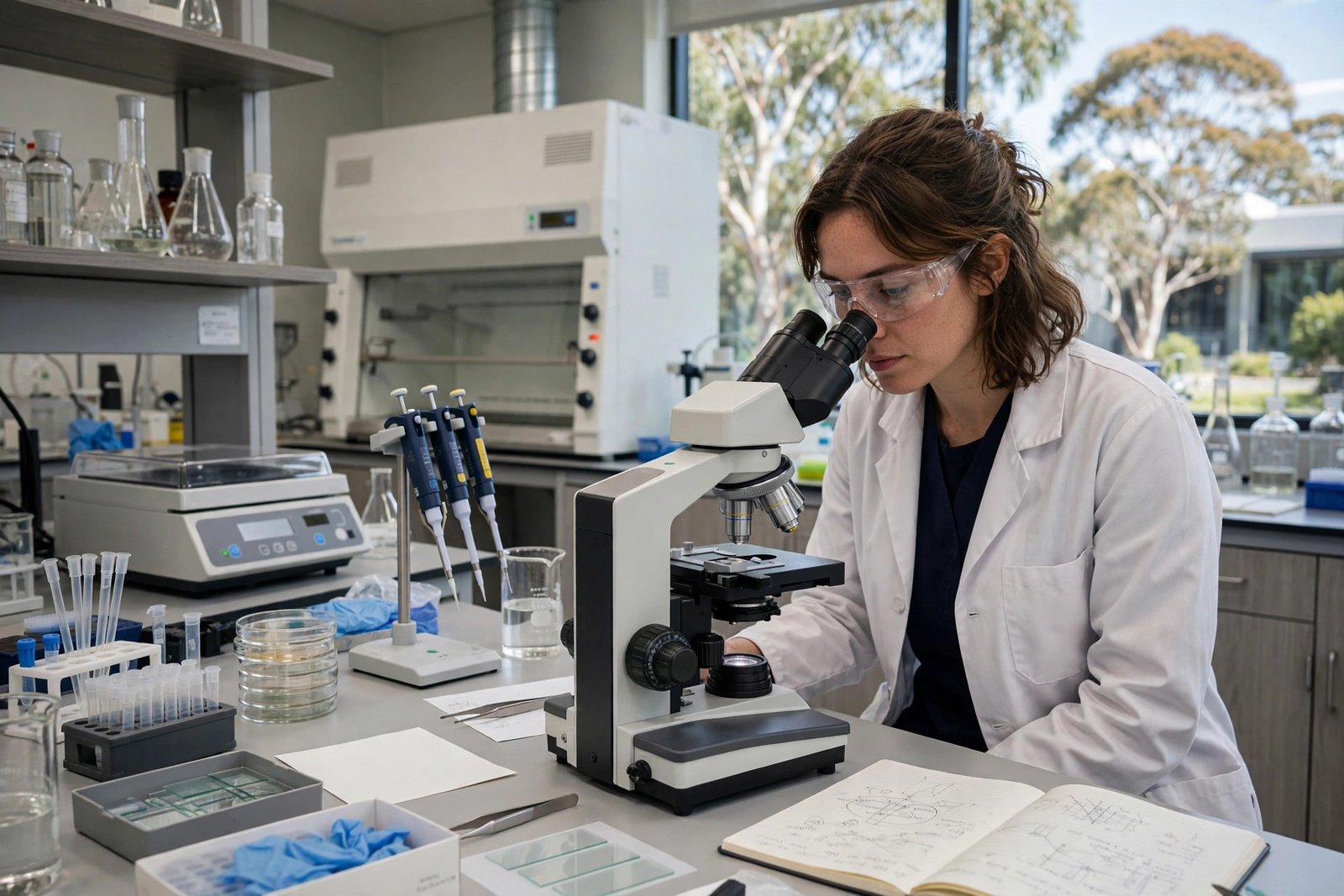
PhD Funding in Australia at a Glance
| Scholarship | Provider | Tuition | Stipend (living allowance) | Who can apply |
|---|---|---|---|---|
| Research Training Program (RTP) Scholarship | Australian Government, administered by each university | Full fees offset | Base rate AUD 34,315 per year in 2026 (AUD 35,550 in 2027); universities may pay up to the maximum rate (AUD 53,608 in 2026; AUD 55,537 in 2027) | Domestic and international HDR applicants, all nationalities |
| Melbourne Graduate Research Scholarships | University of Melbourne | Full fee offset | Living allowance benchmarked to the RTP rate, plus relocation and other allowances | New and currently enrolled graduate researchers meeting entry requirements |
| University of Sydney International Scholarship | University of Sydney | Tuition covered under the associated RTP/university scheme | Stipend benchmarked to the RTP base rate (university publishes the current figure) | International students commencing or enrolled in a master’s by research or PhD |
| ANU HDR scholarships (incl. RTP-funded and ANU University Research Scholarships) | Australian National University | Tuition scholarship/offset arrangements for international students | Stipend set by ANU at or above the RTP base rate; see ANU’s current published rate | Domestic and international HDR applicants |
| Monash Graduate Scholarships / Monash International Tuition Scholarships | Monash University | Tuition scholarship for international students | Living allowance under Monash Graduate Scholarship, benchmarked to RTP | Domestic and international research applicants |
| UQ Graduate School Scholarships | University of Queensland | Tuition offset/scholarship | Stipend benchmarked to the RTP base rate (UQ publishes its current rate) | Domestic and international PhD and MPhil applicants |
| Australia Awards Scholarship (research degrees in some countries) | Australian Government (DFAT) | Full tuition | Contribution to living expenses, airfare, OSHC and establishment allowance | Citizens of participating countries only; PhD availability varies by country |
Stipend figures above use the official RTP rates published by the Australian Government Department of Education. Individual universities set their actual stipend at or above the base rate and publish the current amount on their scholarship pages — always confirm the exact figure for your university and round.
The Research Training Program (RTP): The Backbone of PhD Funding
The Research Training Program is the Australian Government’s main research-training funding scheme. According to the Department of Education, the Government provides funding to eligible universities (higher education providers) through the RTP to support the training of domestic and overseas students undertaking research doctorate and research master’s degrees — collectively called higher degrees by research, or HDRs. The RTP began on 1 January 2017, replacing the Australian Postgraduate Award, the International Postgraduate Research Scholarship (IPRS) and the Research Training Scheme, which is why older web pages still mention those names.
Three features of the RTP matter most to you as an applicant:
- You apply to the university, never to the government. The Department of Education states explicitly that RTP scholarship applications cannot be made through the Department — each university runs its own application and selection process with its own rounds and deadlines, and you may apply to more than one university.
- An RTP scholarship is a package of up to three components: a tuition fees offset, a stipend for general living costs, and allowances for the ancillary costs of an HDR (for example relocation, thesis and publication costs). Universities decide which components each scholarship includes.
- Support periods are generous. For a full-time research doctorate, RTP support runs for a minimum of three years and up to four years at the university’s discretion; for a full-time research master’s, up to two years.
The RTP stipend rates for 2026 and 2027
The RTP stipend is indexed every year from 1 January. The official rates published by the Department of Education are:
| Year | Full-time base RTP stipend rate | Full-time maximum RTP stipend rate |
|---|---|---|
| 2025 | AUD 33,511 per year | AUD 52,352 per year |
| 2026 | AUD 34,315 per year | AUD 53,608 per year |
| 2027 | AUD 35,550 per year | AUD 55,537 per year |
Most universities pay at or modestly above the base rate, and some top up significantly for priority projects or use project funds to reach higher figures — which is why two RTP-funded students at different universities can receive different stipends. The stipend is paid fortnightly, is generally tax-free for full-time scholarship holders in Australia, and is intended to cover general living costs, not to make you wealthy: in Sydney and Melbourne it covers a modest student lifestyle, while in Canberra, Brisbane, Adelaide or Perth it stretches considerably further. RTP stipend holders also receive allowances defined by their university’s rules — typically a relocation allowance if you move interstate or from overseas, and a thesis allowance (commonly a few hundred dollars for a research master’s and roughly double for a doctorate). International RTP recipients should note that the RTP itself does not automatically include health cover; universities commonly require you to hold Overseas Student Health Cover (OSHC) for your visa, and some university scholarship packages include OSHC — check your offer letter carefully.
University Research Scholarships: Where Most International PhDs Are Funded
Universities combine their RTP block grant with their own funds into scholarship schemes under their own names. In practice, when you apply for a PhD place with scholarship consideration at a major Australian university, you are competing in a ranked pool in which the top candidates receive an RTP-funded or university-funded package that looks very similar: tuition fully covered plus a living stipend. The differences that matter are the stipend level, the application rounds, and any automatic-consideration rules.
University of Melbourne — Graduate Research Scholarships
The University of Melbourne offers Graduate Research Scholarships to high-achieving domestic and international students applying for a graduate research degree. The package provides a full fee offset for the standard course duration and a living allowance benchmarked to the RTP stipend rate for up to 3.5 years for doctoral students (two years for master’s by research), together with a one-off relocation allowance and OSHC for international students who require a student visa, plus paid leave entitlements under the scheme rules. Melbourne assesses scholarship applications in faculty-based rounds across the year; if you apply for admission by the round deadlines and meet the eligibility criteria, you are automatically considered — late admission applications simply roll into the next round, which is why applying early in the cycle materially improves your position.
Australian National University — HDR scholarships
The Australian National University funds a large HDR cohort relative to its size, reflecting its research intensity. ANU awards a range of centrally managed scholarships — including RTP-funded stipends and ANU University Research Scholarships — alongside college and school-level awards, many assessed automatically when you apply for HDR admission and indicate scholarship consideration. International students are considered for tuition scholarships in combination with stipend awards. ANU runs defined application rounds (a main round closing in the second half of the year for commencement the following year, with a further round for mid-year commencement), and Canberra’s lower living costs make the stipend particularly competitive in real terms.
University of Sydney — International Scholarship
The University of Sydney offers its International Scholarship to international students commencing or enrolled in a master’s by research or PhD. The scholarship provides a stipend benchmarked to the RTP base rate together with tuition coverage under the associated scheme, and is awarded on academic merit and research potential across multiple rounds each year, with published closing dates for each research period. Because rounds close on fixed dates for each intake period, Sydney is a university where missing a deadline by a week can mean waiting months for the next round — check the current round dates on the University’s HDR scholarship pages well before you plan to start.
Monash University and University of Queensland
Monash University combines the Monash Graduate Scholarship (living allowance) with the Monash International Tuition Scholarship for international research students, assessed in several competitive rounds per year through its graduate research admission process. The University of Queensland similarly awards Graduate School scholarships in rounds, pairing tuition support with a stipend benchmarked to the RTP base rate, and UQ’s institutes (for example in agriculture, health and sustainability) add project-funded top-ups in priority areas. The University of Adelaide runs comparable scholarship rounds for international HDR applicants. The pattern everywhere is the same: admission plus scholarship are decided together, ranked on your academic record and research proposal, with supervisor support a decisive factor.

Eligibility: What Universities Actually Require
For RTP and university research scholarships, you must first be eligible for the degree itself. The standard entry profile for a PhD in Australia is:
- A bachelor’s degree with first-class or upper second-class (H1/H2A) honours, or
- A master’s degree with a substantial research component (typically at least 25% of the degree) completed at a high standard, or
- An equivalent qualification or combination of qualifications and research experience/publications demonstrating research capability, as assessed by the university.
On top of degree entry, scholarship ranking weighs: your grades in the qualifying degree (first-class honours or a master’s average in the high-distinction range is the competitive zone at the top universities); research outputs such as peer-reviewed publications, conference papers and a strong master’s thesis; the quality and feasibility of your research proposal; your prospective supervisor’s support and the fit with the school’s research strengths; and referee reports. English proficiency must meet the university’s HDR requirement — commonly IELTS 6.5–7.0 overall with no band below 6.0, and higher in some disciplines. RTP rules also set a limit relevant to many applicants: you generally cannot receive an RTP stipend if you are already receiving an equivalent award, scholarship or salary providing more than 75% of the RTP stipend rate to undertake the HDR. Previous HDR study counts against your support period — if you have already completed two years of a PhD elsewhere, your remaining RTP support is reduced accordingly.
Australia Awards for PhD Study
For citizens of participating countries, the Australia Awards Scholarship can fund doctoral study where the country program includes research degrees — availability genuinely varies by country and year, and in many countries Awards are offered for master’s degrees only. Where PhD Awards are offered, coverage is comprehensive: full tuition, contribution to living expenses, return air travel, establishment allowance, OSHC and fieldwork support. The trade-offs are the obligations: Awards scholars must return home for at least two years after completing the scholarship, and the proposed research must align with the home country’s development priorities. Apply through OASIS in the annual window — for study commencing in 2027, applications opened on 1 February 2026 and closed on 30 April 2026. If your country does not offer PhD Awards, the RTP/university route above is open to you regardless of nationality. Note that India is not a participating country for long-term Australia Awards, so Indian PhD applicants should concentrate entirely on university and RTP competition — where they are frequently successful.
How to Apply: The Process That Works
- Identify your field and shortlist universities (9–15 months before start). Use our study abroad guides and each university’s researcher profiles to find groups publishing actively in your topic.
- Find and contact a supervisor. This is the decisive step in Australia. Write a short, specific email: your qualifications and grades, your proposed topic in a few sentences, why their group, and your CV and transcripts attached. A supervisor who agrees to support you transforms your scholarship ranking.
- Develop your research proposal with the supervisor’s feedback — typically 2–5 pages covering the question, literature gap, methodology, timeline and significance.
- Check the scholarship round dates for each university and work backwards. Main rounds at most universities close between August and October for commencement in the first half of the following year, with additional rounds for mid-year starts.
- Lodge the HDR admission application with scholarship consideration indicated, including certified transcripts and certificates, English test results, CV, proposal, and nomination of referees. Many universities charge no application fee for HDR applications.
- Wait for the ranked outcome. Universities notify scholarship outcomes after round assessment; unsuccessful scholarship applicants may still receive an admission offer (self-funded) — decide in advance whether you would accept that or re-apply next round.
- Accept, enrol and apply for your visa. With a full scholarship, your Confirmation of Enrolment and scholarship letter evidence your funding; you still need OSHC and must meet the Subclass 500 Genuine Student and health/character requirements. The Department of Home Affairs’ published financial-capacity figure for living costs is AUD 29,710 per year, but a full stipend scholarship letter is the standard evidence used by funded HDR students.
Deadlines and Rounds: Planning Your 2026/2027 Cycle
| Period | What happens | Action |
|---|---|---|
| Jan–Jun 2026 | Supervisor search and proposal development for 2027 commencement | Contact supervisors; draft proposal; sit English test if needed |
| 1 Feb – 30 Apr 2026 | Australia Awards window for 2027 commencement | Eligible-country PhD applicants apply via OASIS (now closed for 2027; next window expected Feb–Apr 2027) |
| Aug–Oct 2026 | Main international scholarship rounds close at most major universities for early-2027 commencement | Lodge complete HDR + scholarship applications before each university’s closing date |
| Nov–Dec 2026 | Main round outcomes released | Accept scholarship offer; arrange OSHC; lodge visa |
| Jan–Mar 2027 | Semester 1 commencement; some universities run a further round for mid-year starts | Arrive, enrol, complete HDR induction and milestone planning |
| 1 Jan 2027 | RTP rates re-index | 2027 base stipend AUD 35,550 applies |
Round structures differ by university and faculty. The dates above are the planning pattern verified from official scheme information; your university’s published round dates are the ones that govern your application.
How to Make Your Application Competitive
Supervisor fit beats university brand. Committees fund projects a named supervisor champions. A tailored proposal aligned with an active, grant-holding research group will outrank a generic proposal at a more famous university. Convert your grades for the committee. If your transcript uses a scale unfamiliar to Australian assessors, a brief explanation (or your university’s official grading scale) in your CV helps; never restate your grades as higher than they are — committees verify. Publish if you can. Even one peer-reviewed output or a well-regarded conference paper materially strengthens a PhD scholarship file, as does a master’s thesis examined with strong reports. Write a feasible proposal. Three to four years, a clear method, and milestones — ambitious but achievable beats grandiose. Choose referees who know your research and give them your proposal and CV; a specific letter about your research work outweighs a generic letter from a senior name. Apply to multiple universities. RTP applications are explicitly permitted at more than one institution, and scholarship odds vary enormously between universities and rounds. Finally, use our student tools to track round deadlines so nothing closes while you are polishing documents.
A Note on Destination Australia
You may still see the Destination Australia Program mentioned in older guides as a source of up to AUD 15,000 per year for students at regional campuses. Be aware that new Commonwealth funding for Destination Australia ceased from 1 July 2024 and the program is closed to new applicants; existing recipients continue to be supported under their award conditions. For regional study in 2026/2027, ask your chosen regional university about its own current international scholarships instead, and verify any claim about Destination Australia on the Department of Education website.
Common Mistakes
- Applying to the Department of Education for an RTP scholarship. The Department does not accept applications — universities administer everything.
- Contacting supervisors with a mass email that names the wrong university or research topic. Committees and supervisors notice instantly.
- Missing the main round and assuming rolling admission applies to scholarships. Admission may be rolling; scholarship money is allocated in rounds.
- Assuming the stipend covers a family in Sydney. Model your budget honestly; consider lower-cost cities or additional savings for dependants.
- Accepting a self-funded PhD offer without a funding plan. International PhD tuition over 3–4 years is a very large commitment; a later scholarship is never guaranteed.
- Ignoring the 75% rule and prior-study deductions in RTP eligibility, which can reduce or remove stipend eligibility.
Frequently Asked Questions
Is a PhD in Australia fully funded for international students?
It can be. The standard competitive package — RTP or university scholarship — covers full tuition through a fees offset and pays a living stipend (2026 base rate AUD 34,315 per year) for up to 3.5–4 years for a doctorate. It does not usually pay airfare, and OSHC is included only in some university packages, so “fully funded” means tuition plus living stipend, with small personal costs remaining.
What is the RTP stipend for 2026 and 2027?
The Australian Government’s published full-time base RTP stipend rate is AUD 34,315 per year for 2026 and AUD 35,550 per year for 2027, with maximum rates of AUD 53,608 (2026) and AUD 55,537 (2027). Universities set their actual stipend at or above the base rate and publish the figure on their scholarship pages.
Do I need a master’s degree to apply for a PhD in Australia?
Not necessarily. You need an honours bachelor’s degree at first-class or upper second-class level, or a master’s with a substantial research component, or equivalent demonstrated research capability. Many international applicants qualify through a research master’s; some qualify through honours plus publications.
Can I apply for PhD scholarships at more than one Australian university?
Yes. The Department of Education confirms prospective students may apply for an RTP scholarship at more than one university, and each university assesses independently. You can only hold one scholarship when you enrol, and you must decline the others promptly.
When should I contact a potential supervisor?
Nine to fifteen months before your intended start is ideal — before the main scholarship rounds close (typically August–October for the following year’s first semester). Supervisors need time to read your proposal, meet you by video call, and support your application within their school.
Is the RTP stipend taxable, and can I work on top of it?
Full-time RTP stipends are generally exempt from Australian income tax under the scholarship provisions, but confirm your individual circumstances. Student visa holders may work up to 48 hours per fortnight during study periods, though universities expect scholarship holders to treat the doctorate as a full-time commitment, and tutoring or research-assistant work within your university is the common, approved pattern.
What GPA do I need to win a PhD scholarship?
There is no published cut-off because ranking is relative within each round, but successful international applicants at the most competitive universities typically hold first-class honours or a master’s average in the high-distinction range, supported by a strong proposal and supervisor. At less oversubscribed universities and in priority research areas, strong upper-second-class profiles with good outputs can succeed.
Can Australia Awards fund my PhD?
Only if you are a citizen of a participating country and your country program offers doctoral Awards for that intake — many countries offer master’s Awards only. Check your country profile on australiaawards.gov.au. India is not a participating country for long-term Awards.
Living on the Stipend: A Realistic Budget Check
A stipend at the 2026 base rate of AUD 34,315 works out to roughly AUD 2,860 per month before any other income. Whether that is comfortable depends overwhelmingly on your city and household. A single student renting a room in a shared house in Canberra, Adelaide, Perth or Brisbane can typically live within the stipend, especially with modest tutoring or research-assistant work on top. A single student in inner Sydney or Melbourne will find the base stipend tight — rents there consume a far larger share — and students accompanied by a partner or children should model their budget very carefully, because the stipend is designed for one person. Universities publish cost-of-living guides for their cities; read the one for your campus before you accept an offer, and remember that your first month carries set-up costs (bond, furniture, winter clothing) that the one-off relocation allowance only partly offsets.
Top-Ups, Project Scholarships and Other Funding Layers
The RTP/university stipend is the base layer, not the ceiling. Many supervisors hold research grants with funding for a top-up scholarship that raises a strong candidate’s stipend above the base rate — sometimes towards the RTP maximum — particularly in fields with industry partners or national priority status, such as artificial intelligence, quantum technologies, clean energy, agriculture and health. Cooperative Research Centres, CSIRO postgraduate programs, and industry PhD schemes add further funded places in applied areas. These opportunities are rarely advertised in one central place: they appear on university “find a scholarship” databases, on project and institute pages, and in conversations with prospective supervisors — one more reason the supervisor conversation matters more than any other step. When you receive an offer, read precisely what is included: stipend rate and duration, tuition offset duration, OSHC inclusion, relocation and thesis allowances, and any conditions on progress milestones. If two offers differ, compare total value over the full degree, not just the headline stipend.
What Happens If You Do Not Win a Scholarship in the First Round?
A missed round is not the end of the road. Common productive responses include: strengthening the file and re-applying in the next round (a revised proposal, a new publication, or a completed research master’s can change a ranking substantially); applying to additional universities, including research-strong institutions outside the largest metropolitan group, where competition per place can be lower; asking your supervisor whether project funding or a later mid-year round exists; and, if you are close to the cut-off, accepting admission only if you have a genuine, sustainable self-funding plan — never on the assumption that funding will appear. Some candidates also sequence their plans: a funded research master’s first, converting strong results into a competitive PhD application. Whatever you choose, keep documents, referees and your proposal current so the next round is an update, not a restart.
Sources & Verification
- Australian Government Department of Education — Research Training Program official page (program structure, university administration, support periods, and stipend rates: 2026 base AUD 34,315 / max AUD 53,608; 2027 base AUD 35,550 / max AUD 55,537): education.gov.au — Research Training Program
- Australia Awards — official site for country eligibility, PhD availability by country and OASIS windows: australiaawards.gov.au
- Study Australia — official portal for studying and living in Australia: studyinaustralia.gov.au
- University of Melbourne, Australian National University, University of Sydney, Monash University, University of Queensland and University of Adelaide — official graduate research scholarship pages for current stipend values, round dates and conditions
- Department of Home Affairs — Subclass 500 requirements and financial capacity (AUD 29,710 per year)
Disclaimer: Scholarship details, stipend values, round dates and eligibility rules change every year. Always confirm the current figures and deadlines on the official university or government website before applying. StudyGraduate is an independent information portal, not an agency; we never promise selection, admission or visa approval.
✅ Eligibility Criteria
- Check the official website for full eligibility criteria for your country
🎁 Benefits
- See the official website for the complete list of benefits
⚙️ Application Process
- 1Check your eligibility on the official site
- 2Prepare your documents and statements
- 3Submit the online application before the deadline
- 4Complete interviews or assessments if shortlisted
- 5Await the final selection announcement
📅 Important Dates
Deadlines vary by country and intake. Check the official website for country-specific dates.
📄 Required Documents
- Valid passport
- Academic transcripts & certificates
- Statement of purpose
- Letters of recommendation
- CV / resume
Commonly required — confirm the exact list on the official site.
❓ Frequently Asked Questions

Ready to Take the Next Step?
Explore more scholarships and study opportunities around the world.
Browse Scholarships →