Mo Ibrahim Foundation Scholarships 2026/27 for African Leaders: Partner University Guide
Mo Ibrahim Foundation Scholarships 2026/27 for African Leaders: Partner University Guide If you are an African graduate searching for a single application portal, a single deadline and a single scholarship amount for the Mo Ibrahim Foundation, stop and read this guide first — because that is not how this opportunity works. The Mo Ibrahim Foundation ... <a title="Mo Ibrahim Foundation Scholarships 2026/27 for African Leaders: Partner University Guide" class="read-more" href="https://studygraduate.com/scholarship/mo-ibrahim-foundation-scholarships-2026-27-for-african-leaders-partner-university-guide/" aria-label="Read more about Mo Ibrahim Foundation Scholarships 2026/27 for African Leaders: Partner University Guide">Read more</a>
📖 Overview
Mo Ibrahim Foundation Scholarships 2026/27 for African Leaders: Partner University Guide
If you are an African graduate searching for a single application portal, a single deadline and a single scholarship amount for the Mo Ibrahim Foundation, stop and read this guide first — because that is not how this opportunity works. The Mo Ibrahim Foundation Scholarships are not one central competition run from one website form. They are a family of awards hosted by specific partner institutions, mainly in the United Kingdom, and each partner sets its own eligible programme, its own academic bar, its own funding package and its own closing date. Understanding that partner-university model is the single most important step towards applying successfully, and it is the mistake that costs otherwise strong candidates an entire cycle every year.
The Foundation itself is an African organisation founded and funded by Dr Mo Ibrahim and dedicated, in its own words, to strengthening leadership and governance across the continent. Its scholarships, first established in 2007, exist to develop the talent of outstanding Africans in selected disciplines — governance, development, public policy, business leadership and international affairs above all. Scholars and fellows who complete a Foundation-supported programme are automatically enrolled in the Foundation’s Now Generation Network, a pan-African network of young and mid-career Africans drawn from fellowship and scholarship alumni. In other words, you are not only applying for money. You are applying to join a leadership community whose entire purpose is better governance for Africa.
This guide is for African nationals only. Every route described below — the taught master’s awards, the two-year study-plus-internship pathway and the professional research fellowship — is restricted to citizens of African countries, and several routes add a residency or domicile condition on top of citizenship. If you are not an African national, these awards are not open to you, however strong your interest in African development may be, and you will find broader options in our scholarships directory. If you are an African national with a strong academic record and a credible commitment to governance and development on the continent, read on: this is one of the most mission-driven funding families available to you anywhere in the world.
A word on honesty before the details. Because each partner runs its own award, there is no Foundation-wide stipend figure and no Foundation-wide deadline that anyone can truthfully quote you. Websites that promise you a single “Mo Ibrahim Scholarship deadline” or a single amount are oversimplifying at best. Where this guide gives a figure — and it does give precise, verified figures for the current partner awards — that figure belongs to the named partner institution and the named cycle, and it is labelled as such. Where a partner has not published a figure, this guide says so plainly rather than inventing one. Always confirm the live details on the partner institution’s own page before you apply.
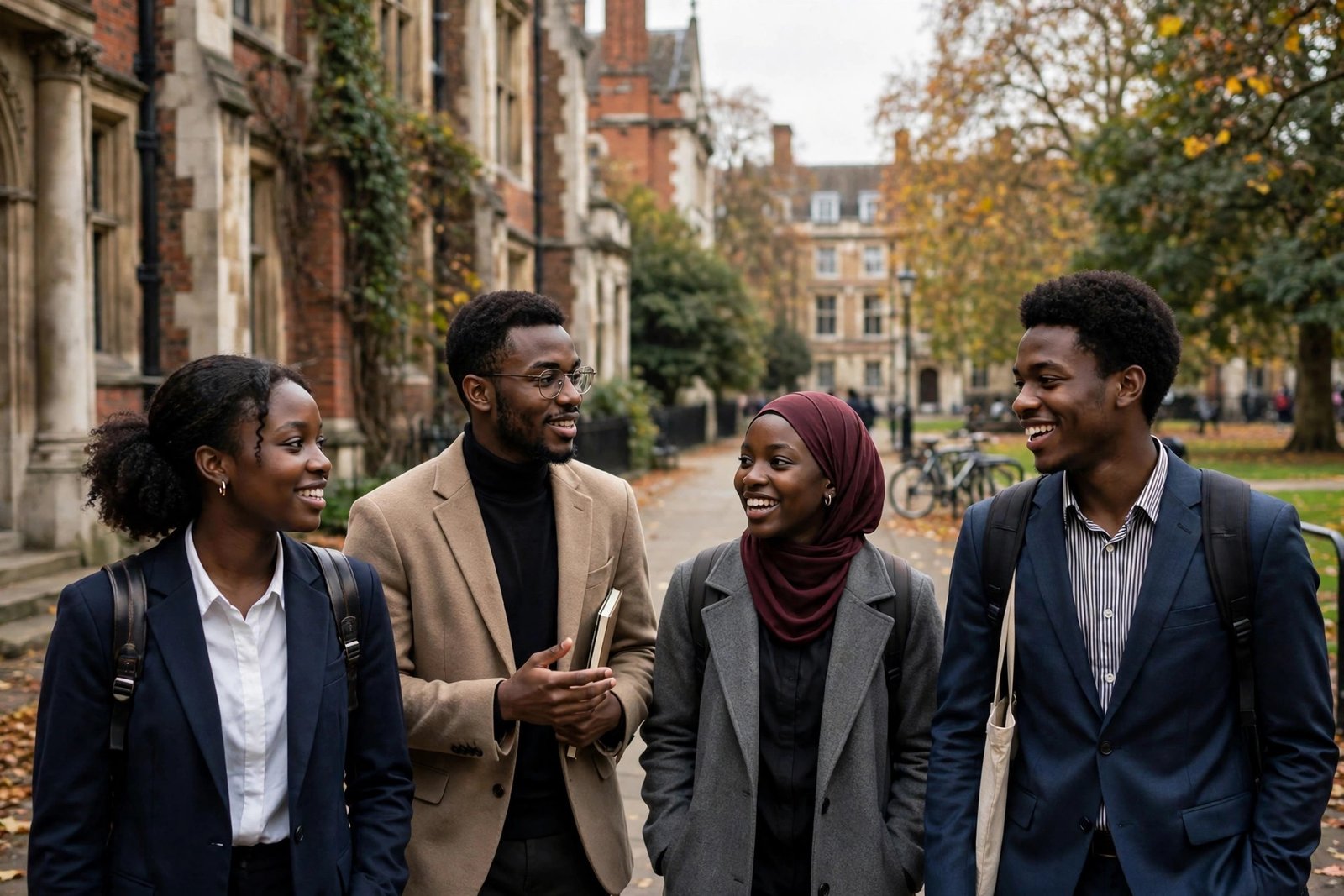
Mo Ibrahim Foundation Scholarships at a Glance
| Item | Details |
|---|---|
| Funding body | Mo Ibrahim Foundation, founded and funded by Dr Mo Ibrahim |
| Application model | Partner-hosted: you apply through the partner institution, not through a single central Foundation portal |
| Who can apply | African nationals only; some routes also require domicile or ordinary residence in an African country |
| Current partner routes in this guide | SOAS University of London (taught master’s); University of Birmingham (MSc plus integrated internship); Chatham House (Academy Fellowship, a professional research fellowship — not a degree) |
| Study location | London and Birmingham, United Kingdom |
| Levels | Taught master’s; two-year MSc plus internship pathway; 10-month professional fellowship |
| Funding | Varies by partner — see the verified partner figures in the Benefits section; no single Foundation-wide amount exists |
| Deadlines | Set by each partner institution; the SOAS 2026/27 deadline was 17 June 2026 and the Chatham House 2026/27 deadline was 7 April 2026 — both labelled last-cycle dates in this guide |
| Alumni network | Graduates are automatically enrolled in the Foundation’s Now Generation Network |
The table already tells you the strategic conclusion: you do not choose “the Mo Ibrahim Scholarship” and then look for a university. You choose which partner route fits your stage of life — a one-year taught master’s, a two-year master’s-plus-internship, or a ten-month research fellowship for working professionals — and then you build your entire application around that partner’s rules. The three routes recruit different people, at different ages, with different qualifications, and they are not interchangeable. A final-year undergraduate cannot apply for the Chatham House fellowship route with any realistic hope, and an experienced policy professional with a master’s degree may find the Birmingham route’s age limit closes that door while opening the fellowship door instead. Matching yourself to the right route is half the competition.
The Partner-University Model: How These Scholarships Actually Work
Most government scholarships you will read about on StudyGraduate — and you can compare them in our universities directory and country guides — are centralised: one funder, one portal, one deadline, one benefits package. The Mo Ibrahim Foundation deliberately works differently. It places its funding inside institutions it trusts, and it lets those institutions recruit, select and administer the awards. SOAS decides who receives the SOAS awards, against SOAS criteria, through the SOAS scholarship process. Birmingham’s International Development Department runs its scholarship alongside admission to one specific MSc. Chatham House selects its Academy Fellow through its own fellowship competition.
This model has three practical consequences you must plan around. First, admission comes first: for the degree routes, you must apply for the academic programme itself, and in the SOAS case you must hold an unconditional offer by the time the scholarship panel meets. A scholarship application without the underlying admission is worthless. Second, timelines are driven by the partner’s academic calendar, not the Foundation’s — which is why the deadlines in this guide range from early April to mid-June depending on the route. Third, the money is packaged differently at each partner: a total award value from which tuition is deducted at one partner, a monthly stipend plus arrival allowance at another, and a fellowship stipend with relocation costs at the third. Comparing routes on headline value alone is misleading; compare what each package actually covers, for how long, and what you would still need to pay yourself.
Historically, the Foundation’s scholarship family has also included other partnerships — older pages and reference works mention, for example, a scholarship for African MBA students at London Business School covering full tuition fees, and earlier doctoral support linked to SOAS’s governance-for-development research. Partnerships change over time: some pause, some close, some are replaced by new awards such as the current SOAS taught master’s scholarship, which SOAS itself describes as a newly established award. This guide therefore features in full only the routes that partner institutions are currently publishing, and it names the London Business School MBA award as a previously listed partnership that you should verify directly with London Business School before relying on it. Treat any website that lists a long, undated menu of “Mo Ibrahim scholarships” with suspicion, and always go back to the partner’s own current page.
Partner Route 1: SOAS University of London — Taught Master’s Scholarship
SOAS University of London is one of the world’s leading institutions for the study of Africa, Asia and the Middle East, and it is the Foundation’s flagship degree partner for 2026/27. The official SOAS scholarship page describes the award plainly: the Foundation has established a new scholarship at SOAS to support and nurture future leaders committed to Africa’s development. There are two awards available for 2026/27, each with a total value of £45,479. Tuition fees are deducted from that total, and the remainder is paid directly to the student as a maintenance stipend. The eligible programmes are any full-time, one-year taught master’s degree programme beginning in 2026/27 — a genuinely broad field, though programmes in development studies, politics, public policy, law, economics and African studies align most naturally with the Foundation’s mission.
The candidate criteria on the official page are specific, and every one of them is a hard filter. You must be a new admission starting in September 2026 — current SOAS students and deferrals are not the target. You must be an Overseas fee-status applicant. You must hold a minimum 2:1 bachelor’s degree from a UK university or an international equivalent. You must hold an unconditional offer for your programme by the time the scholarship panel meets. And the scholarship does not cover funding for, or allow, pre-sessional programmes — if your offer is conditional on a pre-sessional English course, this award will not pay for that course. Preference is given to applicants who are ordinarily resident in Africa and to those who demonstrate a clear interest in governance and/or development in Africa. Note the careful wording: the SOAS criteria as published emphasise overseas fee status, residence preference and commitment to Africa, rather than stating citizenship in the headline criteria — but this is a Foundation award for African leaders, and applicants ordinarily resident in Africa with a governance or development focus are exactly who the preference language is written for. The published deadline for the 2026/27 cycle was 17 June 2026; at the time of writing that date has passed, so treat it as the last cycle’s deadline and as a reliable guide to where in the year the next cycle’s deadline is likely to fall, then confirm the new date on the SOAS page.
Partner Route 2: University of Birmingham — MSc Development Policy and Politics with Mo Ibrahim Internship
The Birmingham route is the most distinctive of the three, because it is not simply a funded degree: it is a two-year pathway that combines a one-year MSc with a one-year integrated internship. The University of Birmingham’s official programme page explains that the International Development Department (IDD) offers one scholarship each year for the MSc in Development Policy and Politics (with Mo Ibrahim Foundation Internship). The successful candidate completes the full one-year MSc, then spends six months with IDD working on research with academics and the Governance and Social Development Resource Centre (GSDRC), followed by six months with the Mo Ibrahim Foundation in London, working alongside the Foundation team on initiatives that aim to put governance at the centre of Africa’s development — including participating in the Now Generation Forum, held as part of the Ibrahim Forum and the Ibrahim Governance Weekend.
The scholarship package published by Birmingham is itemised: full tuition fee; airfare to and from the United Kingdom and visa costs; a monthly stipend of £1,592 for 18 months; and an arrival allowance of £1,082. The remaining six months of the internship period are funded directly to the successful candidate by the Mo Ibrahim Foundation. That structure — eighteen months funded through the university package and the final six months funded directly by the Foundation — is exactly the kind of detail you only get from the partner’s own page, and it is why this guide insists on partner-level verification. Eligibility is demanding and precisely defined. A first-class honours degree or equivalent in a relevant subject from an approved university is essential; Birmingham states that anyone not meeting this minimum will not be considered and should not apply. Relevant subjects listed include Social Policy, Sociology, Politics, International Relations, Development Studies, Diplomacy, Public Administration, Anthropology, Education and related social sciences, excluding business-related degrees. Applicants must be under 30 years of age at the time of applying. They must be African nationals domiciled (or permanent residents) in an African country, with preference given to candidates living in Sub-Saharan Africa. Good written and spoken English is required, with evidence at least at IELTS 6.5 level or TOEFL 580/93 for those whose first language is not English. If you are considering Birmingham more broadly, our profile of the University of Birmingham gives you the institutional context.

Partner Route 3: Chatham House — Mo Ibrahim Foundation Academy Fellowship
The third route is not a degree scholarship at all, and presenting it honestly matters. The Mo Ibrahim Foundation Academy Fellowship at Chatham House — the Royal Institute of International Affairs — is a professional research fellowship for people already building a career. The official Chatham House fellowship page describes it as a joint initiative with the Mo Ibrahim Foundation offering candidates at the early-to-mid stage of their career the opportunity to spend ten months at Chatham House working on an individual research project of their choosing, taking part in the core work of the Institute, developing skills through its leadership programme and extending their professional network in international affairs.
For the 2026/27 cycle, fellows were based full-time at Chatham House in London from October 2026 to July 2027, with hybrid working also possible. The published remuneration was a monthly stipend of £2,565 towards London living expenses — accommodation, utilities, food and transport — plus relocation costs covering travel, accommodation support and visa fees, visa sponsorship where required, the UK Immigration Health Surcharge (excluding dental and optical care and prescriptions), and research expenses relating to fieldwork, outreach, events and publications. On successful completion, fellows gain access to the Academy faculty and alumni and a five-year Chatham House membership. Eligibility is broader than the degree routes in some ways and narrower in others: the fellowship is open to citizens of any African country, including dual nationals where one nationality is African; there is no age restriction; but applicants must hold a completed BA degree or equivalent, must have experience of conducting research, and should come from fields such as academia, NGOs, business, government departments, civil society or the media, with knowledge of and interest in international affairs and Chatham House’s mission. The published application deadline for 2026/27 was 7 April 2026, and Chatham House states that applications for the 2026–27 fellowships are now closed — again, use that as a last-cycle marker, not a live deadline.
Alongside these three routes, keep the Foundation’s separate Ibrahim Leadership Fellowships in your peripheral vision: a distinct programme placing three experienced African professionals a year for twelve months in the executive offices of the African Development Bank, the UN Economic Commission for Africa or the International Trade Centre. That programme requires a master’s degree and at least seven years of relevant experience, so it belongs to a later career stage than this guide’s degree routes — but it shows the ladder the Foundation has built, from master’s scholarships through research fellowships to executive placements, and many scholars aim to climb it over a decade.
Eligibility: The Rules That Apply Across the Family
Because each partner sets its own criteria, there is no single eligibility list — but there is a clear common core, and you should test yourself against it before investing months in an application. First, African identity is non-negotiable: citizenship of an African country for the Chatham House route; African nationality plus domicile or permanent residence in an African country for Birmingham; and, at SOAS, overseas fee status combined with a stated preference for applicants ordinarily resident in Africa. Second, academic excellence is non-negotiable, but the bar differs: a first-class degree is essential at Birmingham, while SOAS sets its floor at a 2:1. Third, mission fit is non-negotiable everywhere. Every route is built around governance, development and leadership for Africa, and every selection process gives weight to a demonstrated, evidenced commitment to those themes — not a generic wish to “help my country”, but a track record and a plan. Fourth, admission or professional standing comes first: an unconditional offer at SOAS, admission to one named MSc at Birmingham, or a research track record and a viable project proposal at Chatham House.
Age rules differ sharply and catch people out. Birmingham’s under-30 rule is absolute at the time of applying. SOAS publishes no age limit for its master’s award. Chatham House explicitly has no age restriction, because it recruits working professionals. English-language requirements also differ: Birmingham publishes IELTS 6.5 or TOEFL equivalents as its evidence threshold, while SOAS applicants must meet the English condition of their offer in order to hold the unconditional offer the scholarship requires. Finally, note what none of these routes is: none is an undergraduate scholarship, none funds study outside the partner institution named, and none can be transferred to a different university if you change your mind. If your heart is set on a university that is not a current partner, this funding family cannot follow you there.
Benefits and Coverage: What Each Partner Actually Pays
| Route | Published funding (verified partner figures) | Duration |
|---|---|---|
| SOAS taught master’s | Two awards for 2026/27, each totalling £45,479: tuition fees deducted from the total, remainder paid to the student as a maintenance stipend. Pre-sessional programmes not covered. | One academic year |
| Birmingham MSc + internship | Full tuition fee; airfare to and from the UK and visa; monthly stipend of £1,592 for 18 months; arrival allowance of £1,082; final six internship months funded directly by the Foundation. | Two years (1-year MSc + 1-year internship) |
| Chatham House Academy Fellowship | Monthly stipend of £2,565; relocation costs (travel, accommodation support, visa fees); Immigration Health Surcharge; research expenses. Not a degree — no tuition involved. | 10 months |
| London Business School MBA (previously listed partnership) | Previously listed as covering full tuition fees for African MBA applicants. Verify current availability directly with London Business School — do not rely on older listings. | MBA duration |
Read that table the way a selection panel would expect you to: carefully, and without inflating it. The SOAS award is generous but finite — because tuition is deducted from the £45,479 total, the maintenance you actually receive depends on your programme’s fee, and London living costs will still require budgeting discipline. The Birmingham package is the most complete in kind, covering travel and visa costs that many scholarships leave to the student, and it pays you across a two-year pathway that ends with professional experience, not just a degree. The Chatham House stipend is a professional fellowship stipend for a working researcher, not student funding, and it comes with research expenses that degree scholarships rarely offer. None of the published packages promises to fund dependants, and none should be assumed to cover costs it does not list. If a cost matters to you — a partner’s travel, childcare, a laptop — and it is not in the partner’s published list, plan as though you must fund it yourself until the partner confirms otherwise in writing.
Beyond money, weigh the non-financial benefits honestly, because for many alumni they prove more valuable. Birmingham interns work inside the Foundation itself for six months and participate in its flagship forums. Chatham House fellows leave with a published research output, a five-year membership and an Academy alumni network in international affairs. SOAS scholars study at an institution whose entire research culture centres the regions the Foundation cares about. And every completer joins the Now Generation Network, which the Foundation describes as spanning members from all 54 African countries. Compare these routes with other African-focused funding such as the Mastercard Foundation Scholars Program when you build your application portfolio — applying to more than one mission-aligned scheme, where you are genuinely eligible, is sensible strategy, not disloyalty.
Programmes and Fields: What You Can Study
The field question answers itself differently at each partner. At SOAS, the door is widest: any full-time one-year taught master’s beginning in 2026/27 is an eligible programme, so the constraint is not the course list but your narrative — preference goes to candidates showing a clear interest in governance and/or development in Africa, so a candidate studying, say, international law, finance or media must connect that field convincingly to African governance and development rather than assuming any subject is equally aligned. At Birmingham there is no choice of programme at all: the scholarship exists for one degree, the MSc in Development Policy and Politics, whose teaching is built around the idea that politics matters for development — core study in international development and development policy and politics, a substantial dissertation with the opportunity for overseas fieldwork, and options such as governance for development and democracy, dictatorship and development. At Chatham House the “programme” is your own research project, chosen by you, but it must sit within international affairs and Chatham House’s mission, and you will develop it inside one of the Institute’s research programmes. In short: SOAS funds breadth with a mission test, Birmingham funds depth in one discipline, and Chatham House funds a question you bring with you.
How to Apply, Step by Step
Step 1 — Choose your route before anything else. Test yourself against the three eligibility sets above: degree level, age, grades, residence and career stage. Most ineligible applications fail at this step, not at selection. Step 2 — Apply for admission (degree routes). For SOAS, submit your master’s application early — SOAS’s own guidance ecosystem warns that admissions processing takes weeks, and you need an unconditional offer before the panel meets, which means clearing every condition, including English, in good time. For Birmingham, apply for the MSc in Development Policy and Politics (with Mo Ibrahim Foundation Internship) as the scholarship is tied to that named programme. Step 3 — Submit the scholarship or fellowship application through the partner. At SOAS this is the university’s scholarship application process for the named award, by the published deadline (17 June 2026 for the last cycle, at 12 noon UK time as listed by scholarship portals reproducing SOAS information — confirm the exact time on the SOAS page). At Chatham House, apply through the Academy fellowship application route with your research proposal at its heart. Step 4 — Prepare your evidence of mission fit. Whichever route you choose, your personal statement or proposal must do three things: show what you have already done in governance, development or leadership; explain precisely what you will study or research and why this partner is the right home for it; and set out a credible, specific plan for how the award converts into impact in Africa afterwards. Step 5 — Secure strong references. Referees should be able to comment on your academic ability and, where relevant, your intended research and its relevance to the Foundation’s aims. Ask early; late references sink complete applications. Step 6 — Track the partner’s outcome process. Panels meet after deadlines; offers of scholarship follow admission outcomes. Keep your contact details current with the partner institution, and if you are waitlisted or unsuccessful, ask whether feedback or a future cycle is appropriate — partners differ.
Required Documents
Exact checklists belong to each partner, but across the three routes you should expect to assemble: a completed programme application and, for SOAS, evidence of your unconditional offer; degree certificates and full academic transcripts demonstrating the required classification (first-class for Birmingham, minimum 2:1 for SOAS); evidence of English-language proficiency where your first language is not English; proof of African citizenship and, for Birmingham, of domicile or permanent residence in an African country, and for SOAS your fee-status evidence; a personal statement addressing governance, development and leadership in Africa; a curriculum vitae; and academic or professional references. Chatham House applicants additionally need a defined research proposal and evidence of prior research experience. Prepare certified copies and translations where documents are not in English, keep digital scans at the resolution portals require, and name files clearly — administrators handling hundreds of applications notice care, and carelessness at document stage quietly corroborates doubts raised elsewhere.
Deadlines and Timeline
| Stage | SOAS route | Birmingham route | Chatham House route |
|---|---|---|---|
| Programme application | Months before the scholarship deadline; allow several weeks for admissions processing | Apply for the named MSc in the university’s normal admissions cycle | Not applicable — fellowship application instead |
| Scholarship/fellowship deadline (last published cycle) | 17 June 2026 (2026/27 cycle) | Set by the University of Birmingham for the relevant entry year — check the programme page; no date is quoted here because the partner page reviewed did not publish one in the material verified | 7 April 2026 (2026/27 cycle); applications now closed |
| Key condition at deadline/panel stage | Unconditional offer held by the time the panel meets | First-class degree and under-30 rule assessed at application | Research proposal and experience assessed in fellowship competition |
| Start | September 2026 for the 2026/27 cycle | MSc start, followed by internship year | October 2026 to July 2027 for the 2026/27 cycle |
The honest headline of that table is that two of its three deadlines are last-cycle dates, published here and labelled as such, because the purpose of this guide is to prepare you for the next cycle rather than pretend a closed deadline is open. If you are reading this after those dates, your task is to work backwards from the equivalent point in the coming cycle: secure admission first, hold your documents ready, and submit the scholarship application the moment the partner opens it. Applicants who begin only when a scholarship is announced routinely miss the unconditional-offer condition at SOAS or rush a weak research proposal at Chatham House.
Selection Criteria and How to Improve Your Chances
Panels across the family reward the same four qualities, weighted differently. Academic merit is the entry ticket: transcripts that clear the published bar with room to spare, and references that corroborate them. Mission evidence is the differentiator: work, volunteering, research or activism that shows governance and development are your record, not your aspiration. A Ugandan applicant who has spent two years digitising land records for a district government, or a Nigerian graduate who has published policy analysis with a think tank, gives a panel something to believe in. Partner fit is the third quality: at SOAS, a statement that engages with the specific department and supervisors; at Birmingham, a genuine intellectual commitment to the politics of development that the MSc teaches; at Chatham House, a research question the Institute’s programmes can host and an audience exists for. The fourth quality is a credible future plan — specific enough to name sectors, institutions or problems you intend to work on in Africa, humble enough not to promise transformation single-handed.
Practical improvements that cost nothing: start the admissions application a full term earlier than feels necessary; convert a conditional offer to unconditional by clearing English requirements early; write the statement in your own voice and cut every sentence that could appear in any applicant’s statement; quantify your experience (budgets handled, people trained, policies drafted); and rehearse explaining your research or study plan in five minutes, because fellowship routes in particular may test exactly that. Use our rankings explorer and study tools to compare partner institutions with your other options while you prepare.
Common Mistakes
The most common mistake is searching for a central Foundation application form and wasting the season — there isn’t one for these awards; the partner is the door. Second: applying for the scholarship before securing admission, or holding only a conditional offer when the SOAS panel meets. Third: ignoring the hard filters — Birmingham’s first-class requirement and under-30 rule, and the African nationality and domicile conditions — and hoping a panel will waive them; published criteria say applicants below the bar will not be considered. Fourth: treating the Chatham House fellowship as a degree scholarship and asking it for tuition it does not pay, or treating it as an entry-level opportunity when it requires research experience. Fifth: quoting outdated figures from aggregator websites — stipends and totals change between cycles, and repeating a superseded number in your application signals carelessness. Sixth: a generic statement name-checking “Africa” without evidence, specifics or a plan. Seventh: missing that these awards cannot be transferred to a non-partner university.
Frequently Asked Questions
Is there one Mo Ibrahim Foundation scholarship application?
No. The Foundation funds awards through partner institutions, and each partner runs its own competition. You apply to SOAS for the SOAS awards, to the University of Birmingham for its MSc scholarship, and to Chatham House for the Academy Fellowship. There is no single central form, deadline or amount.
Who is eligible — do I have to be African?
Yes. These routes are for African leaders: Chatham House requires citizenship of an African country (dual nationals included), Birmingham requires African nationality plus domicile or permanent residence in an African country, and SOAS gives preference to applicants ordinarily resident in Africa alongside its overseas fee-status requirement. Non-African nationals are not eligible for this funding family.
How much is the SOAS scholarship worth?
For 2026/27 SOAS published two awards, each with a total value of £45,479. Tuition fees are deducted from that total and the remainder is paid to you as a maintenance stipend, so your actual living allowance depends on your programme’s fee. The award does not cover pre-sessional programmes.
What does the Birmingham scholarship include?
The University of Birmingham publishes: full tuition fee, airfare to and from the UK and visa costs, a monthly stipend of £1,592 for 18 months, and an arrival allowance of £1,082, with the final six internship months funded directly by the Mo Ibrahim Foundation. The pathway lasts two years — a one-year MSc followed by a one-year internship split between IDD in Birmingham and the Foundation in London.
I have a 2:1, not a first. Can I still apply somewhere?
Possibly. Birmingham states a first-class degree is essential and that those below it should not apply. SOAS sets its minimum at a 2:1, so a strong 2:1 applicant ordinarily resident in Africa, with an unconditional offer and clear governance or development commitment, fits the SOAS criteria as published. Chatham House requires a completed BA and research experience rather than a stated classification.
Is the Chatham House fellowship a degree?
No. It is a ten-month professional research fellowship (October to July in the 2026/27 cycle) for early-to-mid-career candidates, paying a monthly stipend of £2,565 plus relocation, visa, health surcharge and research costs in that cycle. You complete an individual research project; you do not earn a degree.
What happened to the London Business School Mo Ibrahim scholarship?
London Business School has previously listed a Mo Ibrahim Foundation Scholarship for African MBA applicants covering full tuition fees. Partnerships change, and this guide could not verify a current-cycle LBS award from an official LBS page at the time of writing, so check directly with London Business School before planning around it.
Can I use the scholarship at a different university?
No. Each award is tied to its partner institution and, at Birmingham, to one named MSc. If you want to study elsewhere, you need funding attached to that institution instead.
Sources and Verification
This guide was prepared from official partner and programme sources: SOAS University of London, “Mo Ibrahim Foundation Scholarship” (soas.ac.uk) — award count, £45,479 value, eligible programmes, candidate criteria and 17 June 2026 deadline; University of Birmingham, International Development Department, “MSc Development Policy and Politics with Mo Ibrahim Foundation Internship” (birmingham.ac.uk) — scholarship package, internship structure and entry requirements; Chatham House, “Mo Ibrahim Foundation Academy Fellowship” (chathamhouse.org) — fellowship model, eligibility, stipend and 2026/27 dates; and Mo Ibrahim Foundation background on its scholarships and Now Generation Network (moibrahimfoundation.org, as summarised in reference sources). Figures are partner-published figures for the cycles named in the text.
Disclaimer: Scholarship details change yearly — always confirm deadlines, amounts and eligibility on the official partner institution’s website before applying. StudyGraduate is an information portal, not an agency, and no article can promise selection, admission or visa approval.
✅ Eligibility Criteria
- Check the official website for full eligibility criteria for your country
🎁 Benefits
- See the official website for the complete list of benefits
⚙️ Application Process
- 1Check your eligibility on the official site
- 2Prepare your documents and statements
- 3Submit the online application before the deadline
- 4Complete interviews or assessments if shortlisted
- 5Await the final selection announcement
📅 Important Dates
Deadlines vary by country and intake. Check the official website for country-specific dates.
📄 Required Documents
- Valid passport
- Academic transcripts & certificates
- Statement of purpose
- Letters of recommendation
- CV / resume
Commonly required — confirm the exact list on the official site.
❓ Frequently Asked Questions

Ready to Take the Next Step?
Explore more scholarships and study opportunities around the world.
Browse Scholarships →