Konrad-Adenauer-Stiftung (KAS) Scholarship 2026/27 in Germany: Master’s & PhD Guide
Konrad-Adenauer-Stiftung (KAS) Scholarship 2026/27 in Germany: Master’s & PhD Guide The Konrad-Adenauer-Stiftung (KAS) Scholarship is one of Germany’s most distinctive funding opportunities for international students, because it is about much more than money. KAS is one of Germany’s political foundations — organisations funded largely from public funds that support talented students who share their values ... <a title="Konrad-Adenauer-Stiftung (KAS) Scholarship 2026/27 in Germany: Master’s & PhD Guide" class="read-more" href="https://studygraduate.com/scholarship/konrad-adenauer-stiftung-kas-scholarship-2026-27-in-germany-masters-phd-guide/" aria-label="Read more about Konrad-Adenauer-Stiftung (KAS) Scholarship 2026/27 in Germany: Master’s & PhD Guide">Read more</a>
📖 Overview
Konrad-Adenauer-Stiftung (KAS) Scholarship 2026/27 in Germany: Master’s & PhD Guide
The Konrad-Adenauer-Stiftung (KAS) Scholarship is one of Germany’s most distinctive funding opportunities for international students, because it is about much more than money. KAS is one of Germany’s political foundations — organisations funded largely from public funds that support talented students who share their values and want to take responsibility in society. For KAS, those values are rooted in a Christian democratic view of humanity: human dignity, freedom, justice, solidarity, democracy, the rule of law and human rights. If you are an academically strong master’s or doctoral student who volunteers, who cares about politics and society, and who already speaks good German, this scholarship can fund your studies in Germany and connect you to a lifelong network of scholars, alumni, academics and public figures.
This guide explains the KAS International Scholarship for the 2026/27 cycle in full: who can apply, how much the scholarship pays, why German at B2 level or above is non-negotiable, what counts as political and social engagement, how the two application routes work, what documents you need, when to apply, and how to avoid the mistakes that end many applications before they are read properly. It also places KAS in its wider landscape, alongside the DAAD Scholarship and the other political foundation scholarships, so you can decide where your profile fits best. You can also browse the wider StudyGraduate scholarships directory and university profiles while you plan.
A warning at the start, in the spirit of honesty this programme deserves: KAS is not a scholarship you apply to simply because you need funding. Applicants who do not identify with the Foundation’s aims, who have no record of engagement, or who cannot demonstrate good German will not be competitive, however excellent their grades are. Conversely, if your academic record, your volunteering and your values genuinely align, KAS offers something few other funders do — personal mentoring, an interdisciplinary seminar programme, a local university group at your place of study, and support that continues through an active alumni association long after graduation.
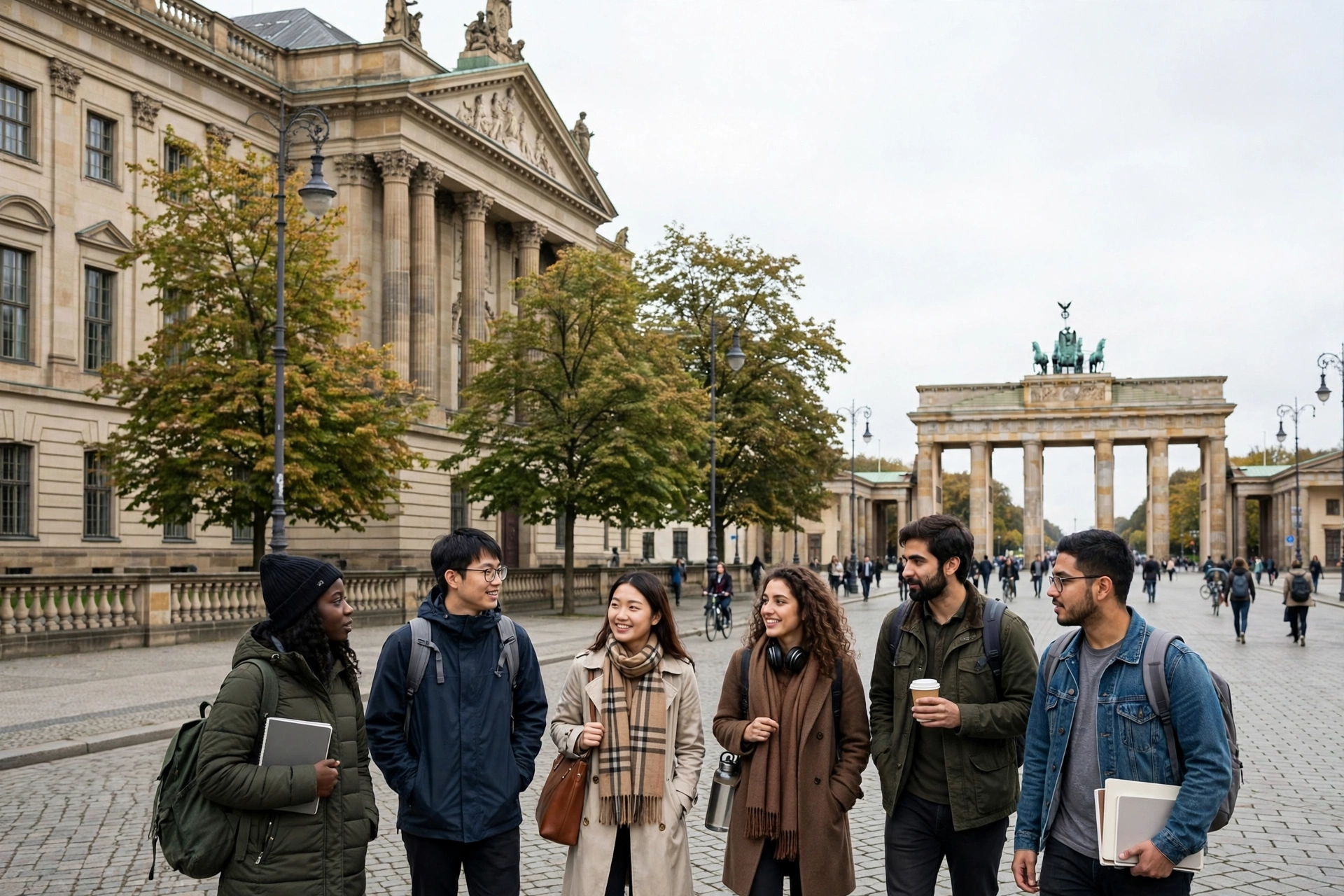
Konrad-Adenauer-Stiftung Scholarship at a Glance
| Item | Details |
|---|---|
| Scholarship name | Konrad-Adenauer-Stiftung (KAS) Scholarship — International Scholarship Programme / International Student Funding |
| Host country | Germany |
| Levels supported (international programme) | Master’s / postgraduate studies and doctoral (PhD) studies; research stays are also described on the official KAS pages. Bachelor’s applicants under the domestic route must already have completed at least two semesters at a German university. |
| Monthly funding — master’s / postgraduate | €992 per month, as published on the official KAS scholarship page at the time of writing; standard funding period two years |
| Monthly funding — doctoral candidates | €1,400 per month, as published on the official KAS scholarship page, provided you meet the admission requirements for a PhD programme at a German university without conditions; standard funding period is generally three years in programme guidance |
| Additional allowances | May be granted on application — for example health insurance contributions, family allowance and childcare supplements — exact amounts and conditions are set out in the programme guidelines on kas.de |
| German language requirement | Good German is expected; programme guidance states a minimum of B2 level, demonstrated for example by a Goethe-Institut certificate, even if your degree programme is taught in English |
| Core personal requirements | Above-average academic performance, voluntary political / social engagement, and identification with the Foundation’s values: democracy, rule of law and human rights |
| Study duration requirement | Plan to study in Germany for at least four semesters in programme guidance; shorter programmes are generally not funded |
| Application routes | Domestic selection procedure in Germany, and applications via participating KAS offices abroad — deadlines and participation vary by office and must be checked locally |
| Application deadlines | KAS operates two deadlines a year for its scholarship selection in published programme listings (15 January and 15 July, with the July domestic deadline at 12:00 noon in recent cycles). Always confirm the exact current-cycle deadline and route on kas.de and with your local KAS office before you apply. |
| Repayment | Scholarships do not need to be repaid. Double funding with BAföG or other public funding is not permitted, per KAS. |
| Official website | kas.de — Scholarship and Culture / International Student Funding pages |
The table above is a summary, not a substitute for the guidelines. KAS states clearly on its official scholarship page that additional allowances may be granted upon request and that the exact amounts and conditions are outlined in the programme guidelines. Read those guidelines for the cycle you are applying in, because rates, deadlines and document lists are updated by the Foundation.
Who Is the KAS Scholarship For?
KAS describes its scholars as people who get involved. On its official pages the Foundation says: democracy needs people who want to take on responsibility, shape society and make a difference. Its scholars speak up for a tolerant, open and fair society, and they get involved in politics, in civil society, in churches or through social projects. That language is not marketing filler — it is a selection brief. Every part of the application, from your motivation letter to your interview, will be read against it.
In practical terms, the international programme is for graduates and doctoral candidates from outside Germany — in many programme descriptions, particularly from non-EU countries — who want to complete a master’s, postgraduate or doctoral programme at a German university. You need a university degree for the graduate route, a plan to study in Germany for a substantial period, and a record that shows both academic excellence and engagement beyond your studies. If you are still at bachelor’s level and outside Germany, KAS is usually a scholarship to aim for at master’s stage, not one you can apply to from secondary school. Bachelor’s funding exists in the domestic system, but programme guidance requires applicants to have already completed at least two semesters at a German university.
The Foundation also welcomes a wide range of subjects. KAS scholars study across the humanities, social sciences, law, economics, natural sciences, engineering and other fields — its seminar programme is deliberately interdisciplinary, bringing together, in its own example, an economist discussing banking stability with a philosopher, or a sociologist and a computer scientist exploring the societal impact of big data. There are clear exclusions in programme guidance — human medicine and dentistry leading to the state examination, medical specialisation programmes and postdoctoral projects are not funded — and programmes that are too short to meet the minimum funding period are also excluded. Check the current guidelines if your programme is a one-year master’s, a professional qualification, or a joint degree spent largely outside Germany.
Eligibility Requirements in Detail
1. Above-average academic performance
KAS is looking for graduates and doctoral candidates who have a university degree and above-average academic performance. There is no single worldwide GPA cut-off published for the international programme, because grading systems differ, but “above average” is meant seriously. Your transcripts, degree classification and academic references need to show that you performed well above the typical standard in your system, and that you have the preparation to succeed in a demanding German master’s or doctoral programme. If your grades are merely average, improving your academic profile — or choosing a funder whose criteria fit you better — is a more honest strategy than hoping the engagement section will compensate completely.
2. Good German language skills — B2 or above
This is the requirement that surprises international applicants most, and it is absolute. Programme guidance for the international scholarship states a minimum German level of B2, demonstrated for example by a Goethe-Institut certificate. KAS expects good German even if your degree is taught entirely in English, because the non-financial programme — seminars, university group activities, mentoring conversations and much of the Foundation’s public life — is conducted in German. You will be expected to discuss political and social questions in German, not just order food or pass a visa interview.
Plan your language learning early. Reaching B2 from beginner level takes sustained study over many months, and reaching the confident, discussion-ready German that helps in a selection interview takes longer. If you are applying for 2026/27 and you have no German yet, be realistic: you may need to target a later cycle while you learn, or focus first on funders that do not require German. If you are already at B1, intensive study, a recognised certificate and regular speaking practice should be your priority alongside your application documents. Do not claim a level you cannot demonstrate with a certificate and in conversation.
3. Political and social engagement aligned with the Foundation’s values
KAS looks for applicants who are actively engaged in voluntary work and who support democracy, the rule of law and human rights. Engagement can take many forms: volunteering in a community organisation, social or charitable work, involvement in a church or faith community, cultural projects, student representation, political or civic initiatives, coaching, tutoring, or leadership in a non-profit. What matters is that it is real, sustained and reflective. A single certificate from a one-day event will not carry the same weight as two years of regular responsibility where you can explain what changed because you were involved, what you learned, and why it matters to you.
Alignment does not mean you must be a member of a particular political party, and KAS scholars come from diverse backgrounds. It does mean you should be able to explain, thoughtfully and in your own words, why democracy, human dignity, freedom of expression and the rule of law matter, how those values relate to your field and your home country, and what you hope to contribute during and after your scholarship. Applicants who are openly hostile to those values, or who treat the values section as a copy-and-paste exercise, are unlikely to succeed — and would probably not enjoy the programme if they did.
4. A qualifying study plan in Germany
You must plan to study at a German university for at least four semesters in programme guidance — for master’s applicants, that typically means a four-semester master’s programme; for doctoral candidates, admission to a PhD programme at a German university without conditions for the full €1,400 rate as described by KAS. Research stays and postgraduate programmes are covered in the official descriptions, but short programmes, programmes below the minimum duration and postdoctoral projects are not. As with other German funders, you should secure admission — or be well advanced in the admission process — at a state or state-recognised German university. Browse StudyGraduate’s study abroad guidance for how German admissions and semesters work.
5. Personal qualities: openness, initiative and willingness to participate
KAS says it encourages scholars to try new things, step out of their comfort zone and keep growing academically and personally. It expects scholars to take an active role in their local university group and in the seminar programme, and after their studies to help promote lasting ties between their home country and Germany. If you want a silent cheque with no obligations, this is the wrong programme. If you want a community that will challenge and support you, that expectation is a benefit, not a burden.
Benefits and Coverage: What KAS Actually Pays
On its official scholarship page, KAS publishes the following financial support for international students and doctoral candidates. Graduate students enrolled in a master’s or postgraduate programme receive a monthly scholarship of €992, with a standard funding period of two years. Doctoral candidates receive €1,400 per month, provided they meet the admission requirements for a PhD programme at a German university without conditions. KAS states that all its scholarships are funded by the German Federal Ministry of Education and Research and the Federal Foreign Office, and that they do not need to be repaid.
Beyond the monthly rate, additional allowances may be granted upon request — KAS gives family allowances, childcare supplements and contributions toward health insurance as examples, with exact amounts and conditions in the programme guidelines. Secondary programme listings that reproduce the guidelines have in recent cycles listed a health insurance subsidy of up to €120 per month, a family allowance of €276 per month where a spouse lives in Germany for more than three months, and a child allowance of €250 per child per month, as well as research travel grants for approved academic research abroad and partial reimbursement of tuition fees of up to €750 per semester in exceptional cases. Because allowance rules change and depend on your circumstances, treat those figures as a guide to what to ask about, and confirm the current amounts in the official guidelines for your cycle — do not budget on the basis of a third-party listing alone.
Equally important is what the scholarship does not cover. Programme guidance notes that enrolment, re-registration and semester fees — including student union contributions and the semester transport ticket — are not covered, and tuition is not generally covered beyond the exceptional partial reimbursement described above. In most German public universities tuition is low or absent for many programmes, but in states or programmes that charge international tuition, and for private institutions, you need a separate plan. KAS also states that double funding from KAS and BAföG or other public funding is not permitted, and programme guidance says KAS does not provide follow-up or bridge funding to continue an existing scholarship — although a previous scholarship for undergraduate study does not prevent you applying for master’s or doctoral support.
Non-financial benefits: mentoring, seminars and the university groups
Many KAS scholars say the non-financial programme is the most valuable part. Each scholar receives individual support: advisors take time to get to know you, discuss your goals, and help you navigate your studies or PhD. Every scholarship holder becomes part of a university group at their place of study; groups design their own seminar programmes — cultural outings, behind-the-scenes tours of parliament, political discussions — supported by a trusted academic advisor. The interdisciplinary seminar programme brings scholars from all fields together with experts from science, politics, media, the arts and culture. And when the scholarship ends, the connection continues through the alumni association, the ASeV. For a future career in academia, public policy, journalism, business or civil society, that network — in Germany and in your home region through KAS’s international offices — can matter as much as the monthly payment.
Can you live on €992 a month in Germany?
Honest budgeting matters. Germany requires most international students who need a visa to demonstrate funds for living expenses; the blocked account amount for 2026 is €11,904 per year, which is €992 per month — the same figure as the KAS master’s rate. That alignment is not a coincidence: the rate is calibrated to the official estimate of student living costs. In lower-cost university cities, €992 can cover rent in shared accommodation, health insurance, food, transport and study materials with careful budgeting. In Munich, Hamburg, Frankfurt or central Berlin, rent alone can consume a much larger share, and you will need the allowances you qualify for, savings, or permitted part-time work within your residence rules to live comfortably. Doctoral candidates on €1,400 have more headroom, but family costs change the calculation quickly. Use the StudyGraduate tools directory, including cost-of-living and budget tools, to model your specific city before you accept any offer.

Programmes and Fields of Study
KAS does not publish a closed list of eligible subjects for the international programme, and its interdisciplinary ethos points the other way: scholars are deliberately mixed across fields so they learn from each other. Political science, international relations, law, economics, history, philosophy, theology, journalism and social sciences sit naturally with the Foundation’s mission, and many scholars work in those areas — but natural scientists, engineers, computer scientists, medical researchers in eligible non-clinical programmes, artists in related programmes and others also hold KAS scholarships where their study plan and engagement fit.
What matters more than the label of your subject is the coherence of your story: why this programme, in Germany, now; how it builds on your previous study; what question or problem you want to work on; and how your studies connect to responsibility in society — in your home country, in Germany, or internationally. A computer scientist working on trustworthy AI governance, an engineer working on the energy transition, an economist working on social market questions and a historian working on democratic memory can all make that story convincingly. A purely technical application that never mentions society, values or engagement will read as a mismatch, whatever the grades.
For doctoral candidates, add research fit: a defined dissertation project, a supervisor or institute at a German university that wants to host it, and unconditional admission where required. For master’s applicants, add programme fit: a four-semester programme at a recognised university whose modules and language of instruction you have actually researched. Name specific modules, research groups or professors in your motivation letter only if you have genuinely checked them — selection readers can tell the difference.
How to Apply: Step by Step
- Confirm your route. KAS international applicants apply either through the domestic selection procedure if they are already in Germany, or through a participating KAS office abroad in their home country or region. Only selected offices participate in each cycle, and deadlines can differ by country. Start on the official KAS scholarships page on kas.de and then follow the instructions for the International Student Funding programme and for your local office, if you are applying from abroad.
- Check the mandatory requirements before you write anything. German at B2 or above with a recognised certificate, a qualifying degree and above-average record, a study plan of at least four semesters in Germany, and documented voluntary engagement. KAS programme guidance says plainly not to submit enquiries or applications unless you meet the mandatory requirements. Respect that — an application that fails a mandatory gate wastes your time and the readers’.
- Secure or advance your German university admission. Apply to German master’s or doctoral programmes in parallel, following each university’s own deadlines, which are often months before the scholarship deadline. For doctoral study, contact potential supervisors early with a focused research proposal.
- Prepare your documents (see the full list below). Order certified copies and translations early; book your German certificate exam in time for the result to be available; ask referees well in advance and give them your CV, your study plan and a note on KAS’s values and criteria so they can write a specific reference.
- Write a motivation letter that is genuinely yours. Explain your academic path, your engagement, your values, why KAS specifically — not just “a scholarship in Germany” — and what you will contribute to the university group and seminar programme, and after graduation. Write it in the language the guidelines require for your route, and have a qualified person proofread your German without rewriting your voice.
- Submit through the channel your route specifies. For the domestic procedure, applications and document uploads are made through the KAS Campus portal as directed in the current call. For the abroad route, follow your local KAS office’s submission instructions exactly. Submit before the deadline — in recent domestic cycles the July deadline has been 15 July at 12:00 noon — and keep confirmation of submission.
- Prepare for selection. Shortlisted applicants are invited to selection procedures that can include interviews and discussion elements, where academic plans, engagement, values and German communication are all assessed. Practise discussing your field, your engagement and current social and political questions in German, honestly and with nuance. There is no benefit in memorised slogans; readers reward reflection, openness to other perspectives and clarity about your own position.
- If selected, complete enrolment and visa steps promptly. Your scholarship confirmation helps demonstrate funding, but you remain responsible for university enrolment, residence registration, health insurance and, where required, a student visa or residence permit. If you are not selected, ask — politely, through the channel provided — whether feedback is available, strengthen the weak area (often German or documented engagement) and consider whether a later cycle or a different funder fits better.
Required Documents
Document lists are set in the current programme guidelines and can differ slightly by route and level, so use this list to prepare and then check it against the official call. Typically, international applicants prepare:
- Completed application form for your route (Campus portal or local office form, as directed)
- Tabular curriculum vitae, including education, engagement, work, language skills and any publications or awards
- Motivation letter / statement of purpose addressing academic goals, engagement, values and fit with KAS
- Copies of degree certificates and full academic transcripts, with certified translations where the guidelines require them
- Proof of German language proficiency at minimum B2 level, for example a Goethe-Institut certificate or another recognised certificate named in the guidelines
- Academic reference(s) from university teachers who know your work; doctoral applicants additionally provide a reference or confirmation from their doctoral supervisor
- Proof of admission or enrolment at a German university, where available at application, or evidence of your application status as the guidelines allow
- For doctoral applicants: a dissertation proposal / exposé describing your research question, method, literature and timetable, plus confirmation of supervision
- Evidence of voluntary, social or political engagement — confirmations from the organisations you work with, describing your role and duration
- Copy of your passport or identity document, and any further forms the current call lists
Do not invent engagement, inflate roles, or submit certificates you have not earned. KAS checks references and discusses your documents in interview; an inconsistency can end an otherwise strong application and damage your credibility for future cycles.
Deadlines and Timeline
| Stage | Timing | Notes |
|---|---|---|
| German language preparation | 12–24 months before deadline for most learners | B2 with a recognised certificate is a mandatory gate; discussion-ready German helps in selection |
| German university applications | Varies by university; often 4–9 months before semester start | University deadlines are separate from and often earlier than the scholarship deadline |
| KAS application deadlines | Two deadlines a year in published listings: 15 January and 15 July | The domestic July deadline in recent cycles has been 15 July at 12:00 noon. Applications via KAS offices abroad can have different local deadlines — confirm yours on kas.de and with the local office for the 2026/27 cycle. |
| Selection procedures | In the weeks / months after each deadline | Interviews and discussion elements for shortlisted candidates; format and dates are communicated by KAS |
| Funding start | Aligned with enrolment / semester start after selection | Master’s standard period two years; doctoral standard period generally three years, subject to progress and guidelines |
| Visa / residence preparation | Immediately after admission and scholarship confirmation | Blocked account requirement for 2026 is €11,904 per year where a blocked account is required; a scholarship confirmation can serve as proof of funds — follow your embassy / consulate instructions |
Because the brief for this article asked specifically about two deadlines per year, a clarification is important for accuracy: older and university-published listings of the KAS international programme consistently show 15 January and 15 July as the two application deadlines, while many recent international summaries emphasise the 15 July domestic deadline and note that offices abroad set their own dates. That is why the table phrases the position carefully. For a 2026/27 application, the only safe deadline is the one printed in the current official call for your specific route. If your local office is not participating in a given cycle, you cannot simply submit to another office — ask KAS, through the official contact channels, what route, if any, is open to you.
Selection Criteria and How to Improve Your Chances
KAS selection weighs academic excellence and personal suitability together. Readers look for: a strong, coherent academic record and study plan; proven, sustained voluntary engagement; identification with the Foundation’s values and the ability to reflect critically on social and political questions; openness, tolerance and willingness to engage with different perspectives; initiative and leadership potential; and good general education and curiosity beyond your own field, as the Foundation’s own descriptions emphasise. German communication underpins all of it.
To improve your chances, start with evidence, not adjectives. Keep a simple engagement log for a year before you apply: organisation, role, hours, responsibilities, outcomes. Ask the organisations to confirm it in writing. In your motivation letter, connect the dots explicitly — this experience, this value, this study goal, this future contribution — rather than listing activities and hoping the reader assembles the story. Choose referees who have seen both your academic work and, ideally, your character in action, and who will write specifically. Research KAS properly: read its publications on a topic in your field, attend a public KAS event in your country if one is available, and be able to discuss an issue where you agree with the Foundation’s direction and one where you have questions — thoughtful independence, respectfully expressed, is more convincing than total agreement with everything.
For doctoral applicants, the proposal is decisive alongside engagement. A focused question, a method you can defend, awareness of the German research landscape in your topic and a supervisor who genuinely supports the project will separate you from generic proposals. For master’s applicants, programme specificity does similar work: show you know the curriculum, the language of instruction, and how the degree leads to your next step back home or internationally.
Finally, treat the wider German funding landscape intelligently. KAS sits alongside the other political foundations — the Friedrich-Ebert-Stiftung, aligned with social democracy; the Heinrich Böll Foundation Scholarship, aligned with the Greens; and others including Rosa Luxemburg, Hanns Seidel and Friedrich Naumann — and alongside DAAD, the German Academic Exchange Service, which is not a political foundation and does not require identification with a foundation’s values or, for many programmes, German at B2. Apply to the foundation whose values you genuinely share; applicants who send near-identical applications to every foundation are usually obvious. You can compare the social-democratic route in our Friedrich Ebert Stiftung Scholarship guide. Never apply for double public funding in a way the rules forbid — KAS explicitly prohibits double funding with BAföG or other public funding.
Common Mistakes to Avoid
- Applying without B2 German. It is a mandatory requirement in programme guidance, even for English-taught degrees. An application without the certificate and the ability will not be rescued by excellent grades.
- Treating engagement as a decoration. Listing memberships with no role, duration or reflection — or inventing volunteering — fails the core personal criterion.
- Writing a generic “study in Germany” letter. If your letter could be sent unchanged to DAAD and every foundation, it shows you do not understand KAS. Name the values, the seminar programme and the university groups, and your contribution to them.
- Ignoring the four-semester rule. Short master’s programmes and programmes below the minimum funding period are generally not funded. Check your programme length before you build a plan around KAS.
- Missing your route’s real deadline. Domestic, January, July and local-office deadlines are not interchangeable. Confirm which one governs you, including the time of day, and submit early.
- Budgeting as if everything is covered. Semester fees, enrolment fees and most tuition are not covered; high-rent cities strain €992 a month. Budget honestly, including the €11,904-a-year living-costs benchmark for 2026.
- Applying to a foundation whose values you do not share. Beyond the ethics, it shows in interview. Choose the funder that fits you.
Frequently Asked Questions
How much does the KAS Scholarship pay in 2026/27?
As published on the official KAS scholarship page at the time of writing, international master’s and postgraduate students receive €992 per month with a standard funding period of two years, and doctoral candidates receive €1,400 per month provided they meet the admission requirements for a PhD programme at a German university without conditions. Additional allowances for health insurance, family and childcare may be granted on application under the programme guidelines. Confirm the rates in the guidelines for your cycle, as they can be updated.
Do I really need German if my master’s is taught in English?
Yes. Programme guidance states a minimum of B2 German, demonstrated for example by a Goethe-Institut certificate, regardless of the language of your degree programme. The Foundation’s seminars, university groups and mentoring are conducted largely in German, and selection includes your ability to engage in German.
Can I apply for a bachelor’s degree with KAS from my home country?
Generally, no — not as a new entrant from abroad. The international programme described by KAS is for master’s, postgraduate and doctoral study and research stays. Bachelor’s funding in the domestic system requires, in programme guidance, that you have already completed at least two semesters at a German university. If you are finishing school now, plan KAS for your master’s stage.
Is there an age limit for the KAS international scholarship?
Older programme listings and some university summaries mention an age limit of 30 at application for international applicants, while the current main KAS scholarship page extracted for this guide does not state a single universal age limit for every category. Because this point has varied in published guidance, check the current programme guidelines for your route before you rely on either position, and ask your local KAS office if the guidelines are unclear.
Which subjects are not funded by KAS?
Programme guidance excludes human medicine and dentistry leading to the state examination, medical specialisation programmes and postdoctoral projects, as well as programmes that do not meet the minimum funding duration. If your programme is professional, clinical or unusually short, verify its eligibility in the current guidelines before applying.
Can I hold KAS together with another scholarship?
KAS states that double funding from KAS and BAföG or other public funding is not permitted, and guidance says KAS does not provide follow-up funding to continue an existing scholarship. A scholarship held for a previous, completed stage of study is a different matter. Disclose any other funding you hold or are applying for, exactly as the application asks.
Do I have to be a member of a political party to get a KAS Scholarship?
No party membership requirement is stated in the programme descriptions used for this guide. What KAS requires is identification with its values — democracy, rule of law, human rights — and active voluntary engagement, which can be political, social, church-based, cultural or community work. Be ready to discuss your engagement and your views thoughtfully and respectfully.
Does KAS guarantee admission to a German university or a visa?
No. A scholarship is funding and support; university admission is decided by the university, and visa and residence decisions are made by the German authorities. KAS selection does not guarantee either, and no honest guide should promise selection, admission or visa approval.
Sources and Verification
This guide was prepared from official and programme sources, checked in October 2026:
- Konrad-Adenauer-Stiftung — Scholarships page (kas.de): values and programme ethos, individual support, seminars and university groups, and the published international rates of €992 per month for master’s / postgraduate students (standard period two years) and €1,400 per month for doctoral candidates, plus the notes on additional allowances, funding by the Federal Ministry of Education and Research and the Federal Foreign Office, non-repayment and the prohibition on double funding with BAföG or other public funding.
- KAS International Student Funding programme guidance, as reproduced in DAAD and university listings: B2 German minimum, above-average performance, voluntary engagement, support for democracy, rule of law and human rights, study in Germany for at least four semesters, bachelor’s applicants to have completed at least two semesters in Germany, doctoral admission requirements, exclusions and allowance details.
- DAAD — German Academic Exchange Service (daad.de): context for the wider German scholarship landscape and the distinction between DAAD and the political foundations.
- Study in Germany (study-in-germany.de): official portal context for studying in Germany, admissions and living costs. The Germany blocked account figure of €11,904 per year for 2026 is the programme context figure used across StudyGraduate’s Germany guides.
Disclaimer: Scholarship details, rates, allowances and deadlines change yearly. Always confirm deadlines, amounts, eligibility and document requirements on the official KAS website and with your local KAS office before applying. StudyGraduate is an information portal, not an agency, and does not promise selection, admission or visa approval.
✅ Eligibility Criteria
- Check the official website for full eligibility criteria for your country
🎁 Benefits
- See the official website for the complete list of benefits
⚙️ Application Process
- 1Check your eligibility on the official site
- 2Prepare your documents and statements
- 3Submit the online application before the deadline
- 4Complete interviews or assessments if shortlisted
- 5Await the final selection announcement
📅 Important Dates
Deadlines vary by country and intake. Check the official website for country-specific dates.
📄 Required Documents
- Valid passport
- Academic transcripts & certificates
- Statement of purpose
- Letters of recommendation
- CV / resume
Commonly required — confirm the exact list on the official site.
❓ Frequently Asked Questions

Ready to Take the Next Step?
Explore more scholarships and study opportunities around the world.
Browse Scholarships →