ICCR Scholarship 2026/27 to Study in India: Undergraduate, Postgraduate & PhD Guide
ICCR Scholarship 2026/27 to Study in India: Undergraduate, Postgraduate & PhD Guide If you want a funded degree in India — a country with large public universities, English-medium teaching in most programmes, and living costs far below those in North America or Europe — the scholarships administered by the Indian Council for Cultural Relations (ICCR) ... <a title="ICCR Scholarship 2026/27 to Study in India: Undergraduate, Postgraduate & PhD Guide" class="read-more" href="https://studygraduate.com/scholarship/iccr-scholarship-2026-27-to-study-in-india-undergraduate-postgraduate-phd-guide/" aria-label="Read more about ICCR Scholarship 2026/27 to Study in India: Undergraduate, Postgraduate & PhD Guide">Read more</a>
📖 Overview
ICCR Scholarship 2026/27 to Study in India: Undergraduate, Postgraduate & PhD Guide
If you want a funded degree in India — a country with large public universities, English-medium teaching in most programmes, and living costs far below those in North America or Europe — the scholarships administered by the Indian Council for Cultural Relations (ICCR) should be near the top of your list. ICCR is an autonomous organisation of the Government of India, working under the Ministry of External Affairs, and it runs the Government of India’s best-known scholarship route for foreign nationals who want to study at Indian universities and institutes. Through one online system, the A2A (Admission to Alumni) Scholarship Portal, you can apply for undergraduate, postgraduate and PhD study across a wide range of subjects, and if you are selected, the scholarship covers the core costs of your degree: tuition, a monthly living allowance, housing support and, under several schemes, return airfare.
This guide is written for international students planning for the 2026/27 cycle and beyond, with a particular focus on applicants from Bangladesh, Nepal, Sri Lanka, Pakistan, Nigeria, Indonesia and other countries whose students regularly appear in ICCR classrooms. It explains which ICCR schemes exist, who is eligible, exactly what the scholarship pays for, which courses are excluded, how to apply step by step on the A2A portal, what documents you need, when the portal usually opens and closes, and the mistakes that quietly end otherwise strong applications. Everything factual in this guide has been checked against ICCR’s own portal, ICCR guidelines for applicants, and announcements published by Indian embassies and high commissions, which are the channels through which ICCR scholarships are promoted in each country.
One warning before you read further, because it shapes everything else: ICCR scholarships are allocated country by country and scheme by scheme. The scheme open to a student in Dhaka may not be the scheme open to a student in Accra or Kathmandu, and the number of slots differs by country. That is why this guide will keep sending you back to two places — the A2A portal at a2ascholarships.iccr.gov.in and the Indian mission (embassy or high commission) in your country. They are the only sources that can confirm the schemes, slots and deadlines that apply to you personally. Use this guide to understand the system and prepare a strong file; use the portal and your mission to confirm the details of your cycle.
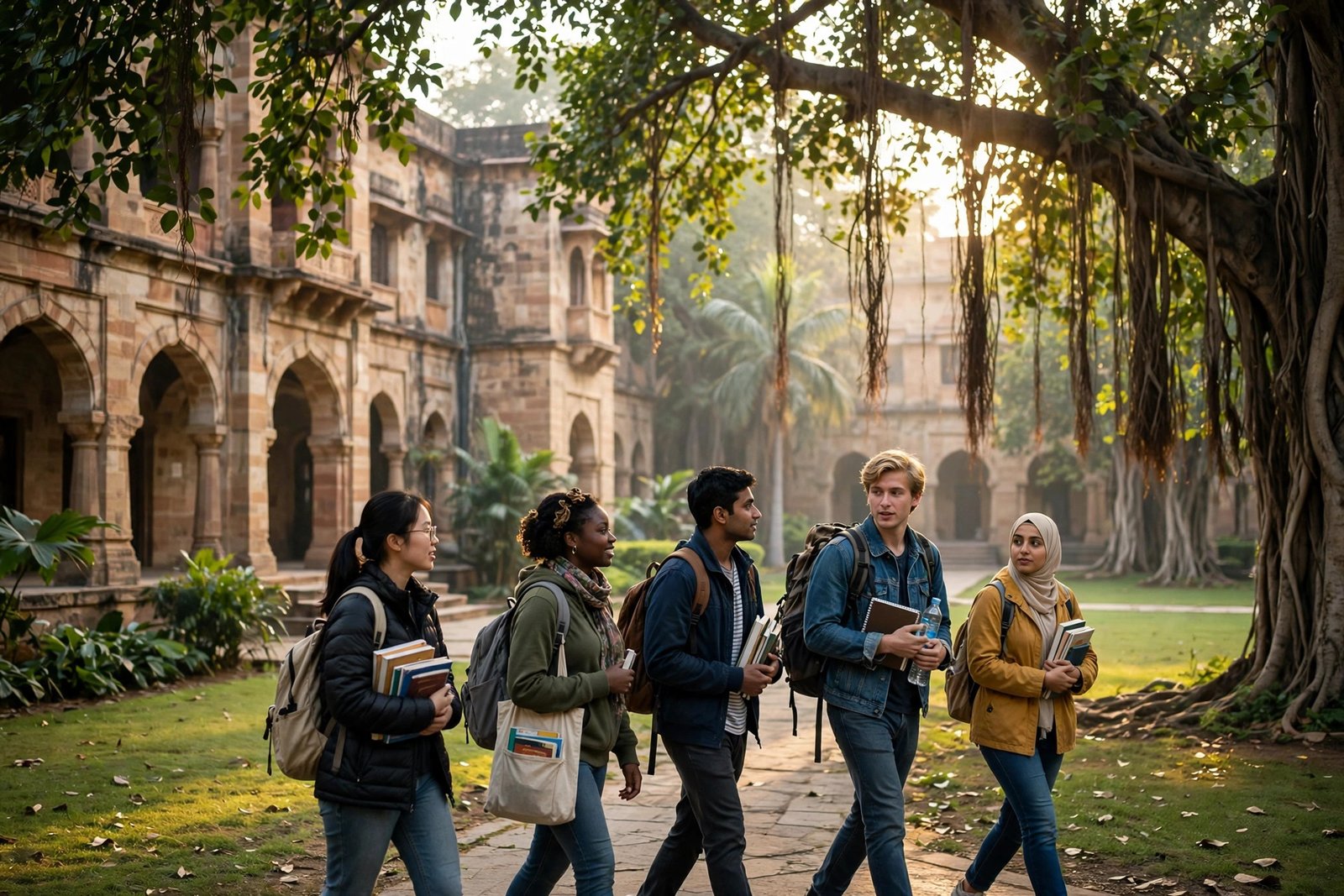
ICCR Scholarship 2026/27 at a Glance
The table below summarises the scholarship as ICCR presents it across its schemes. Read the notes under the table carefully: ICCR publishes its financial terms by course level and by scheme, so a single universal stipend figure does not exist, and any website that gives you one number for every student is oversimplifying the system.
| Item | Details |
|---|---|
| Scholarship name | ICCR Scholarships (a family of Government of India schemes administered by the Indian Council for Cultural Relations) |
| Main schemes | Atal Bihari Vajpayee General Scholarship Scheme; Dr. S. Radhakrishnan Cultural Exchange Scholarship Scheme; Lata Mangeshkar Dance & Music Scholarship Scheme; AYUSH Scholarship Scheme; plus country- and region-specific schemes (for example Commonwealth, Mekong-Ganga Cooperation, India-Africa Maitri and schemes for Sri Lankan and Nepalese nationals) — availability depends on your nationality |
| Host country | India |
| Levels | Undergraduate, postgraduate (Master’s), MPhil/PhD and research; diploma and Indian culture courses under specific schemes |
| Where you study | Universities and institutes empanelled with ICCR (central and state universities and other recognised institutions listed on the A2A portal) |
| What it covers | Tuition and other compulsory fees as per actuals; monthly living allowance (stipend); house rent allowance where hostel accommodation is not used; annual contingent grant; thesis/dissertation expenses for research scholars; medical benefits under ICCR norms; return economy airfare under schemes that include it (notably the General and Dance & Music schemes) |
| Who can apply | Foreign nationals only — Indian citizens are not eligible. You must be a citizen of a country covered by the scheme you apply under |
| Age | Generally 18 to 40 years for undergraduate and postgraduate courses and up to 50 years for PhD in recent cycles; some country notices have used 18–35 (40 for PhD), so confirm the limit in your mission’s notice for your cycle |
| Application route | Online only, through the A2A Scholarship Portal, with your application routed via the Indian mission in your country |
| Application window | The portal typically opens in late winter/spring for the academic year starting in July–August. In the 2026-27 cycle, country deadlines fell in spring 2026 — for example 15 April 2026 in one published country notice and 30 April 2026 for the General Scheme in another — with the AYUSH scheme running later, to 31 May 2026 |
| Cost to apply | No application fee is charged by ICCR for the scholarship application itself |
| Official website | iccr.gov.in and the A2A portal |
If you are comparing India with other destinations, browse our full scholarships directory and our study abroad guides to see how ICCR sits alongside government scholarships in Türkiye, Hungary, China, Japan and Korea, which follow a similar embassy-and-portal model.
What the ICCR Scholarship Actually Is
ICCR was founded in 1950 to build cultural and educational links between India and the rest of the world, and its scholarship programme has been running for decades. Indian missions regularly describe the scale of the system in their notices: ICCR offers scholarship slots every year across more than a hundred empanelled universities and institutes, and students from well over a hundred countries study in India under its various schemes at any given time. You are not applying to one single competition. You are applying into a family of schemes, each with its own funding source, eligible region and slot allocation.
The four schemes you will meet most often are these. First, the Atal Bihari Vajpayee General Scholarship Scheme (scheme code A1201 in recent cycles, formerly called the General Scholarship Scheme or GSS) is the flagship open scheme: undergraduate, postgraduate and research study across most academic subjects, with return airfare included. Embassy notices for 2025-26 announced 625 slots globally under this scheme, which gives you a sense of its scale relative to the others. Second, the Dr. S. Radhakrishnan Cultural Exchange Scholarship Scheme (formerly the Cultural Exchange Programme / Education Exchange Programme) operates under bilateral cultural exchange agreements, so it exists only for countries that have such an agreement with India, and airfare is generally not included. Third, the Lata Mangeshkar Dance & Music Scholarship Scheme (A1209) is for students of Indian culture — dance, music, theatre, performing arts, sculpture, Indian languages and Indian cuisine — with 100 slots announced globally in a recent cycle and no country-wise allocation. Fourth, the AYUSH Scholarship Scheme supports study of India’s traditional medicine systems — Ayurveda, Yoga, Unani, Siddha and Homoeopathy — at undergraduate, postgraduate and PhD level for students from eligible country groupings.
Around those four sit smaller, targeted schemes that appear only if your nationality matches: a Commonwealth scholarship scheme, the Mekong-Ganga Cooperation scheme for Cambodia, Laos, Myanmar, Thailand and Vietnam, an India-Africa Maitri scheme for African nationals, a Quad STEM scheme for Indo-Pacific students in undergraduate engineering, and dedicated schemes for Sri Lankan and Nepalese nationals, among others. The practical lesson is simple: do not begin by picking a scheme name you read on a blog. Begin on the A2A portal and with your Indian mission’s current notice, see which schemes are actually open to your passport for 2026/27, and then apply under the correct one. Applying under the wrong scheme is a quiet, common and entirely avoidable reason for rejection.
Eligibility: Who Can Apply for the ICCR Scholarship?
Eligibility has two layers: ICCR’s general rules, which apply to almost everyone, and the admission rules of the university and course you choose, which you must also meet. Meeting one layer does not excuse you from the other.
General ICCR eligibility
- Nationality: You must be a foreign national — a citizen of a country other than India — and a citizen of a country covered by the scheme you apply under. ICCR scholarships are not open to Indian citizens, including those living abroad.
- Age: Recent ICCR guidelines and mission notices most commonly state 18 to 40 years for undergraduate and postgraduate courses, with a maximum of 50 years for PhD applicants. Be aware that individual country notices have sometimes published tighter limits, such as 18 to 35 years with 40 for PhD. Treat the notice issued for your country and cycle as the controlling document and check your age against its stated reference date.
- Academic qualifications: For undergraduate study, completion of about 12 years of schooling (10+2 or equivalent). For a Master’s, a relevant Bachelor’s degree. For PhD, a relevant Master’s degree. Your marks must meet the entry standard of the course you select — ICCR does not override a university’s admission requirements.
- English proficiency: Teaching at empanelled institutions is overwhelmingly in English, and ICCR tests this directly: applicants write a 500-word essay in English on the portal as part of the application, which ICCR uses to assess proficiency. If you hold TOEFL, IELTS or similar scores you may submit them as supporting evidence, but the essay is the standard instrument — write it yourself and write it well.
- Medical fitness: You must submit a certificate of physical fitness in ICCR’s prescribed format, completed by a registered medical practitioner in your country. Selected students are also expected to take the medical insurance that ICCR norms require.
- One application: Submit one careful application for the cycle. Duplicate or careless multiple submissions create problems rather than advantages, and ICCR guidelines have consistently warned against applying more than once.
- Passport: You need a passport valid for the duration of your intended course. If yours expires soon, renew it before you apply rather than after selection.
Course-level eligibility notes
For PhD applications, universities will expect a defined research interest that fits a department’s capacity, and some will want a synopsis or proposal as part of admission. For professional and technical courses such as engineering, check the specific prerequisites in mathematics and science subjects, because the university, not ICCR, judges whether your school or Bachelor’s record qualifies you. For AYUSH courses, eligibility follows the regulatory requirements of the traditional-medicine councils — for example, postgraduate Ayurveda, Siddha, Unani and Homoeopathy courses require the corresponding recognised Bachelor’s degree in that system, while an M.Sc. in Yoga has typically been open to graduates of any discipline. The A2A portal and the receiving institute’s own pages carry the course-by-course details, and ICCR’s guidelines explicitly advise applicants to visit the university’s website and confirm course eligibility before listing it as a preference.
Benefits: What Does the ICCR Scholarship Cover?
ICCR publishes its benefits in a Financial Terms and Conditions document tied to each scheme, and the structure — rather than one headline figure — is what you should understand. The package is built from the following components, and the exact rates are set by course level: an undergraduate receives less per month than a postgraduate, who receives less than a PhD or post-doctoral scholar. That is why this guide describes the package by component and level rather than inventing one monthly number for everyone.
| Component | How ICCR structures it |
|---|---|
| Tuition and compulsory fees | Paid as per actuals charged by the university/institute for your course, within ICCR norms |
| Living allowance (stipend) | Paid monthly, at a rate that rises with course level — undergraduate, then postgraduate/MD and PhD/post-doctoral at progressively higher rates as published in the scheme’s Financial Terms |
| House rent allowance / accommodation | Hostel accommodation where available, or a monthly house rent allowance up to a ceiling that is higher in metro cities (Delhi, Bengaluru, Kolkata, Chennai, Mumbai, Hyderabad, Pune) than elsewhere, paid as per actual rent within the ceiling — the AYUSH financial terms, for example, publish ceilings of Rs. 6,500 per month in those metro cities and Rs. 5,000 per month in other cities |
| Contingent grant | An annual grant for books, study material and related academic expenses — published examples put it at a lower annual amount for undergraduate/diploma students and a higher amount for PhD and MD/MS scholars |
| Thesis and dissertation expenses | A one-time amount for scholars whose course requires a thesis/dissertation or project submission — a higher published amount for PhD scholars than for Master’s/MD project work in the AYUSH terms |
| Airfare | Economy-class airfare by the shortest/cheapest route, once at admission and once after completion, from your country’s capital to the airport nearest your institute — included under schemes such as the General and the Dance & Music schemes; the Cultural Exchange scheme generally excludes airfare, so check your scheme’s terms |
| Medical benefits | Medical cover/benefits under ICCR norms, with compulsory medical insurance for scholars as prescribed in the guidelines |
| Visa fee | Mission notices for the main schemes have listed visa fee coverage among the facilities provided; confirm against your scheme’s financial terms |
Now the honest limitations, because budgeting on a misunderstanding is how students end up in difficulty in their first semester. First, ICCR’s own guidelines tell arriving students to carry personal funds — around USD 1,500 is the figure the guidelines suggest — to cover initial settlement costs: deposits, registration and local formalities, food and housing, until the first scholarship payments flow, which the guidelines note can take two to three months while bank accounts and paperwork are completed. Treat that advice seriously; it comes from the funder itself. Second, the scholarship is calculated for the student alone: it does not fund a spouse or family members, and the stipend is set on that basis. Third, house rent allowance is a ceiling, not a guarantee — if your rent is lower you are paid as per actual, and if you choose accommodation above the ceiling the difference is yours. Fourth, payments are disbursed through India’s Public Financial Management System (PFMS) to your Indian bank account, so opening that account promptly after arrival is part of receiving your money on time. Finally, benefits continue only while you remain a bona fide student meeting the university’s and ICCR’s academic progress requirements; a scholarship is not payable indefinitely beyond your course duration.

Programmes and Fields of Study — Including What Is Excluded
The academic range under ICCR is broad. Mission notices for the General Scheme routinely list engineering and technology, sciences, agriculture, commerce and economics, business administration, humanities and social sciences, languages, education, journalism, Buddhist studies, art and culture, and information technology, at undergraduate, postgraduate and doctoral levels. The Dance & Music scheme adds the full range of Indian cultural study — classical dance and music, theatre and performing arts, sculpture, Indian languages and Indian cuisine. The AYUSH scheme covers Ayurveda, Yoga, Unani, Siddha and Homoeopathy, including MD and PhD routes for already-qualified practitioners.
Equally important is the exclusion list, because thousands of hopeful applicants each year begin applications for courses ICCR does not fund. Across recent guidelines and mission notices, ICCR scholarships are not offered for medical and paramedical courses (MBBS, nursing, physiotherapy, anaesthesia and similar clinical programmes) outside the separate AYUSH traditional-medicine scheme, nor for fashion courses, nor for law courses, nor for long integrated programmes such as the five-year BA LLB or five-year integrated B.Sc./M.Sc. ICCR’s guidelines have also stated that scholarships are not awarded for medical, law and casual research categories. If your ambition is an MBBS in India, ICCR is not your route, and no agent can change that — look instead at how other countries fund medical study, and use our study guides to compare your options honestly. Similarly, if you want a five-year integrated law degree, plan a self-funded or differently-funded route rather than spending a cycle on an ineligible ICCR application.
Within the eligible range, be strategic about your five university preferences. The A2A system lets you list up to five universities/institutes in order of preference, and the course you name matters as much as the institution: you must meet that course’s entry requirements, and popular courses at a handful of famous universities absorb a disproportionate share of applications. A balanced list — some ambitious choices, some strong but less congested universities offering the same subject — materially improves the chance that one of your preferences can actually admit you when ICCR forwards your file.
How to Apply for the ICCR Scholarship: Step by Step
- Read your Indian mission’s notice first. Find the scholarship announcement of the Embassy or High Commission of India in your country for 2026/27. It names the schemes open to your nationality, the slot allocation if published, and the exact closing date that applies to you. Missions promote ICCR through their websites and social channels every cycle; this notice overrides any generic date you read elsewhere, including in this guide.
- Shortlist courses and universities on the A2A portal. Browse the empanelled universities and courses listed on the A2A portal, then visit each university’s own website to verify entry requirements, course content and medium of instruction. Choose up to five preferences you genuinely qualify for and would genuinely accept.
- Prepare your documents early (full list in the next section), including certified copies and English translations of anything not in English, your fitness certificate in ICCR’s format, and your 500-word English essay drafted in your own words.
- Register on the A2A portal. Create your account when the portal opens for your cycle, using an email address you check daily — all communication, including admission offers, flows through the portal and that email.
- Complete the online application carefully. Fill in personal, academic and course-preference sections exactly as your documents spell them. Names must match your passport letter for letter; a mismatch between portal, certificates and passport is a classic cause of later administrative delay.
- Upload documents and your essay. Upload clear, complete scans in the formats and sizes the portal specifies, plus your 500-word essay. Blurry partial scans are a self-inflicted wound; rescan rather than hoping.
- Submit before your country’s deadline — not the portal’s last day. Deadlines are enforced per country/mission. Submitting a week early protects you against portal congestion, power cuts and document queries.
- Follow the mission’s instructions after submission. Some missions interview shortlisted candidates or verify documents; respond promptly to any request. Your file is considered by ICCR and forwarded to your preferred universities for admission decisions.
- Watch the portal and your email for offers. Universities convey admission decisions through the A2A system. If you receive an offer, accept within the stated window and follow ICCR’s and the mission’s instructions on visa, airfare (where your scheme includes it) and arrival reporting. ICCR’s guidelines ask students to upload travel details to the portal well before arrival — ideally 15–20 days ahead — so reception and joining formalities can be arranged.
- After arrival, complete joining formalities immediately: report to the university and the ICCR regional office as instructed, open your Indian bank account, complete registration and insurance formalities, and keep copies of everything. Your stipend cycle depends on these steps being completed.
While you prepare, our student tools — including budget and deadline planning tools — can help you organise the parallel tasks (document attestation, passport renewal, essay drafting) that this application demands. And if India is one of several countries you are considering, the step-by-step pattern above will feel familiar: government scholarships such as Stipendium Hungaricum use a comparable portal-plus-mission structure, so skills transfer between applications.
Required Documents
Exact upload requirements are set in the portal for your cycle, but across recent cycles ICCR applicants have consistently needed the following. Prepare all of them before the portal opens; document hunting after opening day is how deadlines get missed.
- Passport bio-data page — valid for the full duration of the intended course.
- Recent passport-size photograph meeting the portal’s specifications.
- Academic certificates and mark sheets/transcripts for every completed level relevant to your application (school-leaving for UG; Bachelor’s for PG; Master’s for PhD), as certified copies.
- Certified English translations of any certificate or transcript not originally in English.
- The 500-word English essay written within the portal/application as ICCR directs.
- TOEFL/IELTS or other English test scores, if you have them (supporting evidence, not a substitute for the essay).
- Certificate of physical fitness in ICCR’s prescribed format, signed by a registered medical practitioner.
- Recommendation/reference letter(s) where your scheme or chosen course asks for them.
- For PhD applicants: a research synopsis/proposal where the university requires one for admission.
- Any country-specific documents your Indian mission’s notice lists — follow that notice exactly, because missions can add verification or attestation steps for their applicants.
Deadlines and Application Timeline
ICCR runs on India’s academic calendar: degrees generally begin in July–August, and the application season sits in the first half of the calendar year. For the 2026-27 cycle, the pattern published by Indian missions was a spring application window with country deadlines in April 2026 for the main schemes — one mission notice set 15 April 2026, another summary records the General Scheme closing on 30 April 2026 — while the AYUSH scheme closed later, on 31 May 2026. For the next cycle, expect a similar shape — portal opening in late winter and country deadlines in spring — but confirm the exact dates in your mission’s notice the moment it appears, because ICCR sets deadlines per scheme and missions apply them per country. The table below is a planning timeline based on the published 2026-27 pattern, labelled as such; it is a preparation aid, not a promise of next cycle’s dates.
| Stage | Typical timing (based on the 2026-27 published pattern) | What you should be doing |
|---|---|---|
| Mission notices published; portal opens | Late winter (February–March) | Confirm your scheme, read the guidelines and financial terms, shortlist five universities |
| Application window | Spring (March–April) | Register, complete the application, upload documents and essay |
| Country deadline — main schemes | Mid-to-late April (15 and 30 April 2026 in published 2026-27 notices) | Submit well before this date; late files are not carried forward |
| AYUSH scheme deadline | Late May (31 May 2026 in the 2026-27 cycle) | AYUSH applicants use this later window, but should still apply early |
| Scrutiny, mission processing and university admission decisions | Late spring to early summer | Monitor portal and email; respond to document or interview requests |
| Offers, visa and travel | June–July | Accept the offer, complete visa formalities, upload travel details 15–20 days before arrival |
| Academic session begins | July–August | Arrive with settlement funds (guidelines suggest around USD 1,500), complete joining and bank formalities |
To place ICCR in your wider application calendar, compare it with the other big government schemes in our rankings and scholarship comparisons coverage — Türkiye Burslari, for example, runs earlier in the year, while several European schemes cluster in autumn, so a determined applicant can sequence applications across the year instead of betting everything on one portal.
Selection Criteria and How to Improve Your Chances
ICCR does not publish a points formula, and anyone who claims to know an exact formula is inventing it. What the system’s design tells you is this: selection is competitive within your country’s slot allocation, your academic record must clear the admission bar of at least one of your chosen universities, and your file passes through both mission/ICCR scrutiny and university admission review. Within that structure, these factors are within your control.
Academic consistency. Strong, consistent marks in the subjects relevant to your chosen course matter more than a single brilliant result surrounded by weak ones, because the university reviewing your file is judging whether you will survive its programme. Course fit. Choose courses whose prerequisites you demonstrably meet; an application for a Master’s in a field unrelated to your Bachelor’s, with no bridging evidence, invites an admission refusal that ICCR cannot overturn. The essay. Your 500 words are the one place where ICCR hears your own English and your own reasoning. Write about why this subject, why India, and what you intend to do with the degree, in clear, specific, honest English. A generic essay pasted from the internet reads as generic within two sentences. Preference strategy. Use all five university preferences, spread realistically, and only list universities you would actually join — declining an offer late rarely converts into a second chance in the same cycle. Document quality. Certified copies, proper translations, a correctly completed fitness certificate and passport-consistent names signal a serious applicant and prevent administrative rejection. Country engagement. Attend any briefing or interview your mission organises; missions remember engaged, well-prepared candidates, and interviews, where held, test genuine motivation and communication.
Common Mistakes That Cost Applicants the Scholarship
- Applying for an excluded course. MBBS, nursing, physiotherapy, fashion, law and five-year integrated programmes are outside ICCR’s funding (AYUSH traditional medicine excepted, under its own scheme). No exceptions are made because an application was well written.
- Guessing the deadline from a blog. Deadlines differ by scheme and country. A date that was correct for another country — or last year — can close the door on you. Your mission’s current notice is the only safe source.
- Applying under the wrong scheme. If your country has a dedicated or bilateral scheme, an application under a scheme you are not eligible for will not simply be transferred. Confirm scheme eligibility first.
- Listing universities you do not qualify for. ICCR forwards your file; the university decides admission. Five unrealistic preferences produce five refusals.
- A borrowed or AI-polished essay that does not sound like you. The essay exists to test your English and your thinking. If an interview follows and your spoken English or reasoning does not match the essay, the mismatch is damaging.
- Arriving without settlement money. ICCR’s guidelines are explicit that initial formalities take time and advise carrying around USD 1,500. Ignoring the funder’s own advice creates a needlessly hard first two months.
- Paying an agent for an ICCR “guarantee”. Slots are allocated by country and decided through the official process. Anyone selling guaranteed ICCR selection is selling something they do not control. The application itself is free and online; spend money only on legitimate costs such as translations, certification and your passport.
- Missing post-offer steps. Selection is not the finish line: offer acceptance windows, visa formalities and travel-detail uploads all have deadlines, and students lose places by treating them casually.
Frequently Asked Questions
Is the ICCR Scholarship fully funded?
It is a comprehensive government scholarship: tuition as per actuals, a monthly living allowance set by course level, housing support through hostel accommodation or house rent allowance within ceilings, an annual contingent grant, thesis support for research scholars, medical benefits under ICCR norms, and return airfare under the schemes that include it. It does not fund dependants, and ICCR advises you to carry personal settlement funds of around USD 1,500 for your first weeks. So plan on the scholarship carrying the degree itself, with a modest personal buffer on top.
Can I apply for MBBS or nursing in India through ICCR?
No. ICCR’s published exclusions bar medical and paramedical courses — including MBBS, nursing and physiotherapy — as well as fashion, law and five-year integrated courses. The exception in the health area is the AYUSH scheme, which funds traditional Indian medicine systems (Ayurveda, Yoga, Unani, Siddha, Homoeopathy), not conventional MBBS medicine. If MBBS is your goal, you need a different funding route.
What is the A2A portal and do I have to apply through it?
Yes. The A2A (Admission to Alumni) Scholarship Portal at a2ascholarships.iccr.gov.in is ICCR’s official online application system. Applications are submitted there and processed in coordination with the Indian mission in your country. There is no paper alternative and no legitimate third-party application channel.
How many universities can I choose?
Up to five universities/institutes, listed in order of preference. Choose only courses whose entry requirements you meet, verify each course on the university’s own website first, and spread your choices realistically rather than naming five of the most competitive institutions in the country.
Do I need IELTS or TOEFL for the ICCR Scholarship?
ICCR assesses English primarily through the mandatory 500-word English essay in the application. If you already hold TOEFL/IELTS or similar scores, you may submit them as supporting evidence, and individual universities may value them, but the essay is ICCR’s standard proficiency instrument. You still need genuinely strong English — teaching and assessment at your university will be in English from day one.
What are the age limits?
Recent ICCR cycles have most commonly published 18–40 years for undergraduate and postgraduate applicants and up to 50 years for PhD applicants, while some country notices have used 18–35 (40 for PhD). Because notices differ, check the exact limits and the reference date in your own mission’s 2026/27 announcement before applying.
When will I know if I have been selected?
Admission decisions flow from the universities back through the A2A portal in the weeks after your country’s deadline, typically in late spring and early summer ahead of the July–August session start. There is no single global results day; monitor your portal account and the email you registered with, and respond to any mission communication promptly.
Can I work part-time in India while on an ICCR Scholarship?
Your status in India is that of a full-time scholarship student on a student visa, and both your visa conditions and the scholarship’s academic-progress requirements should be treated as the governing rules. Do not plan your budget around part-time earnings; the scholarship package is designed to carry a single student’s costs, supplemented by the personal buffer ICCR advises you to bring.
Sources & Verification
This guide was prepared from the following official sources, checked at the time of writing: the ICCR A2A Scholarship Portal (a2ascholarships.iccr.gov.in); the Indian Council for Cultural Relations website (iccr.gov.in), including ICCR’s guidelines for applicants and the financial terms published for its schemes; and scholarship announcements published by Indian missions, including the Embassy of India notices summarising scheme facilities, age limits, exclusions and 2026-27 deadlines (Embassy of India, La Paz — ICCR Scholarships and Embassy of India, Ulaanbaatar — ICCR Scholarship Notification 2026-27). Where mission notices differed — for example on precise age ceilings and closing dates — this guide says so and directs you to your own mission’s notice rather than presenting one country’s terms as universal.
Disclaimer: Scholarship details, rates, scheme availability and deadlines change from cycle to cycle and vary by country. Always confirm deadlines, financial terms and eligibility on the official A2A portal and with the Indian mission in your country before applying. StudyGraduate is an information portal, not an agency, and cannot guarantee selection, admission or visa approval for any applicant.
✅ Eligibility Criteria
- Check the official website for full eligibility criteria for your country
🎁 Benefits
- See the official website for the complete list of benefits
⚙️ Application Process
- 1Check your eligibility on the official site
- 2Prepare your documents and statements
- 3Submit the online application before the deadline
- 4Complete interviews or assessments if shortlisted
- 5Await the final selection announcement
📅 Important Dates
Deadlines vary by country and intake. Check the official website for country-specific dates.
📄 Required Documents
- Valid passport
- Academic transcripts & certificates
- Statement of purpose
- Letters of recommendation
- CV / resume
Commonly required — confirm the exact list on the official site.
❓ Frequently Asked Questions

Ready to Take the Next Step?
Explore more scholarships and study opportunities around the world.
Browse Scholarships →