How to Apply for Knight-Hennessy Scholars 2027 at Stanford: Step-by-Step Guide
How to Apply for Knight-Hennessy Scholars 2027 at Stanford: Step-by-Step Guide Knight-Hennessy Scholars (KHS) is Stanford University’s graduate scholarship and leadership programme: a multidisciplinary, multicultural community of graduate students from across all seven of Stanford’s schools, funded for up to three years of graduate study and brought together through the King Global Leadership Program at ... <a title="How to Apply for Knight-Hennessy Scholars 2027 at Stanford: Step-by-Step Guide" class="read-more" href="https://studygraduate.com/scholarship/how-to-apply-for-knight-hennessy-scholars-2027-at-stanford-step-by-step-guide/" aria-label="Read more about How to Apply for Knight-Hennessy Scholars 2027 at Stanford: Step-by-Step Guide">Read more</a>
📖 Overview
How to Apply for Knight-Hennessy Scholars 2027 at Stanford: Step-by-Step Guide
Knight-Hennessy Scholars (KHS) is Stanford University’s graduate scholarship and leadership programme: a multidisciplinary, multicultural community of graduate students from across all seven of Stanford’s schools, funded for up to three years of graduate study and brought together through the King Global Leadership Program at Denning House. Each year KHS selects up to around 100 scholars from a global pool, with no quotas by country, field or school. If you want Stanford’s funding and its leadership community, however, there is one structural fact you must get right from day one: Knight-Hennessy requires TWO separate applications. You apply to Knight-Hennessy Scholars through its own online application, and you apply separately to the Stanford graduate degree programme you want to join. Both applications matter, both have their own deadlines, and being admitted to one does not guarantee the other.
This step-by-step guide covers the complete 2027 cohort process: the degree-eligibility window (for the 2027 cohort, your first bachelor’s degree must have been received in January 2020 or later), every KHS application component — one-page résumé, transcripts, short answers, the “Connect the dots” essay, two recommendation letters and the invitation-only video statement — the funding package, the finalist timeline through video statements in January, finalist notification, interviews and Immersion Weekend in February–March, and the mistakes that most often end KHS applications early. Dates in this guide are the published 2027 cohort dates verified against Stanford sources: the KHS application opened on 1 June 2026 and closed on 6 October 2026 at 1:00pm Pacific Time. The official KHS admission page notes that the 2027 cohort application is now closed and the 2028 cohort application will open in June 2027, so if you are reading this after the deadline, use this guide to build your 2028 application on the same structure and confirm the new dates when they are published. For programme background, see our parent guide to Knight-Hennessy Scholars at Stanford and the Stanford University profile on StudyGraduate.
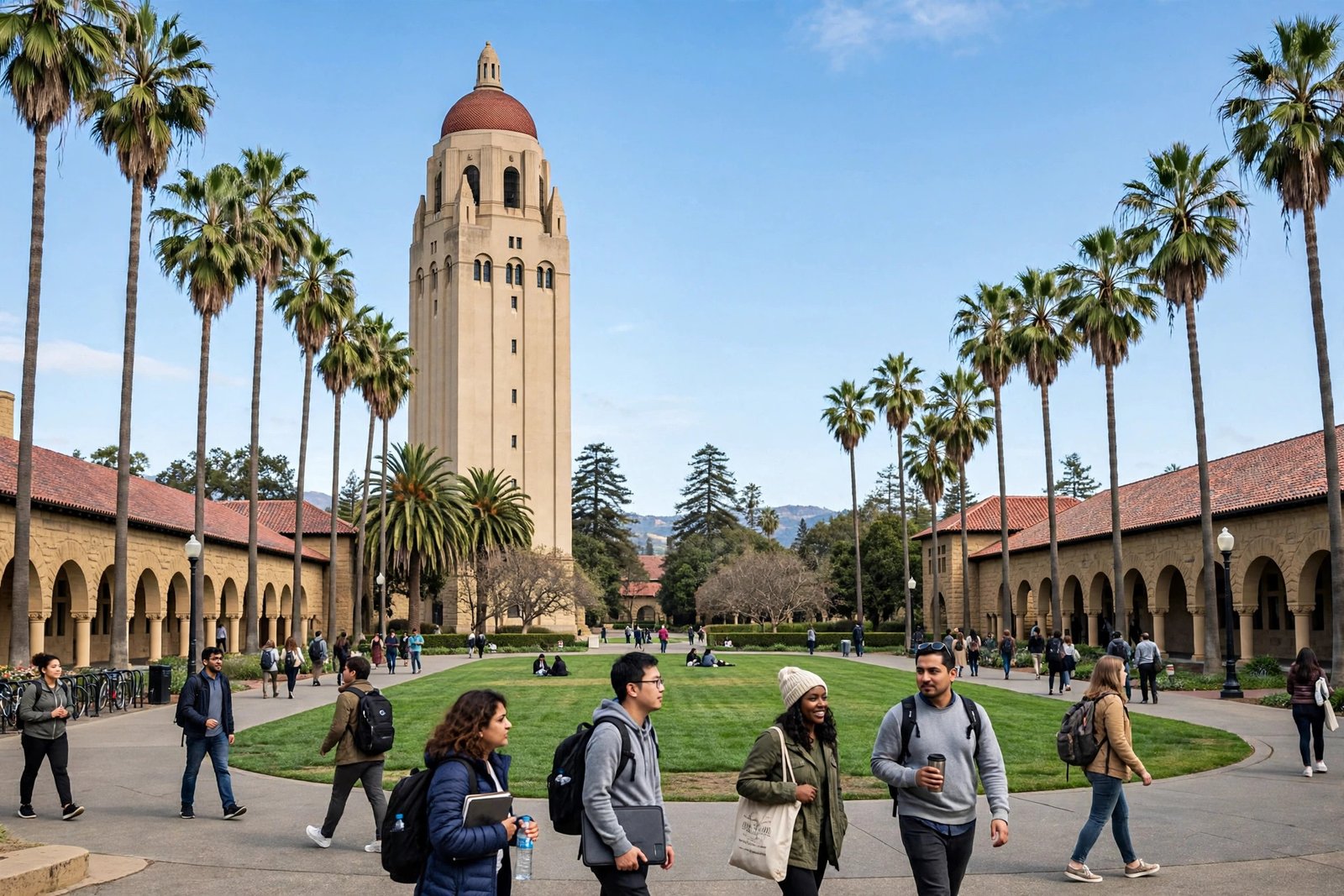
Knight-Hennessy Scholars 2027 at a Glance
| Item | Details for the 2027 cohort |
|---|---|
| Host university | Stanford University, California, USA |
| Who can apply | Citizens and residents of all countries; no nationality, field or school quotas |
| Eligible degrees | Full-time Stanford graduate degrees across all seven schools: MA, MS, MBA, MFA, MPP, JD, MD, DMA, PhD and joint/dual degrees (with published exclusions) |
| Degree-eligibility window | First bachelor’s degree received in January 2020 or later (January 2018 or later for US military active/veteran applicants) |
| Applications required | Two: the KHS online application AND the Stanford graduate programme application |
| KHS deadline | 6 October 2026, 1:00pm Pacific Time |
| Stanford programme deadline | Your programme’s deadline, and no later than 1 December 2026 to retain KHS eligibility — whichever is earlier |
| Funding | Up to 3 years: tuition and associated fees, living and academic stipend, annual travel stipend, one-time relocation stipend |
| Cohort size | Up to ~100 scholars per year |
| Finalist stage | Video statements in January 2027; Immersion Weekend at Stanford, 5–6 March 2027 (published cycle timeline) |
| Official website | knight-hennessy.stanford.edu |
Eligibility: The Rules That Decide Whether You Can Apply at All
The bachelor’s degree window
The defining KHS eligibility rule is about when you earned your first bachelor’s degree. For the 2027 cohort, Stanford’s published rule is that you are eligible if you earned (or will earn) your bachelor’s degree in 2020 or later — expressed in the programme’s funding and eligibility guidance as a first bachelor’s degree received in January 2020 or later. For applicants with US military service (active or veteran), the window extends by two years, to January 2018 or later. If you are still studying, you must be on track to complete your first bachelor’s degree before you enrol at Stanford in September 2027. The window moves forward by one year with each cohort, so 2028 applicants should expect a “2021 or later” rule and must confirm it when the 2028 application opens in June 2027. KHS states there is no formula and no automatic qualifying achievement beyond this eligibility frame — but the frame itself is strict: a first degree completed before the window cannot be cured by a later master’s degree.
You must apply to, be accepted by, and enrol in a Stanford graduate degree
KHS is not a standalone degree. You must apply to an eligible full-time Stanford graduate programme — across the Graduate School of Business, School of Engineering, School of Humanities and Sciences, School of Law, School of Medicine, Graduate School of Education, and the Doerr School of Sustainability — be accepted, and enrol. Degree types include MA, MS, MBA, MFA, MPP, JD, MD, DMA and PhD programmes, plus eligible joint and dual degrees. Stanford publishes exclusions: programmes such as the Honors Cooperative Program, the Master of Liberal Arts, the JSD and the Master of Legal Studies, and most coterminal arrangements, are not eligible for KHS. Current Stanford PhD students may apply during their first year of PhD enrolment to join KHS in their second year. And KHS offers cannot be deferred: if you cannot enrol in your selection year, you must reapply for a later cohort.
Nationality, age and background
Citizens of all countries may apply, and KHS publishes no restriction based on citizenship, age, institution, field of study or career aspiration beyond the degree window above. No institutional endorsement or nomination from your home university is required — you apply directly. That openness matters for applicants from Bangladesh, India, Pakistan, Nepal, Nigeria and Indonesia: your file is read on the same criteria as every other file in the pool.
What Knight-Hennessy Funds
During each of the first three years of graduate study, scholars receive the package set out on Stanford’s official KHS funding page:
| Component | What it covers |
|---|---|
| Tuition fellowship | A fellowship applied directly to cover tuition and associated fees for your Stanford graduate programme |
| Living and academic stipend | Room and board, books, academic supplies, instructional materials, local transportation and reasonable personal expenses |
| Travel stipend | An annual stipend intended to cover an economy-class ticket for one trip each year to and from Stanford |
| Relocation stipend | A one-time stipend for newly enrolling scholars to offset relocation costs and/or technology purchases |
| Academic enrichment funds | Scholars in their second and third years may apply for supplemental funds for activities such as conference travel |
Funding duration follows your degree. As a guide from Stanford’s published funding framework: master’s-level degrees (MA, MBA, MFA, MPP, MS, LLM, JSM) are funded for up to six academic quarters; the JD for up to nine quarters; the MD for up to 11 quarters, with the School of Medicine funding later years under its standard commitment; and PhD and DMA scholars for up to 12 quarters (nine academic quarters plus three summers), with the degree programme funding from year four onward. KHS funds the degree named in your initial admission letter; adding a second degree later requires a further application and is not guaranteed. Two financial cautions: KHS does not publish a single dollar figure for the stipend (it varies and is set by Stanford), and stipends are taxable in the United States — KHS does not reimburse tax liabilities, and international scholars from countries without a US tax treaty may have tax withheld. Also value the non-cash element honestly: the King Global Leadership Program — workshops, convenings, study trips and a cross-disciplinary cohort housed around Denning House — is a core part of the offer, not an optional extra.
The Two Applications, Explained
Think of the process as two files moving in parallel. The KHS application asks who you are, how you think, and how you lead; it is read against the KHS criteria of independence of thought, purposeful leadership and civic mindset. The Stanford programme application asks whether you belong in that specific degree; it is read by the department or school against its academic and professional standards, with its own statement of purpose, its own recommendation letters and, where required, its own test scores. You need both files to succeed: KHS cannot select you without a Stanford admission, and a Stanford admission alone does not make you a scholar.
Sequencing matters because the deadlines differ. The KHS application closes first — 6 October 2026 at 1:00pm Pacific Time for the 2027 cohort, the same for every applicant regardless of programme. Your Stanford programme application is due by that programme’s own deadline for KHS applicants or by 1 December 2026, whichever comes earlier. Some programmes effectively pull KHS applicants into their earliest round — the Stanford MBA, for example, has historically required KHS applicants to apply in its first round — so read your programme’s KHS-specific instructions the day you start, not in November.
Step by Step: The KHS Application
Step 1: Confirm your degree window and programme eligibility
Check your first bachelor’s conferral date against the January 2020 cut-off (January 2018 for US military applicants), and check your intended Stanford degree against the eligible list and exclusions. Do this before writing anything: no essay can fix an eligibility failure.
Step 2: Open the KHS application when it launches (1 June for the 2027 cohort)
Create your account in the KHS application portal on the official KHS admission pages, read the year’s application instructions in full, and note every word limit and deadline in your own tracker. Starting in June gives you four months — the realistic minimum for the writing this application requires.
Step 3: Prepare the core components
- Online application form — personal, academic and professional information.
- Résumé — one page. A tightly edited one-page résumé covering education, work, leadership and service. The discipline of one page is part of the test.
- Transcripts — transcripts from each college or university attended for a year or more, with English translations where the originals are not in English.
- Test scores — only if your Stanford programme requires them. KHS itself requires no GRE, GMAT or other test; submit scores (including English proficiency scores where your programme requires them) according to your graduate programme’s rules.
- Two recommendation letters — submitted through the KHS system by recommenders who can evidence the KHS criteria with specific examples. These are separate from your programme’s letters and should not simply duplicate them.

Step 4: Write the short answers and the “Connect the dots” essay
The written heart of the KHS application is three short-answer questions plus one essay, with strict word limits as published for recent cohorts:
- Short answer 1 (250 words): your short-term and long-term academic and professional intentions.
- Short answer 2 (250 words in total): three brief moments — a time you engaged with someone with a different perspective, a time you acted with courage, and a time you fell short of expectations.
- Short answer 3 (150 words in total): eight improbable facts about you — true, unlikely things that reveal a side of you your achievements do not.
- Essay (500–550 words; published limit 550 in recent guidance — follow the live application’s limit for your cycle): “Connect the dots. How have the influences in your life shaped you?” The strongest essays are specific and personal: they trace real influences — people, places, events, failures — into the person and the plans you now present, in a way no other applicant could have written.
Write these early and revise them cold. KHS also publishes a policy on the use of artificial intelligence in application materials: your application must be your own authentic work, and misrepresentation — including drafting recommendation letters yourself — violates the application terms. Treat AI tools, if you use them at all, as you would a proofreader, never as the author of your story.
Step 5: Submit the KHS application by 6 October, 1:00pm Pacific Time
The deadline is uniform and unforgiving, and the timezone catches international applicants every year: 1:00pm in California on 6 October is already the early hours of 7 October in Karachi, Dhaka and Mumbai, and late evening in Lagos and London. Submit at least 24 hours early, and confirm your two KHS recommenders have submitted — their deadline is the same as yours.
Step 6: Submit your Stanford graduate programme application
Complete the separate programme application through Stanford’s graduate application system by your programme’s KHS deadline or 1 December 2026, whichever is earlier. This file typically includes its own statement of purpose, programme-specific essays, its own recommendation letters, transcripts, an application fee (with fee-waiver routes described by Stanford Graduate Admissions), and test scores where the programme requires them. Track the two applications as separate checklists; finishing one says nothing about the other.
Step 7: The video statement — by invitation, in January
After the written review, KHS invites a group of applicants — on a rolling basis through January in the published 2027 timeline — to record a short video statement inside the application system, due within a set number of days of the invitation. In recent cycles the prompt has been to teach something to your cohort of fellow scholars, in no more than two minutes, with no emphasis on production value. You cannot prepare the exact recording in advance, but you can prepare the skill: practise teaching one idea you care about, clearly and warmly, in under two minutes, on a phone camera.
Step 8: Finalists, interviews and Immersion Weekend
In the published 2027 cohort timeline, finalists were notified on 27 January 2027, with online individual interviews in mid-February and Immersion Weekend at Stanford on 5–6 March 2027 — a fully funded finalist visit built around interviews, group activities and a real taste of the KHS community — followed by scholar notification on 16 March 2027. Treat exact dates as cycle-specific and confirm them on the official admission page for your cohort, but the shape is stable: video in January, finalist decision in late January, interviews in February, Immersion Weekend and final decisions in March, enrolment in September. Compare this calendar with your other applications using our application planning tools, and see where Stanford sits in the global rankings while you weigh offers.
Selection Criteria: How KHS Reads Your File
KHS publishes three criteria, and every component is read against them. Independence of thought: intellectual curiosity, analytic ability, and evidence that you think for yourself rather than reciting received wisdom. Purposeful leadership: a record of having led — formally or informally — with ambition directed at meaningful outcomes, and the self-awareness to describe setbacks honestly (which is why the short answers ask about falling short). Civic mindset: humility, empathy, integrity and a demonstrated orientation toward serving others and the wider community. Stanford is explicit that there is no formula, no required score, achievement or story: distinction in how you evidence the criteria matters more than the prestige of the raw material. One strong, specific, reflective application outperforms a decorated but generic one.
A Realistic Preparation Timeline
Working backwards from the two deadlines produces a preparation calendar that strong applicants broadly follow. In the spring before the application opens — March to May — do the eligibility work: confirm your degree-window status, shortlist two or three Stanford programmes whose curricula genuinely fit your plans, and read each programme’s requirements for KHS applicants, including whether it ties KHS candidates to an early application round. Begin conversations with potential recommenders in this period as well; the two KHS letters and the separate programme letters mean some applicants need four or more letters in total across the two files, and recommenders who are asked in May write better letters than recommenders ambushed in September.
When the KHS application opens in June, create your account immediately and copy every prompt and word limit into your own planning document. June and July are for drafting: the “Connect the dots” essay first, because it usually needs the most revision cycles, then the three short answers, then the one-page résumé, which often forces useful decisions about what your application is actually about. August is for the Stanford programme file — its statement of purpose and programme-specific materials — and for any test your programme requires, sat early enough for scores to arrive. September is revision and logistics only: transcripts ordered and checked, translations completed, recommenders reminded with their submission links, and both applications reviewed line by line. Submit the KHS application days before the 6 October deadline, and the programme application well before its December cut-off, then use the autumn to prepare, calmly and without theatrics, for the possibility of a January video invitation — practising the two-minute teaching format on ideas from your own field until it feels natural. Applicants who treat the process as a six-month project consistently produce more coherent files than equally talented applicants who compress it into September.
Common Mistakes
- Submitting only one of the two applications. The single most common fatal error. KHS and programme applications are separate systems with separate deadlines.
- Missing the programme’s KHS rule. If your programme’s own deadline is later than 1 December, you must still apply by 1 December to keep KHS eligibility; some programmes require their earliest round.
- Ignoring the degree window. A first bachelor’s before January 2020 (2027 cohort) makes you ineligible regardless of later degrees or experience.
- Duplicating programme letters for KHS. KHS recommenders must address independence of thought, purposeful leadership and civic mindset with examples; a purely academic letter undersells you here.
- Writing a generic “Connect the dots” essay. If another applicant could sign your essay, it has failed its purpose.
- Over-polishing the video. KHS states production value carries no weight; authenticity and clarity do.
- Deadline timezone errors. 1:00pm Pacific Time converts to the small hours of the next day across South Asia — submit a day early.
- Planning to defer. KHS offers cannot be deferred; if the year does not work, you reapply.
Frequently Asked Questions
Do I really need to submit two applications?
Yes. One application to Knight-Hennessy Scholars and a separate application to your Stanford graduate degree programme. Both must be submitted by their respective deadlines, and admission to the programme is required to receive the scholarship — but programme admission alone does not guarantee a KHS award.
What is the Knight-Hennessy deadline for the 2027 cohort?
The KHS application closed on 6 October 2026 at 1:00pm Pacific Time for all applicants. Stanford programme applications were due by the programme’s deadline or 1 December 2026, whichever was earlier. The 2028 cohort application opens in June 2027, per the official admission page.
How recent must my bachelor’s degree be?
For the 2027 cohort, your first bachelor’s degree must have been received in January 2020 or later; US military active-duty and veteran applicants have an extended window of January 2018 or later. The cut-off moves forward one year per cohort, so confirm the rule for your cycle on the official site.
Does Knight-Hennessy require GRE, GMAT or English test scores?
KHS itself requires no standardised test. Test scores — including English proficiency scores — are required only if your specific Stanford graduate programme requires them, and are submitted under that programme’s rules.
What does the scholarship pay for?
For up to three years: a fellowship covering tuition and associated fees, a living and academic stipend (room and board, books, supplies, local transport, reasonable personal expenses), an annual travel stipend for one economy round trip to and from Stanford, plus a one-time relocation stipend and, in years two and three, the chance to apply for academic enrichment funds. Stipends are taxable in the US and KHS does not publish a single fixed dollar amount.
What is the video statement?
A short recorded statement completed by invited applicants after the written review — invitations are issued on a rolling basis in January, with the recording due within days. In recent cycles the prompt asked applicants to teach something to their future cohort in up to two minutes, with no emphasis on production quality.
What happens at Immersion Weekend?
Finalists are invited to Stanford for Immersion Weekend (5–6 March 2027 in the published 2027 timeline), combining interviews and group activities with an introduction to the KHS community; finalists’ attendance is funded by the programme. Scholar decisions follow in mid-March.
Can international students apply, and is selection guaranteed if I am admitted to Stanford?
Yes, citizens and residents of all countries may apply, with no quotas. No — selection is a separate, holistic decision against the KHS criteria, and neither KHS nor any third party can guarantee selection, Stanford admission, or a US visa outcome.
Sources & Verification
This guide is based on official Stanford sources: the Knight-Hennessy Scholars admission pages (knight-hennessy.stanford.edu/admission), including the published 2027 cohort deadline of 6 October 2026 at 1:00pm Pacific Time, the degree-eligibility window and the two-application requirement; the official KHS funding page (knight-hennessy.stanford.edu/program-overview/funding) for the tuition fellowship, living stipend, travel stipend, relocation stipend and enrichment funds; and Stanford school and department pages summarising KHS (including Stanford Engineering and Humanities & Sciences pages) for cohort size and eligibility confirmations. The January–March finalist timeline is the published 2027 cohort timeline as reported from the official admission cycle; confirm exact dates for future cohorts on the official site.
Disclaimer: Scholarship details, dates and funding terms change yearly, so always confirm deadlines and amounts on the official website before applying. StudyGraduate is an information portal, not an agency, and cannot promise selection, admission or visa approval to any applicant.
Browse more fully funded opportunities in our scholarships directory.
✅ Eligibility Criteria
- Check the official website for full eligibility criteria for your country
🎁 Benefits
- See the official website for the complete list of benefits
⚙️ Application Process
- 1Check your eligibility on the official site
- 2Prepare your documents and statements
- 3Submit the online application before the deadline
- 4Complete interviews or assessments if shortlisted
- 5Await the final selection announcement
📅 Important Dates
Deadlines vary by country and intake. Check the official website for country-specific dates.
📄 Required Documents
- Valid passport
- Academic transcripts & certificates
- Statement of purpose
- Letters of recommendation
- CV / resume
Commonly required — confirm the exact list on the official site.
❓ Frequently Asked Questions

Ready to Take the Next Step?
Explore more scholarships and study opportunities around the world.
Browse Scholarships →