Gates Cambridge Scholarship 2027: Fully Funded Master’s & PhD at Cambridge
Gates Cambridge Scholarship 2027: Fully Funded Master’s & PhD at Cambridge The Gates Cambridge Scholarship is one of the very few awards in the world that uses the phrase “full cost” and means it literally. Each year the Gates Cambridge Trust offers around 70 full-cost scholarships to outstanding applicants from countries outside the United Kingdom ... <a title="Gates Cambridge Scholarship 2027: Fully Funded Master’s & PhD at Cambridge" class="read-more" href="https://studygraduate.com/scholarship/gates-cambridge-scholarship-2027-fully-funded-masters-phd-at-cambridge/" aria-label="Read more about Gates Cambridge Scholarship 2027: Fully Funded Master’s & PhD at Cambridge">Read more</a>
📖 Overview
Gates Cambridge Scholarship 2027: Fully Funded Master’s & PhD at Cambridge
The Gates Cambridge Scholarship is one of the very few awards in the world that uses the phrase “full cost” and means it literally. Each year the Gates Cambridge Trust offers around 70 full-cost scholarships to outstanding applicants from countries outside the United Kingdom to pursue a postgraduate degree in any subject available at the University of Cambridge. The scholarship pays the full University Composition Fee, a maintenance allowance of £23,152 for 12 months at the 2026-27 rate, one economy airfare at the start and one at the end of your course, and your inbound visa costs including the Immigration Health Surcharge — with further discretionary funding for conferences, fieldwork, dependent children and hardship. Approximately two-thirds of the awards go to PhD students, roughly a third of the total are offered in the earlier United States round and the rest in the international round, and at any one time around 250 Gates Cambridge Scholars are studying across Cambridge’s departments and colleges, drawn from a programme whose alumni now number more than 1,700 people from 116 countries.
The programme was established in October 2000 by a donation of US$210 million from the Gates Foundation to the University of Cambridge — at the time the largest single donation to a UK university — and the first scholars arrived in October 2001. Its mission, in the Trust’s own words, is to build a global network of future leaders committed to improving the lives of others. That mission is written into the selection criteria, which is why this guide spends as much time on the “commitment to improving the lives of others” and “leadership potential” criteria as on academic excellence: a Gates Cambridge application with a flawless transcript and no evidence of purpose beyond personal advancement is a weaker application than the Trust is looking for. For 2027 entry, applications opened on 11 September 2026, and the competition runs in two rounds with hard deadlines — 14 October 2026 for US citizens resident in the USA, and either 8 December 2026 or 6 January 2027 for everyone else, depending on the course. Everything below is drawn from the Trust’s official pages at gatescambridge.org; where a figure is a rate for a specific year, it is labelled as such.
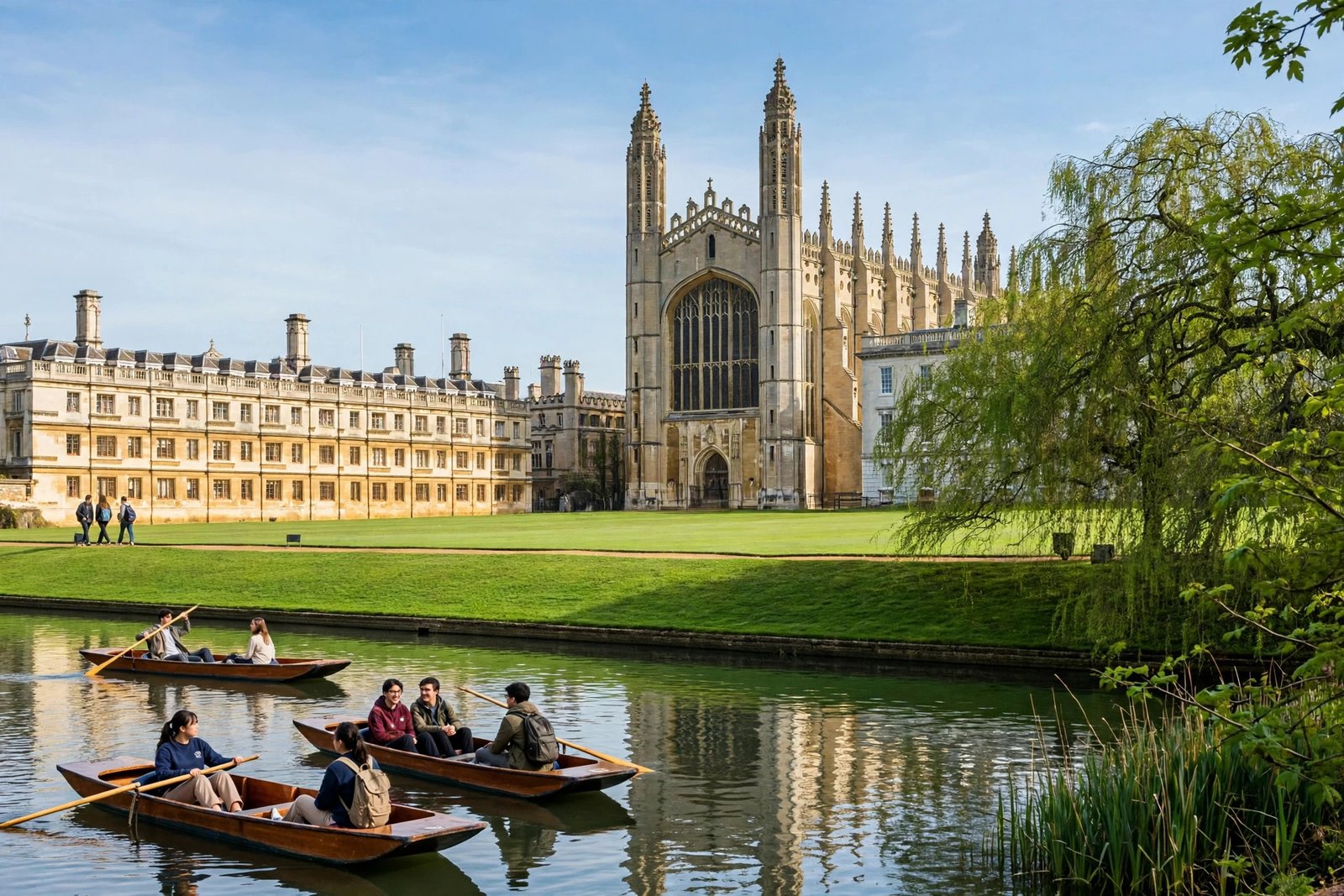
Gates Cambridge Scholarship at a Glance
| Detail | Information |
|---|---|
| Host university | University of Cambridge, United Kingdom |
| Administered by | Gates Cambridge Trust (established 2000 by a US$210m Gates Foundation donation) |
| Awards per year | Around 70 full-cost scholarships; approximately two-thirds to PhD students |
| Who can apply | Citizens of any country outside the United Kingdom |
| Eligible courses | PhD (full-time or part-time pilot), MLitt (full-time), one-year postgraduate courses (full-time, with exceptions) |
| Fees | University Composition Fee paid in full at the appropriate rate |
| Maintenance | £23,152 for 12 months (2026-27 rate), pro rata for shorter courses; PhD funding for up to 4 years |
| Travel | One economy single airfare at the beginning and one at the end of the course |
| Visa costs | Inbound visa costs and the Immigration Health Surcharge covered |
| Applications open (2027 entry) | 11 September 2026 |
| US round deadline | Wednesday 14 October 2026, 11:59 p.m. UK time (US citizens resident in the USA only) |
| International round deadlines | Tuesday 8 December 2026 or Wednesday 6 January 2027, depending on the course funding deadline |
| How to apply | Through the University of Cambridge postgraduate application, indicating Gates Cambridge in the funding section — no separate scholarship form |
| Official website | gatescambridge.org |
Two features of that table deserve immediate attention. First, there is no separate Gates Cambridge application form and no separate scholarship deadline of the Trust’s own invention for most applicants: you apply for the scholarship inside your Cambridge postgraduate application, by the funding deadline for your course, and you supply one additional reference that speaks specifically to the Gates Cambridge criteria. Candidates who treat the scholarship as something to arrange after admission misunderstand the system — by the time an admission offer arrives outside the funding competition, the scholarship money for that cycle has usually been allocated. Second, offers move fast at the end: successful candidates must accept within 72 hours of the offer. Build your decision-making into your timeline, not into those three days. For a wider view of Cambridge’s funding landscape and comparable awards, browse StudyGraduate’s scholarships directory and rankings section alongside this guide.
Eligibility: Who Can Apply for Gates Cambridge?
The Trust states the core eligibility rule in two parts. You can apply for a Gates Cambridge Scholarship if you are a citizen of any country outside the United Kingdom, and you are applying to pursue one of the eligible course types at the University of Cambridge: a PhD (full-time, or part-time under the Trust’s continuing pilot scheme), an MLitt (full-time), or a one-year postgraduate course (full-time), subject to the exceptions below. There is no published age limit, no requirement to have studied any particular subject — the scholarship is open in any subject available at Cambridge — and no separate nationality quota per country: the competition is run in the two rounds described later in this guide, not country by country. Dual nationals should read the Trust’s guidance carefully, but the headline rule is that UK citizens are not eligible; the programme exists for applicants from outside the UK.
Courses Gates Cambridge does NOT consider
The exclusions list matters as much as the inclusions, because a number of popular courses sit on it. Gates Cambridge does not consider applications for: any undergraduate degree, including a BA or an affiliated (second) BA; MASt courses; part-time degrees other than the PhD; and a defined set of professional and non-standard degrees, namely the MBA, Executive MBA and Global EMBA, the Master of Finance (MFin), the Executive Master of Accounting, the Business Doctorate (BusD), the PGCE, MBBChir Clinical Studies, the MD Doctor of Medicine degree, the Graduate Course in Medicine (A101), and the Master of Conservation of Easel Painting. If your target course is on that list, no strength of application can change the outcome — redirect your funding search to Cambridge’s other funders through the university’s student funding search, and to other programmes in our university directory.
Current Cambridge students
If you are already studying at Cambridge, you may apply for a Gates Cambridge Scholarship for a new postgraduate course — for example, moving from an MPhil to a PhD. Current Gates Cambridge Scholars may likewise apply for a second scholarship for a new degree. All current Cambridge students are considered in the international round, regardless of citizenship. What you cannot do is apply for a scholarship to fund the remainder of a course you have already started: a student partway through a PhD cannot retro-fit Gates Cambridge funding onto it. This rule quietly shapes strategy for self-funded master’s students at Cambridge hoping to continue to a doctorate — the PhD application is your Gates Cambridge opportunity, and it must be made in full, in the funding competition, before the new course begins.
Academic standing
Gates Cambridge is, by design, for applicants who can win a place on a Cambridge postgraduate course and excel on it. The Trust’s first selection criterion is outstanding intellectual ability, and departments rank applicants before the Trust’s panels ever see files — your application is ordered by the department you applied to, and only highly ranked applicants progress to scholarship selection. In practical terms, successful applicants typically hold, or are on track for, the highest class of degree in their system, with a record that their referees can describe as exceptional rather than merely strong. There is no published minimum GPA, because the Trust reads records in the context of each country’s system — but “no published minimum” should never be read as “no academic bar”: the bar is set by Cambridge admission plus departmental ranking, and it is high.
Benefits and Coverage: What “Full Cost” Includes
A Gates Cambridge Scholarship covers the full cost of studying at Cambridge through core components paid as of right, plus discretionary components the Trust considers on application.
Core components
- University Composition Fee at the appropriate rate. Your full tuition fee for your course, which varies by course and student type; the Trust directs applicants to the postgraduate prospectus for precise fee amounts for their course.
- Maintenance allowance. £23,152 for 12 months at the 2026-27 rate for a single student, pro rata for courses shorter than 12 months. For PhD scholars the award runs for up to four years, which removes the single most common anxiety of doctoral funding — the unfunded fourth year in which the thesis is actually written.
- Airfare. One economy single airfare at both the beginning and the end of the course.
- Visa and health costs. Inbound visa costs and the cost of the Immigration Health Surcharge.
Discretionary components
- Academic development funding — from up to £750 to up to £4,000, depending on the length of your course, to attend conferences and courses.
- Dependent Children Allowance — up to £12,793 per annum for one child and up to £18,244 per annum for two or more children. Note the boundary precisely: no funding is provided for a partner.
- Fieldwork — PhD scholars may apply to keep up to their normal maintenance allowance while on fieldwork; the Trust does not fund other fieldwork costs, which it expects to be covered by the University Composition Fee.
- Maternity/paternity funding — you may apply to intermit (suspend) your studies for up to six months and continue receiving your maintenance allowance during that time.
- Hardship funding — for unforeseen difficulties facing the scholar.
What is not covered, and funding interactions
Gates Cambridge does not cover bench fees or the costs of scientific equipment or similar academic resources; the Trust expects such core course costs to be covered by the academic department. If you are receiving a salary from an employer or hold another substantial scholarship, the Trust reserves the right to reduce or not pay the standard maintenance allowance, and you must inform the Trust as soon as possible if you are awarded other funding towards your degree. Similarly, where a scholar wins a fee award from a public authority, such as UKRI, they should accept it, and the Trust will not pay that fee or may share the fee and maintenance costs. None of this makes the award any less generous — it remains a genuine full-cost package for a single scholar, with a child allowance many peer scholarships do not offer at all — but it does mean you should present your other funding honestly and early, and test your household budget with our student tools if a partner will accompany you unfunded.

Programs and Fields of Study
Gates Cambridge is deliberately subject-blind: scholars pursue the full range of subjects available at the University of Cambridge and are spread across its departments and colleges. In any given cohort you will find doctoral researchers in engineering, medicine, computer science, natural sciences and mathematics alongside scholars in law, economics, history, education, public policy, languages and the arts, and one-year master’s students on taught and research courses across the same span. Around two-thirds of each year’s awards are made to PhD students, reflecting both the Trust’s research-leadership mission and the economics of the programme — a four-year doctoral award is a much larger commitment than a one-year master’s award, and the Trust weights its portfolio accordingly. Master’s applicants should understand that they are competing for roughly a third of about 70 awards worldwide, which makes the one-year route, in proportional terms, at least as competitive as the doctoral route.
Course choice is not an administrative detail; it is one of the four selection criteria (“reasons for choice of course”). Panels look for a convincing fit between your record, the specific Cambridge course and its faculty, and the future contribution you describe. “Cambridge is famous” is not a reason. “This department houses the only research group working on X with method Y, its course structure lets me do A before B, and that sequence is what my planned work on Z requires” is a reason. Before applying, read your target course’s page in Cambridge’s Course Directory in full — entry requirements, structure, application deadlines and, critically, its funding deadline, because that date is also your scholarship deadline in the international round.
How to Apply, Step by Step
There is one application, not two. You apply to Cambridge for your course and for funding in the same submission, through the university’s postgraduate applicant portal, and Gates Cambridge selects from the applicants whom departments rank most highly. The official timeline page for 2027/8 entry is at gatescambridge.org/apply/timeline, and the Trust’s eligibility page at gatescambridge.org/apply/eligibility states the course rules summarised in this guide.
- Decide your round. If you are a US citizen currently resident in the USA, you must apply in the US round — deadline 14 October 2026 — and you cannot roll into the later round if you miss it. US citizens living or working overseas at the time of application, and all other eligible applicants, apply in the international round. If you are unsure which round applies to you, the Trust invites you to email for a ruling before deadlines approach.
- Choose your course and find its funding deadline. In the international round your deadline is your course’s funding deadline — either 8 December 2026 or 6 January 2027 for 2027 entry — published in Cambridge’s Course Directory on the course page. Two applicants to different departments can have deadlines a month apart; the date on your course page governs.
- Start the Cambridge postgraduate application when applications open (11 September 2026 for 2027 entry). Complete every section: course choice, academic record, research proposal or statement of interest as your course requires, and the funding section.
- Opt in to Gates Cambridge in the funding section. This is the step that puts you in the competition. An application that does not indicate Gates Cambridge in the funding section is not considered for the scholarship, however strong it is.
- Write the Gates Cambridge statement. As part of the funding application you address the Trust’s criteria directly: your outstanding intellectual ability, your reasons for choosing this course, your commitment to improving the lives of others, and your leadership potential. Write it as a single coherent case, with evidence for each element, and make the course-choice reasoning specific to Cambridge’s actual faculty and structure.
- Nominate your referees, including the Gates Cambridge referee. In addition to the academic references your course requires, you provide one further reference from someone who can address the Gates Cambridge criteria — in particular commitment to improving the lives of others and leadership — on the basis of direct knowledge of you. Brief that referee on the criteria explicitly; a second generic academic reference wastes the slot.
- Submit the complete application, references included, by 11:59 p.m. UK time on your deadline. Incomplete applications — a missing transcript, an unsubmitted reference — are not rescued after the deadline. Submit days early; the portal is busiest in the final hours.
- Departmental ranking (October–November for the US round; December–February for the international round). Your department ranks its applicants. Only highly ranked files go forward to the Trust, which is why your academic case and course fit are decided before the Trust’s panels meet.
- Panel review and interview. Shortlisted candidates are reviewed and interviewed by Gates Cambridge selection panels — 22–23 January 2027 for the US round and 22–23 March 2027 for the international round in the 2027-entry cycle.
- Offers and the 72-hour decision. Scholarships are offered by early February 2027 (US round) or early April 2027 (international round), and offers must be accepted within 72 hours. All applicants in each round are notified of the outcome — by 14 December 2026 in the US round and by 8 March 2027 in the international round, per the official timeline for unsuccessful and progressing applicants at each stage.
Required Documents
Your file is the standard Cambridge postgraduate application for your course, plus the Gates Cambridge elements. Expect to prepare: the completed online application form including the funding section with Gates Cambridge selected; a research proposal for research degrees, or the statement your taught course requires; the Gates Cambridge personal statement addressing the four selection criteria; academic transcripts for all post-secondary study (with certified translations where the originals are not in English, following the university’s instructions); degree certificates where studies are complete; the course’s required academic references; the additional Gates Cambridge reference; evidence of English-language proficiency where your course requires it and your prior study does not exempt you; and, for relevant courses, a CV, writing samples or a portfolio as the Course Directory specifies. Requirements differ by course, so the Course Directory page for your exact programme is the controlling checklist — build yours from it, and re-check it in the week you submit.
Deadlines and Timeline for 2027 Entry
| Stage | US round (US citizens resident in the USA) | International round (all other eligible applicants) |
|---|---|---|
| Applications open | 11 September 2026 | 11 September 2026 |
| Application deadline | Wednesday 14 October 2026, 11:59 p.m. UK time | Tuesday 8 December 2026 or Wednesday 6 January 2027, 11:59 p.m. UK time, depending on the course |
| Departmental ranking | Late October–November 2026 | December 2026–February 2027 |
| All applicants notified of outcome at this stage | By 14 December 2026 | By 8 March 2027 |
| Panel review and selection | 22–23 January 2027 | 22–23 March 2027 |
| Scholarships offered | By early February 2027 | By early April 2027 |
| Acceptance window | 72 hours after offer | 72 hours after offer |
| Course start | October 2027 | October 2027 |
These dates are the Trust’s published timeline for entry in the academic year 2027/8, verified on its official timeline page for this guide. If you are reading for a later cycle, expect the same shape — September opening, mid-October US deadline, December/January international deadlines, spring offers — but confirm the exact dates for your cycle, because the two international deadlines are course-specific and have caught out strong applicants who worked to the wrong one.
Selection Criteria and How to Improve Your Chances
The Trust publishes four selection criteria, and your statement, your Gates Cambridge reference and your interview are all judged against them.
Outstanding intellectual ability. Evidence: an exceptional academic record, prizes and distinctions, research outputs appropriate to your stage, and academic referees who can place you credibly among the strongest students they have taught. Because departments rank applicants before the Trust sees them, this criterion also does gatekeeping work — a file the department does not rank highly never reaches a panel.
Reasons for choice of course. Evidence: a precise account of why this Cambridge course, this department and these supervisors, in this sequence, are the right instrument for your research or professional formation — and why the course is the right next step for your record rather than an aspiration detached from it.
A commitment to improving the lives of others. This is the criterion that defines the programme and the one applicants most often assert without evidencing. The Trust looks for a demonstrated pattern — work, research, volunteering, enterprise or public service that has already improved others’ lives in some concrete way — connected credibly to what the Cambridge course will enable you to do next. Scale is not the test; a small, real, sustained contribution described honestly outweighs grand claims about future global impact with nothing behind them.
Leadership potential. Evidence: occasions on which you identified something that needed to change, organised people and resources, and carried it through — in a laboratory, a department, a community organisation, a company or a campaign. Panels probe for judgment, resilience and the ability to bring others with you, not for titles held.
To improve a realistic candidacy: choose referees who between them can speak to all four criteria; give your Gates Cambridge referee the criteria in writing and months of notice; make your statement’s every claim traceable to something a referee or a document can corroborate; and prepare for interview as a scholarly conversation about your proposed work and its purpose, not as a recitation of your statement. Be equally clear-eyed about the odds: around 70 awards a year, worldwide, across every subject, from a pool of thousands of Cambridge applicants who opted in. Applying is rational for a strong candidate; treating Gates Cambridge as your only funding plan is not. Apply in parallel for the other Cambridge funding you are eligible for — the same application puts you in view of university and college funds — and keep alternative institutions in play through our university directory until an offer is in hand.
Common Mistakes
- Applying for an excluded course. The MBA, MFin, PGCE, MASt, undergraduate degrees and the other listed exclusions cannot be funded, whatever your record. Check the eligibility page before falling in love with a course.
- Missing your course’s funding deadline. In the international round there are two deadlines, and yours is the one on your course page. Applicants lose a full year to this error every cycle.
- US-resident citizens drifting into the international round. US citizens resident in the USA must apply in October; they are not eligible for the later round.
- Forgetting to opt in. If Gates Cambridge is not indicated in the funding section of the Cambridge application, you are not in the competition.
- Wasting the Gates Cambridge reference. A duplicate academic reference that never mentions service or leadership leaves two of the four criteria unevidenced by any referee.
- Claiming impact without evidence. Panels test the “improving the lives of others” criterion hard. Unverifiable claims damage credibility on every other criterion too.
- Concealing other funding. A salary or substantial other scholarship can reduce the maintenance allowance, and the Trust requires prompt disclosure. Declare funding as soon as it is awarded.
- Leaving acceptance to the last hour. Offers lapse after 72 hours. Decide your position on parallel offers before results arrive.
Frequently Asked Questions
Is the Gates Cambridge Scholarship fully funded?
Yes. It is a full-cost award: the University Composition Fee in full, a maintenance allowance of £23,152 for 12 months at the 2026-27 rate (pro rata for shorter courses, up to four years for PhD scholars), one economy airfare at the start and end of the course, and inbound visa costs plus the Immigration Health Surcharge. Discretionary funding may add academic development support (£750–£4,000), a dependent children allowance, fieldwork maintenance, parental intermission support and hardship help. Bench fees and scientific equipment are not covered.
How many Gates Cambridge Scholarships are awarded each year?
Around 70, according to the Trust. Approximately two-thirds go to PhD students, and approximately a third of awards are made in the US round with the rest in the international round. About 250 scholars are in residence in Cambridge at any one time.
Who is eligible for the Gates Cambridge Scholarship?
Citizens of any country outside the United Kingdom who are applying for a PhD (full-time, or part-time under the pilot), an MLitt (full-time), or a one-year full-time postgraduate course at Cambridge — subject to the exclusions list, which includes undergraduate degrees, MASt courses, the MBA and related business degrees, the MFin, the PGCE and the clinical medicine routes.
What are the Gates Cambridge deadlines for 2027 entry?
Applications opened on 11 September 2026. US citizens resident in the USA had to apply by Wednesday 14 October 2026. All other applicants apply by their course’s funding deadline — Tuesday 8 December 2026 or Wednesday 6 January 2027. All deadlines are 11:59 p.m. UK time and include references.
Is there a separate Gates Cambridge application form?
No. You apply through the University of Cambridge postgraduate application, indicate Gates Cambridge in the funding section, complete the Gates Cambridge statement, and provide one additional reference addressing the scholarship criteria. Your department ranks applications before the Trust’s panels select.
Can current Cambridge students apply?
Yes, for a new postgraduate course — for example, an MPhil student applying for a PhD — and current Gates Cambridge Scholars may apply for a second scholarship for a new degree. Current students are all considered in the international round. You cannot apply to fund the remainder of a course already started.
Does Gates Cambridge fund partners or families?
Partly. A Dependent Children Allowance of up to £12,793 per annum for one child and up to £18,244 for two or more children is available on a discretionary basis. No funding is provided for a partner, so households should budget for a partner’s costs from other resources.
What are the Gates Cambridge selection criteria?
Outstanding intellectual ability; reasons for choice of course; a commitment to improving the lives of others; and leadership potential. The third and fourth criteria are evidenced through your record, your statement, your dedicated Gates Cambridge reference and interview — not through academic results alone.
Sources and Verification
- Gates Cambridge Trust, The Scholarship, gatescambridge.org/programme/the-scholarship — around 70 awards a year, two-thirds to PhD students, the four selection criteria, programme history (October 2000, US$210m donation, first scholars October 2001), core components including the £23,152 maintenance rate for 2026-27, discretionary components and exclusions from coverage.
- Gates Cambridge Trust, Timeline, gatescambridge.org/apply/timeline — 2027/8 dates: applications opened 11 September 2026; US round deadline 14 October 2026; international deadlines 8 December 2026 and 6 January 2027; ranking, notification, panel (22–23 January and 22–23 March 2027), offer and 72-hour acceptance details.
- Gates Cambridge Trust, Eligibility, gatescambridge.org/apply/eligibility — citizenship rule (any country outside the UK), eligible course types, the full exclusions list, and the rules for current Cambridge students.
Disclaimer: Scholarship values, course eligibility and deadlines change between cycles; the amounts and dates in this guide are the Trust’s published 2026-27 rates and 2027/8-entry timeline, verified on the official Gates Cambridge website for this article. Always confirm your course’s funding deadline and current rates on gatescambridge.org and in Cambridge’s Course Directory before applying. StudyGraduate is an independent information portal, not an agency or a representative of the Gates Cambridge Trust or the University of Cambridge, and nothing in this article promises or implies selection, admission or visa approval.
✅ Eligibility Criteria
- Check the official website for full eligibility criteria for your country
🎁 Benefits
- See the official website for the complete list of benefits
⚙️ Application Process
- 1Check your eligibility on the official site
- 2Prepare your documents and statements
- 3Submit the online application before the deadline
- 4Complete interviews or assessments if shortlisted
- 5Await the final selection announcement
📅 Important Dates
Deadlines vary by country and intake. Check the official website for country-specific dates.
📄 Required Documents
- Valid passport
- Academic transcripts & certificates
- Statement of purpose
- Letters of recommendation
- CV / resume
Commonly required — confirm the exact list on the official site.
❓ Frequently Asked Questions

Ready to Take the Next Step?
Explore more scholarships and study opportunities around the world.
Browse Scholarships →