Fully Funded Scholarships in Sweden for International Students 2026: Swedish Institute Guide
Fully Funded Scholarships in Sweden for International Students 2026: Swedish Institute Guide “Fully funded” is the most abused phrase in scholarship writing, and Sweden is one of the few countries where you can define it precisely — because Sweden’s main funder defines it for you. The Swedish Institute (SI), a Swedish government agency, runs the ... <a title="Fully Funded Scholarships in Sweden for International Students 2026: Swedish Institute Guide" class="read-more" href="https://studygraduate.com/scholarship/fully-funded-scholarships-in-sweden-for-international-students-2026-swedish-institute-guide/" aria-label="Read more about Fully Funded Scholarships in Sweden for International Students 2026: Swedish Institute Guide">Read more</a>
📖 Overview
Fully Funded Scholarships in Sweden for International Students 2026: Swedish Institute Guide
“Fully funded” is the most abused phrase in scholarship writing, and Sweden is one of the few countries where you can define it precisely — because Sweden’s main funder defines it for you. The Swedish Institute (SI), a Swedish government agency, runs the country’s fully funded master’s scholarships: full tuition paid directly to your university, a monthly living allowance of SEK 12,000, and a one-time travel grant of SEK 15,000 (SEK 10,000 for scholars from six named countries). If a scholarship in Sweden does not come from the Swedish Institute, it almost certainly does not pay your living costs: Swedish university scholarships, however generous, are tuition waivers, and a 100% tuition waiver with no stipend still leaves you to find roughly SEK 10,656 for every month of your residence permit. This guide is therefore built around the Swedish Institute — above all the SI Scholarship for Global Professionals, with its sister award, Pioneering Women in STEM — and it treats “fully funded” as a checklist to verify, not a label to trust.
It is also a guide written with its limits stated up front, because the SI scholarship’s limits decide most applications before merit is ever assessed. It is for master’s studies only. It is for citizens of 34 specific countries — a list that includes Bangladesh, Indonesia, and Nigeria, and does not include India, Pakistan, or Nepal. It requires documented work experience — at least 3,000 hours for applicants from most eligible countries — and separately demonstrated leadership experience, which makes it a scholarship for early- and mid-career professionals rather than for students applying straight from a bachelor’s degree. And it funds only master’s programmes on SI’s own eligible list, in four fields: Governance, Public Health, Entrepreneurship and Innovation, and STEM. If you pass those four gates, you are competing for one of Europe’s best-structured awards: the verified 2027/2028 cycle in this guide runs from master’s applications in October 2026–January 2027, through a short scholarship window on 8–24 February 2027, to results on 22 April 2027. Read it alongside our broader guide to scholarships in Sweden for international students, keep the scholarships directory open for alternatives, and use the StudyGraduate tools to keep your own budget as honest as this guide tries to keep the scholarship’s.
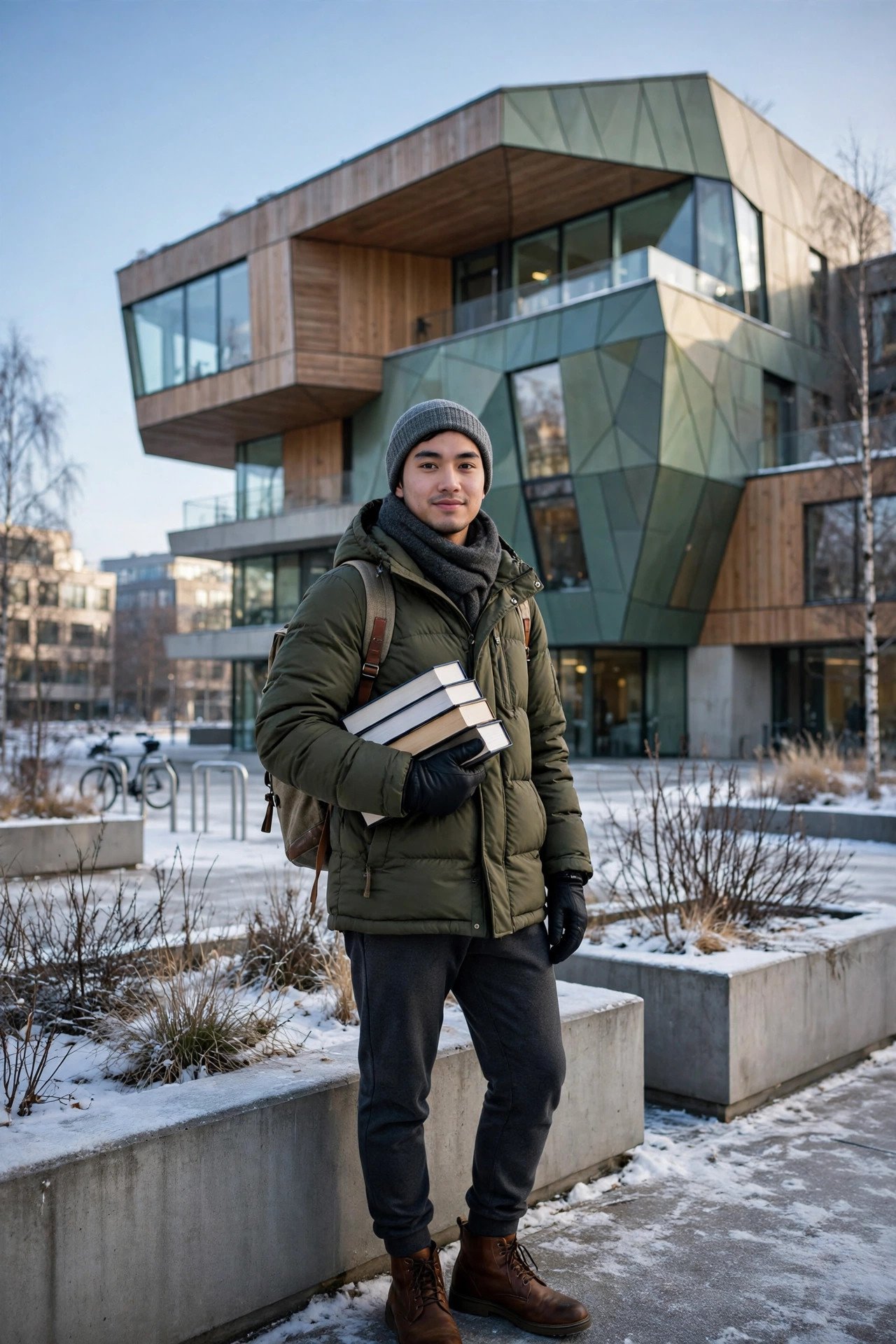
Fully Funded Scholarships in Sweden at a Glance
| Item | SI Scholarship for Global Professionals (verified from si.se) |
|---|---|
| Funder | Swedish Institute (SI), a Swedish government agency |
| Level and duration | Full-time master’s studies, 1 or 2 years, starting in the autumn semester |
| Fields | Governance; Public Health; Entrepreneurship and Innovation; STEM |
| Tuition | Full tuition fee coverage, paid by SI directly to the university each semester |
| Living allowance | SEK 12,000 per month throughout the study period |
| Travel grant | SEK 15,000 one-time; SEK 10,000 for scholars from Armenia, Azerbaijan, Belarus, Georgia, Moldova, and Ukraine; not paid to students already living in Sweden |
| Network | SI Network for Global Professionals during studies; Sweden Alumni Network after graduation |
| Not covered | Insurance (check your university’s cover), the SEK 900 University Admissions application fee, family members, programme changes or extensions |
| Eligible countries | 34 countries listed in the eligibility section below |
| Key dates, autumn 2027 cycle | Master’s applications 16 Oct 2026 – 15 Jan 2027; eligible programmes and documents published 13 Nov 2026; SI portal 8–24 Feb 2027 (closes 14:59 CET); admissions announcement 1 Apr 2027; SI announcement 22 Apr 2027 |
Set that package against the costs it has to meet. Study in Sweden puts average tuition at around SEK 160,000 per year (with a range of roughly SEK 80,000 to SEK 320,000 by subject) and a typical student budget at SEK 10,656 per month; the Swedish Migration Agency’s maintenance requirement for 2026 applications is likewise SEK 10,656 per month. The SI allowance of SEK 12,000 a month is calibrated just above that official budget line — enough to live on as a student in Sweden, not enough to support a family or to live expensively in central Stockholm, which is exactly why SI states plainly that it provides no additional grants for family members. Fully funded, in the Swedish Institute’s own design, means a single student can study without other income; it has never meant that every cost of every household is covered.
The Swedish Institute Scholarship for Global Professionals in Detail
SI describes the scholarship as an investment in future leaders who will drive sustainable development in their home countries, and every element of its design follows from that sentence. The eligible fields are development-facing. The application asks you to motivate how your chosen programmes relate to the sustainable development of your home country and region. Work and leadership experience are eligibility conditions, not tie-breakers. And the scholarship wraps the money in a professional structure — the SI Network for Global Professionals, with leadership and career-development programming during your studies, and lifelong membership of the Sweden Alumni Network afterwards — because the network is part of what Sweden is buying with the award. Understanding this purpose is practical, not decorative: applications are read by people looking for credible future contribution, and the strongest files make that contribution easy to see.
The mechanics are two-stage, and the stages belong to different organisations. Stage one is admission: you apply for master’s programmes through University Admissions, the national portal run under the Swedish Council for Higher Education, ranking up to four programmes and paying one application fee of SEK 900. Stage two is the scholarship: a separate application in SI’s own portal during its February window, using SI’s templates and your University Admissions application details. Neither stage substitutes for the other. A scholarship application without a timely, fee-paid master’s application is void; admission to a programme that is not on SI’s eligible list, or admission only as a reserve, cannot carry a scholarship; and the scholarship can only ever attach to the eligible programme you are actually admitted to on admissions announcement day. Students who treat February as the whole process discover in April that the process was decided in January.
Eligibility: The Four Gates
Gate 1 — Citizenship. You must be a citizen of one of the 34 eligible countries published by SI for the cycle: Armenia, Azerbaijan, Bangladesh, Belarus, Bolivia, Brazil, Colombia, Ecuador, Egypt, Ethiopia, Georgia, Guatemala, Indonesia, Iraq, Jordan, Kenya, Liberia, Malaysia, Mexico, Moldova, Morocco, Nigeria, Peru, Philippines, Rwanda, Senegal, South Africa, Tanzania, Thailand, Uganda, Ukraine, Uzbekistan, and Zambia. You do not need to live in your country of citizenship when you apply. If you hold dual citizenship where both are eligible, choose one and apply under it only — SI states that applicants who use dual citizenship to submit more than one application will have all applications disqualified.
Gate 2 — An eligible programme and admission. Your master’s programme must be on SI’s eligible list — English-taught programmes within Governance, Public Health, Entrepreneurship and Innovation, and STEM — which SI publishes on 13 November 2026 for the autumn 2027 cycle. You must be liable to pay tuition fees, have paid the University Admissions application fee on time, and be admitted (or conditionally admitted) to one of the eligible programmes on the day admissions are announced. Reserve-listed programmes cannot be considered, and there are no scholarships for late admissions.
Gate 3 — Work experience. Valid experience includes full-time or part-time employment, freelancing, and entrepreneurship, and it must be provable on SI’s certification templates. The hours rule splits by country group: applicants from Bangladesh, Bolivia, Brazil, Colombia, Ecuador, Egypt, Ethiopia, Guatemala, Indonesia, Iraq, Jordan, Kenya, Liberia, Malaysia, Mexico, Morocco, Nigeria, Peru, Philippines, Rwanda, Senegal, South Africa, Tanzania, Thailand, Uganda, Uzbekistan, Vietnam, and Zambia must have at least 3,000 hours of work experience accumulated before February 2027, from a maximum of three employers (the hours do not need to come from one continuous job). Applicants from Armenia, Azerbaijan, Belarus, Georgia, Moldova, and Ukraine must provide proof of work experience with no set number of hours, but more experience is prioritised. Work experience related to your chosen field of study is prioritised across the board. As a scale check, 3,000 hours is roughly eighteen months of full-time work — reachable for a working graduate, a genuine barrier for a fresh one, and a number you should audit honestly a year ahead, not in January.
Gate 4 — Leadership experience. Separate from employment as such, you must demonstrate leadership: experience of leading colleagues or organisations, a mandate to influence an organisation’s development strategy, allocating tasks, or familiarity with decision-making processes, evidenced through employment, entrepreneurship, or civil-society engagement. There is no minimum-hours rule for leadership, but SI prioritises strong, relevant leadership from employment. Alongside the four gates sit the standing exclusions: no current enrolment in or degree from a Swedish university; no cumulative residence in Sweden of two years or more before the scholarship period (starting August 2027 for this cycle); no previous SI scholarship for studies in Sweden; and no Swedish or EU/EEA citizenship or specified Swedish permits — with published exceptions, including for Ukrainian applicants residing in Sweden under the Temporary Protection Directive and for Moldovan applicants holding Romanian dual citizenship, who must state the eligible citizenship when applying.
Pioneering Women in STEM: The Sister Scholarship
SI’s second fully funded award, Pioneering Women in STEM, exists to increase women’s participation in science, technology, engineering, and mathematics. It is open to female citizens of ten countries — Bangladesh, Indonesia, Kenya, Malaysia, Nigeria, Philippines, Rwanda, South Africa, Thailand, and Vietnam — applying to eligible English-taught STEM master’s programmes, and it likewise requires demonstrated work experience and leadership experience, tuition-fee liability, and admission to a listed programme, with the eligible programme list for the 2027/2028 cycle also published on 13 November 2026. Its published package mirrors the Global Professionals structure of tuition coverage, monthly allowance, and travel support — confirm the exact amounts and any combined-application instructions on the official SI page for your cycle, including SI’s guidance if you are eligible for both awards. For a woman in STEM from one of the ten countries, this is not a consolation route: it is a dedicated competition inside your field, and it should be planned with the same October-to-February discipline as the main scholarship.
Benefits and Coverage — and What “Fully Funded” Excludes
The funded package, restated from SI’s official page, has four parts. Full tuition fee coverage: SI pays the fee directly to your Swedish university each semester, for the awarded programme only — you cannot transfer the award to a different programme, and the scholarship cannot be extended beyond the awarded period. A monthly allowance of SEK 12,000 throughout the study period, intended to cover your living expenses: against Study in Sweden’s typical budget of SEK 10,656 a month (food SEK 2,716; accommodation SEK 4,900; local travel SEK 650; phone and internet SEK 400; miscellaneous the remainder), the allowance leaves a modest margin that disciplined budgeting protects and Stockholm rents can consume — housing choice is the single biggest variable in whether SEK 12,000 feels comfortable or tight. A one-time travel grant of SEK 15,000, or SEK 10,000 for scholars from Armenia, Azerbaijan, Belarus, Georgia, Moldova, and Ukraine, which does not apply if you are already living in Sweden. Network membership: the SI Network for Global Professionals during your studies and the Sweden Alumni Network after them.
The exclusions deserve the same prominence, because they are where “fully funded” disappointments are manufactured. The scholarship does not include insurance — SI recommends checking what insurance your university provides for international students, and students on permits of under a year generally need their own comprehensive cover for the residence permit. It does not cover the SEK 900 application fee to University Admissions, which you pay months before any result. It provides no grants for family members: a partner or children can accompany you only if your household meets the Migration Agency’s higher maintenance figures from other resources. And it does not permit programme changes or extensions — if you switch programmes or your studies overrun the awarded period, the scholarship does not follow you. None of this makes the award less valuable; all of it belongs in your budget from day one. Compare the destinations and fallbacks in the study abroad section if your household costs make a single-student scholarship unworkable.

Programmes and Fields of Study
Eligible programmes are English-taught master’s programmes in SI’s four fields, as listed by SI for the cycle. In practice those fields are broader than they first sound. Governance reaches across public policy, political science, public administration, development studies, and law-adjacent programmes. Public Health covers global and public health master’s programmes at Sweden’s medical universities and universities with strong health faculties. Entrepreneurship and Innovation spans innovation management, entrepreneurship, and business programmes with that focus. STEM is the widest gate of all — engineering, computer science and data, environmental and energy technology, life sciences, and more — and it is also the field of the Pioneering Women in STEM award. Two disciplines of choice follow. First, choose programmes whose stated prerequisites your degree actually satisfies, because Swedish admission is requirement-based: an SI-motivation masterpiece cannot admit you to a programme whose required subject credits you lack. Second, choose programmes you can connect, specifically and without strain, to a development contribution in your home country — SI asks you to make that motivation, and programmes chosen for prestige alone make it hard to write. Browse Swedish institutions and programmes early through the universities directory and the national portal, and finalise your list only after SI publishes the eligible programmes on 13 November.
How to Apply, Step by Step
- Audit the four gates (a year ahead if possible). Confirm citizenship eligibility, tally your certifiable work hours against the 3,000-hour rule if it applies to your country, and identify leadership evidence. If your hours are short, the honest fix is time and documented work, not creative accounting — SI verifies on its own templates.
- Shortlist eligible-field programmes (autumn 2026). Draft your list of up to four master’s programmes in Governance, Public Health, Entrepreneurship and Innovation, or STEM, checking each programme’s entry requirements against your transcript.
- Confirm the eligible list (13 November 2026). When SI publishes the 2027/2028 eligible programmes and application documents, verify every programme on your list appears, and download the templates immediately.
- Apply through University Admissions (16 October 2026 – 15 January 2027). Submit one application, rank carefully — you can only be admitted to one programme, and only an admitted eligible programme can carry the scholarship — upload documents as instructed for your country, and pay the SEK 900 fee on time. Save your application details; the SI application needs them.
- Prepare SI documents in January. Complete SI’s CV, work-experience and leadership certification forms, references, and motivation components exactly as instructed, with certifiers briefed early — referees and employers are the bottleneck in every February window.
- Submit in the SI portal (8–24 February 2027). The portal closes at 14:59 CET on 24 February. Submit days early; a two-week window with template uploads is not forgiving of last-day errors.
- Admissions announcement (1 April 2027). Your eligibility is settled here: admitted to an eligible programme, or the scholarship cannot be awarded, regardless of your February file.
- SI announcement (22 April 2027). If selected, follow SI’s acceptance instructions precisely and in order.
- Residence permit and housing (spring–summer 2027). Apply to the Swedish Migration Agency with your scholarship evidence — the award covers the maintenance requirement (SEK 10,656 per month for 2026 applications) and tuition — and pursue university housing channels immediately; the autumn semester begins in late August.
Required Documents
For admission through University Admissions: passport copy; bachelor’s certificate and transcripts following the country-specific instructions for your degree (including translations where required); evidence of English proficiency as your background requires; and any programme-specific documents listed for your chosen programmes. For the SI application: the documents SI publishes with the call on 13 November — in recent cycles structured around a CV in SI’s format, certified proof of work experience and of leadership experience on SI’s templates, references, passport copy, and your University Admissions application information; the motivation material SI requests on how your programme choice serves sustainable development in your home country and region completes the file. Treat template fidelity as a requirement, not a style: SI processes thousands of applications in a two-week window, and off-template evidence risks exclusion before assessment. For the residence permit: admission confirmation, the SI award letter as financial evidence, passport, and insurance arrangements if your stay is under a year.
Deadlines and Timeline
| Date | Milestone (autumn 2027 cycle, from si.se) |
|---|---|
| 16 October 2026 – 15 January 2027 | Apply for master’s programmes through University Admissions; pay the SEK 900 fee on time |
| 13 November 2026 | SI publishes eligible master’s programmes and scholarship application documents |
| 8 – 24 February 2027 | SI scholarship portal open; closes 14:59 CET on 24 February |
| 1 April 2027 | University admissions announcement — SI eligibility requires admission to an eligible programme on this day |
| 22 April 2027 | SI scholarship announcement |
| Spring – summer 2027 | Acceptance steps, residence permit application, housing |
| Late August 2027 | Studies begin in Sweden |
If you are reading this after a window has closed, the correct move is not to hunt for a late route — SI offers none for this scholarship — but to build next cycle’s file: document work experience as it accrues, line up certifiers, and enter the October admissions round with your programme list already tested against the previous year’s eligible list, knowing the new list lands each November.
If You Are Not Eligible: The Honest Fallback Ladder
A guide to fully funded scholarships in Sweden owes you a paragraph for the majority of readers who will not win one — above all readers from India, Pakistan, and Nepal, who are outside the SI country list entirely, and eligible-country readers whose work history is still short. The fallback ladder, in order of value: university tuition scholarships, which can remove 25% to 100% of tuition (Lund’s Global Scholarship, for example, spans that full range) but never pay living costs, so they pair with roughly SEK 127,872 of evidenced living funds for a twelve-month permit; Erasmus Mundus Joint Masters with a Swedish partner, which pay €1,400 a month under Erasmus+ rules and are open worldwide, in exchange for a joint degree across at least two countries; home-country and foundation funding, checked against Sweden as an approved destination; and Sweden’s employed PhD route after a master’s, where doctoral candidates are typically hired by the university rather than charged fees. Each rung is a real plan; none should be described — by this site or any other — as the SI scholarship by another name.
Selection Criteria and How to Improve Your Chances
SI does not publish a points grid, but its stated priorities compose one in outline. Work experience in line with your chosen field is prioritised. Leadership experience is assessed, with strong and relevant leadership from employment prioritised over nominal titles. Your motivation — the explicit link between your chosen programmes and the sustainable development of your home country and region — is a required element of the application, not an ornament. And the whole file sits on an admission decision made independently by Swedish universities on academic requirements. Improve each element directly: choose programmes continuous with your work, so the field-alignment priority works for you; evidence leadership with decisions and outcomes — budgets influenced, teams led, services changed — rather than memberships; write the motivation as a chain (a named problem at home, the specific competence this programme builds, the institution or sector you will apply it in) instead of a tribute to Sweden; and have every certificate signed, dated, and consistent before February, because certification quality is where documented professionals distinguish themselves from plausible narrators. SI also publishes application and selection statistics by country on its website — read your country’s numbers to calibrate expectations honestly; the scholarship receives thousands of applications annually across its eligible countries for a few hundred awards, and planning a university-scholarship backstop in parallel is what prepared applicants do.
Common Mistakes
- Starting in February. The scholarship window is the last step, not the first. Without a timely University Admissions application, a paid fee, and an eligible programme choice made by 15 January, there is nothing for February to attach to.
- Miscounting work experience. The 3,000 hours for most eligible countries must be accumulated before February 2027, from a maximum of three employers, and certified on SI’s templates. Hours you cannot certify do not count at decision time.
- Applying under the wrong citizenship. With dual eligible citizenships you must choose one; using both to file multiple applications disqualifies all of them, per SI’s published rule.
- Choosing an ineligible programme for a prestigious name. If the programme is not on SI’s list for your cycle, it cannot be funded, however ranked the university. Check the list published each November.
- Budgeting as if “fully funded” covered a family or insurance. SI excludes both explicitly. Households must meet the Migration Agency’s added family amounts (SEK 4,440 per month for a partner and SEK 2,664 per child at 2026 rates) from other resources.
- Missing the 14:59 CET close. The portal closes mid-afternoon Central European Time on the final day — for many applicants that is evening at home, for some it is earlier than expected. Submit days in advance.
- Assuming the scholarship can move or extend. It attaches to the awarded programme and period only. A programme change ends the arrangement; plan your choice as final.
Frequently Asked Questions
What does the Swedish Institute Scholarship for Global Professionals actually cover?
Full tuition, paid by SI directly to your university each semester; a monthly allowance of SEK 12,000 throughout the study period; a one-time travel grant of SEK 15,000 (SEK 10,000 for scholars from Armenia, Azerbaijan, Belarus, Georgia, Moldova, and Ukraine, and not paid if you already live in Sweden); and membership of the SI Network for Global Professionals and, afterwards, the Sweden Alumni Network. It does not include insurance, the SEK 900 application fee, or support for family members.
Who is eligible for the Swedish Institute Scholarship in the 2027/2028 cycle?
Citizens of 34 listed countries — including Bangladesh, Indonesia, and Nigeria, and not including India, Pakistan, or Nepal — who are liable to pay tuition fees, apply to an SI-eligible master’s programme in Governance, Public Health, Entrepreneurship and Innovation, or STEM, are admitted to one, and can document work experience (at least 3,000 hours before February 2027 for most countries) plus leadership experience. Standing exclusions apply for Swedish degree holders, prior SI scholars, and those with two or more years’ prior residence in Sweden, among others listed by SI.
What are the exact key dates for autumn 2027 entry?
From SI’s official page: master’s applications through University Admissions, 16 October 2026–15 January 2027; eligible programmes and application documents published 13 November 2026; SI portal open 8–24 February 2027, closing at 14:59 CET; admissions announcement 1 April 2027; SI announcement 22 April 2027.
I have just graduated and have little work experience. Can I still win an SI scholarship?
Realistically, this is the scholarship’s main barrier for fresh graduates: most eligible countries require at least 3,000 certified work hours, and leadership evidence is required on top. If your documented experience is far below that, build it deliberately and apply in a later cycle, and in the meantime consider university tuition scholarships, which do not impose an experience requirement.
What is the Pioneering Women in STEM scholarship?
SI’s dedicated award for female citizens of Bangladesh, Indonesia, Kenya, Malaysia, Nigeria, Philippines, Rwanda, South Africa, Thailand, and Vietnam applying to eligible STEM master’s programmes. It requires work and leadership experience like the main scholarship; check the official SI page for its current package details and how it interacts with a Global Professionals application.
Does the SI scholarship cover my spouse or children?
No. SI provides no additional grants for family members. Family members may accompany you only if your household separately meets the Swedish Migration Agency’s maintenance requirement, which adds SEK 4,440 per month for a spouse or partner and SEK 2,664 per child at the 2026 rates.
Can I change my programme or extend my studies on the scholarship?
No. SI states that the scholarship does not allow changes to the awarded study programme and does not allow extensions or changes to the awarded scholarship period. Choose your programme as a final decision.
Does winning the scholarship guarantee my residence permit?
No. The permit is decided by the Swedish Migration Agency on its own criteria. The SI award is strong financial evidence — it covers tuition and exceeds the SEK 10,656 monthly maintenance requirement at 2026 rates — but the decision, and requirements such as insurance for stays under a year, remain the Agency’s.
Sources & Verification
All core facts were verified on the Swedish Institute’s official Scholarship for Global Professionals page: the 34 eligible countries by name, the SEK 12,000 monthly allowance, the SEK 15,000/10,000 travel grant and its exclusions, the four eligible fields, the 3,000-hour work-experience rule and the country groups it applies to, leadership requirements, the standing exclusions and exceptions, what the scholarship does not cover, and the autumn 2027 key dates (13 November 2026 list publication; 8–24 February 2027 portal closing 14:59 CET; 1 April 2027 admissions announcement; 22 April 2027 SI announcement). The sister award was checked on SI’s Pioneering Women in STEM page (10 eligible countries). Cost context comes from Study in Sweden (tuition average around SEK 160,000 per year, range SEK 80,000–320,000; typical budget SEK 10,656 per month; SEK 900 application fee) and from the Swedish Migration Agency’s higher-education residence permit page (maintenance requirement SEK 10,656 per month for 2026, family additions SEK 4,440 and SEK 2,664).
Disclaimer: Scholarship details, amounts, country lists, and deadlines change with every cycle, and SI notes that the information on its pages may be subject to change. Always confirm deadlines, amounts, and eligibility on the official Swedish Institute website before applying. StudyGraduate is an information portal, not an agency or a funder, and nothing in this guide promises or implies selection, admission, scholarship award, or a residence permit.
✅ Eligibility Criteria
- Check the official website for full eligibility criteria for your country
🎁 Benefits
- See the official website for the complete list of benefits
⚙️ Application Process
- 1Check your eligibility on the official site
- 2Prepare your documents and statements
- 3Submit the online application before the deadline
- 4Complete interviews or assessments if shortlisted
- 5Await the final selection announcement
📅 Important Dates
Deadlines vary by country and intake. Check the official website for country-specific dates.
📄 Required Documents
- Valid passport
- Academic transcripts & certificates
- Statement of purpose
- Letters of recommendation
- CV / resume
Commonly required — confirm the exact list on the official site.
❓ Frequently Asked Questions

Ready to Take the Next Step?
Explore more scholarships and study opportunities around the world.
Browse Scholarships →