Fulbright Foreign Student Program 2027 in the USA: Fully Funded Master’s & PhD Guide
Fulbright Foreign Student Program 2027 in the USA: Fully Funded Master’s & PhD Guide The Fulbright Foreign Student Program is the flagship international exchange programme of the United States government. Led by the U.S. Department of State in partnership with more than 160 countries worldwide, it enables graduate students, young professionals and researchers from abroad ... <a title="Fulbright Foreign Student Program 2027 in the USA: Fully Funded Master’s & PhD Guide" class="read-more" href="https://studygraduate.com/scholarship/fulbright-foreign-student-program-2027-in-the-usa-fully-funded-masters-phd-guide/" aria-label="Read more about Fulbright Foreign Student Program 2027 in the USA: Fully Funded Master’s & PhD Guide">Read more</a>
📖 Overview
Fulbright Foreign Student Program 2027 in the USA: Fully Funded Master’s & PhD Guide
The Fulbright Foreign Student Program is the flagship international exchange programme of the United States government. Led by the U.S. Department of State in partnership with more than 160 countries worldwide, it enables graduate students, young professionals and researchers from abroad to study and conduct research at American universities. Around 4,000 foreign students receive Fulbright grants in a typical year. For the 2027 cycle, successful applicants will travel to the United States to begin master’s degrees, doctoral study or non-degree research, funded by one of the most respected scholarship names in the world.
The single most important fact about Fulbright — and the one applicants most often get wrong — is that there is no single global deadline and no single global application form. The programme is administered in each country by a binational Fulbright Commission, a Fulbright Foundation, or the U.S. Embassy’s Public Affairs Section. Each of those offices sets its own deadline (typically somewhere between February and October), its own priority fields, and sometimes its own additional eligibility rules. In Pakistan, applications run through the United States Educational Foundation in Pakistan (USEFP). In other countries you may apply through your local commission or directly via the embassy. This guide explains the universal structure of the programme, then shows you how to find and follow your own country’s exact rules.
Fulbright is also different in purpose. Since 1946 the programme has existed to increase mutual understanding between Americans and people of other countries. Selection panels therefore look beyond grades: they want scholars who will represent their home country well in the United States, engage with American communities, and return home to share what they have learned. If you read this guide with that mission in mind, every part of the application — the study objectives essay, the personal statement, the interview — will make more sense.
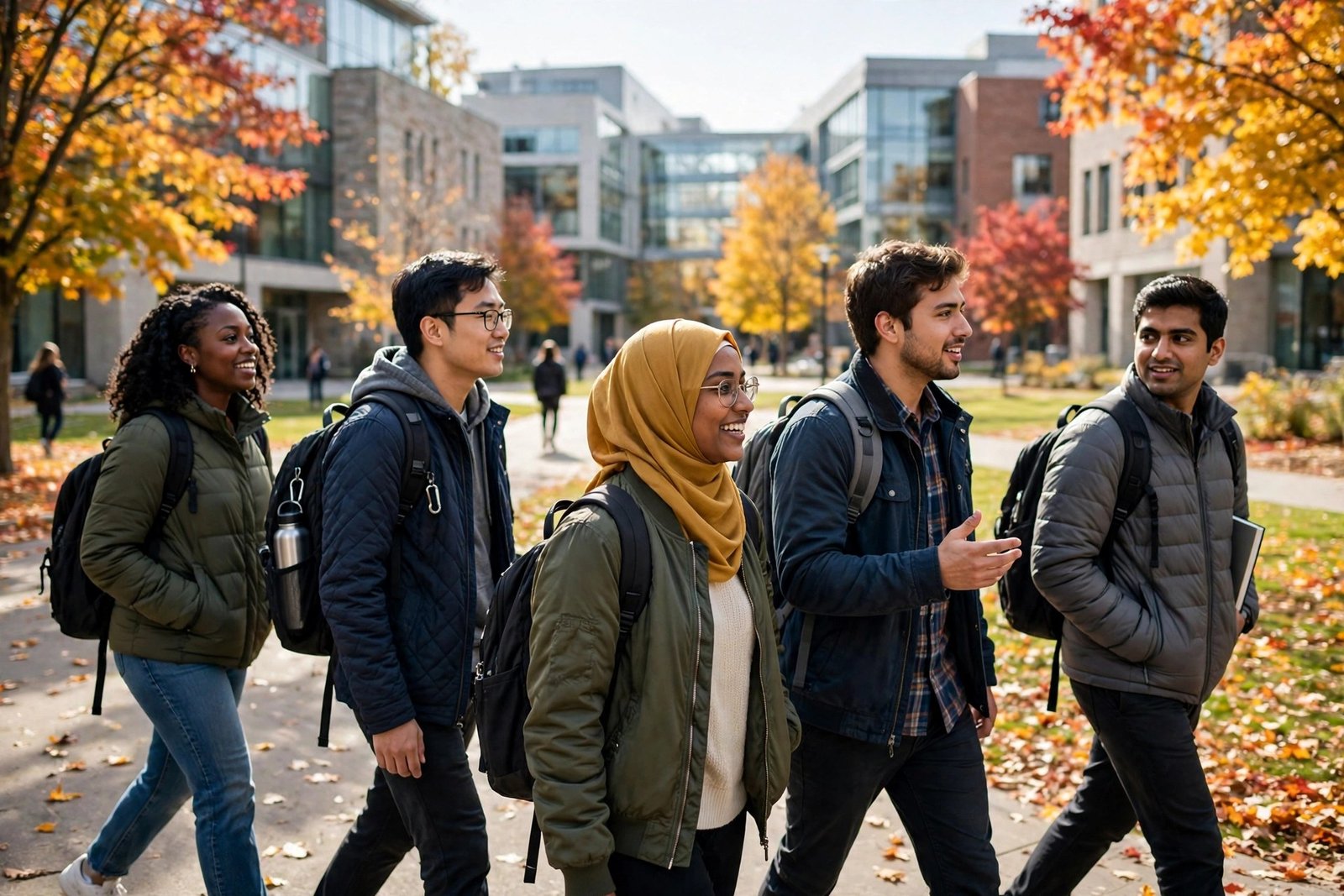
Fulbright Foreign Student Program at a Glance
| Detail | Information |
|---|---|
| Programme | Fulbright Foreign Student Program |
| Funder | U.S. Department of State, Bureau of Educational and Cultural Affairs, with binational commissions and partner governments |
| Host country | United States of America |
| Levels | Master’s degrees, PhD study, and non-degree research |
| Funding type | Fully funded for the grant period — tuition support, living stipend, airfare, health benefit plan |
| Who can apply | Non-U.S. citizens residing in their country of nomination, holding the equivalent of a U.S. bachelor’s degree |
| Grants per year | Approximately 4,000 foreign students across 160+ countries |
| Deadline | No single global deadline — set by each country, typically February to October |
| Apply through | Your country’s Fulbright Commission, Foundation, or U.S. Embassy |
| Visa | J-1 Exchange Visitor sponsorship |
| Home-residency rule | Two-year home-country physical presence requirement applies to J-1 grantees after the grant |
| Official sources | foreign.fulbright.org, eca.state.gov/fulbright, educationusa.state.gov |
To compare Fulbright with other routes into American graduate schools, see our guides to scholarships in the USA and the full scholarships directory, and browse U.S. institutions in our universities directory.
Who Is Eligible for the Fulbright Foreign Student Program?
Core eligibility is set globally, then refined by each country office. The baseline requirements, as published for the programme, are as follows.
Residence and citizenship
You must reside in the country of nomination at the time of application, and you must be a citizen or national of a participating country. You must not hold U.S. citizenship — dual citizens of the United States are not eligible — and U.S. permanent residents (green card holders) are likewise ineligible. Fulbright is an exchange programme for people whose home is outside the United States.
Academic preparation
By the programme start date you must hold the equivalent of a U.S. bachelor’s degree with a good academic record. For master’s applicants that usually means a completed four-year bachelor’s, or a bachelor’s plus master’s combination where your country’s system works that way — check your commission’s exact wording, because countries define equivalence differently. Doctoral applicants and research scholars face additional expectations about prior research and, often, a master’s degree. Employees of the U.S. Department of State and certain related categories, and their immediate family members, face restrictions described in the programme regulations.
English proficiency
You must be fluent in English, or able to reach fluency with support. Programme guidance cites recommended minimums around 550 on the paper-based TOEFL, 79–80 on the internet-based TOEFL, or 6.5 overall on IELTS as indicators of readiness for graduate study, but the exact testing requirements and minimum scores for your application are set by your country programme and by the universities that later consider you. Some candidates with strong files but developing English may be offered Long-Term English Training before their academic programme. Never assume a score requirement you read on a general website applies to your country — confirm it with your commission.
Field restrictions and country priorities
Most academic fields are eligible, but there are important exceptions. Clinical study and practice — such as medicine, dentistry, nursing and pharmacy programmes involving direct patient care — are generally not eligible under the Foreign Student Program. Many country programmes also publish priority fields reflecting national needs: public health, energy, agriculture, education, technology, public policy and similar areas frequently appear. A strong application in a priority field, from a candidate committed to returning home, is exactly what country panels are assembled to find.
The return commitment
Fulbright grantees travel on J-1 Exchange Visitor visas, which carry the two-year home-country physical presence requirement: after your grant, you must spend two years in your home country before becoming eligible for certain other U.S. visa categories. Combined with the programme’s exchange mission, this means Fulbright is designed for people whose plans are rooted at home. Panels test this commitment seriously at interview.
What Does Fulbright Cover?
Fulbright grants are described as fully funded because the package covers the core costs of your study for the grant period. Exact benefit structures vary somewhat by country and by placement, so treat the table below as the standard model and confirm your country’s version.
| Benefit | Standard coverage |
|---|---|
| Tuition and fees | Funding support towards tuition and required fees at your U.S. university, arranged through the administering agency and the institution |
| Living stipend | A monthly living allowance for the grant period, set with reference to the cost of living at your host institution’s location |
| Airfare | Round-trip international airfare between your home country and the United States |
| Health cover | A health benefit plan for the grantee for the duration of the grant (the State Department’s Accident and Sickness Program for Exchanges) |
| J-1 visa sponsorship | Sponsorship and support for your Exchange Visitor visa process |
| Pre-academic training | Possible Long-Term English Training or pre-academic training where the country programme offers it |
| Enrichment activities | Seminars, community engagement and the global Fulbright alumni network |
Honest limits matter. The grant supports the grantee; it is not a family package. Dependent allowances, where they exist at all, are limited and country-specific, and the health benefit plan covers the grantee only. Doctoral funding duration also varies: some country programmes fund a defined initial period — commonly the first one to two years — with continuation or university assistantships expected thereafter, while master’s grants typically cover the degree period. Your commission’s call for applications is the only authoritative statement of what your grant would include, so read it line by line before you plan around figures quoted anywhere else, including in this guide.

Placement: How You End Up at a U.S. University
Unlike scholarships where you first win an offer from a named university, Fulbright placement usually works the other way round. In the United States, the Institute of International Education (IIE) administers the Foreign Student Program for most world regions, and AMIDEAST administers it for much of the Middle East and North Africa, both on behalf of the Department of State. Two placement models exist. Under IIE Placement, the agency submits your file to a carefully chosen set of universities and negotiates funding packages on your behalf. Under Self-Placement, available in some countries, you apply to universities yourself and Fulbright recognises a suitable admission and funding arrangement. Which model applies to you is decided by your country programme — discuss it with your commission early, because it changes how you should write your study objectives.
Whichever model applies, the universities involved are accredited U.S. institutions across all fifty states — not only the famous names. You can explore examples in our profiles of institutions such as Harvard University and Stanford University, but remember that Fulbright placement prioritises fit, funding and programme strength over brand, and many grantees thrive at excellent public research universities that offer full assistantship packages. Use the official EducationUSA network — over 430 advising centres in more than 175 countries — for free, authoritative help understanding the U.S. system while you prepare.
How to Apply, Step by Step
- Find your country programme. Start from the official programme portal, foreign.fulbright.org, and select your country. Note your administering body — commission, foundation or embassy — and download the current call for applications.
- Confirm your deadline and rules. Record your country’s exact deadline (somewhere between February and October depending on the country), its priority fields, its test requirements and any extra eligibility conditions.
- Prepare for required tests. Many country programmes require or strongly expect TOEFL or IELTS, and some expect GRE scores for university placement. Book tests months ahead; scores must usually arrive before placement, and late scores are a common reason strong files stall.
- Write your essays. The core written pieces are a Study/Research Objectives statement — what you will study, why, and why in the United States — and a Personal Statement showing the person and trajectory behind the grades. Adapt both to Fulbright’s exchange mission and your country’s priorities.
- Assemble transcripts and references. You will need official transcripts for all post-secondary study and, typically, three letters of reference from people who can judge your academic and professional promise.
- Submit the online application by your country deadline. Applications are submitted through the system your country programme specifies. Incomplete files are not reviewed.
- Interview. Shortlisted candidates are interviewed by a binational panel in their home country. Expect questions on your study plan, your knowledge of the United States, and your plans after returning home.
- Nomination and placement. Successful nominees are approved by the Fulbright Foreign Scholarship Board, then placed by IIE or AMIDEAST with U.S. universities, which make the final admission decisions.
- Visa and pre-departure. With placement confirmed, you complete medical and visa steps for J-1 sponsorship, attend your commission’s pre-departure orientation, and travel — usually in the August before the U.S. academic year begins.
Required Documents
- Completed online application form for your country programme.
- Study/Research Objectives essay and Personal Statement.
- Official transcripts (and degree certificates) for all university study, with certified English translations where required.
- Three letters of reference.
- TOEFL/IELTS and, where required, GRE score reports — the programme guidance references institutional reporting arrangements, so follow your commission’s instructions exactly.
- A copy of your passport’s biographic page.
- For research and PhD applicants: a detailed research proposal, and sometimes writing samples or a curriculum vitae in the format your commission specifies.
Deadlines and Timeline
| Stage | Typical timing |
|---|---|
| Country application windows open | Varies by country — many open in autumn or winter before the deadline |
| Country application deadlines | February to October, set individually by each commission, foundation or embassy |
| Interviews | In the months immediately after your country’s deadline |
| Nomination and board approval | Following interviews, before placement begins |
| University placement | Winter–spring before departure, handled by IIE or AMIDEAST |
| Visa, medical and orientation | Spring–summer before departure |
| Travel and programme start | Usually August–September, aligned with the U.S. academic year |
Because each country’s calendar differs, the only safe method is to work backwards from your own commission’s published dates. Use our deadline-tracking and planning tools to hold your test dates, reference requests and submission target in one place.
Selection Criteria: How to Improve Your Chances
Fulbright panels select exchange ambassadors as well as students. Academic excellence is necessary — a good record in a relevant degree — but it is not sufficient. Panels weigh leadership potential and community engagement: evidence that you have contributed beyond your own advancement, in your workplace, profession or community. They weigh the quality and feasibility of your study objectives, including whether the United States genuinely offers something distinctive for your project. They weigh adaptability and intercultural readiness, because you will represent your country in American classrooms and communities. And they weigh your return plan: specific, credible intentions to apply your training at home, consistent with the J-1 two-year home presence rule.
Practical ways to strengthen a file: anchor your study objectives in a problem your country actually faces; show prior engagement — volunteering, mentoring, professional associations — rather than promising future engagement; choose referees who know your work in detail; prepare for the interview by reading about the U.S. regions and university types where you might be placed; and keep every claim in your essays consistent with your transcripts and CV. Panels interview the person behind the paper file, and inconsistencies are found quickly.
How Country Programmes Differ: What to Check First
Because administration is local, two applicants from neighbouring countries can face noticeably different competitions in the same cycle. The U.S. Department of State’s Fulbright pages describe the programme’s global structure, but your country call is where the operative details live. Before writing a single essay, extract five things from that call: the exact deadline and submission portal; the degree levels funded this cycle; the priority fields, if any; the test requirements and any minimum scores; and the list of required documents, including transcript and translation rules. Bangladeshi, Indian, Pakistani, Nepali, Nigerian and Indonesian applicants — the largest groups in our readership — all apply through established local bodies (in Pakistan, for example, the long-standing route is USEFP, the United States Educational Foundation in Pakistan), and those bodies run free information sessions well before their deadlines. Attend one. The questions other applicants ask will reveal misunderstandings you did not know you had.
Country programmes also differ in what happens after selection. Some fund a full two-year master’s outright; others fund the first year and expect the placement university’s assistantship or tuition waiver to carry the second. Some include a pre-academic English component; others expect arrival-ready English from day one. Doctoral support is even more variable, and in several countries Fulbright doctoral grantees are funded for a defined research period rather than an entire PhD. None of this is hidden — it is simply local. The applicants who get surprised are the ones who planned around a different country’s terms.
Writing Fulbright Essays That Panels Remember
Your Study Objectives essay should be readable by an educated non-specialist on the panel and convincing to a specialist in your field. Open with the problem, not with your biography: the flood-management gap, the teacher-training shortage, the energy-storage bottleneck — whatever your field’s version is. Then explain what you will study, the specific methods, laboratories, archives or curricular strengths the United States offers, and how each element maps onto the problem. Close with the application: the institution, ministry, company, university or community you will work with on return, and the measurable difference your training makes. If a panel member can summarise your plan in one sentence after reading, you have written it correctly.
The Personal Statement carries what transcripts cannot: the experiences that formed your direction, the communities you belong to and serve, and the curiosity you would bring to an American campus. Fulbright’s founding idea is mutual understanding, so show the exchange in both directions — what you hope to learn from the United States and what you can genuinely offer American classmates and neighbours, from professional knowledge of your region to the everyday cultural fluency that makes campus conversations richer. Avoid repeating your CV in prose form; panels already have it. Instead, choose two or three defining experiences, tell them concretely, and let the trajectory speak for itself.
A final practical point on preparation: because placement, testing and interviews run on your country’s calendar, build your own master timeline the week you decide to apply. Work backwards from the deadline — references requested at least a month out, tests booked early enough for scores to be reported, transcripts and translations ordered before university offices get busy. Our study-abroad guides walk through document preparation in more detail, and EducationUSA advisers in your country can review your understanding of the process free of charge.
Common Mistakes Fulbright Applicants Make
- Using another country’s deadline. The most damaging error of all. A date copied from a blog about a different country programme is worthless; only your commission’s call counts.
- Writing a generic “study in America” essay. Panels can tell instantly. Your objectives must name a field problem, a methodology or curriculum need, and a home application.
- Ignoring priority fields. If your country publishes priorities and your field sits outside them, you must make an exceptional case — or reconsider your framing honestly.
- Leaving tests too late. Placement cannot proceed without required scores. Book TOEFL/IELTS (and GRE where needed) as soon as you decide to apply.
- Weak references. Letters from famous names who barely know you lose to detailed letters from supervisors who do.
- Treating Fulbright as an immigration route. The programme is an exchange with a home-residency requirement. Applications that read as exit plans fail at interview.
- Applying to universities independently without telling the commission. Placement models differ; coordinate with your country office before paying application fees anywhere.
Frequently Asked Questions
1. What is the deadline for the Fulbright Foreign Student Program 2027?
There is no single global deadline. Each country’s Fulbright Commission, Foundation or U.S. Embassy sets its own date, and across the world these fall roughly between February and October. Find your country on foreign.fulbright.org and use only that date.
2. Can I choose which U.S. university I attend?
Usually not directly. In most countries, IIE or AMIDEAST places nominated candidates with universities that fit their field and offer viable funding. Some country programmes permit a self-placement model. You can express preferences, and strong files with clear objectives tend to be placed well, but the final admission decision belongs to the universities.
3. Does Fulbright fund PhD study as well as master’s degrees?
Yes. The Foreign Student Program supports master’s degrees, doctoral study and non-degree research, though the mix varies by country — some commissions fund mainly master’s degrees in a given cycle. Your country’s call for applications states which levels it is funding.
4. Do I need TOEFL or GRE scores to apply?
English proficiency is required, and programme guidance references recommended TOEFL iBT scores around 79–80 or IELTS 6.5 as readiness indicators. Whether scores are required at application, and whether the GRE is expected, is set by your country programme and by placement needs. Confirm early and test early.
5. Can I bring my spouse or children?
Dependents may accompany grantees as J-2 visa holders in many cases, but Fulbright funding is designed for the grantee alone: the health benefit plan covers only you, and any dependent support is limited and country-specific. Families should plan finances independently and confirm the current rules with their commission.
6. What is the two-year home residency requirement?
J-1 Exchange Visitor grantees, including Fulbright students, are generally subject to a requirement to spend two years physically present in their home country after the exchange before they become eligible for certain other U.S. immigration benefits. It reflects the programme’s purpose: skills gained in the U.S. are meant to benefit your home country first.
7. I already live or study in the United States. Can I apply?
Generally no. Applicants must reside in their country of nomination at the time of application, and people with extensive recent U.S. experience are typically deprioritised, because Fulbright aims to widen access to exchange. Check your commission’s precise wording if your situation is unusual.
8. How competitive is Fulbright?
Very. Roughly 4,000 foreign student grants are awarded each year across more than 160 countries, and popular country programmes receive many applications per place. A strong academic record, a focused study plan, community leadership and a credible return plan are all needed — but thousands of ordinary, well-prepared graduates win these grants every year, which is why careful preparation matters more than pedigree.
Sources and Verification
- U.S. Department of State, Bureau of Educational and Cultural Affairs — Fulbright Program overview: eca.state.gov/fulbright (programme led by the U.S. government in partnership with 160+ countries).
- Fulbright Foreign Student Program official portal: foreign.fulbright.org (country-by-country eligibility, benefits including J-1 sponsorship, funding support, health benefit plan and enrichment activities; residence and bachelor’s-equivalence requirements; placement administered by IIE and AMIDEAST). Note: the portal could not be loaded directly during our October 2026 check, so country-level details in this guide are stated as programme-wide patterns — always confirm on your own country’s page.
- EducationUSA, U.S. Department of State: educationusa.state.gov (official advising network, 430+ centres in 175+ countries).
- Country-level sources such as USEFP (Pakistan) and binational commissions publish the binding deadlines and priority fields for their applicants.
Disclaimer: StudyGraduate is an independent information portal, not an agency, and is not affiliated with the Fulbright Program or the U.S. Department of State. Scholarship details change every year and vary by country — always confirm deadlines, eligibility and amounts on the official website for your country before applying. We never promise selection, admission or visa approval; those decisions rest solely with the commissions, universities and U.S. visa authorities.
✅ Eligibility Criteria
- Check the official website for full eligibility criteria for your country
🎁 Benefits
- See the official website for the complete list of benefits
⚙️ Application Process
- 1Check your eligibility on the official site
- 2Prepare your documents and statements
- 3Submit the online application before the deadline
- 4Complete interviews or assessments if shortlisted
- 5Await the final selection announcement
📅 Important Dates
Deadlines vary by country and intake. Check the official website for country-specific dates.
📄 Required Documents
- Valid passport
- Academic transcripts & certificates
- Statement of purpose
- Letters of recommendation
- CV / resume
Commonly required — confirm the exact list on the official site.
❓ Frequently Asked Questions

Ready to Take the Next Step?
Explore more scholarships and study opportunities around the world.
Browse Scholarships →