Dalhousie University Scholarships for International Students 2026
Dalhousie University Scholarships for International Students 2026 Dalhousie University — “Dal” to everyone in Halifax — is Atlantic Canada’s leading research university, and for international students it has one important advantage over many better-known Canadian names: funding is built into the admission process rather than hidden behind it. Every fall, Dalhousie offers more than 2,000 ... <a title="Dalhousie University Scholarships for International Students 2026" class="read-more" href="https://studygraduate.com/scholarship/dalhousie-university-scholarships-for-international-students-2026/" aria-label="Read more about Dalhousie University Scholarships for International Students 2026">Read more</a>
📖 Overview
Dalhousie University Scholarships for International Students 2026
Dalhousie University — “Dal” to everyone in Halifax — is Atlantic Canada’s leading research university, and for international students it has one important advantage over many better-known Canadian names: funding is built into the admission process rather than hidden behind it. Every fall, Dalhousie offers more than 2,000 entrance awards to new undergraduate students, and international applicants are eligible to apply for that pool on the same General Entrance Award application as Canadian students. At graduate level, the university runs one of Canada’s strongest harmonised scholarship systems, where a single competition can put you in contention for the Killam Predoctoral Scholarships, the Nova Scotia Graduate Scholarship, the Dalhousie Research Excellence Scholarship and several donor-funded awards at once. Add Halifax’s comparatively affordable cost of living and Dalhousie’s International Tuition Guarantee for undergraduates in six faculties, and the funding picture becomes genuinely competitive — provided you understand which awards you are actually eligible for, and you meet one deadline that matters more than any other: 15 February.
This guide covers every major Dalhousie scholarship open to international students for the 2026 and 2027 entry cycles: undergraduate entrance awards, renewable scholarships, faculty and donor awards, and the full graduate funding ecosystem. Every value below is taken from Dalhousie’s official pages at the time of writing, and where an award’s value varies or a new cycle has not yet been published, we say so plainly rather than inventing a figure. Before you plan your budget, read our full Dalhousie University profile for programs, tuition and admission requirements, browse the wider StudyGraduate scholarships directory, and compare Dalhousie’s offer with the national picture in our guide to scholarships in Canada.

Dalhousie Scholarships at a Glance
| Award | Level | Value (CAD) | Who can apply | How considered |
|---|---|---|---|---|
| General Entrance Awards (pool of 2,000+ awards) | Undergraduate, entering from high school | Approx. $1,000 to $80,000 total range across the pool; many awards one-time, some renewable up to 4 years | Domestic and international | General Entrance Award application; deadline 15 February 2027 for Fall 2027 |
| Sankofa Scholarship (international) | Undergraduate | $48,000 ($12,000 per year, renewable for 4 years) | International student of Black/African descent from the Caribbean (preference to former British West Indies) | Via General Entrance Award application |
| Killam Predoctoral Scholarship (Level 2, doctoral) | Doctoral | $42,000 per year, up to 3 years | Canadian and international | Graduate harmonised scholarship competition / department nomination |
| Dalhousie Research Excellence Scholarship | Doctoral | $35,000 per year, up to 4 years | Canadian and international | Entrance scholarship through Faculty of Graduate Studies |
| Abdul Majid Bader Graduate Scholarship | Thesis master’s or doctoral | $40,000 per year, 2 years | International students (Iranian students preferred) | Entrance or in-program, Faculty of Graduate Studies |
| Canada Graduate Research Scholarship – Doctoral (CGRS-D) | Doctoral | $40,000 per year, up to 3 years | Canadian and international (replaces the discontinued Vanier) | National competition via Dalhousie |
| Nova Scotia Graduate Scholarship (NSGS) | Thesis master’s / doctoral | Master’s $10,000 per year (up to 2 years); doctoral $15,000 per year (up to 4 years) | Canadian and international; research must align with Nova Scotia priority areas | Department nomination after admission |
| Dalhousie Master’s Research / 1-Year Master’s Scholarship | Thesis master’s | $20,000 for one year | Canadian and international | Entrance or in-program, Faculty of Graduate Studies |
| President’s Awards (doctoral) | Doctoral | Value equal to tuition fees, up to 2 years | Canadian and international | Entrance or in-program |
Two honest warnings before you go further. First, undergraduate entrance money at Dalhousie is real but modest for most students: the $80,000 top of the range belongs to a small number of major renewable awards, while a typical strong applicant receives a one-time or renewable award worth a few thousand dollars a year. Budget for your degree as if you will pay most of it yourself, and treat scholarship income as a discount, not a funding plan. Second, the serious money at Dalhousie sits at graduate level — a funded PhD package built around a Killam, Research Excellence or CGRS-D award can exceed $35,000–$42,000 per year before supervisor top-ups, teaching assistantships and research assistantships are counted. Your strategy should differ completely depending on which level you are entering.
Why Dalhousie Is Worth a Serious Look
Dalhousie was founded in 1818 and is a member of the U15, Canada’s group of research-intensive universities. It enrols roughly 20,000 students across campuses in Halifax and Truro, Nova Scotia, with particular research strength in ocean science, health, engineering, computer science and agriculture. For scholarship hunters, three structural features matter. The first is the International Tuition Guarantee: international undergraduates entering the Faculties of Agriculture, Arts and Social Sciences, Computer Science, Engineering, Management or Science pay a fixed tuition rate that does not rise during their degree, which makes four-year budgeting unusually predictable. The second is Halifax itself — a mid-sized coastal capital where rent and daily costs run well below Toronto or Vancouver, so every scholarship dollar stretches further. The third is Nova Scotia’s provincial graduate funding: the Nova Scotia Graduate Scholarship exists specifically to attract research talent to the province, and — unusually for a provincial program — it is explicitly open to international students who do not come from Nova Scotia or even from Canada.
Undergraduate Entrance Awards: The General Entrance Award Application
Almost all undergraduate entrance funding at Dalhousie flows through one door: the General Entrance Award application. Dalhousie states that it offers over 2,000 entrance awards each year, with values ranging from approximately $1,000 to $80,000 across single-year and four-year awards. Through this one application you are considered for hundreds of individual scholarships, bursaries and hybrid awards funded by the university and its donors. Awards may be one-time or renewable for up to four years, provided you meet the stated academic standard and course-load requirements in each renewal year.
Who is eligible
According to Dalhousie’s official entrance awards page, you are eligible to apply if you are entering Dalhousie in the fall term directly from high school, or you are a mature student with no transferable post-secondary study. You should typically hold an average of at least 80% or 26 predicted/anticipated IB points; averages are calculated on the five courses required for your program. Crucially for readers of this guide, Dalhousie states that all students — domestic and international — are eligible to apply, and gap-year students can still apply provided they have not completed transferable post-secondary study. Transfer students are generally not eligible, with a specific exception for First Nations and Indigenous Black students from the Maritimes applying for the FNIB scholarships.
How selection works
Dalhousie assesses entrance awards on a combination of academic achievement, leadership and initiative, extracurricular involvement, community service, financial need and, for some donor awards, cultural identity. That mix matters: the General Entrance Award application is not just a grades form. Sections that let you describe activities, service and circumstances carry real weight for the hybrid and bursary awards inside the pool, so a strong applicant with an 85% average and a serious record of contribution can outperform a slightly higher scorer who leaves those sections thin. Some awards inside the pool require a separate application, which you complete after applying to Dalhousie — check the individual award listings once you have access.
The deadline that decides everything
For the 2027–2028 cycle, Dalhousie has published the dates already: the General Entrance Award program opens on 1 October 2026 and the application deadline is 15 February 2027. Applications are reviewed after the February deadline, and successful students are notified in the spring. If you miss 15 February, you are effectively out of the entrance award competition for that fall — there is no late window for the main pool. Students starting in winter or summer terms are directed instead to current-student awards and bursaries. Build your entire Dalhousie timeline backwards from 15 February: admission application submitted, entrance award application completed, and your official first-semester transcript (or provincial student ID, for Nova Scotia and Ontario applicants) submitted before that date.
Named undergraduate awards international students should know
Within and alongside the general pool, several named awards deserve specific attention. The Sankofa Scholarships include one award reserved for an international student of Black/African descent from the Caribbean — with preference to students from the former British West Indies — valued at $48,000, paid as $12,000 per year renewable over four years; two further Sankofa awards of $32,000 are for domestic students. In the Faculty of Computer Science, the WeAreAllCS entrance scholarships — including the Women in Technology award and the African Nova Scotian and African Descent award, each up to $10,000 over two years ($5,000 entrance plus $5,000 in year two, dependent on academic performance) — are open to Canadian and international students entering the Bachelor of Computer Science or Bachelor of Applied Computer Science; one Computer Science scholarship application covers all of them. Faculty-level and donor awards change from year to year, so treat these as illustrations of the pool’s depth, and always read the current listings inside the application portal rather than relying on any third-party list — including this one.
How entrance awards are paid
Dalhousie pays entrance awards to your student account in two equal instalments, in mid-August and mid-December. To receive the funds you must be registered full-time — a minimum of 9 credit hours per term for degree students (6 for technology students). If money remains after tuition and fees are settled, you can request a refund from Student Accounts after the last day to add classes in each term. You accept an award by accepting your offer of admission in the application portal and paying your admission deposit, so an award offer is one more reason to respond to your admission offer promptly rather than letting it sit.
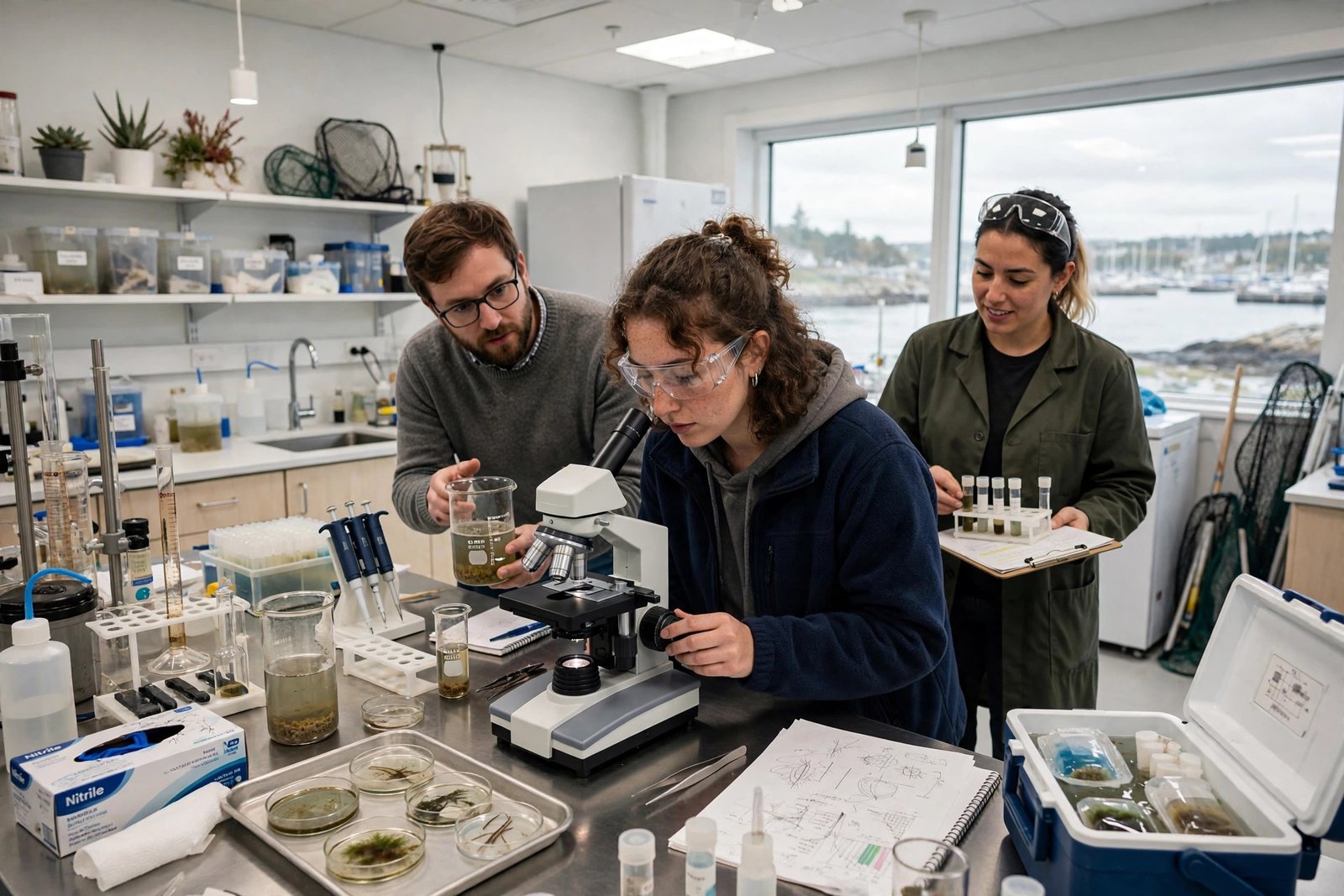
Graduate Funding: Where Dalhousie’s Money Really Is
Dalhousie’s Faculty of Graduate Studies (FGS) maintains dedicated scholarship listings for master’s and doctoral students, with a specific page for awards open to international students. The headline awards, all verified on Dalhousie’s official international scholarships page, are these:
Killam Predoctoral Scholarships
The Killam awards are Dalhousie’s most prestigious graduate scholarships, endowed through the Killam Trusts. The official FGS listing values the Killam Predoctoral Scholarship at Level 2 (doctoral) at $42,000 per year for up to three years, open to Canadian and international students as an entrance or in-program award. Killam scholars are expected to be among the strongest researchers in their cohort nationally — if you are applying for a Dalhousie PhD with a first-class record and a serious research proposal, this is the award your department will have in mind. A smaller Killam International Research Award of $6,000 supports doctoral Killam scholars undertaking international research activity.
Dalhousie Research Excellence Scholarship and President’s Awards
The Dalhousie Research Excellence Scholarship is an entrance award for doctoral students valued at $35,000 per year for up to four years, open to Canadian and international applicants — one of the most valuable university-funded doctoral entrance awards in Atlantic Canada. The President’s Awards, also for doctoral students, carry a value equal to tuition fees for up to two years. For an international doctoral student, a package combining a Research Excellence Scholarship with supervisor-funded research assistantship income changes the economics of a PhD completely; ask your prospective department, in writing, what a typical funding package for an international admit looks like before you accept any offer.
Abdul Majid Bader Graduate Scholarship
This award is specifically for international students entering a thesis-based master’s or doctoral program, valued at $40,000 per year for two years, with preference given to Iranian students. If you are an international applicant with an exceptional record, confirm with FGS whether you are being considered for it as part of the harmonised competition.
Nova Scotia Graduate Scholarship (NSGS)
The NSGS is funded by the Province of Nova Scotia and administered through Dalhousie. At master’s level it is valued at $10,000 per year, renewable for a second year (up to 24 months, and not beyond the end of your second year in program). At doctoral level, published values are $15,000 per year for up to four years. Two conditions define this award. First, your research must align with one or more of Nova Scotia’s priority research areas — which include ocean science and technology, life sciences, clean technology and renewable energy, natural resource sectors, business sustainability and social innovation. Second, you generally must not have started your program before 31 December of the competition year. Students do not usually apply directly: eligible students are nominated by their home department after admission, and Dalhousie departments advise including a clearly marked paragraph in your application research proposal explaining how your research supports a priority area. A strong academic record — Dalhousie guidance cites above 3.7 GPA in your last two years as competitive — is expected. International students are explicitly eligible; you do not need to be from Nova Scotia or Canada.
Master’s-level awards
For thesis-based master’s students, Dalhousie lists the Dalhousie 1-Year Master’s Scholarship and the Dalhousie Master’s Research Scholarship, each $20,000 for one year, open to Canadian and international students as entrance or in-program awards. Smaller in-program awards and bursaries — such as the A.S. Mowat Prize ($1,500), the Harold A. Robertson Scholarship ($5,000) and the John and Lena Graham Commonwealth Bursary (at least $1,000, for international students) — top up packages once you are enrolled. Course-based master’s programs (such as many professional degrees) carry far less scholarship funding; if funding matters, a thesis-based route is usually the funded route.
The Vanier replacement: CGRS-D
Older guides will tell you to apply for the Vanier Canada Graduate Scholarship. Do not build a plan around it: the Vanier program has been discontinued. Its replacement in Canada’s harmonised doctoral funding landscape is the Canada Graduate Research Scholarship – Doctoral (CGRS-D), which Dalhousie’s own doctoral scholarships page lists at $40,000 per year for up to three years, open to Canadian and international students. Dalhousie runs harmonised graduate scholarship competitions in which one application is considered across the major awards your department administers — Killam, NSGS, CGRS-D and university awards — so the practical step is unchanged: apply to your program by its internal deadline (generally in early December for fall entry) and complete the harmonised scholarship application your department directs you to.
Eligibility Summary for International Students
| Requirement | Undergraduate entrance | Graduate (thesis-based) |
|---|---|---|
| Admission status | Applied/admitted to a Dalhousie bachelor’s program for fall entry, directly from high school (or no transferable post-secondary study) | Applied/admitted to a thesis-based master’s or doctoral program; supervisor alignment expected for research degrees |
| Academic threshold | Typically 80% average or 26 IB points minimum to apply; competitive awards need much higher | Strong record; NSGS guidance cites 3.7+ GPA in last two years as competitive; Killam/CGRS-D expect first-class standing |
| Citizenship | All nationalities eligible for the General Entrance Award pool | Most FGS awards open to international students; a few federal awards are domestic-only — check each listing |
| English proficiency | Must meet Dalhousie admission requirements for your program | Must meet FGS and program requirements |
| Enrolment to receive funds | Full-time registration (min. 9 credit hours/term) | Full-time registration in an eligible program; awards paid per FGS terms |
| Study permit finances | IRCC living-funds requirement: CAD 22,895 for applications 1 Sep 2025–31 Aug 2026; CAD 23,448 from 1 Sep 2026 — in addition to tuition and travel. A scholarship does not remove this requirement. | |
What the Awards Do and Do Not Cover
Undergraduate entrance awards are credited to your student account against tuition and fees first; any surplus after fees can be refunded to you after the add/drop date. They do not arrive as cash in hand before you travel, and IRCC will still expect you to show the required living funds — CAD 23,448 for a single applicant from 1 September 2026, on top of first-year tuition — when you apply for your study permit. Graduate awards are paid according to FGS terms and are normally combined with teaching and research assistantships arranged by your department or supervisor; the total package, not any single award, is what you should compare between universities. Neither undergraduate nor graduate awards at Dalhousie should be described as “fully funded” unless the specific combination you have been offered in writing actually covers tuition plus living costs — for most undergraduates it will not, and honesty about that gap is what separates a workable budget from a visa refusal or a mid-degree crisis.
How to Apply, Step by Step
- Choose your program and check prerequisites. Confirm the five required courses for undergraduate admission, or the supervisor and degree requirements for graduate study, on Dalhousie’s official program pages.
- Apply for admission early. Undergraduates apply through Dalhousie’s application portal and pay the CAD 70 admission application fee. Graduate applicants apply to their program by its internal deadline — generally early December for scholarship consideration for the following fall.
- Complete the General Entrance Award application (undergraduates). After submitting your admission application, log back into the application portal and complete the entrance award application in full — including the activities, leadership and financial-need sections. One application covers hundreds of awards.
- Submit your transcript before the deadline. Official first-semester transcripts (or your provincial student ID if you are a Nova Scotia or Ontario applicant) must be in before 15 February 2027 for the Fall 2027 competition.
- Graduate applicants: complete the harmonised scholarship steps. Follow your department’s instructions for the harmonised competition, include the NSGS priority-area paragraph in your research proposal if your work fits a Nova Scotia priority, and confirm your supervisor knows which awards you want to be nominated for.
- Watch for spring notifications. Entrance award decisions are communicated in the spring after the February deadline. Accept by accepting your admission offer and paying the deposit.
- Apply for your study permit with full financial proof. Show tuition plus the IRCC living-funds amount for your application date (CAD 23,448 from 1 September 2026), whether or not you hold an award.
Required Documents
- Admission application and CAD 70 undergraduate application fee (graduate fees vary by program)
- Official transcripts — first-semester transcript for entrance award consideration; final transcripts to confirm your offer
- English proficiency scores if your prior schooling was not in English (IELTS 6.5 overall with no band below 6.0 is Dalhousie’s general undergraduate benchmark; programs vary)
- General Entrance Award application, completed in the portal (undergraduates)
- For graduate applicants: statement/research proposal (with NSGS alignment paragraph where relevant), CV, transcripts and reference letters as your program requires
- Passport and financial documents for your study permit application
Deadlines and Timeline
| Date | Milestone |
|---|---|
| 1 October 2026 | General Entrance Award program opens for 2027–2028 (Fall 2027 entry) |
| Early December 2026 (typical) | Internal program deadlines for many graduate programs, for harmonised scholarship consideration — confirm with your department |
| 15 February 2027 | General Entrance Award application deadline; admission application, award application and transcript must be complete |
| Spring 2027 | Entrance award offers notified; accept by accepting admission offer and paying deposit |
| Mid-August / mid-December | Award instalments credited to student account (two equal payments) |
| 1 September 2026 onwards | IRCC living-funds threshold CAD 23,448 applies to study permit applications |
How to Improve Your Chances
For undergraduates, your admission average — calculated on the five courses your program requires — is the single biggest lever, but it is not the only one. Complete every section of the General Entrance Award application: leadership, service, extracurricular involvement and financial need are formal selection criteria, and hybrid awards inside the pool reward exactly the evidence those sections collect. Apply for admission early enough that your first-semester transcript is strong and submitted on time; a late or missing transcript quietly removes you from consideration. If you belong to a community a named award serves — Caribbean students of Black/African descent for the international Sankofa award, women entering computer science for WeAreAllCS — make sure the application makes that eligibility unmistakable.
For graduate applicants, scholarship outcomes are decided largely before you ever fill in a funding form: by the strength of your record, the quality of your research proposal, and whether a supervisor wants you. Contact prospective supervisors months ahead with a specific, informed research idea — and if your topic touches oceans, clean technology, life sciences, natural resources, business sustainability or social innovation, say explicitly how it advances a Nova Scotia priority, because that alignment is the NSGS’s formal purpose. Finally, compare written funding packages, not headlines: a $35,000 Research Excellence Scholarship plus assistantships may beat a nominally larger offer elsewhere once Halifax living costs are counted.
Common Mistakes
- Missing 15 February. The General Entrance Award deadline is absolute for fall entry; admission without the award application means no entrance funding.
- Assuming awards are automatic. Unlike some Canadian universities, Dalhousie’s main undergraduate pool requires the General Entrance Award application — admission alone does not enter you.
- Budgeting around the $80,000 headline. That figure is the top of a 2,000-award pool. Plan on your own funds covering most costs.
- Applying as a transfer student and expecting entrance awards. Transfer students are generally ineligible for the entrance pool.
- Chasing the discontinued Vanier. The doctoral route now runs through CGRS-D at $40,000 per year — update any advice you read that still cites Vanier as open.
- Under-proving finances for the study permit. A scholarship offer does not replace IRCC’s living-funds requirement (CAD 23,448 from 1 September 2026, plus tuition).
- Graduate applicants ignoring the supervisor step. Departments nominate for NSGS and rank harmonised applications; an unknown applicant with no supervisor contact starts at a disadvantage.
Frequently Asked Questions
Are international students really eligible for Dalhousie entrance awards?
Yes. Dalhousie’s official entrance awards page states that all students — domestic and international — are eligible to apply through the General Entrance Award application, provided they are entering in the fall directly from high school (or with no transferable post-secondary study) and typically hold at least an 80% average or 26 IB points.
How much can an undergraduate actually receive?
Dalhousie publishes an approximate range of $1,000 to $80,000 across its 2,000+ entrance awards, with most awards far below the top figure. Named renewable awards include the international Sankofa Scholarship at $12,000 per year for four years ($48,000 total). Treat any figure as confirmed only when it appears in your own offer.
Is there a separate application for each scholarship?
No — one General Entrance Award application considers you for hundreds of awards. A small number of awards require an additional separate application, which Dalhousie flags in its listings.
What is the deadline for Dalhousie entrance scholarships?
For Fall 2027 entry, the program opens 1 October 2026 and the deadline is 15 February 2027. Your admission application, award application and official first-semester transcript must all be submitted by then.
What graduate scholarships can international students get at Dalhousie?
The Faculty of Graduate Studies lists, among others: Killam Predoctoral (doctoral, $42,000/yr up to 3 years), Research Excellence Scholarship ($35,000/yr up to 4 years), Abdul Majid Bader Scholarship for international students ($40,000/yr for 2 years), Nova Scotia Graduate Scholarship ($10,000/yr master’s; $15,000/yr doctoral), master’s research scholarships ($20,000 for one year) and CGRS-D ($40,000/yr up to 3 years).
Is the Vanier Scholarship still available at Dalhousie?
No. The Vanier Canada Graduate Scholarship has been discontinued. Dalhousie lists its replacement, the Canada Graduate Research Scholarship – Doctoral (CGRS-D), at $40,000 per year for up to three years, open to Canadian and international doctoral students.
Do I need to be from Nova Scotia for the Nova Scotia Graduate Scholarship?
No. Dalhousie states that NSGS students do not need to be from Nova Scotia or even Canada. Your research must align with a Nova Scotia priority area, you must meet the timing rules, and your department nominates you after admission.
Does a Dalhousie scholarship cover my study permit financial proof?
No. You must still show IRCC the required funds: tuition plus living funds of CAD 22,895 for applications submitted 1 September 2025 to 31 August 2026, rising to CAD 23,448 for applications from 1 September 2026.
Sources & Verification
- Dalhousie University — Future Undergraduate Student Awards (entrance awards page): award counts, $1K–$80K range, eligibility, 1 October 2026 opening and 15 February 2027 deadline, payment instalments — dal.ca/entranceawards
- Dalhousie University, Faculty of Graduate Studies — International Student Scholarships, Bursaries and Awards: Killam, Research Excellence, Bader, master’s scholarships, President’s Awards values — dal.ca FGS international scholarships
- Dalhousie University, Faculty of Graduate Studies — Doctoral Scholarships listing: CGRS-D $40,000/yr — dal.ca doctoral scholarships
- Dalhousie University — Nova Scotia Graduate Scholarship guidance (program pages): master’s value $10,000/yr, priority-area alignment and department nomination.
- IRCC study permit proof-of-funds table: CAD 22,895 to 31 August 2026; CAD 23,448 from 1 September 2026.
Disclaimer: Scholarship values, deadlines and eligibility change yearly. Always confirm deadlines and amounts on the official Dalhousie website before applying. StudyGraduate is an information portal, not an agency, and cannot promise admission, scholarship selection or visa approval.
✅ Eligibility Criteria
- Check the official website for full eligibility criteria for your country
🎁 Benefits
- See the official website for the complete list of benefits
⚙️ Application Process
- 1Check your eligibility on the official site
- 2Prepare your documents and statements
- 3Submit the online application before the deadline
- 4Complete interviews or assessments if shortlisted
- 5Await the final selection announcement
📅 Important Dates
Deadlines vary by country and intake. Check the official website for country-specific dates.
📄 Required Documents
- Valid passport
- Academic transcripts & certificates
- Statement of purpose
- Letters of recommendation
- CV / resume
Commonly required — confirm the exact list on the official site.
❓ Frequently Asked Questions

Ready to Take the Next Step?
Explore more scholarships and study opportunities around the world.
Browse Scholarships →