Commonwealth Shared Scholarships 2026/27: Eligibility, Benefits & Requirements
Commonwealth Shared Scholarships 2026/27: Eligibility, Benefits & Requirements The Commonwealth Shared Scholarships are one of the most distinctive fully funded routes to a Master’s degree in the United Kingdom, because they are built around a single, clear test that many other scholarships do not apply in the same way: you must be talented enough to ... <a title="Commonwealth Shared Scholarships 2026/27: Eligibility, Benefits & Requirements" class="read-more" href="https://studygraduate.com/scholarship/commonwealth-shared-scholarships-2026-27-eligibility-benefits-requirements/" aria-label="Read more about Commonwealth Shared Scholarships 2026/27: Eligibility, Benefits & Requirements">Read more</a>
📖 Overview
Commonwealth Shared Scholarships 2026/27: Eligibility, Benefits & Requirements
The Commonwealth Shared Scholarships are one of the most distinctive fully funded routes to a Master’s degree in the United Kingdom, because they are built around a single, clear test that many other scholarships do not apply in the same way: you must be talented enough to win a place on an approved course, and you must be unable to afford to study in the UK without this scholarship. Run by the Commonwealth Scholarship Commission in the UK (CSC) and funded by the UK Foreign, Commonwealth and Development Office (FCDO), jointly with participating UK universities, the scheme exists to contribute to the development needs of Commonwealth countries by training skilled professionals and academics who would not otherwise have been able to study in the UK. If you are comparing it with other awards in our scholarships directory, that development purpose — and the financial-need condition attached to it — is what you need to understand first.
This guide explains the 2026/27 round in depth, and also gives you the confirmed dates for the following round so you can plan ahead. For study beginning in September/October 2026, applications opened at 16:30 GMT on Wednesday 12 November 2025 and closed at 16:00 GMT on Tuesday 9 December 2025. The CSC has since published the next cycle on its official Shared Scholarships page: applications for the 2027/28 academic year open on Tuesday 10 November 2026 and close at 16:00 GMT on Tuesday 8 December 2026, for study beginning in September/October 2027. The pattern is consistent — a short window of roughly four weeks in November to early December — and that short window is why serious applicants prepare their university application, references and development impact statement months in advance, rather than starting when the portal opens.
Shared Scholarships are for full-time taught Master’s study only. They are not for undergraduate study, they are not for PhD study, and they are normally tenable for 12 months only — one academic year. You do not apply for a generic scholarship and then choose any course you like. You apply for an approved Master’s course at a participating UK university, and you make a separate CSC application through CSC Central. Both parts matter. The university carries out its own selection and nominates candidates to the CSC, and the CSC then confirms that the nominated candidates meet the eligibility criteria for the programme. An applicant who completes only one of those two applications has not completed an application at all.
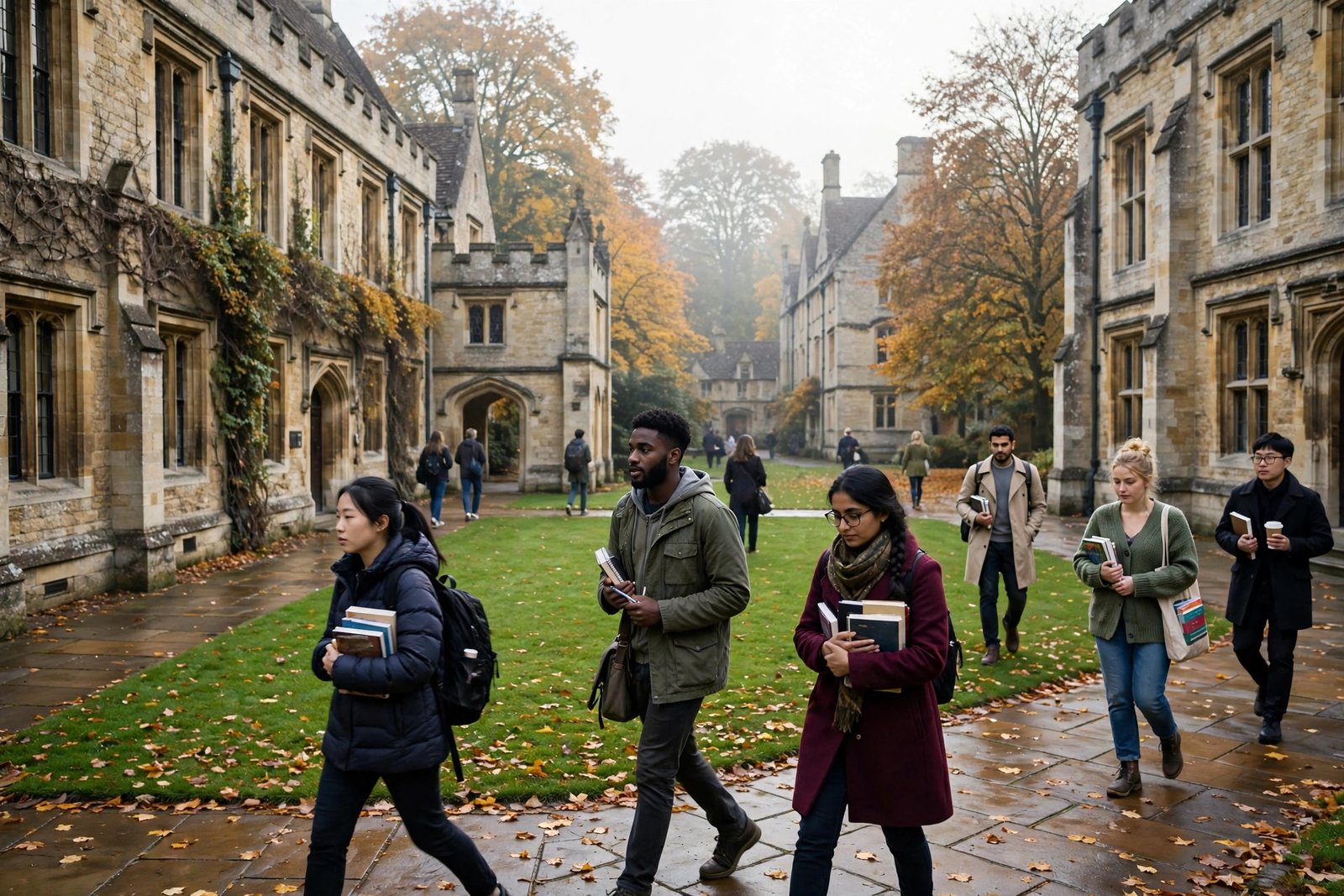
Commonwealth Shared Scholarships at a Glance
| Item | Detail (as published by the CSC) |
|---|---|
| Scholarship | Commonwealth Shared Scholarships, administered by the Commonwealth Scholarship Commission in the UK (CSC) |
| Funders | UK Foreign, Commonwealth and Development Office (FCDO), jointly with participating UK universities |
| Level | Full-time taught Master’s only — not undergraduate, not PhD |
| Duration | Normally 12 months |
| Where you study | An approved course at a participating UK university |
| Tuition | Approved tuition fees covered in full by agreement between the CSC and the university; scholars are not liable for any part of the fee |
| Stipend | £1,712 per month, or £2,000 per month at universities in the London metropolitan area, at current levels published on the CSC Shared page — paid and funded by the university. Earlier-cycle rates were lower (£1,452 / £1,781 in the 2025/26 FAQ), so always check the current page. |
| Airfare | Approved airfare from your home country to the UK and return at the end of the award, funded by the CSC; dependants’ fares are not reimbursed |
| Other support | Warm clothing allowance where applicable, thesis grant where applicable, study travel grant, contribution towards a mandatory tuberculosis (TB) test for the visa where required, child allowance in defined single-parent circumstances, and a disability needs assessment where applicable |
| 2026/27 window (last cycle) | Opened 12 November 2025, closed 9 December 2025 at 16:00 GMT, for September/October 2026 start |
| 2027/28 window (published) | Opens 10 November 2026, closes 8 December 2026 at 16:00 GMT, for September/October 2027 start |
| How you apply | CSC Central online system, plus a separate admission application to the university for the approved course |
If you are still deciding which country or funding route fits your profile, browse our universities directory and study abroad guides alongside this article, but do not let general research delay the two practical steps this scheme requires: choosing an approved course, and preparing a development impact case that a UK university can confidently nominate.
Who the Scholarship Is For: Intended Beneficiaries
The CSC describes the intended beneficiaries as high-quality postgraduate students from least developed and middle-income Commonwealth countries, including fragile and conflict-affected states, who have not studied for a year or more in a high-income country before, who would not otherwise be able to afford to study in the UK, and who have the potential to enhance the development of their home countries with the knowledge and leadership skills they acquire. Every clause in that sentence is an eligibility or selection signal. Least developed and middle-income status explains the country list. The high-income-country clause becomes a hard eligibility rule. The affordability clause becomes the financial-need test. The development-potential clause becomes the heart of the selection process, because universities nominate on academic merit and on the potential impact of your work on the development of your home country.
This is therefore not the right award if you simply want any funded Master’s in the UK, in any subject, for personal career advancement alone. It is the right award if your chosen course is demonstrably relevant to a development problem in your home country, if you can explain that relevance in concrete terms — who benefits, what changes, over what timeframe, and how that change could be measured — and if your financial circumstances genuinely mean UK study is out of reach without shared funding from the CSC and the university.
Eligibility in Depth
Citizenship, refugee status and permanent residence
To be considered, you must be a citizen of, or have been granted refugee status by, an eligible Commonwealth country, and you must be permanently resident in an eligible Commonwealth country. Citizenship alone is not enough if you are permanently living elsewhere, and residence alone is not enough without the citizenship or refugee-status link. The CSC also asks you to prove citizenship or refugee status with your application: a copy of a valid passport, or a national ID card, showing your photograph, date of birth and country of citizenship. If that document is missing, or if your transcripts are incomplete, the application can be treated as ineligible — the CSC is explicit that applications will be considered ineligible if any required documentation is not included by the closing date.
The eligible countries list — confirm the scope
Only applicants from the countries listed on the CSC’s Shared Scholarships page can apply. The current published list is: Bangladesh, Belize, Botswana, Dominica, Eswatini, Fiji, Gabon, Ghana, Grenada, Guyana, India, Jamaica, Kenya, Kiribati, Lesotho, Malawi, Malaysia, Maldives, Mauritius, Montserrat, Mozambique, Namibia, Nauru, Nigeria, Pakistan, Papua New Guinea, Rwanda, Saint Helena, Saint Lucia, Saint Vincent and The Grenadines, Samoa, Sierra Leone, Solomon Islands, South Africa, Sri Lanka, Tanzania, The Gambia, Togo, Tonga, Tuvalu, Uganda, Vanuatu and Zambia.
Read that list carefully, because it is narrower than “all Commonwealth countries” and it changes in scope between cycles and between CSC schemes. Some countries that appear on other Commonwealth Scholarship lists do not appear here, and some summaries on third-party websites reproduce older, shorter lists — for example lists that omit Belize, Botswana, Malaysia, South Africa and several Caribbean and Pacific states. Bangladesh is on the list, as are India, Pakistan, Nigeria, Ghana, Kenya, Sri Lanka and Uganda, which covers much of StudyGraduate’s core audience, but you should never assume your country is eligible for a future cycle because it was eligible in a past one. Check the list on the official page for the cycle you are applying to, on the day you start your application.
Academic qualification by September of the start year
You must be available to start academic studies in the UK by the start of the UK academic year in September of the start year — September 2027 for the 2027/28 round, September 2026 for the 2026/27 round — and by that September you must hold a first degree of at least upper second-class (2:1) honours standard, or a lower second-class degree together with a relevant postgraduate qualification, usually a Master’s degree. In practice that means a strong bachelor’s degree is the normal route in. A 2:2 on its own does not meet the stated standard; the CSC’s wording pairs a lower second-class degree with an additional relevant postgraduate qualification. If your degree is graded on a different scale, the question a university will ask is whether it is equivalent to at least a UK 2:1 — be ready to provide full transcripts for all higher education qualifications, including to-date transcripts for any course you are still studying, with certified translations if they are not in English. Where transcripts are missing or do not include all pages, the CSC says the application will be considered ineligible.
The high-income-country rule
You must not have studied or worked for one academic year or more in a high-income country. The CSC asks candidates to declare at the end of the form that they have not studied in a high-income country, and it makes one helpful clarification: study by distance learning at a university in a high-income country, while resident in your home country, is permitted. If any previous study at a university in a high-income country was undertaken remotely, you must make that clear in the form. Do not leave this ambiguous. A year spent physically studying or working in a high-income country is a different fact from an online degree completed from home, and the application form is the place to explain the distinction precisely, with dates.
Financial need: unable to afford study in the UK otherwise
The requirement to “be unable to afford to study in the UK without this scholarship” is not decorative language. The scheme’s purpose, in the CSC’s own words, is to provide training for skilled and qualified professionals and academics who would not otherwise have been able to study in the UK, and UK universities bid for these scholarships for specific courses with demonstrable development impact, agreeing to fund the living-cost component themselves. That shared-funding model is the reason the award is called “Shared”: the CSC and the university share the cost, precisely so that places can reach candidates for whom the full cost of UK tuition and living expenses is a genuine barrier. Present your circumstances honestly and consistently across the CSC form and the university application. Exaggeration, inconsistency, or a personal statement that talks about development impact while ignoring the affordability condition entirely, weakens a nomination case. Equally, do not talk yourself out of applying because you have some savings or family support — the test is whether you could afford UK university study without the scholarship, not whether you have zero resources.
No age limit, and English language
There is no age limit for CSC applications, although the CSC advises candidates to confirm with employers any age restrictions on leave entitlement they may have. On language, the CSC does not require candidates to take an IELTS test itself, but universities may require evidence of a particular level of English language proficiency as a condition of the scholarship and of admission. That distinction matters for planning: even if CSC Central does not ask you to upload an IELTS score, your chosen university may set its own English condition and its own deadline for meeting it, and you should check that requirement on the course page before you apply. Our test preparation resources can help you plan if a test is required. For researching UK courses more generally, the CSC itself points applicants to the British Council’s Study UK course and institution search.
The Six Development Themes and Approved Courses
Commonwealth Scholarships are offered across six development themes. The CSC’s current development pages describe them as: science and technology for development; strengthening health systems and capacity; promoting innovation and entrepreneurship; strengthening global peace, security and governance; strengthening resilience and response to crises; and access, inclusion and opportunity. You will also see a closely related wording in older cycle materials — for example “promoting global prosperity” in place of “promoting innovation and entrepreneurship”, and “strengthening global peace, security and governance” — because theme labels have been refreshed over time. The substance is stable: your course and your impact statement must connect clearly to development, and the CSC asks applicants to select Sustainable Development Goals they aim to impact after the award.
The practical rule for Shared Scholarships is stricter than the theme list. You must apply for an approved course at a participating UK university. The CSC publishes a full list of approved courses and details of all participating universities for each cycle, and it notes that the links on its page at the time of writing relate to the previous programme, with the new cycle’s courses and universities published in advance of the opening date. That means you cannot rely on last year’s approved-course list as a guarantee for the next cycle. A course that was approved last year may not be approved this year, because universities bid for scholarships for specific courses. Build a shortlist, by all means — but verify each course against the approved list for your cycle before you invest weeks in an application for a course that cannot be funded under this scheme in that year.
Within those themes, strong applications tend to share three features. First, the course content maps visibly onto the development problem: modules on health systems, climate resilience, education access, agricultural technology, public policy or data for development, for example, rather than a general degree title with no development connection. Second, the applicant’s previous study and employment support the course choice, which is why the form asks you to explain how your experience is relevant to the programme you want to undertake. Third, the post-scholarship plan is specific to the home country context — a named sector, a type of employer or community, a realistic timeframe, and beneficiaries who are more precise than “my country as a whole”.

Benefits and Coverage in Full
Each Commonwealth Shared Scholarship is jointly funded by the CSC and the participating university, and provides the package set out on the CSC’s official page. Approved tuition fees are covered in full by agreement between the CSC and the university — you are not liable to pay any part of the tuition fee for the approved course. Approved airfare from your home country to the UK, and return airfare at the end of the award, is funded by the CSC, with two limits you should note before you travel: the CSC will not reimburse the cost of fares for dependants, and it will not reimburse the cost of journeys made before the award is confirmed. Do not book your own flight in advance and expect repayment; in the CSC’s pre-award guidance, scholars are told the university will provide details on how to arrange the flight once the visa is received, and that self-booked flights will not be reimbursed.
The stipend — the living allowance — is paid and funded by the university. On the CSC’s current Shared Scholarships page the rate quoted at current levels is £1,712 per month, or £2,000 per month for scholars at universities in the London metropolitan area. Treat those as the current published rates for planning, not as a permanent guarantee: the CSC’s own FAQ for an earlier cycle quoted £1,452 per month (£1,781 in London) for 2025/26 and noted that the figure may be reviewed before arrival to reflect changing living costs. Rates rise between cycles, which is exactly why you should quote the figure from the official page for your cycle in any budget you prepare, and date it. The stipend is designed to cover necessary living costs including accommodation; the CSC is candid that it is not designed to fund extensive social activities, holidays, running a car, or supporting family members in the UK or abroad.
Beyond tuition, airfare and stipend, the package includes a warm clothing allowance where applicable, paid and funded by the university; a thesis grant towards the cost of preparing a thesis or dissertation where applicable, paid by the university and funded by the CSC; a study travel grant towards study-related travel within the UK or overseas, on the same funding basis; and a contribution towards the cost of a mandatory tuberculosis test where one is required for a visa application, provided receipts are supplied. If a scholar has children and is widowed, divorced or a single parent, a child allowance is payable at £622 per month for the first child and £154 per month for the second and third child under the age of 16, if the children are living with the scholar at the same address in the UK — and the CSC warns that its family allowances are intended only as a contribution, that true family costs in the UK are likely to be considerably higher, and that scholars must be able to supplement those allowances for any family members who accompany them. If a scholar shares that they have a disability, a full assessment of needs and eligibility for additional financial support will be offered. A Commonwealth Shared Scholarship covers fees, approved fares and personal maintenance for one degree, for full-time study only; other scholarships or bursaries that cover the same costs may not be held concurrently.
How to Apply, Step by Step
Step 1 — Check eligibility honestly, using the CSC checklist. Work through citizenship and residence, the eligible-country list, the 2:1-or-equivalent standard by September, the high-income-country rule, and the affordability condition. The CSC publishes a Shared Scholarships eligibility checklist and advice for applicants; completing that check before the portal opens saves you from discovering an ineligibility rule in December, when there is no time to fix it.
Step 2 — Shortlist approved courses and participating universities for your cycle. Wait for — or, if you are preparing early, monitor for — the approved-course list for your cycle. You can apply for more than one course and to more than one university, but you may accept only one offer of a Commonwealth Shared Scholarship. Check each university for its own advice on when to apply for admission, its admission requirements, and its rules for applying, because university deadlines are separate from the CSC deadline and some courses close early.
Step 3 — Apply for admission to the university course. Candidates must also apply and secure admission for the chosen course in addition to applying for the scholarship. This is the step applicants most often underestimate. A CSC application that names a course you have not applied to, or applied to too late for the university’s own timetable, cannot result in a nomination.
Step 4 — Prepare your CSC Central answers offline. The CSC advises candidates to prepare answers outside the system and paste in finalised text, to use the save function, and to avoid refreshing the browser window, which exits the form and loses unsaved data. Applications cannot be edited after submitting. The form uses two-factor authentication on registration and on each login, so ensure you have access to a smartphone or a second email account, and keep the application reference number email — with its reference and passcode, which are case-sensitive — somewhere safe.
Step 5 — Write the development impact statement in four parts. This is the centrepiece of the form; see the dedicated section below. The form also asks you to list all undergraduate and postgraduate qualifications, up to 10 publications and prizes, your employment history with an explanation of relevance, your award objectives and how each will be met, your career plans for the five years after the scholarship and your long-term plans, a detailed plan of study, a personal statement, and a summary of voluntary activities and leadership.
Step 6 — Secure references and upload all supporting documents before the deadline. You will list the names and positions of three referees who can comment both on your capacity to benefit from study in the UK and on your ability to deliver development impact afterwards; one referee must be a current employer, if applicable. References themselves must be uploaded in CSC Central — from at least two individuals, in PDF format, signed, and either on institutional letterhead or in an email clearly showing the sender’s details. Upload your proof of citizenship, full transcripts and any certified translations in the same system. The CSC cannot accept applications or documentation submitted outside the online system.
Step 7 — Submit early. The CSC advises completing and submitting as early as possible because the system is very busy in the days before the deadline. For the next published cycle that deadline is 16:00 GMT on Tuesday 8 December 2026; for the 2026/27 cycle it was 16:00 GMT on Tuesday 9 December 2025. Treat the time and the GMT zone literally — a submission attempted after 16:00 GMT because of a local-time miscalculation is a missed deadline.
Step 8 — Understand what happens next. Applications are shared with the universities, which nominate their chosen candidates to the CSC — the CSC’s page for the recent cycle referred to nominations in March following the December deadline. The university notifies provisionally selected candidates once eligibility is confirmed and terms of admission are being agreed; a formal Confirmation of Award letter follows, and candidates are required to submit a Health and Disability Form before that letter can be issued — and to sign an undertaking to return to their home country as soon as possible after the end of the award.
The Development Impact Statement: The Part That Decides Nominations
The CSC asks for a development impact statement in four parts, and it is worth quoting the structure because generic statements fail against it. In the first part, explain how the proposed scholarship relates to development issues at the global, national and local level, and to development issues connected to your chosen CSC development theme and the wider sector. In the second part, explain how you intend to apply your new skills once the scholarship ends. In the third part, outline what you expect will change in development terms following the scholarship, including the outcomes you aim to achieve, the timeframe for their implementation, and who the beneficiaries will be. In the fourth part, write about how the impact of your work could best be measured and evidenced.
Notice what that structure rewards: specificity at three scales, a credible application plan, named outcomes with a timeframe and beneficiaries, and a measurement method. “I will return and help my community” answers none of the four parts. “I will use training in health systems management to redesign referral pathways in district clinics in my region within two years of returning, reducing avoidable referrals for the population those clinics serve, and I will evidence it through clinic referral records and waiting-time data” begins to answer all four. You do not need to promise national transformation. You need a plan a nominating panel can believe, delivered by a person whose employment history and course choice already point in that direction. Link every answer in the form to the selection criteria — the CSC itself advises applicants to note the criteria carefully and link their answers to each point listed.
Required Documents Checklist
| Document | What the CSC requires |
|---|---|
| Proof of citizenship / refugee status | Copy of a valid passport or national ID card showing photograph, date of birth and country of citizenship |
| Full transcripts | All higher education qualifications, including to-date transcripts for courses currently being studied; certified translations if not in English; all pages included |
| References | From at least two individuals, uploaded to CSC Central, in PDF format, signed, on institutional letterhead or an email clearly showing the sender’s details. The form also asks for details of three referees, one being a current employer if applicable. |
| University admission application | Separate application to the participating university for the approved course, following that university’s own deadlines and rules |
| After provisional selection | Health and Disability Form before a Confirmation of Award can be issued; signed undertaking to return home after the award |
Keep digital copies of everything in the exact format requested, named clearly, well before December. Transcripts that need certified translation, and referees who need time to write, sign and letterhead a reference, are the two items that most often cannot be produced in the final week.
Deadlines and Timeline
| Stage | 2026/27 cycle (last cycle) | 2027/28 cycle (published) |
|---|---|---|
| Applications open | 12 November 2025, 16:30 GMT | 10 November 2026 |
| Applications close | 9 December 2025, 16:00 GMT | 8 December 2026, 16:00 GMT |
| University nominations to CSC | Early 2026 / March 2026 as described in CSC materials | Expected spring 2027 — confirm on the CSC page |
| Provisional selection and Confirmation of Award | After nomination, eligibility confirmation and agreement of admission terms | Same process — no date is promised to individual applicants |
| Studies begin | September/October 2026 | September/October 2027 |
Use our study tools, including deadline planning resources, to work backwards from the December closing date: university shortlist by September, admission applications in the autumn, references requested at least a month before the CSC deadline, and a complete draft impact statement before the portal even opens.
Selection Criteria and How to Improve Your Chances
Each participating university conducts its own recruitment process to select a specified number of candidates and puts those candidates forward to the CSC, which then confirms eligibility. Applications are considered according to academic merit, quality of the study or research proposal as described in the CSC’s selection materials, and potential impact on the development of the candidate’s home country. In practical terms, you improve your chances by strengthening all three at once: a degree record that clearly meets the 2:1-equivalent standard; a plan of study that is detailed, course-specific and feasible in 12 months; and an impact case that is local, timed and measurable. Choose referees who can speak to both sides of your case — academic capacity and development delivery — and brief them on the four-part impact structure so their letters reinforce, rather than merely repeat, your form. Finally, apply to the university early enough that your admission position is clear; a nomination is far easier for a university to make for a candidate whose course place is already in order.
If this scheme is not the right fit — because your country is not on the Shared list, your course is not approved this cycle, or you are seeking a different level of study — compare the parent overview in our Commonwealth Shared Scholarships guide and consider other fully funded routes such as Australia Awards Scholarships or the Global Korea Scholarship for graduate study, checking each scheme’s own eligibility rules rather than assuming they mirror the CSC’s.
Common Mistakes That End Applications
The most common mistake is completing only half the process: a CSC Central application with no university admission application, or a university application with no CSC form. The second is missing the December deadline by treating it as a late-December or January deadline, or by misreading 16:00 GMT in local time. The third is an incomplete document set — a transcript missing pages, an unsigned reference, a reference not on letterhead and not in a qualifying email format, or proof of citizenship that does not show date of birth — any of which can make the application ineligible. The fourth is choosing a course that is not on the approved list for that cycle, often by relying on a third-party list from a previous year. The fifth is a vague development impact statement that never names outcomes, beneficiaries, a timeframe or a measurement method. The sixth is inconsistency on the two sensitive eligibility points: the high-income-country history, where remote study must be clearly explained, and financial need, where the form, the personal statement and the university application should tell the same honest story. The seventh is leaving CSC Central to the final days, when the system is busiest, the two-factor login is unfamiliar, and unsaved work can be lost by a browser refresh.
Frequently Asked Questions
Is the Commonwealth Shared Scholarship fully funded?
For the approved course, yes, in the sense the CSC defines it: full approved tuition fees, approved return airfare, a monthly stipend (£1,712, or £2,000 in London, at current published levels), and the additional allowances described in this guide. It does not cover dependants’ airfares, journeys made before the award is confirmed, or the full true cost of maintaining a family in the UK, for which the CSC says scholars must supplement the family allowances themselves.
Can I apply if my degree is a 2:2?
Not on a 2:2 alone under the stated eligibility wording. You must by September of the start year hold a first degree of at least upper second-class (2:1) honours standard, or a lower second-class degree plus a relevant postgraduate qualification, usually a Master’s degree. If your grading scale is different, the question is equivalence to that standard, evidenced by full transcripts.
Is Bangladesh eligible for Commonwealth Shared Scholarships?
Yes. Bangladesh is on the CSC’s current published eligible-countries list for Shared Scholarships, along with countries including India, Pakistan, Nigeria, Ghana, Kenya and Sri Lanka. Because lists can change between cycles, confirm Bangladesh — or any country — on the official CSC page for the cycle you are applying to.
Do I need IELTS for a Commonwealth Shared Scholarship?
The CSC does not require candidates to take an IELTS test itself. Your university may, however, require evidence of a particular level of English proficiency as a condition of admission and of the scholarship. Check the course page for your university’s requirement and deadline, and do not assume the CSC position removes a university condition.
Can I apply for more than one course or university?
Yes. Candidates can apply for more than one course and to more than one university, but they may accept only one offer of a Commonwealth Shared Scholarship. Every course you apply for under the scheme must still be an approved course at a participating university for that cycle.
Can I stay in the UK and work after the scholarship?
The award is built around return. Candidates are required to sign an undertaking to return to their home country as soon as possible after the end of the award, scholars are expected to reside in the UK during the award and to seek approval for overseas travel, and the CSC states it cannot provide a letter of support or permission for scholars to remain in or return to the UK after the award to work or undertake postdoctoral study, with only a narrow, strictly conditioned consideration of extension where a scholar wishes to move from Master’s to PhD study. Plan on returning home and delivering the impact you described.
What stipend will I actually receive?
The CSC’s current Shared Scholarships page quotes £1,712 per month, or £2,000 per month in the London metropolitan area, at current levels, paid and funded by the university. Earlier cycles were lower — £1,452 / £1,781 was quoted for 2025/26 — and rates may be reviewed. Use the figure published for your cycle and your Confirmation of Award as the authoritative amount.
Who selects scholars — the CSC or the university?
Both, in sequence. Each participating university conducts its own recruitment, selects a specified number of candidates and nominates them to the CSC. The CSC then confirms that nominated candidates meet the programme’s eligibility criteria. Enquiries about nomination should be directed to the UK university.
Sources & Verification
This article was verified against the Commonwealth Scholarship Commission’s official Shared Scholarships page on cscuk.fcdo.gov.uk, which publishes the eligibility rules, eligible countries, financial assistance, application dates for the 2027/28 round (opening 10 November 2026, closing 8 December 2026 at 16:00 GMT) and the current stipend rates quoted here; the CSC’s pre-award FAQs for Shared Scholars on cscuk.fcdo.gov.uk, which gave the earlier 2025/26 stipend rates and flight-booking guidance used to show how rates change; and the CSC’s development impact pages describing the six development themes. University cycle pages, including the University of Leeds Commonwealth Shared Scholarships 2026 page, were used only to cross-check how participating universities present the same CSC rules.
Disclaimer: Scholarship details, approved courses, eligible countries, stipend rates and deadlines change yearly. Always confirm deadlines, amounts and course approval on the official CSC website before applying. StudyGraduate is an information portal, not an agency, and cannot promise selection, admission or visa approval to any applicant.
✅ Eligibility Criteria
- Check the official website for full eligibility criteria for your country
🎁 Benefits
- See the official website for the complete list of benefits
⚙️ Application Process
- 1Check your eligibility on the official site
- 2Prepare your documents and statements
- 3Submit the online application before the deadline
- 4Complete interviews or assessments if shortlisted
- 5Await the final selection announcement
📅 Important Dates
Deadlines vary by country and intake. Check the official website for country-specific dates.
📄 Required Documents
- Valid passport
- Academic transcripts & certificates
- Statement of purpose
- Letters of recommendation
- CV / resume
Commonly required — confirm the exact list on the official site.
❓ Frequently Asked Questions

Ready to Take the Next Step?
Explore more scholarships and study opportunities around the world.
Browse Scholarships →