

MS in Energy Management Abroad: Eligibility, Fees, Top Universities and Careers
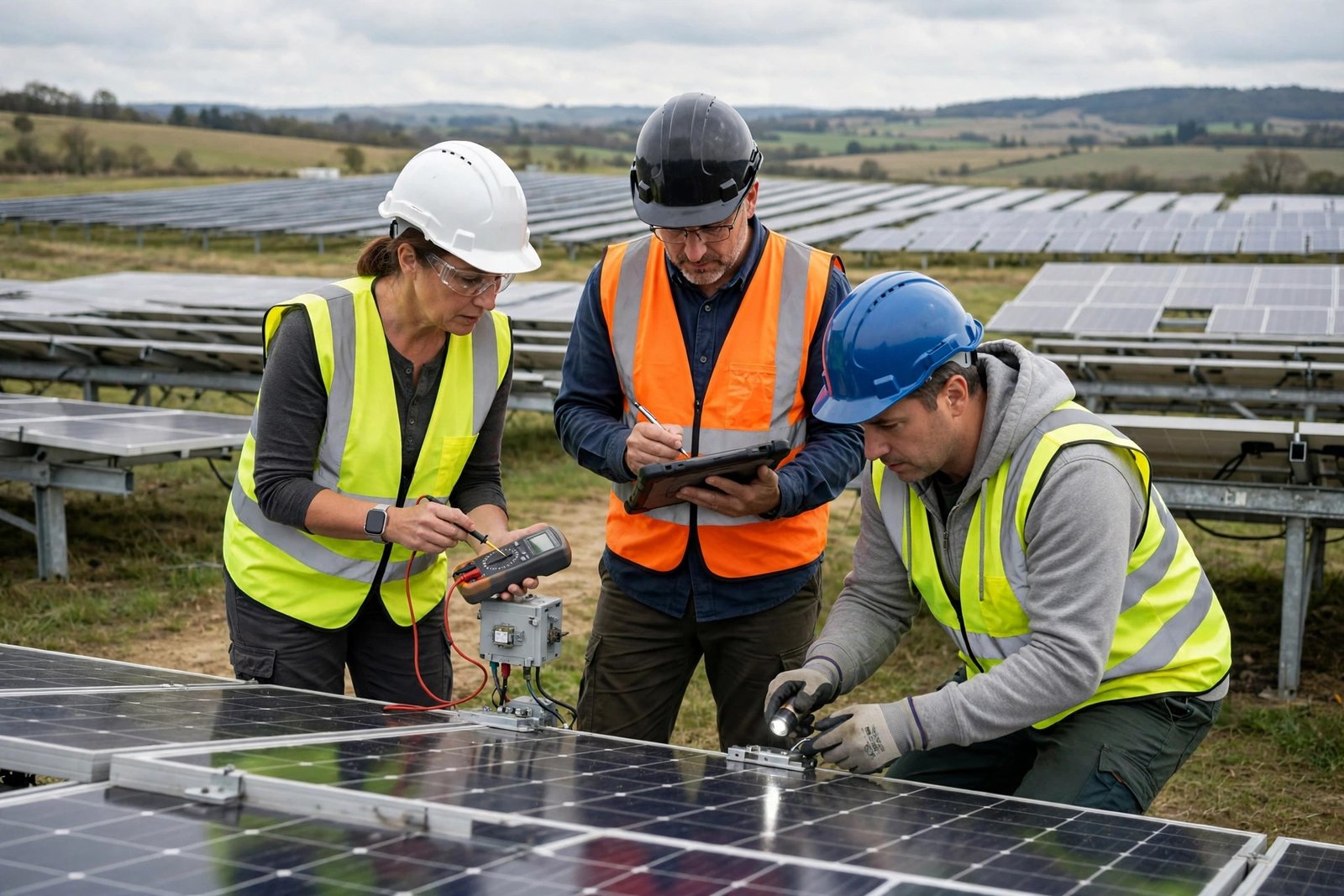
An MS in Energy Management sits at the meeting point of engineering, economics, policy and business. It is designed for graduates who want to do more than understand how energy is produced: graduates learn how energy is bought, sold, saved, regulated and planned, and how organisations cut both costs and carbon without breaking operations. If you have ever looked at a factory, a hospital, a campus or a city district and wondered who decides how much energy it uses, where that energy comes from and what it costs, this degree trains you to be that person.
The degree is not the same as a pure energy engineering degree, although the two overlap. A traditional energy engineering programme spends most of its time on turbines, grids, thermodynamics and plant design. Energy management adds the commercial and organisational layer on top: energy auditing, procurement strategy, tariffs and markets, project finance, regulation, behaviour change and the data systems that turn meter readings into decisions. Graduates therefore work in a space where a technical mistake and a commercial mistake can both be expensive, and where the ability to explain a business case to a finance director matters as much as the ability to read a load curve.
This guide explains who the degree suits, what you will actually study, what universities usually ask for, how to plan costs honestly, which countries are strong choices, what careers look like, and which official salary figures you can trust. It is written for 2026 and 2027 intakes. Fees, deadlines and visa rules change every year, so treat every figure here as a planning benchmark and confirm the current number on the official university or government page before you apply.
At a glance
| Feature | Typical picture |
|---|---|
| Degree level | Master’s degree, usually MSc, MS or MBA-style specialist master’s depending on the university |
| Typical duration | 12 months full-time in the UK; 18 to 24 months in the USA, Canada and Australia; 2 years (4 semesters) in much of Germany |
| Who it suits | Engineering, science, economics, business and built-environment graduates, and professionals already working in energy, facilities or operations |
| Core subjects | Energy auditing, energy economics and markets, renewable energy systems, building energy performance, data analysis, policy and regulation, project management |
| Common capstone | An applied project, consultancy-style dissertation or industry placement report, often based on a real building, portfolio or energy dataset |
| English test | Usually IELTS or TOEFL for English-taught programmes; exact scores vary by university and must be checked on the official programme page |
What is energy management, and why does it need its own degree?
Energy management is the discipline of using energy as efficiently, affordably and cleanly as possible across an organisation. That sounds simple until you look at what it involves in practice. A large organisation may buy electricity and gas on different contracts, run heating and cooling systems that were installed decades apart, own a vehicle fleet, lease buildings it does not control, and report emissions to investors, regulators and customers who all want different numbers. Someone has to join those pieces together, and that person needs to speak the languages of engineering, finance and policy at the same time.
The demand for that skill comes from three directions at once. First, energy prices are volatile, so wasted energy is wasted money in a way that boards notice. Second, climate policy, disclosure rules and customer expectations now push organisations to report and reduce emissions, which creates work that cannot be done with a spreadsheet alone. Third, the energy system itself is changing: solar, wind, storage, heat pumps, electric vehicles and smart grids all create new choices about when energy is used, stored or sold back. A graduate who understands only the technology, or only the finance, will miss half the decision.
That is why the curriculum of a good energy management master’s is deliberately mixed. You will study enough engineering to understand what a system can and cannot do, enough economics to judge whether a project pays back, and enough management to get a project approved and delivered. If you want a purely technical career designing power plants, a straight energy engineering degree may fit better. If you want to run energy strategy, procurement, efficiency programmes or sustainability reporting, energy management is the more direct route.
What you study
Programme titles vary, and so do module lists, but most energy management master’s degrees are built around the same spine. The first part usually covers energy fundamentals: how energy systems work, how buildings and industrial processes consume energy, and how to measure consumption properly. Measurement matters more than newcomers expect. An energy manager who cannot establish a credible baseline, normalise for weather and production, and prove that a saving is real will not keep the trust of a finance team for long.
The second part is usually commercial and analytical. Expect modules on energy economics, energy markets and pricing, procurement and contracting, and the financial appraisal of efficiency and renewable projects. You will learn concepts such as payback period, net present value, internal rate of return and levelised cost, and you will learn why a project with a good payback can still fail if it carries the wrong risk, the wrong contract structure or the wrong maintenance burden. Data skills run through this section too: energy data analysis, visualisation and, increasingly, the use of building management systems and smart-meter data.
The third part is policy, strategy and people. Modules commonly cover climate and energy policy, regulation, carbon accounting and reporting, corporate sustainability strategy, and change management. This is the part of the degree that surprises engineering graduates most, because a technically perfect efficiency measure still needs occupants to use a building differently, suppliers to deliver on time, and senior managers to fund the work. Case studies and group projects are therefore common: you may audit a real building, design a procurement strategy for a fictional portfolio, or pitch a retrofit programme to a panel playing the role of a board.
Common module themes include:
- Energy auditing, metering and measurement and verification
- Building energy performance, heating, cooling, lighting and controls
- Renewable energy technologies, storage and grid integration
- Energy economics, markets, tariffs and procurement strategy
- Project finance, business cases and risk for energy projects
- Carbon accounting, reporting frameworks and climate policy
- Data analysis, energy modelling and visualisation
- Facilities, operations and asset management
- Research methods and a dissertation or applied capstone project
Some programmes lean technical and sit inside an engineering faculty; others lean commercial and sit inside a business school. Read the module list, not just the degree title, before you choose. Two programmes both called “energy management” can feel like different degrees, and the right one depends on whether you want to spend your career closer to plant rooms or closer to boardrooms.
Eligibility and entry requirements
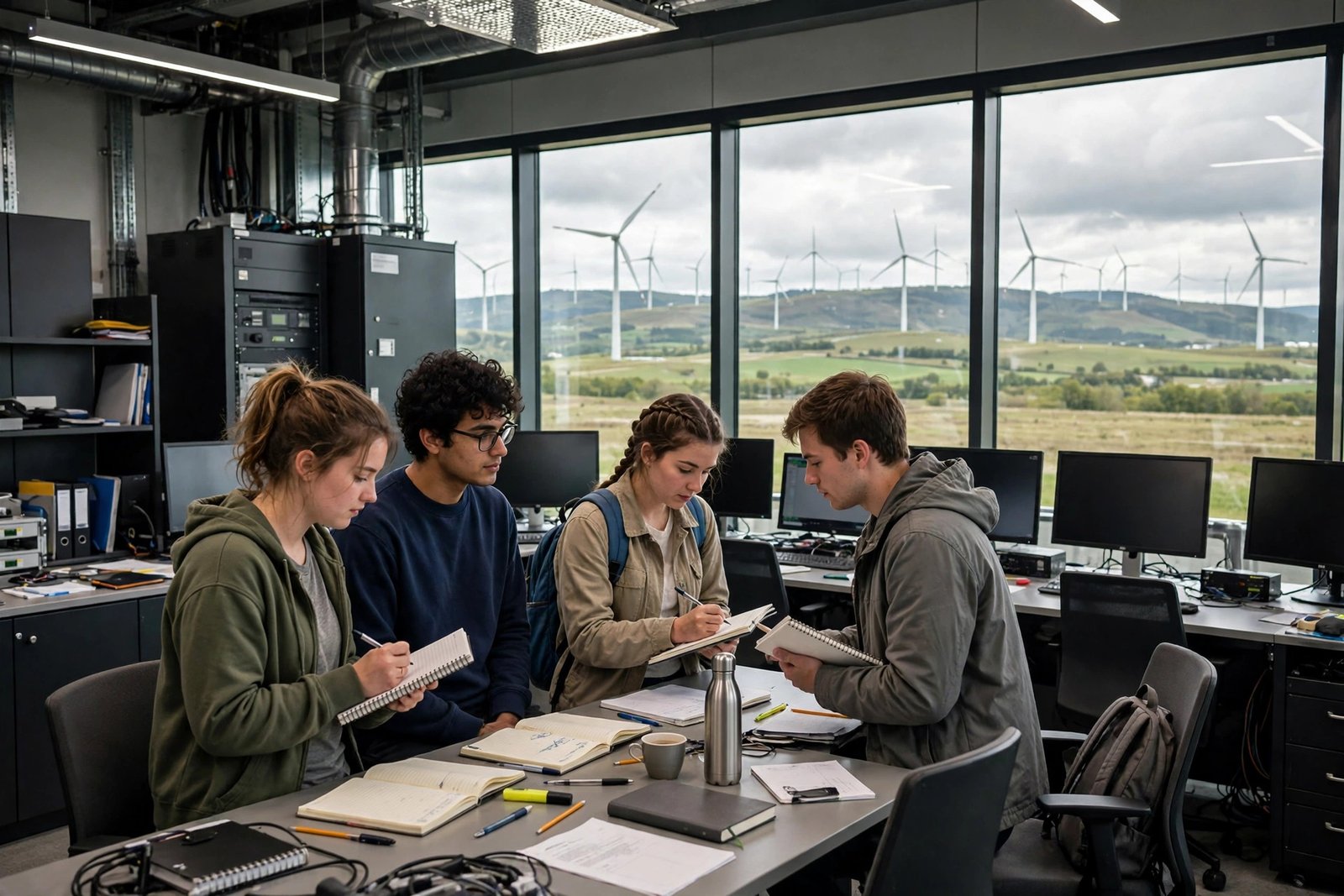
Most programmes ask for a bachelor’s degree in a relevant subject and evidence that you can handle both quantitative work and academic writing in English. Relevant backgrounds usually include mechanical, electrical, civil or chemical engineering, physics, environmental science, economics, business, architecture and building services. Some programmes accept a broader range of degrees if you can show relevant work experience or strong quantitative modules. Others are stricter, especially engineering-faculty programmes that assume prior thermodynamics or mathematics.
Grades are expressed differently by country. UK universities often ask for a second-class honours degree or equivalent; US universities usually use a GPA scale and may ask for transcripts, a statement of purpose and letters of recommendation; Canadian and Australian universities publish their own country-specific grade equivalences; German universities often work through uni-assist or a faculty check of whether your degree is recognised. Do not convert your own grades with an unofficial calculator and treat the result as an offer: use the university’s published equivalence or ask admissions directly.
English requirements also vary. As a rough planning guide, many English-taught master’s programmes ask for an overall IELTS band around 6.5, with no section below 6.0, or a TOEFL equivalent, but some ask for 7.0 and some accept 6.0 with a pre-sessional course. Test requirements, accepted tests and waiver rules differ by institution, so check the programme page rather than a general university page. If you studied your previous degree entirely in English, some universities will waive the test; others will not, and the waiver policy is usually published.
| Destination | Typical entry pattern | Watch out for |
|---|---|---|
| United Kingdom | Relevant bachelor’s degree, personal statement, references; IELTS commonly around 6.5 overall | One-year intensity: the pace is fast and there is little room to catch up on missing maths |
| United States | Bachelor’s degree, transcripts, statement of purpose, recommendations; GRE requirements vary and many programmes are now test-optional | Programme homes differ: engineering, business and public-policy versions of this degree are not interchangeable |
| Canada | Relevant bachelor’s degree, transcripts, statement of interest; some research-based options require a supervisor | Course-based and thesis-based master’s degrees lead to different timelines and funding patterns |
| Germany | Recognised bachelor’s degree, subject relevance, English or German proof depending on the language of instruction | Application routes and deadlines differ by university; public universities often charge no tuition but living costs still apply |
| Australia | Relevant bachelor’s degree or relevant work experience for some programmes; English test as published | Two-year programmes may matter for post-study work eligibility; check the current rules, not older guides |
Work experience is not always required, but it changes how much you get from the degree. Students who have worked in facilities, utilities, construction or manufacturing can connect the theory to real buildings and real budgets immediately. Students coming straight from a bachelor’s degree can still do very well, especially if they choose a programme with an industry project or placement, but they should expect to work harder on the commercial parts of the course. If you have experience but a weaker academic record, look for programmes that explicitly welcome professional applicants and say how experience is assessed.
Tuition and living costs: how to plan honestly
Tuition for an energy management master’s varies so widely by country, university and programme type that a single “average fee” would mislead more than it helps. Public universities in Germany commonly charge little or no tuition for many programmes, although semester contributions and living costs still apply. UK one-year master’s tuition for international students is typically a five-figure sterling amount, and the one-year format means the total tuition bill is for one year rather than two. US tuition varies enormously between public and private universities and between states. Canadian and Australian tuition sits between these patterns but still varies by institution. The honest approach is to shortlist three to five programmes, take the tuition figure from each official programme page, and compare totals for the full degree, not just one year.
Living costs need the same discipline. Student visa financial requirements are a useful floor for planning, because they reflect what governments expect you to show, but they are not a complete budget: rent, food, transport, insurance, books, a laptop, winter clothing and travel home all sit on top of the minimum. Use a budgeting tool to test your own numbers before you commit.
| Country | Official financial benchmark to plan around | What it covers |
|---|---|---|
| United Kingdom | Student visa maintenance: GBP 1,529 per month in London, GBP 1,171 per month outside London | Living costs for the visa application; tuition is separate and must also be shown |
| Germany | Blocked account: EUR 11,904 for the year | Living costs; many public programmes charge little or no tuition, but the blocked amount is still required |
| Australia | Student visa financial capacity: AUD 29,710 for living costs for 12 months | Living costs for the visa application; tuition and travel are additional |
| Canada | Proof of funds for living expenses: CAD 22,895, rising to CAD 23,448 | Living costs for the study-permit application; tuition is additional |
Two planning mistakes are common. The first is comparing a one-year UK degree with a two-year degree elsewhere on annual tuition alone: the two-year degree costs two years of living expenses even if its annual tuition looks lower. The second is forgetting that scholarships rarely cover everything. A partial scholarship that covers 25 percent of tuition is still valuable, but it does not remove the need for a living-cost plan. Build your budget in three lines: tuition for the full degree, living costs for the full stay, and a contingency for visa fees, insurance and travel. Then test it with the study abroad budget planner and the tuition fee calculator on StudyGraduate before you apply.
Top universities and countries for this programme
The best country for energy management depends on what kind of energy work you want. The United Kingdom is strong on energy policy, markets and building performance, and its one-year master’s format appeals to students who want to return to work quickly. Germany is strong on engineering, renewables integration and industrial energy systems, and its public-university model keeps tuition low for students who can meet the living-cost requirement. The United States offers scale: large energy markets, big utilities, national laboratories and a wide range of business-school and engineering-school versions of the degree. Canada combines natural resources, hydroelectric power and building-sector work with post-study work routes that many graduates value. Australia is strong on solar, grid and remote-energy questions, and its universities serve a region where energy transition work is growing fast.
Rather than chasing a single league table, shortlist by programme content. Look for programmes that publish a full module list, name the staff who teach energy topics, describe the capstone or industry project, and explain what graduates do next. A programme with a strong auditing and data component will serve a facilities career better than a programme that is mostly policy essays, however famous the university. Use the universities directory and the Courses and Programs directory to compare options, and compare related profiles such as the MBA and the Bachelor of Engineering if you are still deciding between a management-leaning and an engineering-leaning route.
When you read rankings, keep providers separate. QS and THE publish different rankings with different methods, and a university’s position in one is not its position in the other. StudyGraduate’s rankings pages keep the two providers apart, and you should do the same in your own shortlist. A rank is a starting point for research, not a substitute for reading the curriculum.
Careers and salaries
Energy management graduates work in utilities, energy consultancies, facilities and property companies, manufacturing, government, hospitals, universities and large corporate sustainability teams. Early roles commonly include energy analyst, energy engineer, sustainability analyst, facilities coordinator and junior energy consultant. With experience, graduates move into energy manager, senior consultant, head of sustainability, director of facilities or energy procurement lead roles. The path is rarely a single ladder: many graduates move between consulting, in-house roles and the public sector as their experience grows.
There is no standalone BLS occupation called “energy manager”, so honest salary reporting uses the nearest official occupations as proxies and labels them as such. The figures below are US medians from the Bureau of Labor Statistics Occupational Outlook Handbook, May 2025. They describe the US labour market for those occupations; they are not a promise of what any individual graduate will earn, and they do not transfer directly to other countries.
| Nearest official occupation (proxy) | Median annual wage, BLS May 2025 | Projected growth, 2025–35 | Why it is a useful proxy |
|---|---|---|---|
| Facilities managers (within administrative services and facilities managers) | $106,660 | 5% for administrative services and facilities managers overall | Many energy managers own building portfolios and facilities budgets |
| Administrative services managers | $114,130 | 5% for the combined occupation group | Covers the operational and administrative management side of the role |
| Environmental engineers | $107,110 | 6% | Covers the technical, environmental-systems side of energy and sustainability work |
Read those figures with care. A median is the middle of a distribution: half of workers in the occupation earned more and half earned less. Industry matters a great deal; the BLS reports, for example, that environmental engineers in the federal government had a May 2025 median of $124,760, well above the all-industry median. Location, experience, professional credentials and sector matter too. Energy-specific credentials such as Certified Energy Manager (CEM) status, where recognised, can help experienced professionals evidence competence, but no credential guarantees a salary or a job. If a source quotes you an “energy manager salary” without naming the occupation, the country, the year and the source, treat it as marketing, not data.
Post-study work rules also shape careers and must be checked at the time you apply, because they change. In the United States, Optional Practical Training is typically 12 months, with a possible 24-month STEM extension only for eligible STEM programmes and employers. In the United Kingdom, the Graduate Route has allowed master’s graduates two years of work, with an announced shortening to 18 months from 1 January 2027 for new applicants; the announced rule and the current rule are different things, so check which applies to your start date. In Canada, the Post-Graduation Work Permit length depends on programme length and other conditions, up to three years. None of these routes guarantees employment or permanent residence.
Scholarships for this field
Scholarships for energy management come from several directions: university merit scholarships, government scholarships for international students, and awards tied to energy, sustainability or climate themes. Because awards change annually, the useful habit is to search by your destination and level rather than by a single famous scholarship name, and to apply to more than one. Check deadlines early: government scholarships often close many months before university application deadlines, and some require a separate application entirely.
Start with StudyGraduate’s scholarships directory and the scholarship finder tool, then confirm every award on the official provider’s page: the amount, what it covers, whether it renews, and whether it can be combined with other funding. Be sceptical of any agent or website that charges a fee to “secure” a scholarship or promises an award before you have applied. Genuine scholarships do not work that way.
How to choose and apply
Choose in this order: curriculum first, then cost and location, then reputation. Read three module lists in full and ask yourself which one you would enjoy in week eight, when the novelty has worn off. Then check the total cost for the full degree, the visa financial requirement, and whether the programme length affects post-study work eligibility in that country. Then look at the university’s graduate outcomes, industry links and capstone arrangements. A programme that lets you audit a real building or work on a real dataset will teach you things a purely exam-based programme cannot.
For applications, prepare a statement that connects your background to energy management specifically, not to sustainability in general. Admissions tutors read many statements about “saving the planet”; the ones that stand out explain a concrete problem you have seen — a building that wasted energy, a bill you could not explain, a project that failed for commercial reasons — and what you want to learn in order to solve it. References should come from people who have seen your quantitative or project work, not simply from the most senior person you know. And apply to a spread of programmes: one ambitious, two realistic, one safe, all of which you would genuinely be happy to attend.
Frequently asked questions
Is an MS in Energy Management better than an MS in Renewable Energy?
Neither is better in general; they answer different questions. Renewable energy degrees focus on generation technologies. Energy management focuses on how organisations use, buy and save energy across all sources, including renewables. Choose renewable energy if you want to design generation systems, and energy management if you want to run energy strategy, efficiency and procurement.
Do I need an engineering degree to apply?
Not always. Many programmes accept economics, business, environmental science and built-environment degrees, especially business-school versions. Engineering-faculty programmes are stricter and may require prior mathematics or thermodynamics. Check the published entry requirements for each programme rather than assuming.
Can I study energy management without work experience?
Yes, most taught master’s programmes accept strong recent graduates. Work experience helps, particularly for the commercial modules, and a programme with an industry project or placement can partly bridge the gap. If you have experience, highlight it; if you do not, show quantitative coursework and any relevant project work.
How long does the degree take?
Typically 12 months full-time in the UK, 18 to 24 months in the USA, Canada and Australia, and two years in Germany. Part-time options exist at some universities and extend the timeline. Always confirm the duration on the official programme page, because it affects total cost and, in some countries, post-study work eligibility.
What salary can I expect after graduation?
No honest guide can promise a figure. The closest official US benchmarks are the BLS May 2025 medians for proxy occupations: $106,660 for facilities managers, $114,130 for administrative services managers and $107,110 for environmental engineers. Your actual pay will depend on country, city, sector, experience and role.
Is Germany really tuition-free for this degree?
Many public universities in Germany charge little or no tuition, but “tuition-free” does not mean cost-free. You still need to cover living costs, show EUR 11,904 in a blocked account for the visa, pay semester contributions, and fund travel and insurance. Some specialised or private programmes do charge tuition, so check each programme individually.
Does this degree lead to permanent residence abroad?
No degree guarantees permanent residence. Post-study work routes can give you time to gain experience and, in some countries, to qualify for a work visa, but residence outcomes depend on immigration rules, employer sponsorship, occupation lists and your personal circumstances at the time. Treat any promise of residence as a warning sign.
Sources and Verification
Sources consulted for this article: US Bureau of Labor Statistics, Occupational Outlook Handbook — Administrative Services and Facilities Managers (May 2025 medians and 2025–35 projections); US Bureau of Labor Statistics, Occupational Outlook Handbook — Environmental Engineers (May 2025 median and 2025–35 projections); UK, German, Australian and Canadian government student-visa financial requirements as summarised in the StudyGraduate programme brief (UK GBP 1,529 London / GBP 1,171 outside London; Germany EUR 11,904 blocked account; Australia AUD 29,710; Canada CAD 22,895 rising to CAD 23,448). Salary figures are labelled as proxies where no standalone BLS occupation exists for energy management, and all figures are US figures unless stated otherwise.
Figures change yearly — confirm fees, entry requirements, deadlines and visa rules on the official university page and the official government immigration page before you apply. StudyGraduate is an information portal, not an agency — it never promises admission, jobs, salaries or visa or permanent-residence outcomes.