

Student Visa from Bangladesh: Documents, Proof of Funds and Interview Guide by Country
If you are applying for a student visa from Bangladesh, the hardest part is rarely filling in the form. It is proving — with documents that an officer can verify quickly — that you have a real offer, that the money for your course genuinely exists and will still be there after you arrive, and that your study plan makes sense for your background. Every major destination asks those same three questions, but each country answers them with different forms, different money rules and a different kind of interview. A file that would pass easily for Germany, where funds sit in a blocked account before you apply, can fail for the United States, where a consular officer in Dhaka may decide your F-1 case in a short interview based largely on what you say and the Form I-20 in front of them. A file built for Canada can fail for the United Kingdom if the money has not been held for the full 28 days the UK requires.
This guide is written specifically for Bangladeshi applicants — students leaving after HSC, bachelor’s graduates heading for a master’s, and research students — applying to the United Kingdom, the United States, Canada, Australia and Germany for 2026 and 2027 intakes. It walks through the documents you need before you start, the proof-of-funds rules country by country, what actually happens at the visa application centre and at interview, the mistakes that most often lead to refusal, and how to prepare calmly and honestly. If you are still at the earlier stage of choosing courses after HSC, read our companion guide on studying abroad after HSC from Bangladesh first, and keep your academic papers in order with our guide to certificate attestation in Bangladesh, because attested board and university documents underpin almost every visa file described below.

Student Visas from Bangladesh at a Glance
The table below summarises the five routes side by side. Use it to orient yourself, then read the detailed country section that applies to you — the headline figure is never the whole test, and officers look at the source and history of funds as carefully as the total.
| Country and visa | Visa fee | Living funds to show (excl. tuition) | Interview? | Work in term time | Post-study route |
|---|---|---|---|---|---|
| UK — Student visa | £558 plus Immigration Health Surcharge £776/year | £1,529/month London / £1,171 outside, up to 9 months | Sometimes — credibility interview possible | Usually 20 hrs/week at degree level | Graduate Route 2 years (3 PhD); announced 18 months from 1 Jan 2027 |
| USA — F-1 | $185 MRV + $350 SEVIS; plus Visa Integrity Fee of at least $250 at issuance where collected | Full first-year costs on Form I-20; no single national threshold | Yes — in-person interview in Dhaka for most applicants | On campus only, 20 hrs/week | OPT 12 months + 24-month STEM extension |
| Canada — Study permit | CAD 150 | CAD 22,895 to 31 Aug 2026 / CAD 23,448 from 1 Sep 2026, plus tuition and travel | Usually paper-based; interview if IRCC requests one | 24 hrs/week off campus | PGWP up to 3 years |
| Australia — Subclass 500 | AUD 2,500 from 1 Jul 2026 (AUD 2,050 for some groups) | AUD 29,710/year, plus tuition and travel | Usually paper-based; interview if Home Affairs requests one | 48 hrs/fortnight | Subclass 485: 2–3 years by qualification |
| Germany — National visa for study | Check the German Embassy Dhaka fee at booking (national visa fee) | €11,904/year in a blocked account (€992/month) | Appointment and document check at the embassy/VFS; questions possible | 140 full days / 280 half days per year | 18-month job-seeker permit |
Two warnings about this table. First, exchange rates move, so a taka figure quoted by anyone — including an agent — is only a snapshot; always budget from the figure in the destination currency and check the rate again before you transfer money. Second, several rules on this page changed during 2026, including Australia’s October 2026 reforms and the UK’s announced maintenance rise. Dates matter: apply the rule that applies on the date you submit, not the date you started preparing.
Before You Apply Anywhere: The Core Bangladeshi Document Set
Whatever the destination, start by assembling the same core file. Having it ready early saves weeks later, because attestation, bank letters and passport renewals in Bangladesh all take time that does not shrink just because an intake deadline is close.
Identity and travel documents. A valid passport with enough validity for the application and, ideally, well beyond your course start; previous passports if you have travelled before; your National ID card and birth certificate where a form asks for them; and recent photographs taken to the exact specification of the country you are applying to — sizes differ, so do not reuse one set everywhere. If your name is spelled differently across your passport, HSC certificate and birth certificate, fix that inconsistency before you apply rather than hoping an officer will overlook it. Name mismatches are one of the most avoidable causes of delay for Bangladeshi applicants.
Academic documents. SSC and HSC certificates and transcripts, bachelor’s degree certificate and transcript if you are a postgraduate applicant, and any provisional certificates where the final document has not yet been issued. Many destinations and universities expect attestation — by your education board, the university, the Ministry of Education and the Ministry of Foreign Affairs, and in some cases the destination country’s embassy. Do this in the correct order and keep both originals and clear colour scans. You can check your readiness at any point with the StudyGraduate document checklist tool, and compare country requirements side by side with the visa requirement checker.
The offer document. Each country has its own version, and the visa application is built around it: a Confirmation of Acceptance for Studies (CAS) in the UK, a Form I-20 in the USA, a Letter of Acceptance plus, for most applicants, a Provincial or Territorial Attestation Letter (PAL/TAL) in Canada, an electronic Confirmation of Enrolment (eCoE) in Australia, and an admission letter (Zulassung) in Germany. Never apply before this document is issued, and check every field on it — name, date of birth, passport number, course dates and fees — as soon as it arrives. An error on the offer document propagates into the visa application.
Financial documents. Bank statements for the sponsor’s accounts, a bank solvency or balance confirmation letter where the destination asks for one, evidence of where large deposits came from (salary, business income, land sale deed, loan sanction letter), the sponsor’s income evidence and tax documents where relevant, and a signed sponsor declaration explaining the relationship and the commitment to pay. In Bangladesh, sponsors are most often parents; whoever sponsors you, the money trail must be explainable in one reading. A large unexplained deposit shortly before application is the single most damaging pattern in a South Asian visa file, in every destination below.
English and test scores. Keep your IELTS, TOEFL, PTE or other accepted test report ready and consistent with what your university used to make the offer. Requirements differ sharply — Duolingo, for example, is not a UK Secure English Language Test and is not accepted by the Australian Department of Home Affairs for the visa, even where a university accepted it for admission. Our test preparation section explains which test suits which destination, and the deeper money mechanics sit in our guide on proof of funds for a student visa, explained country by country.
United Kingdom: Student Visa from Bangladesh
How it works. You apply online via the official GOV.UK Student visa service once your university issues your CAS, pay the visa fee of £558 and the Immigration Health Surcharge of £776 per year of visa, then prove your identity — for most applicants in Bangladesh, by attending a visa application centre to give biometrics. Bangladesh is a country where a tuberculosis test from an approved clinic is required for a visa longer than six months, so book that early and include the certificate. You can apply up to six months before your course starts, and you should not book non-refundable travel until the visa is granted.
Proof of funds. You must show the first year of unpaid course fees as listed on your CAS, plus living costs of £1,529 per month if your course is in London or £1,171 per month outside London, for up to nine months — maximum living amounts of £13,761 and £10,539 respectively. For applications on or after 30 November 2026 those monthly rates rise to £1,570 in London and £1,203 outside London, so a file prepared in autumn 2026 for a January 2027 application must use the new figures. The money must have been held for at least 28 consecutive days, ending within 31 days of your application date, and it must not dip below the required total on any day in that period. Funds can be held by you or by a parent or legal guardian, with a consent letter and proof of relationship; money held by other relatives does not count under the UK rules. If you are bringing a dependant — which, since January 2024, is only possible for research-postgraduate students and certain government-sponsored students — you must show an additional £845 per month in London or £680 outside London, for up to nine months, per dependant.
Interview. Most Bangladeshi applicants are not interviewed, but UK Visas and Immigration can invite you to a credibility interview, by video or in person, to test whether you are a genuine student: why this course, why this university, what you studied before, how the course fits your career plan, and how you will fund it. Answer from your own knowledge, in your own words. A student who chose the course should be able to name its modules; a student reading from a script prepared by someone else usually cannot.
After your course. The Graduate Route currently gives two years (three after a PhD). The government has announced that this will be cut to 18 months for applications on or after 1 January 2027 — present in your planning as an announced change with that date, and time your application accordingly if you will be eligible near the boundary. Bangladeshi students considering the UK should also look at funding early: see our scholarship guide for scholarships for Bangladeshi students in the UK.
United States: F-1 Visa from Bangladesh
How it works. After admission to a SEVP-certified school, the university issues your Form I-20. The process is set out on the US Department of State student visa page. You then pay the I-901 SEVIS fee of $350, complete the DS-160 form online, pay the $185 visa application (MRV) fee, and schedule your appointments through the US Embassy Dhaka system — typically a visa application centre appointment for biometrics and documents, followed by the consular interview itself. Apply as early as the system allows; Dhaka interview availability fluctuates, and a late appointment is not a reason an officer can fix for you.
Total cost — budget honestly. The two long-standing fees total $535 ($350 SEVIS plus $185 MRV). On top of that, a Visa Integrity Fee of at least $250, created by law signed in July 2025 and charged at issuance, has been rolling out unevenly — so budget for a total of up to $785 and verify, shortly before your interview, whether and how the fee is being collected for F-1 applicants in Dhaka. Do not treat social-media claims about the fee as fact in either direction; check the official US sources listed at the end of this guide.
Proof of funds. The USA has no single national maintenance figure. Your I-20 states the estimated cost of the first academic year — tuition, living expenses, books, insurance — and the funding that offsets it, and the consular officer must be satisfied that the funding is real, available and sufficient, and that you can explain how later years will be paid for. Bring bank statements and solvency evidence for your sponsor, income and employment or business documents, loan approval letters if a loan forms part of the funding, and scholarship letters if the university has awarded aid. Be ready to explain any large or recent deposit plainly. Officers are not looking for the richest file in the queue; they are looking for a file whose numbers add up without improvisation.
The interview. The F-1 interview in Dhaka is short, in English, and decisive. Under US law the officer starts from the position that an applicant intends to immigrate and must be persuaded otherwise, so expect questions in four groups: your study plan (why this course and university, what you will study), your funding (who pays, what they do, what it costs), your background (grades, gaps, previous refusals of any country — answer truthfully), and your ties and plans after study. There are no model answers that work for everyone, and memorised speeches about loving a famous city tend to collapse under one follow-up question. Short, specific, truthful answers that match your documents are the strongest preparation there is. F-1 students may work on campus up to 20 hours per week in term; spouses on F-2 visas cannot work. After graduation, Optional Practical Training gives 12 months, with a further 24-month extension for qualifying STEM degrees.
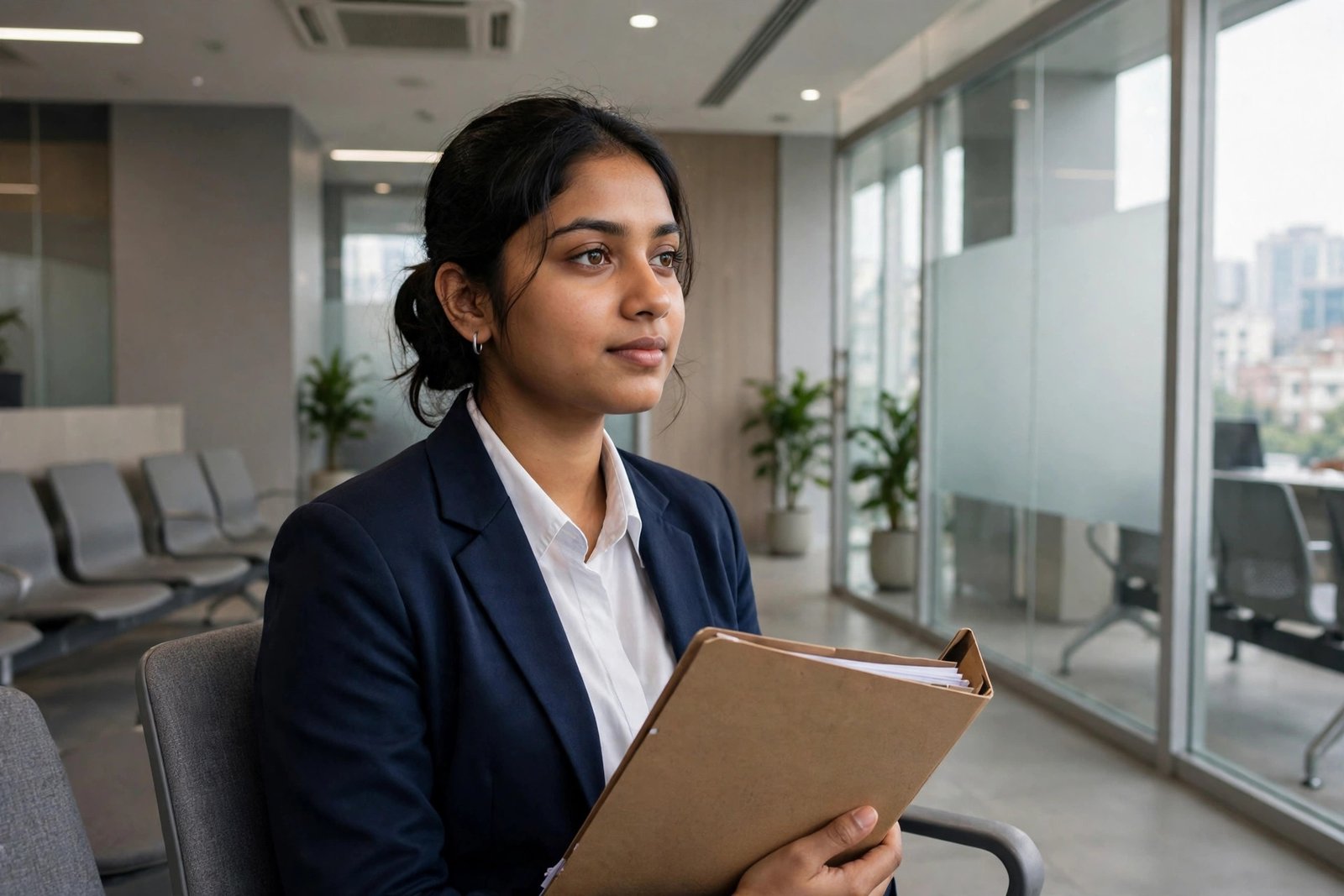
Canada: Study Permit from Bangladesh
How it works. You apply online to Immigration, Refugees and Citizenship Canada (IRCC) through the official Canada study permit pages on Canada.ca with your Letter of Acceptance and pay the study permit fee of CAD 150. Most applicants also need a Provincial or Territorial Attestation Letter (PAL/TAL) from the province of study, confirming their place under Canada’s national cap, which is set at 408,000 permits for 2026. Since 1 January 2026, however, master’s and doctoral students at public designated learning institutions are fully exempt from the PAL/TAL requirement — a meaningful simplification for Bangladeshi postgraduates. You will give biometrics at a visa application centre in Bangladesh and may be asked for a medical examination and police certificates. Note clearly: the Student Direct Stream (SDS) ended in November 2024. It is not a current route, whatever older videos or agents still say, and there is no separate faster Bangladeshi stream to apply under.
Proof of funds. Outside Quebec, a single applicant must show living expenses of CAD 22,895 for applications up to 31 August 2026, rising to CAD 23,448 for applications from 1 September 2026 — in addition to the first year of tuition and the cost of travel to and from Canada. IRCC wants to see that you can pay without relying on work in Canada: bank statements over several months, tuition already paid where the institution requires it, an education loan, scholarship letters, and a sponsor letter explaining income and relationship. Explain the source of funds explicitly; for longer courses, also show how years two onwards will be funded. Bangladeshi applicants should keep the sponsor’s employment or business evidence, tax documents and bank history consistent with each other — IRCC officers cross-check these documents against each other, and inconsistencies, rather than modest income, are what undermine files.
Work and after study. Eligible students may work off campus up to 24 hours per week during term. After graduation, the Post-Graduation Work Permit (PGWP) lasts up to three years depending on your programme. The field-of-study requirement introduced in November 2024 applies only to non-degree college programmes; bachelor’s, master’s and doctoral graduates are exempt, though language benchmarks apply — CLB 7 for degree graduates and CLB 5 for other college graduates. Funding options specific to you are collected in our guide to scholarships for Bangladeshi students in Canada.
Australia: Subclass 500 from Bangladesh
How it works. Once your provider issues an eCoE and you have arranged Overseas Student Health Cover (OSHC) for the full stay, you lodge the Student visa (Subclass 500) online through ImmiAccount, following the official Home Affairs Subclass 500 page. The visa application charge is AUD 2,500 from 1 July 2026 for most applicants, with a lower charge of AUD 2,050 applying to some groups, including certain course types — confirm your exact charge in the Home Affairs pricing estimator before you lodge, because the charge is not refunded if the visa is refused. You must meet the Genuine Student (GS) requirement: short written responses, inside the application, explaining your circumstances in Bangladesh, your reasons for choosing this course and provider, how the course benefits your future, and any other relevant information. Write these yourself, specifically; generic template answers are recognisably generic.
Proof of funds. The financial capacity requirement is AUD 29,710 per year for your living costs, plus your first-year course fees and travel costs. Where family could be included, the additional capacity amounts are AUD 10,394 for a partner and AUD 4,449 per child, with schooling costs on top for school-age children. Evidence can include savings with a clear history, an education loan, or a parent’s or partner’s income meeting the official alternative threshold supported by government tax documents. Keep funds in accounts you can document for several months, and expect Home Affairs to look at the genuineness and accessibility of the money, not only the closing balance.
The October 2026 dependant reforms — read carefully. From 2 October 2026, under official ministerial reforms now in force, most students can no longer include a partner or children on a Subclass 500 application. Exemptions apply to PhD students, Pacific and ASEAN nationals, and government-sponsored students, among the specified groups; the subsequent-entrant route for family has been removed, and similar dependant restrictions are coming for the Subclass 485. Most temporary visa holders can also no longer apply for a Student visa onshore, and the restriction on transferring providers has been extended from six to twelve months. Bangladeshi applicants are not in the Pacific/ASEAN exemption groups, so unless you are a PhD student or government-sponsored, plan on studying in Australia without dependants on your student visa and take advice on the current rules before assuming family can join later.
English, work and after study. The visa English floor for direct entry is IELTS 6.0 overall (since August 2025), with lower packaged thresholds when combined with ELICOS English study. Duolingo is not accepted by Home Affairs for this visa. You may work 48 hours per fortnight while your course is in session and unlimited hours in scheduled breaks. After study, the Temporary Graduate visa (Subclass 485) generally requires you to be aged 35 or under (with exceptions including research master’s and PhD graduates) and lasts two years after a bachelor’s or master’s by coursework, and three years after a research master’s or PhD. See also scholarships for Bangladeshi students in Australia.
Germany: National Student Visa from Bangladesh
How it works. Germany is the most appointment-driven of the five routes from Bangladesh. You apply for a national (D) visa for study through the German Embassy Dhaka process, following the federal Make it in Germany guidance on visas for studying, with an admission letter from a German university, recognised qualifications, health insurance, and proof of financing. Embassy appointment demand in Dhaka has historically been very high, so Bangladeshi applicants for Germany should start the visa track as soon as admission allows and should treat the waiting time as part of the plan — defer admission properly with the university if needed rather than letting an offer lapse silently. Once in Germany, you convert the entry visa into a residence permit for study at the local Foreigners’ Authority.
Proof of funds — the blocked account. The standard proof is a blocked account (Sperrkonto) holding €11,904 for one year, released to you at €992 per month after arrival. Open it only with a provider accepted for this purpose, transfer slightly more than the minimum so bank and transfer charges cannot pull the credited amount below €11,904, and keep the blocking confirmation for your appointment. A recognised scholarship or a formal obligation declaration from a sponsor in Germany can serve as alternatives where accepted. Remember the blocked account covers living costs, not tuition: most public universities charge no tuition, but Baden-Württemberg charges non-EU students €1,500 per semester, and TU München has charged non-EU fees since 2024/25 — if either applies to you, budget for it separately. Our profile of TU Berlin shows the no-tuition public model in the capital, and funding routes are gathered in scholarships for Bangladeshi students in Germany.
Interview and questions. Your embassy appointment is primarily a document and identity check, but be ready to answer basic questions about your course, your university and city, your language preparation and your financing — the same genuine-student logic as everywhere else. If your programme is taught in German, evidence of language progress matters; if it is taught in English, be able to explain that clearly too. After graduation, Germany offers an 18-month post-study job-seeker residence permit, during which you may work, and a route into an employment residence permit once you have a qualifying job.
Visa Fees and Funds: Full Comparison Table
| Cost item | UK | USA | Canada | Australia | Germany |
|---|---|---|---|---|---|
| Government visa fee | £558 | $185 MRV + $350 SEVIS (+ at least $250 Visa Integrity Fee at issuance where collected; up to $785 total) | CAD 150 | AUD 2,500 (AUD 2,050 some groups) | National visa fee — confirm with Embassy Dhaka at booking |
| Health charge | IHS £776/year | University-required insurance varies | Provincial cover / private insurance varies | OSHC required for full stay | German health insurance required |
| Living funds to evidence | £13,761 max (London) / £10,539 (outside), 9 months | Full first-year cost on I-20 | CAD 23,448 from 1 Sep 2026, excl. tuition/travel | AUD 29,710/year | €11,904/year blocked |
| Tuition to evidence | First-year balance on CAS | As on I-20 | First year | First year | Only where fees apply (e.g. Baden-Württemberg, TUM) |
| Funds holding rule | 28 consecutive days, ending within 31 days of applying | Availability judged at interview | History and source examined; several months of statements | Genuine access and history examined | Money blocked before visa decision |
For a personal estimate in taka and in your destination currency, build your numbers with the StudyGraduate study abroad budget planner and browse all destinations in our study abroad section before you commit to one route.
Common Mistakes and Documented Refusal Reasons
Refusals are almost never random, and this guide does not quote approval or refusal percentages for Bangladeshi applicants, because no figure of that kind should be trusted unless it comes from an official statistical release you can open and read yourself. What can be described honestly are the documented reasons officers record, which repeat across all five countries. First, insufficient or unverifiable funds: money that falls below the required total, was held for too short a period under the UK’s 28-day rule, appears as a sudden unexplained lump sum, or sits in an account the applicant cannot show genuine access to. Second, a study plan that does not connect: a course unrelated to previous study or work, a lower-level course after a higher qualification with no explanation, or an applicant who cannot describe the course they are supposedly travelling for. Third, inconsistent documents: names, dates or figures that differ between the passport, certificates, offer document and bank papers. Fourth, missing country-specific items — no TB certificate for the UK, no PAL/TAL for Canada where one is required, no OSHC for Australia, an unblocked or under-funded account for Germany, an unsigned I-20 for the USA. Fifth, misrepresentation, including altered bank documents or rehearsed false statements at interview: this is the one category that can damage future applications to many countries, not just the one in front of you, and no shortcut is worth it.
Practical Tips for Bangladeshi Applicants
Start the money before the application. For the UK, count backwards 28 days from your intended application date and protect the balance from that day. For Germany, open the blocked account early and over-transfer slightly. For Canada and Australia, build a clean several-month bank history and write a one-page source-of-funds note that matches the documents, taka deposit by taka deposit if a large sum arrived. Prepare your interview answers by writing bullet points in your own English, not by memorising paragraphs; practise explaining three things out loud — your course, your funding, and your plan after graduation — until each takes under a minute. Keep one organised folder, physical and scanned, in the order the checklist asks for, and carry originals plus copies to every appointment in Dhaka. Finally, apply through official channels yourself wherever possible: you are responsible for what is submitted in your name, including anything an intermediary uploads.
Frequently Asked Questions
Can I apply for student visas to two countries at the same time from Bangladesh?
You can hold offers from several countries, but parallel visa applications cost fees you will not recover and can create confusion if documents such as your passport are held. Most students choose one destination, apply properly, and keep a second offer as a backup only if its deposit terms allow.
Whose bank account can I use as proof of funds?
Rules differ. The UK accepts funds held by you or a parent or legal guardian, with consent and proof of relationship. Canada and Australia examine sponsor relationships and income evidence closely. The USA looks at the funding shown on the I-20 and supporting documents. Germany’s blocked account is in your own name. Always check the specific rule for your destination rather than assuming family money counts everywhere.
How much money should I show beyond the minimum?
Show the required amount, held correctly, plus a sensible margin for exchange-rate movement and fees — but do not inflate a file with borrowed short-term money you cannot explain. A clean minimum with a clear source is stronger than a larger balance with an unexplained deposit.
Do I need IELTS for the visa itself?
Sometimes the visa has its own English floor, as in Australia (IELTS 6.0 overall for direct entry, and Duolingo is not accepted by Home Affairs), and sometimes English is assessed through your university and CAS, as in the UK, where Duolingo is not an approved Secure English Language Test. Your university’s admission requirement and the visa requirement are related but not identical — check both.
What happens if my visa is refused?
Read the refusal notice carefully, fix the specific documented reason if it can genuinely be fixed — for example a funds-holding period or a missing document — and only then consider reapplying or any review route the country offers. Reapplying immediately with the same file usually produces the same result, plus another fee.
Can my spouse and children come with me?
It depends sharply on country and level. The UK allows dependants only for research postgraduates and certain government-sponsored students. Australia, from 2 October 2026, no longer allows most students to include family on Subclass 500, with exemptions including PhD students. In the USA, F-2 dependants may accompany you but cannot work. Check the current rule for your exact course before making family plans.
Should I pay an agent to guarantee my visa?
No one can guarantee a visa, and any promise of guaranteed approval is a warning sign, not a service. Visa decisions are made only by the destination government. Use official sources, keep control of your own application accounts and documents, and never submit documents you know are not genuine.
When should I book my flight?
After the visa is granted, unless a fare is fully refundable. Each country also has an earliest entry date — for example F-1 students generally cannot enter the USA more than 30 days before the programme start on the I-20 — so book within the window your visa allows.
Sources & Verification
This guide was prepared from official sources: GOV.UK Student visa and Immigration Rules Appendix Student and Appendix Finance; the US Department of State (travel.state.gov) and the US Department of Homeland Security SEVIS / I-901 guidance, and US Embassy Dhaka application instructions; Immigration, Refugees and Citizenship Canada (canada.ca) study permit and proof of financial support pages; the Australian Department of Home Affairs (homeaffairs.gov.au) Subclass 500 and financial capacity pages and the Ministerial media release on the October 2026 reforms; Study in Australia (studyinaustralia.gov.au); the German Federal Foreign Office and Make it in Germany (make-it-in-germany.com) and DAAD (daad.de) guidance on proof of financing and the blocked account; and VFS Global centre information for Bangladesh where centre procedures are described. Figures and rules change — always confirm on the official government or university website before applying.
Disclaimer: StudyGraduate is an information portal, not a visa agency, consultancy or immigration law firm, and this guide is general information, not immigration advice for your individual case. No one — including StudyGraduate — can promise or guarantee a visa approval. For complex cases, consult the destination government’s official guidance or a properly regulated immigration adviser.