Top 20 Fully Funded Scholarships in Germany 2027
Top 20 Fully Funded Scholarships in Germany 2027 Germany is the easiest country in the world in which to define “fully funded” — and the easiest in which to be misled by the phrase. Public universities in most German states charge no tuition fees at all for consecutive degree programmes, which means a scholarship that ... <a title="Top 20 Fully Funded Scholarships in Germany 2027" class="read-more" href="https://studygraduate.com/scholarship/top-20-fully-funded-scholarships-in-germany-2027/" aria-label="Read more about Top 20 Fully Funded Scholarships in Germany 2027">Read more</a>
📖 Overview
Top 20 Fully Funded Scholarships in Germany 2027
Germany is the easiest country in the world in which to define “fully funded” — and the easiest in which to be misled by the phrase. Public universities in most German states charge no tuition fees at all for consecutive degree programmes, which means a scholarship that pays your living costs in Germany effectively funds your whole degree, even though the same stipend in the United States or Australia would cover barely a third of the bill. A monthly payment of €992 — the standard graduate rate across DAAD and most foundation programmes — plus free tuition, subsidised student housing and a semester ticket is a complete funding package in a way that has no equivalent in the English-speaking world. This guide ranks the twenty real routes to that package for the 2027 intake: the DAAD family of programmes, the European Union’s Erasmus Mundus, Germany’s political and church foundations, and the doctoral funding channels that employ you as a researcher rather than stipending you as a student.
Two honesty rules govern this list. First, every programme named here exists and funds international students in Germany — but not every programme fits every reader, and each entry states its real gatekeepers: the two years of work experience DAAD EPOS demands, the German-language thresholds (usually B2 or higher) that the political foundations enforce even for English-taught degrees, and the ideological alignment the foundations exist to promote. Second, two famous names on this list are flagged for what they are: the Deutschlandstipendium (€300 per month) is a top-up, not full funding, and it appears because it stacks on top of almost everything else; and doctoral positions at Max Planck Institutes are salaried jobs, not scholarships — which is precisely why they pay the most. Figures were verified against official sources in October 2026, including the DAAD scholarship database. Where a foundation publishes its rate on its own site, that rate is quoted; where rates follow the standard BAföG-linked scale, this guide says so rather than inventing a number. Start your wider research in our scholarships directory and compare German universities in the universities directory as you read.
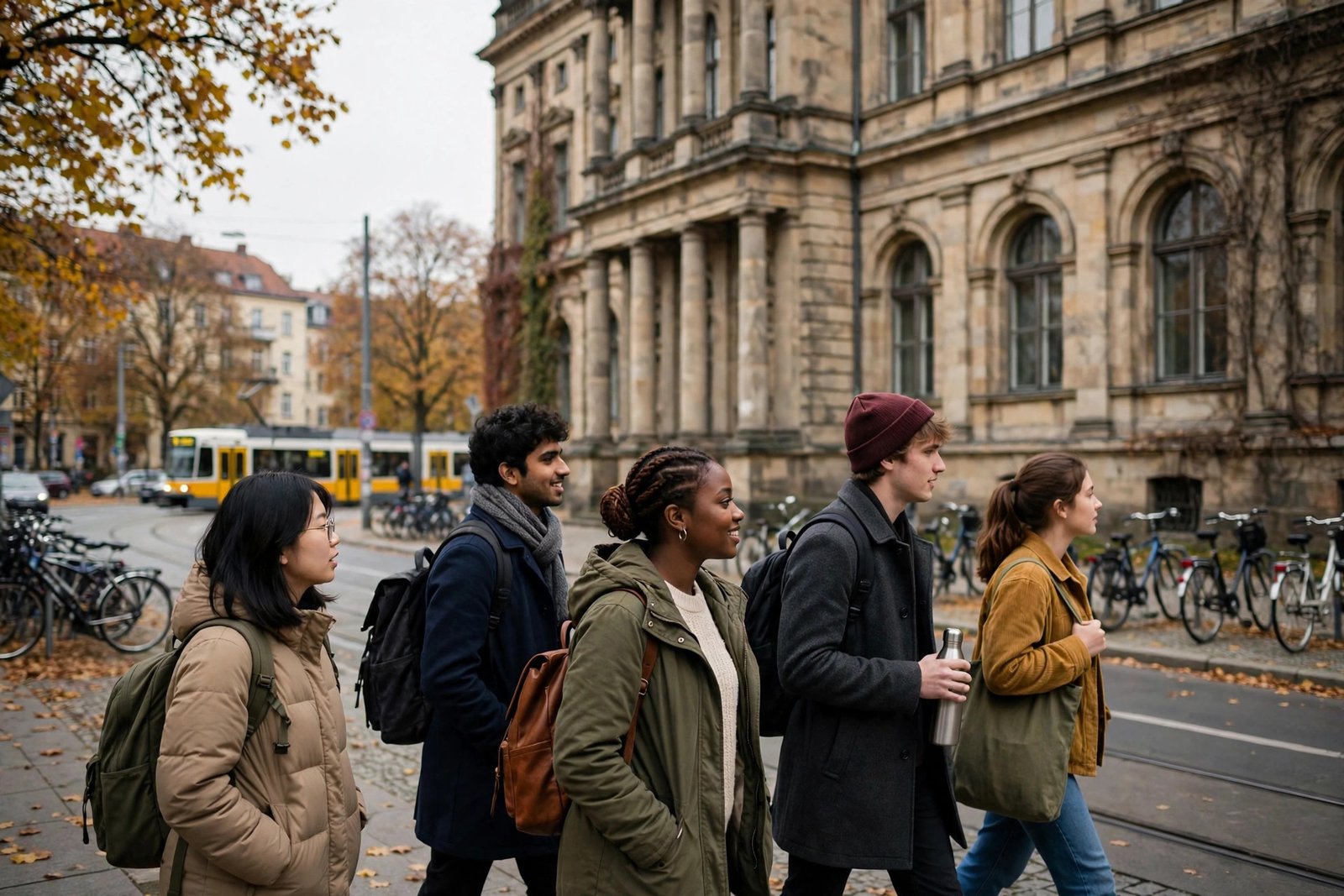
Fully Funded Scholarships in Germany at a Glance
| # | Programme | Level | Core funding (per month unless stated) | Key gatekeeper |
|---|---|---|---|---|
| 1 | DAAD EPOS (Development-Related Postgraduate Courses) | Master’s, PhD | €992 master’s / €1,300 PhD (€1,400 from Feb 2026), insurance, travel | 2+ years work experience; DAC-country citizenship |
| 2 | DAAD Study Scholarships | Master’s | €992, study allowance €460/year, insurance, travel | Degree within last 6 years; country calls vary |
| 3 | DAAD Research Grants — Doctoral | PhD research stays 7–12 months | €1,300, insurance, travel, research allowance | Enrolled or admitted doctoral candidate |
| 4 | DAAD Helmut Schmidt Programme (PPGG) | Master’s in public policy/governance | €992, insurance, travel, language course | Work experience; listed courses only |
| 5 | DAAD Graduate School Scholarship Programme (GSSP) | PhD at structured graduate schools | Full doctoral funding via the host graduate school, DAAD rates | Nomination by a GSSP graduate school |
| 6 | DAAD ERP Study Scholarships (Economics/Business) | Master’s | €992, €460/year study allowance, insurance | Economics/business first degree |
| 7 | Erasmus Mundus Joint Masters | Master’s across 2–3 European countries | €1,400 plus participation costs covered | Consortium application; max 3 programmes |
| 8 | Friedrich Ebert Foundation (FES) | Bachelor’s, Master’s, PhD | €992 plus health insurance; child allowance | German C1-level proofs; social-democratic engagement |
| 9 | Konrad Adenauer Foundation (KAS) | Master’s, PhD | €992 graduate / €1,400 doctoral in the international programme | German B2; Christian-democratic values alignment |
| 10 | Heinrich Böll Foundation | Master’s, PhD | €992 non-EU master’s rate plus allowances (doctoral rates higher — check the call) | German B2/DSH 2; green-values engagement |
| 11 | Rosa Luxemburg Foundation | Master’s, PhD | Doctoral: €1,500 + €100 mobility + €20 lump sum (DAAD database) | German B2; democratic-socialist engagement |
| 12 | Friedrich Naumann Foundation | Master’s, PhD | Standard foundation scale (aligned to BAföG maximum plus study allowance) | German proficiency; liberal-values engagement |
| 13 | Hanns Seidel Foundation | Master’s, PhD | Standard foundation scale for international scholars | German proficiency; Christian-social values alignment |
| 14 | KAAD (Catholic Academic Exchange Service) | Master’s, PhD, postdoc | Full package incl. travel and language course — rate set in the award letter | Catholic (Programme 1, with stated exceptions); partner-country route |
| 15 | Hans Böckler Foundation | Bachelor’s, Master’s, PhD (narrow eligibility) | Standard foundation scale plus €300 study allowance in cited schemes | Mainly BAföG-eligible applicants; trade-union/social engagement |
| 16 | Evangelisches Studienwerk Villigst | Bachelor’s, Master’s, PhD | Standard foundation scale plus study allowance | Protestant church link and German proficiency |
| 17 | Cusanuswerk | Bachelor’s, Master’s, PhD | Standard foundation scale plus study allowance | Catholic faith and German proficiency |
| 18 | SBW Berlin Scholarship | Bachelor’s, Master’s | Living costs, accommodation and travel under SBW’s own terms | Financial need; commitment to a social project; Berlin study |
| 19 | Max Planck IMPRS / doctoral researcher positions | PhD | Employment contract (TVöD E13 scale) or institute stipend — the highest-paid route | Direct application to the institute/school |
| 20 | Deutschlandstipendium | Bachelor’s, Master’s (not PhD) | €300 — a top-up only, NOT full funding alone | Enrolment at a participating university |
1. DAAD EPOS — the flagship for professionals from developing countries
Coverage: €992 per month for master’s scholars and €1,300 per month for doctoral candidates, rising to €1,400 from February 2026 in current calls; payments towards health, accident and personal liability insurance; a travel allowance; and, in defined circumstances, a monthly rent subsidy and an allowance for accompanying family members. Funding runs 12 to 42 months depending on the course. Eligibility: A bachelor’s degree (normally four years) in a relevant subject, completed within the last six years, with results in the top third of the class, plus at least two years of relevant professional experience gained after the degree, and citizenship of a country on the DAAD’s DAC list — which includes Bangladesh, India, Pakistan, Nepal, Nigeria and Indonesia. You must not have lived in Germany for more than 15 months at the deadline. Deadline: There is no single EPOS deadline: you apply directly to up to three courses on the official EPOS course list, each with its own closing date, mostly between August and November 2026 for the 2027/28 intake. The authoritative source is the official DAAD EPOS entry in the DAAD scholarship database, and our own profile of the DAAD Scholarship walks through the document set. EPOS is the single most valuable Germany application most readers of this guide will ever make: it is designed for exactly the mid-career professional profile that other funders ignore.
2. DAAD Study Scholarships — the general master’s route
Coverage: €992 per month, a study allowance, insurance payments and a travel allowance under the country call’s terms. Eligibility: A first degree completed within the last six years, above-average results, and — for the all-disciplines call — simultaneous applications to three German master’s programmes; the scholarship takes effect only once you present an admission letter. Some countries run this call annually; others do not run it at all, which is why your home DAAD office’s page, not a global blog, decides whether you can apply this year. Deadline: Country-specific, commonly in the autumn. The discipline-specific variants (architecture, fine art, music, performing art) run on their own fixed calendars with portfolio or audition requirements — treat those deadlines as immovable.
3. DAAD Research Grants for doctoral candidates
Coverage: €1,300 per month for doctoral candidates (€934 if you are not yet on a doctorate), insurance payments, a travel allowance, a one-off research allowance (€460 for applicants from DAC countries, €260 otherwise), and possible rent subsidy and family allowances after funding starts. Eligibility: Above-average qualifications; you are either already enrolled on a doctorate or hold a master’s (exceptionally a bachelor’s) by the time funding begins; postdocs cannot apply to this line. Deadline: Two selection rounds a year through the DAAD portal, with dates set per call. The grant funds a 7–12 month research stay at a German university or non-university institute agreed with a German supervisor, and it is non-renewable — it is a bridge into a German research group, and many holders convert the stay into a fully funded doctorate with that same group.
4. DAAD Helmut Schmidt Programme — public policy and good governance
Coverage: €992 per month, insurance, travel allowance, a funded German language course before the degree, and possible rent and family supplements, for master’s study on the programme’s fixed list of English-taught public policy, governance, law, economics and social science courses. Eligibility: A relevant first degree, professional experience (practical experience in governance, administration, NGOs or related fields is scored), and citizenship of a listed developing or emerging country. Deadline: One annual window, typically closing at the end of July for commencement the following year — the 2027 intake follows that pattern unless DAAD announces otherwise; the programme page controls. If your career is in public service and your goal is a policy master’s, this is a narrower, less crowded door than EPOS, with comparably complete funding.

5. DAAD Graduate School Scholarship Programme (GSSP)
Coverage: Full doctoral funding for the standard doctorate period, paid through selected structured graduate schools at DAAD scholarship rates with insurance and allowances under the school’s GSSP terms. Eligibility: You do not apply to DAAD directly: GSSP graduate schools nominate international doctoral candidates from their own applicant pools, so your application goes to the school (typically a DFG-funded graduate school or research training group) and must state your interest in GSSP nomination. A master’s degree within the last six years, excellent results and a research fit with the school’s programme are the practical filters. Deadline: Each school’s own doctoral application round, most commonly in late autumn or winter. For STEM and structured-science doctorates, GSSP plus entry 19 (institute positions) are the two routes that together fund most international PhDs in Germany.
6. DAAD ERP Study Scholarships — economics and business graduates
Coverage: €992 per month, a study allowance of €460 per year, insurance payments, a travel allowance on application, and a possible funded two-month German course before studies begin — as set out in the official DAAD database entry for the ERP programme. Eligibility: Excellently qualified graduates whose first degree is in economics or business administration, completed by the time the scholarship starts, with the degree no older than six years; you must apply to three host universities in parallel, and you cannot have been resident in Germany for more than 15 months at the deadline. Deadline: Set by the call in your home country or region; selection committees sit in the home countries. ERP is small, specific and far less competitive per place than the headline DAAD lines — if your degree fits, it should be on your list.
7. Erasmus Mundus Joint Masters — €1,400 a month, two or three countries
Coverage: A scholarship of €1,400 per month for up to 24 months, intended to cover travel, visa, installation and living costs, with participation costs (including tuition at partner universities) covered separately by the consortium — a total value of up to €33,600 in monthly payments alone. Eligibility: A bachelor’s degree (or final-year status, graduating before the master’s starts), any nationality, no previous Erasmus Mundus Joint Master scholarship; you may apply to a maximum of three programmes in a cycle, and no more than 10% of a programme’s scholarships go to one nationality. Several consortia are coordinated from Germany or include a German semester, which is why the programme belongs on a Germany list: choose a consortium whose mobility track includes a German partner and you study in Germany on EU money. Deadline: Each consortium sets its own — most fall between October 2026 and January 2027 for September 2027 starts. Read our profile of the Erasmus Mundus Scholarship for consortium-hunting strategy, and plan your German semester using our study abroad guides.
8. Friedrich Ebert Foundation (FES) — social democracy’s foundation
Coverage: International students receive a monthly base amount of €992, with health insurance costs funded and additional allowances for scholars with children (the DAAD database lists a child allowance; FES’s own pages have cited differing family figures, so confirm the current amount in your award letter). Funding follows BAföG maximum-duration rules and never has to be repaid. Eligibility: Enrolment (or imminent enrolment) at a state-recognised German university, above-average grades with first graded certificates available, demonstrable commitment to social-democratic values and social engagement, and — the decisive filter — strong German: at least DSH 2, TestDaF level 4, a Goethe C1 certificate or an equivalent C1 proof, even if your degree is taught in English. The official DAAD database entry for FES notes around 40 new international scholarships a year. Deadline: Applications are possible at any time, but FES publishes staged timelines by degree level — doctoral and master’s applicants must respect the semester cut-offs on the FES site. FES suits activists and community organisers as much as academics; your engagement record is a scored document, not decoration.
9. Konrad Adenauer Foundation (KAS)
Coverage: In the international programme, monthly grants of €992 for bachelor’s and master’s students and €1,400 for doctoral candidates are currently listed, with additional allowances possible (including towards health and long-term care insurance and family support). The domestic programme described on the KAS study funding page works differently — a needs-based basic grant of up to €812 plus a €300 study allowance for all holders — so identify which programme’s rules apply to you before budgeting. Eligibility: Above-average academic record, voluntary engagement, identification with Christian-democratic values, and German at B2 level for the international programme. Bachelor’s applicants apply after at least two semesters at a German university; master’s and PhD applicants apply from abroad through KAS’s offices. Deadline: Annual rounds set by KAS (the international selection typically runs to a mid-year deadline) — the KAS scholarships page for your country controls the date.
10. Heinrich Böll Foundation — the Green foundation
Coverage: For non-EU international master’s students, the foundation currently funds a basic scholarship of €992 per month, with possible additions including a health insurance allowance of up to €100 per month, a fixed monthly supplement, support for German course fees and, in defined cases, reimbursement of German tuition fees up to €10,000 per year; doctoral funding follows its own higher scale — confirm the current doctoral rate in the live call, as published figures have changed across recent cycles. Eligibility: Excellent grades, social engagement and political interest aligned with the foundation’s goals (ecology, democracy, human rights), and German at B2 or DSH 2 minimum. Priority goes to DAC-country applicants who completed their previous degree abroad and are not yet resident in Germany. Deadline: Two rounds a year closing 1 March and 1 September; the spring 2027 round runs 15 January–1 March 2027. Of all the foundations, Böll’s profile — climate, migration, social justice — matches the largest number of StudyGraduate readers; if your engagement record is real, this is your foundation application.
11. Rosa Luxemburg Foundation — democratic socialism’s foundation
Coverage: For international doctoral candidates, the DAAD database records a grant of €1,500 per month plus a €100 mobility allowance and a €20 lump sum, for a maximum of three years; the master’s funding for international students follows the foundation’s published scale in its current call. Eligibility: For the doctoral programme: acceptance at a state-recognised university, a German supervisor, a very good graduate degree, social engagement in line with the foundation’s values, and German at B2 or above, as set out in the official DAAD database entry; priority is given to DAC-country applicants still residing in their home country, and you must generally not have been in Germany more than 15 months. Deadline: 1 October each year for the international doctoral programme; master’s calls run to their own dates (historically 1 April and 1 October windows) on the foundation’s site.
12. Friedrich Naumann Foundation — the liberal foundation
Coverage: Monthly funding on the standard foundation scale (calculated on BAföG principles with a study allowance on top), for the standard period of study, plus the foundations’ trademark non-material support: seminars, mentoring and an alumni network. Because Naumann publishes its amounts within its current guidelines rather than as a single headline figure, verify the exact monthly amount in the live call before you budget. Eligibility: Master’s and doctoral students at German universities with outstanding records, talent and character, commitment to liberal values and social responsibility, and German proficiency sufficient for the foundation’s seminar programme. Deadline: Two application rounds a year (spring and autumn windows published on the foundation’s site). Smaller than FES or KAS, Naumann rewards applicants who can show concrete liberal engagement — student politics, entrepreneurship with a social brief, press freedom or rule-of-law work.
13. Hanns Seidel Foundation
Coverage: Scholarship funding for international master’s and doctoral students on the Hanns Seidel scale set out in its current guidelines, for study at German universities, together with an extensive accompanying seminar programme run from Munich. Eligibility: Above-average qualifications, personal suitability, commitment to Christian-social values and the foundation’s goals, and German language skills adequate for participation in the programme. Seidel is Bavaria-based and historically strong in development cooperation, public administration and journalism training. Deadline: Rounds are announced on the foundation’s website; international applicants typically apply through its country offices or the central scholarships department — confirm the route for your country before preparing documents, as it differs by region.
14. KAAD — the Catholic Academic Exchange Service
Coverage: KAAD Scholarship Programme 1 is a genuine full package for scholars from its partner countries in Africa, Asia, Latin America, the Middle East and Eastern Europe: funding for a master’s, PhD or postdoctoral stay at a German university, with travel to and from Germany, a funded German language course of up to six months before the degree, insurance and monthly funding set in the award letter — KAAD does not publish one universal stipend figure, so any website quoting you an exact KAAD amount without that caveat is guessing. Eligibility: A university degree with above-average results, several years of professional or research experience for postgraduate applicants, a development-relevant study intention with a credible return-and-contribute plan, and — for Programme 1 — Catholic affiliation, with stated openness to applicants of other denominations where the partnership case supports it. Applications run through KAAD’s partner committees in your home region, not through a central open portal. Deadline: The Bonn selection rounds have historically used 15 January and 30 June cut-offs, with earlier deadlines at partner-committee level — your regional committee’s date is the one that binds you.
15. Hans Böckler Foundation — narrow door, real money
Coverage: Funding on the standard foundation model — a monthly grant calculated under BAföG principles plus a study allowance (cited schemes show €300 per month for study costs) — for bachelor’s, master’s and doctoral study and for the foundation’s second-chance education routes. Eligibility: This is the list’s narrowest door and it is labelled as such: Böckler primarily funds applicants who are eligible under German BAföG rules — in practice mostly German citizens, EU citizens with settlement rights, and recognised refugees — who can show trade-union or socio-political engagement and a biography that fits the foundation’s mission of educational justice for working-class students. If you are a newly arriving non-EU student without BAföG eligibility, this foundation is almost certainly not your route, and your time is better spent on entries 1–14. Deadline: Published rounds (historically 1 February and 1 August for its main schemes) on the foundation’s site.
16. Evangelisches Studienwerk Villigst — the Protestant scholarship institution
Coverage: Monthly funding on the standard foundation scale plus a study allowance, for the full standard period of study, with doctoral funding for up to 3.5 years under its rules, and one of the strongest interdisciplinary seminar programmes in German scholarship life. Eligibility: Membership of a Protestant church (with considered exceptions), outstanding academic achievement, social engagement, and German proficiency — Villigst funds study at German universities and expects scholars to be resident and active in its community, which makes it a realistic route mainly for applicants already connected to Germany or to a Protestant church at home. Deadline: Annual rounds published by Villigst (doctoral and undergraduate lines run on different dates — check the current call).
17. Cusanuswerk — the Catholic bishops’ scholarship institution
Coverage: Monthly funding on the standard foundation scale plus study allowance, for bachelor’s, master’s and doctoral students at German universities, with additional support for study abroad periods and family circumstances under its guidelines. Eligibility: Catholic faith, excellent academic promise, church and social engagement, and strong German. Like Villigst, Cusanuswerk primarily serves students already within the German educational and church landscape — international applicants typically need to be enrolled in Germany and proposed through its selection channels. Deadline: Annual selection rounds published by Cusanuswerk; self-application routes and deadlines differ by degree level.
18. SBW Berlin Scholarship
Coverage: SBW Berlin funds international bachelor’s and master’s students studying in Berlin, covering living costs under its own terms — including accommodation in SBW-arranged housing, a monthly living allowance set in the award, and travel support — in exchange for the scholar’s active participation in a social project during the degree and a commitment to return home (or work on development projects connected to the home country) after graduation. Eligibility: Financial need, strong grades, a home country where the degree skills are needed, age limits that SBW publishes per call (historically 18–30), and no close family already resident in Germany. Deadline: SBW runs defined application windows published on its website; applications are only accepted inside those windows. SBW is small and unusual — part scholarship, part service programme — and for a Berlin-bound applicant with genuine social-project experience it is one of the few non-government full packages at bachelor’s level in Germany.
19. Max Planck IMPRS and doctoral researcher positions — the salaried doctorate
Coverage: Most funded doctorates in Germany are not stipends at all: they are employment contracts, typically paid on the TVöD E13 public-service scale (commonly at 50–75% for doctoral researchers, which in recent years has meant a gross salary broadly in the region of €2,300–€3,300 per month depending on step and percentage — verify the current scale and the exact offer, because contracts differ by institute and state), with full social insurance, pension contributions and paid leave. International Max Planck Research Schools (IMPRS) recruit worldwide in English and bundle the contract or an equivalent institute stipend with structured training. Eligibility: A strong master’s in the institute’s field and success in an openly advertised, internationally competitive selection — no German required in most natural-science IMPRS programmes. Deadline: Each school’s annual call (many close between November and January) plus rolling project vacancies on institute sites. If you want a German PhD, treat job boards and IMPRS calls as scholarship applications: financially, this route beats every stipend on this list, and it is how the majority of international STEM doctorates in Germany are actually funded. Check where the big institutes sit in the global research rankings while you shortlist groups.
20. Deutschlandstipendium — the €300 top-up (honestly labelled)
Coverage: €300 per month — €150 from a private sponsor matched by €150 from the Federal Government — normally for one year and renewable within the standard study period, as university pages such as TU Dortmund’s Deutschlandstipendium FAQ confirm. It is income-independent, does not affect BAföG, and can usually be combined with part-time work and many other awards. Eligibility: Any enrolled student (not doctoral candidates) at a participating university, any nationality, selected on achievement plus engagement and personal circumstances. Deadline: Your university’s own annual window (for example mid-August to mid-September at TU Dortmund; October–November at Hamburg). It closes this list deliberately: alone it is not full funding, but stacked onto tuition-free study, a student job and subsidised housing, it is often the final €300 that makes a self-funded German degree viable — and unlike every other entry here, you apply after you arrive, from inside the system.
Eligibility in Germany: the three filters that decide everything
Filter one — language. DAAD’s English-taught routes (EPOS, Helmut Schmidt, Erasmus Mundus, IMPRS positions) ask for English proof, usually IELTS 6.0–6.5 or the course’s own standard. The political and church foundations (entries 8–13, 16–17) ask for German — B2 as a floor, C1-level certificates at FES — because their seminar programmes run in German. Applicants who start German early hold a structural advantage over stronger-on-paper rivals who cannot clear this filter. Filter two — timing. DAAD’s main lines require your last degree to be no more than six years old and your residence in Germany to be under 15 months at the deadline; EPOS additionally requires two years of post-degree work experience. These are hard rules with no discretion. Filter three — fit. Foundations fund people, not just transcripts: each has a values profile, and a generic “excellent student” application that could be sent to all six foundations will fail at all six. Germany’s visa system adds a financial backdrop you should know even as a scholarship applicant: the blocked account requirement for a student visa is €11,904 for 2026 — a recognised scholarship award letter normally replaces the blocked account as your financial proof, which is one more reason a full scholarship simplifies everything downstream. Plan your applications with our application guides and track the overlapping windows with the deadline tools.
How to apply: the Germany playbook
- Map yourself against the filters in September. Degree age, work experience, language certificates, values fit. The output is a personal shortlist of four to six programmes from the twenty above — not twenty applications.
- Fix your language evidence. Book IELTS/TOEFL for DAAD routes; if a foundation is your target, enrol in German now — reaching B2 from zero takes most learners 12–18 months of steady work, so this decision cannot wait for an admission letter.
- For EPOS and Helmut Schmidt, choose courses before writing anything. Your motivation letter must argue development impact through that specific course’s curriculum; generic letters are the top rejection cause.
- Prepare the DAAD document set once, properly: hand-signed DAAD application form where required, Europass CV, motivation letter(s), certified degree and transcript copies with grade explanations, employment certificates proving your two years (EPOS), language certificates, and recent recommendation letters on official letterhead.
- Apply through the right door. EPOS goes to the course, not to DAAD. Study Scholarships go through the DAAD portal or your home office as the call states. Foundations have their own portals. GSSP and IMPRS go to the school or institute.
- Prepare for interviews. DAAD and foundation selections interview shortlisted candidates on motivation, subject knowledge and return/development plans. Interview in the language the programme requires — for foundations, that means German.
- Use the award letter for your visa. Present the scholarship as financial proof, arrange health insurance as the award specifies, and register your address on arrival to activate payments.
Documents you will need
- Degree certificates and full transcripts (certified copies; sworn translations if not in English or German)
- Proof of the date of your final degree examination — selectors apply the six-year rule from it
- Employment certificates on employer letterhead stating role, duties and exact dates (mandatory for EPOS; scored for Helmut Schmidt)
- Language certificates: IELTS/TOEFL for English-taught routes; DSH, TestDaF, Goethe or telc certificates for foundations
- Motivation letter tailored per programme (DAAD allows a joint letter for up to three EPOS courses, ranked by priority)
- Two recent academic or professional recommendation letters, signed and on letterhead
- For foundations: evidence of social/political engagement — certificates, references from organisations, project documentation
- For doctoral routes: a research proposal and a German supervisor’s written agreement where the call requires one
Deadlines and timeline for the 2027 cycle
| Window | Programmes | Notes |
|---|---|---|
| End of July 2026 (annual pattern) | DAAD Helmut Schmidt Programme | Single annual window for the following year’s start |
| August – November 2026 | DAAD EPOS course deadlines | Each course sets its own date — the EPOS course list controls |
| Autumn 2026 | DAAD Study Scholarships and ERP (country calls); university Deutschlandstipendium windows | Check your home DAAD office and your university respectively |
| 1 October 2026 | Rosa Luxemburg international doctoral deadline | Annual fixed date |
| October 2026 – January 2027 | Erasmus Mundus consortium deadlines; many IMPRS annual calls | Per-consortium and per-school dates |
| 15 January – 1 March 2027 | Heinrich Böll spring round (closes 1 March); FES staged timelines run in parallel | Foundation rounds repeat 1 September (Böll) |
| 15 January / 30 June pattern | KAAD Bonn selections | Partner-committee deadlines are earlier — confirm locally |
How to improve your chances
Exploit the crowding map. EPOS attracts the world; ERP, Helmut Schmidt and GSSP attract a fraction of the applicants per funded place. If your profile fits a narrow programme, the narrow programme is your best expected value. Make development impact concrete. DAAD selectors score what changes because you studied: name the institution you will return to, the policy, technology or curriculum you will change, and the population it reaches. Vague patriotism scores zero. Treat the foundations as relationships. Attend their public events and webinars, read their publications, and write your application in their vocabulary only where it is genuinely yours — selectors interview, and performed alignment collapses under questioning. Start German before you need it. Even for DAAD routes, A2–B1 German strengthens your integration case and your daily life; for foundations it is the whole game. Apply in parallel, honestly. DAAD permits multiple course applications (ranked); nothing stops a simultaneous foundation application where the rules allow it — but never hold two full scholarships for the same period, and disclose parallel funding exactly as each funder requires. Finally, keep your German shortlist current with our guide to the fully funded scholarships in Australia if you are comparing a research doctorate across both systems.
Common mistakes
- Applying to DAAD centrally for EPOS. EPOS applications go to the courses. A perfect file sent to the wrong address is a rejection.
- Ignoring the six-year and 15-month rules. Both are applied mechanically. Check them before investing in translations.
- Claiming work experience you cannot document. EPOS counts only experience evidenced by employer certificates with dates and duties — internships during your degree do not count towards the two years.
- Assuming “tuition-free” means “cost-free”. You still pay semester contributions (roughly €100–€350 per semester at most public universities), and Baden-Württemberg charges non-EU students €1,500 per semester in tuition — a scholarship stipend absorbs this, but a self-funded plan must budget it.
- Sending one generic foundation application six times. Each foundation can tell. Tailor or do not apply.
- Believing any agent can “guarantee” DAAD. Selection is by independent committees; no intermediary has influence, and DAAD applications are free.
Frequently asked questions
Is €992 a month actually enough to live on in Germany?
For a single student, yes — that is the design point of the rate. It assumes subsidised student housing or a shared flat (WG), the semester ticket for transport, and student-rate living costs. In Munich it is tight; in Leipzig, Dresden or most mid-sized university cities it is workable. Scholars with families receive defined supplements under some programmes but should still budget a gap.
Can I apply for DAAD EPOS without work experience?
No. Two years of relevant professional experience after your bachelor’s degree is a formal eligibility requirement, evidenced by employer certificates. Recent graduates should target the Study Scholarships, Erasmus Mundus or foundation routes instead, and build the experience that makes a later EPOS application strong.
Do I need German for a fully funded scholarship in Germany?
For DAAD’s English-taught programmes and IMPRS positions, no — English is the working language, though basic German transforms daily life. For the political and church foundations, yes: B2 is the common floor and FES asks for C1-level certificates, because their academy programmes run in German.
Are these scholarships open to Bangladesh, India, Pakistan, Nepal, Nigeria and Indonesia?
Yes for the flagship routes: all six countries appear on the DAAD DAC list used by EPOS, and Erasmus Mundus, the foundations and doctoral positions are nationality-open subject to each programme’s terms. Always confirm your country on the current EPOS DAC list and, for KAAD and Hanns Seidel, whether a partner structure exists in your country.
What is the blocked account, and does a scholarship replace it?
Self-funded students prove finances for the visa with a blocked account holding €11,904 (2026 figure). A recognised full scholarship award letter is accepted as financial proof instead, which is why scholarship holders normally do not open a blocked account. If your funding is partial, expect to evidence the remainder.
Can I stay in Germany after a DAAD scholarship?
Germany’s post-study residence permit (18 months to seek skilled work) applies to graduates of German degrees regardless of funder. EPOS and KAAD carry a development expectation that you return and apply your skills at home, and some home-country DAAD agreements formalise this — read your award conditions, because breaching a return condition can have consequences even where German immigration law itself is welcoming.
How competitive is Erasmus Mundus compared with DAAD?
Both are highly competitive, but they reward different profiles: Erasmus Mundus consortia select mainly on academic excellence and programme fit, with no work-experience requirement, while EPOS weights professional experience and development impact. Strong recent graduates often do better in Erasmus Mundus; mid-career professionals usually do better in EPOS.
Can I combine the Deutschlandstipendium with DAAD funding?
Combinations are restricted: the Deutschlandstipendium cannot generally be stacked with other federally funded merit scholarships for the same period, and DAAD funding counts here. It combines more readily with self-funding and part-time work. Your university’s Deutschlandstipendium office gives the binding answer for your exact funding mix.
Sources & Verification
Verified in October 2026 against: the DAAD scholarship database entries for EPOS (€992 / €1,300, rising to €1,400 from February 2026; insurance, travel, rent and family supplements; two years’ experience; top-third results), the ERP Study Scholarships (€992 plus €460 annual study allowance, three-university rule, six-year rule), DAAD Research Grants (doctoral €1,300, research allowance €460/€260), the Friedrich Ebert Foundation (€992 base, insurance, up-to-40 awards, C1-level German proofs) and the Rosa Luxemburg Foundation doctoral programme (€1,500 + €100 + €20, B2 German, 1 October deadline); the Konrad Adenauer Foundation’s official study funding pages (domestic scale and international programme figures as published); the Heinrich Böll Foundation’s published 2026/2027 funding terms (non-EU master’s €992 plus allowances, 1 March / 1 September rounds); official Erasmus Mundus programme information (€1,400 per month for up to 24 months, participation costs covered, three-application and 10%-per-nationality rules); and TU Dortmund’s official Deutschlandstipendium FAQ (€300 per month, renewal and eligibility rules). KAAD, the remaining foundations and the Max Planck institutes publish rates within their own calls and guidelines rather than as single universal figures; this guide states that plainly wherever it applies instead of quoting an invented amount.
Disclaimer: Scholarship amounts, rates and deadlines change every cycle. StudyGraduate is an information portal, not an agency, and cannot guarantee selection, admission or visa approval. Always confirm the stipend, eligibility rules and closing date for your specific programme and round on the official DAAD, foundation or university website before you apply or make any financial commitment.
✅ Eligibility Criteria
- Check the official website for full eligibility criteria for your country
🎁 Benefits
- See the official website for the complete list of benefits
⚙️ Application Process
- 1Check your eligibility on the official site
- 2Prepare your documents and statements
- 3Submit the online application before the deadline
- 4Complete interviews or assessments if shortlisted
- 5Await the final selection announcement
📅 Important Dates
Deadlines vary by country and intake. Check the official website for country-specific dates.
📄 Required Documents
- Valid passport
- Academic transcripts & certificates
- Statement of purpose
- Letters of recommendation
- CV / resume
Commonly required — confirm the exact list on the official site.
❓ Frequently Asked Questions

Ready to Take the Next Step?
Explore more scholarships and study opportunities around the world.
Browse Scholarships →