Top 15 Fully Funded Scholarships in Turkey 2027
Top 15 Fully Funded Scholarships in Turkey 2027 Turkey — officially Türkiye — is one of the few study destinations where a single government scholarship can cover almost everything: tuition, accommodation, health insurance, flights, a monthly stipend and even a full year of language training before your degree begins. That programme is Türkiye Scholarships (Türkiye ... <a title="Top 15 Fully Funded Scholarships in Turkey 2027" class="read-more" href="https://studygraduate.com/scholarship/top-15-fully-funded-scholarships-in-turkey-2027/" aria-label="Read more about Top 15 Fully Funded Scholarships in Turkey 2027">Read more</a>
📖 Overview
Top 15 Fully Funded Scholarships in Turkey 2027
Turkey — officially Türkiye — is one of the few study destinations where a single government scholarship can cover almost everything: tuition, accommodation, health insurance, flights, a monthly stipend and even a full year of language training before your degree begins. That programme is Türkiye Scholarships (Türkiye Burslari), run by the Presidency for Turks Abroad and Related Communities (YTB), and it anchors this list. Around it sits a second layer of funding that many applicants miss: joint Türkiye Scholarships programmes with elite private universities such as Koç and Sabancı, the graduate full rides at Bilkent, research fellowships from TÜBİTAK, foundation scholarships for theology students, and Erasmus Mundus joint masters that include Turkish universities as partners.
This guide ranks the 15 strongest routes to studying in Turkey with little or no cost in 2027. It is written for international students — including applicants from Bangladesh, India, Pakistan, Nepal, Nigeria and Indonesia — who want verified figures, not recycled blog numbers. A warning on figures first: Türkiye Scholarships stipends were revised upward in recent cycles. The amounts most older websites still quote (4,500 / 6,500 / 9,000 TL) are superseded. As listed on the official Türkiye Scholarships site in September 2026, the full-time stipend is 6,500 TL per month for associate and bachelor’s students, 9,500 TL for master’s students and 13,000 TL for PhD students, with the Research Scholarship at 37,000 TL per month. Always re-check the official site when the 2027 call opens, because amounts are reviewed against inflation.
An honesty note on the word “fully funded”: entries 1–4 and the top university graduate packages genuinely cover tuition plus living costs. A few later entries are deliberately included because they are the strongest partial routes in their niche — the Success Scholarship, for example, is stipend-only — and each entry labels its coverage type clearly so you can plan without surprises. You can also browse our full scholarship directory and compare Turkish institutions in the university directory before you choose your 12 programme preferences.
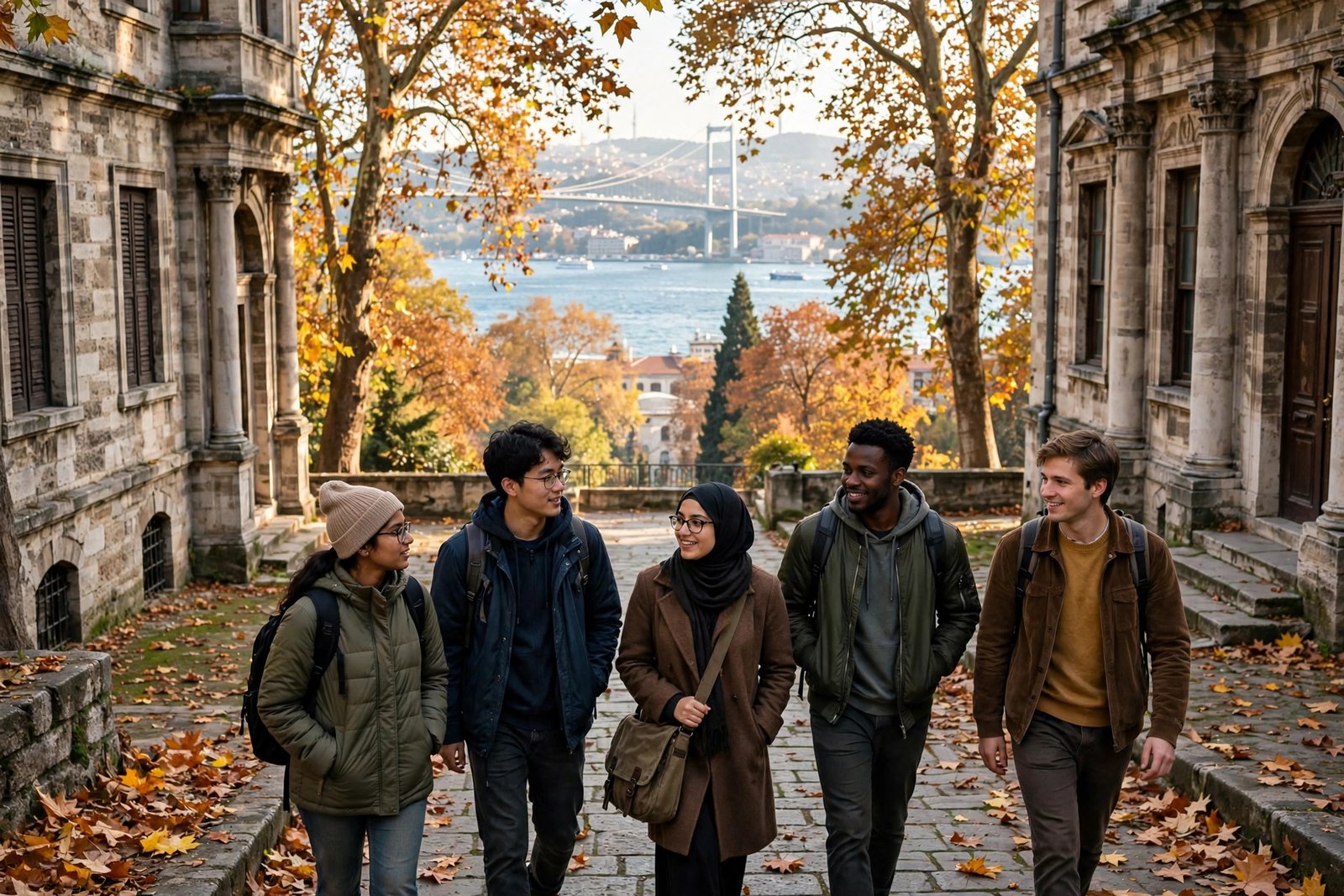
At a Glance: The 15 Scholarships Compared
| # | Scholarship | Level | Coverage type | Typical deadline |
|---|---|---|---|---|
| 1 | Türkiye Scholarships – Full-Time (Bachelor’s/Associate) | Undergraduate | Full: tuition, stipend 6,500 TL/mo, housing, insurance, flights, language year | 20 February |
| 2 | Türkiye Scholarships – Graduate Programme | Master’s, PhD | Full: tuition, stipend 9,500 / 13,000 TL/mo, housing, insurance, flights | 20 February |
| 3 | Türkiye Scholarships – Merit Scholarship | All degree levels | Full plus double stipend | 20 February (assessed in main round) |
| 4 | Türkiye Scholarships – Research Scholarship | PhD candidates, researchers | Stipend 37,000 TL/mo for 3–12 months | Rolling / announced rounds |
| 5 | Koç University – Türkiye Scholarships Joint Programme | Undergraduate, Master’s, PhD | Full tuition plus stipend, housing and flights via YTB | 20 February + Koç admission deadlines |
| 6 | Koç University Graduate Scholarships | Master’s, PhD | Full tuition, monthly stipend, dormitory for admitted graduate students | Programme rounds, mainly autumn intake |
| 7 | Sabancı University Graduate Full Scholarships | Master’s, PhD | Full tuition, stipend, dormitory, laptop, insurance | Programme deadlines |
| 8 | Bilkent University Graduate Scholarships | Master’s, PhD | Tuition waiver plus stipend and housing support | Programme deadlines (early July for autumn in recent cycles) |
| 9 | Türkiye Scholarships – Art Scholarship | Bachelor’s, Master’s | Full package for music, performing and fine arts | 20 February |
| 10 | Türkiye Diyanet Foundation (TDV) Scholarships | High school, Bachelor’s, Master’s, PhD (theology) | Full: tuition, stipend, accommodation for theology-track students | Announced annually, usually early year |
| 11 | TÜBİTAK International Research Fellowships (2216 / 2232 family) | Researchers, PhD | Research stipend and travel support; project-based | Call-based |
| 12 | Erasmus Mundus Joint Masters (Turkish partner programmes) | Master’s | Full: participation costs plus monthly allowance | October–January, programme-specific |
| 13 | İbn Haldun University Graduate Scholarships | Master’s, PhD (social sciences) | Tuition waiver plus stipend for strong admits | Programme deadlines |
| 14 | YTB–IsDB Joint Scholarship Programme | Bachelor’s, Master’s, PhD | Full Türkiye Scholarships package for eligible IsDB member-country citizens | 20 February window in joint-call years |
| 15 | Türkiye Scholarships – Success Scholarship | Students already in Turkey | Stipend only for one year — NOT a full package (labelled honestly) | October–November window |
The Ranked List: 15 Scholarships in Detail
1. Türkiye Scholarships – Full-Time Bachelor’s and Associate Programmes
Coverage: University and department placement, full tuition, monthly stipend of 6,500 TL, accommodation (dormitory for the full undergraduate period), health insurance, a once-off flight ticket at the start and on graduation, and a one-year Turkish language course (TÖMER) before the degree. Eligibility: Citizens of all countries except Türkiye; under 21; minimum 70% academic achievement, rising to 90% for medicine, dentistry and pharmacy; graduated or graduating before August of the application year. Deadline: Applications run every year from 10 January to 20 February through the Türkiye Scholarships Application System (TBBS); the 2027 window follows the same standing calendar unless YTB announces a change. This is the single most valuable undergraduate route into Turkey because placement is built in — you list up to 12 programme choices and YTB places successful candidates, so you do not need a separate university admission first. Competition is intense, with applications reported in the hundreds of thousands in recent years, so grades alone are not enough: your motivation letter and interview matter.
2. Türkiye Scholarships – Graduate Programme (Master’s and PhD)
Coverage: The same full package as the undergraduate programme, with stipends of 9,500 TL per month for master’s and 13,000 TL per month for PhD students; graduate scholars receive dormitory accommodation in the first year, with housing arrangements thereafter as set out in the TBBS guidance for your city and status. Eligibility: Under 30 for master’s and under 35 for PhD; minimum 75% academic achievement. One important restriction, stated on the official programme pages: Türkiye Scholarships does not award graduate scholarships in clinical health sciences, although some non-clinical health-related programmes may appear in the system. Deadline: 10 January – 20 February each year. Graduate applicants should treat the research proposal and statement of purpose as the centre of the application — expert committees review files in March–April and shortlisted candidates are interviewed between roughly April and June, with results in early August and arrival in September.
3. Türkiye Scholarships – Merit Scholarship Programme
Coverage: The full Türkiye Scholarships package with twice the regular monthly stipend. Eligibility: Applicants with outstanding academic records and strong standardised test results — the programme is aimed at candidates whose grades and scores (for example high school averages around 90% alongside strong SAT, GRE or similar results, as described in programme guidance) place them at the very top of the pool. You do not apply through a separate form in a separate season; merit status is assessed within the main Türkiye Scholarships process, which is why the practical advice is simple: apply in the main 10 January – 20 February window, submit every optional test score you legitimately have, and make sure your file evidences excellence rather than merely claiming it. Deadline: Same as the main round. If you are a genuinely top-scoring applicant, the Merit route is the difference between a comfortable stipend and a generous one in expensive cities such as Istanbul.
4. Türkiye Scholarships – Research Scholarship
Coverage: A monthly stipend listed at 37,000 TL for research stays of 3 to 12 months — by far the highest monthly figure in the Türkiye Scholarships family, reflecting that it supports established researchers rather than degree students. Eligibility: PhD holders, or PhD candidates at the dissertation stage, and academics; under 50; applicants normally need an invitation or acceptance from a Turkish host university and a defined research plan. Deadline: Research Scholarship applications are handled in announced rounds and, per current programme information, applications are accepted across the year in some categories — check the official calendar rather than assuming the February deadline applies. This is the right route if you are mid-PhD elsewhere and want a funded research period in Turkey, or a postdoctoral researcher building a collaboration with a Turkish group. It does not lead to a Turkish degree by itself.
5. Koç University – Türkiye Scholarships Joint Programme
Coverage: Full tuition at Koç — one of Turkey’s most selective private universities — combined with the YTB package of stipend, housing and flights for students selected under the joint scheme. Eligibility: International applicants who both (a) apply through Türkiye Scholarships listing Koç programmes, and (b) meet Koç’s own admission requirements, which for undergraduates typically means strong school results plus SAT and English proficiency evidence, and for graduate applicants GRE and TOEFL-type evidence depending on the school. The dual-selection structure is the catch: winning one side without the other does not activate the full package. Deadline: The Türkiye Scholarships side closes 20 February; Koç’s own application deadlines are separate and programme-specific, so start both files in the autumn before. Koç teaches in English, which removes the language-year barrier that some applicants worry about, although Türkiye Scholarships scholars still complete Turkish training as the programme requires.
6. Koç University Graduate Scholarships (University-Funded)
Coverage: For admitted master’s (with thesis) and PhD students, Koç’s graduate schools have historically offered packages combining full tuition scholarship with a monthly stipend, dormitory accommodation and other supports, with exact terms set per graduate school and cohort. Eligibility: Admission to a Koç graduate programme; scholarship consideration is integrated with admission for most programmes, and strong files — high GPA, relevant research experience, strong references and, where required, GRE scores — are what move an admit into a funded admit. Deadline: Koç runs programme-specific rounds, with the main intake in autumn; check the graduate school pages for your programme’s exact dates. Because terms vary by school and year, treat any specific stipend figure quoted on third-party sites as unverified until you see it in your own offer letter — that caution applies to every private-university package in this list.

7. Sabancı University Graduate Full Scholarships
Coverage: Sabancı publishes several graduate scholarship types. Its full scholarship packages combine 100% tuition exemption with a monthly stipend, dormitory accommodation, transport support, private health insurance, a laptop and limited conference support; project scholarships funded through TÜBİTAK or industry can top stipends up further. Published figures change by academic year and scholarship type — Sabancı’s own pages are the authority, and admitted students receive the exact package in writing. Eligibility: Admission to a Sabancı graduate programme in fields such as computer science and engineering, electronics, industrial engineering, materials science, mathematics, physics and molecular biology; all programmes are taught in English. Scholarship decisions are made during admission evaluation, so there is usually no separate scholarship form. Deadline: Graduate programme deadlines, which fall in rounds across the year for autumn entry. Sabancı and Koç together are the strongest English-medium private options in Turkey for funded graduate study.
8. Bilkent University Graduate Scholarships
Coverage: Bilkent awards graduate financial support as tuition waiver alone or tuition waiver plus a monthly stipend including housing support, alongside benefits such as private health insurance, a laptop, a meal card and annual travel support for conferences for supported research students, per Bilkent’s published graduate scholarship information. Amounts are set per academic year. Eligibility: A minimum CGPA of 2.80/4.00 at application, GRE General quantitative scores for international applicants (a minimum around 153 quantitative is published), and English proficiency evidenced by TOEFL iBT (minimum around 87), IELTS (around 6.5 overall) or Bilkent’s own proficiency route, as detailed on Bilkent’s pages. Deadline: There is no separate scholarship application — admitted graduate applicants are considered automatically; programme deadlines for autumn entry have fallen in early July in recent cycles, but apply well before the published date for your department. Bilkent, in Ankara, is particularly strong in engineering, science and economics.
9. Türkiye Scholarships – Art Scholarship Programme
Coverage: The full Türkiye Scholarships package — placement, tuition, stipend at the standard level rates, accommodation, insurance, flights and language course — for students in music, performing arts and fine arts at designated universities. Eligibility: Applicants to artistic programmes who meet the general academic and age criteria and can evidence artistic ability; portfolio or audition-type evidence is central to how these files are judged. Deadline: The main 10 January – 20 February window. Arts applicants routinely underestimate how much the creative evidence matters relative to grades: prepare your portfolio or recordings with the same care a STEM applicant gives to a research proposal, and choose programmes whose artistic tradition genuinely matches your training.
10. Türkiye Diyanet Foundation (TDV) International Scholarships
Coverage: The Türkiye Diyanet Foundation supports international students on theology tracks — including the International Imam Hatip high school programme and undergraduate and graduate theology study — with packages covering tuition, a monthly stipend, accommodation and related student support, as set out in each year’s TDV call. Eligibility: International applicants for Islamic theology and related programmes who meet the age, academic and programme conditions of the specific TDV programme; these awards are for theology-track study, not general degrees. Deadline: TDV announces its own application period each year, typically in the early part of the year, through its official education portal — do not assume the YTB calendar applies. For students whose goal is formal religious education in Turkey, TDV is the specialist route and Türkiye Burslari’s general programmes are the alternative.
11. TÜBİTAK International Research Fellowships
Coverage: The Scientific and Technological Research Council of Türkiye (TÜBİTAK) runs fellowship schemes for international researchers — including the 2216 Research Fellowship Programme for International Researchers and the 2232 programme family for outstanding researchers — providing monthly research support and, depending on the call, travel and related allowances. Amounts and durations are call-specific and must be read from the active call text. Eligibility: Researchers with a host institution and supervisor in Turkey and a research project that fits the call; these are competitive academic fellowships, not degree scholarships. Deadline: Call-based, announced on TÜBİTAK’s BİDEB pages. Graduate students at Turkish universities may also encounter TÜBİTAK BİDEB domestic graduate scholarships through their departments and project funding — your supervisor is the best guide to which scheme, if any, fits your status.
12. Erasmus Mundus Joint Masters with Turkish Partners
Coverage: Erasmus Mundus scholarships cover participation costs (including tuition) plus a monthly allowance — the standard Erasmus Mundus scholarship has been €1,400 per month for up to 24 months in recent programme generations — for a joint master’s delivered by a consortium in at least two countries. Some consortia include Turkish universities as full or associated partners, and Turkish institutions also appear as mobility destinations within programmes. Eligibility: A bachelor’s degree (or final-year status as the programme allows); each consortium sets its own academic and language requirements. Deadline: Most consortia open between October and January for the following autumn. Read our dedicated guide to the Erasmus Mundus scholarship and check the official Erasmus Mundus catalogue for which programmes currently include a Turkish partner — consortium membership changes between funding periods, so verify rather than assume.
13. İbn Haldun University Graduate Scholarships
Coverage: İbn Haldun University in Istanbul, a foundation university focused on social sciences and humanities, offers admitted graduate students scholarship packages that can combine full tuition waiver with a monthly stipend, with levels tied to admission strength and programme. Terms are published per intake on the university’s pages. Eligibility: Admission to a master’s or PhD programme in fields such as economics, political science, sociology, history, law and Islamic studies; strong academic background and, for research degrees, a credible proposal. Deadline: Programme application deadlines for the autumn intake. İbn Haldun is a useful counterweight to the engineering-heavy lists above for social-science applicants who want Istanbul plus funding.
14. YTB–Islamic Development Bank (IsDB) Joint Scholarship Programme
Coverage: In joint-call years, YTB and the Islamic Development Bank have offered a joint programme placing successful candidates in Turkish universities with the Türkiye Scholarships-style full package. Eligibility: Citizens of IsDB member countries applying to eligible bachelor’s, master’s or PhD programmes, meeting both partners’ academic criteria. Deadline: Joint calls have used the main Türkiye Scholarships window; because this programme runs only when a joint call is announced, the honest advice is to check both the Türkiye Scholarships and IsDB scholarship pages at the start of each cycle — if no joint call is open, the standard Türkiye Scholarships application remains your route, and eligibility for one does not depend on the other.
15. Türkiye Scholarships – Success Scholarship (Başarı Bursu)
Coverage — read carefully: This is a stipend-only award for one academic year. It does not include tuition, flights or placement, and it is included in this list because it is the official lifeline for a specific group: international students already studying in Turkey at their own expense who achieve strong grades. Eligibility: Current international students enrolled at Turkish universities who meet the published GPA threshold for their level and are not already holding a Türkiye Scholarships award. Deadline: Its own application window, which has run in October–November in recent cycles, separate from the February full-time round. Do not build a plan to “arrive self-funded and switch onto Success” — places are limited and the award does not pay tuition — but if you are already there and performing well, apply.
Eligibility: The Rules That Decide Most Applications
Across the Türkiye Scholarships family, four filters decide most outcomes before an expert committee ever reads your essay. First, citizenship: citizens of all countries may apply, but Turkish citizens and those who have lost Turkish citizenship may not. Second, age: under 21 for associate and bachelor’s, under 30 for master’s, under 35 for PhD and under 50 for the Research Scholarship — these are hard cut-offs, so check your date of birth against the cycle’s rules before investing weeks in an application. Third, minimum grades: 70% for undergraduate, 75% for graduate and 90% for health sciences at undergraduate level. Fourth, status: you cannot apply for a level at which you are already enrolled at a Turkish university, and you must have graduated — or be due to graduate before August of the application year. University scholarships (Koç, Sabancı, Bilkent, İbn Haldun) apply their own admission tests and English requirements on top of this, and Erasmus Mundus consortia set theirs independently. Use the StudyGraduate tools, including the deadline tracker and document checklist, to keep parallel applications organised.
How to Apply Step by Step (Türkiye Scholarships Route)
- Research programmes first. Use the programme search on the official Türkiye Scholarships site to shortlist up to 12 university–department combinations that match your background. Graduate applicants can only choose from programmes the system offers them based on their educational history.
- Create your TBBS account. Register on the Türkiye Scholarships Application System (TBBS) at turkiyeburslari.gov.tr — application is free and only ever through this system.
- Complete your profile. Enter personal information, education history and language details exactly as they appear on your documents; mismatched names or dates cause verification problems later.
- Upload documents. Add your ID or passport, recent photograph, diploma or temporary graduation certificate, transcripts, and any national or international exam results and language certificates your chosen programmes require.
- Write the letter of intent. Explain why Turkey, why these programmes, and what you will do with the degree. Committees read thousands of generic letters; specific, credible plans stand out.
- Rank your 12 choices carefully. Placement follows your preferences where possible, but the committee decides. Put programmes you would genuinely accept at the top.
- Submit before 20 February. Do not wait for the final day — the system is heavily loaded in the last 48 hours every year.
- Prepare for interview. Shortlisted candidates are interviewed (April–June in the standard calendar) on both academic readiness and motivation. Results are announced in early August, with transfers to Turkey in September and the TÖMER language year starting the academic journey.
For university-direct routes (Koç, Sabancı, Bilkent), the sequence is different: apply for admission on the university’s own portal by its deadline, because scholarship decisions there are made inside the admission process. Running both tracks in parallel — TBBS in January–February and direct university applications on their own calendars — is the strategy most successful funded students in Turkey actually used.
Required Documents
- Valid national ID card or passport
- A recent photograph (taken within the last year)
- Diploma or temporary graduation certificate
- Academic transcripts for your most recent completed studies
- National exam results, if applicable in your country
- International exam results (SAT, GRE, GMAT, ALES-type) if your programmes require or reward them
- Language proficiency certificates (TOEFL, IELTS or Turkish certificates) if required by the programme
- For research applications: a research proposal, and for TÜBİTAK-type fellowships, host acceptance evidence
- For university graduate applications: CV, statement of purpose and usually two recommendation letters
Documents in languages other than Turkish or English may need certified translation for university-direct applications; TBBS accepts uploads in a range of languages for the scholarship application itself, but read the current call’s instructions — translation rules are a detail that changes and that applicants get wrong.
Deadlines and Timeline for the 2027 Cycle
| Stage | Türkiye Scholarships (standing calendar) | Notes |
|---|---|---|
| Applications open | 10 January 2027 | TBBS online only; 2027 call to be confirmed by YTB |
| Applications close | 20 February 2027 | Same standing window every year unless announced otherwise |
| Evaluation | March–April 2027 | Preliminary screening, then expert committee review |
| Interviews | April–June 2027 | Held in 100+ countries and online |
| Results | Early August 2027 | Placement announced with results |
| Arrival in Turkey | September 2027 | Visa and transfer procedures run through August |
| Success Scholarship window | October–November (recent cycles) | For students already enrolled in Turkey only |
| Erasmus Mundus deadlines | October 2026 – January 2027 | Each consortium sets its own closing date |
The 2027 Türkiye Scholarships dates above follow YTB’s standing annual calendar (10 January – 20 February), which the official site publishes as the application period every year. If YTB adjusts the 2027 window, the official announcement governs — another reason to create your TBBS account early and enable notifications. For wider comparisons, see how Turkey stacks up in our guide to the top fully funded scholarships in Switzerland and the study abroad hub.
How to Improve Your Chances
Treat the 12 choices as a strategy, not a wish list. Mixing one or two ultra-competitive Istanbul programmes with strong programmes in Ankara, İzmir, Eskişehir or Bursa materially improves placement odds without lowering degree quality. Evidence every claim. If your letter says you led a project, the file should contain a certificate, a reference or a result that proves it. Submit test scores even when optional. Merit assessment and university-direct admission both reward documented SAT, GRE or English scores. Start Turkish early. You do not need Turkish to apply, and the TÖMER year is funded, but arriving with basic Turkish signals commitment in interviews. Apply on both tracks. TBBS plus direct admission at Koç, Sabancı or Bilkent doubles your funded pathways. Write for the committee’s question. Türkiye Scholarships funds future contributors to their home countries and to Turkey’s international networks; show a concrete plan for both.
Common Mistakes
- Using outdated stipend figures to plan. Older blogs quote 4,500 TL for undergraduates; the official listing in September 2026 is 6,500 TL. Budget from the official site, and remember stipends are reviewed over time.
- Missing the age cut-off. Being 21 for a bachelor’s application ends the application regardless of grades.
- Applying for graduate health sciences. Türkiye Scholarships does not award graduate scholarships in clinical health fields; check whether your target programme is actually offered in TBBS.
- Listing 12 near-identical choices. If all 12 are the most competitive programmes in Istanbul, a strong file can still go unplaced.
- Paying an “agent” for TBBS. The application is free and online only. Anyone charging to “guarantee” a Türkiye Scholarship is running a scam.
- Ignoring the language year in your life plan. The degree timeline is the TÖMER year plus the programme length; plan family, work and funding expectations accordingly.
Frequently Asked Questions
Is Türkiye Burslari fully funded?
Yes, for full-time programmes it is a genuine full package: tuition, monthly stipend (6,500 TL undergraduate, 9,500 TL master’s, 13,000 TL PhD as officially listed in September 2026), accommodation, health insurance, once-off flights at the start and on graduation, and a one-year Turkish language course.
When do applications open for the 2027 intake?
Türkiye Scholarships uses a standing annual window of 10 January to 20 February. Treat 10 January – 20 February 2027 as the working window and confirm the 2027 call on the official site when it is published.
Do I need to speak Turkish or have IELTS to apply?
No Turkish is required at application — scholars complete a funded one-year TÖMER course and must reach the required level. English certificates are required only where your chosen programmes demand them, though strong English scores help both TBBS merit assessment and university-direct admission.
Can I choose my university?
You list up to 12 programme preferences and placement weighs them, but final placement is the committee’s decision. Strategic, varied lists get placed more often than 12 copies of the most famous programme.
What grades do I need?
Minimums are 70% (undergraduate), 75% (graduate) and 90% (undergraduate health sciences). These are floors, not competitive scores — successful candidates typically sit well above them.
Is there an application fee?
No. Türkiye Scholarships applications through TBBS are free. University-direct applications (for example at private universities) may charge their own admission fees — check each university’s page.
Can students already studying in Turkey get funding?
Yes, through the Success Scholarship — a one-year, stipend-only award for self-funded international students already enrolled with strong grades. It does not pay tuition and cannot be applied for from abroad as a first entry route.
How competitive is it?
Very. Application volumes are reported in the hundreds of thousands for a few thousand awards. Strong grades, a specific motivation letter, documented achievements and a sensible programme list are the controllable factors.
Sources & Verification
This article was verified in October 2026 against: Türkiye Scholarships official site (turkiyeburslari.gov.tr — Criteria & Scholarship Programmes and Full-Time Programmes pages, including stipends of 6,500 / 9,500 / 13,000 TL and the Research Scholarship figure); YTB application calendar information; Koç University and Sabancı University official graduate scholarship pages; Bilkent University official graduate scholarship information; TÜBİTAK BİDEB programme pages; Türkiye Diyanet Foundation education pages; and the European Commission’s Erasmus Mundus information. Official Türkiye Scholarships portal: Türkiye Scholarships full-time programmes. Study-in-Turkey programme search: Study in Türkiye.
Disclaimer: Scholarship amounts, deadlines and eligibility change yearly. Always confirm deadlines and amounts on the official website before applying. StudyGraduate is an information portal, not an agency, and cannot guarantee selection, admission or visa approval.
✅ Eligibility Criteria
- Check the official website for full eligibility criteria for your country
🎁 Benefits
- See the official website for the complete list of benefits
⚙️ Application Process
- 1Check your eligibility on the official site
- 2Prepare your documents and statements
- 3Submit the online application before the deadline
- 4Complete interviews or assessments if shortlisted
- 5Await the final selection announcement
📅 Important Dates
Deadlines vary by country and intake. Check the official website for country-specific dates.
📄 Required Documents
- Valid passport
- Academic transcripts & certificates
- Statement of purpose
- Letters of recommendation
- CV / resume
Commonly required — confirm the exact list on the official site.
❓ Frequently Asked Questions

Ready to Take the Next Step?
Explore more scholarships and study opportunities around the world.
Browse Scholarships →