Top 10 Fully Funded Summer Schools for International Students 2027
Top 10 Fully Funded Summer Schools for International Students 2027 A fully funded summer school can change the direction of your studies in eight to twelve weeks. You work in a real research group, live in a new country, build a network of professors and peers, and — most importantly for your next application — ... <a title="Top 10 Fully Funded Summer Schools for International Students 2027" class="read-more" href="https://studygraduate.com/scholarship/top-10-fully-funded-summer-schools-for-international-students-2027/" aria-label="Read more about Top 10 Fully Funded Summer Schools for International Students 2027">Read more</a>
📖 Overview
Top 10 Fully Funded Summer Schools for International Students 2027
A fully funded summer school can change the direction of your studies in eight to twelve weeks. You work in a real research group, live in a new country, build a network of professors and peers, and — most importantly for your next application — you come home with a reference letter from someone whose name carries weight. The problem is that the phrase “fully funded summer school” is used loosely online. Some programmes pay for everything: travel, housing, insurance and a monthly allowance. Others pay a generous stipend but expect you to arrange and fund your own housing from it. A few widely shared “summer schools” actually charge tuition and are not funded at all.
This guide lists ten programmes for summer 2027 that we could verify as genuinely funded, and it tells you plainly, entry by entry, what is covered and what is not. Where a programme has an important restriction — for example, DAAD RISE Germany is only open to students enrolled in North America, the UK or Ireland, and UCLA’s RIPS programme accepts international students only if they are already studying in the United States — we say so in the entry itself, not in a footnote. Where a famous name does not quite fit the category, we label it honestly: the OIST Research Internship in Japan is a year-round research placement, not a summer school, and it charges a small application fee, so it appears here with both facts stated clearly.
The list mixes three types of opportunity: language and culture summer courses (DAAD’s University Summer Courses in Germany), structured summer research fellowships (ETH Zurich, CERN, ISTA, Caltech, UCLA), and global research programmes with multiple host sites (Amgen Scholars). Most are aimed at bachelor’s and master’s students. Almost all open their applications between October and February for the following summer, which means the time to prepare is now, in autumn 2026 — not in spring 2027 when most deadlines have already passed. You can browse related long-term options in our scholarships directory and compare institutions in the universities directory while you shortlist summer programmes.

At a Glance: The 10 Programmes Compared
| Programme | Location | Duration | Funding headline | Who can apply |
|---|---|---|---|---|
| CERN Summer Student Programme | Geneva, Switzerland | 8–13 weeks | Daily subsistence allowance (93 CHF/day in the 2026 cycle), health insurance, possible travel support | Bachelor’s/master’s students with 3+ years of study; all nationalities |
| ETH Zurich Student Summer Research Fellowship | Zurich, Switzerland | 2 months (July–August) | CHF 4,000 stipend; travel and visa costs covered; housing organised | Bachelor’s/master’s students in computer science and related fields, worldwide |
| DAAD University Summer Courses (HSK) | Germany | About 4 weeks | Course fees, accommodation, €475 one-off allowance, insurance, travel allowance for selected countries | Enrolled bachelor’s/master’s students outside Germany; German language required |
| DAAD RISE Germany | Germany | 2–3 months | €992/month, insurance, international travel subsidy | Undergraduates enrolled in the US, Canada, UK or Ireland only |
| ISTernship, ISTA | Klosterneuburg, Austria | 2–3 months (May–September) | Monthly compensation, travel support, subsidised housing assistance | Bachelor’s/master’s students in STEM; all nationalities |
| Amgen Scholars | Hosts in the US, Europe and Asia | 8–10 weeks | Stipend, housing and travel — amounts set by each host institution | Undergraduates; eligibility set by each host (some hosts restrict citizenship) |
| Caltech SURF | Pasadena, USA | 10 weeks | $8,110 award in 2026; housing is NOT automatically included | Continuing undergraduates, including international students |
| UCLA RIPS (IPAM) | Los Angeles, USA | 9 weeks | Stipend, campus housing and meals, travel allowance | Undergraduates; international students only if already studying in the US |
| CERN Openlab Summer Student Programme | Geneva, Switzerland | 9 weeks | Daily subsistence allowance, health insurance, possible travel support | Bachelor’s/master’s students in computing-related fields; all nationalities |
| OIST Research Internship (honest label: year-round, not a summer school) | Okinawa, Japan | 3–6 months, rounds include summer | ¥2,400 per working day, round-trip airfare, furnished housing — but a ¥5,000 application fee applies | Final-year bachelor’s, master’s students and recent graduates in STEM |
Read the funding headline carefully. “Fully funded” in this table means the programme’s package is designed to cover the core costs of participation — but the mechanism differs. ETH Zurich pays a stipend and separately covers travel and visa costs. DAAD HSK pays the course provider directly for your course and accommodation and gives you a smaller cash allowance. Caltech SURF pays one large stipend and leaves housing to you. All three can leave you with little or no out-of-pocket cost, but only if you budget the way the programme intends.
The Top 10 Fully Funded Summer Schools and Summer Programmes for 2027
1. CERN Summer Student Programme — Geneva, Switzerland
CERN, the European Organization for Nuclear Research, runs one of the world’s best-known summer student programmes. Selected bachelor’s and master’s students spend 8 to 13 weeks on site in Geneva working on a technical or scientific project with a CERN team, attend an extensive lecture programme in physics (with an additional IT lecture series run by CERN Openlab), visit facilities, and produce a final report and presentation. For the 2026 cycle, CERN offered a subsistence allowance of 93 CHF per calendar day (tax-free), coverage under CERN’s health insurance scheme (with the contribution deducted from the allowance), assistance finding accommodation on or near the CERN site, and — depending on individual circumstances — support with travel expenses to Geneva. Eligibility requires at least six semesters (three years) of full-time university study by the start of the summer, enrolment as a student at least until the programme starts, and good English. PhD candidates are not eligible. Candidates of all nationalities can apply, although nationals of Canada, Japan and the United States have historically also had to apply through their national routes — check the current call. The 2026 application deadline was 26 January 2026, so expect the 2027 cycle to close in late January 2027; confirm the exact date on CERN’s careers pages.
2. ETH Zurich Student Summer Research Fellowship (SSRF) — Zurich, Switzerland
ETH Zurich’s Department of Computer Science runs a two-month summer research fellowship, fixed to July and August, in which bachelor’s and master’s students from anywhere in the world join a research group and complete a defined project. Research areas include machine learning, information security, computer systems, robotics, programming languages and software engineering, bio/medical informatics, human–computer interaction, theory and visual computing. According to ETH Zurich’s official programme page, fellows receive a stipend of CHF 4,000 to cover housing and living expenses, travel and visa expenses are covered (travel is claimed against receipts at the start of the programme), and accommodation is organised in a student house with single rooms once you are accepted. You must be enrolled in computer science or a related field such as electrical engineering, mathematics or physics, and your expected graduation date must fall in the spring of the year after the fellowship or later. Applications for the 2026 round closed on 16 December 2025, so the 2027 round is expected to close in mid-December 2026 — this is one of the earliest deadlines on this list, and it arrives while many students are still in exam season. Prepare your CV, transcript and one-page motivation letter in November.
3. DAAD University Summer Courses (HSK) — Germany
If your goal is the German language itself, DAAD’s University Summer Courses — known by the German abbreviation HSK — are the classic funded route. The scholarship supports attendance at a four-week language and regional studies course at a German higher education institution between June and September, taught in German, with at least 25 teaching hours per week. The funding package covers the language course costs, accommodation arranged by the course provider for the duration of the course, a one-time allowance of €475, health, accident and personal liability insurance, and a country-specific travel allowance for applicants from selected countries. Payments are generally made through the course provider rather than to your home bank account. You must be at least 18, be enrolled at a university outside Germany during the application and scholarship period, and demonstrate German proficiency — the courses are taught entirely in German, and the current call sets a minimum level (A2 in recent calls; verify the exact requirement in the 2027 call). Applications for courses in summer 2027 opened on 1 September 2026 and close on 30 October 2026 at 23:59 CET — the only programme on this list whose 2027 deadline is still open as this guide is published. DAAD funding can only be received once per applicant for this programme, so choose your course city carefully. DAAD’s degree scholarships are covered separately in our guide to the DAAD Scholarship.
4. DAAD RISE Germany — research internships across Germany
RISE Germany (Research Internships in Science and Engineering) places undergraduate students in two- to three-month summer research internships at German universities and research institutes, where each intern is mentored by a doctoral student or researcher. The working language is English, and German is not required. According to DAAD’s official RISE Germany page, interns receive a monthly scholarship of €992, DAAD provides health, accident and personal liability insurance, the package includes an international travel subsidy, and all interns are invited to a three-day RISE meeting in Heidelberg in early July with a €160 travel allowance for the meeting. Host institutions provide housing assistance. The critical restriction: RISE Germany is open only to students currently enrolled at a university in the United States, Canada, the United Kingdom or Ireland, in biology, chemistry, physics, earth sciences, engineering or a closely related field, who will have completed at least two years of their degree by the internship and will still be undergraduates afterwards. German citizens are eligible only if they have lived outside Germany for at least six years. For summer 2027, applications run from 15 October to 30 November 2026, with reference letters due by 15 December 2026 and results around February/March 2027. Students enrolled in Asia, Africa or continental Europe outside the named countries cannot apply to RISE Germany — look at ISTernship, CERN or Amgen Asia/Europe hosts instead.
5. ISTernship — Institute of Science and Technology Austria (ISTA)
The ISTernship summer programme brings bachelor’s and master’s students to ISTA in Klosterneuburg, near Vienna, for two to three months between mid-May and mid-September. ISTerns join research groups in biology, computer science, data science and scientific computing, mathematics, physics, neuroscience, chemistry and materials science, and interdisciplinary areas, and present their work at a summer poster session. Programme information describes monthly compensation to help with living costs in Austria, a travel allowance for the round trip to ISTA, assistance with travel and visa arrangements, and subsidised accommodation on campus or in student residences in Vienna; ISTA states it does not charge processing or application fees for its programmes. Earlier ISTernship cycles published a monthly scholarship payment of €1,150, while ISTA’s separate year-round scientific internships carry an employment salary — the two schemes are different, so check which figure the 2027 ISTernship call publishes before you budget. Applicants must have completed at least the fourth semester of their bachelor’s studies before the start date; students already enrolled in a PhD are not eligible. Recent cycles closed applications in early February (an anticipated deadline of 5 February 2027 appears in university fellowship listings), so treat January as your working deadline and confirm on ISTA’s PhD and internship pages.
6. Amgen Scholars — hosts in the United States, Europe and Asia
Amgen Scholars is not one programme but a family of summer research programmes funded by the Amgen Foundation at host universities across three continents, each running its own admissions and setting its own funding package. That structure is both its strength — many hosts, many fields in the life and biomedical sciences — and the reason you must read each host’s page rather than a generic summary. To give you a verified sense of the range: the University of Tokyo host has offered eight weeks of laboratory research with accommodation, round-trip travel and a stipend reported at ¥270,000 for the programme period; Karolinska Institutet in Stockholm publishes a stipend of SEK 11,000 per month with housing and round-trip travel covered, plus travel to the European symposium in Cambridge; Stanford’s SSRP–Amgen Scholars describes itself as fully funded with summer housing, meals, travel and a stipend (published at $4,800 in a recent cycle). United States hosts, however, commonly restrict eligibility to US citizens or permanent residents — Howard University and UCLA state this plainly — while the Asian and European hosts are the realistic route for most international students. Applications typically close between late January and early February, and you apply to each host separately. If a host’s funding or citizenship rules are not stated on its official page, email the programme office before spending time on the application.
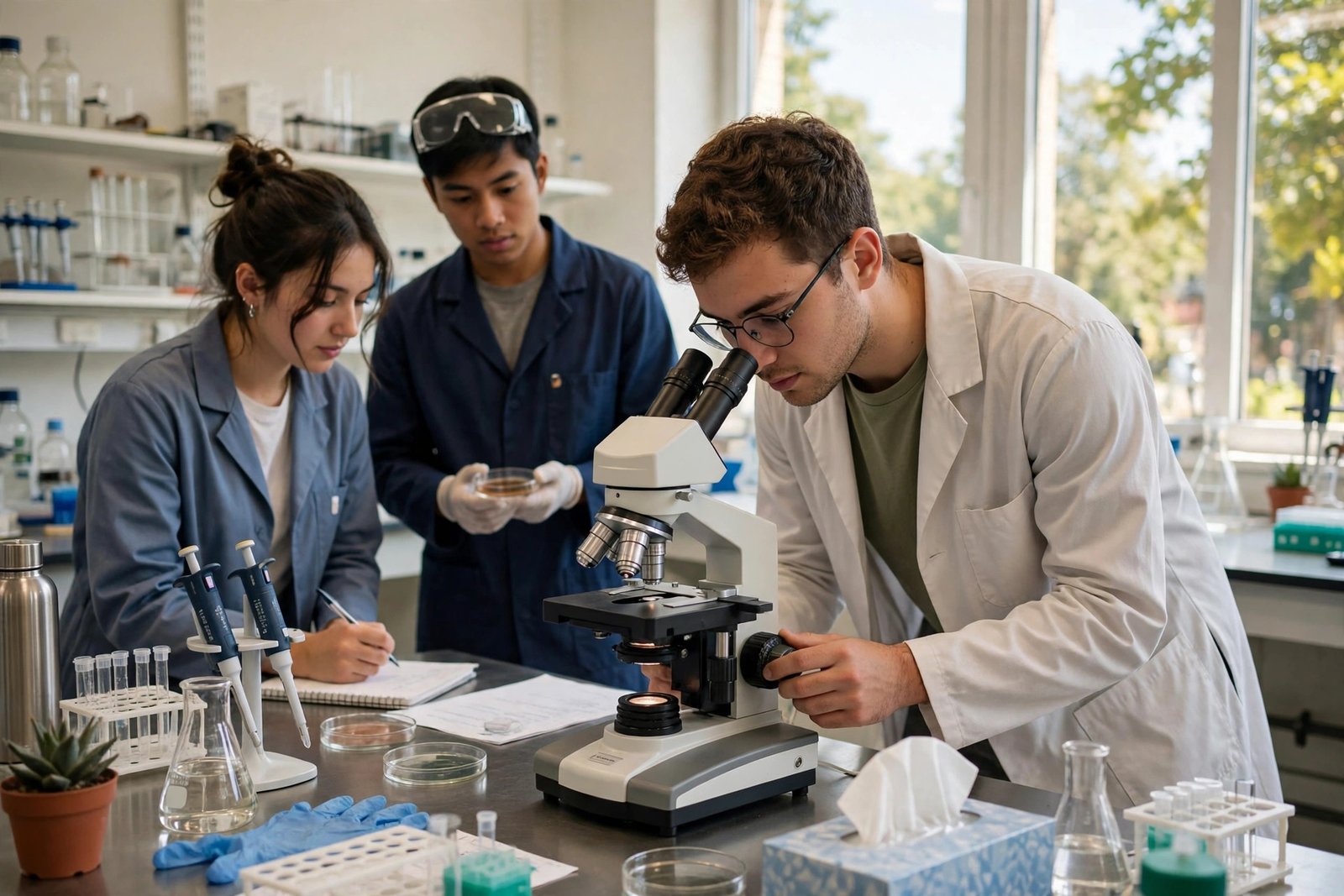
7. Caltech SURF — Pasadena, United States
Caltech’s Summer Undergraduate Research Fellowships (SURF) have run since 1979 and are modelled on the real grant-seeking process: you identify a faculty mentor (or a mentor at NASA’s Jet Propulsion Laboratory), develop a project together, and submit a proposal that a faculty committee reviews. The programme lasts ten weeks, from mid-June to late August, and ends with a technical report and an oral presentation at SURF Seminar Day. Caltech’s Student-Faculty Programs office states that in 2026 each SURF student received an award of $8,110 for the ten-week period. Here is the honest caveat that many listicles omit: SURF does not automatically include housing or travel. Students arrange on-campus housing at a guest rate and their own travel to Pasadena, paid from the stipend. In an expensive city, that still leaves the stipend as substantial support, but it is not the same as an all-expenses-paid package — budget for housing deposits and flights before you accept. SURF is open to continuing undergraduates from Caltech and other universities, including international students, and you must devote full-time effort — no courses or other jobs during the fellowship. Because you must secure a mentor before applying, start contacting faculty in November or December; a cold application without a mentor conversation is the most common reason SURF proposals fail.
8. UCLA RIPS — Research in Industrial Projects for Students, Los Angeles
RIPS, run by UCLA’s Institute for Pure and Applied Mathematics (IPAM), is the applied-mathematics entry on this list. For nine weeks, teams of undergraduates work on real research problems proposed by industry or public-sector sponsors, guided by an academic mentor and an industry mentor, and present results orally and in writing at the end. According to IPAM’s RIPS pages and its current programme listings, participants receive a stipend (listed at $4,200 in the current MathPrograms posting, and $4,000 in the 2023 FAQ — check the figure in the 2027 call), a travel allowance, and housing and meals on campus. Graduating seniors are eligible. The restriction that matters for this guide’s readers: IPAM states that foreign students are eligible only if they are already studying in the United States — RIPS is therefore an excellent funded summer for international students already enrolled at a US institution on an F-1 visa (you may need Curricular Practical Training authorisation through your home institution), but it is not a route for students enrolled abroad to enter the US for the summer. Applications, including recommendation letters, have closed in early-to-mid February in recent cycles (the 2026 deadline was extended to 20 February after a communications error — a reminder to submit well before the deadline, not on it).
9. CERN Openlab Summer Student Programme — Geneva, Switzerland
If your profile is computing rather than physics, CERN Openlab is the sister programme to entry 1 and deserves its own place. Openlab students spend nine weeks on advanced IT projects — data science, machine learning, high-performance computing, cloud and quantum computing topics — working with CERN’s IT experts and industry partners, and present their work in a lightning talk and technical report at the end. The package mirrors the main CERN programme: a daily subsistence allowance (93 CHF per calendar day in recent cycles, tax-free), coverage by CERN’s health insurance scheme, a travel lump sum in many cases, and help finding accommodation. Eligibility follows the same pattern: bachelor’s or master’s students in computer science, mathematics, engineering or physics with a strong computing profile, at least three years of full-time study completed by the summer, still enrolled during the programme, and a good working knowledge of English — no IELTS or TOEFL is required. Candidates of all nationalities are welcome. In the 2026 cycle, start dates were fixed in late June and results were announced in late March or early April, which tells you the application window sits in winter; watch CERN’s careers pages from November onwards for the 2027 call.
10. OIST Research Internship — Okinawa, Japan (read the label)
We include the Okinawa Institute of Science and Technology (OIST) Research Internship with an explicit honest label: it is not a summer school, and it is not a summer-only programme. It is a competitive research placement of roughly three to six months, offered in two rounds per year — and the spring round runs from April to September, which is why summer applicants legitimately target it. Interns work in a research unit across STEM fields, from neuroscience and marine science to quantum and computational science. OIST’s published support includes an internship allowance of ¥2,400 per working day, one direct round-trip air ticket between your home institution and OIST, furnished on- or off-campus accommodation, a shuttle bus pass for commuting, and administrative support with the Certificate of Eligibility, visa, insurance and local registration. Two facts keep it at number 10 rather than higher: first, recent cycles have charged a non-refundable application fee of around ¥5,000, so it is a funded placement but not a free application; second, its four-to-six-month length does not fit a standard summer break unless your home university approves a longer placement. Eligibility covers students in the final two years of a bachelor’s degree, master’s students, and recent graduates, worldwide. The round with an October 2026 deadline places interns between April and September 2027 — if your calendar fits, it is one of the strongest funded research experiences in Asia.
Eligibility: Who These Programmes Are Really For
Across all ten entries, five eligibility themes repeat. First, enrolment status: almost every programme requires you to be a current bachelor’s or master’s student, and several require you to still be enrolled when the programme starts — graduating seniors must check each rule, because CERN excludes students who will have finished, while RIPS explicitly accepts them. Second, stage of study: research programmes want evidence you can contribute, so CERN asks for three completed years, RISE and ISTernship for at least two years or four semesters. Third, field fit: ETH SSRF is computer science and close neighbours only; DAAD HSK is for students of any discipline but is taught in German; Amgen is life-sciences centred. Fourth, geography of enrolment, which is the most commonly missed rule — RISE Germany looks at where you study, not your passport, and RIPS requires current US enrolment for international applicants. Fifth, language: working languages are English almost everywhere except HSK, and none of the research programmes on this list requires IELTS or TOEFL, though all expect you to write and present in English. Before you invest in any application, use the scholarship and deadline tools in our tools directory to build your shortlist and track each programme’s window.
How to Apply: Step by Step
- Shortlist by eligibility, not prestige (October–November 2026). Eliminate any programme whose enrolment, field or citizenship rules exclude you. Two or three well-matched applications beat eight generic ones.
- Read the official call for the 2027 cycle. Amounts and dates in this guide are from the most recent verified cycles; the official call is the only document that binds the programme. Note what “funded” includes for that specific programme.
- For mentor-based programmes, contact faculty early. SURF requires a mentor and a co-written proposal; ISTA’s internships begin with research-group fit. Polite, specific emails in November and December — naming the group’s actual research — are what separate funded summers from rejected ones.
- Prepare documents in parallel. Order official transcripts before university offices close for holidays; brief your referees with your CV, the programme description and the deadline at least three weeks ahead.
- Write a programme-specific statement. Explain the exact project or course, why this host, what you bring, and what the summer unlocks next (a thesis, a master’s application, a publication). Reusing one generic essay across CERN, ETH and DAAD is visible to reviewers.
- Submit early and verify. Portals slow down near deadlines, and RIPS’s 2026 deadline confusion shows even organisers make errors. Submit days ahead, then log back in to confirm your status shows as complete, including reference letters.
- Prepare for selection steps. Some programmes interview; mentor-based programmes may involve email or video discussions with the host group. Re-read your own statement before any call.
- On selection, act fast on logistics. Accept formally, start the visa process immediately, book travel only as the programme instructs (several programmes reimburse against receipts or book for you), and confirm housing arrangements in writing.
Required Documents
Most programmes on this list ask for a common core: a CV in English; official academic transcripts (with certified translations where the original is not in English, German, French or Italian, depending on the programme); proof of current enrolment; a statement of purpose or motivation letter tailored to the programme — ETH caps this at one page, so brevity is a skill; one or two academic reference letters; and a copy of your passport or ID at the offer stage. Programme-specific additions include a research proposal co-developed with a mentor (Caltech SURF), per-project motivation letters (DAAD RISE lets you apply to multiple projects, each with its own letter), a German language certificate (DAAD HSK), and a list of completed courses (RISE). Keep scanned, clearly named PDFs of everything in one folder from November onwards — deadlines cluster in December, January and February, and document-hunting is the most avoidable cause of missed submissions.
Deadlines and Timeline for Summer 2027
| When | What happens | Programmes involved |
|---|---|---|
| 30 October 2026 | Application deadline (verified for the 2027 cycle) | DAAD University Summer Courses (HSK) |
| October 2026 | Application round deadline for placements starting April–September 2027 | OIST Research Internship (spring round) |
| 15 October – 30 November 2026 | Application window (verified dates) | DAAD RISE Germany |
| Mid-December 2026 (expected) | Deadline based on the last cycle (16 December 2025); confirm for 2027 | ETH Zurich SSRF |
| Late January 2027 (expected) | Deadline based on the last cycle (26 January 2026); confirm for 2027 | CERN Summer Student and CERN Openlab |
| Late January – early February 2027 (expected) | Host deadlines based on recent cycles; each host sets its own date | Amgen Scholars hosts |
| Early February 2027 (expected) | Anticipated deadlines from recent cycles; confirm officially | ISTernship, UCLA RIPS, Caltech SURF |
| February–April 2027 | Results announced; mentor confirmations; visa and housing steps begin | All programmes |
| June–September 2027 | Programmes run (ETH fixed to July–August; HSK courses June–September) | All programmes |
If you are reading this after some deadlines have passed, do not abandon the plan: HSK and summer-school routes reopen every year, and a strong autumn spent on research assistance at your home university makes next year’s applications materially stronger. Students aiming at a full degree next should also compare these short programmes with the degree-level awards in our guide to fully funded scholarships without an age limit and the fellowship routes in our fully funded fellowships list.
How to Improve Your Chances
Selection for funded summer programmes turns on fit and evidence. Fit means your statement names the host’s actual research groups, courses or projects and explains a plausible contribution — reviewers fund students whose plans could only have been written for their programme. Evidence means your file already shows research behaviour: a methods course with a strong grade, a small project, a poster, code or lab work you can describe concretely. Secure referees who have seen you do research-like work and give them your draft statement; a detailed letter from a lecturer who supervised your project outweighs a generic letter from a famous name. Respect the arithmetic of these programmes — small cohorts and global applicant pools mean rejection is the statistical norm, so apply to two or three programmes whose rules you genuinely meet, spread across types (one research fellowship, one institute programme, one language or applied programme). Finally, treat the application itself as training: the statements, CV and referee relationships you build now are the same assets your master’s and fellowship applications will need within a year.
Common Mistakes to Avoid
- Assuming “fully funded” means identical coverage. SURF’s stipend must also pay your housing; OIST charges an application fee; HSK pays the provider, not you. Read each entry’s mechanism before comparing amounts.
- Missing the enrolment-geography rules. RISE Germany and RIPS exclude most students enrolled abroad, however strong their grades. Check before writing, not after.
- Applying to CERN or ETH at the last minute. Both close in winter — ETH in mid-December — when transcripts and referees are hardest to obtain.
- Sending a generic statement. If your essay could be submitted unchanged to five programmes, it is optimised for none of them.
- Ignoring the mentor step. For SURF and similar schemes, no mentor conversation usually means no award, however polished the proposal looks.
- Booking travel before being told how. Several programmes reimburse against receipts or arrange travel themselves; booking early on your own can make the cost ineligible.
- Trusting social-media summaries over the official call. Stipend figures circulate for years after they change — RISE figures of €750 and €861 still appear online long after DAAD moved to €992.
Frequently Asked Questions
Are these summer schools really free, or will I pay something?
For most entries, the package is designed to cover course or project costs, housing, insurance, travel support and living money, so a careful participant can attend with little out-of-pocket spending. The exceptions are stated in the entries: Caltech SURF pays a stipend from which you fund housing and travel, and the OIST internship charges a small application fee (around ¥5,000 in recent cycles). Personal spending, passport fees and any costs for dependants are never covered.
Can I apply if I graduate in 2027?
Sometimes. RIPS accepts graduating seniors, and OIST accepts recent graduates. CERN requires enrolment at least until the programme starts, and RISE requires you to remain an undergraduate afterwards. Check the rule for each programme before applying.
Do I need IELTS or TOEFL for these programmes?
None of the research programmes listed makes IELTS or TOEFL a formal requirement — CERN states this explicitly for its summer programmes. You still need genuinely good English: your statement, references and any interview are assessed in English, and HSK in Germany is taught in German and requires proven German proficiency instead.
How many programmes should I apply to?
Two or three that you are truly eligible for is the sweet spot. Each serious application takes several days of tailored work, and mentor-based programmes need weeks of lead time. Quality and fit beat volume in every selection process on this list.
When should I start preparing for summer 2027?
Now. DAAD HSK closes on 30 October 2026, RISE Germany on 30 November 2026, and ETH SSRF in mid-December. January and February deadlines (CERN, Amgen hosts, ISTA, RIPS, SURF) need transcripts and referees arranged before the winter holidays in many countries.
Can a summer school lead to a master’s scholarship?
Indirectly, yes — it is one of the strongest preparation steps you can take. A funded summer gives you a research reference from an international institution, a concrete project to write about in master’s statements, and sometimes a direct route back: hosts regularly encourage strong summer students to apply for their graduate programmes and scholarships.
What if my university is not well known internationally?
These programmes select individuals, not university brands. A strong transcript, a specific project fit and a detailed reference letter from someone who supervised your work matter more than your institution’s ranking. Several programmes, including RISE and Amgen, exist partly to widen access beyond elite institutions.
Is DAAD HSK suitable for complete beginners in German?
No. HSK courses are taught entirely in German and the call sets a minimum proficiency level (A2 in recent calls — verify for 2027). Beginners should first build German at home or through local institutes, then apply in a later cycle.
Sources & Verification
Funding, eligibility and dates in this article were checked in October 2026 against official or institutional sources, including: ETH Zurich, Department of Computer Science — Student Summer Research Fellowship programme structure page (CHF 4,000 stipend, travel and visa coverage); DAAD — RISE Germany official page (€992 monthly scholarship, application window 15 October–30 November 2026, eligibility by country of enrolment) and DAAD University Summer Courses call information (€475 allowance, course and accommodation coverage, 30 October 2026 deadline); Caltech Student-Faculty Programs (2026 SURF award of $8,110); UCLA IPAM — RIPS programme pages and listings (stipend, housing and meals, eligibility of foreign students already studying in the US); CERN programme information as published for the 2026 cycle (93 CHF daily allowance, health insurance, eligibility); ISTA ISTernship programme information; Amgen Scholars host pages (University of Tokyo, Karolinska Institutet, Stanford); and OIST Research Internship information (¥2,400 per working day, airfare, housing, application fee). Where 2027 dates or amounts had not been published at the time of writing, this guide says so and identifies the figure as belonging to the last verified cycle.
Disclaimer: Scholarship and programme details change yearly. Always confirm deadlines, amounts, eligibility and coverage on the official programme website before applying. StudyGraduate is an information portal, not an agency, and cannot guarantee selection, admission or visa approval for any programme listed.
✅ Eligibility Criteria
- Check the official website for full eligibility criteria for your country
🎁 Benefits
- See the official website for the complete list of benefits
⚙️ Application Process
- 1Check your eligibility on the official site
- 2Prepare your documents and statements
- 3Submit the online application before the deadline
- 4Complete interviews or assessments if shortlisted
- 5Await the final selection announcement
📅 Important Dates
Deadlines vary by country and intake. Check the official website for country-specific dates.
📄 Required Documents
- Valid passport
- Academic transcripts & certificates
- Statement of purpose
- Letters of recommendation
- CV / resume
Commonly required — confirm the exact list on the official site.
❓ Frequently Asked Questions

Ready to Take the Next Step?
Explore more scholarships and study opportunities around the world.
Browse Scholarships →